Even after the best body shop in town works its magic, your car’s value takes a hit. We’re talking a drop of 10% to 30% or more, simply because it now has an accident on its record. This immediate financial loss is called diminished value, and it reflects a simple market truth: buyers will always pay more for a car with a clean history.
The Immediate Drop in Your Car's Value After a Wreck
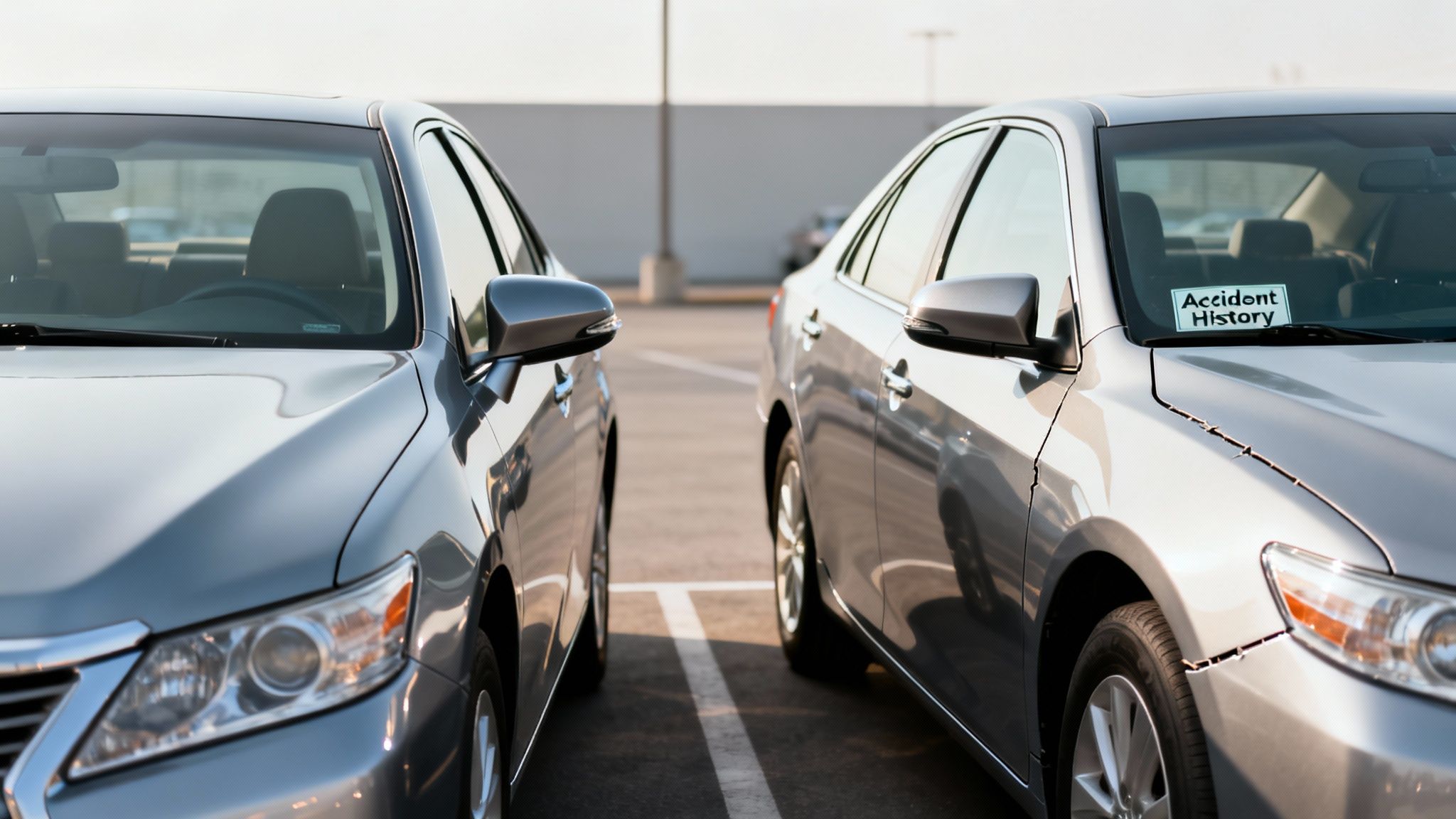
Think about it this way. Imagine two identical used cars sitting on a lot. Same make, model, year, and mileage. One has a clean vehicle history report. The other was in an accident but has been professionally repaired and looks brand new. Which one would you choose? If you’re like most buyers, you’d pick the one without the accident history, or you’d expect a steep discount on the one that was repaired.
That discount is the core of diminished value.
This unavoidable loss is what the industry calls inherent diminished value. It’s the automatic drop in your car’s market price that happens the moment an accident is documented on reports from services like Carfax or AutoCheck. No matter how perfect the repairs are, the stigma of the accident history sticks, making potential buyers wary of hidden issues down the road.
So, How Much Value Are You Really Losing?
The exact amount of value your car loses isn't just a random number. It’s calculated based on a few critical factors that an appraiser will look at closely. We'll dive deeper into these later, but the big ones are:
- Damage Severity: A crumpled bumper is one thing; a bent frame is a completely different story. Structural damage causes a much steeper drop in value than minor cosmetic fixes.
- Vehicle Age and Mileage: A newer car with low mileage simply has more value to lose, so it suffers a bigger percentage drop than an older, high-mileage vehicle.
- Make and Model: Buyers of luxury, exotic, or high-end performance cars expect perfection. These vehicles often take the biggest financial hit from an accident.
To put it in perspective, a minor fender bender on a popular sedan like a 2018 Honda Accord valued at $20,000 could easily knock its trade-in price down to $15,000. That’s a 25% loss overnight. Why? Because the first thing a dealership or educated private buyer does is pull the vehicle history report. Seeing a collision on that report immediately lowers their offer.
To give you a clearer idea, here's a general breakdown of how the severity of damage typically affects your car's value.
Estimated Value Loss by Damage Severity
This table provides a quick overview of typical depreciation percentages based on the severity of accident damage, helping you immediately gauge your potential loss.
| Damage Severity | Typical Value Loss | Description of Damage |
|---|---|---|
| Minor/Cosmetic | 5% – 15% | Scratches, small dents, bumper scrapes. No structural damage or airbag deployment. |
| Moderate | 15% – 30% | Significant body panel replacement, some mechanical parts replaced. Airbags may have deployed. |
| Severe/Structural | 30% – 50%+ | Frame damage, major component replacement, multiple airbags deployed. The car may have a "salvage" title history. |
Keep in mind these are just estimates. The final figure depends on the unique details of your car and the accident itself.
The bottom line is this: even with flawless repairs, your car is no longer worth what it was moments before the collision. This is a real, tangible financial loss that you, the owner, are stuck with unless you take action.
If you want to get a ballpark idea of where your vehicle stands, a good first step is to use an online tool. Check out our car value after accident calculator for a preliminary assessment of your loss.
Understanding Inherent Diminished Value
Ever notice how a brand-new phone in a sealed box is worth more than the exact same phone that's been opened, even if it's never been used? Your car's clean, accident-free history is that factory seal. The second an accident is reported, that seal is broken for good.
This is the core idea behind inherent diminished value. It’s the automatic, immediate drop in your car’s market price simply because it now has an accident on its record. It doesn't matter if the best mechanic in the world made your car look and drive like new. The damage history on reports from Carfax and AutoCheck is permanent.
This history creates a stigma. When you go to sell or trade in your car, potential buyers will be hesitant. They'll worry about hidden damage or wonder if problems will pop up down the road. That doubt directly translates into them offering you less money than they would for an identical car with a clean record. That price difference is your diminished value.
The Most Important Type of Value Loss
It's important to know that inherent diminished value isn't the only kind. You might also hear about repair-related diminished value, which happens when a body shop does a shoddy job—think mismatched paint or cheap aftermarket parts. That's a real problem, but inherent diminished value is more fundamental.
It's the loss you suffer even with perfect repairs, and it's the primary type of loss you can claim when you're not at fault for the accident. The at-fault driver's insurance company has a duty to make you "whole" again, and that includes paying you for this very real drop in your car's resale value.
"Inherent diminished value is the loss that occurs simply because the vehicle now has a documented history of being in an accident. It’s the market’s reaction to the vehicle’s newfound history, and it is a real, recoverable loss."
Because the rules can get tricky and differ from place to place, knowing your rights is half the battle. Getting familiar with the specific https://totallossnw.com/diminished-value-laws/ in your state is a critical first step toward getting paid what you're owed.
If you're ready to dig deeper into the actual process, checking out an expert guide to filing a diminished value claim can give you a clear roadmap. This kind of knowledge helps you push back against the insurance company's initial lowball offer and fight for the full amount your vehicle lost. After all, the accident changed your car's history and tanked its value—and that's a loss you deserve to be compensated for.
What Really Determines Your Car's Post-Accident Value Loss?
Figuring out how much value your car loses after an accident isn't just a guessing game. It's a complex calculation where several key variables come together to tell the full story of your financial hit. No two accidents are the same, and the market certainly doesn't treat every car equally.
The biggest piece of the puzzle is, without a doubt, the severity and type of damage. A minor fender bender with a few scratches might only cause a small dent in your car's resale price. But if the collision bent the frame? That’s a whole different story. Structural damage is a massive red flag for any potential buyer, as it can affect the car's safety and integrity for the rest of its life. This kind of damage can easily cause the value to plummet by 30% or more.
Even the parts used in the repair matter. Your choice between factory-original or aftermarket components can swing the final value. It's worth understanding the impact of OEM versus aftermarket parts on car value before the repairs even begin.
Vehicle Age and Pre-Accident Condition
Next up, we have to look at the car's age, mileage, and its condition before the crash. A brand-new car with just 5,000 miles on it has a lot more value to lose compared to a decade-old daily driver with 150,000 miles. The newer car is going to see a much bigger percentage drop simply because it started from a much higher price point.
Think about it this way: if a car was already a bit beat up, maybe with a salvage title or a lot of visible wear, an accident won't diminish its value nearly as much. You can't really lose value that wasn't there to begin with. On the flip side, a pristine, garage-kept car takes a much bigger financial hit because the accident tarnishes its perfect history.
Make, Model, and Market Perception
The specific make and model of your vehicle also plays a huge role. Luxury brands, high-performance sports cars, and sought-after collector vehicles are hit the hardest by diminished value. The reason is simple: the people who buy these cars expect perfection and are incredibly wary of any accident history.
A documented accident on a high-end Porsche or a classic Mustang can be a complete deal-breaker for serious enthusiasts, causing its value to plummet far more than a common family sedan.
Finally, the court of public opinion—or market perception—weighs in. Some car models have a reputation for being costly or difficult to repair, making buyers extra hesitant after they see an accident on the vehicle history report.
All these factors weave together to create a unique value-loss profile for every single car and every single accident. In today's market, this means a single accident can devalue your car by 10% to 30%, turning a $20,000 vehicle into a $14,000 headache even after it's been perfectly repaired. An independent appraiser is trained to analyze all these variables to calculate the true financial damage, giving you the solid proof you need to claim what you're owed.
Why an Insurance Company's Valuation Is Often Wrong
When you file a diminished value claim, the insurance company doesn't just pull a number out of thin air. They have a system, and it’s usually a standardized, in-house calculation designed to figure out how much value your car lost.
The problem is, their goal is the exact opposite of yours.
You want a settlement that truly reflects what your car has lost in market value. The insurance company, on the other hand, wants to minimize its payout. This fundamental conflict of interest means they often lean on methods that serve their bottom line, not your financial recovery.
The Problem with Formula 17c
One of the most common—and controversial—tools insurers use is something called Formula 17c. It sounds official, but it's really just a method developed by the insurance industry that consistently undervalues your loss. The whole formula is designed to start low and get even lower.
It starts by capping the maximum possible diminished value at just 10% of your car's pre-accident market value. From that already low ceiling, it applies two "modifiers" that nearly always chop the payout down even more:
- Damage Modifier: This adjusts the amount based on how severe the damage was. Severe structural damage gets a higher multiplier, while minor cosmetic stuff gets a much lower one.
- Mileage Modifier: This reduces the final number based on your car's mileage, penalizing vehicles that have actually been driven.
By the time these deductions are applied, the initial offer is often a tiny fraction of the real-world value your car has actually lost. Formula 17c isn't a tool for finding fair market value; it's a tool for minimizing insurance payouts.
The image below shows the factors that genuinely influence a car's loss in market value after it's been in an accident.
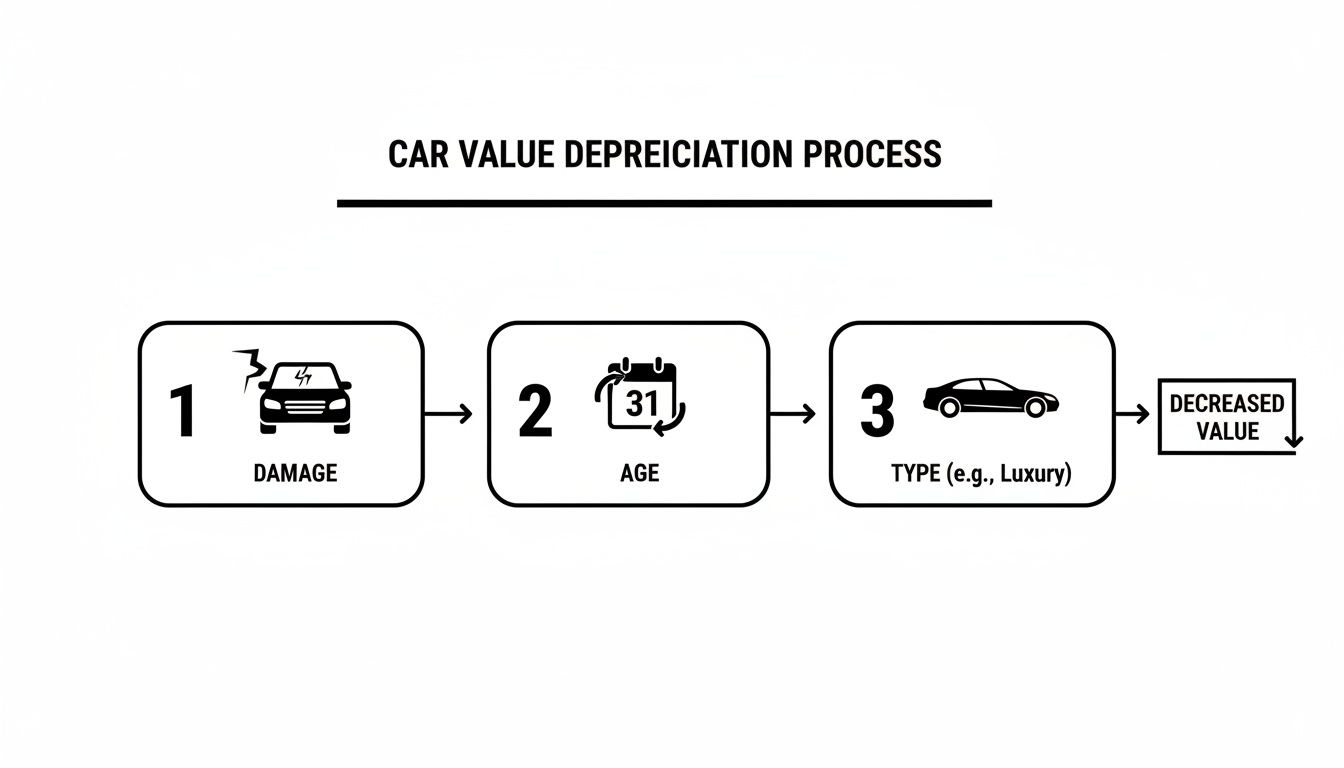
As you can see, real-world things like the type of damage, the car’s age, and its class are what actually drive depreciation—not some self-serving formula.
A Real-World Example of a Lowball Offer
Let's walk through how this plays out. Imagine your car was worth $30,000 before the accident. Right off the bat, the 17c formula caps the potential loss at $3,000 (10%).
Now, say your vehicle had significant damage (but not structural) and has 60,000 miles on the odometer. The insurer might apply a damage modifier of 0.50 and a mileage modifier of 0.80.
Here's what their math would look like:
$3,000 (10% Cap) x 0.50 (Damage) x 0.80 (Mileage) = $1,200
Their final offer to you is a measly $1,200. Meanwhile, an independent market analysis might show that similar cars with an accident history are selling for $5,000 less than their clean-title counterparts.
This is exactly why their first offer is almost always wrong and needs to be challenged with a strong counter-argument backed by real data. An insurer’s goal is to settle for as little as possible, which is why understanding what the actual cash value of your car is becomes so critical. An independent appraisal is your best defense against their biased math.
How a Certified Appraiser Fights for Your Car's True Value
When you file a diminished value claim, you're stepping into the ring with an insurance company whose primary goal is to minimize its payout. Their adjusters use internal formulas and valuation tools specifically designed to protect their bottom line.
A certified, independent appraiser, on the other hand, is in your corner and only your corner.
Their sole mission is to determine the true, fair market value your vehicle actually lost. They aren't tied to flawed industry formulas like 17c. Instead, they act as your expert advocate, using real-world market data to build a powerful, evidence-based case for what you're rightfully owed.
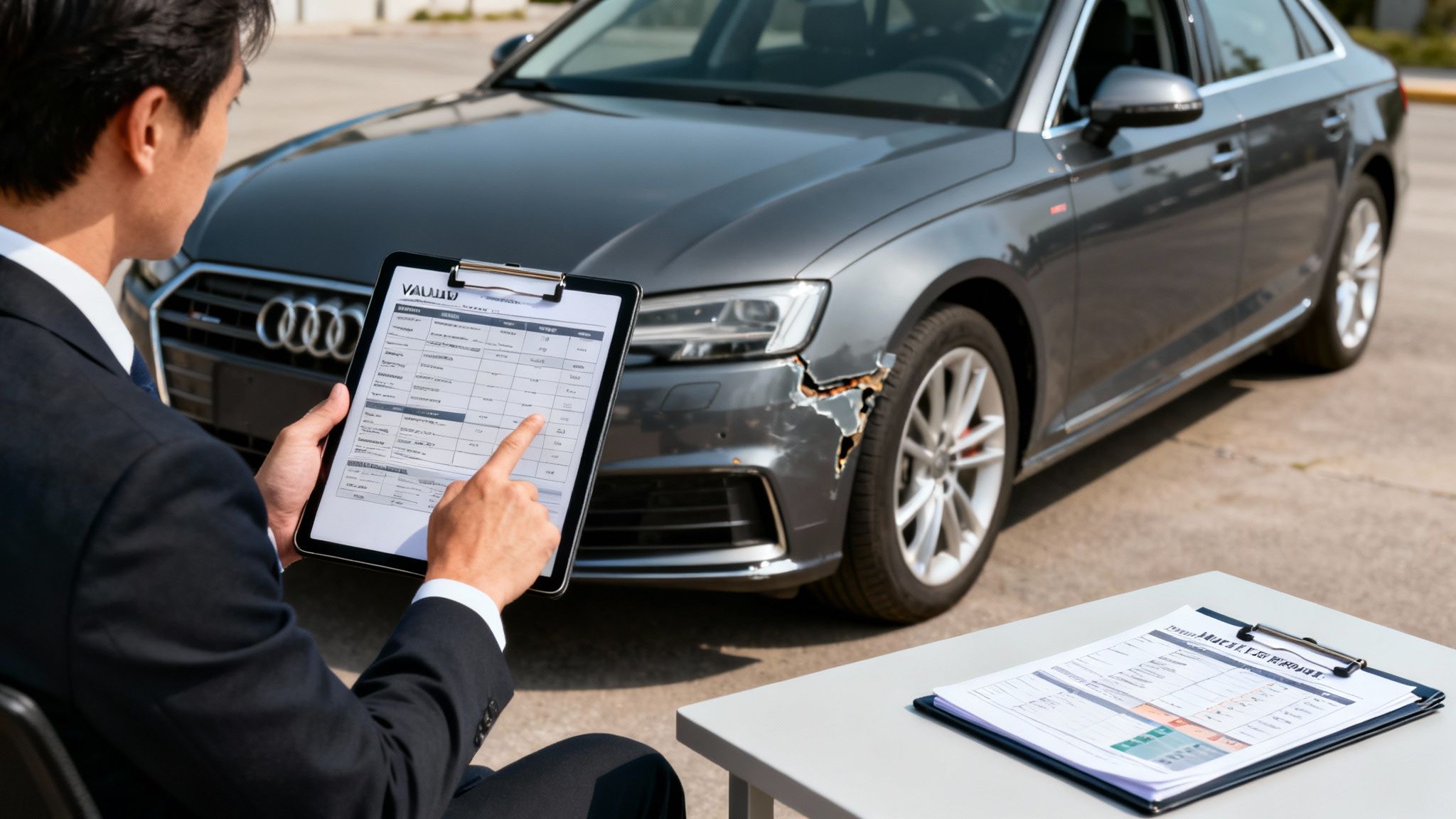
This isn't just a quick look at an online pricing guide. It's a deep, meticulous investigation into your car's specific situation.
The Appraiser's Investigative Process
A professional appraiser leaves no stone unturned. They dig into the details to build a valuation that’s both accurate and impossible for an insurer to ignore.
- Step 1: Thorough Physical Inspection. The appraiser personally examines the quality of the repairs, hunting for any imperfections or lingering issues. They'll also scrutinize the final repair invoice to understand the full scope of what was damaged and fixed.
- Step 2: In-Depth Market Analysis. This is where the real magic happens. The appraiser pulls actual sales data for cars just like yours in your local market. They compare the sale prices of vehicles with clean histories to those with similar accident damage, creating a crystal-clear picture of the value that has vanished.
- Step 3: A Detailed, Evidence-Backed Report. Finally, all this research is compiled into a professional report. This document clearly outlines the appraiser's methodology, the comparable sales data, and the final diminished value figure. It’s not just an opinion—it's a solid argument backed by undeniable, real-world evidence.
An appraiser's report gives you the critical leverage you need to counter an insurer's lowball offer. It changes the conversation from one based on their biased formulas to one based on market reality.
Using the Appraisal Clause in Your Policy
Here's a little-known secret: your auto insurance policy likely has a powerful tool built right in called the Appraisal Clause. This provision gives you the right to hire an independent appraiser if you disagree with the insurance company's assessment of your loss.
When you invoke this clause, you and the insurer each hire your own appraiser. If those two can't agree, they select a neutral third appraiser (known as an umpire) who makes the final, binding decision.
This process completely sidesteps the insurer's self-serving software and forces them to deal with the facts. A certified appraiser can guide you through invoking this clause, making sure your rights are protected and you get the fair settlement you deserve.
Navigating a Total Loss Claim After an Accident
Sometimes, the damage from an accident is just too much. When the cost to fix your car is more than the car is actually worth, the insurance company will declare it a total loss.
This happens when the repair bill, plus whatever they can get for the car as salvage, is higher than its Actual Cash Value (ACV) right before the crash. Think of it this way: if fixing the car costs more than its market value, it’s simply not a smart financial move for the insurer. They’ll "total it out" instead.
Here’s something you need to know: that first settlement offer you get from the insurance company for your totaled car is almost always low. It's not personal; it's business. They use their own valuation tools to come up with a number that benefits them. Treat that offer as what it is—a starting point for a negotiation.
Contesting a Low Settlement Offer
You absolutely do not have to take the insurer's first offer. To get what your car was truly worth, you need to come prepared with your own evidence.
- Compile Maintenance Records: Dig up every receipt you have. Regular oil changes, new tires, recent brake jobs—all of it proves your car was well-cared for, which adds value.
- Document Recent Upgrades: Did you just put in a new sound system or buy a set of premium tires a month before the accident? Find those receipts. These upgrades should be factored into the value.
- Gather Market Comparisons: Scour local online listings for cars that are the same make, model, year, and condition as yours was. This real-world data shows what it would actually cost to replace your vehicle.
Your strongest weapon in this fight is an independent appraisal. A certified appraiser works for you, not the insurance company. They'll create a detailed, evidence-based report that establishes the fair market value, forcing the insurer to defend its lowball figure.
Getting this right is more important than ever. In 2024, total loss declarations shot up to a record 22% of all collision claims, and that number is expected to keep rising. Why? Cars on the road are getting older, and with used car values dropping, it takes less damage to push a vehicle over the total-loss threshold. You can get more details on this trend and learn how accidents are pushing more cars to be scrapped.
Got Questions? We've Got Answers
Wading through the aftermath of an accident is tough enough without a bunch of confusing insurance rules. Let's clear up some of the most common questions drivers have about diminished value and how to protect their car's worth.
Can I Claim Diminished Value If I Caused the Accident?
Unfortunately, the answer is almost always no. A diminished value claim is something you file against the insurance company of the driver who was at fault.
Your own collision coverage is there to get your car fixed, but it's not designed to pay you for the hit your car’s market value takes after those repairs are done. While a couple of states might have some weird exceptions, the rule of thumb is solid: you have to be the innocent party to make a successful claim.
Is There a Deadline to File My Claim?
Yes, and this is a big one. Every state has a legal deadline for filing property damage claims, known as the statute of limitations. This window is usually around two or three years from the date of the accident.
Pro Tip: Don't wait. The best time to kick off the diminished value process is right after your car is out of the body shop. The sooner you act, the easier it is to gather fresh evidence, and you won't have to worry about missing your state's deadline.
If you let that deadline pass, you lose your right to claim that money forever.
What Paperwork Do I Need to Prove My Case?
When you're going up against an insurance company, solid proof is your best friend. The more organized documentation you have, the better your chances of getting a fair offer.
Think of it as building a case. You'll need a few key pieces of evidence:
- The Police Report: This is the official story of the accident and clearly states who was at fault.
- Damage Photos: Snap plenty of pictures of your car right after the crash and again after the repairs are finished. Before-and-after shots are powerful.
- The Final Repair Invoice: Get the detailed bill from the auto body shop. It lists every part and all the labor, proving the extent of the damage.
- A Certified Appraisal Report: This is your knockout punch. An independent diminished value report from a professional appraiser is expert testimony that calculates exactly how much value your car has lost.
Getting these documents in order before you even make the call gives you the confidence and leverage you need to negotiate effectively.
If you're dealing with a diminished value or total loss situation, don't let the insurance company tell you what your car is worth. The certified appraisers at Total Loss Northwest fight to get you a fair settlement based on real market data, not their biased formulas. We provide expert, independent auto appraisals to ensure you recover the full value you're owed. Learn more about how a professional appraisal can help you.