When you’re dealing with the aftermath of a car accident, getting an independent car appraisal is the single most powerful move you can make to get a fair insurance settlement. It’s an expert, unbiased valuation of your vehicle's pre-accident value or its loss in value after repairs. Think of it as your hard evidence to push back against an insurer's typically low first offer, which is crucial for both total loss and diminished value claims.
Why Your Insurer's First Offer Is Just a Starting Point
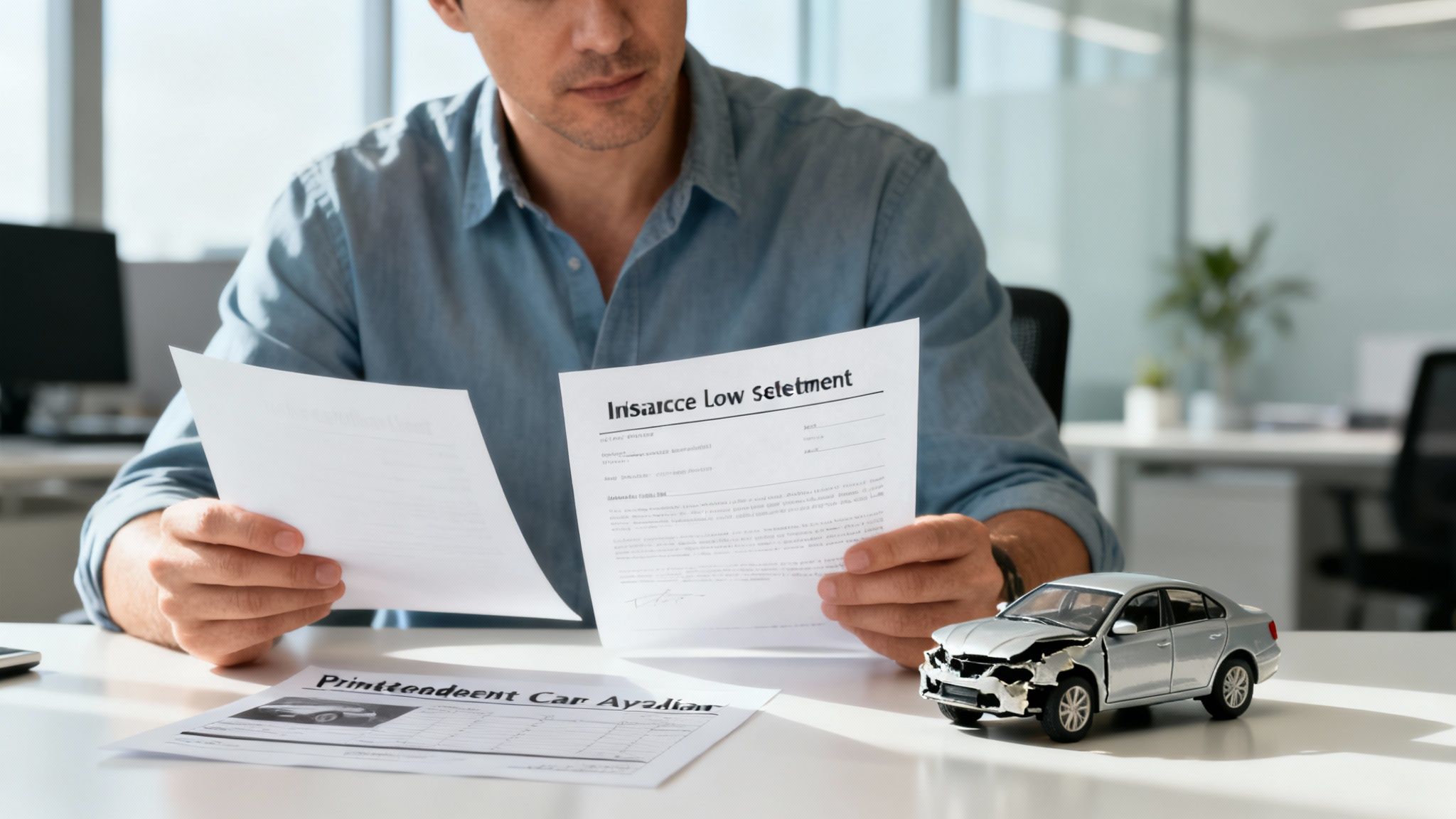
After a wreck, that first settlement offer from the insurance company can feel like a finish line. But you have to remember—it’s almost always just their opening bid in a negotiation.
Insurance companies are businesses, plain and simple. Their priority is to close claims as quickly and cheaply as possible. The initial number they give you is usually spit out by automated valuation software using generic market data. These systems are built for speed, not accuracy, and they often miss the very details that made your car valuable.
The Problem with Automated Valuations
These computer-generated values just can't see the full picture. They are notorious for overlooking the unique factors that a real person would spot, which almost always leads to a lowball figure. This is especially true if your car was:
- Meticulously Maintained: All those service records and the fact that your car was garage-kept? The software doesn't care.
- Custom or Modified: Those expensive aftermarket wheels, stereo system, or performance upgrades are completely invisible to most automated tools.
- Classic or a Collector Car: The unique market, rarity, and provenance of a classic car require a specialist's eye, not an algorithm.
If you’re curious about the tech insurers use, you can look into virtual appraisal solutions like Snapsheet to see how these quick, data-driven estimates are made. It’s a world away from a hands-on, expert evaluation.
To give you a clearer picture, here’s a quick breakdown of the differences.
Insurer Valuation vs Independent Appraisal
| Valuation Factor | Typical Insurance Method | Independent Appraiser Method |
|---|---|---|
| Data Source | Large, generic national databases (e.g., CCC, Audatex). | Local and regional market data, comparable sales, and dealer quotes. |
| Condition | Basic condition categories (e.g., "Average," "Fair") with standard deductions. | Detailed, point-by-point physical inspection of the vehicle's actual condition. |
| Upgrades | Often ignores aftermarket parts or uses a heavily depreciated value. | Assesses the market value added by specific modifications and custom features. |
| Comparables | May use "comparable" vehicles from hundreds of miles away or with different options. | Finds true "apples-to-apples" comps from your specific local market. |
As you can see, the methods are fundamentally different. One is designed for volume and cost savings, while the other is focused on accuracy and real-world value.
Your Strongest Counterargument
This is exactly why a professional appraisal is so essential. It becomes your primary piece of evidence to prove the insurer’s offer is too low. A detailed report from an independent appraiser gives you a market-based valuation backed by a physical inspection and solid research.
An insurer's first offer is a business calculation. An independent appraisal is a factual market valuation. Your goal is to bridge the gap between their number and the reality of what you've lost.
Whether your car is declared a total loss or you're fighting for diminished value, this document completely changes the dynamic. It forces the adjuster to look beyond their automated number and deal with a valuation based on facts. Learning how to deal with insurance adjusters is a skill, and walking in with a professional appraisal is your best opening play. Without it, you’re just arguing with your opinion against their "data," and that's a tough battle to win.
Navigating Diminished Value and Total Loss Claims
After a wreck, your claim is going to go one of two ways: Diminished Value or Total Loss. Figuring out which path you're on is the first real step, and a professional car appraisal is the single most important tool you'll have for either situation.
Think of it this way: the insurance company has two main routes to settle your property damage claim. Your job is to make absolutely sure their decision—and the check they write—is based on your car's actual market value, not just some number their software spits out.
When Your Car Is Repairable But Worth Less
Welcome to the world of Diminished Value (DV). This is the invisible financial hit your car takes just for having an accident on its record. Even with perfect, top-notch repairs that make it look showroom-fresh, its resale value has taken a permanent dive.
It's simple logic. Picture two identical used trucks on a sales lot. One has a squeaky-clean vehicle history report, while the other shows a major collision repair. Which one are you going to pay top dollar for? The price gap between those two trucks is the diminished value.
A vehicle’s worth isn’t just about its physical condition; it's about its story. An accident permanently taints that story, and that stigma directly lowers what a future buyer will pay. You have a right to be compensated for that loss.
This is a very real, tangible financial loss, and it's one that insurance companies are often banking on you not knowing about. To get what you're owed, you can't just throw out a number. You need a certified appraisal to pinpoint the exact loss in market value, giving you the concrete proof needed to build your claim. Understanding the specific diminished value laws and regulations is crucial, and an appraisal report is the bedrock of that entire process.
When Repairs Don't Make Financial Sense
The other road your claim can take is a Total Loss. This happens when an insurer decides the cost to fix your car (plus what they could get for it as scrap) is more than a certain percentage of its pre-accident value. That pre-accident value is called the Actual Cash Value (ACV).
This threshold changes from state to state and policy to policy, but the math is pretty straightforward.
Let's say your car had an ACV of $20,000 and the body shop comes back with a repair estimate of $16,000. The insurance company will almost certainly declare it a total loss. It makes more sense for them to cut you a check for the ACV than to pour that much money into repairs.
This is where their first offer is so incredibly important. The insurer's ACV figure is often the most vulnerable part of their settlement, and they frequently undervalue vehicles to save money. A detailed, post-accident appraisal establishes a true, market-backed ACV, putting the ball in their court to either match it or justify their lowball offer. It's your best leverage for getting paid what your car was actually worth just moments before the crash.
How Modern Car Complexity Impacts Your Claim
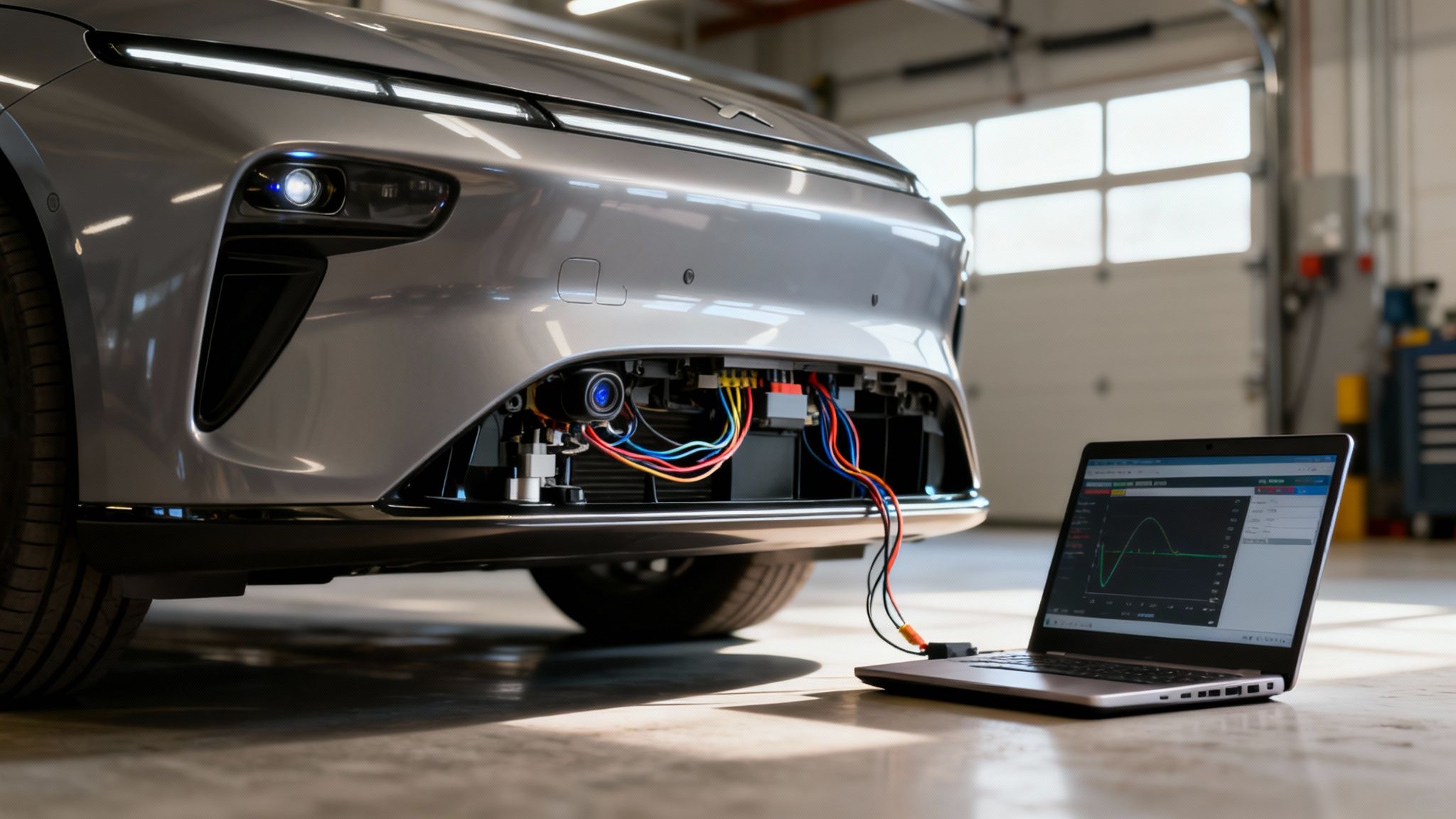
The car sitting in your driveway is less like the vehicles of yesterday and more like a rolling supercomputer. While all this new tech has made driving safer and more convenient, it completely changes the game after an accident. To get a fair settlement, you have to understand how this complexity drives up costs in ways that standard insurance valuations often miss.
Think about it: a minor fender-bender isn't just a simple bumper replacement anymore. That same bumper probably houses a whole network of sensors for parking assist, blind-spot monitoring, and automatic emergency braking. A cracked windshield isn't just a piece of glass; it might hold cameras crucial for your lane-keeping assist system, meaning it needs a costly specialist recalibration, not just a simple swap.
These systems are fantastic for safety, but they also mean repairs are far more involved and expensive than they used to be. The days of a quick, cheap fix are pretty much over for most modern cars.
The Hidden Costs Insurers Overlook
Here's the problem: the valuation software insurance companies use is built for speed and volume, and it struggles to keep pace with how fast automotive technology is changing. These automated systems simply can't account for the true cost of repairing or replacing all these sophisticated components.
This is exactly why getting an expert car appraisal after an accident is so important. A good appraiser who actually understands modern automotive technology can spot and document the value of features the insurer's software is likely to overlook, such as:
- Advanced Driver-Assistance Systems (ADAS): This is the web of cameras, lidar, and radar that has to be calibrated perfectly to work safely. A tiny misalignment can render it useless or even dangerous.
- Specialized Materials: Many new cars use aluminum, high-strength steel, or even carbon fiber. Repairing these materials requires special training and equipment that not every body shop has.
- Complex Electronics: A hit that looks minor on the outside can easily damage sensitive control modules and wiring harnesses buried deep inside the vehicle, leading to thousands in hidden repair costs down the road.
The real value of a modern car isn't just in its make, model, and mileage anymore. It's in the sophisticated technology woven into every panel and component—a fact that standard valuation tools consistently undervalue.
When an insurer’s automated system misses these details, you end up with an inaccurate repair estimate or a lowball total loss offer. You’re left holding a check that doesn't truly cover the cost of making you whole again.
Why More Parts Mean Higher Stakes
The data backs this up. Recent industry analysis shows that the average number of replacement parts on damage appraisals has shot up by 15%. Even more telling, those parts now account for over 51% of the total repair cost. On top of that, the number of distinct labor operations needed for a single repair has climbed by 20%, reflecting just how much more detailed the work has become. You can read more about these trends in modern vehicle repair costs.
This data just confirms what so many of us are experiencing firsthand: repairs are more fragmented, they involve more individual pieces, and they demand a lot more skilled labor.
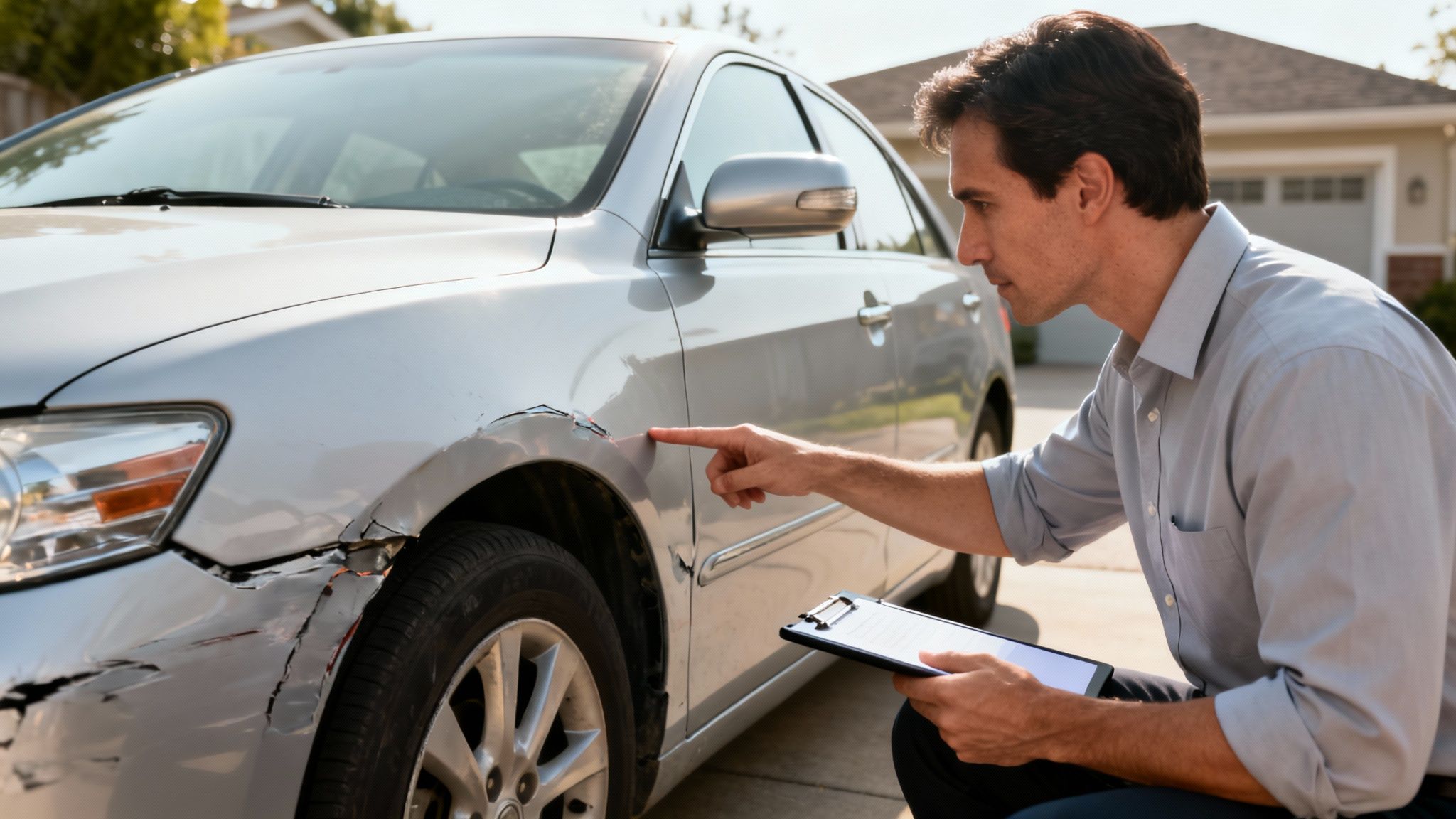
An experienced appraiser knows how to navigate this maze. They’ll perform a thorough, hands-on inspection and create a detailed report that accurately reflects your vehicle's features and the real-world cost of repair or replacement. A proper vehicle appraisal is your single best tool for fighting a low offer. It ensures your settlement accounts for every last sensor, camera, and specialized material that makes your car what it is.
Without it, you're essentially letting an outdated algorithm decide what your modern vehicle is worth.
Your Game Plan for Getting an Independent Appraisal
When the insurer slides a lowball offer across the table, it’s easy to feel cornered. But this isn't the end of the road—it's your cue to stop reacting to their numbers and start building your own case. Taking control begins with getting your own independent appraisal, and that's exactly what gives you the power to negotiate a fair settlement. Here’s how you get it done right.
Your first move is finding the right expert. You don't just need a mechanic; you need a certified, independent auto appraiser. These pros are trained to nail down a vehicle's actual market value and, crucially, they have no ties to any insurance company. That means their assessment is completely unbiased.
Look for appraisers who live and breathe diminished value or total loss claims. You want someone with a proven track record whose reports actually get accepted by insurance carriers. A quick search for specialists in your state is the perfect place to start.
Arm Your Appraiser with Evidence
Once you've found your expert, it’s your job to give them all the ammunition they need. Think of it as building a comprehensive case file that proves what your vehicle was truly worth before the crash. The better your documentation, the stronger their final report will be.
Here's the essential paperwork you'll need to pull together:
- The Insurer's Offer: Hand over the adjuster's initial valuation report. This shows your appraiser the exact number you're up against.
- The Full Repair Estimate: Make sure you have the detailed, itemized estimate from the body shop that lists every single bit of damage.
- Maintenance and Service Records: Got new tires recently? Just had a major service? Every single record proves your car was meticulously maintained, which directly pumps up its pre-accident value.
- Photos and Videos: Dig up every photo you took at the scene and, if you have them, pictures of your car from before the accident.
A quick tip: Don't dismiss the small stuff. Every receipt for a recent oil change, a new battery, or a set of premium floor mats helps paint a picture of a well-cared-for vehicle. It all adds up and justifies a higher valuation.
Playing Your Trump Card: The Appraisal Clause
With your appraiser lined up and your documents in hand, it’s time to put the insurance company on notice. You need to formally tell them you’re disputing their valuation. A simple, professional email is usually all it takes. State clearly that you've hired an independent appraiser to provide a professional car appraisal after an accident.
Now for the real power move. Pull out your auto insurance policy and find the Appraisal Clause. This is a powerful, but often overlooked, part of your contract that lays out a formal dispute resolution process.
In short, it says that if you and the insurer can’t agree on the vehicle's value, you both hire your own independent appraisers. If those two can't come to an agreement, they'll bring in a neutral third appraiser—an "umpire"—who makes the final call. And that decision is typically binding.
Invoking this clause officially takes the negotiation out of the hands of the adjuster and puts it into a structured, unbiased system. It forces the insurer to take your independent report seriously because they know they're contractually obligated to follow the process. It's your right to a fair valuation, and this is how you claim it.
Using Your Appraisal to Negotiate a Fair Settlement
Once you have that professional appraisal in hand, the dynamic with the insurance company changes completely. You're no longer just arguing about opinions; you're presenting them with cold, hard facts. An independent report is your most powerful asset, but how you use it in negotiations is what really makes the difference between a lowball offer and a fair settlement.
Your first move is to formally submit the car appraisal after accident report to the insurer. Don't just attach it to a blank email and hope for the best. You need to draft a professional demand letter to go with it. This letter should be clear and to the point, outlining your position, highlighting the key findings from the appraisal, and stating your counteroffer—the settlement amount you’re now demanding based on solid evidence.
This whole process is about building a case, and the appraisal is your cornerstone.
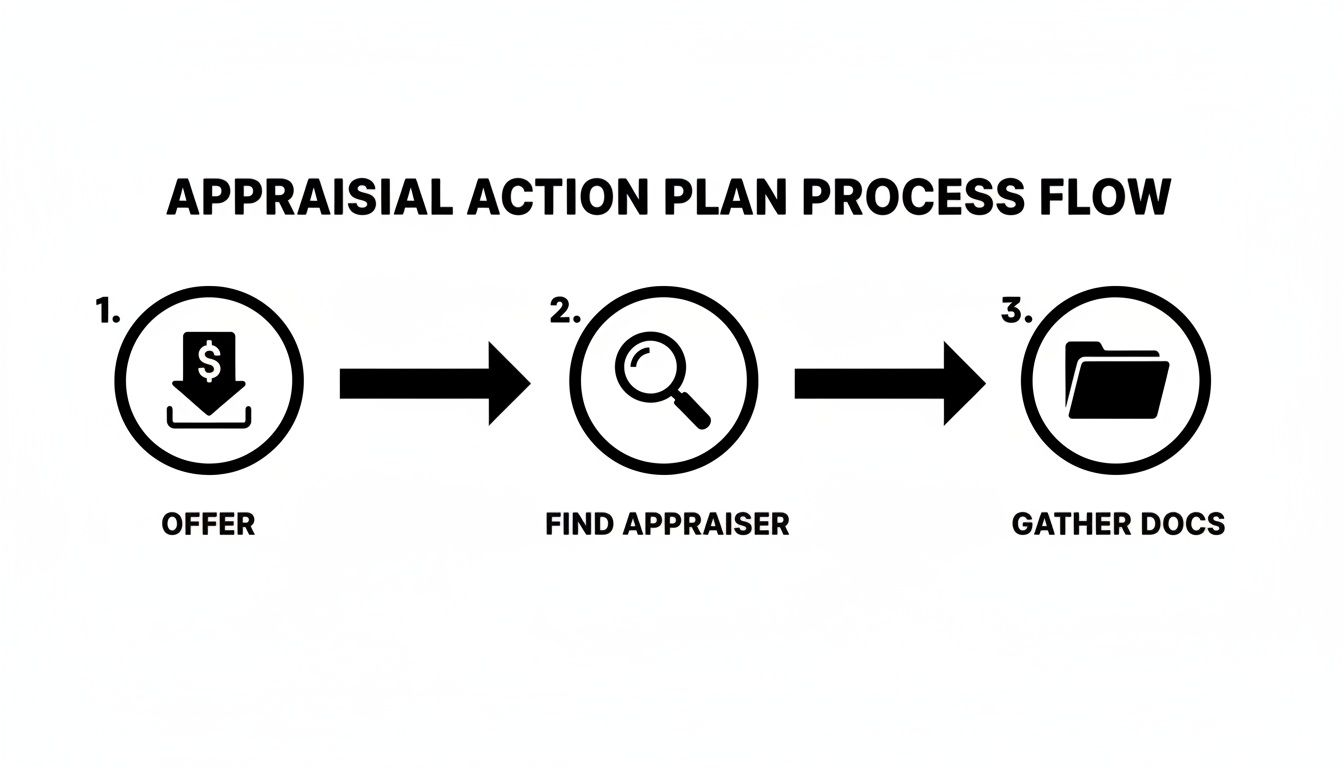
From their initial offer, you've now found an expert, gathered your proof, and are ready to stand your ground with a much stronger negotiation position.
Communicating with the Adjuster
After you’ve sent your demand letter and appraisal, the real conversation starts. Through every phone call and email, it is absolutely crucial to remain calm, professional, and firm. Remember, insurance adjusters negotiate for a living; they have a playbook of common objections they use every day.
Here’s how you can prepare for their typical arguments:
- They say: "Your appraiser's comparables aren't accurate."
- You say: "Could you please provide me with specific, local comparable vehicles that you believe are a better match for my car's exact trim, pre-accident condition, and mileage?" More often than not, their examples will be miles away or in worse shape.
- They say: "We don't accept third-party appraisals."
- You say: "My policy includes an Appraisal Clause, which outlines a clear process for resolving valuation disputes using independent appraisers. I'm following the procedure laid out in our contract."
- They say: "The repairs fully restored your car's value."
- You say: "My appraisal specifically addresses the inherent diminished value. A vehicle with an accident history, no matter how well repaired, does not sell for the same price as one without. The report proves this loss."
Your appraisal isn't just a second opinion; it’s a market-validated report from a certified professional. Frame it as the factual baseline for your entire discussion and keep bringing the adjuster back to the evidence inside it.
When the Insurer Still Won't Budge
What if you hit a wall? If the adjuster digs in their heels and refuses to negotiate in good faith, it’s time to escalate. Your next official move is to formally invoke the Appraisal Clause in your insurance policy. This is a game-changer. It takes the decision away from the difficult adjuster and puts it into a structured, binding process that involves a neutral third-party "umpire."
In some situations, particularly with high-value vehicles or insurers known for being difficult, getting a lawyer involved might be your best bet. An attorney can apply legal pressure and make sure the insurance company is held to the terms of the policy you’ve been paying for. By taking these structured steps, you turn that appraisal from a piece of paper into the tool that gets you the money you're rightfully owed.
Your Top Questions About Post-Accident Appraisals, Answered
After a car wreck, you’re suddenly thrown into a world of insurance claims, repair shops, and confusing paperwork. It’s no wonder so many questions pop up, especially when it comes to making sure you’re paid fairly for your car's damage or loss.
Let’s clear up some of the most common things people ask about getting a car appraisal after an accident.
How Much Does a Professional Appraisal Cost?
This is usually the first thing people want to know, and it's a fair question. You can expect an independent appraisal to cost somewhere between $300 and $750.
The final price tag often hinges on a few factors, like your car's value, how complex the damage is, and whether you're fighting a diminished value or a total loss claim. Think of it less as a cost and more as an investment. A solid, professional appraisal can easily boost your settlement by thousands of dollars, making that initial expense well worth it.
When Should I Get My Own Appraisal?
The best time to act is the second you get that first lowball offer from the insurance company. Don't hesitate.
The sooner you commission your own appraisal, the more leverage you have. It sends a clear signal to the insurer that you're serious and you have the expert evidence to prove their number is wrong.
The insurer's first offer is just that—an offer. It's their opening move in a negotiation. Your independent appraisal is the factual counter-evidence you need to start that conversation on your terms.
It's also worth knowing that total loss claims are hitting historic highs. A record number of claims are being declared total losses, and with over 70% of these involving cars that are seven years or older, owners of well-maintained older vehicles are particularly at risk. You can dig into the data on this trend in these crash course insights and see why an accurate appraisal has never been more critical.
What If My Car Is Leased or Still Has a Loan?
This is a really common scenario, and it absolutely doesn't stop you from getting the settlement you deserve. Here’s how it works:
- If your vehicle is leased: You can and should still file a diminished value claim. When that lease is up, the leasing company will almost certainly hit you with a hefty fee for the car's accident history. A successful DV claim gives you the cash to cover that charge.
- If you have a loan on your car: Should the vehicle be totaled, the insurance check is sent to your lender first. If the insurer's low offer doesn't cover your loan balance, you’re stuck making payments on a car you can't even drive. A proper appraisal ensures the settlement is large enough to pay off the loan completely.
For a deeper look into the entire process from start to finish, check out this comprehensive guide to car appraisal after an accident. It’s a fantastic resource for understanding every step.
At Total Loss Northwest, we specialize in providing certified, independent appraisals that force insurance companies to pay what you're rightfully owed. If you've been in an accident in Oregon or Washington, don't settle for less. Contact us to get the expert valuation you need to secure a fair settlement. Learn more at https://totallossnw.com.