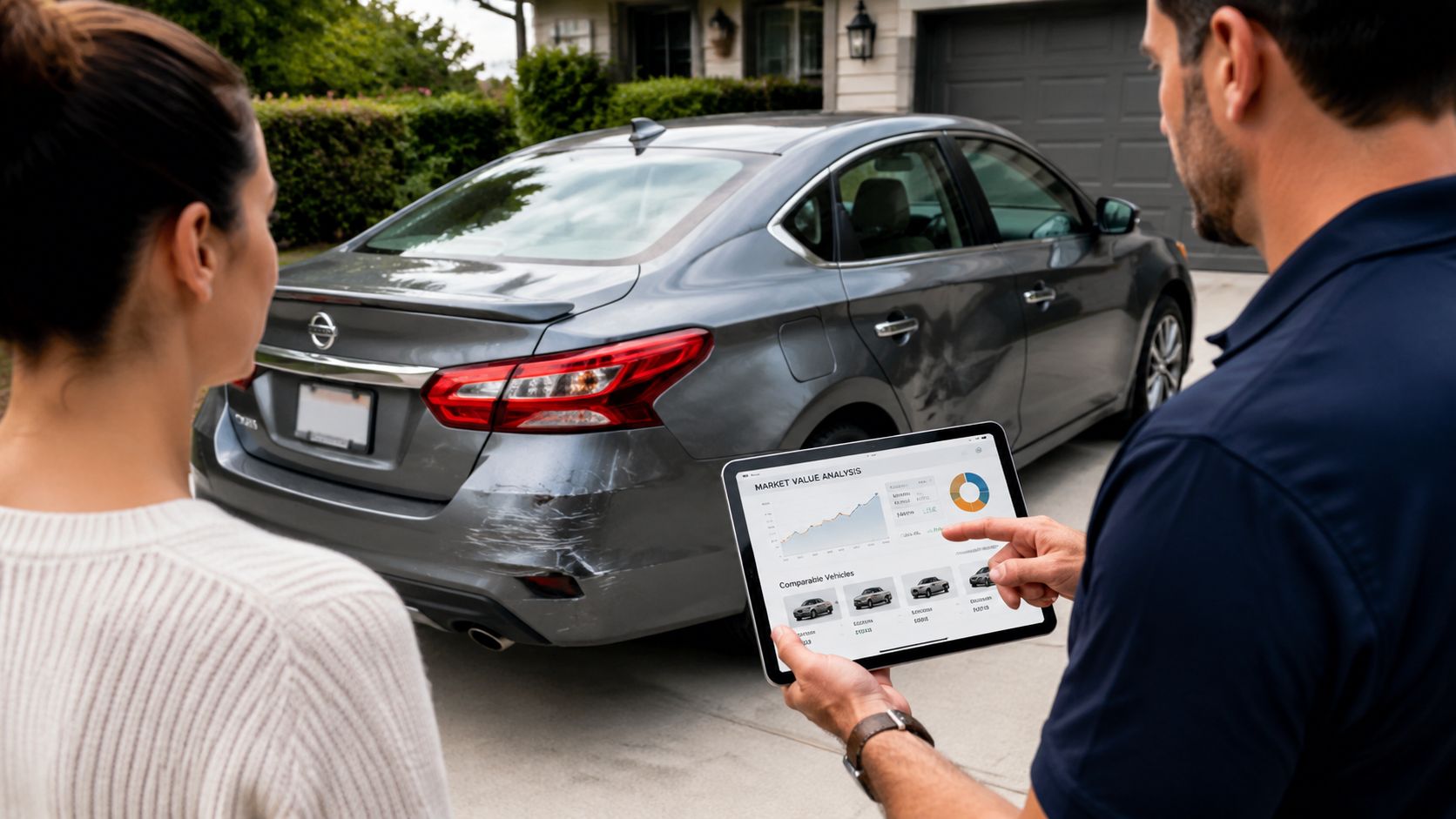
Ever had a car accident? Even after the body shop works its magic and your car looks brand new, a hidden financial hit is waiting for you down the road. This is known as diminished value, and it’s the drop in your car’s market value simply because it now has an accident on its record.
Think about it: when you go to sell that car, buyers will pull up a vehicle history report. That black mark from the accident makes your car less desirable than an identical one with a clean history. It's a permanent stain that directly impacts what someone is willing to pay.
The Hidden Cost of a Car Accident

Let's paint a picture. You're driving your meticulously maintained SUV, and suddenly, another driver rear-ends you. The repairs are flawless—you can't even tell there was damage. But the minute that accident was documented, your vehicle's resale value took a nosedive.
This isn't a theoretical problem; it’s a real, tangible loss. And it's a loss that insurance companies rarely bring up on their own. They'll cover the repairs, but they often "forget" to mention the thousands of dollars in equity that just vanished from your asset.
Understanding the Financial Impact
We're not talking about pocket change. Imagine your vehicle had a fair market value of $30,000 before the crash. After the accident and top-notch repairs, its new market value might only be $26,000. That $4,000 gap is your diminished value—money you’ve lost through no fault of your own.
To truly understand how to get that money back, it’s important to know what a diminished value claim is. In short, it’s your right as the innocent party to demand that the at-fault driver's insurance company makes you financially whole by compensating you for this lost value.
Quantifying Your Loss in the Real World
Professionals in the field see this every day. A vehicle’s value can plummet by 15-35% or more after an accident, even with perfect repairs. Real-world settlements often fall in the 10-20% range, depending on the car's age, mileage, and how bad the damage was.
Appraisers use established formulas to calculate this. For instance, a newer car with under 20,000 miles might get a full 1.00 multiplier for the loss calculation, while that number drops as the mileage climbs. The goal is to arrive at a fair, evidence-based figure for your loss.
To give you a quick handle on these concepts, here’s a simple breakdown.
Diminished Value at a Glance
| Concept | What It Means for You |
|---|---|
| The Core Concept | Your car is worth less money after an accident, regardless of repair quality. |
| The Cause | The permanent stigma of an accident history on reports like Carfax. |
| Your Right | If not at fault, you can claim this loss from the other driver's insurance. |
| The Goal | To be made financially "whole" again, restoring the equity you lost. |
This guide will walk you through everything you need to know about pursuing a diminished value claim. We'll uncover the different types of diminished value, show you how insurers try to minimize their payouts, and give you a clear roadmap to recovering the money you're rightfully owed.
Understanding the Three Kinds of Diminished Value
When we talk about the diminished value of a car, it's not a one-size-fits-all concept. Think of it as an umbrella term covering three different ways your car can lose value after a wreck. Each one kicks in at a different point in the process, from the moment of impact to long after the repairs are done.
Figuring out which type applies to your situation is the first real step in knowing what you can—and can't—claim. The three types are Inherent Diminished Value, Repair-Related Diminished Value, and Immediate Diminished Value. While they all represent a genuine loss, insurance companies typically only entertain claims for one of them. Let's dig in.
Inherent Diminished Value: The Lingering Stigma
This is the big one. Inherent Diminished Value is the most common and widely recognized type of loss, and it's the primary focus of almost every successful claim. It’s the automatic drop in your car’s market value simply because it now has an accident on its record.
Even with the best repairs in the world—repairs so good you can't tell anything ever happened—the car is now worth less than an identical one with a squeaky-clean history. Why? Because that accident will show up on a CarFax or AutoCheck report forever.
Imagine two identical houses on the same street. One has a history of a professionally repaired foundation crack, and the other doesn't. Which one would you pay more for? The car is no different. That blemish on its record is a permanent stigma that buyers just aren't willing to ignore.
Key Takeaway: Inherent Diminished Value is the loss you can't fix with a wrench or a paint gun. It's the direct financial hit you take because of the accident itself, and it’s what you have a legal right to recover from the at-fault driver's insurance.
Repair-Related Diminished Value: When the Fix Isn't Quite Right
Next up is Repair-Related Diminished Value. This type of loss isn't about the accident itself, but about the quality of the work done to fix it. If the body shop cut corners or just didn't do a great job, your car’s value takes an extra hit on top of the inherent loss.
Common signs of a shoddy repair include:
- Mismatched paint that doesn't quite blend with the rest of the car.
- Use of cheaper, aftermarket parts instead of original manufacturer (OEM) equipment.
- Uneven gaps between body panels that weren't there before.
- A frame that wasn't straightened properly, leading to persistent alignment or handling problems.
If you’re dealing with this kind of loss, your beef is usually with the repair shop that did the work, not the at-fault driver's insurance company. You paid for a professional repair, and you didn't get one.
Immediate Diminished Value: The Short-Lived Drop
Finally, we have Immediate Diminished Value. This is a bit more theoretical. It’s the difference between your car’s value right before the crash and its value as a crumpled heap sitting on the side of the road before any repairs have been made.
While it's a very real loss in that moment, it’s also temporary. Since the at-fault insurer is already on the hook to pay for the repairs, they essentially "fix" this immediate loss by restoring the car. Because the repairs are already being paid for, this isn't something you can file a separate claim for.
By focusing your claim on Inherent Diminished Value, you're going after the permanent financial damage that sticks around long after the last bill has been paid. This is exactly where a professional appraiser shines—they have the expertise to calculate that specific, lasting loss and build the rock-solid case you need.
How Insurance Companies Undervalue Your Claim
When you file a diminished value claim, you're stepping into the insurance company's arena. You might expect a fair, market-based offer from the at-fault driver's insurer, but that's rarely what happens. Insurers are businesses focused on one thing: minimizing what they pay out. To do this, they have a go-to tool designed to systematically slash your claim: the 17c formula.
This isn't some neutral industry standard. It’s a controversial calculation that came out of a Georgia court case back in 1999 (Mabry v. State Farm). Insurers loved it so much they adopted it nationwide because it’s brilliant at producing lowball offers that protect their profits, not your car's value. Accepting their first offer, which is almost always spit out by a version of this formula, is one of the biggest financial mistakes you can make after an accident.
Breaking Down the Flawed 17c Formula
So, how does this formula work against you? It starts with an arbitrary 10% cap on your car's pre-accident value. Right off the bat, no matter how nice your car is or how bad the damage was, the insurer decides your maximum loss is just 10% of its Blue Book value. This number has zero basis in what happens in the real-world car market.
From that already low ceiling, things only go downhill. The formula then hits you with two major deductions:
- Damage Multiplier: The claim is reduced based on a subjective damage rating. Was it "minor" or "major"? Their adjuster decides, and their decision always lowers the payout.
- Mileage Multiplier: Your car is penalized for every mile on the odometer. This drastically cuts the settlement for any vehicle that isn't fresh off the dealership lot.
Stacking these deductions on top of the initial cap guarantees the final offer is just a tiny fraction of your car's actual loss in value. It's a mathematical sleight of hand—it looks official, but it conveniently ignores the only thing that matters: what a real buyer would actually pay for a car that's been in a wreck.
Think about it: A car worth $40,000 gets its potential diminished value claim instantly capped at $4,000 using their formula. After they apply deductions for "severe" damage and average mileage, the offer could easily shrink to less than $1,000. That number has nothing to do with the real hit you'll take when you try to sell.
This is why understanding the different types of diminished value is so critical.

The diagram above shows that Inherent Diminished Value—the permanent loss of value from the accident "stigma"—is exactly what the insurer's formula is designed to ignore. And that's the money you're rightfully owed.
The Independent Appraisal Advantage
So, how do you fight a rigged formula? You don't argue with it; you replace it with reality. That’s where a certified independent appraiser comes in. An independent appraisal isn't a rigid calculation—it's a comprehensive report grounded in actual market data for your specific car.
An expert appraiser doesn't start with arbitrary caps or generic penalties. They dig into the details. They analyze sales data for comparable vehicles, consult with dealership managers who buy and sell these cars every day, and closely examine the repair records to see if there was structural damage. They look at your car through the eyes of a savvy buyer and calculate the real-world discount needed to sell it now that it has a documented accident history.
This table really drives home the difference between their method and a real-world analysis.
Insurer's Formula vs Independent Appraisal
| Factor | The Insurer's 17c Formula | Independent Market Appraisal |
|---|---|---|
| Starting Point | An arbitrary 10% cap on the car’s market value. | The full, pre-accident market value of your specific vehicle. |
| Damage Assessment | A vague damage "multiplier" that drastically reduces the payout. | A detailed analysis of repair invoices and structural damage. |
| Mileage Impact | A harsh mileage penalty that punishes you for driving your car. | An evaluation of market expectations for your car's age and mileage. |
| Final Calculation | A low, predetermined number designed to benefit the insurer. | A data-driven figure reflecting what real buyers would pay. |
At the end of the day, the insurance company's goal is to close your claim for as little as possible. They are counting on you not knowing the difference between their formula and a genuine market analysis. By investing in an independent appraisal, you're swapping their self-serving math for undeniable proof of your loss, giving you the ammunition you need to demand a fair settlement.
How to Build a Rock-Solid Diminished Value Claim

So, you understand that insurance companies often use questionable formulas to minimize what they owe you. That’s the first step. The next is to build a case so compelling they have no choice but to listen.
To successfully recover the diminished value on a car, you can’t just say you’ve lost money—you have to prove it with cold, hard facts. It's time to shift from being a victim of the accident to being the architect of your own successful claim. This means getting organized and gathering the right paperwork to tell your vehicle's full story.
Your Evidence Checklist
Think of this like a lawyer preparing for court. Your documents are your evidence. Without them, your claim is just an opinion, and opinions are easy for an insurer to dismiss. A well-organized file is the foundation for a powerful appraisal report.
Here’s what you need to start gathering:
- The Police or Accident Report: This is ground zero. It officially establishes who was at fault, which is essential for filing a third-party diminished value claim.
- All Repair Estimates: Even the initial, rough estimates are useful. They help create a timeline and show how the scope of the damage was initially assessed.
- The Final, Itemized Repair Invoice: This is your most important piece of paper. It breaks down every single part, every hour of labor, and—critically—shows if the shop used OEM (Original Equipment Manufacturer) or cheaper aftermarket parts.
- Before and After Photos: A picture is worth a thousand words, right? "Before" photos prove your car was in great shape. "After" photos (taken before any repairs) show the true extent of the collision. And don't forget post-repair photos, which can expose any lingering flaws.
When you put all this together, you create a factual narrative that leaves very little room for an insurance adjuster to argue.
Why a Professional Appraisal is Your Secret Weapon
Gathering your documents is a great start, but the real game-changer is a certified, independent appraisal. This isn't just someone's opinion; it's an expert analysis that turns your pile of paperwork into an airtight valuation report. An independent appraiser is your advocate, bringing the credibility needed to go toe-to-toe with the insurance company.
A professional appraisal report is the single most effective tool for overcoming an insurer's resistance. It replaces their biased, formula-driven numbers with a real-world, market-based valuation grounded in verifiable data and expert analysis.
A good appraiser doesn’t use generic online calculators or flawed formulas like Rule 17c. Instead, they do the legwork. They'll conduct a detailed market study, often calling sales managers at local dealerships to ask a simple question: "What would you really offer for this car on trade-in, knowing it has this accident history?" This is the kind of specific, localized evidence you need for a winning diminished value appraisal.
This expert analysis is more important than ever. By the end of 2023, the used car market saw a 7.0% year-over-year decline, according to the Manheim Used Vehicle Value Index. As you can learn from Cox Automotive, this market shift means the value gap between a clean-history car and a repaired one has grown even wider.
An independent appraiser levels the playing field. They know how to read a repair invoice, spot the difference between structural and cosmetic damage, and translate it all into a precise, defensible dollar amount. Their report is the proof you need to force the insurance company to negotiate on your terms, not theirs.
Navigating the legal side of a diminished value claim is a bit like driving in a new city—you need to know the local rules of the road. Every state has its own unique set of laws, and they can dramatically affect your ability to get paid what you're owed. Getting this part right is absolutely critical to a successful claim.
If you’re in Oregon or Washington, the rules are pretty straightforward. Both are considered “third-party” diminished value states. In plain English, that means you can only file a claim against the insurance company of the driver who hit you. It doesn't matter if you have the best insurance policy in the world; you can’t claim this loss from your own insurer. The claim follows the fault.
Don't Miss Your Deadline
The single most important rule you need to know is the statute of limitations. Think of it as a ticking clock on your right to file a claim. Once this legal deadline passes, your claim is gone for good, no matter how solid your evidence is.
- In Oregon: You have six years from the date of the accident to file for property damage. That's a pretty generous window, but you shouldn't wait.
- In Washington: The timeline is much tighter. You only get three years from the date of the accident.
While those timeframes might sound like a long way off, putting it off is a big mistake. The longer you wait, the tougher it becomes to track down evidence and accurately pin down market values. The best advice I can give is to get the ball rolling as soon as your repairs are done.
Crucial Point: The clock starts ticking on the day of the accident. Waiting too long to contact an appraiser or submit your claim can jeopardize your ability to get paid what you're rightfully owed.
Why Your Specific Vehicle Matters So Much
The current used car market throws another curveball into the mix. We're seeing values change differently across various types of vehicles. A one-size-fits-all formula just won't cut it.
For example, wholesale values dropped an average of 7.0% in 2023, but the real story is in the details. Compact cars got hammered, dropping 11.7%, while SUVs only saw a 6.1% decline. You can see more of the data on how different vehicle segments are being impacted over at appraisalengine.com. This is exactly why a generic calculator won't work—you need an appraisal that reflects the real-world market for your specific car.
No matter where you live, the core idea is the same: you have to follow the rules to get a fair settlement. To dive deeper into your state's specific requirements, take a look at our guide to diminished value laws and your rights. Knowing the local playbook is your first step toward getting this right.
Your Action Plan to Reclaim Your Car's Lost Value
Alright, you understand what diminished value is and why it matters. Now comes the important part: getting that money back in your pocket. It's time to shift from knowing to doing. Let's walk through the exact steps to recover the equity your car lost in the accident.
First, let's get one critical point straight. You can only file for diminished value if you were not at fault for the collision. This is a third-party claim, meaning you’re going after the at-fault driver's insurance company to make you whole for the damage their policyholder caused.
Step 1: Assemble Your Documentation
Before you even think about picking up the phone, you need to build your case file. Think of yourself as a detective gathering evidence. The more thorough your documentation, the harder it is for an insurance adjuster to argue with you.
Get a folder and start collecting these items:
- The official police or collision report. This is your proof of who was at fault.
- Every repair estimate you received, from the first look to the final version.
- The final, itemized repair invoice. This is the big one—it details every single part and labor hour.
- Clear photos of the damage before any work was done.
This paperwork tells the story of your car's journey, providing the hard facts needed to prove your loss.
Step 2: Do Not Accept the First Offer
Once your car is fixed, the other driver's insurance company will be eager to close your claim. They might offer you a small, almost insulting check for "inconvenience" or diminished value—or, more often, they'll offer nothing at all.
Your job is to politely refuse any final settlement offer. Don't let them rush you.
Crucial Reminder: When you accept a final check for property damage, you almost always sign a release form. This document legally prevents you from seeking any more money for that claim, including diminished value. Never sign a release until you are 100% satisfied.
Step 3: Engage a Certified Independent Appraiser
This is where you bring in a professional. Find a certified, independent appraiser who lives and breathes diminished value claims. They become your expert advocate, armed with the market data and experience to build a rock-solid case for you.
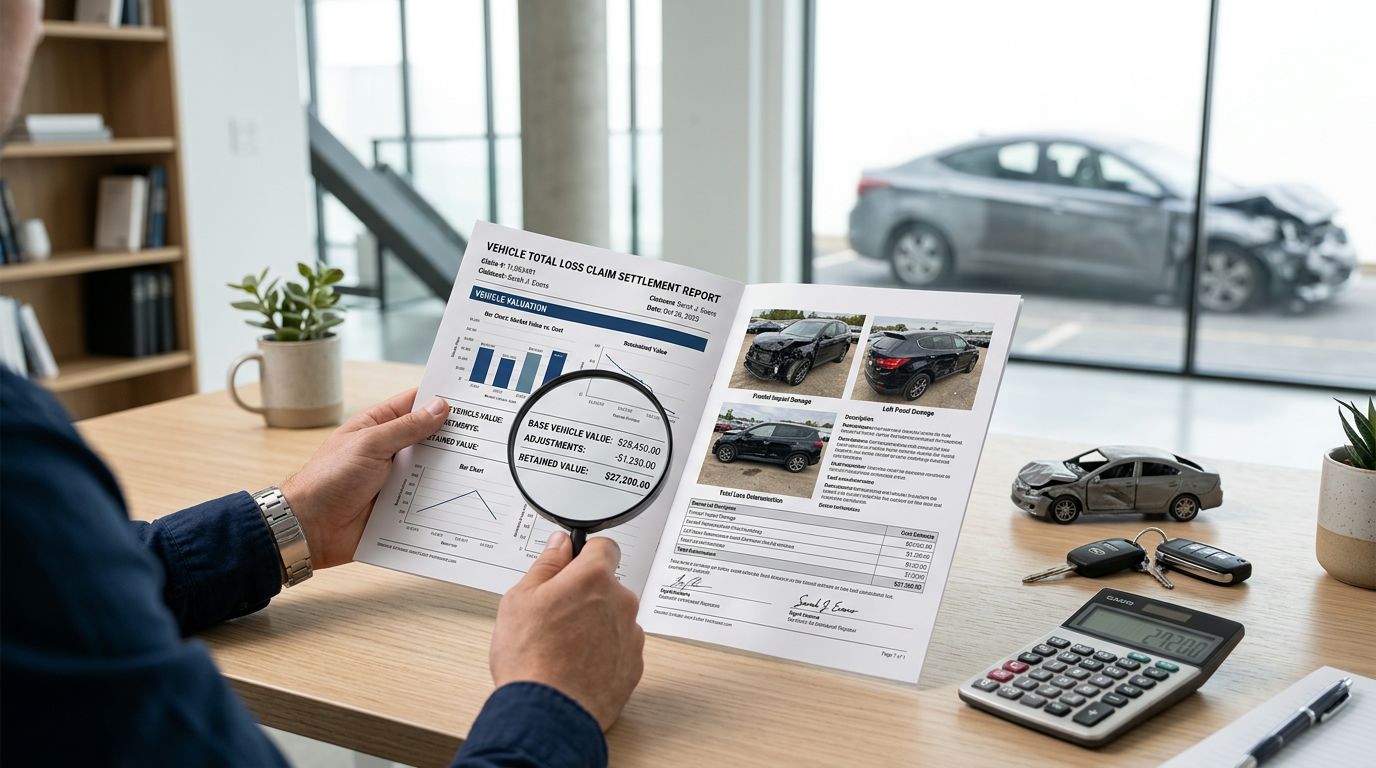
A professional appraiser takes your stack of documents and turns it into a formal, evidence-backed report that calculates your exact financial loss. Their report carries far more weight than the insurance company's internal (and often self-serving) formulas.
While you can use a diminished value claim calculator to get a rough estimate, a professional appraisal is what you need to actually file and win your claim.
Step 4: Understand the Power of the Appraisal Clause
What if the insurance company still won't play fair, even after seeing your professional report? This is when you use your trump card: the Appraisal Clause.
This clause, buried in most auto insurance policies, is a powerful tool for dispute resolution. Invoking it forces the issue. You have your appraiser, the insurance company hires their own, and these two experts are required to negotiate a binding settlement. It takes the decision out of the adjuster's hands and puts it into the hands of unbiased professionals.
Don't let the process overwhelm you. By following these steps methodically and partnering with an expert, you can confidently navigate the claim and get the settlement you're owed. You've already lost value in the accident—don't lose the fight to get it back.
Your Diminished Value Questions, Answered
Even after getting the basics down, you probably still have a few questions rolling around in your head. That’s perfectly normal. Diminished value can feel like a tricky corner of the insurance world, but having clear answers to the most common questions can make all the difference.
Let's clear up some of the things people ask us most often.
Can I File A Diminished Value Claim If I Was at Fault?
This is the big one, and in almost every situation, the answer is no. A diminished value claim is all about recovering your financial loss from the person who caused the accident. It’s their negligence that damaged your property and tanked its value, so their liability insurance is the policy that pays.
If you were the one at fault, your own collision coverage is there to pay for the repairs. But that policy almost never covers the drop in resale value that follows. It's a critical difference to understand before you even think about starting a claim.
How Long Do I Have to File a Diminished Value Claim?
Every state has a deadline for filing property damage claims, which is officially called the statute of limitations. If you miss this window, you lose your right to collect a single penny, no matter how solid your case is.
And these timelines can be wildly different from one state to the next.
For instance, take a look at two states where we do a lot of work:
- In Oregon, the law is on your side with a generous six-year window from the date of the accident.
- But head north to Washington, and that timeline shrinks to just three years.
The best advice? Don't wait. Start the process as soon as your car is out of the shop to avoid any last-minute scrambles with the deadline. The rules can get complicated, and for a deeper dive into what a claim looks like elsewhere, this guide explains what is a diminished value claim in Texas.
Is It Worth Filing a Claim for an Older Car?
This is a great question, and it really just boils down to the car's market value. If you’re driving an older, high-mileage sedan that wasn’t worth much to begin with, the diminished value might be so small that it’s not worth the time and effort to pursue. The math just doesn't add up.
But age isn't everything. For a beautifully maintained classic car, a vintage truck, or any specialty older vehicle that held serious value before the crash, a diminished value claim is absolutely worth it. A professional appraiser can dig into the specifics of your vehicle and tell you if the potential payout is big enough to make a claim worthwhile.
Key Insight: Don't automatically dismiss a vehicle just because it's old. The real question is about its market value and desirability. A 15-year-old daily driver and a vintage Porsche are in completely different leagues.
What if the Insurance Company Rejects My Appraisal Report?
It’s practically a given that an insurance adjuster will try to push back on your claim, even when you hand them a professional report. But here’s the thing: a credible, evidence-packed appraisal from a certified expert is incredibly hard for them to legally ignore.
If they refuse to negotiate in good faith, you have a trump card.
This is where you invoke the "Appraisal Clause" in the at-fault driver's policy. This is a dispute-resolution tool built into most auto insurance policies, and it forces their hand. Once you invoke it, the insurance company has to hire its own independent appraiser.
The two appraisers then work to find a fair number based on the facts. If they still can't agree, a neutral third-party appraiser (an umpire) is brought in to make a final, binding decision. This brilliant little clause takes the biased adjuster out of the driver's seat and puts the decision back where it belongs—based on real-world data, not insurance company algorithms.
Don't let an insurance company tell you what your car is worth. At Total Loss Northwest, our certified appraisers build undeniable, data-driven cases to recover the full diminished value you're owed. If you're ready to fight for a fair settlement, get in touch with us today. https://totallossnw.com