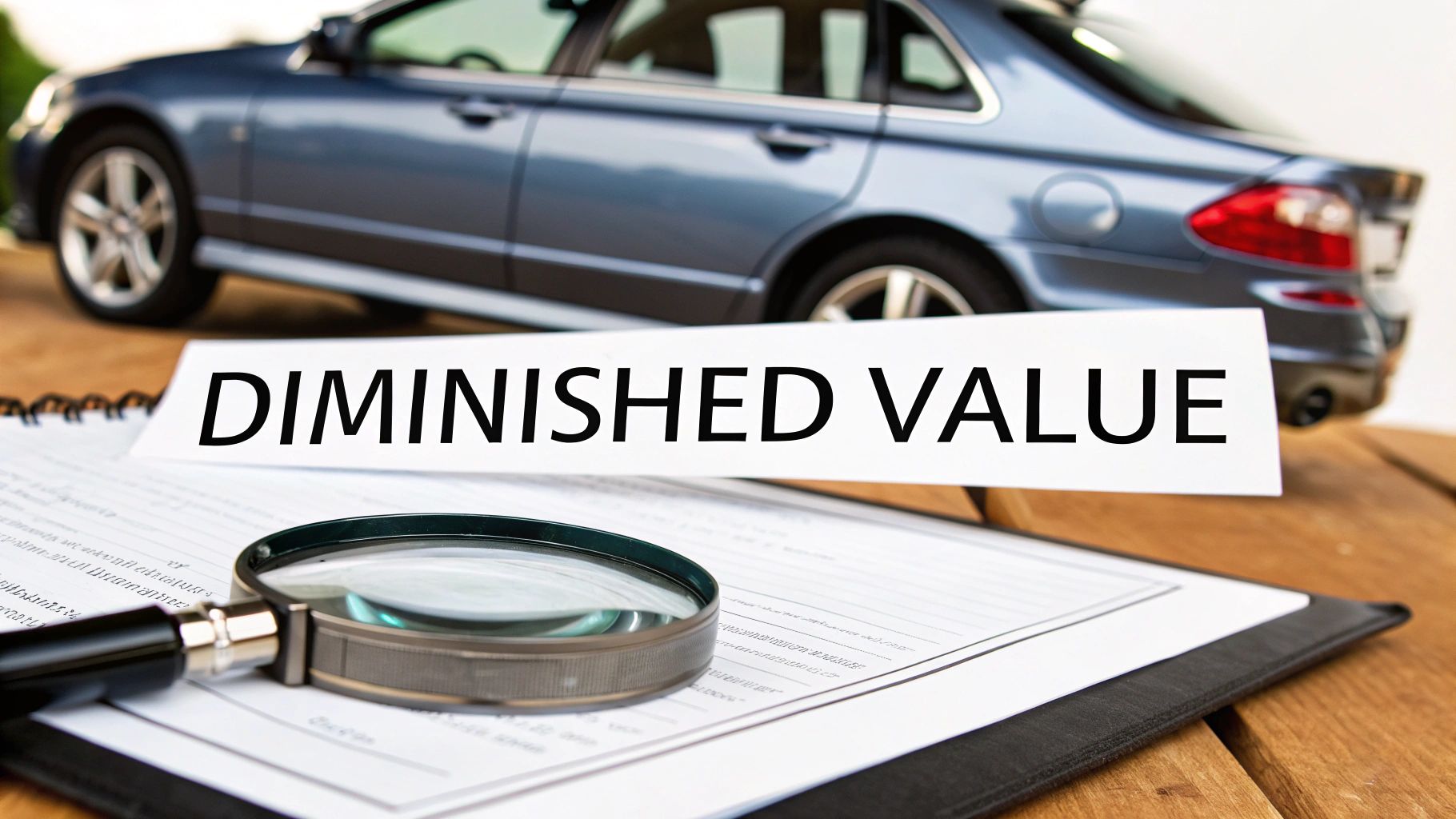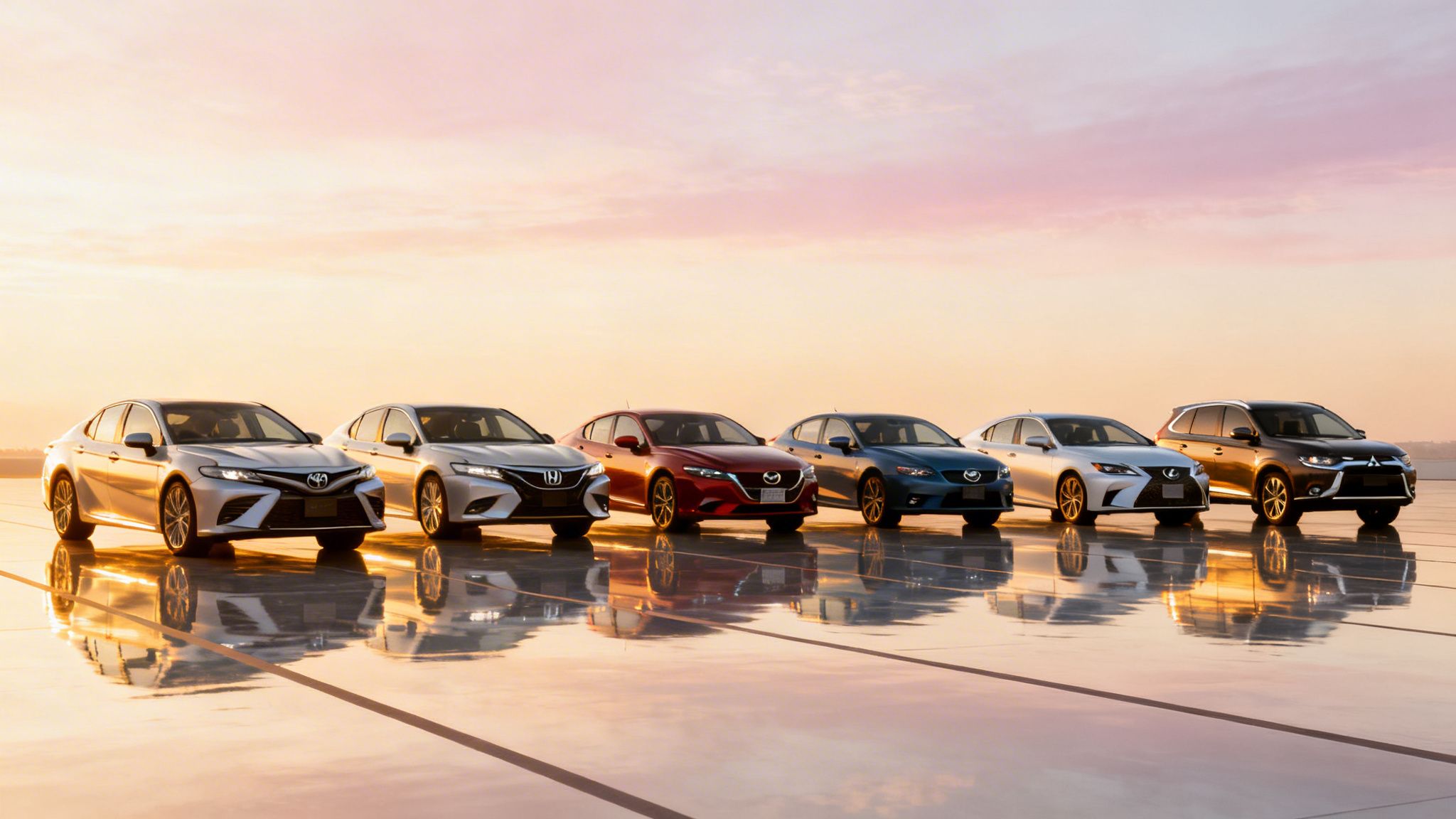
Choosing a new car involves more than just style and performance; it's a long-term financial decision. For decades, the term Japanese car brand has been associated with reliability, efficiency, and strong resale value. These are not just selling points. They are critical factors that directly influence your financial outcome after an unforeseen event like a car accident. Whether you're facing a diminished value claim for a repairable vehicle or a total loss settlement, the brand you drive plays a significant role in determining the amount you're owed.
This guide breaks down seven of the most prominent Japanese car brands available in the U.S. We will examine what makes each brand unique, from their flagship models and safety technology to their long-term value retention. This isn't just another buyer's guide; it's a strategic look at how your choice today can protect your investment tomorrow. Understanding these details is especially important when you need a certified appraiser to prove your vehicle's true market value after a collision. Let's explore which brand best aligns with your needs for both the road ahead and for protecting your asset.
1. Toyota: The Benchmark for Reliability and Resale
Toyota has built an empire on the pillars of durability and predictability. It's a brand that rarely surprises, and for millions of owners, that's its greatest strength. From the ubiquitous RAV4 to the dependable Camry, Toyota vehicles are engineered to last, which translates directly into some of the highest resale values in the industry. This reputation isn't just marketing; it's a tangible asset confirmed year after year by organizations like Kelley Blue Book and J.D. Power.

This Japanese car brand continues to expand its hybrid and PHEV offerings, making efficiency another key value proposition. The rollout of Toyota Safety Sense (TSS) 4.0 on new models further solidifies its commitment to protecting occupants, a factor that insurers and appraisers note carefully.
Representative Models & Characteristics
Toyota's lineup is diverse, catering to nearly every segment of the market with a consistent focus on practicality and longevity.
- RAV4: The quintessential compact SUV, known for its balanced ride, ample cargo space, and excellent fuel economy, especially in its hybrid and Prime (PHEV) versions.
- Camry: For decades, the Camry has been a benchmark for midsize sedans, offering a comfortable, quiet ride and an unimpeachable record for reliability.
- Tacoma: A dominant force in the midsize truck market, the Tacoma is famous for its off-road prowess and exceptionally high resale value. Its durability makes it a favorite for both work and recreation.
Diminished Value & Total Loss Considerations
A Toyota's strong market reputation directly impacts insurance claim outcomes. When a Toyota is in an accident, its high resale value creates a significant pre-accident baseline. This means that even with excellent repairs, the post-repair vehicle may suffer a substantial loss in market value, known as diminished value. Insurers often underestimate this loss, making a detailed appraisal critical for owners to recover fair compensation.
Key Insight: In a total loss scenario, the insurer's initial offer for a Toyota might not reflect its true market worth, especially for well-maintained or low-mileage examples. The brand's predictable high demand means its actual cash value (ACV) is often higher than standard valuation guides suggest. Getting a professional, independent vehicle appraisal is the best way to contest a low offer and ensure you are compensated based on what it would actually cost to replace your vehicle in the current market.
2. Honda: The Art of the Well-Rounded Automobile
Honda has mastered the formula for creating vehicles that blend practicality, efficiency, and an engaging driving experience. While Toyota often focuses on ultimate durability, Honda infuses its lineup with a bit more verve, attracting buyers who want reliability without sacrificing fun. The brand's reputation for strong engineering and owner satisfaction is backed by competitive residual values, as noted by ALG and J.D. Power.

As another leading Japanese car brand, Honda has made its advanced Honda Sensing driver-assist suite standard on nearly all core models, bolstering its safety credentials. With straightforward warranty coverage and new entries into the EV market like the Prologue, Honda continues to be a go-to choice for a wide spectrum of drivers looking for a dependable and enjoyable vehicle.
Representative Models & Characteristics
Honda's lineup is known for its refinement, smart packaging, and a consistent balance of performance and fuel economy.
- Civic: A perennial leader in the compact class, the Civic offers sharp handling, a high-quality interior, and a reputation for long-term dependability. It serves as an excellent benchmark for the segment.
- Accord: The Accord has long been praised for its sophisticated driving dynamics, spacious cabin, and strong hybrid powertrain options, often feeling more upscale than its price suggests.
- CR-V: As one of the best-selling SUVs in America, the CR-V is known for its massive cargo area, comfortable ride, and excellent fuel efficiency, particularly in its popular hybrid variant.
Diminished Value & Total Loss Considerations
Similar to Toyota, Honda's strong brand equity and high resale value establish a solid pre-accident value for insurance claims. Following a collision, a properly repaired Honda can still face significant inherent diminished value because buyers are less willing to pay top dollar for a vehicle with an accident history. This is a critical factor that initial insurance settlement offers frequently overlook. To learn more about this post-repair loss, you can read about automobile diminished value and how it is calculated.
Key Insight: In a total loss situation involving a Honda, especially a popular model like a CR-V or an Accord in good condition, the insurer's valuation might not align with the strong regional demand. These vehicles are sought after on the used market, often commanding prices above standard book values. Securing an independent appraisal is a vital step to challenge a lowball offer and document the vehicle's true actual cash value (ACV) based on real-world market data.
3. Subaru: The Standard for All-Weather Confidence and Safety
Subaru has carved out a distinct identity by making its Symmetrical All-Wheel Drive and advanced safety features the core of its brand promise. This focus on practical performance has earned it a loyal following, particularly in regions with challenging weather conditions. Its vehicles are known for their high ground clearance, excellent visibility, and a feeling of sure-footed security, backed by a strong record of IIHS Top Safety Pick awards across its model line.

The widespread adoption of the EyeSight Driver Assist Technology as standard equipment further reinforces its safety-first reputation. While its CVT transmissions may not appeal to all driving enthusiasts, the practical packaging and dependable nature of this Japanese car brand make it a compelling choice for families and adventurers alike. This reputation for safety and capability plays a significant role in its valuation.
Representative Models & Characteristics
Subaru's lineup consistently delivers practicality and all-wheel-drive confidence, making it a standout in several popular segments.
- Outback: A wagon-like crossover that defines the brand, the Outback offers a comfortable ride, generous cargo capacity, and raised ground clearance, making it an ideal vehicle for both daily commutes and weekend excursions.
- Forester: As a more traditional compact SUV, the Forester is prized for its upright driving position, exceptional visibility, and user-friendly design. It consistently earns top marks for safety.
- Crosstrek: This subcompact SUV combines a small, city-friendly footprint with the brand's signature AWD and rugged styling, appealing to buyers who want capability without the bulk of a larger vehicle.
Diminished Value & Total Loss Considerations
The strong brand loyalty and safety reputation of Subaru models help them retain value well. Following an accident, a Subaru’s Diminished Value can be substantial because buyers specifically seek out these vehicles for their proven safety and structural integrity. Any compromise to that integrity, even with proper repairs, can deter a potential buyer and lower the vehicle's market price.
Key Insight: In a total loss, the insurance company's initial settlement offer for a Subaru may overlook its high demand in specific regional markets, especially for well-equipped trims like the Wilderness models. Because of this, the actual cash value (ACV) might be higher than what standard valuation guides indicate. If your car is declared a total loss, you should understand the process and consider an independent appraisal to challenge a low offer and ensure you're compensated fairly for its true replacement cost.
4. Mazda: Affordable Premium with a Driver's Edge
Mazda has successfully carved out a niche as an "affordable premium" Japanese car brand, blending upscale design and engaging driving dynamics with mainstream pricing. Its vehicles consistently earn praise for having interiors that feel a class above their price point and for providing a handling experience that prioritizes the driver. This focus on perceived quality and safety is reinforced by numerous IIHS Top Safety Pick and Top Safety Pick+ awards across its lineup.

While its U.S. dealer network is smaller than giants like Honda or Toyota, Mazda's strong brand identity and loyal following help maintain solid residual values. Redesigned core models, like the upcoming CX-5, are set to further improve interior packaging and build on this reputation for delivering high value and a premium feel.
Representative Models & Characteristics
Mazda's lineup is known for its cohesive "Kodo" design language and a consistent focus on a fun-to-drive character, regardless of the vehicle segment.
- CX-5: A standout in the competitive compact SUV market, the CX-5 is celebrated for its sharp handling, quiet and elegant cabin, and strong standard feature list. It appeals to buyers who want practicality without sacrificing style or driver enjoyment.
- Mazda3: Available as a sedan or hatchback, the Mazda3 offers a premium interior and sophisticated road manners that challenge entry-level luxury cars. Its available all-wheel-drive system adds to its all-weather appeal.
- CX-90: As Mazda's flagship three-row SUV, the CX-90 showcases the brand's premium aspirations with a powerful inline-six engine, refined ride, and a high-end interior. It competes directly with more expensive luxury-brand offerings.
Diminished Value & Total Loss Considerations
The "affordable premium" positioning of Mazda directly influences its value in an insurance claim. A Mazda's pre-accident value is supported by its strong safety ratings and upscale features, which appraisers must recognize. Following an accident, the inherent diminished value can be significant because buyers seeking that premium feel are often wary of vehicles with a collision history, even if repaired perfectly.
Key Insight: In a total loss claim for a Mazda, especially a higher-trim model like a CX-5 Signature or a CX-90, the insurer's valuation may not capture its full market position. The actual cash value (ACV) is often higher than book values suggest because these vehicles are seen as alternatives to more expensive luxury brands. Contesting a low offer with an independent vehicle appraisal is crucial to prove what it would truly cost to replace your well-equipped Mazda in the current retail market.
5. Lexus: The Gold Standard for Luxury and Reliability
Lexus was born from Toyota's ambition to create a world-class luxury car, and it has since become the benchmark for build quality, quietness, and owner satisfaction in the premium segment. By combining Toyota's engineering prowess with first-class materials and advanced technology, Lexus offers a refined ownership experience that few can match. This commitment to quality makes it a leading Japanese car brand for retaining value.

The brand's reputation is supported by exceptional warranty coverage and a vast, class-leading selection of hybrid models that deliver impressive fuel economy without sacrificing comfort. This focus on long-term, trouble-free ownership is a core part of its identity and a major factor in its high resale performance.
Representative Models & Characteristics
Lexus offers a complete lineup of luxury sedans, coupes, and SUVs, with most models prioritizing a smooth, serene ride and impeccable interior craftsmanship.
- RX: A pioneer of the luxury crossover segment, the RX is celebrated for its plush ride, quiet cabin, and powerful yet efficient hybrid powertrains. It consistently ranks as a top seller in its class.
- ES: The definitive midsize luxury sedan for buyers who value comfort above all else. The ES provides a spacious, well-appointed interior and an exceptionally smooth driving experience, especially in its hybrid form.
- LX: Based on the legendary Toyota Land Cruiser, the LX is a full-size luxury SUV that combines opulent features with genuine, go-anywhere off-road capability and uncompromising durability.
Diminished Value & Total Loss Considerations
The high desirability and market-leading resale value of Lexus models create a significant financial consideration after an accident. A collision, even one with flawless repairs, can cause a substantial drop in the vehicle's market value, resulting in high diminished value. Because Lexus vehicles maintain their worth so well, the pre-accident value is very high, making the post-repair value gap wider than for many other luxury brands.
Key Insight: In a total loss claim for a Lexus, its strong brand equity means the actual cash value (ACV) often exceeds what standard valuation tools report. Insurers may present an initial offer that fails to capture the true cost of replacing a well-maintained RX or ES in the current market. Securing an independent vehicle appraisal is crucial to document the vehicle's real-world value and contest an insufficient settlement from the insurance carrier.
6. Acura: Precision Crafted Performance Meets Practical Luxury
Acura, Honda’s luxury and performance division, has carved out a distinct niche by offering a compelling alternative to its European rivals. This Japanese car brand focuses on a performance-first philosophy, blending advanced engineering with premium features at competitive price points. The brand’s reputation is built on Honda’s foundation of reliability, enhanced with more power, sophisticated technology, and upscale materials.

Models featuring Super Handling All-Wheel Drive (SH-AWD) and the high-performance Type S variants demonstrate Acura's commitment to the driving experience. This focus, combined with strong residual value projections from organizations like J.D. Power, makes Acura a smart choice for buyers seeking both excitement and long-term value retention.
Representative Models & Characteristics
Acura's lineup is intentionally focused, delivering athletic handling and a high level of standard equipment across its core sedans and SUVs.
- MDX: A benchmark in the three-row luxury SUV segment, the MDX is known for its agile handling (especially with SH-AWD), spacious interior, and strong V6 engine. It provides a family-friendly package without sacrificing driver engagement.
- Integra: The revival of a legendary nameplate, the modern Integra is a premium sport compact that offers a spirited driving experience, a practical liftback design, and an available manual transmission, a rarity in its class.
- TLX: This sport sedan directly challenges European competitors with aggressive styling and performance-oriented engineering. The TLX Type S, with its turbocharged V6 and SH-AWD, represents the pinnacle of the brand's performance capabilities.
Diminished Value & Total Loss Considerations
Acura's position as a premium brand with strong value retention means that post-accident diminished value can be significant. The market expects a clean history on a luxury vehicle, and an accident record, even with perfect repairs, can cause a notable drop in its resale price. An independent appraisal is crucial to document this loss and challenge an insurer’s low settlement offer.
Key Insight: In a total loss, the Actual Cash Value (ACV) of an Acura, particularly a Type S or a top-tier trim with SH-AWD, is often underestimated by insurance adjusters. These models carry a market premium that standard valuation tools may not capture. Securing a professional vehicle appraisal ensures your settlement offer reflects the vehicle's true replacement cost, accounting for its specific trim, condition, and desirability among enthusiasts.
7. Nissan: Aggressive Pricing and Broad Market Appeal
Nissan competes aggressively in the mainstream market by offering a wide array of vehicles known for competitive pricing and frequent incentives. This Japanese car brand targets cost-conscious buyers with a lineup that stretches from the budget-friendly Sentra sedan to the family-oriented Rogue crossover and innovative EVs like the Ariya. While its reputation for reliability has been mixed compared to its top rivals, Nissan's value proposition is strong, packing modern tech and safety features into affordable packages.

The brand has made strides in expanding its advanced driver-assistance systems (ADAS) and improving infotainment across its core models. Nissan's wide dealer footprint makes both sales and service accessible, and it was an early leader in the mass-market EV space with the LEAF, a legacy continued by the newer Ariya.
Representative Models & Characteristics
Nissan’s product portfolio is diverse, with a clear focus on delivering features and style at an accessible price point.
- Rogue: A top seller in the compact SUV segment, the Rogue is praised for its comfortable interior, generous cargo capacity, and smooth ride. Newer models offer advanced ProPILOT Assist technology.
- Altima: This midsize sedan is a strong competitor against the Camry and Accord, often standing out with available all-wheel drive, a feature not common in its class. It balances comfort with efficiency.
- Z: A legendary nameplate, the Nissan Z continues its legacy as an attainable, driver-focused sports car. It provides thrilling performance and classic rear-wheel-drive dynamics without the premium price of European competitors.
Diminished Value & Total Loss Considerations
Nissan's pricing strategy, which often includes significant manufacturer rebates and dealer incentives, can directly influence insurance claim outcomes. The brand's lower initial purchase price and sometimes faster depreciation compared to Honda or Toyota can result in a lower pre-accident value baseline. This makes establishing a strong case for diminished value after an accident particularly important, as the vehicle's marketability can take a significant hit.
Key Insight: In a total loss claim for a Nissan, the insurer’s initial valuation may heavily factor in widespread promotional pricing, potentially undervaluing your specific vehicle. Models like a well-equipped Rogue Platinum or a performance-oriented Z have stronger market demand than base models. Contesting a lowball offer with an independent vehicle appraisal is crucial to prove the true market cost to replace your specific trim, condition, and low-mileage example.
Top 7 Japanese Car Brands Comparison
| Brand | 🔄 Complexity | ⚡ Resource requirements | ⭐ Expected outcomes | 📊 Ideal use cases | 💡 Key advantage |
|---|---|---|---|---|---|
| Toyota | Low — broad lineup and nationwide support simplifies selection | Moderate — wide price range; strong parts/service availability | High reliability and strong resale value | Families, long-term ownership, hybrid/PHEV buyers | Nationwide dealer network and extensive electrified options |
| Honda | Low — standard safety tech and straightforward warranties | Moderate — mainstream pricing; growing EV entry | Strong reliability with engaging driving dynamics | Daily drivers seeking safety/efficiency; mainstream EV entry (Prologue) | Consistent balance of safety, efficiency, and driving feel |
| Subaru | Low — AWD standard reduces configuration complexity | Moderate — AWD hardware and practical packaging | Excellent traction and safety in poor-weather regions | All-weather/winter regions, outdoor lifestyles | Symmetrical AWD and strong IIHS safety performance |
| Mazda | Moderate — upscale features with smaller dealer reach | Moderate — premium-feel at mainstream prices; fewer dealers | Upscale cabin and engaging driving, strong safety ratings | Buyers wanting near-luxury feel without luxury price | Premium interiors and driver-focused dynamics |
| Lexus | Low–Moderate — luxury complexity but familiar Toyota underpinnings | High — higher purchase and maintenance costs | Top-tier reliability and industry-leading resale among luxury brands | Luxury buyers prioritizing refinement and long-term value | Strong retained value and broad hybrid/PHEV lineup |
| Acura | Moderate — performance-focused trims add option complexity | Moderate — competitive MSRPs with sporty equipment | Good value-oriented luxury with sporty character | Performance-minded luxury buyers seeking value vs. European rivals | Sport trims (Type S) and transparent pricing |
| Nissan | Low — straightforward, affordable lineup and clear pricing | Low — lower entry prices and frequent incentives | Value-oriented ownership; reliability perception mixed vs. leaders | Cost-conscious buyers and accessible EV adoption (Leaf/Ariya) | Competitive pricing and wide dealer footprint |
Protecting Your Investment: Your Next Steps After an Accident
Throughout this guide, we've explored the distinct identities of major Japanese car manufacturers. From the unwavering reliability of Toyota and Honda to the sporty aspirations of Mazda and the premium experiences offered by Lexus and Acura, your choice of a japanese car brand significantly influences its long-term financial journey. Brands with high resale value and strong consumer trust often provide a better starting point in post-accident negotiations.
However, as we've highlighted, a respected badge is not an automatic shield against a lowball insurance offer. Insurance adjusters operate with their company's bottom line in mind, frequently using standardized software that may not account for your specific vehicle's condition, trim level, or local market demand. This can lead to a settlement offer that fails to reflect its true pre-accident worth, whether you're filing a diminished value claim for a repaired vehicle or facing a total loss declaration. Understanding the financial implications is key, including how adjusters determine if a car is totaled.
From Brand Reputation to Actionable Strategy
Your vehicle is more than just a nameplate; it’s a specific asset with a unique value. The key to securing a fair settlement is moving beyond brand generalities and focusing on concrete, market-based evidence for your car. This is where a certified, independent appraisal becomes your most powerful tool.
By invoking the Appraisal Clause in your insurance policy, you can introduce an unbiased expert to advocate on your behalf. Here’s what that process looks like and why it’s effective:
- Evidence-Based Valuation: A professional appraiser doesn't rely on generic book values. They conduct a detailed analysis of your local market, finding comparable vehicles (comps) that have recently sold. This real-world data forms the basis of a much stronger valuation argument.
- Condition and Customization: Was your Subaru Outback meticulously maintained? Did you add a desirable options package to your Acura TLX? An independent appraisal documents these value-adding factors that an insurer's initial report often overlooks.
- Negotiating from Strength: An appraiser's report provides the documented proof needed to counter the insurance company’s low offer. It shifts the conversation from their algorithm to the reality of what it would cost to replace your exact vehicle in its pre-accident state.
Ultimately, the strength of a japanese car brand like Lexus or Toyota sets a high baseline for value, but an independent appraisal is the mechanism that ensures your final settlement actually meets that baseline. It transforms your car's inherent value from a talking point into a documented financial reality, giving you the leverage needed to protect your investment.
If your vehicle has been declared a total loss or suffered significant diminished value, don't accept the first offer. The experts at Total Loss Northwest specialize in producing detailed, evidence-backed appraisals for every japanese car brand, ensuring your settlement reflects your car's true market value. Visit Total Loss Northwest to empower yourself with a certified appraisal and get the compensation you deserve.