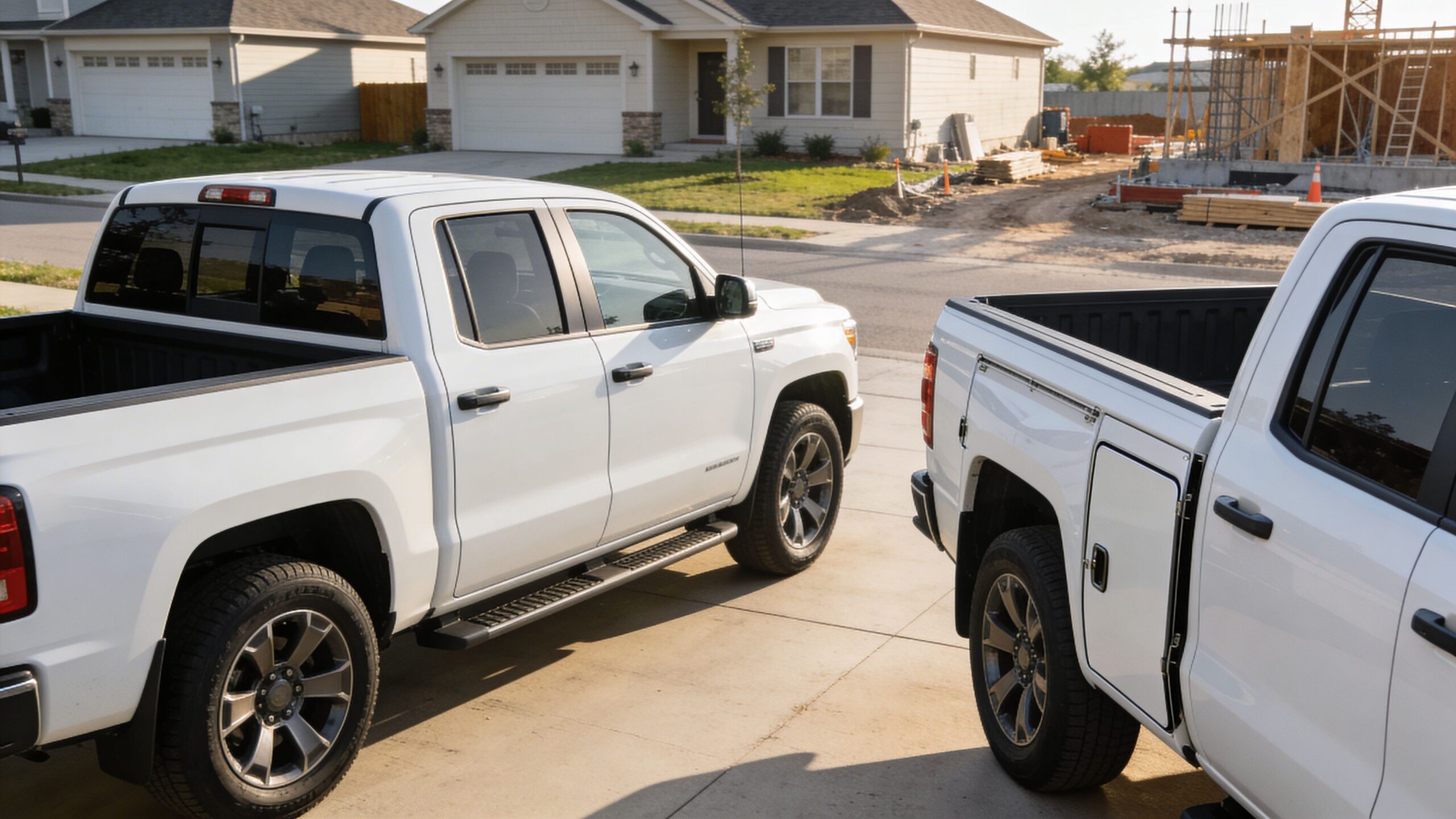
Two truck owners can walk away from the same kind of crash with different insurance offers.
One drives a crew cab. The other drives an extended cab. Both trucks are the same model line, similar year, similar trim, and similar condition before the loss. Yet the settlement numbers don’t land in the same place. That surprises many owners, particularly when they've considered cab style a comfort choice rather than a valuation issue.
As an appraiser, I’ve seen this misunderstanding create expensive mistakes. People focus on engine, mileage, four-wheel drive, and trim package. Those matter. But cab configuration matters too, because buyers treat these trucks differently in the market, and insurance valuation should reflect that.
That’s the core point in any crew cab vs extended cab discussion. It isn’t just about where your passengers sit. It’s about how the truck is classified in the used market, how broad the buyer pool is, and how much influence you have when a carrier calculates actual cash value or diminished value after a crash.
The Hidden Factor in Your Truck's Value
A common claim scenario starts the same way. The owner looks at the adjuster’s valuation report and sees comparable trucks that seem close enough at first glance. Same badge. Similar mileage. Same drivetrain. Then the numbers still feel off.
The missing detail is often the cab.
A crew cab and an extended cab can look similar on paper if you skim a valuation sheet quickly. But buyers don’t skim. They pay for usable rear seating, full-size rear doors, interior storage, and overall versatility. That’s why a cab mismatch in a total loss valuation can drag the settlement down.
In practical terms, the wrong cab comparison can distort the truck’s pre-loss value before you ever argue about options or condition. If you’re trying to verify what your truck was worth before the crash, it helps to understand how fair market value is calculated for a total loss claim.
A truck’s cab style isn’t a cosmetic detail. It changes how the market prices the vehicle.
This matters just as much in a diminished value claim. After repairs, buyers still care about the underlying configuration. If your truck was the more desirable cab style before the accident, that stronger pre-accident market position affects the amount of value the accident may have taken away.
Owners usually discover this too late. They compare their truck to a friend’s truck, or to a generic online listing, and assume the values should be close. In the actual market, they often aren’t.
Defining Crew Cabs and Extended Cabs
The easiest way to understand crew cab vs extended cab is to ignore marketing names for a minute. Ford, Chevrolet, GMC, Ram, Toyota, and Nissan may use different labels. The layout is what matters.
What a crew cab is
A crew cab uses four full-size doors and a rear seating area designed for adult passengers, not occasional use. The rear doors are front-hinged like a typical SUV or sedan, and entry to the back seat is straightforward.
That layout changes how people use the truck every day. A crew cab works for family trips, work crews, child seats, grocery runs, airport pickups, and secure interior gear storage. It feels much closer to an SUV with a bed attached than to a traditional work truck.
The used market recognizes that flexibility, and that’s one reason crew cabs bring stronger money.

What an extended cab is
An extended cab adds rear seating behind the front row, but it does so with compromise. Depending on the manufacturer, it may use smaller rear doors, rear-hinged access doors, or a tighter rear opening. The back seat is more limited and is better suited to occasional passengers, smaller adults, or gear.
This design exists for a reason. It preserves more of the truck’s length for bed space and utility while still offering more flexibility than a regular cab.
For some owners, that’s the right trade. If you haul tools, supplies, coolers, hunting gear, or jobsite materials more often than people, an extended cab can be the more functional setup.
Why the definitions matter in claims
Insurers and vehicle owners both make mistakes when they reduce the comparison to “four doors versus not quite four doors.” That shortcut misses the core issue.
The cab type affects:
- Passenger utility, because a crew cab is built for regular rear-seat use
- Cargo strategy, because an extended cab often gives back space in the bed
- Buyer demand, because more shoppers want one layout than the other
- Comparable selection, because the wrong cab can make a bad valuation report look acceptable
In an appraisal file, the truck isn’t just a pickup. It’s a pickup with a specific market identity.
A Detailed Spec Comparison by the Numbers
A cab choice changes more than comfort. It changes who will buy the truck later, which comparables an insurer can defend, and how much money is at stake if the truck is totaled or loses value after repairs.
For a clean side-by-side baseline, EchoPark’s crew cab vs. extended cab comparison notes that crew cabs generally offer more rear legroom and headroom, more usable rear-seat cargo space, stronger average market pricing, and lower payload than comparable extended cabs. The exact spread varies by brand, wheelbase, drivetrain, and trim.
| Feature | Crew cab | Extended cab |
|---|---|---|
| Rear doors | Full-size rear doors | Smaller rear doors or access-style rear doors |
| Passenger use | Built for regular adult use in the second row | Better for occasional passengers or gear |
| Rear legroom | More rear-seat space | Less rear-seat space |
| Rear headroom | More upright and comfortable for adults | Tighter for taller passengers |
| Seating practicality | Better for repeated four- or five-passenger use | Works better as a two-person truck with occasional rear seating |
| Rear seat cargo use | More enclosed storage behind the front row | Less secure interior storage space |
| Market position | Broader buyer demand in many retail markets | Stronger fit for work-focused buyers who prioritize bed utility |
| Payload tendency | Often lower in comparable setups | Often higher in comparable setups |

Where crew cabs win
Crew cabs usually bring the strongest retail appeal because they fit more lives. Families use them. Commuters use them. Small-business owners use them. That wider audience matters in Oregon and Washington because insurers often support a total loss value with local or regional comparable sales. A truck with broader demand usually gives an appraiser more defensible comps at stronger asking prices.
That same pattern shows up in diminished value work. After an accident, a repaired crew cab often suffers a larger real-dollar stigma because there was more pre-loss market demand and more pre-loss value to begin with.
Practical rule: If the truck regularly carries adults, kids, dogs, or gear that needs to stay locked inside, a crew cab usually protects more market value.
Where extended cabs win
Extended cabs make sense when the truck is a tool first and a people carrier second. The shorter cabin can support a setup that favors payload, bed utility, or a lower purchase price. For contractors, utility crews, and owners who rarely use the back seat, that is a real financial advantage, not a compromise on paper.
It also affects claim strategy. An extended cab should not be priced against crew cab comparables just because the trim, engine, and mileage look close. I see that mistake in valuation reports. It can overstate or understate value depending on the buyer pool for that specific truck.
Why these specs matter to appraisers
Cab configuration influences the truck’s market identity. Market identity influences comparable selection. Comparable selection influences the settlement number.
That chain matters most in two situations. First, total loss claims, where the insurer is trying to assign actual cash value. Second, diminished value claims, where the owner has to show how the accident changed what buyers will pay. In both cases, the wrong cab match can swing the result by far more than owners expect.
A proper appraisal file checks cab style, bed length, drivetrain, trim, condition, and local demand together. Leaving cab type out of that analysis is how money gets left on the table.
Choosing Your Cab for Real-World Scenarios
Truck buyers rarely choose a cab in a vacuum. They choose it around school pickups, muddy boots, power tools, road trips, and the kind of stuff that doesn’t fit neatly in a brochure.

The family driver
A family using a pickup as a primary vehicle ends up happier in a crew cab. Full-size rear doors matter when you’re loading kids, sports bags, groceries, or a child seat in bad weather.
The value question matters here too. The truck’s usefulness to a larger pool of second owners tends to support stronger resale and stronger claim positioning after a loss.
The contractor or tradesperson
An electrician, framer, grounds worker, or small contractor may lean the other way. Extended cab trucks consistently offer about 0.6 to 1 foot longer bed options, with 6.5-foot beds common on extended cabs while crew cabs generally accommodate 5.9-foot beds or smaller, according to the truck-bed comparison discussed at Fishing Minnesota’s crew cab vs extended cab discussion.
That longer bed changes daily workflow. It can mean fewer compromises when carrying materials, fewer tailgate-down loads, and a truck that better matches commercial use.
There’s another practical point in that same comparison. Crew cabs produce slightly lower maximum towing and payload capacities than extended cabs when equipped with identical drivetrains and suspension because of the heavier cabin.
If the truck earns its keep with cargo space more than passenger space, the extended cab often makes more financial sense at purchase.
The weekend adventurer
This owner sits in the middle. Hunting gear, camping bins, coolers, dogs, and dirty equipment all compete for space. Some people want a longer bed for bikes, kayaks, or a slide-out setup. Others want the secure interior room of a crew cab for weather-sensitive gear.
A lot depends on what you don’t want exposed. If expensive gear or passengers matter more, crew cab wins. If longer cargo is the constant issue, extended cab starts to look smarter.
A quick walkaround helps clarify the trade-off better than any spec sheet:
The claim-side consequence
In total loss work, the truck’s use case matters because that use case is tied to market demand. A work-oriented extended cab shouldn’t be judged by family-vehicle standards. A family-oriented crew cab shouldn’t be discounted like a stripped utility layout.
That’s where a lot of valuation reports go wrong. They treat both cabs as near substitutes when the market often doesn’t.
How Cab Type Affects Resale Value and Market Demand
A truck owner in Portland or Tacoma can buy two similar pickups with the same engine, trim level, and mileage, then see very different offers at trade-in or after a crash because one has a crew cab and the other has an extended cab. Cab style changes who shops for the truck, how fast it sells, and how hard a buyer pushes on price.
That buyer pool drives resale. As noted in Royal Chevrolet’s discussion of crew cab and extended cab market differences, crew cab trucks usually bring more money in the used market than comparable extended cab models, while extended cabs commonly start lower at MSRP.
Why crew cabs usually bring stronger resale
Crew cabs fit more use cases with fewer compromises.
A dealer can market the same crew cab truck to a contractor with kids, a couple replacing an SUV, a commuter who wants enclosed rear seating, or a small business owner who carries people and tools on the same day. That broad appeal supports stronger asking prices and usually shortens time on market.
In appraisal work, that matters because market value is built from real comparable sales, not from a theory that one cab is close enough to the other. If the local market prefers crew cabs, that preference shows up in transaction prices.
Why extended cabs can still make financial sense
Extended cabs serve a narrower segment, but that does not make them a bad purchase. It means pricing is usually more sensitive to condition, mileage, trim, and region because fewer buyers are specifically looking for that configuration.
For an owner who wants a lower entry price and does not need full rear-seat access, an extended cab can still be the smarter buy. The trade-off shows up later. Resale demand is often thinner, so the truck may take longer to sell and may attract lower offers when compared with an equivalent crew cab.
What owners miss after an accident
The same demand gap can affect a claim.
If an insurer pulls comparable sales that blur together crew cabs and extended cabs, the settlement number can come in low because the software treated cab type like a minor body variation instead of a pricing factor. I see that mistake regularly in truck valuations. It costs owners money on total loss settlements and on post-repair loss claims.
If your truck has been repaired and you are trying to measure what the crash did to its market price, it helps to understand how automobile diminished value claims work.
A crew cab is not just easier to live with for many households. In the resale market, it often carries a stronger value position, and that difference can follow the truck straight into an insurance file.
The Critical Impact on Insurance Claims in OR and WA
A truck owner in Portland or Spokane gets a total loss offer after a serious crash. The report looks clean. Same model, similar year, close mileage. Then one line gives away the problem. The insurer mixed crew cab and extended cab comparables, and the settlement drops.
In Oregon and Washington, that mistake can cost real money because pickups hold strong market demand and cab configuration changes how buyers price the truck.

Where insurer valuations often miss the mark
Cab style is not a minor body detail in a claim file. It affects actual cash value, comparable vehicle selection, and post-repair marketability.
Capital One’s discussion of how to weigh crew cab and extended cab options highlights a practical point insurers sometimes miss. A crew cab and an extended cab can share a badge, engine, and trim level while selling into different demand pools. In appraisal work, that matters because valuation software often groups trucks too broadly unless someone corrects the comp set by hand.
That gap shows up often in the Pacific Northwest. Crew cabs tend to draw stronger interest from households, small business owners, and buyers who want one truck to cover commuting, family duty, and weekend hauling. If the insurer values that truck against weaker extended cab comparables, the owner may get a low total loss number before the negotiation even starts.
The post-accident value issue
The same cab mismatch can affect diminished value after repairs.
A repaired crew cab usually enters the resale market with a different buyer profile than a repaired extended cab. That does not mean every crew cab produces a larger claim. It means the loss in market value has to be measured against the right pre-accident position. If the starting point is wrong, the diminished value calculation is wrong too.
When a valuation report uses the wrong cab type, the rest of the math can still be neatly presented and still be off.
What owners should do with that information
Start with the valuation report itself. Read the comparable vehicles line by line. Confirm cab type, bed length, drivetrain, trim, mileage, and condition. I regularly see owners focus on year and model while missing that the insurer used the wrong cabin configuration.
If your truck was repaired, apply the same discipline to a diminished value claim. The market does not treat all pickups as interchangeable, especially after collision history enters the record. If you need background on the process, this overview of diminished value auto claims explains how these losses are evaluated.
The appraisal clause matters here
Cab-type disputes are well suited for appraisal because they turn on market evidence, not guesswork. A solid appraisal can separate crew cab sales from extended cab sales, identify weak or mismatched insurer comps, and show how local buyers in Oregon and Washington price that configuration.
That does not mean every crew cab deserves a higher settlement. It means your truck should be valued in the market segment where it competes.
Expert Tips for Buyers and Claimants
The right truck choice and the right claim strategy are connected. Buyers should think about future valuation before they sign. Claimants should think about market proof before they accept an offer.
For buyers
Start with use, not image.
- Choose crew cab if passengers are regular cargo. If adults, kids, work crews, or family trips are part of normal use, the larger cabin usually protects both convenience and future market appeal.
- Choose extended cab if bed function drives the purchase. If you need longer bed utility more often than rear-seat comfort, the lower buy-in and stronger cargo profile can be the better fit.
- Think about the second owner. Resale value comes from what the next buyer wants, not only what works for you today.
- Read listings carefully. Manufacturer naming can hide the actual layout. SuperCab, Double Cab, King Cab, and similar labels don’t always line up cleanly across brands.
For claimants
After a crash, details matter more than most owners realize.
First, identify your truck correctly in every document. Cab style should be clear in your photos, VIN decode, window sticker if available, and comparable vehicle search.
Second, read the valuation report line by line. If the insurer used mismatched cabs, weaker trims, or vehicles with a different utility profile, the starting value may already be wrong.
Third, document features that support your truck’s position in the market. Full rear doors, seating layout, interior condition, bed configuration, and work or family usability all matter when they affect buyer demand.
Don’t argue only that your offer feels low. Show why the comparable trucks don’t match.
Finally, don’t rush the first number. Initial reports can contain bad comps, shallow adjustments, or a generic interpretation of your truck’s configuration. A careful review matters more than a quick response.
One decision, two timelines
A cab choice affects your wallet twice.
It affects what you pay and how you use the truck while you own it. Then it affects what the truck is worth when you sell it, trade it, or fight over it after a collision.
That’s why the best choice isn’t just the cab you like best. It’s the cab that fits your daily use and holds its position when value is under scrutiny.
Frequently Asked Questions
Are there other truck cab types besides crew and extended cab
Yes. Many manufacturers also offer a regular cab, which is the basic two-door layout with no real rear passenger area. Some brands also use unique names for larger or specialized cabs. What matters in valuation is the layout and utility, not the badge name.
Does manufacturer branding change the crew cab vs extended cab value difference
The brand changes the details, but not the core principle. Ford, Ram, Chevrolet, GMC, Toyota, and others all have their own naming and packaging, yet the market still distinguishes between a full four-door passenger-friendly truck and a more limited rear-seat layout. The stronger the buyer demand for the crew-style layout in that model line, the more important it becomes in a claim.
How do aftermarket modifications affect this comparison in a claim
They can matter, but they don’t erase cab type. Lift kits, wheels, tires, canopies, racks, bumpers, or off-road accessories may add or change value depending on quality, condition, and market acceptance. The truck still needs to be valued first in the correct cab category. A modified crew cab and a modified extended cab are not interchangeable.
If I only use the back seat occasionally, should I still care about cab type in a settlement
Yes. Insurance valuation follows market value, not only your personal habits. Even if you rarely used the back seat, the market may still place a premium on the truck because future buyers value that configuration.
If your truck was totaled or lost value after an accident, Total Loss Northwest helps Oregon and Washington owners challenge low insurance valuations with certified independent appraisals. They specialize in total loss and diminished value cases, invoke the Appraisal Clause, and build reports based on real market value instead of insurer software shortcuts.