Your car starts, runs, and gets you where you need to go. But it doesn’t feel as sharp as it used to. Throttle response is a little lazy. Idle feels uneven at stoplights. You’re filling up more often, yet nothing seems obviously broken.
That’s usually when people ask, should i use fuel injector cleaner, or is it just another bottle on the parts-store shelf making big promises.
The practical answer is yes, sometimes. But only if you understand what problem it solves, what kind of cleaner you’re buying, and when a bottle is the right tool versus when the car needs actual diagnosis. I look at vehicles through a value lens as much as a mechanical one. A car that runs poorly after an accident, or one with spotty maintenance habits, often creates unnecessary arguments over condition, drivability, and market value. If you’re sorting out that kind of issue, the maintenance guidance in these vehicle value resources helps put the bigger picture in focus.
Is Your Car Trying to Tell You Something?
A lot of injector cleaner purchases start with a hunch. The car feels off, but not bad enough to strand you. You notice a rougher idle in the morning, a little hesitation pulling into traffic, or a drop in smoothness that’s hard to describe unless you drive the car every day.
That kind of change matters. Drivers know their own vehicles. When the engine loses crispness, there’s often a reason. Fuel injectors are one possible cause, especially if deposits have started to affect how fuel enters the engine. But cleaner isn’t a magic potion. It’s a maintenance product aimed at one specific problem: unwanted buildup inside the fuel system.
A bottle of cleaner makes sense when deposits are the issue. It won’t repair a broken part, a vacuum leak, or an ignition fault.
I see this come up often with post-accident vehicles. The owner is focused on body repairs, alignment, and settlement numbers, but the engine suddenly feels rougher than before. Sometimes the timing is coincidence. Sometimes a car that sat, drove short trips, or got inconsistent fuel quality during the repair process develops drivability complaints that weren’t obvious before. That doesn’t mean injector cleaner is the automatic answer. It means the fuel system belongs on the checklist.
The useful way to approach this is simple:
- Notice the pattern: Is the issue rough idle, hard starting, hesitation, or weaker fuel economy?
- Look at recent history: Has the car sat for stretches, been driven mostly on short trips, or filled with lower-detergent fuel?
- Set a realistic goal: You’re trying to restore normal spray pattern and drivability, not cure every engine problem with one bottle.
What Fuel Injector Cleaner Actually Does to Your Engine
Fuel injectors work like tiny precision spray nozzles. Their job is to deliver fuel in a controlled pattern so the engine can burn it efficiently. When deposits build up, that spray can become uneven. Instead of a fine mist, you get poor atomization and less consistent combustion.
That’s the reason the car feels different. The engine isn’t always getting fuel in the shape and amount it was designed to receive.

Two cleaner types matter more than most labels admit
Not all injector cleaners work the same way. According to VP Racing Fuels on how fuel injector cleaners really work, there are two distinct categories. Dissolvents like polyetheramine (PEA) break down deposits without residue, while detergents force deposits to detach. That distinction matters because some ethanol-based cleaners can loosen debris rather than dissolve it, potentially clogging injectors.
That’s why the chemistry matters more than the marketing. For a modern daily driver, especially one with direct injection or recurring deposit issues, a PEA-based cleaner is usually the safer choice. It’s trying to dissolve carbon-related buildup rather than knock chunks loose and hope they pass through cleanly.
What cleaner can and cannot do
A good cleaner can help restore spray pattern, smooth idle quality, and improve throttle response when deposits are light to moderate. That’s where these products earn their keep.
It cannot do the following:
- Fix electrical injector failure: If an injector solenoid has failed, no additive will revive it.
- Repair mechanical damage: Cracked components, leaking seals, and worn fuel pumps need parts and labor.
- Replace diagnosis: Misfires, check-engine lights, and severe hesitation can come from several systems.
Practical rule: Buy for chemistry, not hype. If the label doesn’t make the active cleaning approach clear, I’d keep looking.
When people ask if they should use fuel injector cleaner, this is the core answer. Use it as a cleaning tool for deposit-related problems and routine maintenance. Don’t use it as a substitute for proper troubleshooting.
Telltale Signs Your Fuel Injectors Are Clogged
Clogged injectors usually announce themselves through behavior, not noise. The engine still runs, but it stops running cleanly. You’ll notice it in how the car starts, idles, accelerates, and consumes fuel.
A restricted injector can distort the spray pattern. That leads to less efficient combustion, and the symptoms show up where drivers feel them most.
The symptoms that point in this direction
Fuel injector cleaners are most effective for reduced fuel economy, rough idle, and hard starting, and PEA-based formulas are proven to dissolve carbon deposits, especially for drivers using non-TOP TIER gasoline, which lacks sufficient detergents and leads to faster buildup, as noted in this injector cleaner guide from Marin Mazda.
In plain terms, watch for:
- Rough idle: The engine feels shaky or inconsistent at stoplights.
- Hesitation on acceleration: You press the pedal and the response feels delayed or uneven.
- Hard starting: The car cranks longer than normal before it settles into idle.
- Lower fuel economy: You’re using more fuel for the same driving pattern.
If you want a broader symptom checklist that overlaps with real-world injector failures, Pete Nelson Automotive has a useful guide on 7 Signs of a Bad Fuel injector. It’s a good reference when you’re trying to separate light deposit buildup from a more serious injector problem.
Why fuel quality changes the odds
Drivers who consistently use high-detergent fuel may need bottled cleaner less often. Drivers who use lower-detergent fuel, make short trips, or let the car sit are more likely to see deposit-related drivability complaints.
That doesn’t make every rough idle an injector issue. Ignition coils, spark plugs, vacuum leaks, and intake problems can mimic some of the same symptoms. But when the pattern is mild to moderate and tied to fuel delivery feel, injector deposits belong high on the suspect list.
Effectiveness and Limits of Bottled Cleaners
A car comes in after a collision repair, the body work looks fine, but the owner still complains that it idles unevenly and feels flat pulling away from a light. That kind of complaint matters. In an appraisal, unresolved drivability issues can hurt buyer confidence and complicate a diminished value or total loss review, even when the problem turns out to be maintenance-related rather than crash-related.
Bottled injector cleaner has a place, but it needs to be used for the right job. It can help with light to moderate deposit buildup. It will not repair a worn injector, correct a misfire caused by ignition parts, or reverse long-term neglect in one tank.
Why opinions on bottled cleaners are so split
Drivers who use quality fuel, drive long enough to keep the engine fully warm, and stay current on maintenance often notice little change from a pour-in additive. That is a fair result, not proof that every cleaner is useless.
On the other hand, vehicles that spend their lives on short trips, sit for long periods, or get fed inconsistent fuel are more likely to develop deposit-related performance loss. In those cases, a cleaner can be a sensible low-cost step before paying for diagnostic time or fuel system service. This DIY guide to fuel injector cleaner reflects that same divide. Some cars benefit. Some do not. Usage history decides a lot.
Where bottled cleaner earns its keep
Use bottled cleaner with realistic expectations:
- Light deposit problems: Mild hesitation, a slightly rough idle, or a small drop in smoothness are the kinds of complaints where a quality cleaner may help.
- Good detergent chemistry: Products built around PEA tend to have a better track record than bargain formulas that rely on vague marketing.
- Planned maintenance use: Cleaner usually performs better as part of routine upkeep than as a last-ditch fix after symptoms have been ignored for months.
That makes it a maintenance tool, not a rescue tool.
Where it reaches its limit
Bottled cleaner will not solve mechanical or electrical faults. If an injector is leaking, sticking internally, electrically weak, or if the underlying problem is a spark plug, coil, vacuum leak, fuel pressure issue, or intake fault, the additive is just treating the tank while the actual defect remains.
I tell clients to judge bottled cleaner by one standard. Did it address a mild deposit issue early enough to protect drivability, fuel economy, and service records? If yes, it did its job. If no, the car needs testing, not another bottle.
For a broader look at where additives fit in regular maintenance, this piece on fuel additives for petrol engines is a useful reference.
From a value standpoint, this matters more than many owners realize. A vehicle with a documented maintenance approach and no lingering performance complaint is easier to defend in an appraisal. A vehicle with unresolved hesitation, rough running, or repeated guesswork repairs raises questions about condition, care, and whether the post-accident driving issue was ever fully sorted.
When and How to Use Fuel Injector Cleaner Correctly
If you’re going to use injector cleaner, use it proactively. That’s where the clearest results show up. Random use after the engine already feels bad is less efficient and usually less convincing.
According to FleetRabbit’s fuel system cleaner guidance, proactive use in a maintenance program significantly outperforms reactive use. Top-performing fleets achieved a 12% improvement in fuel economy and a 65% reduction in injector replacement rates, compared with weaker gains from random applications. The same source notes that many fleet managers wait until problems show up, while leading operators use scheduled treatments every 3,000-5,000 miles.
A practical maintenance schedule
For most drivers, this is a sensible approach:
| Vehicle Profile | Recommended Action | Frequency |
|---|---|---|
| Daily driver with mostly city use | Use a PEA-based pour-in cleaner as preventative maintenance | Every 3,000 miles |
| Mixed-use daily driver | Add cleaner on a routine maintenance cadence | Every 3,000-5,000 miles |
| Highway-heavy driver using quality fuel | Use cleaner less aggressively, especially if performance is stable | Around 5,000 miles |
| High-mileage vehicle over 75,000 miles | Use a gentler schedule and avoid aggressive product use | Conservative routine, with professional service if needed |
| Neglected system or recurring symptoms | Don’t keep repeating bottles. Consider professional cleaning | Professional service every 30,000-45,000 miles for stubborn deposits |
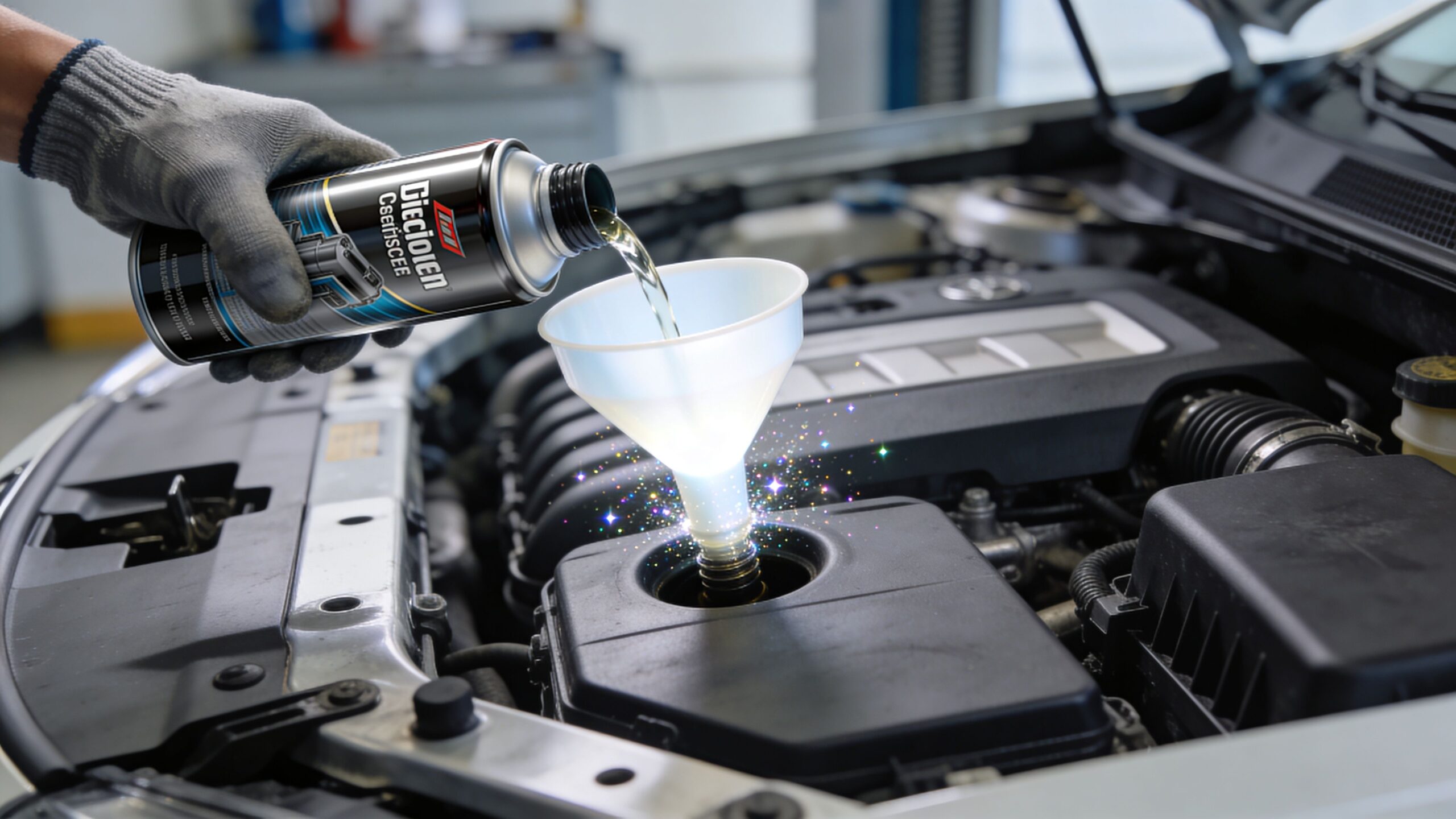
How to do it without creating new problems
Use the product label and the owner’s manual as your final authority, but the routine is straightforward:
- Choose a PEA-based cleaner. That gives you the best chance of dissolving deposits cleanly.
- Add it before refueling. Mixing works better when gasoline enters the tank afterward.
- Use the recommended amount only. More isn’t better.
- Drive normally. The cleaner needs time moving through the system under regular use.
- Track the result. Pay attention to idle quality, starting behavior, and throttle response over the next tank or two.
When timing matters for value
Maintenance timing matters more than most owners think. If a post-accident car has drivability complaints, using a documented, reasonable maintenance step early can help separate preexisting neglect from a manageable service issue.
That becomes useful when condition is part of a value dispute. A poor-running engine can change how a car is perceived after repairs, just like structural or cosmetic issues can. The broader impact of that condition shift is part of what people are trying to understand when they look into how much value a car can lose after an accident.
DIY Additives versus Professional Fuel System Service
DIY cleaner is a light-maintenance tool. Professional fuel system service is a diagnostic and repair step. Choosing the right one protects more than drivability. It helps protect how the car presents on paper and on a test drive, which matters if the vehicle has already been through an accident claim or may face an appraisal dispute later.

When DIY makes sense
Use a bottle when the problem is still minor. Slight hesitation, a rough idle that just started, or a car that sees a lot of short-trip driving can justify a quality cleaner. It is a reasonable first step when you have no strong evidence of mechanical failure and want to address light deposit buildup before it turns into a bigger drivability complaint.
There is a limit. If the symptom keeps coming back, if cold starts are getting worse, or if acceleration feels uneven enough that a buyer or adjuster would notice it on a short drive, repeated additives stop being maintenance and start becoming avoidance.
When a shop visit is the smarter move
Professional service earns its keep when the issue needs testing, not guesswork. A shop can check fuel trim, injector balance, pressure, misfire activity, and whether the problem is in the ignition or air system instead of the injectors. That matters on older or poorly documented vehicles, where several small issues can feel like one fuel problem.
Sometimes the injector is dirty. Sometimes it is sticking, leaking, or electrically failing. If diagnosis shows the injector itself is done, cleaning will not fix it. For a plain-language overview of what replacement involves, Kwik Kar’s article on replacing your car's injector gives a useful baseline.
I tell owners this often. If one bottle helped and the next two did nothing, stop buying bottles and get the car tested.
That decision also affects value. In appraisal work, a vehicle with a documented inspection and a clear repair recommendation presents better than one with an unresolved drivability complaint and a stack of additive receipts. If you are already dealing with repairs, resale questions, or a diminished value discussion, it helps to understand how much value a car can lose after an accident, because mechanical condition changes what the market is willing to pay.
The Final Verdict on Fuel Injector Cleaner
Use fuel injector cleaner if the car is giving you an early warning, not after the problem has already turned into a repair order.

For a healthy vehicle, a quality PEA-based cleaner used at reasonable intervals can help control deposit buildup and keep drivability consistent. It makes the most sense on cars that do a lot of short-trip driving, sit for stretches, or get fed uneven fuel quality. In those cases, the product has a clear job. It helps maintain clean spray patterns before rough idle, hesitation, or hard starts become a bigger issue.
The trade-off is simple. Cleaner is maintenance, not diagnosis.
That matters even more on older or higher-mileage vehicles. A bottle can help with light deposits, but it will not correct a weak injector, a leaking injector, low fuel pressure, or an ignition problem that feels similar from the driver’s seat. If the car still runs poorly after one proper treatment, stop guessing and test the system.
From an appraisal standpoint, this decision carries more weight than many owners realize. A car that starts cleanly, idles properly, and has sensible maintenance history presents better than one with an unresolved drivability complaint. That difference shows up in buyer confidence, claim discussions, and the file an appraiser has to defend. If you are dealing with repairs, resale, or a settlement, it helps to understand how car value after an accident is judged, because mechanical condition affects its market value.
A short video can help if you want a quick visual overview before buying a product or booking service.
The final call is straightforward. Use injector cleaner as preventive maintenance and for mild early symptoms. Do not use it as a substitute for testing when the problem persists. That approach protects performance, limits avoidable wear, and gives you better documentation if the vehicle’s condition and value are ever questioned after an accident.