You're sitting on the shoulder, or in a parking lot, or back at home staring at a dented car and a ringing phone. The other driver admitted fault at the scene. Their insurer already wants a statement. The body shop says one thing, the adjuster says another, and all you want is to be paid fairly and move on.
That's exactly where many get caught. They assume a third party claim is a routine insurance process. It isn't. It's a negotiation with a company whose job is to close your file for as little as possible.
The Aftermath An Introduction to Third Party Claims
The first shock is the crash. The second is realizing that being “not at fault” doesn't make the process easy.
A rear-end hit at a stoplight can leave you with bumper damage, hidden structural issues, rental bills, missed work, and a car that won't carry the same resale value even after perfect repairs. Then the calls begin. An adjuster sounds friendly. They ask for photos, a recorded statement, and patience while they “evaluate the claim.” That's when many individuals begin weakening their position.
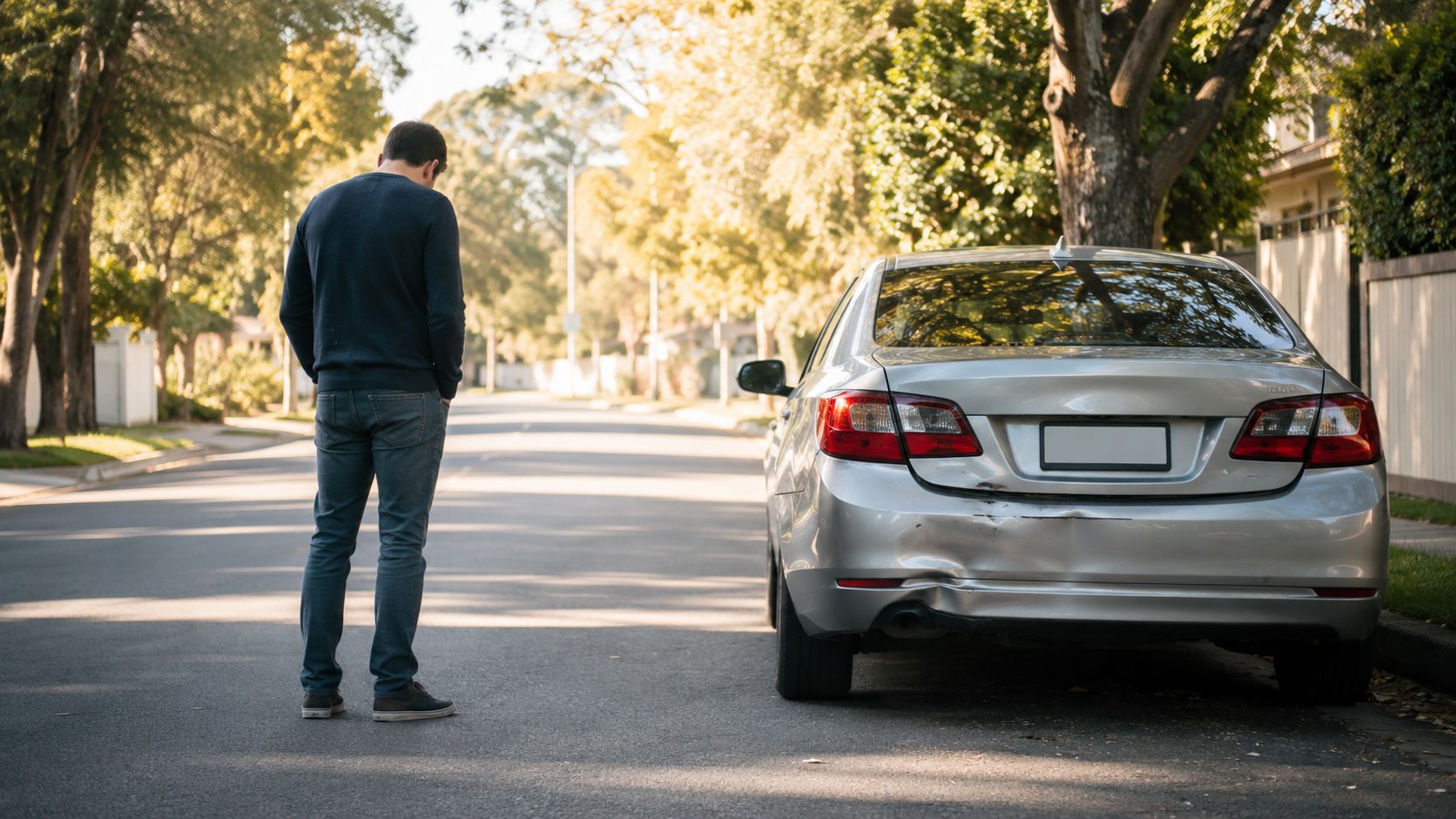
A third party liability claim is the formal process of making the at-fault driver's insurer pay for the harm their insured caused. That's the practical meaning. It's your path to getting your losses covered without letting the other side redefine what your damage is worth.
Why this matters more than people think
These claims aren't small or rare. The U.S. liability insurance market held a 38.45% share of the global market in 2025, 95% of personal injury lawsuits settle before trial, and the median settlement is $31,000, according to liability insurance market data from Allied Market Research. Those numbers tell you something important. Insurers settle claims every day, and they do it based on pressure, documentation, and influence.
If you were hurt, the stress doesn't end with the crash. Sleep gets worse. Driving gets tense. Work can slip. In British Columbia, people dealing with accident fallout may benefit from professional ICBC counselling services when the emotional side of a claim starts affecting daily life.
Practical rule: Don't treat the insurer like a helper. Treat them like the opposing side in a financial dispute.
What usually goes wrong
Most drivers focus on the visible damage. That's the insurer's favorite version of the claim because it's narrow and easy to contain.
They'll talk about repair estimates, approved shops, and processing times. They usually won't volunteer information about diminished value, post-repair stigma, hidden comparables issues on total loss valuations, or the clauses that let you challenge a bad number. If you don't know those pieces exist, you can't fight for them.
That's why third party liability claims frustrate people. The process looks simple from the outside. In reality, the hardest part isn't opening the claim. It's refusing to let the insurer define the value of your loss.
Who Files Who Pays and What Is Covered
The terminology confuses people because insurance loves labels. Strip the labels away, and this gets easier fast.
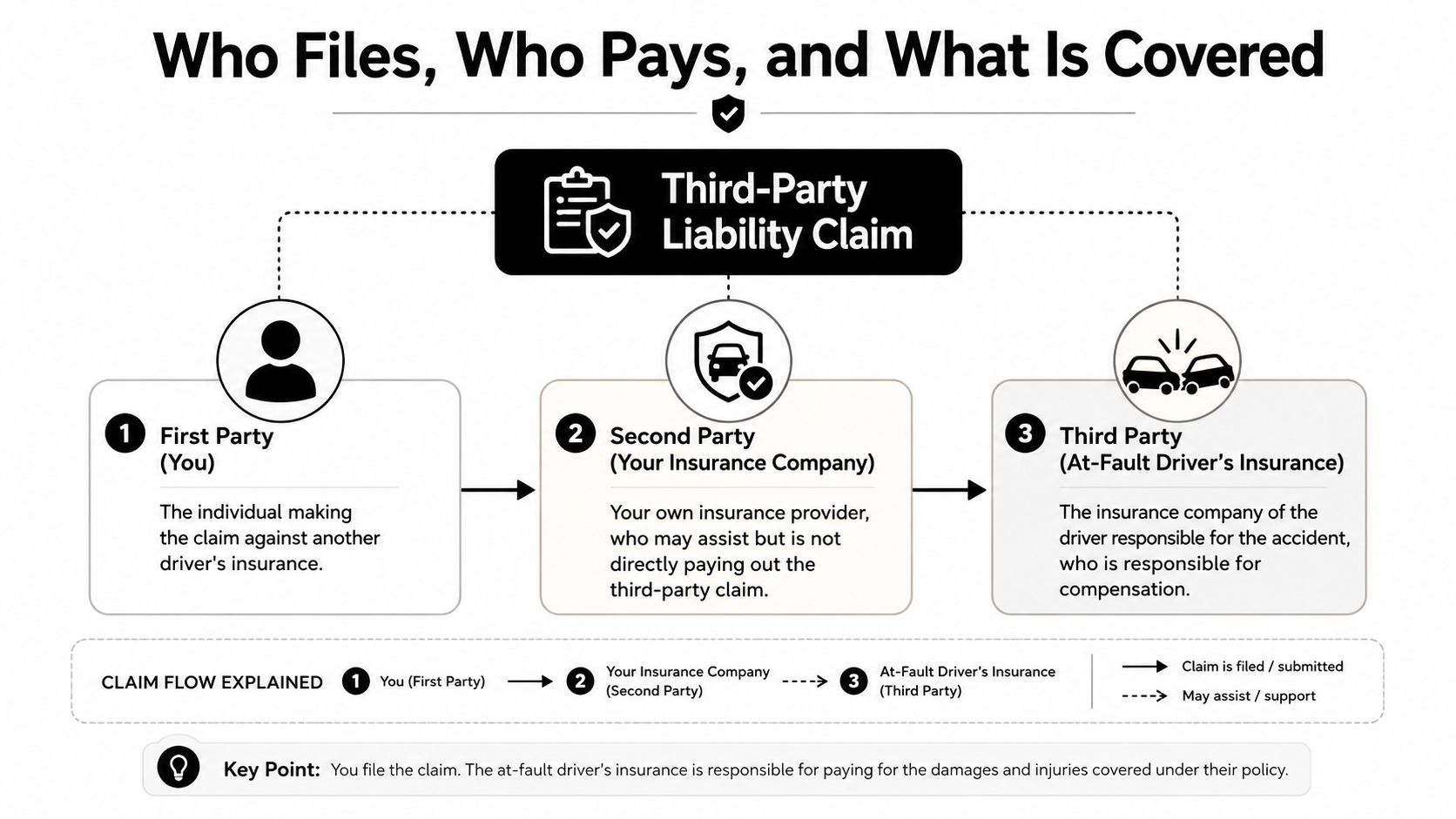
If your neighbor's tree falls on your parked car because they failed to maintain it, you don't demand payment from your own wallet. You pursue the neighbor or their insurer. A car accident works the same way. When another driver causes the damage, their liability coverage is the primary target.
The three parties in plain English
- First party means you, the injured driver or vehicle owner making the claim.
- Second party means your own insurance company. They may help with reporting, collision coverage, or coordination, but they aren't the party responsible for paying the third party claim.
- Third party means the at-fault driver and that driver's insurer. That's the source of liability payment when their driver caused the loss.
That distinction matters because people often waste time arguing with the wrong company. Your own carrier may be involved, but in a third party liability claim, the money you're pursuing comes from the at-fault side.
What the claim legally covers
Third-party liability claims are legally defined as charges filed with the at-fault driver's insurer to recover costs for bodily injury and property damage. Building a successful claim requires evidence such as police reports, witness statements, and photos to establish probable liability, as explained in Progressive's overview of third-party claims.
So what's covered? Start with two big buckets.
| Coverage Area | Typical Examples |
|---|---|
| Bodily injury | Medical bills, treatment costs, injury-related losses |
| Property damage | Vehicle repairs, total loss value, other damaged property |
That's the broad legal frame. The central struggle is over valuation inside those categories.
Why your own insurer may still show up
Your insurer may step in if you use your own coverage first, need guidance on benefits, or need help while liability is being investigated. But that doesn't change who should ultimately pay.
If you want a more detailed breakdown of how auto liability coverage works in practice, read this guide on what liability insurance covers.
Commercial drivers and fleet managers run into the same basic structure, just with more moving parts. If you manage work vehicles, this piece with insights for haulage and logistics fleets is useful because fleet insurance changes how claims administration and responsibility get handled.
The cleanest claim files win faster. Liability may be obvious to you, but insurers still want documentation that supports every part of your position.
Calculating Your Full Compensation Beyond Just Repairs
The repair bill is not your claim value. It's one part of your claim value.
That distinction matters because insurers often act as if paying the body shop closes the file fairly. It doesn't. A proper third party claim should account for every loss tied to the crash, not just the parts and labor needed to make the vehicle drivable again.
The damage categories people miss
The financial impact of third-party liability claims can be severe. Truck accident settlements average $103,654 and dog bite cases average $97,517, according to liability claim statistics compiled by Feather Insurance. Different claim types vary, but the lesson is the same. Serious compensation isn't unusual when the harm is documented properly.
Here's the checklist I want every vehicle owner to use.
| Damage Category | What It Covers |
|---|---|
| Vehicle repairs | Body work, mechanical work, parts, paint, calibration, related repair costs |
| Total loss value | The fair market value of the vehicle if repair isn't economical |
| Loss of use | Rental car costs or compensation for the period you were without your vehicle |
| Medical expenses | Ambulance, ER care, follow-up treatment, therapy, prescriptions, ongoing care tied to the crash |
| Lost income | Wages or business income lost because injuries kept you from working |
| Out-of-pocket costs | Towing, storage, rideshare costs, parking, and other crash-related expenses |
| Diminished value | The loss in resale value after an accident, even when repairs are completed well |
| Pain and suffering | Non-economic harm where the law allows it and the facts support it |
Diminished value is where underpayment gets baked in
A repaired car is not the same as an undamaged car. Buyers know it. Dealers know it. Appraisers know it. Insurers know it too, but many won't bring it up unless you force the issue.
If your vehicle now has an accident history, that history can affect resale and trade-in value. This is especially important for newer vehicles, luxury models, collector vehicles, and anything with strong pre-loss market demand. The better the car was before the crash, the more likely diminished value matters.
Common examples include:
- A clean-title late-model SUV that now shows significant collision history.
- A premium vehicle repaired with quality parts but carrying permanent market stigma.
- A collector or enthusiast car where originality and clean history influence buyer demand.
- A vehicle with structural or airbag-related repair history, even if the repair was technically proper.
What to document before you discuss numbers
Don't negotiate from memory. Build a file.
- Photos before and after repairs help show condition and scope.
- The repair estimate and final invoice reveal the seriousness of the damage.
- Comparable vehicle listings help support pre-loss and post-repair market arguments.
- Maintenance records show your vehicle wasn't neglected.
- Receipts for every crash-related expense keep side losses from disappearing.
A body shop invoice proves what was repaired. It does not prove what your vehicle is still worth in the market.
That's the gap many people miss, and it's the gap insurers exploit.
Navigating the Claims Process From Crash to Check
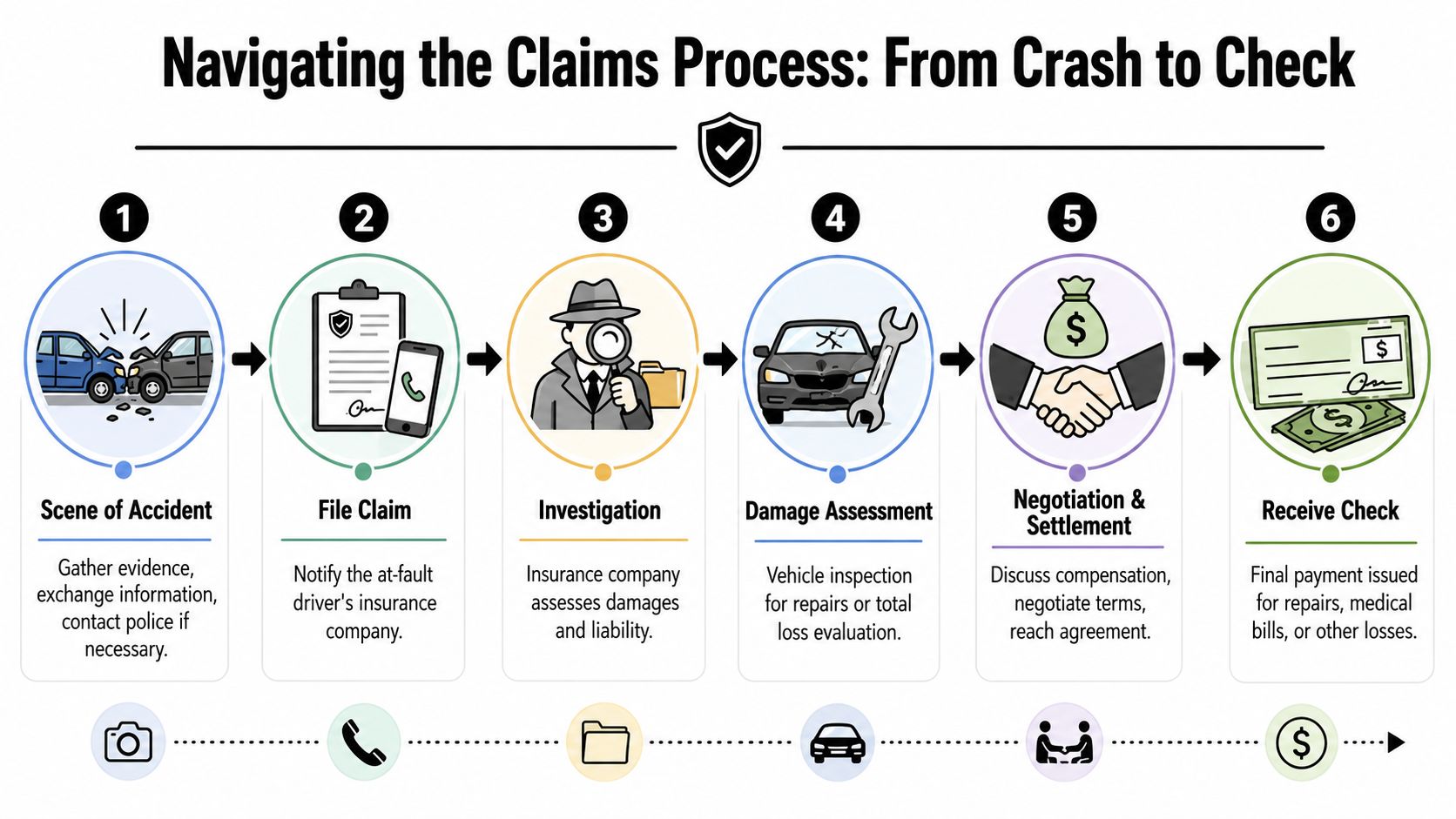
A good claim starts at the scene, not when the adjuster calls two days later. What you collect in the first hour can shape the rest of the file.
What to do at the scene
If you're physically able, handle the basics in a disciplined way.
- Get names and insurance details. Confirm the driver's identity, plate, policy information, and vehicle details.
- Take wide and close photos. Capture vehicle positions, damage, skid marks, signs, weather, and the surrounding road.
- Call law enforcement when appropriate. A police report can become a key liability document.
- Get witness contact information. Independent witnesses help when the other driver changes their story.
- Notify your own insurer. Even when the other driver is at fault, your carrier usually wants prompt notice.
If you need a practical post-crash checklist, this guide on steps after a car accident covers the common actions that protect your claim.
Filing the claim and dealing with the investigation
Once you open the claim with the at-fault insurer, expect an investigation. That usually includes liability review, damage inspection, and requests for statements or documents.
Don't ramble. Don't speculate. Don't fill silence because an adjuster sounds friendly.
Use this approach instead:
- Stick to facts. State what happened, where it happened, and what damage resulted.
- Send documents in organized batches. Photos, repair estimates, medical records, and receipts should be labeled clearly.
- Keep a communication log. Track dates, names, phone numbers, and what was said.
- Confirm key points in writing. Email is better than relying on memory after a phone call.
A lot of people learn better by seeing the process laid out visually. This short video gives a useful overview of how claims handling typically moves from report to resolution.
Where claims start to stall
Insurers often slow the file in predictable ways. They may delay liability acceptance, use thin market comparisons on a total loss, ignore loss-of-use disruption, or pretend diminished value isn't ripe until repairs are complete.
That's why your recordkeeping matters. If you miss work, save the proof. If you rent a car, keep every invoice. If the vehicle sits in storage waiting on inspection, document the dates. Claims get weaker when the paper trail is weak.
Keep this standard: If you can't show it with a document, photo, invoice, or written note, expect resistance.
Before you agree to settlement
Read the release carefully. Some settlements close only one part of the property claim. Others try to wrap up everything at once.
Never assume the check is just for repairs. Insurers sometimes present partial resolution as final resolution. If diminished value, rental reimbursement, medical treatment, or future issues are still open, make sure the paperwork says so. Once you sign away rights, arguing later gets much harder.
Fighting Lowball Offers and Winning Your Settlement
The first offer is usually a test. The insurer wants to know whether you understand the value dispute or whether you're tired enough to sign.
If the offer doesn't match the actual loss, reject it clearly and in writing. You don't need drama. You need a record.
How to counter a bad offer
A strong response does three things. It identifies what's missing, it supports your number, and it shows the insurer you're prepared to keep pushing.
Your written demand should include:
- A clean summary of liability so the adjuster can't blur fault and valuation.
- An itemized damages list covering repair costs, loss of use, out-of-pocket expenses, and any other unresolved categories.
- Supporting documents such as invoices, photos, comparable vehicles, and repair records.
- A deadline for response so the file doesn't drift.
Don't write like you're begging for help. Write like you're documenting a debt.
Why diminished value gets ignored
Insurers manage to save funds. They know many owners won't ask about diminished value, and even fewer will know how to prove it.
A critical issue in this space is the undercompensation of diminished value. In 2025, 68% of total loss disputes in Oregon and Washington involved unaddressed diminished value, and fewer than 15% of policyholders knew they could invoke the Appraisal Clause, according to Bell Law Offices' discussion of third-party liability and diminished value.
That tracks with what I see in real claim disputes. Owners focus on getting the car back. Insurers focus on closing the file before the owner asks what the accident history did to market value.
If your vehicle lost market appeal after the crash, the insurer doesn't get to erase that loss by pointing to a completed repair.
The Appraisal Clause is your leverage
Few are aware of the Appraisal Clause, which is exactly why it's so useful. When the dispute is about value, especially in total loss and diminished value cases, this clause can shift the fight away from the insurer's internal software and toward independent valuation evidence.
That matters because valuation software is only as fair as the inputs and assumptions behind it. If the adjuster uses weak comparables, ignores options, misses condition adjustments, or undervalues the local market, the output will be low. The software gives that number a polished look, but a polished lowball is still a lowball.
If you're stuck dealing with an adjuster who won't move, this guide on how to negotiate with an insurance adjuster is worth reading before you respond.
When to stop debating and escalate
You've reached that point when any of these happen:
- The adjuster repeats the same number without answering your evidence.
- Their comparable vehicles don't actually compare on condition, trim, mileage, or market.
- They refuse to discuss diminished value at all.
- They pressure you to settle quickly before all damages are documented.
At that stage, the smartest move isn't another emotional phone call. It's a formal valuation challenge backed by evidence.
State Specific Rules for Oregon and Washington
Oregon and Washington drivers need state-specific strategy, not generic internet advice. Claim handling, comparative fault, and diminished value disputes all play out differently depending on the local legal environment and insurer habits.
Why local rules change the outcome
In both states, fault can become a negotiation point even when the other driver looks clearly responsible at first glance. Lane changes, turning movements, intersection timing, and statements made at the scene can all become an argument for the insurer to reduce what they pay.
That means you need to watch two things closely:
- How the insurer is framing fault
- Whether they're narrowing the claim to repairs only
If they can assign some blame to you and limit the damage categories under discussion, they shrink the payout from both directions.
Oregon and Washington are ground zero for DV fights
For drivers in Oregon and Washington, diminished value isn't some theoretical add-on. It's a recurring dispute point. That's why owners here should document vehicle condition carefully, preserve the repair file, and review any valuation language with skepticism.
A repaired car with an accident history often takes a market hit in these states just like anywhere else. The practical problem is that many insurers still handle the claim as if proper repairs erase resale damage. They don't.
Use a local mindset when reviewing a valuation:
| Review Question | Why It Matters |
|---|---|
| Are the comparables actually local or meaningfully similar? | Weak comparables drag value down |
| Does the report reflect your trim, options, and condition? | Missing features can suppress the settlement |
| Was prior clean condition documented? | Cleaner pre-loss condition strengthens your position |
| Has diminished value been addressed separately? | Repairs and DV are not the same issue |
Deadlines and blame arguments need attention early
If negotiations collapse, legal deadlines matter. So does comparative negligence analysis. Don't wait until the file has gone stale to ask where you stand on either issue.
If the insurer starts hinting that you “may share responsibility,” take that seriously right away. The same goes for any delay that pushes your claim closer to a filing deadline. A claim can look cooperative for months and turn adversarial overnight.
The practical rule for Oregon and Washington drivers is simple. Don't rely on the adjuster's summary of your rights. Build your own file, protect your timeline, and challenge valuation with local evidence.
Getting Expert Help for Your Total Loss or DV Claim
There's a point where handling the claim yourself stops being efficient. If the dispute is minor, you can often resolve it with organized paperwork and persistence. If the insurer is lowballing a total loss or brushing off diminished value, you usually need a valuation professional.
That's not because your argument is weak. It's because valuation disputes are technical.
When expert help makes sense
Two situations stand out.
First, the insurer declares your vehicle a total loss and presents a market value that doesn't match the true cost to replace the vehicle with one of similar condition. This happens when they use poor comparables, miss trim or package differences, or ignore local market realities.
Second, your repaired vehicle carries lasting resale damage and the insurer acts like the completed body work solved everything. It didn't. Repair quality and market perception are different issues.

What a real appraisal does
A proper independent appraisal should examine the vehicle itself, the condition history, the repair file, and the relevant market data. It should also identify flaws in the insurer's valuation method, not just announce a different number.
That matters because insurers don't move just because you say their offer feels unfair. They move when someone shows why the valuation is defective.
A strong appraisal can help with:
- Total loss disputes where the carrier's market value is too low
- Diminished value claims where post-accident stigma was ignored
- Collector, custom, or high-end vehicles where generic software often performs poorly
- Appraisal Clause disputes where formal valuation procedure provides an advantage
The right expert doesn't just “support your claim.” They translate your loss into a valuation the insurer has to answer.
Choose technical credibility over volume promises
Don't hire based on flashy slogans. Ask how the appraiser handles comparable selection, condition adjustments, repair-history analysis, and policy-based appraisal disputes. Ask whether they understand total loss methodology and diminished value separately, because they are separate problems.
You want someone who works from evidence, not templates. The insurer already has templates.
If your insurer is undervaluing your total loss or ignoring diminished value, Total Loss Northwest is built for exactly that fight. They specialize in independent total loss and diminished value appraisals for Oregon and Washington vehicle owners, and they use the Appraisal Clause to challenge biased insurance valuations with real market evidence.