You're probably here because the insurance company already called, sounded polite, and put a number on the table that feels off. Maybe your car was repaired but now carries an accident history. Maybe it was declared a total loss and the valuation looks detached from the actual market. Maybe you're trying to figure out how to negotiate a car accident settlement without a lawyer without getting steamrolled.
Good. You can handle a lot of this yourself if you stay organized, stay objective, and stop playing by the adjuster's script.
Most drivers make one mistake right away. They treat the claim like a casual conversation. It's not. It's a valuation dispute wrapped in friendly phone calls. The insurer has a process, documentation standards, and a target number. You need the same. If you want a fair settlement, especially on property damage, diminished value, or total loss, you need evidence, a defensible valuation, and the discipline to reject a weak first offer.
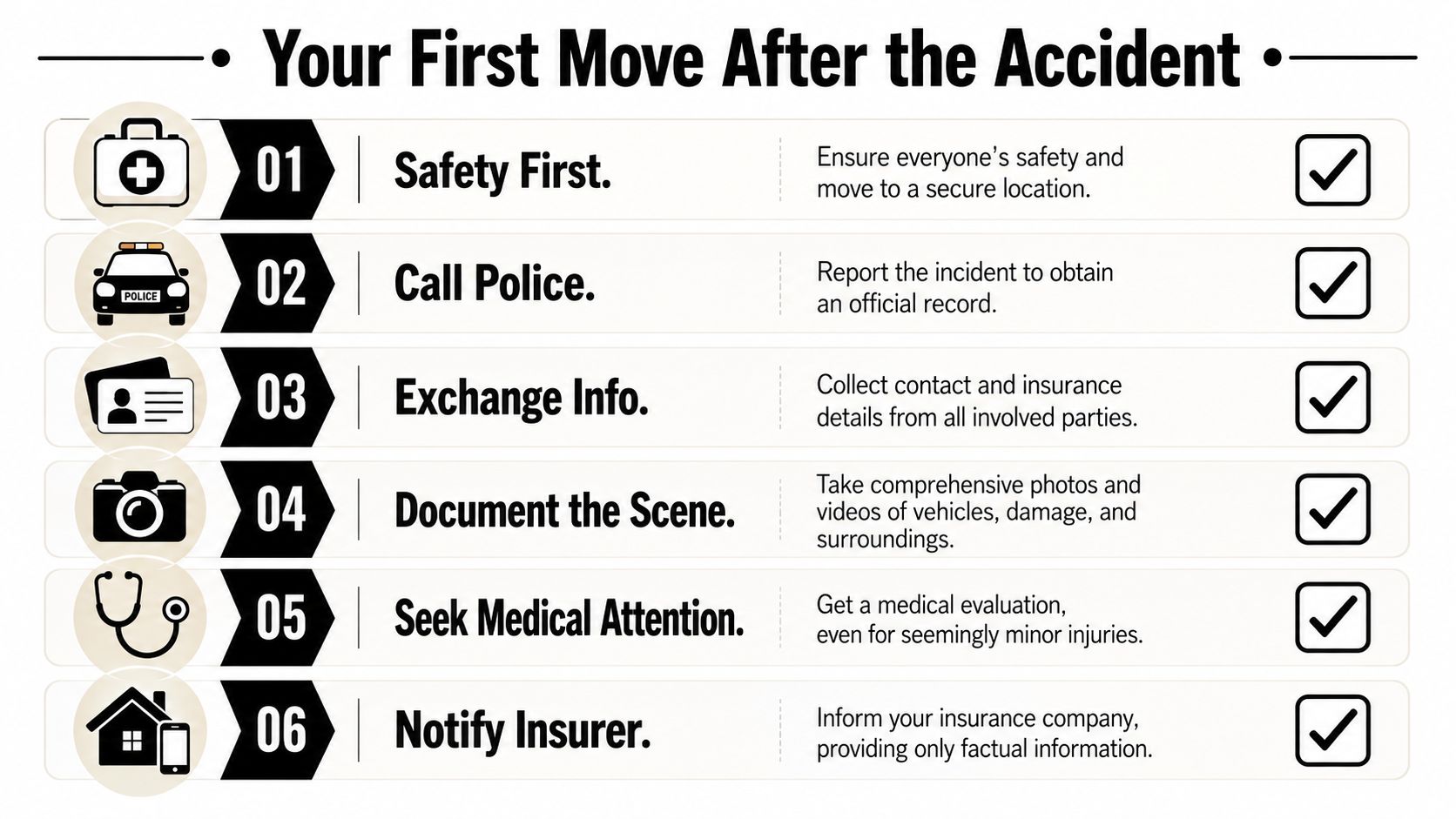
Your First Move After the Accident
The wreck just happened. Your phone is buzzing. The other driver is talking fast. The insurer will soon sound friendly and organized. If you are not more organized than they are in the first hour, you hand them an advantage they never give back.
Your first move is to build a claim file that pins down fault, damage, and vehicle condition before anyone else gets to frame it.
Lock down the evidence
If you can stand and use your phone, start documenting. Do it like the value of your claim depends on it, because it does.
Begin wide. Get the full roadway, lane positions, traffic controls, skid marks, debris, weather, and lighting. Then get closer. Photograph each vehicle from all four corners, both sides, the front and rear straight on, wheel position, airbags, broken glass, fluid leaks, and the VIN plate if you can see it.
Do not stop at the obvious dent. Property damage fights are won on context. The insurer will later argue about force, point of impact, prior damage, repair scope, and whether your vehicle was already in poor condition. Good photos cut those arguments off early.
Use this checklist:
- Take overview photos: Show where the vehicles ended up relative to the road, curb, signs, and signals.
- Take damage photos from multiple angles: Capture the full panel, adjacent panels, gaps, trim, and anything pushed out of alignment.
- Record video: Walk the scene slowly and state only objective facts such as location, date, time, and visible damage.
- Photograph the interior if airbags deployed: Interior damage supports impact severity.
- Save the timestamped originals: Do not edit, crop, or filter anything.
Rule: If a photo can stop an argument later, take it now.
Get the report and the witnesses
Call police if the situation allows and get the report number. That report ties the drivers, vehicles, carrier information, and crash narrative to one official record. You want that paper trail started immediately.
Then get witnesses before they leave. A neutral witness can shut down a liability dispute fast. Ask for full name, phone number, and email. If they are willing to send a short written account by text or email, save it exactly as they wrote it.
Collect these before you go home:
| What to collect | Why it matters |
|---|---|
| Driver and insurance details | Opens the claim and confirms coverage information |
| Police report number | Connects the loss to an official record |
| Witness names and phone numbers | Supports your version of events if fault gets contested |
| Photos and video | Preserves physical proof before the scene changes |
| Tow yard or body shop info | Helps you track storage charges, inspection access, and repair records |
Protect the vehicle claim from day one
Many drivers lose money without realizing it when they treat the car as a repair problem and ignore the valuation problem.
If the vehicle is repairable, ask where it is going, who will inspect it, and whether teardown charges or storage fees are accumulating. If the damage looks severe, start thinking about total loss value immediately. If the car will be repaired, start thinking about diminished value immediately. Those issues begin now, not after the adjuster has already picked a number.
Save every document tied to the car. Tow bill, storage invoice, photos, body shop estimate, supplement, rental receipt, maintenance records, recent upgrades, and comparable listings if your vehicle was clean and well-kept. A better file gives you a stronger position later when you challenge a weak valuation or review what determines your car accident settlement value.
Protect the injury side without giving the adjuster extra ammunition
If you have symptoms, get checked. Small injuries often feel bigger the next day.
When you notify your insurer, keep it tight. Give the time, place, vehicles involved, and whether police responded. Do not guess about speed. Do not volunteer opinions about fault. Do not fill dead air with speculation because the adjuster sounds casual. Casual conversations create recorded statements that get used against you later.
The first 48 hours decide how hard this claim will be to fight
Set up one folder on your phone and one on your computer. Put everything in both. Photos, video, witness contacts, report request, tow paperwork, repair estimates, rental receipts, medical paperwork, and every email from the carrier.
Then make one simple log. Date, who called, what they said, what they asked for, and what you sent.
That is how you stay in control. The insurer has a system. You need one too.
Calculating What Your Claim Is Truly Worth
The adjuster says your car is worth $18,400, the repair bill is covered, and the file is ready to close. If you accept that at face value, you can lose money in two places at once. First on the value of the vehicle itself. Then on the post-repair loss in market value they hope you never bring up.

A solid valuation starts with one rule. Separate the easy numbers from the disputed ones. Towing, storage, rental, and repair invoices are straightforward. Diminished value, total loss valuation, future treatment, and pain and suffering require proof and a clean explanation. Those are also the areas where insurers shave claims the hardest.
Price every category of loss before you negotiate
Build your claim by category, then support each line with a document.
- Medical expenses: Bills, treatment records, prescriptions, and any recommended follow-up care supported by the medical file.
- Lost income: Missed work, reduced hours, and employer verification.
- Property damage: Repair costs, towing, storage, rental, inspection fees, and related out-of-pocket expenses.
- Pain and suffering: Notes, medical records, activity limits, and clear examples of how the injury disrupted daily life.
Then add the vehicle-specific losses many owners miss. If you want a sharper breakdown of what belongs in the number, review this guide to car accident settlement value.
Diminished value is one of the most overlooked parts of a claim
A repaired vehicle is often still worth less after a crash. That is not opinion. It is how buyers and dealers price accident history.
Insurers love to act like the repair check ends the property damage claim. It does not. A body shop can restore function and appearance. It cannot erase a damage report from the vehicle history or remove buyer skepticism.
Diminished value hits harder when the vehicle was strong in the market before the wreck, especially if it was:
- Late-model with a clean history
- Luxury, performance, custom, or collector-grade
- Hit in a way that involved structural work or major panel replacement
- Low-mileage and well maintained
If you are documenting the repair file yourself, combine photos, estimates, supplements, and final invoices into one PDF before you send them. An offline photo to PDF converter makes that easier and keeps your submission clean.
Total loss offers are often weak on details
When a carrier totals your vehicle, they usually rely on valuation software and a list of supposed comparable cars. That report may look polished. Check it anyway, line by line.
Bad total loss valuations usually come from ordinary errors. Wrong trim. Missing options. Generic condition adjustments. Comps from the wrong market. Mileage comparisons that are technically close but commercially useless. If the report misses those details, the offer is low.
Use a side-by-side review:
| Valuation point | Insurer version | Your review |
|---|---|---|
| Vehicle trim | May be generic or broad | Verify exact trim and package |
| Condition | Often standardized | Document actual pre-loss condition |
| Options | Sometimes incomplete | Confirm wheels, tech, safety, premium packages |
| Comparable vehicles | May be weak matches | Look for same-generation, similar mileage, similar condition |
| Local market | Can be stretched geographically | Focus on real replacement market for your area |
Pull proof that shows what you owned before the crash. Good photos matter. Maintenance records matter. Option lists matter. So do listings for comparable vehicles in your market. If the insurer undervalues the car, your counter should show exactly where they got it wrong.
A quick primer helps if you want to see how valuation disputes are framed in practice:
Build a number you can defend
Do not start with a round number that feels fair. Start with documents, then assign each part of the claim to a supported dollar amount.
For property damage, that means repair-related costs, diminished value if the vehicle was repaired, or a corrected market value if the vehicle was totaled. For injury damages, it means bills, wage loss, and a written explanation tied to records instead of guesswork. The stronger your paper file, the harder you are to underpay.
Here is the inside scoop. Property damage is often the cleanest part of the case to prove, and that makes it a pressure point. If the insurer refuses to correct a bad repair valuation or total loss number, that dispute can set up your strongest next move later in the process: the appraisal clause. That option gets ignored in most guides. It should not.
Writing a Demand Letter That Gets Results
You send a sloppy demand letter, and the adjuster sees an easy target. You send a tight one, and the file gets treated differently. That is the point.
A demand letter is not a place to vent. It is a pressure document. It tells the insurer three things fast: you know what you are claiming, you can prove it, and you are prepared to challenge a bad number, especially on property damage.
Build the letter like a case file
Keep it clean. Keep it readable. Make every section earn its place.
Use this order:
Claim identifiers
List the claim number, date of loss, vehicle year, make, model, VIN, and everyone involved.Short accident summary
State what happened in plain English. Stick to facts supported by the report, photos, or other evidence.Damages breakdown
Separate each category and assign a dollar amount to it. Include repair costs, rental or loss-of-use, towing, storage, diminished value for a repaired vehicle, or corrected actual cash value for a total loss. If you also have injury damages, list those separately.Support for each amount
Identify the records behind every number. Repair estimates, invoices, comparable listings, valuation reports, photos, medical bills, wage records, and receipts.Your demand
State the total amount you want to resolve the claim.Deadline for written response
Give them a firm date. Short enough to create pressure, long enough to look reasonable.
That format works because it forces the adjuster to answer your numbers instead of hiding behind vague language.
Make property damage impossible to ignore
Many self-represented claimants often leave money on the table at this stage. They mention the body shop bill and stop there.
Do not stop there.
If the car was repaired, address diminished value directly. A crash history can cut resale value even after proper repairs. Say that plainly, attach support, and put a number on it. If the vehicle was totaled, attack the valuation line by line. Wrong trim, missing options, bad condition adjustments, weak comparable sales, and listings pulled from the wrong market are all fair game. A demand letter that spells this out tells the insurer you are not going to accept a canned CCC or Mitchell number without a fight.
If you want a solid layout to follow, this guide to a car accident settlement demand letter gives you a useful framework.
Match every dollar to a document
A demand with no paper behind it is just a complaint.
Organize your evidence before you send anything. If your photos are scattered across your phone, email, and text messages, combine them into one clear attachment. An offline photo to PDF converter makes that easy and helps you send one clean file instead of a mess of screenshots.
Make the adjuster's job simple. Hand them a packet a supervisor can review in five minutes.
Good supporting exhibits often include:
- Police report or exchange sheet
- Scene photos
- Damage photos before repair
- Final repair invoice or repair estimate
- Comparable vehicle listings from your actual market
- Maintenance records
- Window sticker or option list
- Diminished value report, if you have one
- Total loss valuation corrections, if the car was declared a total loss
Use language that sounds expensive to ignore
Write like someone preparing a record, not someone asking for sympathy.
Good language sounds like this:
“My demand reflects documented repair-related costs, loss of use, and diminished value supported by the attached records and market data.”
“The total loss valuation fails to account for the vehicle's trim level, factory options, condition, and local comparable vehicles. See attached corrections.”
That wording does two jobs. It shows control, and it signals that you know how these files get reviewed when a dispute does not go away.
Leave out anything that weakens your position
Cut the fluff. Cut the drama. Cut anything you cannot prove.
Do not include:
- Offers to “explain everything” by phone
- Angry accusations
- Casual statements that sound like shared fault
- Round-number demands with no math behind them
- Threats you are not prepared to carry out
One more point. If property damage is the pressure point in your case, your demand letter should make that obvious. A bad repair number, a ignored diminished value claim, or a low total loss valuation can turn into your strongest pressure tool later if the policy gives you the right to challenge value through appraisal. The adjuster knows that. Your letter should make it clear that you do too.
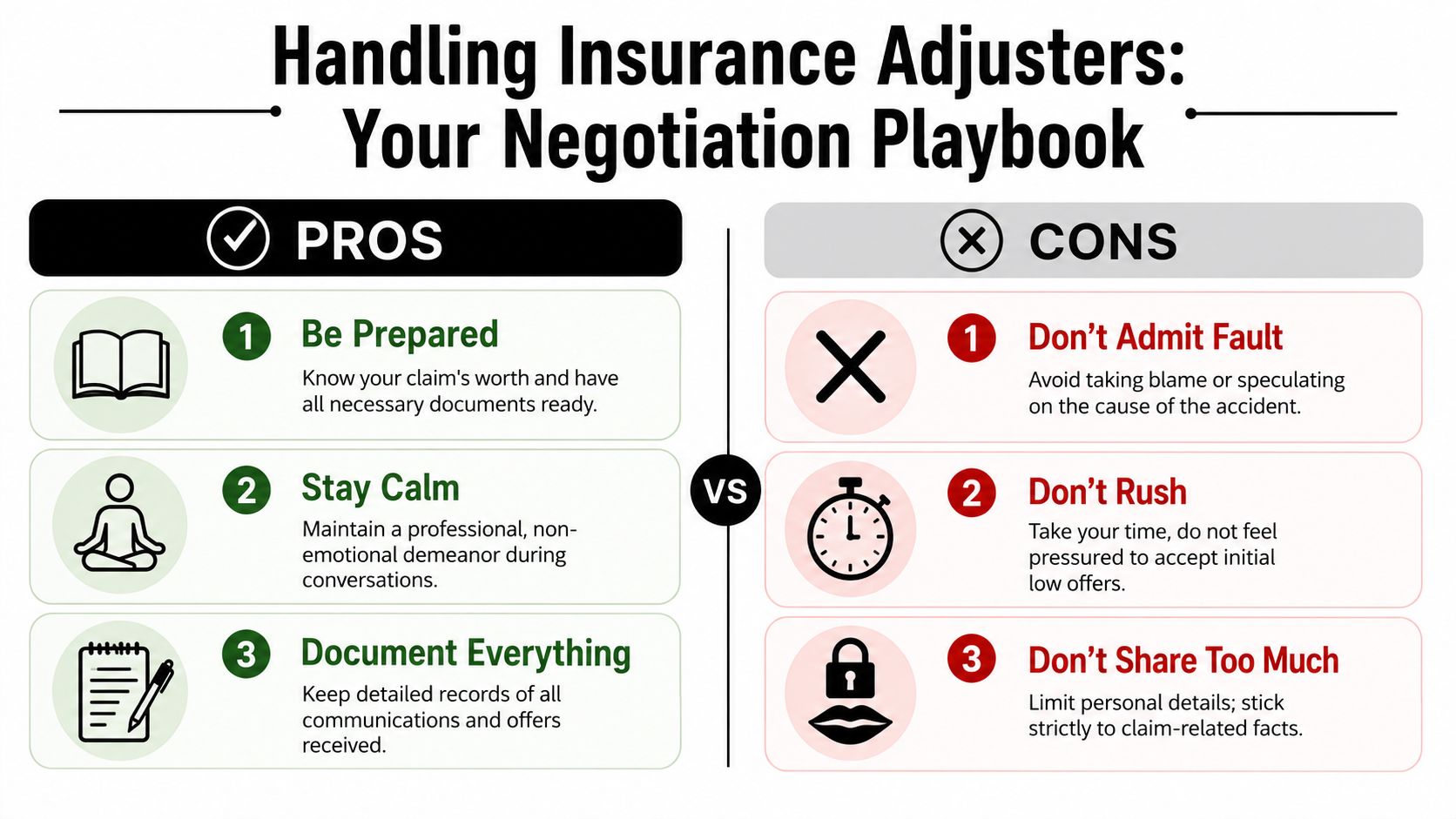
The Negotiation Playbook for Handling Adjusters
Your demand letter is in. Two days later the adjuster calls, sounds friendly, and throws out a number that does not come close to your repair loss, total loss correction, or diminished value. That call is a test.
Treat it that way.
The adjuster wants to find out whether you know your file, whether you will defend your numbers, and whether you will get tired before they do. If you stay disciplined, you can turn that conversation into a record of every weak point in their valuation.
Put the adjuster on defense
Do not respond to a low offer with a lower demand. Respond with questions that force support.
Use language like this:
They say: “This is what the claim is worth.”
You say: “Show me the valuation support in writing. Identify the comparables, condition adjustments, repair assumptions, and any deductions you used.”
They say: “This is a fair offer.”
You say: “Fair based on what, exactly? Point me to the documents and methodology.”
They say: “If you want to wrap this up, you should accept now.”
You say: “I will review any written offer after I receive the full breakdown.”
That tone works because it does not argue. It demands support.
Keep the conversation on property damage, not feelings
Adjusters handle emotion all day. They are less comfortable with a claimant who keeps dragging the discussion back to market value, repair quality, and measurable loss.
If your car was repaired, hammer the parts they want to blur together:
- quality of repairs
- loss of use
- out of pocket costs
- post-repair market stigma
- diminished value support
If the vehicle was declared a total loss, stay fixed on valuation errors:
- bad comparable vehicles
- missing trim or packages
- wrong condition ratings
- missed prior upgrades
- local market differences
- unsupported deductions
This is the inside angle many guides skip. Property damage disputes are often easier to prove than people think, and insurers know it. A weak repair estimate, a soft diminished value number, or a sloppy total loss valuation gives you something concrete to challenge.
Ask the question that changes the claim
When the offer is low, ask this:
“What specific facts or valuation inputs caused you to reach that number?”
Then stop talking.
That question forces the adjuster to show their work. If they cite comps, ask for them. If they rely on a condition adjustment, ask what evidence supports it. If they deny diminished value, ask whether they reviewed any market-based opinion or just defaulted to a blanket position. If they say the total loss report is accurate, ask them to explain every trim, mileage, option, and comparable entry they used.
A vague answer helps you. It tells you they do not have a strong file.
Refuse to give away ground for free
Do not fill silence. Do not bargain against yourself. Do not cut your number just because the adjuster sounds unimpressed.
Adjusters are trained to normalize bad offers. They say things like “this is standard,” “this is all the system allows,” or “nobody pays that.” None of that matters. What matters is whether their number survives scrutiny.
A good reply is short:
“If your position is supported, send the support. If not, revise the offer.”
That is how you keep control.
Document every contact like a valuation fight is coming
Phone calls are useful. Written follow-up is where you build pressure.
After every call, send a short email that confirms:
- date and time
- who you spoke with
- amount discussed
- reasons the adjuster gave
- documents you requested
- your deadline for a response
Use a running log like this:
| Date | Contact | What they said | Your response | Next step |
|---|---|---|---|---|
| 6/12 | Adjuster phone call | Offered lower amount | Requested written explanation | Waiting on valuation support |
| 6/14 | Email from adjuster | Sent partial rationale | Rebutted missing comparables | Requested revised offer |
This matters for one reason. Insurance companies get much more careful when they see a clean paper trail.
Watch for the pressure points that signal a bigger dispute
Some adjusters stall because they expect fatigue. Others stall because the valuation file is weak and they need time. Learn to spot the difference.
Pay attention when they:
- repeat the number without answering your questions
- refuse to send the valuation report
- ignore your comparable vehicles
- dismiss diminished value without analysis
- rely on generic statements about “market conditions”
- insist the offer expires quickly
Those are not negotiation strengths. Those are signs the file may not hold up if you force a formal value dispute. If the policy allows it, the insurance appraisal clause process for total loss and diminished value disputes can turn that pressure into action.
Stay calm. Stay specific. Stay annoying to lowball.
You do not need to sound aggressive. You need to sound prepared.
Keep every response tied to proof. Keep asking for support. Keep correcting the record. A claimant who understands diminished value, total loss errors, and valuation procedure is much harder to push around than someone arguing from frustration alone.
That is how you handle adjusters. You make them justify every bad number until they fix it or expose a dispute they can no longer hide.
Your Ultimate Leverage The Appraisal Clause
When the insurer won't fix a bad total loss value or a weak diminished value number, it's common to perceive two options. Accept it or hire a lawyer.
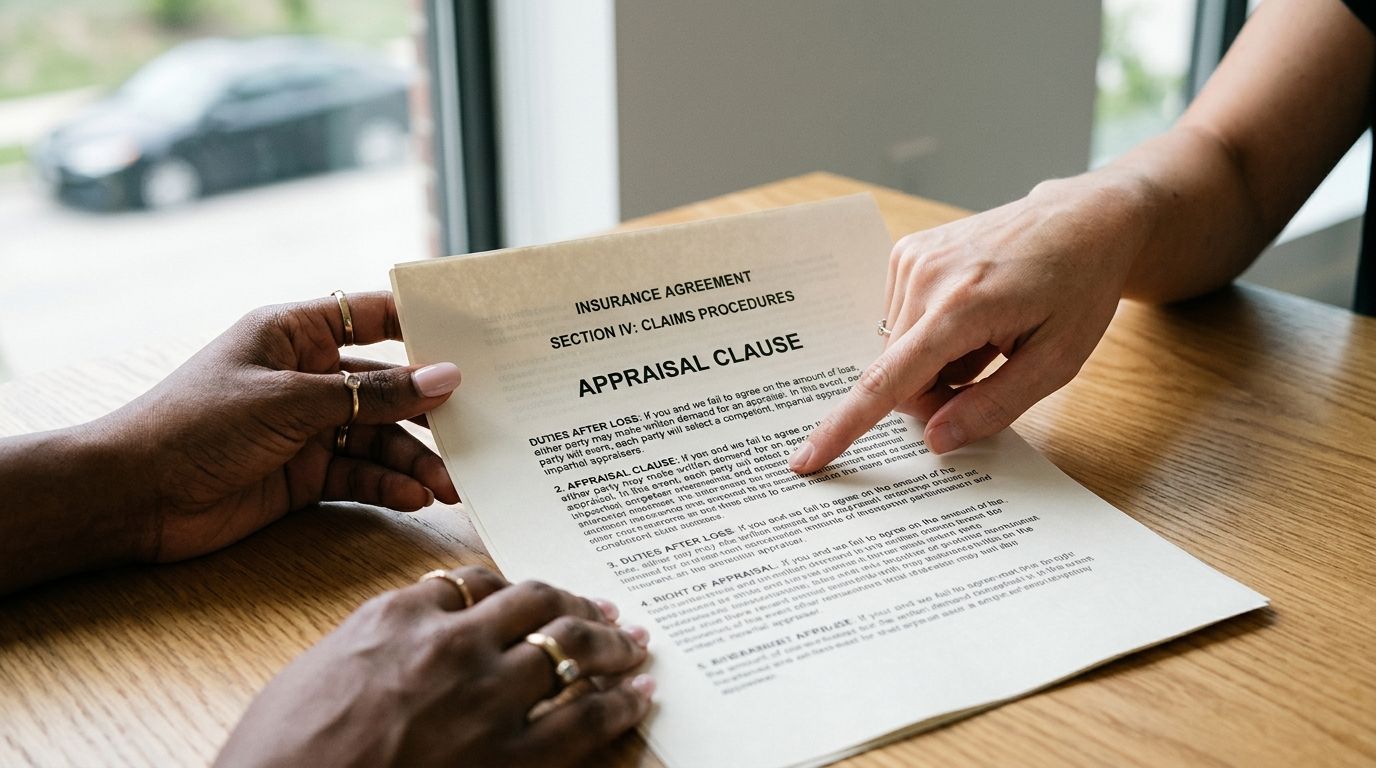
There's often a third option in the policy itself. The Appraisal Clause.
That clause matters because valuation fights are not always legal fights. Many are appraisal fights. The dispute isn't whether a claim exists. The dispute is what the vehicle is worth.
Why this clause matters more than most people realize
A lot of settlement advice stops at “start high and negotiate.” That's incomplete, especially in total loss and vehicle value disputes.
A detailed discussion from Total Loss Northwest points out that many guides fail to explain how the Appraisal Clause can remove the insurer's biased valuation software from the equation when a lowball total loss settlement is disputed. That gap matters because without a process to challenge valuation formally, many owners never reach real market value.
The clause enables the discussion. It shifts the conversation from “please reconsider your number” to “we're moving the valuation dispute into a contract-based process.”
If the insurer controls the valuation method, they control the outcome. The Appraisal Clause breaks that monopoly.
What invoking it actually does
In plain English, the Appraisal Clause is a contractual mechanism that lets each side select an appraiser when there's a dispute over value. That means you are no longer stuck arguing with an adjuster whose number came from software you didn't choose and can't audit.
For total loss claims, that's a major shift. For diminished value claims, it can also be powerful where the policy and claim circumstances allow value disputes to be appraised.
The usual benefits are practical:
- It narrows the dispute: You stop arguing about feelings and focus on market value.
- It raises the quality of evidence: Comparable vehicles, condition adjustments, options, and market support become central.
- It pressures weak insurer valuations: Software-driven numbers don't look so impressive when challenged by independent appraisal logic.
When to consider using it
Not every claim needs appraisal. Some need better documentation first. But you should seriously look at the clause when:
- The total loss offer ignores your vehicle's actual trim, options, or condition
- The comparables are poor matches
- The insurer won't explain major valuation adjustments
- You're stuck in circles with no meaningful revision
- The disagreement is about vehicle value, not legal liability
Before you invoke anything, read the policy language carefully. Then compare it with a plain-English explanation of the insurance appraisal clause.
The practical sequence
The exact procedure depends on policy wording and state-specific realities, but the general path is straightforward.
Identify the clause in the policy
Read the valuation dispute language, not just the declarations page.Confirm the dispute is about value
The clause is typically aimed at amount-of-loss disputes, not fault disputes.Send formal written notice
Keep it professional and tied to the policy language.Choose a competent independent appraiser
Pick someone who understands total loss and diminished value methodology, not just general car pricing.Keep your evidence package tight
Vehicle options, pre-loss condition, comparable listings, repair history, photos, and any dealer support should be ready.
This is often the cleanest pressure point available to a self-represented claimant. You're no longer begging for a better number. You're using the contract.
Finalizing the Deal and Getting Paid
Friday afternoon. The adjuster calls, sounds friendly, and says they can “get this wrapped up today.” Then the release shows up with broad language, vague payment timing, and claim scope that goes far beyond what you discussed.
That is where people give money back.
A settlement is finished only after three things happen: the exact terms are in writing, the release matches those terms, and the payment arrives in the form and timeframe you agreed to. Until then, you do not have a completed deal. You have a conversation.
Confirm the agreement in writing the same day
Send a short email as soon as the number is agreed. Do not rely on the adjuster's file notes. Write your own record.
Include:
- Exact settlement amount
- What the payment resolves: property damage only, bodily injury only, or both
- Vehicle value items included: total loss, repair costs, diminished value, rental, towing, storage, taxes, fees, and title transfer issues if applicable
- Payment details: check, ACH, lienholder payment, co-payee issues, and expected send date
- Any remaining obligations: title, power of attorney, vehicle pickup, keys, or odometer statement
Keep it brief and specific. If the insurer later changes the paperwork, your email becomes the reference point.
Treat the release like the real negotiation
The release matters more than the phone call.
Once you sign it, your claim is usually over. If the insurer underpaid your total loss, skipped diminished value, or slipped bodily injury language into a property damage deal, that signature can shut the door.
Read every line with one question in mind: does this document match the agreement exactly?
Watch for these problems:
| Release issue | Why it costs you |
|---|---|
| Broad release language | Can wipe out claims you never agreed to settle |
| Wrong claim category | Can convert a property damage settlement into a full accident release |
| Missing value terms | Can erase diminished value, rental, fees, or other negotiated items |
| No payment deadline | Gives the carrier room to drag out the check |
| Title and lien errors | Delays payment and creates avoidable disputes |
If the wording is wrong, do not sign and argue later. Reject it, mark the problem language, and demand a corrected release.
Protect the property damage pieces insurers like to blur
At this point, self-represented drivers lose ground. The insurer combines separate value issues into one neat file and hopes you do not notice what got left out.
Separate each item before you sign:
- Total loss value
- Sales tax, title, and registration reimbursement where owed
- Rental reimbursement end date
- Towing and storage
- Aftermarket equipment or recent upgrades
- Diminished value, if the vehicle was repaired instead of totaled
If your car was repaired, confirm whether diminished value is included or excluded. If your car was totaled, confirm the settlement handles the actual cash value dispute and nothing more. Do not let vague wording bury a real value loss.
Do not sign from fatigue
End-stage claims wear people down. That is why insurers often push hardest at the finish line.
Slow down if any of these are true:
- The release is broader than the email confirmation
- You are still sorting out injury treatment
- The carrier changed the wording after agreeing to narrower terms
- The payment timing is missing
- The total loss paperwork does not match the vehicle, lien, trim, options, or condition
- A repaired vehicle claim still has an unresolved diminished value dispute
One bad signature can undo weeks of solid work.
Know when to stop doing it alone
Some claims should stay DIY. Others need a specialist before you give up more value.
Bring in outside help when:
- The total loss offer still ignores the vehicle's actual trim, options, mileage, condition, or local market
- The insurer refuses to address diminished value with a real valuation analysis
- The release does not match the deal
- The check is delayed and the carrier keeps changing requirements
- The dispute is about vehicle value, not who caused the crash
That last point matters. A lawyer is not always the first answer. If the primary fight is price, market comps, condition adjustments, or post-repair loss in value, an independent appraiser is often the sharper tool. The Appraisal Clause can force a value dispute into a process the insurer cannot control as easily.
Finish the claim the same way you started it. Stay disciplined. Get every term in writing. Read the release like you expect it to contain a trap, because sometimes it does. Then get paid only after the paperwork says exactly what you agreed to.
If the insurance company is lowballing your total loss or ignoring diminished value, Total Loss Northwest helps drivers fight back with certified independent appraisals and Appraisal Clause support. If you need real market value, not insurer software value, they're built for exactly that fight.