Your car was damaged, the insurer is talking numbers, and you're trying to figure out why one driver gets a smoother path than another. You might be shopping for coverage after an accident. You might be dealing with a total loss offer that feels low. You might also be hearing a term that sounds familiar but not quite clear: insurance score.
That confusion is normal.
Most drivers know what a credit score is. Far fewer understand that insurers often use a different number for a different purpose. And when people ask what is insurance score, they usually think the answer only affects premiums. It doesn't stop there. This number can shape how an insurer classifies risk, how they price your policy, and in some claim situations, the tone of the negotiation itself.
If you're handling a total loss or diminished value dispute, that distinction matters more than it seems.
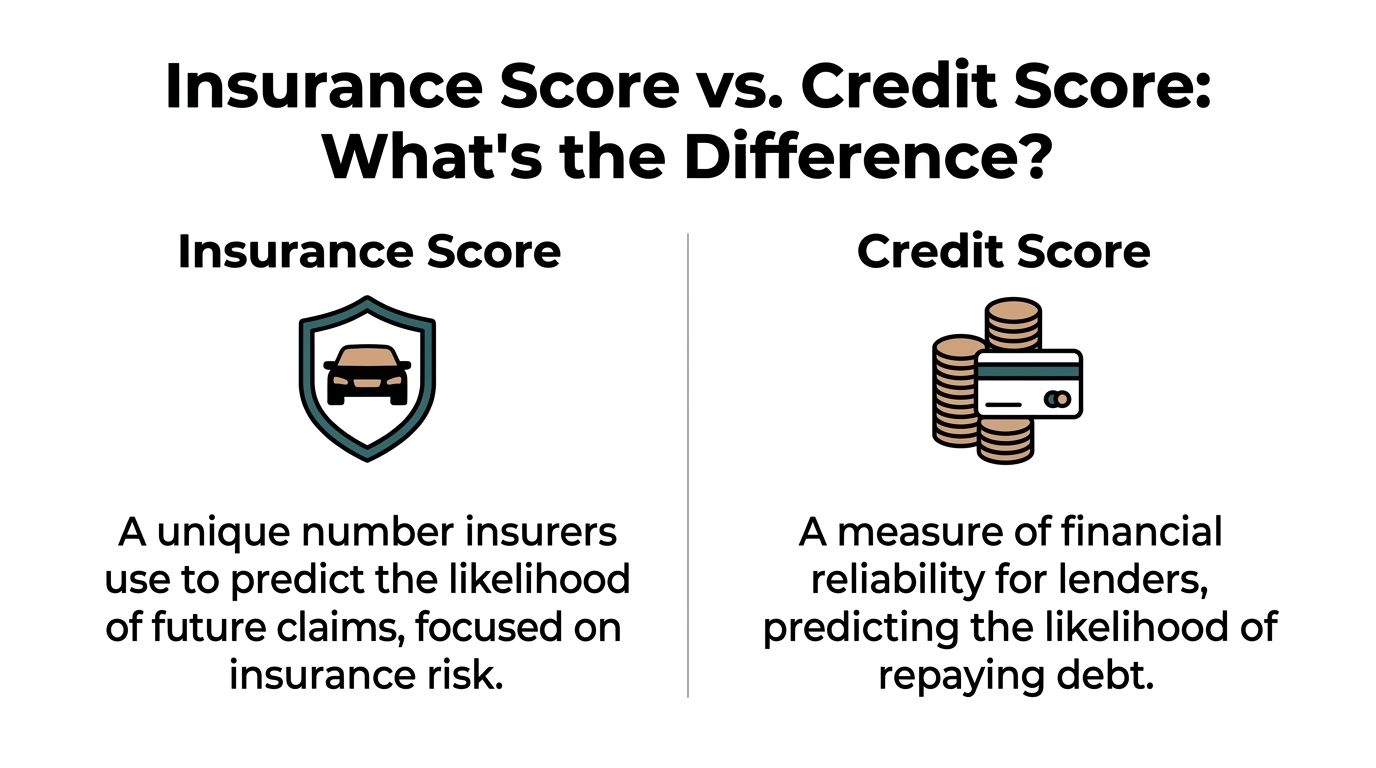
Insurance Score vs Credit Score What's the Difference
A driver can have a solid credit score, pay bills on time, and still get an insurance quote that feels higher than expected. That disconnect frustrates people because the two scores sound related. They are related, but they are not built to answer the same question.
A credit score helps lenders judge whether you are likely to repay borrowed money. An insurance score helps insurers sort risk. It uses parts of your credit history to estimate how likely you are to file claims and how costly those claims might be.
That difference is easy to miss because both scores draw from similar raw material. The better analogy is this. A lender and an insurer can read the same file the way two specialists study the same vehicle after a crash. One is checking whether the engine can be financed. The other is estimating repair risk, resale impact, and future cost exposure. Same car. Different job.
Two scores, two jobs
The Federal Trade Commission's explanation of credit-based insurance scores makes the distinction clearly. Insurers use credit-based insurance scores to help predict risk, while lenders use credit scores to predict repayment.
Here's the side by side view:
| Type | Main purpose | Who uses it | What it tries to predict |
|---|---|---|---|
| Insurance score | Underwriting and pricing insurance | Insurers | Future claims risk |
| Credit score | Lending decisions | Banks, lenders, card issuers | Debt repayment risk |
A driver may look strong to a bank and still look riskier to an insurer. That does not automatically mean the insurer is right. It means the insurer is using a different model.
Why drivers get tripped up
Insurance scores are often described in a way that makes them sound like a repackaged credit score. That wording causes confusion. The score is built from credit report characteristics, but the goal is different, and the practical effects can be different too.
For example, a lender may focus on whether you manage debt well enough to repay a loan. An insurer may focus on patterns it associates with future losses. That can affect quoting, renewals, and how a company classifies your file internally. If you are worried about underwriting changes after an accident or claim activity, this guide on whether auto insurance companies can drop you gives useful context.
There is another layer many drivers never hear about. An insurance score does not just sit quietly in the background of your premium. It can influence how an insurer views overall risk during a claim. In a total loss or diminished value dispute, that risk lens can shape the tone of the negotiation, the level of scrutiny on your documentation, and how hard you may need to push for a fair number.
The key takeaway
When someone asks what is insurance score, the clearest answer is simple. It is a separate insurance risk tool, not a lending grade.
That distinction helps explain more than premiums. It also helps explain why two policyholders can walk into claim negotiations with very different starting points, even when the damage to the vehicle looks similar.
How Insurers Calculate Your Insurance Score
An insurance score is less like a school grade and more like a risk filter. The model scans patterns in your credit file and asks a narrow question: based on this history, how likely is this policyholder to generate future insurance losses?
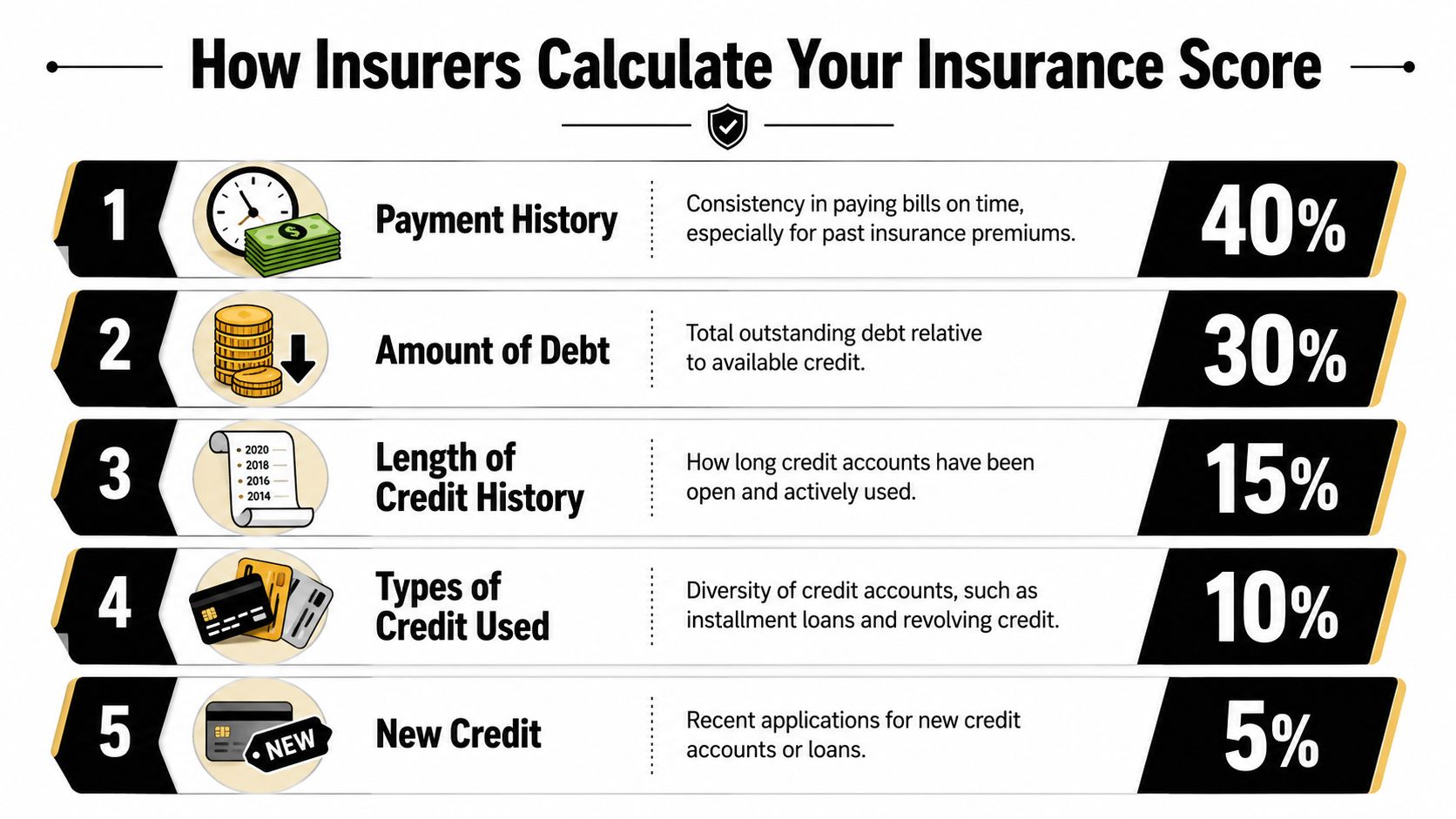
Insurers commonly build that score from five credit-related factors: payment history, outstanding debt, length of credit history, pursuit of new credit, and credit mix.
The five factors in plain English
Payment history
This is usually the biggest signal. A file that shows bills paid on time over and over looks more predictable to the model. Late payments, collections, or repeated missed obligations can push the score the other way.
Outstanding debt
The model looks at how much debt you carry and how much of your available credit is already spoken for. A driver can have a solid income and still appear stretched if revolving balances stay high.
Length of credit history
Older accounts give the model a longer track record to examine. A thin file or very recent credit history creates more uncertainty because there is less behavior to evaluate.
Pursuit of new credit
This factor looks at recent applications and signs that someone is actively seeking more credit. A few inquiries are not the end of the world, but a burst of new applications can read as financial strain.
Credit mix
This is a smaller piece of the formula. It reflects the types of accounts on the report, such as revolving and installment credit.
What the model does not use
A lot of drivers hear “credit based” and assume the insurer is scoring their income, job title, or personal background. According to Insurance.com's summary of insurance score inputs, these models do not use traits such as race, gender, age, marital status, salary, occupation, or employer.
This focus on behavior, not identity, is important. If your score needs work, the practical target is your credit habits, not your personal profile.
A simple way to read the model is this: insurers care most about whether your file shows steady payment habits and whether your credit looks overextended.
That can feel abstract until a claim happens.
Suppose two drivers have similar damage, similar vehicles, and similar coverage. One file presents as lower risk overall, while the other raises more concern inside the insurer's system. The insurance score does not decide fault, and it does not set the value of a totaled car by itself. But it can affect how the claim is handled behind the scenes, including how closely documentation is reviewed and how rigid the adjuster may be during a diminished value or total loss negotiation.
That is one reason drivers with prior credit stress often worry about pricing after major violations and underwriting changes. Resources on protecting your car insurance after a DUI can help explain how insurers view added risk signals across a policy, not just during quoting.
How Your Score Dictates Your Insurance Premiums
A lot of drivers first notice an insurance score in one place only. The bill.
Insurers use this score during underwriting and pricing to sort applicants into risk tiers. A simple way to picture it is shelf pricing at a store. Two customers can pick up the same product, but insurance companies may assign different prices to similar policies because each driver is placed in a different risk category behind the scenes.
How the score changes what you pay
The exact formula and score range can vary by insurer, so the more practical question is not, “What number did I get?” It is, “Which tier did that number place me in?”
That tier can affect whether you qualify for the insurer's better rates or get pushed into a more expensive bracket. In plain terms, a stronger insurance score often leads to lower premiums, while a weaker one can mean higher monthly costs for the same basic coverage.
This is why two drivers with similar cars, similar neighborhoods, and similar driving records can still get very different quotes.
Why drivers get confused by this
Many people assume premiums rise and fall based only on accidents, tickets, and mileage. Those factors matter, but they are not the whole picture. The insurer is also using a separate prediction tool to estimate how risky the overall account appears.
That can feel unfair if your driving has been careful.
But from the insurer's viewpoint, pricing works like a layered appraisal. A vehicle appraiser does not rely on one photo to value a car. They look at condition, options, history, and market data together. Insurers do something similar with risk. Your insurance score is one of several inputs, and it can move the price more than drivers expect.
Your premium reflects the risk tier the insurer assigns to you, not just your visible driving history.
Why this matters beyond the monthly bill
Premium pricing may seem separate from claims until you are trying to recover after a serious crash. Yet the same company systems that classify a policyholder as higher or lower risk can shape the tone of later interactions, especially when money is disputed.
For example, a driver already paying more because of a weaker insurance score may also be less prepared for how firmly an insurer handles a diminished value claim after an accident. The score does not set your car's actual market value, and it should not decide what a total loss vehicle is worth. Still, it can be part of the broader file history the insurer has attached to the policy before negotiations even begin.
That distinction matters. The valuation itself should be based on the vehicle and the market. The relationship with the insurer is shaped earlier, during underwriting and pricing.
If your record also includes a major driving event, the pricing pressure can increase from more than one direction. This resource on protecting your car insurance after a DUI is useful for understanding how serious driving events can complicate the pricing picture beyond credit-based factors.
For many drivers, that is the practical answer to what an insurance score does. It helps determine how expensive coverage will be, and it can influence the insurer relationship long before a total loss or diminished value dispute lands on your desk.
The Hidden Impact on Total Loss and Diminished Value Claims
Most articles stop at premiums. That leaves out the part drivers feel most when their car has already been damaged.
Your insurance score doesn't formally set the market value of your vehicle. A total loss valuation should still be based on the vehicle itself, local market data, condition, options, and comparable sales. A diminished value claim should still turn on how the accident affected resale value. But insurance companies don't handle claims in a vacuum. They handle them inside a broader risk framework.

Why the disconnect catches people off guard
One of the most misunderstood parts of this topic is that a person can have a strong traditional credit score and still carry a poor insurance score. As noted in Wikipedia's overview of insurance score behavior, insurance scores pay attention to things like the ratio of total balance to credit limits and the number of recent inquiries. That means someone with an 800+ financial credit score can still end up with a 500-level insurance score.
That matters because claimants often walk into a dispute thinking, “My credit is excellent, so the insurer must view me favorably.” Not necessarily.
How this can affect the tone of a claim
An adjuster isn't supposed to value your totaled vehicle lower because of your insurance score. The vehicle's value is the vehicle's value. But insurers organize files, price risks, and manage claims using systems built around categorization. When a company already classifies a policyholder as higher risk, that classification can shape the overall posture of the file.
You may see that in ways that are hard to prove line by line:
- Lower initial offers that assume you won't push back.
- Less flexibility when you challenge comparables or condition adjustments.
- Longer negotiations because the insurer starts from a defensive position.
- More reliance on internal valuation software instead of actual local market evidence.
None of that means the insurer is openly saying, “Your score is low, so your car is worth less.” It means the claims climate can become tougher.
If a settlement offer feels off, focus on the evidence behind the number. Comparable vehicles, condition, mileage, options, and repair history matter more than assumptions about you.
Diminished value claims feel this too
This is especially important in a vehicle diminished value claim. Those claims already involve negotiation because the loss isn't as visible as a total loss payout. The car may be repaired, but the accident history can still hurt resale value.
When the insurer begins with a skeptical posture, it can become harder to get serious attention on market stigma, especially for luxury, collector, custom, or newer vehicles. Drivers often think the issue is only the repair bill. It isn't. The argument is whether the market now sees the car as worth less.
The practical takeaway
If you're in a total loss or diminished value dispute, don't assume the insurer's first number is a clean reflection of market reality. Your insurance score may not be the formal valuation input, but it can sit in the background of how the company approaches the file.
That's why evidence matters so much. A solid appraisal, strong comparable vehicles, and a documented challenge to weak valuation methods can reset the discussion around the car instead of the insurer's assumptions.
How to Check and Improve Your Insurance Score
A driver often learns about an insurance score at the worst possible moment. The premium jumps at renewal. A policy application comes back higher than expected. A claim starts to feel harder than it should.
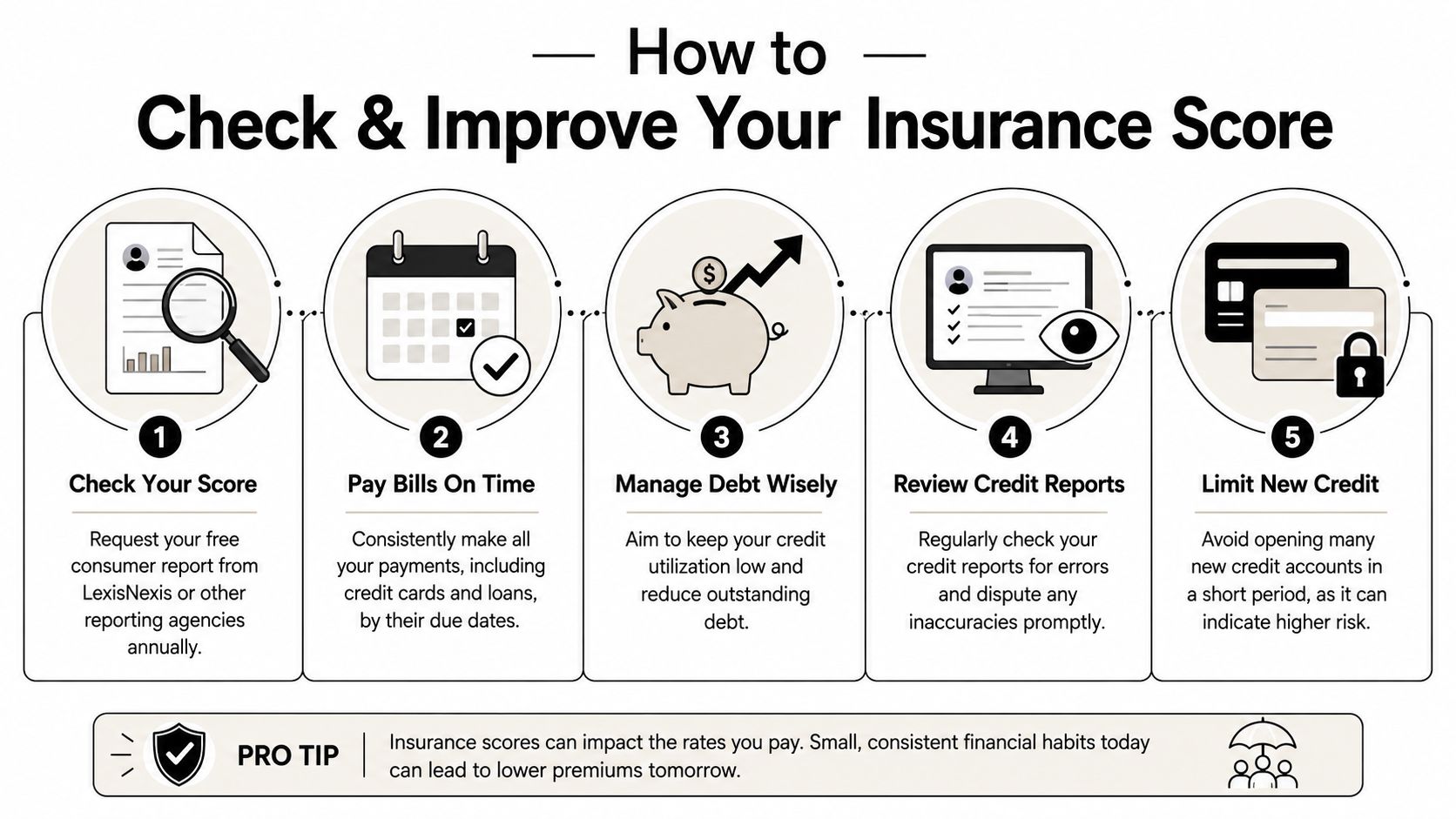
That is why it helps to check your file before you are under pressure. If your insurance score works like a background risk snapshot, the consumer reports behind it are the raw ingredients. Looking at those records early gives you a chance to correct bad information before it affects pricing or adds friction during a claim.
Start with the file, not the guesswork
If you want a real answer to what your insurance score means for you, begin with the records that feed it. Insurers may not hand you the score in a simple, consumer-friendly format, but you can usually request your consumer file from companies that compile this information.
A careful review should include a few basics:
- Request your consumer file from a reporting provider such as LexisNexis.
- Read any adverse action notice if an insurer raised your rate, limited coverage, or changed terms based on credit-related information.
- Check for errors like accounts that are not yours, balances that are wrong, duplicate items, or old negative marks that should no longer appear.
- Review recent activity so you can see whether the file shows a rush of new applications or other signs that may make your profile look less stable.
If you find information that looks wrong, dispute it with the reporting company and keep copies of what you send. If the insurer continues to rely on bad information, you may also need to review the process for filing an insurance commissioner complaint.
Here's a useful video overview before you start pulling documents:
Focus on habits that actually change the picture
Improving an insurance score usually looks less like a trick and more like basic maintenance. A car owner does not fix poor tire wear by repainting the wheels. The proper fix is alignment, pressure, and rotation. Insurance scores work the same way. The visible number changes after the underlying habits improve.
Pay on time
Payment history tends to carry a lot of weight. One late payment may not define your file forever, but repeated late payments can signal financial strain.
Automatic payments, calendar reminders, and updated billing information can help prevent avoidable mistakes.
Lower revolving balances
High credit card balances can make a file look stretched, even if you have not missed a payment. That point confuses many drivers.
They assume on-time payments should be enough. Insurers often look at the broader pattern. Lower balances can make the profile appear more stable.
Be careful with older accounts
Older accounts help show history. Closing a long-standing account can shorten the story your file tells.
That does not mean every old account should stay open forever. It means you should pause before closing one that adds age and consistency to your credit record.
Slow down new applications
Several new applications in a short period can make your file look unsettled. Even if you are financially fine, the pattern can still work against you.
Space out applications when possible.
Check for accuracy before trying to optimize
Credit mix matters less than many people think. Accuracy matters more. An incorrect late payment or a collection account that belongs to someone else can do more harm than an imperfect account mix.
Why timing matters for claim situations
A stronger insurance score does not change your vehicle's market value. A damaged truck is still worth what comparable trucks show it is worth. A repaired luxury car with accident history still may have real diminished value.
But your score can affect the temperature of the interaction. If the insurer sees you as lower risk, the file may move more smoothly. If the background profile raises concerns, you may face more scrutiny, more documentation requests, or less flexibility at the start.
That matters for total loss and diminished value disputes because those claims often depend on persistence. If you are already correcting score-related errors before a claim happens, you are in a better position to keep the discussion centered on vehicle facts instead of fighting side issues at the same time.
Check early, not after the problem starts
Drivers often wait until renewal or after a claim to look into this. By then, the clock feels much louder.
Checking your file early gives you time to correct mistakes, improve the habits that affect the score, and reduce one more source of friction before a pricing change, total loss valuation, or diminished value negotiation begins.
Protecting Your Rights and Your Vehicle's Value
Insurance scores matter, but they don't have the final word on what your vehicle is worth.
State rules vary on how insurers can use credit-based insurance scores. The NAIC notes that some states restrict their use or prohibit them in pricing, so it's smart to check your own state insurance department for the rules that apply where you live. If the claim handling or valuation process starts to look unfair, you can also review the process for filing an insurance commissioner complaint.
Keep the valuation fight focused on the car
When you challenge a total loss or diminished value offer, keep your argument tied to market facts:
- Comparable vehicles should match your vehicle as closely as possible.
- Condition adjustments should be supportable, not arbitrary.
- Options and trim should be identified correctly.
- Accident-related market loss should be treated as a real issue in diminished value claims.
Your insurance score may shape the climate around the claim, but it should not replace evidence. A weak offer is still a weak offer, no matter what category the insurer placed you in.
You have more leverage when you stop arguing feelings and start presenting market proof.
The most effective response to a low offer is an independent valuation that stands on actual vehicle data. That shifts the conversation away from internal scoring models and back to the number that matters most: the fair market value of your car.
If you're dealing with a low total loss offer or a diminished value dispute, Total Loss Northwest helps drivers challenge insurance valuations with independent appraisals backed by real market data. If the insurer's number doesn't reflect what your vehicle was worth, their team can help you push for a fairer result.