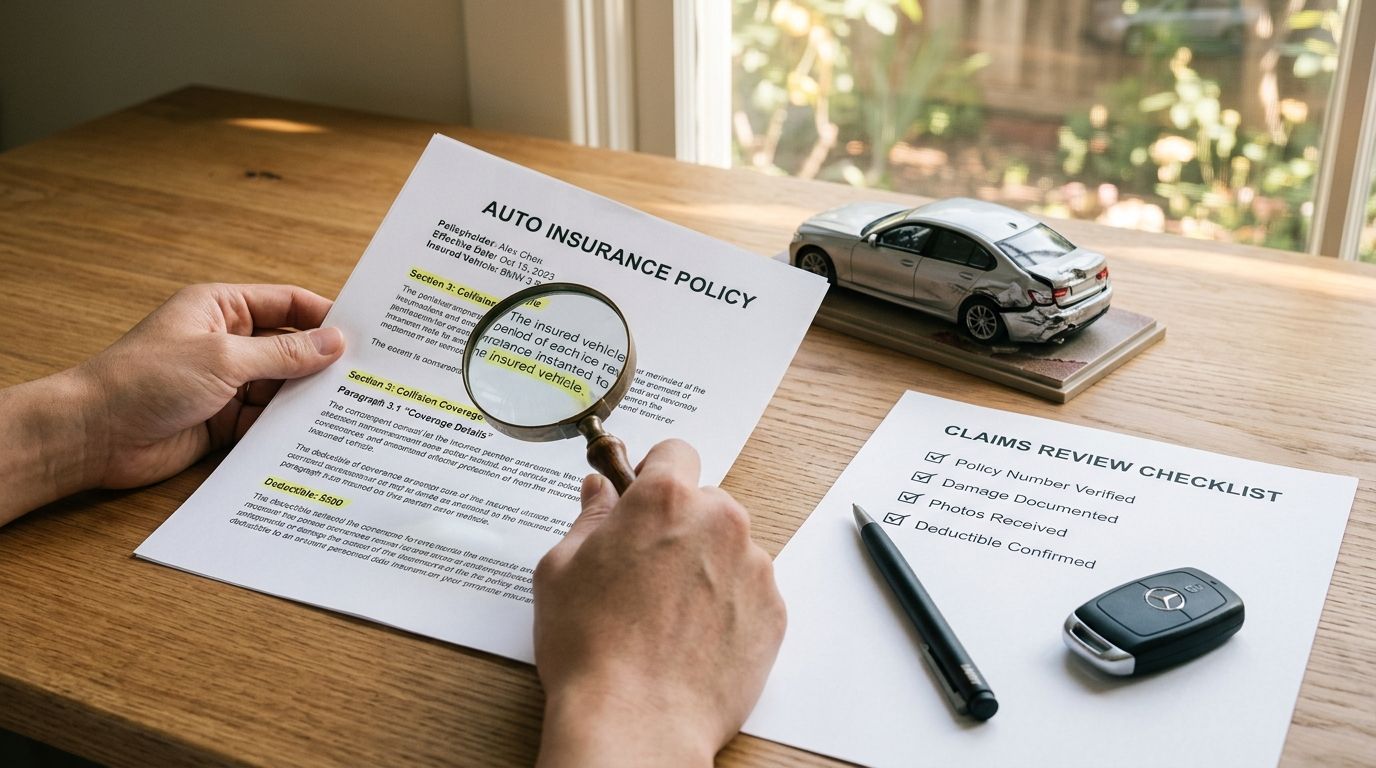
You've had the accident. Your car may be sitting in a tow yard, the adjuster is calling, and now you're staring at a stack of policy documents written in language no normal person would read by choice. That's where the task often feels paralyzing.
Freezing is expensive.
After a crash, your insurance policy isn't paperwork. It's the contract that controls what the carrier owes, what they can deduct, how they value your vehicle, and whether you have a real path to challenge a low total loss offer. If you don't review it, you're negotiating blind.
Why Your Post-Accident Insurance Policy Review Matters
Most drivers don't know their policy until they need it. That's the problem.
Only 3 in 10 Americans, or 30%, review their insurance policies annually, which leaves many exposed to coverage gaps and outdated assumptions about what their policy pays, according to InsuranceNewsNet's reporting on annual insurance review habits. After a wreck, that gap stops being theoretical. It turns into a lower settlement, a denied item, or a surprise deduction.
A post-accident insurance policy review matters because total loss claims often turn on small contract language. Not the slogan in the ad. Not what you thought you bought. The actual wording.
The policy decides the fight
When an insurer says your vehicle is a total loss, the next questions are all contract questions:
- How is value calculated
- What deductions are allowed
- Are custom parts included or excluded
- Can you challenge the valuation through appraisal
- Do you keep the salvage if you want it
- Is there gap, loan, or lease protection
If you don't answer those questions from your own policy, the insurer answers them for you.
Practical rule: Never discuss settlement numbers seriously until you've read the parts of the policy that control valuation and dispute rights.
This is where people get trapped
A lot of claimants assume the insurer's first valuation report is the final word. It isn't. It's the insurer's position. Those are not the same thing.
Post-accident reviews also matter because your declarations page can look clean while the deeper policy language works against you. You may have collision coverage and still be unhappy with the payout because the policy settles on actual cash value. You may have a right to dispute value but miss it because the appraisal clause is buried in the booklet or endorsement stack.
That's why I tell people to stop treating the policy like background noise. After a collision, it becomes your playbook. Read it before you accept the carrier's numbers.
Decoding Your Policy Packet Where to Find What Matters
A focused personal auto insurance policy review doesn't have to eat your whole day. While commercial reviews can take far longer, a well-targeted personal auto review can be done thoroughly in under an hour if you focus on the sections that control the money, as explained in this breakdown of the annual review process.
Start with the packet you already have. Most drivers are looking at three parts.
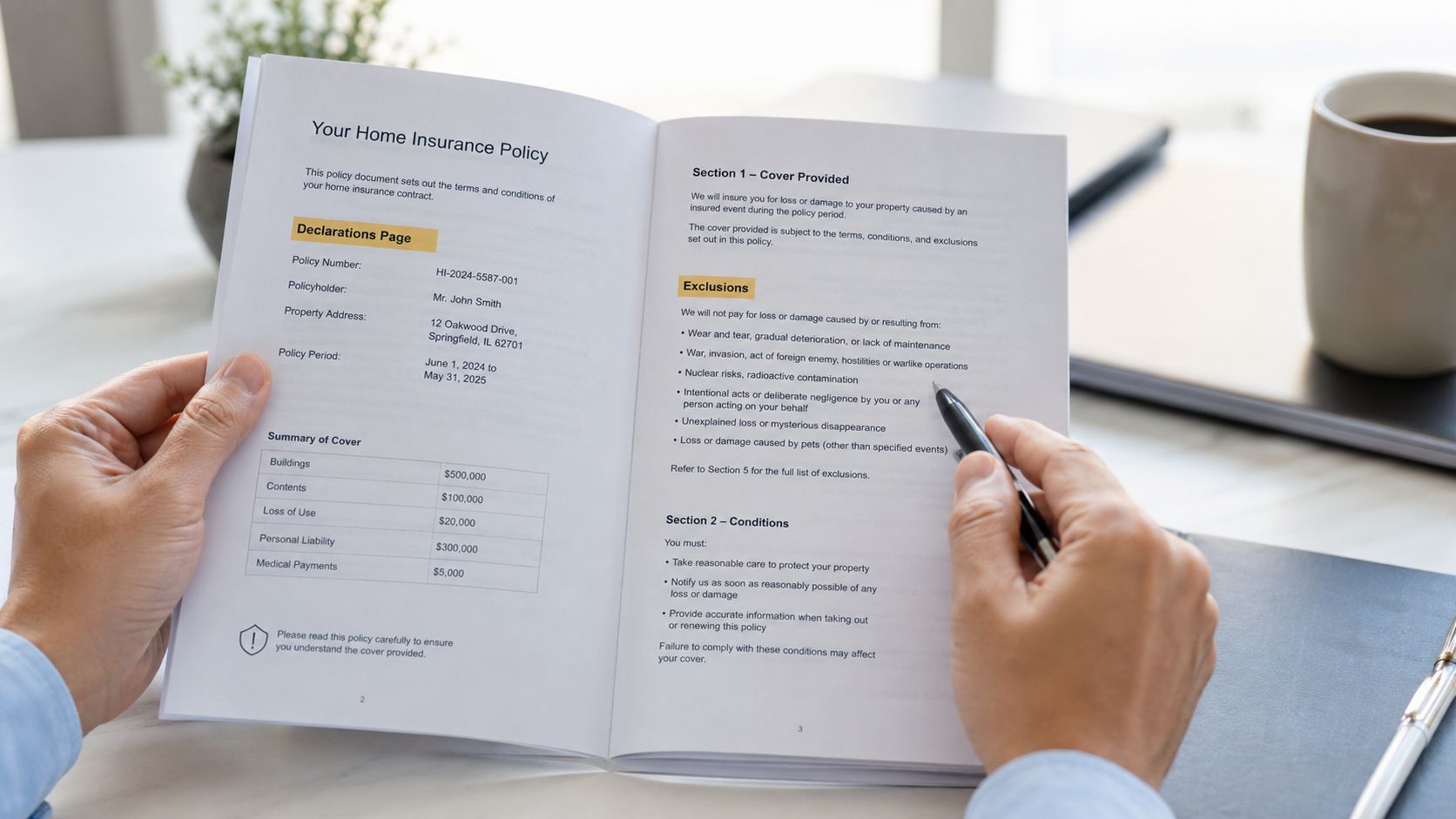
The declarations page
This is the short summary page, often called the Dec page. It usually lists:
- Named insureds and covered drivers
- Vehicle details like year, make, model, and VIN
- Coverage types such as liability, collision, other than collision, rental, and loan or lease payoff coverage
- Deductibles for collision and other than collision
- Policy dates
This page tells you what you bought. It does not tell you how the company interprets it after a total loss. Still, if the vehicle listed is wrong, the deductible is different than you expected, or the policy dates don't line up, you need to catch that immediately.
The policy booklet
This is the dense part. It's where the carrier defines key terms and explains how claims are settled. For total loss cases, this is the document that matters most.
Look for sections titled:
- Definitions
- Physical damage coverage
- Limit of liability
- Loss settlement
- Appraisal
- Transportation expenses
- Custom equipment or aftermarket parts
- Duties after loss
If you want a plain-English walkthrough, this guide on how to read an auto insurance policy helps you identify the clauses worth your time. If you're dealing with state-specific language questions, a practical primer on understanding Florida auto insurance coverages also shows how to parse policy structure without getting lost in legal wording.
Your declarations page is the menu. The policy booklet is the contract. Don't confuse the two.
Endorsements and riders
These pages change the base policy. They can add coverage, remove it, or rewrite settlement language.
That means the endorsement stack can control your payout. A custom parts endorsement may help. Another endorsement may cap or exclude those same items. A loan or lease endorsement may affect what gets paid on a financed vehicle. An amended appraisal clause may change how disputes are handled.
Use this quick map:
| Document | What it tells you | Why it matters after a loss |
|---|---|---|
| Declarations page | What coverages you bought | Confirms deductibles, dates, listed vehicle |
| Policy booklet | How claims are handled | Controls valuation, exclusions, dispute rights |
| Endorsements | What changed from standard wording | Can expand or restrict key protections |
Pull all three before you talk settlement. If the adjuster sent only a valuation report, that's not enough.
Key Clauses That Determine Your Total Loss Payout
This is the part that hits your wallet. If your vehicle is totaled, a few clauses will decide whether the check is fair, thin, or worth disputing.
Actual cash value
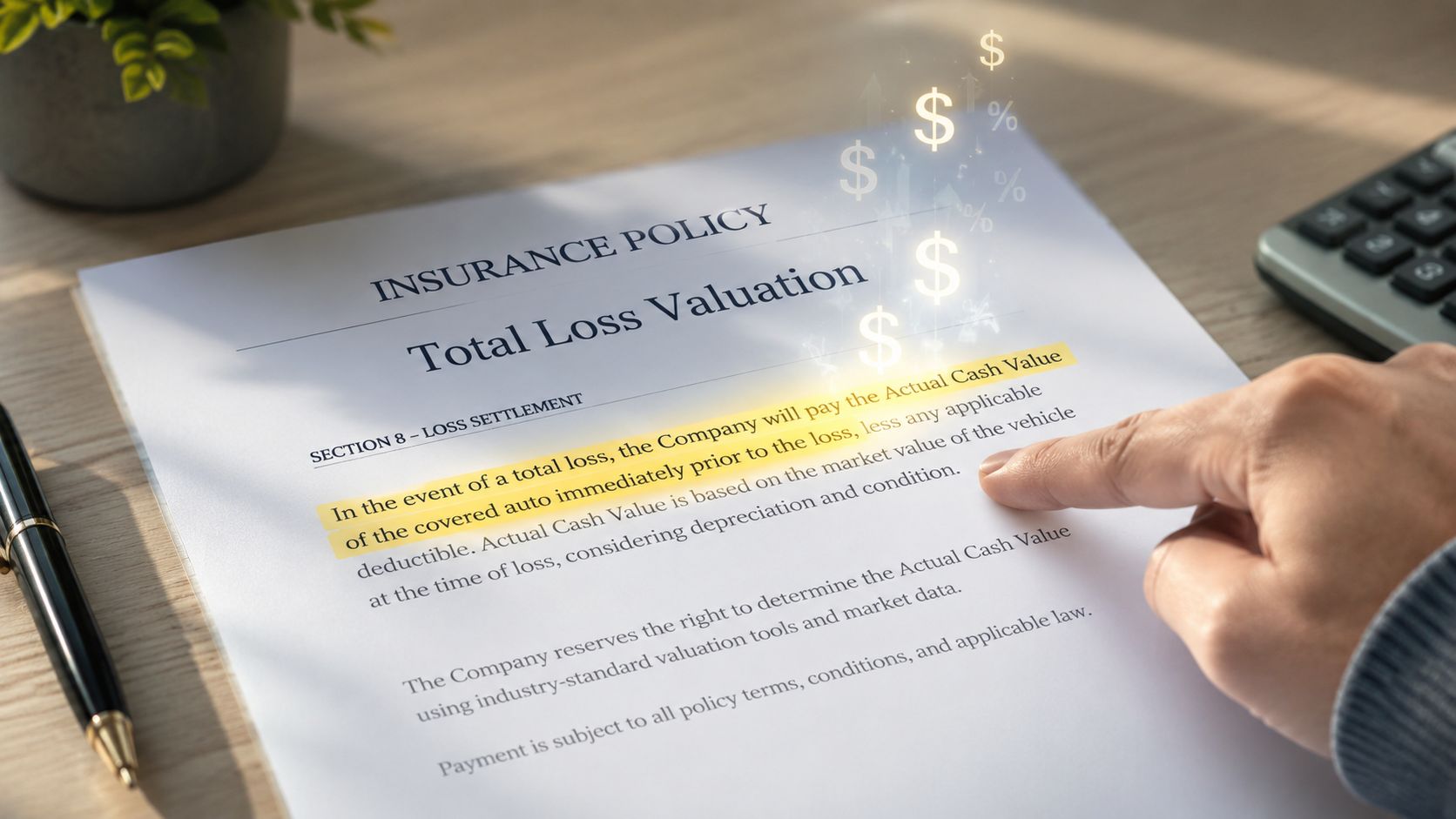
The first clause to find is the one explaining how the insurer values a totaled vehicle. In many policies, the carrier pays Actual Cash Value, often shortened to ACV.
That sounds harmless until you read the definition. ACV usually means the insurer values the car based on its view of market value, then applies adjustments for condition, mileage, prior damage, options, and comparable sales. If that process is sloppy or tilted, your payout drops.
A critical problem is that many people don't realize they even have ACV coverage. 30% of consumers are unaware that their auto policy settles total losses at ACV rather than replacement cost, according to this insurance consultation checklist discussion. That misunderstanding becomes expensive fast with custom, collector, high-value, or sharply depreciating vehicles.
What to look for in the wording
Search for phrases like:
- actual cash value
- market value
- replacement cost less depreciation
- the lesser of
- comparable vehicles
- condition adjustment
If the policy gives the insurer broad discretion and doesn't explain the standard clearly, expect arguments over valuation.
Bottom line: ACV is not “what it costs you to replace your car tomorrow.” It's what the insurer says your car was worth one minute before the loss, under the wording of the policy.
Replacement cost and why it usually isn't there
Many drivers assume their policy should buy them another vehicle of similar kind and quality. That expectation is understandable. It's also often wrong.
Most standard auto policies don't pay replacement cost on ordinary total loss claims. If your policy doesn't expressly provide replacement cost treatment, don't assume you have it. Read the contract. If the carrier keeps talking about ACV, ask them to identify the exact policy language they're relying on.
The appraisal clause
If the insurer's valuation is low, the most important clause in the whole packet may be the Appraisal Clause.
This clause can give you a contract-based way to dispute value without letting the insurer's software dominate the outcome. Typical wording tells each side to select an appraiser, then have those appraisers agree on value or submit the dispute to an umpire.
You want to locate this clause early, not after weeks of arguing with the adjuster. If you need help identifying how it works and what the clause usually looks like, review this explanation of the insurance appraisal clause.
Wording that should get your attention
Look for language such as:
- If we fail to agree on the amount of loss
- either party may demand an appraisal
- each party will select a competent appraiser
- the appraisers will select an umpire
- an agreement by any two will be binding
That language matters because it changes the fight. You're no longer begging the adjuster to reconsider. You're invoking a contractual dispute process.
Salvage retention and owner choice
Some owners want to keep the vehicle. That matters with classics, specialty vehicles, or cars with sentimental or rebuild value.
Your policy may address whether the insurer takes the salvage, whether you can retain it, and how the salvage value affects your payment. If you want to keep the car, read this clause before agreeing to any settlement paperwork. Once the title transfer and release are done, your negotiating power is usually weaker.
Loan, lease, and gap language
If you still owe money on the vehicle, read every line tied to:
- loan or lease payoff
- gap coverage
- lienholder payment
- loss payable clause
These provisions don't increase the car's value. They determine who gets paid first and whether any shortfall is covered. Drivers often learn too late that the total loss payment goes straight to the lender and still doesn't wipe out the balance.
Here's the plain truth. A total loss settlement isn't one number pulled from thin air. It's the result of valuation language, exclusions, endorsements, deductions, and dispute rights working together. If you don't read those clauses, you can't tell whether the insurer's offer is accurate or just convenient for them.
Spotting Red Flags and Common Policy Pitfalls
A lot of bad claim outcomes don't start with a dramatic denial. They start with policy language that looks ordinary until the day you need it.
The insurance industry has a term for this problem in commercial lines: silent underinsurance. Industry data indicates that approximately 60% of commercial policies contain coverage gaps or insufficient limits at renewal, and the same idea applies to personal auto policies when hidden exclusions or outdated values only show up after a claim is filed, as discussed in Bluefire Insurance's review guidance for client policy reviews.
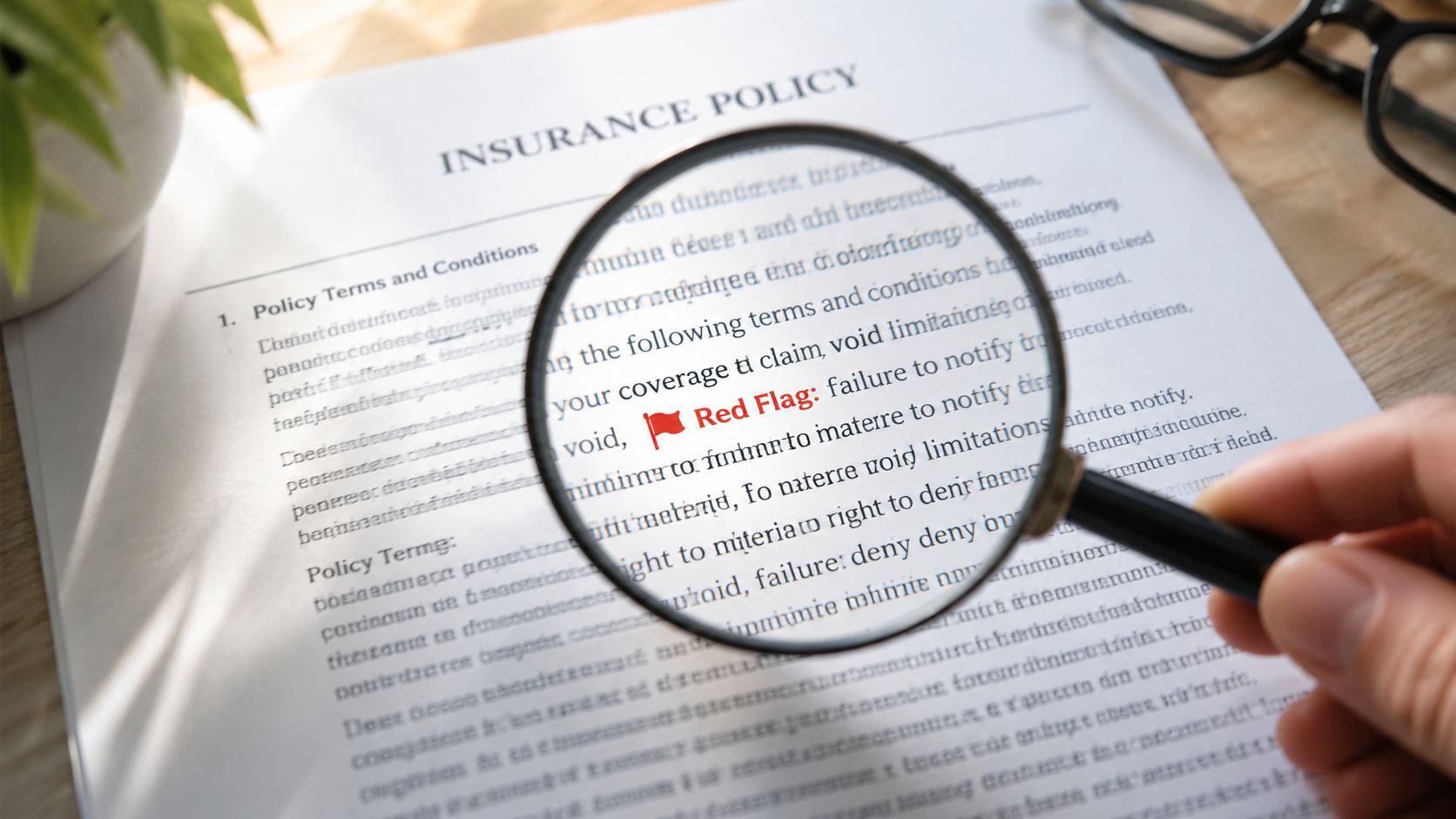
Vague ACV language
If the policy defines actual cash value loosely, that's a problem. Broad wording gives the insurer room to rely on weak comparables, aggressive condition deductions, and valuation methods that don't reflect your real market.
Red flag phrases include:
- we may determine
- our valuation vendor
- comparable vehicles available to us
- condition adjustments at our discretion
None of that means the number is wrong by default. It does mean you should inspect the valuation line by line.
Missing or weakened appraisal rights
If your policy has no appraisal clause, or it has one that heavily favors the insurer's process, your options narrow fast.
Watch for wording that:
- limits appraisal to certain disputes only
- lets the carrier block the process with internal review
- requires steps that are easy to miss
- buries the clause in endorsements rather than the main booklet
A policy can look solid until you realize your best dispute tool was removed or narrowed.
Custom parts and modification traps
This catches owners of trucks, classics, performance cars, and enthusiast builds all the time. The insurer values the base vehicle, then excludes or caps the parts you spent money on.
Read for terms like:
- custom equipment
- aftermarket accessories
- non-factory parts
- stated limit
- special equipment endorsement
If those items aren't scheduled or covered properly, don't expect the total loss offer to honor them automatically.
A short explainer can help you see how these disputes play out in real claims:
The biggest policy mistakes aren't always obvious. They stay hidden until the insurer prices your loss.
Deadlines and post-loss duties
Another common pitfall is failing to comply with policy duties after the crash. The insurer may ask for records, photos, title documents, payoff information, inspection access, or a sworn statement. Some requests are valid. Some are excessive. Either way, your policy usually requires some level of cooperation.
Read that section carefully. Don't hand over broad authorizations without understanding them, but don't ignore deadlines either. Missed notice requirements and sloppy paperwork give carriers another excuse to slow things down.
The Essential Post-Accident Policy Review Checklist
When you're stressed, checklists beat memory. Use this one on your phone or print it.
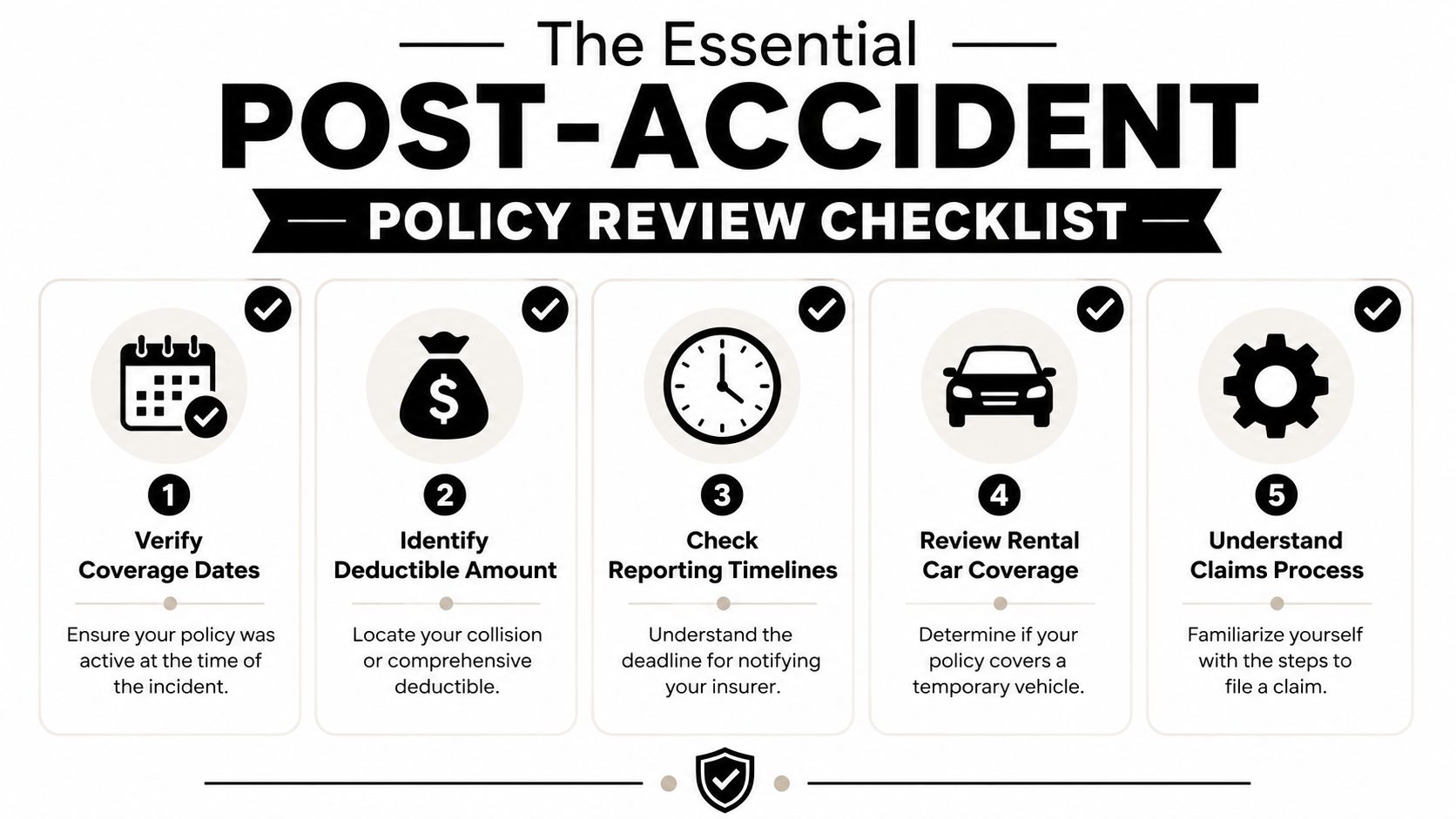
Your review list
Confirm the policy was active
Check the declarations page for effective dates and verify the totaled vehicle is the one listed.Find your deductible
Confirm the collision or other applicable deductible that applies. Don't rely on memory.Locate the loss settlement language
Search the booklet for actual cash value, limit of liability, and loss settlement. Mark the exact wording.Read the definitions section
Focus on terms that affect value, condition, custom equipment, depreciation, and comparable vehicles.Look for the appraisal clause
Search for appraisal, amount of loss, and umpire. Save that page separately.Check for endorsements
Read every endorsement tied to custom parts, loan or lease payoff, rental reimbursement, or amended physical damage coverage.Review salvage language
If you want to keep the vehicle, identify whether salvage retention is allowed and how it changes the payout.Inspect reporting and cooperation duties
Note any deadlines for notice, proof of loss, inspection, title transfer, or dispute procedures.Compare the insurer's valuation report to the policy
Make sure the report follows the contract language instead of adding rules that aren't in your policy.Flag anything that affects money
Write down every clause that changes value, timing, deductions, dispute rights, or who gets paid.
Keep these documents together
Create one folder, digital or paper, with:
- Your declarations page
- Full policy booklet
- All endorsements
- Valuation report
- Photos of the vehicle
- Repair estimate if one exists
- Payoff statement if financed
- Emails with the adjuster
That turns a confusing claim into a documented file. Documentation wins arguments. Memory doesn't.
Taking Action and When to Call for Backup
Once you finish the insurance policy review, you should know which of these situations you're in.
Situation one, the offer appears consistent
If the insurer's valuation matches the policy language, the comparable vehicles make sense, the options and condition are accurate, and there's no missing equipment, you may be able to resolve the claim without a fight.
Still, don't rush the release. Read it before signing. Make sure the amount, deductible, salvage handling, and lienholder payment are all correct.
Situation two, the offer is low or the policy language raises concerns
This is the more common problem. You find ACV wording that gives the insurer room to shave value. The valuation report uses weak comparables. Custom parts are ignored. The appraisal clause exists, but nobody mentioned it. Or the company says “that's our number” and acts like the conversation is over.
It isn't over.
Start by putting your objections in writing. Point to the specific policy language. Ask the adjuster to identify exactly where the contract supports the valuation method they used. Keep it factual. Keep it organized.
If the carrier starts sidestepping the contract, broadening exclusions, or dragging out the process, it helps to understand the larger dispute context. This guide on challenging an insurance claim denial is useful because many of the same practical steps apply when an insurer takes an unreasonable position.
Situation three, you need expert backup
Some fights stop being DIY projects.
If your vehicle is high-value, custom, collector, recently upgraded, or financed upside down, small valuation mistakes have bigger consequences. The same is true if the insurer's report is full of bad comparables or if the appraisal clause needs to be invoked properly.
That's when independent dispute support matters. If you need location-specific help with a valuation dispute, appraisal issue, or total loss disagreement, use local insurance dispute help to find the right next step.
You don't need to know every insurance trick. You do need to know when the carrier's process stopped being fair.
Your policy is the rulebook. Read it early. Mark the clauses that affect value. Challenge the parts that don't line up. And if the dispute turns technical, bring in someone who works these cases for a living.
If you're dealing with a low total loss offer, missing custom equipment value, or an insurer hiding behind a valuation report, Total Loss Northwest can help you push back with an independent appraisal. They specialize in total loss and diminished value disputes, including Appraisal Clause cases, so you're not stuck arguing with the insurance company's numbers on your own.