You pick up your car from the body shop, walk around it, and the repairs look clean. The panels line up. The paint matches. The shop says it's back to pre-loss condition.
Then the problem hits. The vehicle history report won't forget the accident.
That's the gap most drivers feel right away but can't always name. The car may be repaired, but the market often treats it differently now. Buyers, dealers, and trade-in managers usually don't look at an accident history the same way they look at a clean-history vehicle. A diminished value auto appraisal is the process used to measure that hidden financial loss and put real evidence behind it.
Your Car Is Repaired But Is It Worth the Same
A common call starts the same way. The other driver caused the accident. Insurance paid for repairs. The owner did everything right. But when they start thinking about trading the car in, selling it, or even just checking its history report, they realize the vehicle now carries permanent baggage.
That concern is valid. According to market data summarized here, vehicles with a reported accident history lose between 10% and 25% of their pre-accident market value, even when repairs are performed flawlessly. On a vehicle worth $30,000, that can mean $3,000 to $7,500 in lost resale value.

Why drivers feel shortchanged after repairs
The repair invoice only addresses physical damage. It doesn't address what the marketplace thinks about a repaired vehicle with an accident record. That difference matters most when you try to sell, trade, or refinance.
A dealership appraiser doesn't only inspect the shine on the paint. They also check history. If the report shows collision damage, especially structural or major panel repairs, the buyer usually lowers the offer. That's where diminished value lives.
Practical rule: A clean repair bill and a clean history report are not the same thing.
Where insurance confusion starts
Many drivers assume their repair payment made them whole. In real market terms, that often isn't true. The car was fixed. The value loss from stigma, disclosure, and buyer hesitation is a separate issue.
If you're sorting through coverage questions after a crash, it helps to review how California auto insurance policies typically separate property damage obligations from other claim issues. The details vary by policy and claim type, but the basic lesson is the same. Repairs and market loss are not identical.
A diminished value auto appraisal gives that loss a documented number. Without it, you're usually left arguing with an adjuster who already has a lower figure in mind.
What Is Inherent Diminished Value
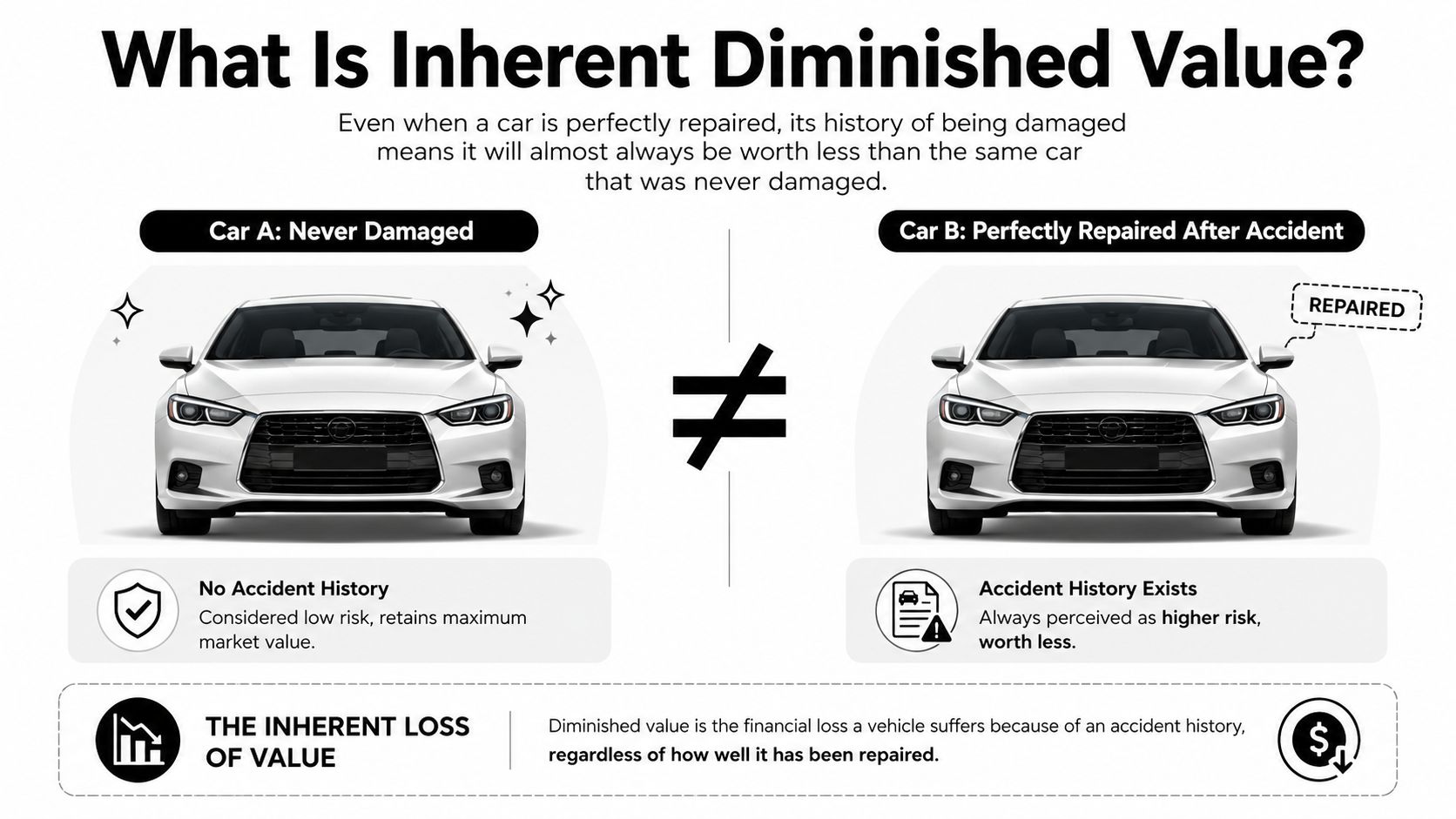
Two identical used cars sit on a lot. Same year. Same trim. Similar mileage. Same color. One has a clean history report. The other was in a collision, then repaired well enough that the prior damage is not readily apparent.
They are not worth the same.
That difference is inherent diminished value. It's the built-in loss in market appeal that exists because the vehicle now has an accident history. It doesn't depend on bad workmanship. It exists even when the repair shop did excellent work.
What it is and what it is not
A lot of claim disputes happen because people mix together different types of loss. Keep these separate:
- Inherent diminished value means the car is worth less because it now carries an accident history.
- Repair-related problems mean the work itself was incomplete or poor, such as mismatch, fitment issues, or unresolved mechanical concerns.
- Unrepaired damage means something still hasn't been fixed.
Only the first category is the classic diminished value issue.
Why the market discounts repaired cars
Buyers think about risk. Dealers think about resale difficulty. Lenders and trade-in managers think about disclosure. Even if the repair looks perfect, the next buyer knows the vehicle was damaged and repaired. That history changes negotiation power.
Here's the simplest way to think about it:
| Vehicle | Condition | Market reaction |
|---|---|---|
| Car A | Never damaged | Easier to sell at full market level |
| Car B | Repaired after accident | Often faces more scrutiny and lower offers |
That spread is what an appraiser is measuring.
A short video can help make the concept even clearer:
Why this distinction matters in a claim
If you tell the insurer, “My repairs weren't done right,” you've started one kind of dispute. If your real issue is that the vehicle is now harder to sell for the same money, you're dealing with diminished value.
That's why the appraisal report has to focus on the market, not just the body shop paperwork. A proper diminished value auto appraisal documents how real buyers and dealers react to accident history, not just whether the fender was replaced correctly.
The strongest diminished value claims are built around buyer behavior, dealer behavior, and vehicle history disclosure.
How Diminished Value Is Calculated
Insurance carriers often prefer formulas because formulas are fast, predictable, and easy to scale. The problem is that a convenient formula doesn't always match the actual market.
The best known example is the 17c formula. As described in this Kelley Blue Book discussion of diminished value, it caps diminished value at 10% of pre-accident value and applies multipliers that can miss the loss, especially for high-value, collector, and custom vehicles. That same discussion notes that independent appraisals often show losses exceeding 20% to 30% for collector vehicles because buyers are reluctant to pay full money for accident-damaged examples.
Why 17c often misses the mark
The formula approach has one clear advantage. It's simple.
That simplicity is also the weakness. It doesn't care enough about local dealer behavior, buyer stigma, repair scope, rarity, trim package, or how a disclosed accident changes actual offers in your area.
For everyday drivers, that can mean a low number. For late-model luxury, custom, and collector vehicles, it can mean a very low number.
If the insurer starts with a cap, the result is already constrained before anyone studies your actual market.
What an independent appraiser does differently
A proper diminished value auto appraisal starts with the primary question: What was this specific vehicle worth before the accident, and what is it worth now, after repairs, with full disclosure?
That market-based approach usually includes:
- Vehicle-specific pre-loss valuation using trim, options, mileage, and condition.
- Post-repair market analysis based on comparable vehicles with accident histories.
- Dealer input from buyers who determine trade and retail values.
- Inspection findings that document where repairs occurred and how extensive they were.
If you want a quick starting point before ordering a full report, a diminished value claim calculator can help frame the issue. It shouldn't replace a formal appraisal when the claim matters, but it can show why an insurer's first offer may be incomplete.
Formula versus market evidence
| Method | What it relies on | Main weakness |
|---|---|---|
| 17c formula | Pre-set cap and modifiers | Can understate unique vehicle losses |
| Independent appraisal | Dealer quotes, comparables, inspection evidence | Requires more work and documentation |
That extra work is exactly why independent reports carry weight. A formula is an internal shortcut. A market-based appraisal is a valuation argument supported by evidence.
The Independent Appraisal Process Step by Step
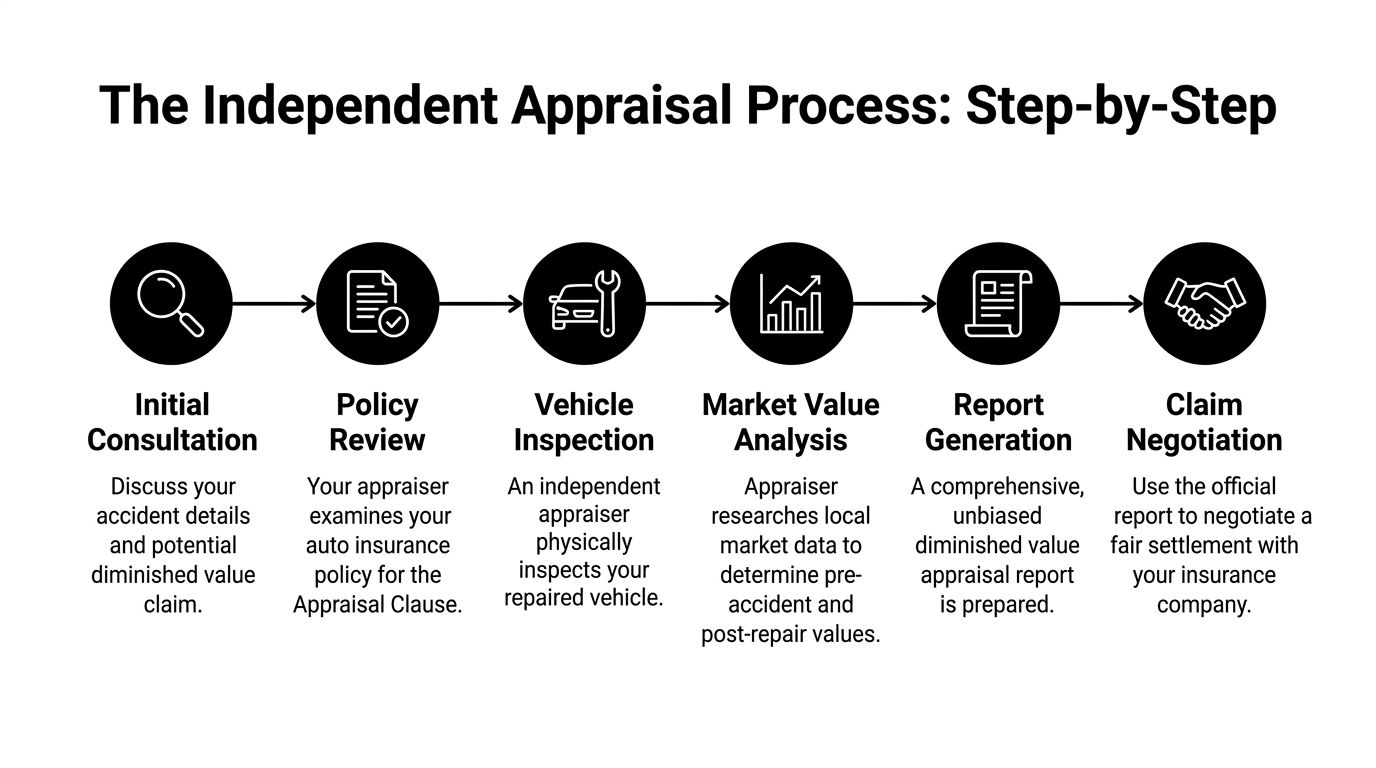
Most drivers expect the appraisal process to be vague or legalistic. It isn't. A good appraiser follows a structured path and builds a file that can survive scrutiny from an adjuster, opposing appraiser, or umpire if the dispute escalates.
What the appraiser needs from you
The first step is document collection. In most claims, that means gathering the basics that tell the vehicle's story before and after the crash.
Bring or send:
- Repair invoice and estimate so the appraiser can see what was replaced, repaired, or refinished.
- Photos of damage and completed repairs if available.
- Vehicle information including VIN, mileage, trim, and options.
- Claim documents such as insurer correspondence and any value offer already made.
This stage matters because the report needs more than a conclusion. It needs support.
What happens during inspection and research
According to this overview of certified diminished value methodology, a certified appraisal should use a USPAP-compliant market-based methodology that prioritizes real-world dealer quotes and paint meter readings over arbitrary formulas. The same source explains that the final number should come from multi-source reconciliation grounded in actual market evidence.
That means the inspection isn't cosmetic theater. The appraiser is looking for objective proof of repair extent and market impact.
Typical tasks include:
- Paint thickness readings to identify repaired panels and refinished surfaces.
- Review of structural and frame-related documents when available.
- Dealer quote collection with full accident disclosure.
- Comparable market research for clean-history and accident-history vehicles.
If you're evaluating providers, an independent insurance appraisal service should explain its methodology clearly. The report should show how the value was developed, not just announce a number.
A defensible appraisal doesn't hide the work. It shows the work.
What the finished report should do
A proper report should answer three questions cleanly:
- What was the vehicle's fair market value before the loss?
- What is its fair market value after repair, with accident history disclosed?
- What evidence supports the difference?
That's what turns a complaint into a claim. It also gives you something far more useful than a phone-call opinion. You now have a document that can be submitted, challenged, defended, and used inside a formal appraisal process.
Using the Appraisal Clause Your Right to a Fair Valuation
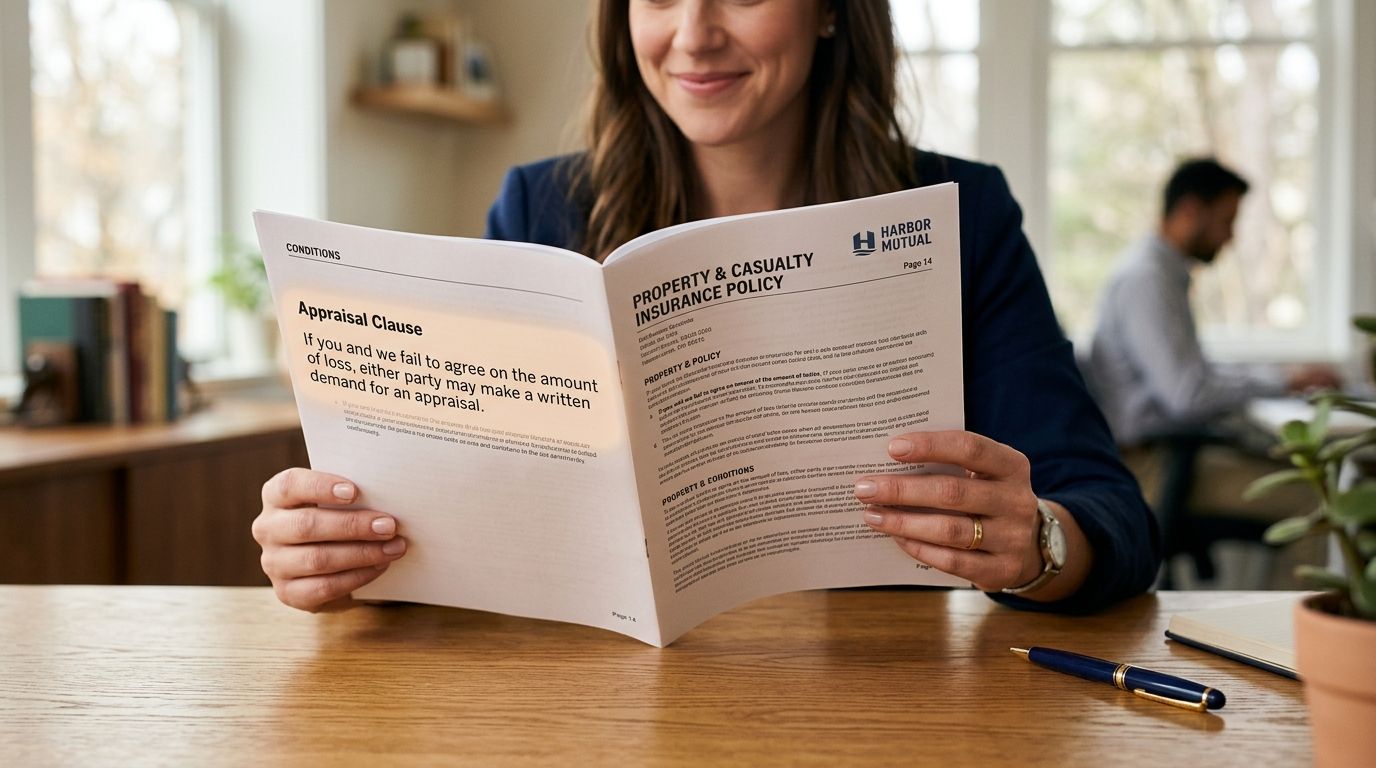
Many policyholders don't realize they already have a tool inside their own contract that can change the claim completely. That tool is the Appraisal Clause.
When value is the dispute, the clause can move the matter out of one-sided adjuster discretion and into a formal valuation process. Instead of arguing endlessly over a low number, each side appoints an appraiser and the dispute focuses on evidence.
Why the clause matters
In this situation, strategy matters more than emotion. If the insurer is using a formula-driven valuation approach, especially one that compresses loss on a higher-value vehicle, the Appraisal Clause can force a different lane of decision-making.
Once invoked, the conversation often becomes less about “what our software says” and more about “what the market evidence proves.” That shift is important in Oregon and Washington cases involving newer vehicles, specialty vehicles, and situations where dealer reaction drives the effective value loss.
When it's worth invoking
The clause tends to matter most when:
- The insurer's number feels formulaic and disconnected from dealer reality.
- The vehicle is late-model, luxury, custom, or collector-owned and standard caps don't fit.
- The adjuster won't move despite documented repair severity and accident-history stigma.
If you want to understand how the process works before triggering it, this guide on the insurance appraisal clause lays out the mechanics in plain language.
The Appraisal Clause doesn't guarantee your preferred number. It does force a more disciplined valuation process.
Why this is especially useful against biased formulas
A lot of drivers make the same mistake. They treat the insurer's first diminished value figure as if it were a neutral professional conclusion. Often, it's the output of a restricted method.
The clause gives you a way around that. It doesn't erase disagreement, but it changes the structure of the disagreement. That's why experienced appraisers look for policy language early. If the contract gives you the right to challenge valuation through appraisal, you should understand it before accepting a reduced settlement.
Diminished Value Claims in Oregon and Washington
Drivers in Oregon and Washington usually care about three things first. Can I make the claim, what will the appraisal cost, and how long will this take?
The answer depends on whether you're presenting the claim through your own policy or against the at-fault party's carrier, what your policy language says, and how cooperative the insurer is once you submit evidence. The practical point is simple. Don't wait until the file cools off and documents disappear.
Cost versus likely benefit
A certified appraisal isn't free, and it shouldn't be. According to this appraisal cost overview, the typical industry benchmark for a single certified diminished value appraisal is $300 to $1,200 in most U.S. markets. The same source explains that the cost reflects the work needed to document the difference between pre-accident value and post-repair market value.
That range makes sense when the appraiser is doing actual inspection and market research. A cheap one-page opinion usually won't help much if the carrier pushes back.
Practical timing in Oregon and Washington
The best time to evaluate diminished value is usually after repairs are complete, when the full repair scope can be documented and the vehicle can be inspected in repaired condition. Waiting too long can make the claim harder to present cleanly because adjusters change, files get thinner, and your own records become harder to assemble.
A practical approach looks like this:
- After repairs finish, gather the final invoice, photos, and claim paperwork.
- Before accepting a final settlement, review whether the insurer addressed diminished value at all.
- If the offer looks low, get an independent appraisal and review your policy for appraisal rights.
What owners of high-value vehicles should watch closely
Oregon and Washington owners of premium, custom, and collector vehicles need to be especially careful about accepting standardized calculations. These vehicles often attract buyers who are more sensitive to prior damage, originality, disclosed repairs, and structural history.
That doesn't mean every claim needs a fight. It means these claims should be evaluated with a market lens, not a shortcut. If the dispute is really about valuation, the Appraisal Clause often becomes the cleanest tool available.
Negotiating Your Claim and Taking the Next Step
Once you have the report, the next move is straightforward. Submit it to the adjuster with a concise written demand and ask for a response based on the evidence in the appraisal, not the prior formula or internal worksheet.
Keep the tone professional. Don't overargue. The report should carry most of the weight.
What works in real negotiations
A few habits consistently help:
- Lead with documentation. Send the appraisal, repair invoice, and any supporting photos together.
- Ask direct questions. If the insurer rejects the figure, ask what specific part of the market evidence they dispute.
- Separate value from emotion. You may be frustrated, but the strongest position is still a calm, evidence-based one.
If the adjuster responds with a recycled low number, that's usually a sign the dispute isn't about explanation. It's about bargaining power. At that point, review whether the policy supports formal appraisal and decide whether to invoke it.
What doesn't work
These approaches usually waste time:
- Phone-only arguments with no paper trail.
- Accepting “that's our formula” as a final answer.
- Using generic internet estimates instead of a report tied to your exact vehicle and repairs.
It also helps to understand how insurers use technology and internal workflows to keep claim handling efficient. This case study on how Gaya AI empowers insurance agencies is useful background because it shows how carriers increasingly systematize decisions. That doesn't make every outcome unfair, but it does explain why policyholders often need disciplined counter-evidence.
A diminished value auto appraisal gives you that counter-evidence. If the valuation is wrong, the answer isn't more frustration. It's better proof.
If your repaired vehicle lost market value and the insurer's number doesn't reflect what buyers and dealers will pay, the next step is to get the loss measured properly. Total Loss Northwest provides independent diminished value and total loss appraisals, including Appraisal Clause support for drivers in Oregon and Washington who need a market-based valuation.