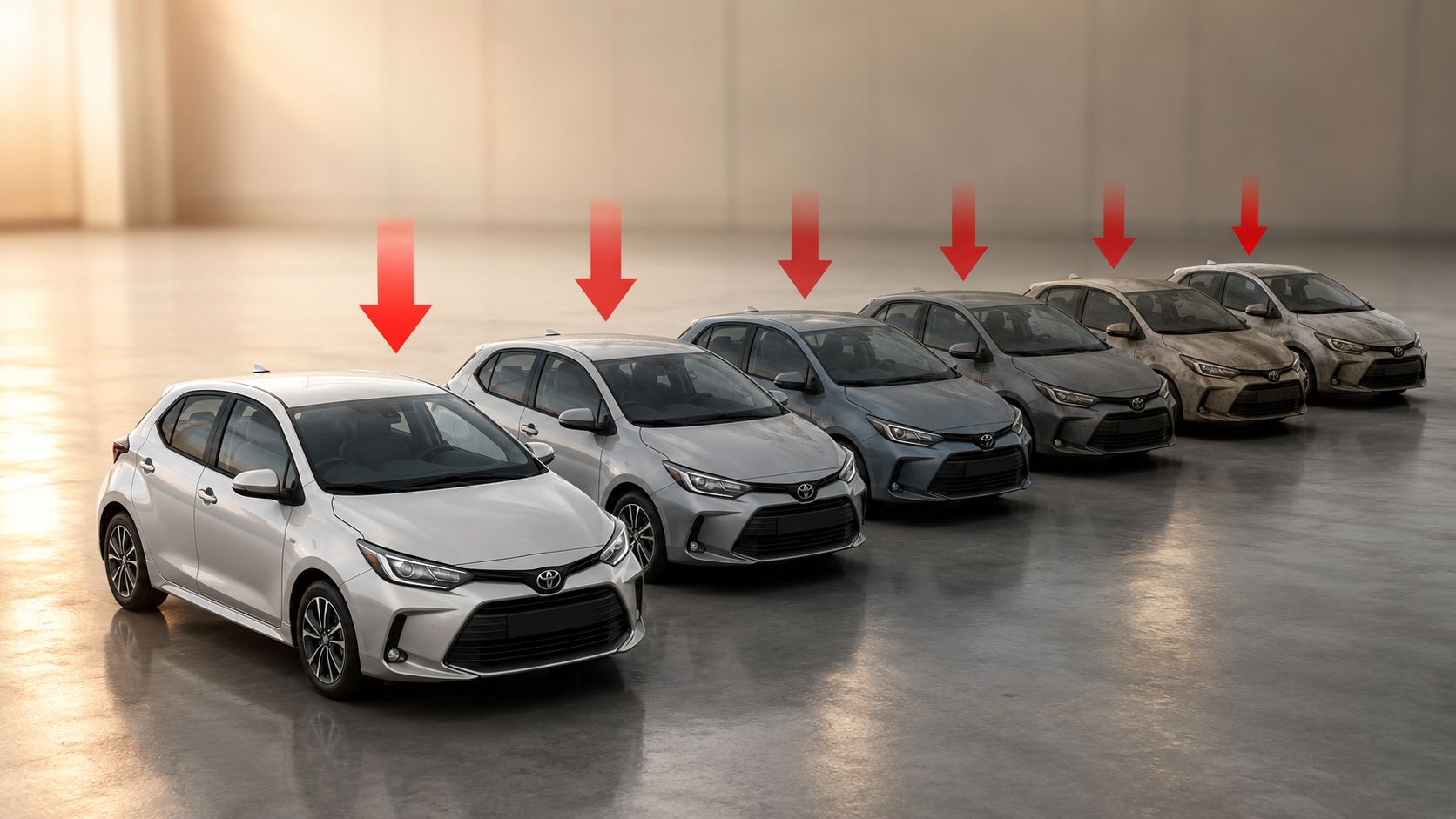
A sedan in India can lose about 20–30% in the first year and then 10–20% annually in years 2–5, which is why a ₹10 lakh car can slide to roughly ₹5–5.5 lakh by year five under typical conditions, according to India-focused resale guidance on depreciation patterns CarToq's resale value guide. That's the hidden cost many buyers overlook when they focus only on monthly payments or on-road price.
The worst resale value cars in India usually share the same warning signs, weak demand, discontinued status, brand exits, low liquidity, or a body style the used market has stopped rewarding. That's why some models become smart buys on the second-hand market but poor ownership bets if you're thinking about future trade-in value. A useful way to think about depreciation is simple, the market pays more for cars it can move quickly, service easily, and explain confidently to the next buyer, which is why a fair-market-value check matters before you sell or total out a vehicle, as explained in this fair market value guide.
1. Renault Captur
The Renault Captur lost resale momentum because it was priced and packaged above its market reach, yet never built the liquidity that keeps used values firm. Buyers saw it as a compact SUV with premium intent, but the model never developed the broad trust or showroom presence that supports strong second-hand pricing. Renault still positions itself as an active brand on its official site, but the Captur itself no longer benefits from an in-market product line, which is usually the first signal used-car buyers look for Renault India.
A fair-market comparison helps explain why the Captur keeps slipping further in the used market, as outlined in this fair market value guide.
Why it depreciates so hard
The Captur had a few strengths on paper, a spacious cabin, a comfortable ride, and shared 1.5L petrol and diesel powertrains with other Renault-Nissan products. Those traits help in ownership, but they do not automatically hold up resale value in India, where used-car buyers pay first for confidence, easy serviceability, and a model that is still visible in the market. A discontinued car changes that calculation quickly. Even a familiar mechanical package can feel like a risk once the nameplate loses showroom support and active demand.
Practical rule: when a model is discontinued and not part of a high-volume family, sellers should expect slower price discovery and more room for negotiation.
The Captur also shows how depreciation worsens after the first owner. A niche purchase can become even harder to sell once parts familiarity and dealer memory fade outside large cities. That leaves one kind of buyer interested, the person who wants comfort and highway stability at a discount. It leaves the broader market unconvinced, which is exactly why the Captur's resale profile stays weak.
2. Honda BR-V
The Honda BR-V had the kind of packaging many family buyers liked on paper, a 7-seat cabin, a smooth i-VTEC petrol engine, and the reassurance of Honda's service network Honda Cars India. The resale market still treated it cautiously because practicality alone doesn't guarantee demand, especially when the model's sales story never became strong enough to create a wide, active used-car audience.
The BR-V's depreciation profile is easy to read. It was discontinued in India after the BS6 transition, so the model stopped receiving the normal boost that comes from fresh inventory, refreshed advertising, and showroom visibility. Once that happens, used demand tends to narrow around buyers who specifically want the nameplate, rather than around the broader family-car audience the car was originally targeting.
The forensic factor
Its worst resale problem is not reliability, it's liquidity. Honda's reputation helps reassure owners about ownership experience, but the used market still punishes cars that don't turn quickly. That's why BR-V listings often get pushed deep below their original price, especially when compared with more mainstream family choices that keep drawing broader interest.
A second factor is category overlap. The BR-V fought for attention against conventional sedans and more obvious compact SUVs, which meant it never owned a clear emotional or practical lane. Buyers saw a flexible seven-seater, but many of them still preferred a more established shape or a body style with better status in the secondary market.
For someone shopping used, that weakness can be a benefit. For an owner planning to sell later, it means the discount you enjoyed at purchase can show up again at exit.
3. Toyota Yaris
The Toyota Yaris is one of the clearest examples of a car that was competent, then sidelined by the market. Toyota discontinued it in September 2021 after weak demand, and that decision matters because used values often mirror what happened in new-car showrooms Livemint's resale discussion. A car can be well built and still suffer poor resale if buyers never gave it much enthusiasm in the first place.
Why the market stayed cold
The Yaris offered a comfortable ride, a quiet cabin, and Toyota's well-known reliability reputation. It also had a safety kit on higher trims and continued aftersales support, which should have been enough to protect residual values better than it did. Instead, the market responded to the car's softer styling, conservative positioning, and lack of a standout feature story.
That's the key forensic clue. The Yaris did not fail because it was badly engineered. It failed because it never built a strong emotional case or a clear price-value narrative against more aggressive rivals. Used-car buyers tend to pay up for products they can justify quickly to themselves, and the Yaris made that justification harder than Toyota's more popular nameplates.
What this tells buyers
A car can have a trusted badge and still become a resale laggard if it misses the market mood. The Yaris is a strong reminder that resale value is shaped by demand, not just durability. That's why conservative engineering helps ownership, but it doesn't automatically protect liquidity.
If you're shopping used, the Yaris can make sense as a comfort-first sedan. If you're buying new and thinking about eventual sale, its history shows why a low-emotion product in a crowded sedan class can age faster in financial terms than owners expect.
4. Ford EcoSport
The Ford EcoSport was once one of India's most recognizable sub-4m SUVs, helped by strong driving dynamics, sharp steering, and a solid-feeling chassis. Its resale story changed after Ford's exit from retail and manufacturing in India, because the used market prices the brand's future footprint as much as the car itself Ford India. That matters in a segment shaped by broad consumer interest, which is why guides on why SUVs are so popular help explain why some compact SUVs stay liquid while others fade.
Brand exit changed the math
The EcoSport still has a loyal owner base and a good reputation among drivers who care about steering feel. It also came with a wide engine mix, including 1.5L petrol and diesel options, and higher trims brought useful equipment and decent build quality. Those strengths did not fully offset the market's reaction to Ford stepping away from the segment.
Buyers do not only ask whether a car runs well. They also ask who will want it next, and who can service it without friction.
That question weakens the EcoSport's resale profile. Once a manufacturer reduces its visible presence, the pool of future buyers gets smaller. Some shoppers hesitate because they worry about parts, while others shift toward compact SUVs with a clearer ownership path and stronger used-market recognition. The car becomes attractive mainly to enthusiasts who already understand its strengths, not to the wider audience that usually sets used prices.
The EcoSport also shows how a model can age differently from its driving reputation. A strong product can still turn into a resale discount if the brand ecosystem around it shrinks. For buyers, that creates an opening to pick up a well-kept example at a lower price. For owners, it usually means more pressure during resale negotiations, even when the car itself remains mechanically sound.
5. Nissan Kicks
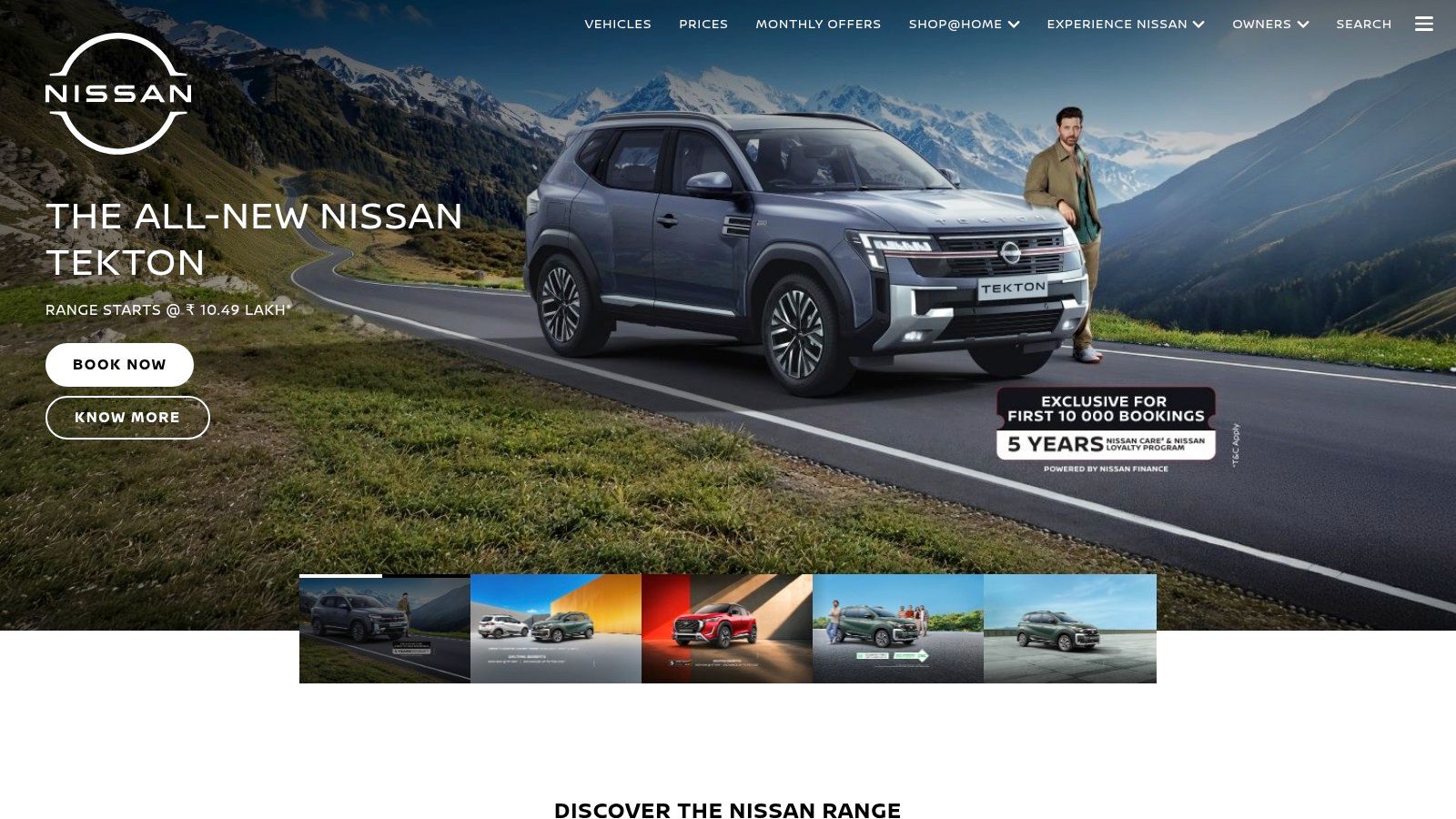
The Nissan Kicks fits a common depreciation pattern in India. It had solid hardware, limited mainstream traction, and was eventually discontinued in India in 2023. Nissan still maintains an active service presence in India through its own network, but that alone does not create used-car demand when a model never became common enough to feel familiar.
A good car with a narrow audience
The Kicks had a spacious cabin, a balanced ride-and-handling setup, and a 1.3L turbo petrol engine that could feel quick. Higher trims were well equipped, so the product itself was not the problem. The issue was market reach. The car stayed more of a connoisseur's pick than a mainstream default, and that is usually a weak starting point for residual value.
Resale pricing in India often rewards cars that buyers can understand quickly. Compact SUVs with broad recognition, easy-to-explain ownership economics, and strong city-town liquidity usually hold up better. The Kicks did not have that simple resale story. Even buyers who liked it often had to think harder about why they wanted it, and hesitation is a problem in the used market.
The hidden pressure on value
Discontinuation makes that weakness more visible. Once a model leaves sale, every used listing competes against the memory of a car that is no longer available in new-car form. Smaller-town mechanics may also be less familiar with it, which adds another layer of caution. That matters because resale is shaped by confidence as much as by condition.
The Kicks shows how a car can depreciate quickly without being a bad product. It only needs to become harder to explain, harder to price, and harder to move. The result is a sharper discount for used buyers, while owners face more pressure during resale negotiations even if the car remains mechanically sound.
6. Datsun redi-GO
The Datsun redi-GO is a clear case of brand-exit depreciation. Once a budget sub-brand is withdrawn, the used market begins to price in uncertainty around parts support, dealer familiarity, and long-term serviceability, even when the car itself is mechanically simple.
Why the floor falls out
The redi-GO had a clear urban brief. It was ultra-light, easy to place in traffic, and inexpensive to run. Its simple Renault-Nissan-sourced mechanicals kept service requirements straightforward, which should have supported value retention at the lower end of the market. The problem was not the product's day-to-day usability. The problem was brand confidence. Once Datsun was phased out, the badge stopped carrying any sense of continuity in the showroom or in the second-hand market.
That shift matters because budget cars already face tougher scrutiny on fit, finish, safety perception, and ownership confidence. When the brand disappears, those concerns do not fade. They harden. Buyers start asking practical questions about part availability, workshop familiarity, and whether the car will remain easy to maintain after several ownership cycles. For a model that competes mainly on price, even modest doubt can push resale offers down quickly.
The redi-GO also sits in the same risk category as other discontinued low-cost cars that lose liquidity once the new-car support structure fades. A useful reference point for that kind of market reaction is the logic behind a salvage title evaluation, where future uncertainty affects current value long before any mechanical problem appears.
Why used buyers still consider it
The redi-GO can still work for a buyer who wants the cheapest possible city runabout and is willing to accept limited brand strength in exchange for low entry cost. Depreciation has already done most of the work for the first owner, which is exactly why it can look attractive on paper. That same depreciation is also why it belongs on a list of the worst resale value cars in India.
For similar budget models, the warning signs are easy to spot. Brand exit, thin dealer visibility, and a product that existed mainly as an entry-price play rather than a long-term ownership proposition usually point to weak residuals. Those are the conditions that turn a low purchase price into steep value loss later on.
7. Chevrolet Cruze
The Chevrolet Cruze is the kind of used car that can confuse first-time buyers, because the product itself had real strengths. It offered a torquey diesel engine, strong highway performance, good road presence, and a well-specced cabin for its era. Yet GM ended Chevrolet retail sales in India at the end of 2017, and that brand exit hit resale confidence hard Chevrolet India.
Strong car, weak secondary market
The Cruze was never really a bad vehicle. In many respects, it was ahead of its time on highway comfort and performance feel. The problem is that resale markets don't reward “was good once,” they reward current certainty. Once Chevrolet stopped selling cars in India, the buyer pool became smaller and more cautious almost immediately.
That caution spreads for rational reasons. Some parts can be costlier or slower to source, and even when support channels remain in place, many used-car buyers don't want to become the person who has to test those channels. The result is an unusually steep gap between what the car offers dynamically and what the market will pay for it.
The salvage mindset matters
The Cruze also shows why accident history and total-loss thinking matter in old, low-liquidity models. A car with already soft demand can become especially difficult to value once it has had damage or insurance involvement, because comparables get thin fast. That's where a structured valuation process matters, including a look at what a salvage title means.
For used buyers, the Cruze can still be a compelling performance bargain. For owners, it's a reminder that a strong driving experience doesn't always convert into strong exit value. Market memory, not just engine output, decides resale.
7 Cars with Worst Resale Value in India
| Model | 🔄 Ownership complexity | ⚡ Resource requirements (service & running costs) | ⭐ Reliability / Quality | 📊 Expected resale / Value | 💡 Ideal use case / Tip |
|---|---|---|---|---|---|
| Renault Captur | Moderate, discontinued in India; dealer/parts uneven | Moderate, proven 1.5L engines; parts can be delayed | ⭐⭐⭐ | Low, heavy depreciation, weak future resale | Buy for comfort and highway stability if resale isn't a priority |
| Honda BR‑V | Low, Honda network strong despite discontinuation | Moderate, smooth i‑VTEC, CVT option; reasonable running costs | ⭐⭐⭐⭐ | Low, steep used‑market discounts | Good value 7‑seat family option; confirm part lead times for specific areas |
| Toyota Yaris | Low, Toyota aftersales/support remains robust | Moderate, comfortable, conservative engines; decent running costs | ⭐⭐⭐⭐ | Low, soft demand limits liquidity | Ideal for buyers prioritizing comfort and reliability over resale gain |
| Ford EcoSport | Moderate–High, Ford wound down India ops; retail support reduced | Moderate, multiple engines; some parts slower to source locally | ⭐⭐⭐ | Low–Moderate, discounts common; niche enthusiast interest | Suited to drivers who value dynamics; verify local service availability |
| Nissan Kicks | Moderate, discontinued but Nissan service network active in many areas | Moderate, 1.3L turbo offers punch; running costs average | ⭐⭐⭐⭐ | Low, undervalued vs active C‑SUV rivals | Higher trims offer strong used‑market bargains; check dealer familiarity |
| Datsun redi‑GO | High, brand shutdown means limited long‑term support | Very low, ultra‑light, cheap to run; some parts may have longer waits | ⭐⭐ | Very low, steep depreciation, thin buyer pool | Best as an ultra‑cheap city runabout; expect resale and parts limitations |
| Chevrolet Cruze | High, GM/Chevrolet exited India; buyer pool and retail channels thin | Moderate, torquey diesel, good highway performance; parts slower/costlier | ⭐⭐⭐ | Very low, heavy depreciation post‑exit | Buy for performance/specs at low price, but plan for harder resale and parts sourcing |
Navigating the Used Market Turning Depreciation to Your Advantage
Poor resale value isn't always a reason to avoid a car. In some cases, it's a reason to buy one used at a better price, as long as you understand why the discount exists. The cars above lost value for different reasons, but the pattern is consistent, weak demand, discontinuation, brand exit, or a product position that never matched what the market wanted to keep paying for.
That's why forensic reading matters. A discontinued model like the Renault Captur or Nissan Kicks tells you one story. A brand-exit case like the Ford EcoSport or Chevrolet Cruze tells you another. The Datsun redi-GO adds a third layer, where brand shutdown and budget perception combine to push values down faster than mechanical simplicity can rescue them.
For sellers, the lesson is timing and condition. Keep service records, fix obvious wear before listing, and price against the market reality rather than the memory of what you paid. If you're dealing with a lowball offer after damage or a total loss, a fair valuation review can matter just as much as service history, which is where Total Loss Northwest fits naturally into the conversation for owners who need a documented market-value assessment. If you also want to sharpen your asking price before listing, this guide to maximizing your vehicle resale price is a useful next step.
For buyers, the best defense is pattern recognition. When you see a car with fading brand support, a tiny used-car audience, or a model story that ended early, assume resale will be soft unless there's strong evidence to the contrary. That doesn't mean the car is bad. It means you're getting paid back for someone else's depreciation.
A CTA for Total Loss Northwest.