You got the car fixed, the bumper looks right, the paint matches, and the shop says it's back to factory spec. Then the trade-in offer lands, and it's lower than the same model with a clean history. That gap is why diminished value appraisal Florida claims matter, because the repair bill and the resale hit are not the same loss.
Florida drivers run into this after rear-end crashes, parking-lot impacts, and more serious hits that leave a permanent record on the vehicle. The insurance company may pay for the repair, but the market still treats the car differently once an accident history shows up. That's the part most drivers don't expect until they try to sell, trade, or refinance.
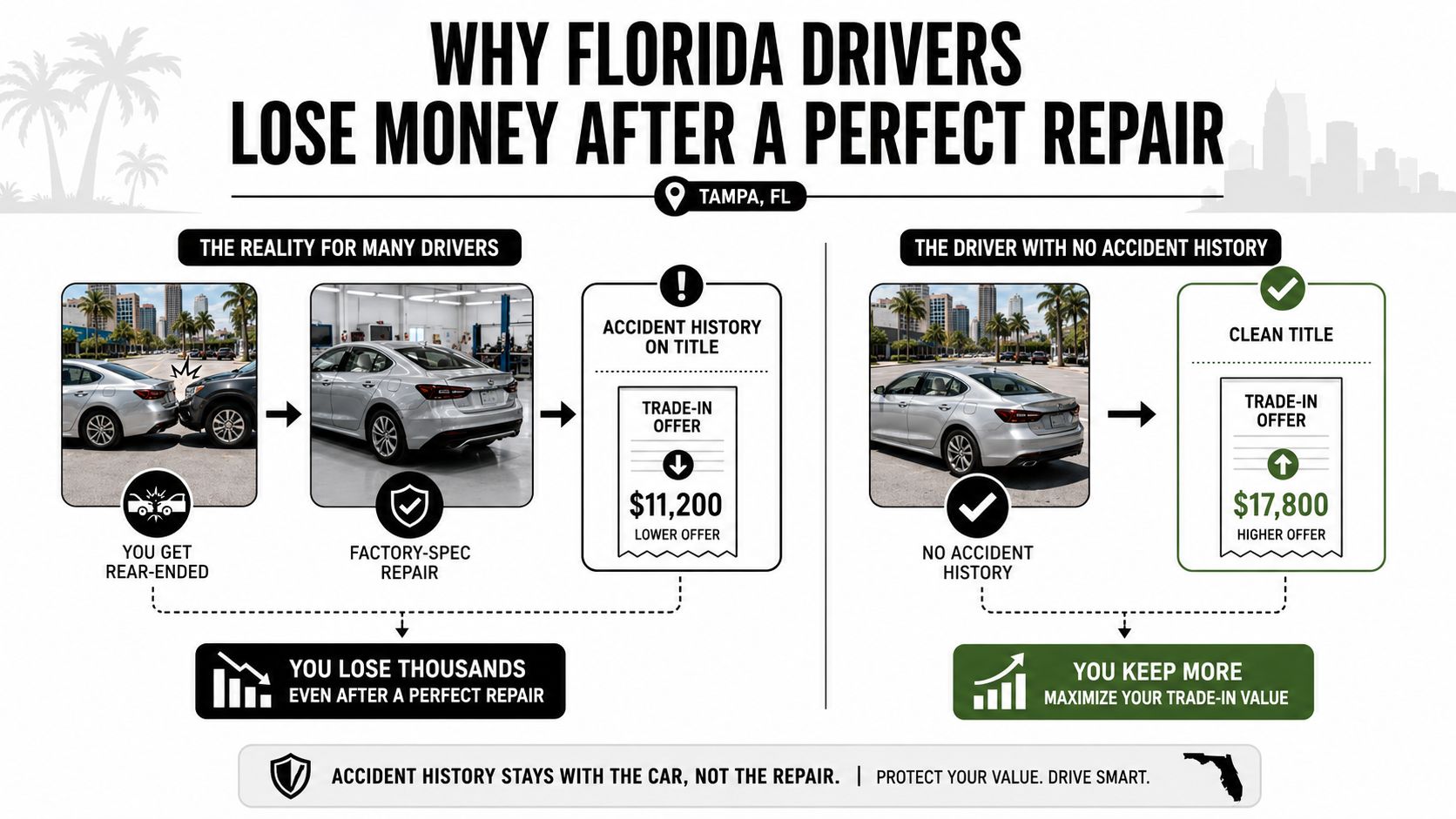
A clean repair doesn't erase stigma. Florida-facing explainers commonly frame diminished value around a 10% to 25% market-loss range, and some note that cars can lose 10% to 50% of value after a crash even when repairs are done right, which is why a $30,000 vehicle can end up with an estimated loss of $3,000 to $7,500 and a $20,000 car can lose $2,000 to $5,000 depending on damage, mileage, repair quality, and how the market views the history (Florida diminished value overview). The point isn't that every car loses the same amount. The point is that the loss attaches to the vehicle's history, not just the repair invoice.
What the market punishes
A buyer doesn't need to inspect the car for long to care about the record. If the history report shows a crash, the offer changes because the buyer assumes there's hidden risk, future repair complexity, or weaker resale later. That's why the strongest Florida claims usually focus on inherent diminished value, the stigma loss that remains after proper repairs are complete (Florida diminished value overview).
There are three recognized flavors of diminished value. Immediate diminished value is the drop right after the crash, before repairs. Repair-related diminished value comes from substandard or incomplete repairs. Inherent diminished value is the permanent market stigma that survives a good repair, and that's the one most Florida third-party claims pursue.
Practical rule: if the repair shop can make the car look right but can't make the accident history disappear, the market loss still exists.
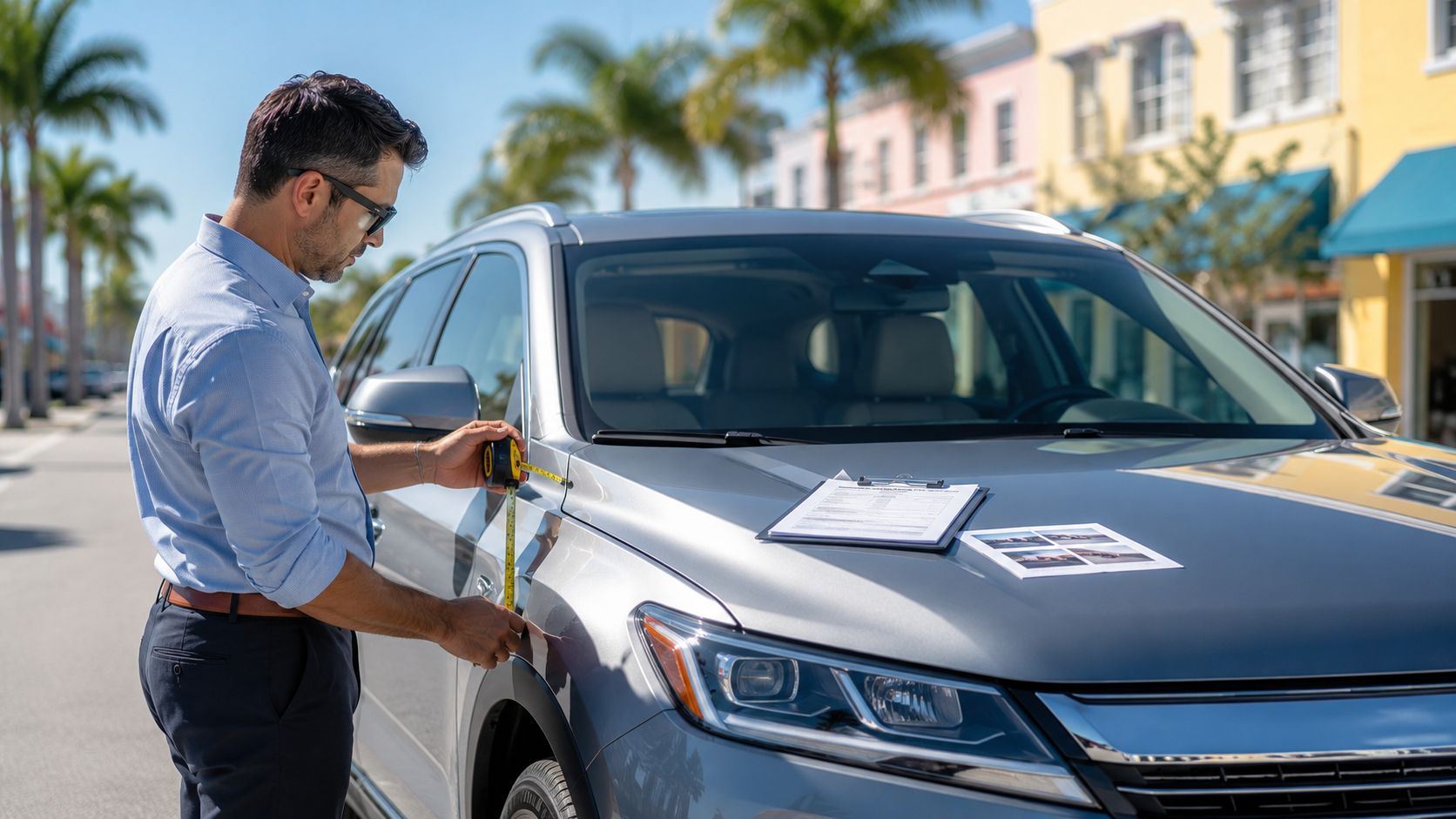
A mid-size SUV makes the difference easy to see. If it's hit, repaired, and later offered at trade-in, the clean-history version and the accident-history version are not priced the same, even if they drive the same. That spread is what a Florida diminished value appraisal tries to document with market evidence rather than guesswork.
If the crash also left you dealing with injuries, it helps to separate the vehicle claim from your medical recovery. A resource like auto accident care in Deerfield Beach from MedAmerica Rehab Center can be useful for drivers sorting out their next steps while the property-damage claim is still moving.
The insurance side often gets confused with total loss paperwork, especially when a company reports the loss internally before the vehicle is back on the road. If that's part of your file, this insurance loss reporting resource helps explain why the record matters.
Who Can File a Florida Diminished Value Claim and When
A Florida diminished value claim usually belongs to the not-at-fault driver in a third-party property-damage claim. If you caused the crash, your own insurer is usually not the right place to ask for diminished value, because the claim is normally made against the at-fault driver's liability coverage. That distinction saves time. It also keeps drivers from sending the demand to the wrong carrier and getting nowhere.
A claim can be worth filing only if the vehicle still has real market loss after repairs. A clean repair does not erase the accident history, and insurers know that buyers, dealers, and trade-in departments react to that history. In practice, the question is whether the loss is big enough to justify the appraisal cost. A modest repair on an older car may not clear that bar, while a late-model vehicle with heavy structural damage often does. If you want to check whether a local appraiser can price the claim before you spend money, a search for diminished value appraisal near me is a practical first step.
The three claim types in plain English
Inherent diminished value is the common Florida claim. It is the market stigma that remains after a proper repair. Immediate diminished value is the drop in value right after impact, before repairs begin, and repair-related diminished value comes from poor repairs or incomplete restoration. Most owners pursue the first one because it matches the actual loss on a repaired car with an accident history. That is the same basic framework discussed in BDISchool's answers on Florida accidents.
The timing matters as much as eligibility. Florida property-damage claims, including diminished value, are generally measured under the property-damage deadline that runs from the crash date. If you miss that window, the insurer can deny the claim even when the loss is real. The safest approach is to treat the clock as already running the day the collision happens.
A simple case makes it clear. If a driver is rear-ended on June 1, that date starts the claim period. If the owner is a minor or the file has a tolling issue, the timing can change, but you should never assume extra time exists without checking the facts in the file. In ordinary third-party cases, waiting for the insurer to finish its internal review is how valid claims get lost.
Do not wait for the adjuster to finish “looking into it” before you preserve the claim. The deadline keeps running even when the carrier is slow.
That is why eligibility comes first, before anyone spends money on appraisal work. If you are the not-at-fault owner, the claim is aimed at the other driver's insurer, not your own. The timeline starts with the crash, not with the day the repair shop finally sends the invoice.
How to Choose the Right Florida Diminished Value Appraiser
The wrong appraiser gives you a number. The right one gives you a report the insurer has to read carefully. In a diminished value appraisal Florida claim, the difference comes down to independence, market method, and whether the report can survive pushback from a claims adjuster or appraisal clause dispute.
What to look for before you hire
Start with independence. The appraiser should not be tied to the insurer and should be willing to explain the valuation in plain language. You want someone who can identify pre-loss comparables, post-repair comparables, and the specific damage features that justify the loss.
A usable report should include the appraiser's qualifications, the pre-loss comparable vehicles, the post-loss comparable vehicles, and a bottom-line dollar figure. Florida claim guidance also says the packet works best when it's tied to the repair-complete invoice, crash report, photos, and a written demand with a response deadline often set at 30 days (Florida claim packet guidance).
The fee tells you something too. Florida practitioners commonly note appraisals in the $200 to $700 range, and that price range reflects the work needed to build a report that's defensible (Florida appraisal cost guidance). Cheap, one-line estimates are easy for insurers to ignore. A real report takes more work because it has to show how the market was measured.
Ask this before hiring: “Will your report show the comparables and the reasoning, or just a final number?”
| Source | Methodology | Report Detail | Negotiation Strength |
|---|---|---|---|
| Insurer valuation | Often leans on internal software or generic valuation tools | Usually brief, with limited market explanation | Weak if it ignores actual comparable sales |
| Independent appraiser | Uses market comparison and repair specifics | Should show qualifications, comps, and a bottom-line figure | Stronger because it ties the number to market evidence |
The internal route can be useful as a settlement starting point, but it's not the same thing as a defensible appraisal. If you need a nearby-sounding search starting point, diminished value appraisal near me is the kind of phrase drivers use when they want a local appraiser who can document the market gap.
One more blunt point. If the appraiser won't talk about comparable sales, repair scope, and how the accident history affects resale, keep looking.
How Florida Appraisers Calculate Diminished Value
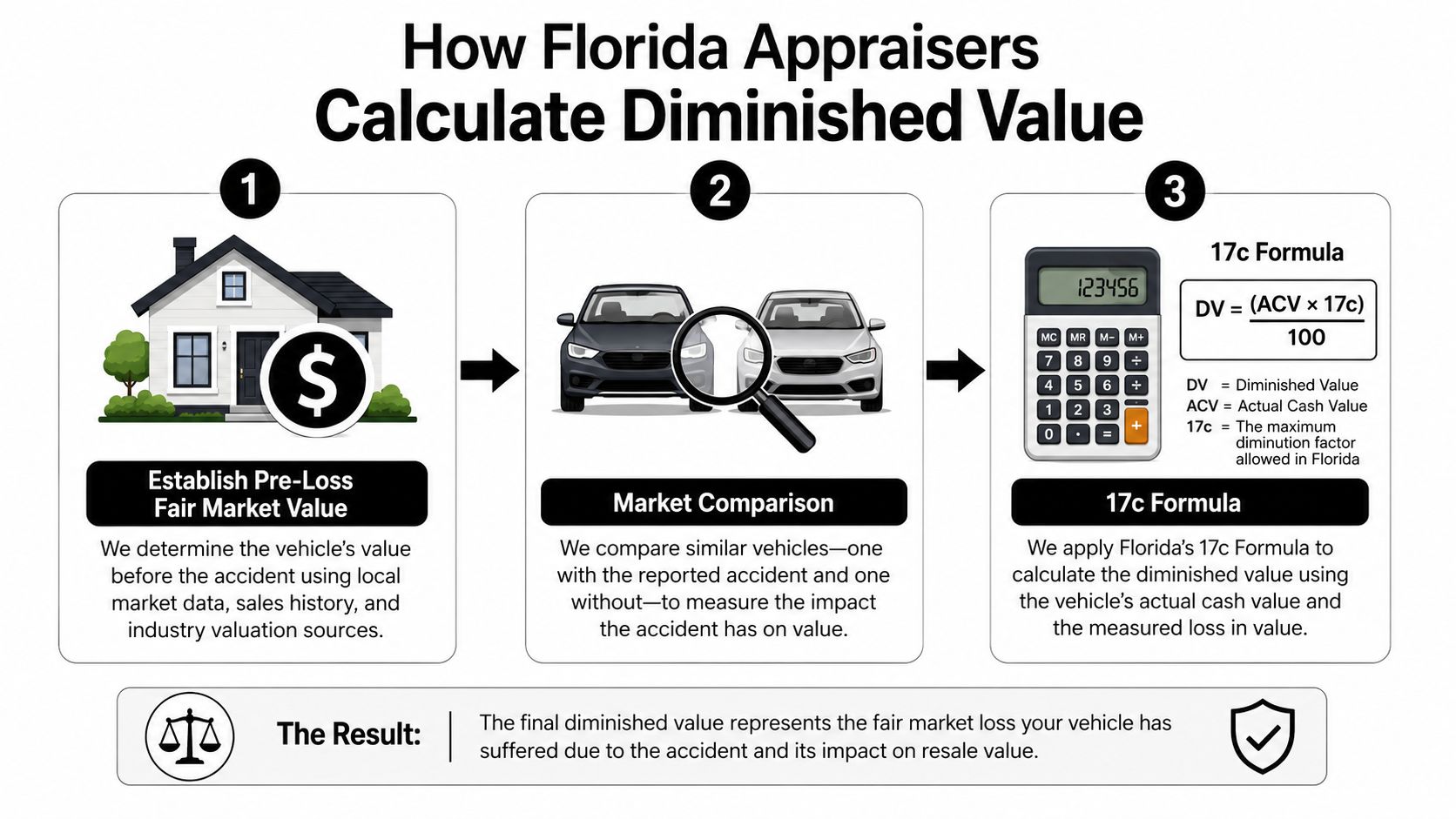
A strong Florida appraisal starts with the market, not a canned percentage. In a real diminished value appraisal Florida report, the appraiser first establishes what the vehicle was worth before the crash, then measures what a repaired version of that same vehicle would bring now.
Step one is pre-loss value
Pre-loss fair market value comes from verified comparable listings, auction data, mileage, trim, and regional adjustments. A base trim sedan and a loaded trim sedan do not start from the same value, even if the year and badge match. The report has to identify the exact vehicle first, and a proper vehicle inspection report helps anchor that starting point.
Step two is the post-repair market
After the repair, the appraiser compares similar repaired vehicles with accident history against clean-history comparables to estimate post-repair market value. The loss is the gap between those two figures. That is the part insurers struggle to dismiss, because it is tied to how buyers price repaired cars, not to a shortcut number.
The 17c formula is a separate insurer-style starting point. Florida-facing guidance says it begins at 10% of pre-accident value before adjusting for mileage and damage severity (17c and appraisal guidance). It is a rough benchmark, not a substitute for market evidence. If an adjuster uses it, the number still needs to be checked against real comparable vehicles and the repair file.
Severity drives the result. Structural repair, frame or unibody work, airbag deployment, suspension involvement, panel replacement, and refinishing scope all affect the market view of the car. A bumper cover swap is not the same thing as structural work, and buyers price those cars differently.
The practical test is simple. Ask whether the repair history would make a buyer discount the car at sale. If the answer is yes, the report should show why, and the infographic above shows the sequence appraisers use when they build that conclusion into a formal valuation.
Packaging and Presenting Your Diminished Value Claim
A strong appraisal still fails if the demand packet is sloppy. The insurer wants a clean file, not a story about how unfair the crash felt. The claim should read like a documented property-loss submission with a number attached and a paper trail that matches it.
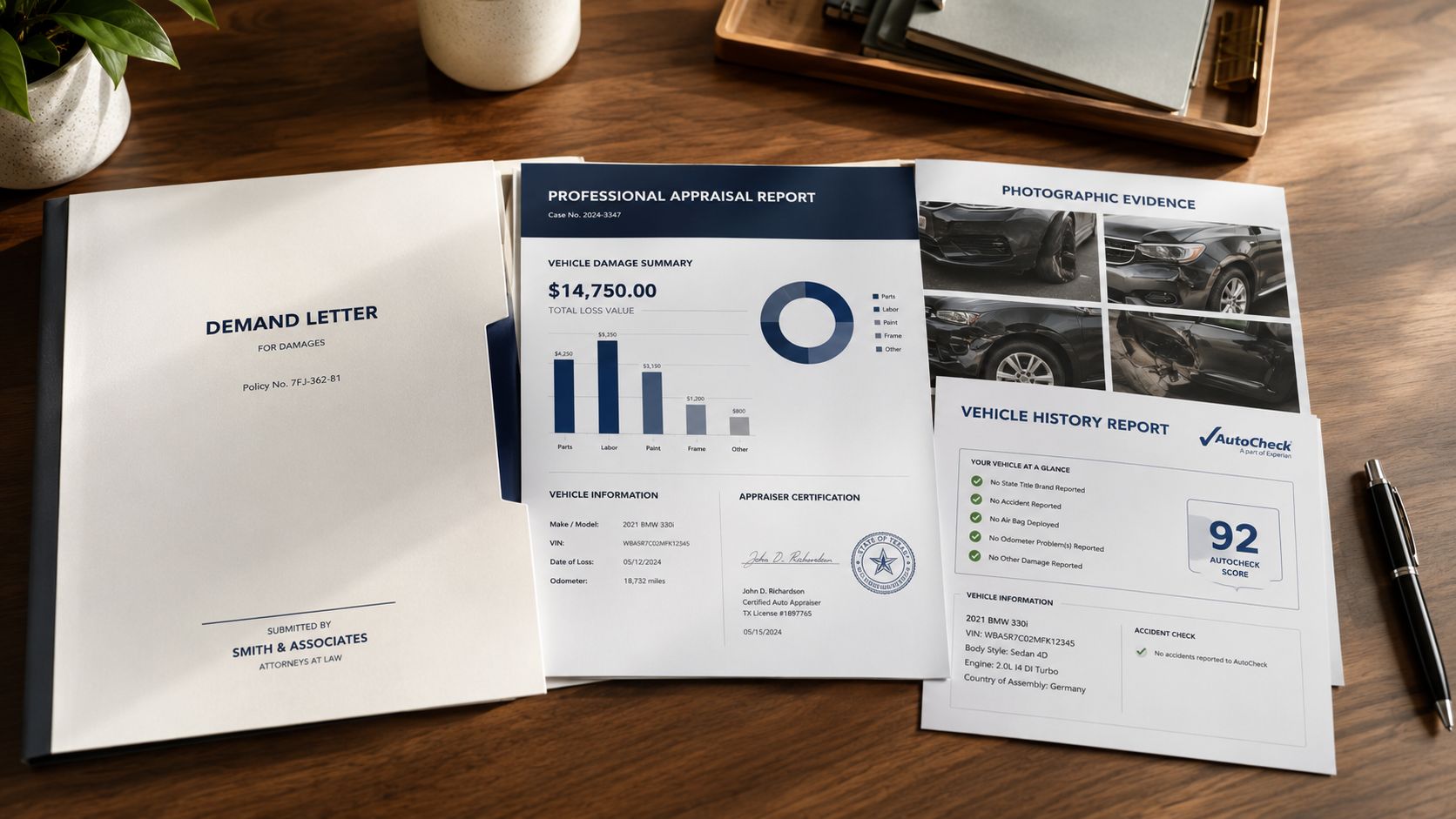
What belongs in the packet
Include the appraisal report, the repair-complete invoice, the crash report, and before-and-after photos. Florida claim guidance also points to pre-loss and post-loss comparables as part of the valuation record, because insurers routinely discount claims that rely only on generic guidebooks instead of actual market evidence.
The demand letter should be short and firm. Name the at-fault insurer, reference the claim number, attach the evidence, state the dollar amount, and give a clear deadline for a written response. Do not ask them to “please reconsider.” State the claim amount and the basis for it.
A useful structure looks like this:
- Claim basis: third-party property damage from the crash
- Evidence: appraisal, crash report, repair invoice, photos
- Amount demanded: the appraised diminished value
- Deadline: 30 days to respond in writing
- Reservation: appraisal clause and litigation rights kept open
If you need to confirm what a complete vehicle file should look like, this vehicle inspection report reference helps organize the kind of documentation that makes the packet easier to defend.
What happens after you send it
Expect one of three responses. The insurer may lowball it, deny it, or counter below the appraisal. That does not mean the file is dead. It means the adjuster is doing what adjusters do, which is protecting the carrier's number until the evidence forces a change.
Practical rule: if the insurer ignores the comps and only repeats “the car was repaired,” the dispute is about market value, not workmanship.
Keep the tone factual. Emotional language gives the insurer an easy excuse to call the demand unprofessional. The report, the photos, and the repair records should do the talking.
When Diminished Value Isn't Worth the Fight and Special Cases
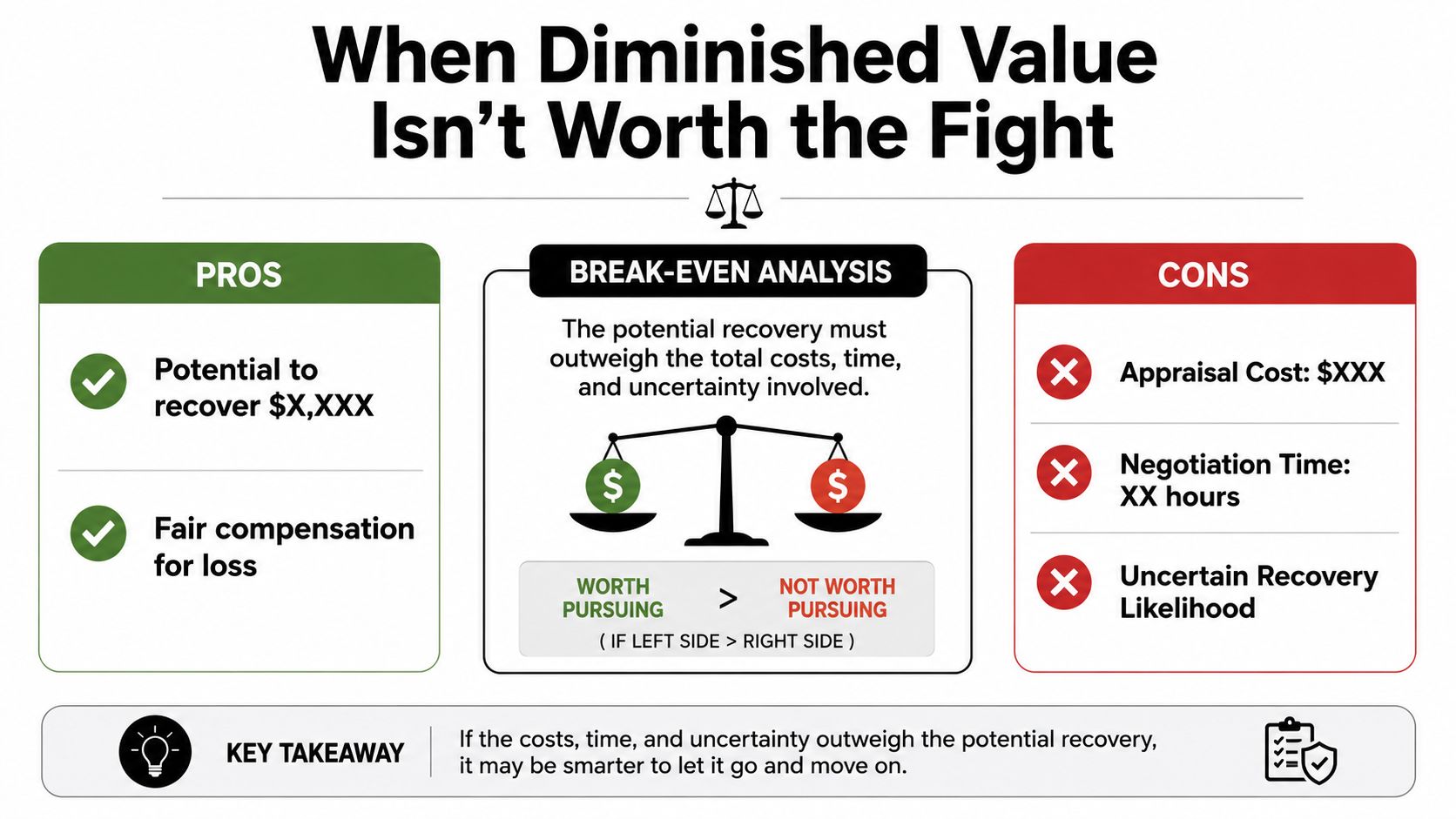
Not every claim is worth paying an appraiser to chase. That's the part most Florida guides skip, even though it's the first question many owners should ask. A smart diminished value appraisal Florida decision starts with break-even math, not optimism.
The break-even test
If the likely recovery is small and the appraisal cost is material, walk away. Florida guidance notes independent appraisal costs commonly around $400 to $700 in one source and $200 to $500 in another, so the practical question is whether the expected recovery comfortably clears that spend (appraisal cost guidance, claim packet guidance). A heavily depreciated older car with high mileage may not produce enough measurable loss to justify the fight.
The same logic applies if the car has prior damage, weak market demand, or a trim level that already trades cheaply. The claim still exists if the market loss is real, but the economics may be bad. That's not a legal judgment, it's a business one.
Where claims can get stronger
The opposite is true for EVs, luxury vehicles, and collector or custom cars. Florida-facing guidance flags those categories as underserved because repair complexity, parts scarcity, ADAS calibration, battery systems, and limited comparables can affect the appraisal approach and the claim size (Florida law and market gap discussion). Rare trims and modified vehicles can also be harder to value because the market is thinner and comparable sales are less obvious.
That's where a detailed appraisal matters most. The report has to show why the comparables are valid, not just that the car is “special.” If the vehicle is unusual, the insurer can't lean on a generic valuation tool and pretend the market is standard.
For a low-value commuter car, the right answer may be to document the loss and move on. For a newer EV, a luxury sedan, or a custom build, the claim can be much more persuasive because the market penalty after a crash is often easier to defend.
Your Florida Diminished Value Next Steps
Start with eligibility. If you weren't at fault and the claim is against the other driver's insurer, the file may be worth pursuing. If you caused the crash, or if the statute clock is running out, the decision gets narrower fast.
Then lock down the documentation. You need the appraiser's qualifications, pre- and post-loss comparables, the repair invoice, the crash report, and photos that show the damage and the repaired condition. Send the written demand with a 30-day response window, and keep the tone direct.
If the insurer lowballs the file, don't treat that as the end of the claim. Ask whether the number was based on actual market evidence or a generic valuation tool that ignored the vehicle's repair history. When the numbers don't line up, the dispute usually turns on proof, not persuasion.
The safest move is to act before the 4-year statute of limitations runs from the crash date (Florida diminished value timeline). Once that deadline passes, the property-damage claim is done, no matter how clean the repair looked or how much value the market stripped away.
If you want a valuation that's built to stand up to insurer pushback, Total Loss Northwest handles diminished value and total loss appraisal work with market-based reporting and appraisal-clause support. Visit Total Loss Northwest if you want to compare your repair history against a defensible market analysis and decide whether the claim is worth filing now.