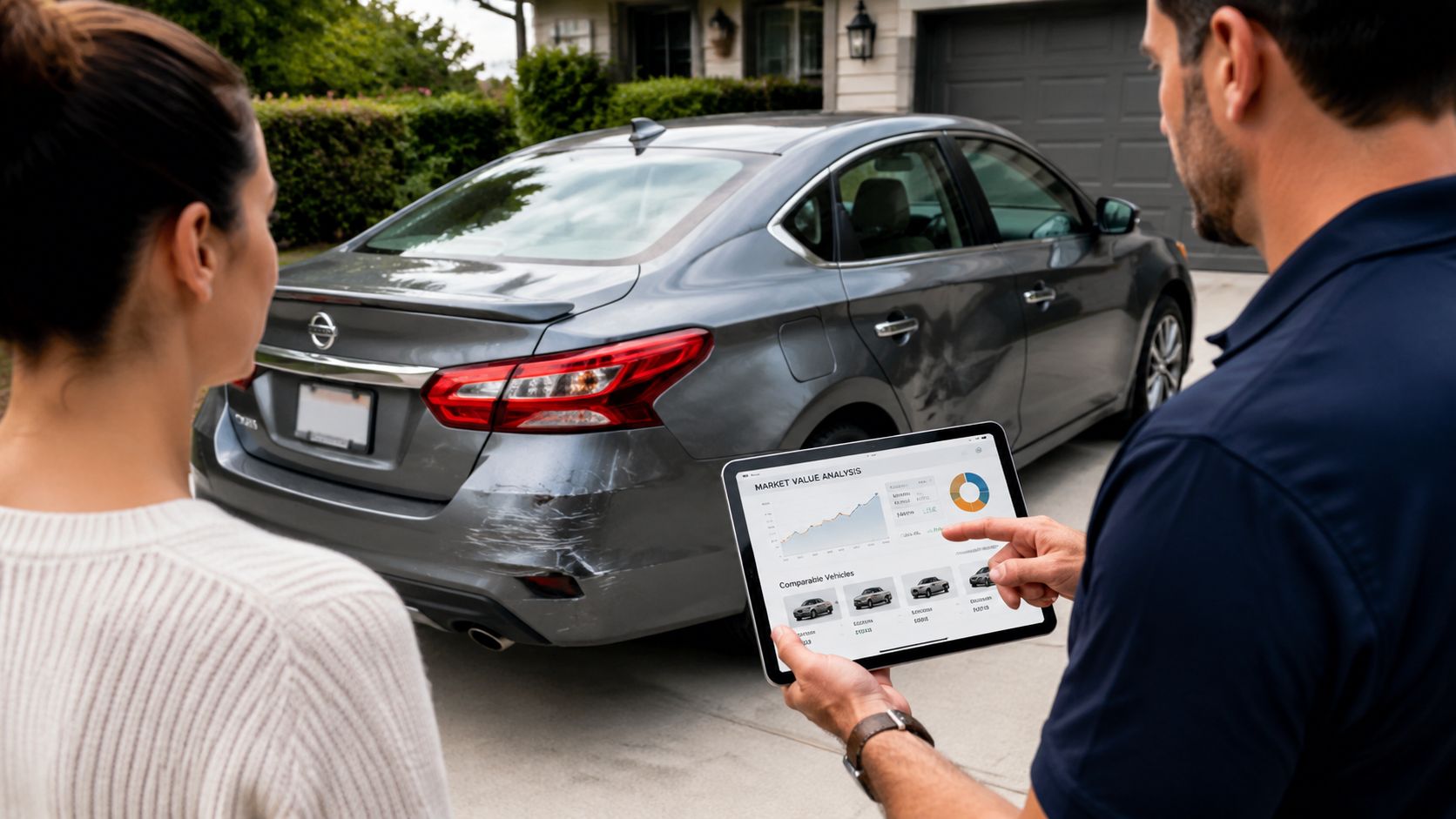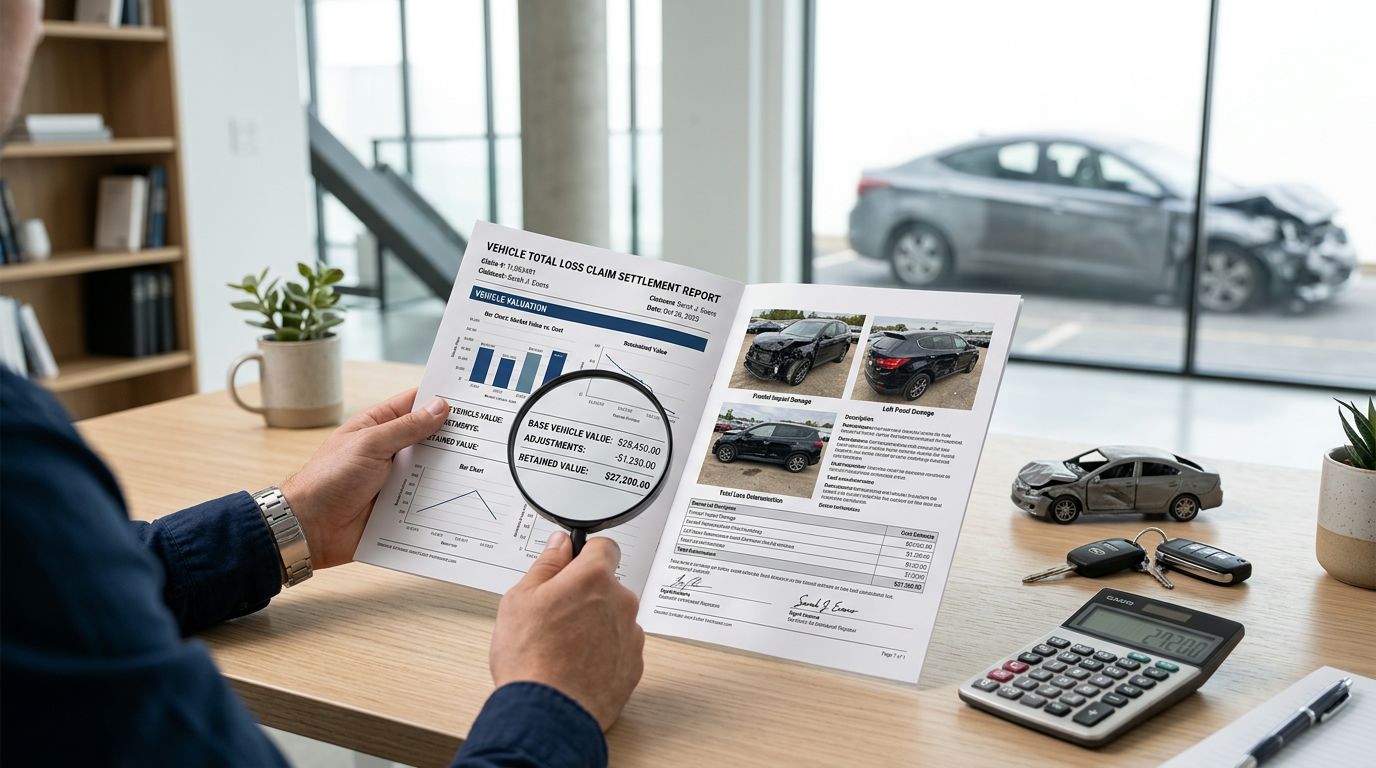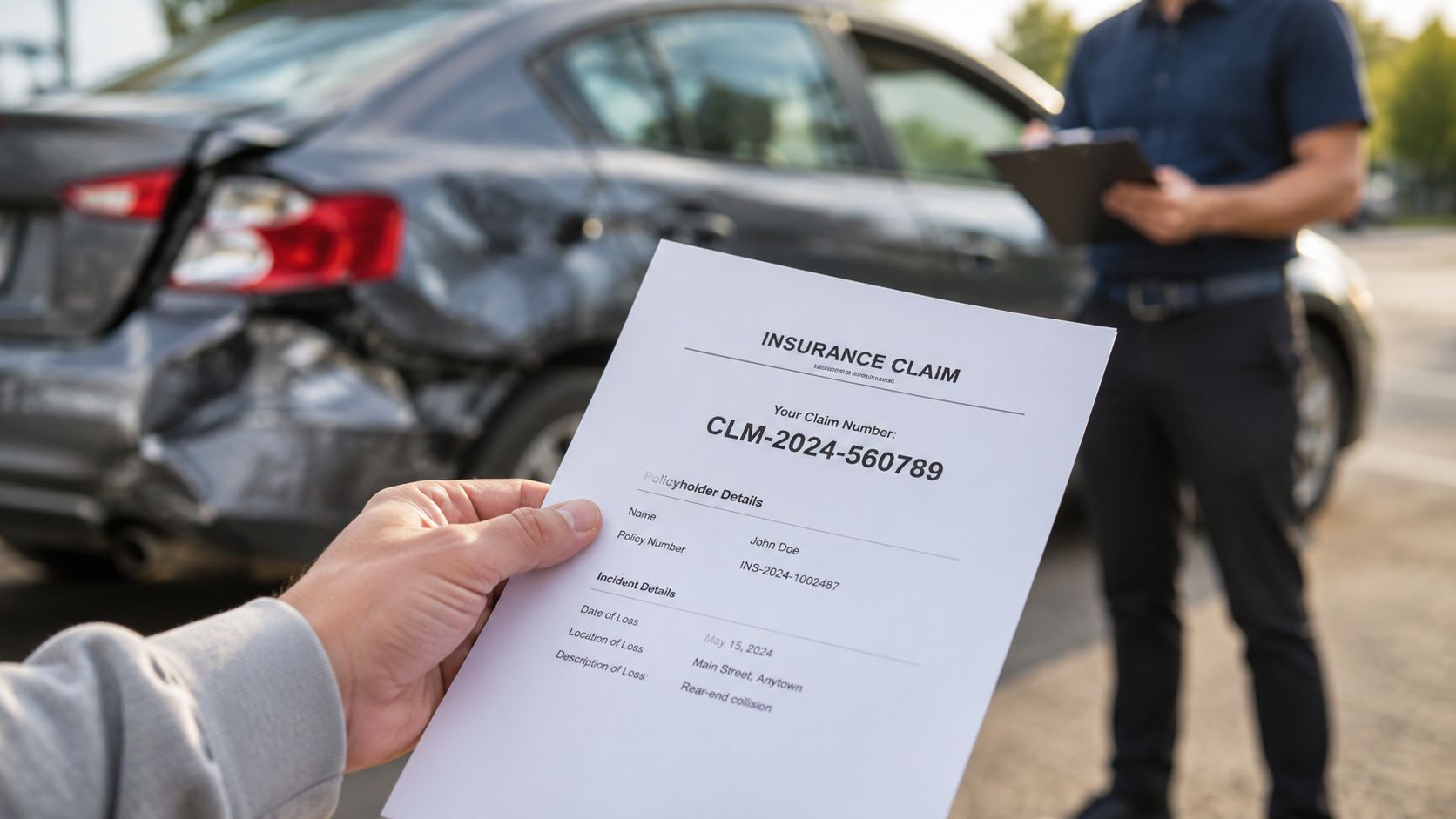
In the United States, claim volume fell 8.9% in Q1 2026 and sat more than 13% below the five-year average, yet total loss frequency reached 23.1% of auto claims, a new industry high, according to Insurance Journal's 2026 claims analysis. That's the contradiction every total-loss driver needs to understand. Fewer claims don't automatically mean easier settlements. Insurers can handle fewer files while paying more attention to severity, repair economics, and total-loss valuation.
Your claim number is the administrative key to that fight. It connects the accident, vehicle, policy, estimates, valuation reports, supplements, and settlement discussions. If the number is wrong, missing, or attached to the wrong coverage file, your evidence can sit outside the negotiation that determines what you're paid.
The practical rule is simple: treat your claim number as part of your evidence file, not as a meaningless reference code. Confirm it, use it consistently, and make sure every appraisal, market comparison, repair invoice, and communication is tied to the correct claim.
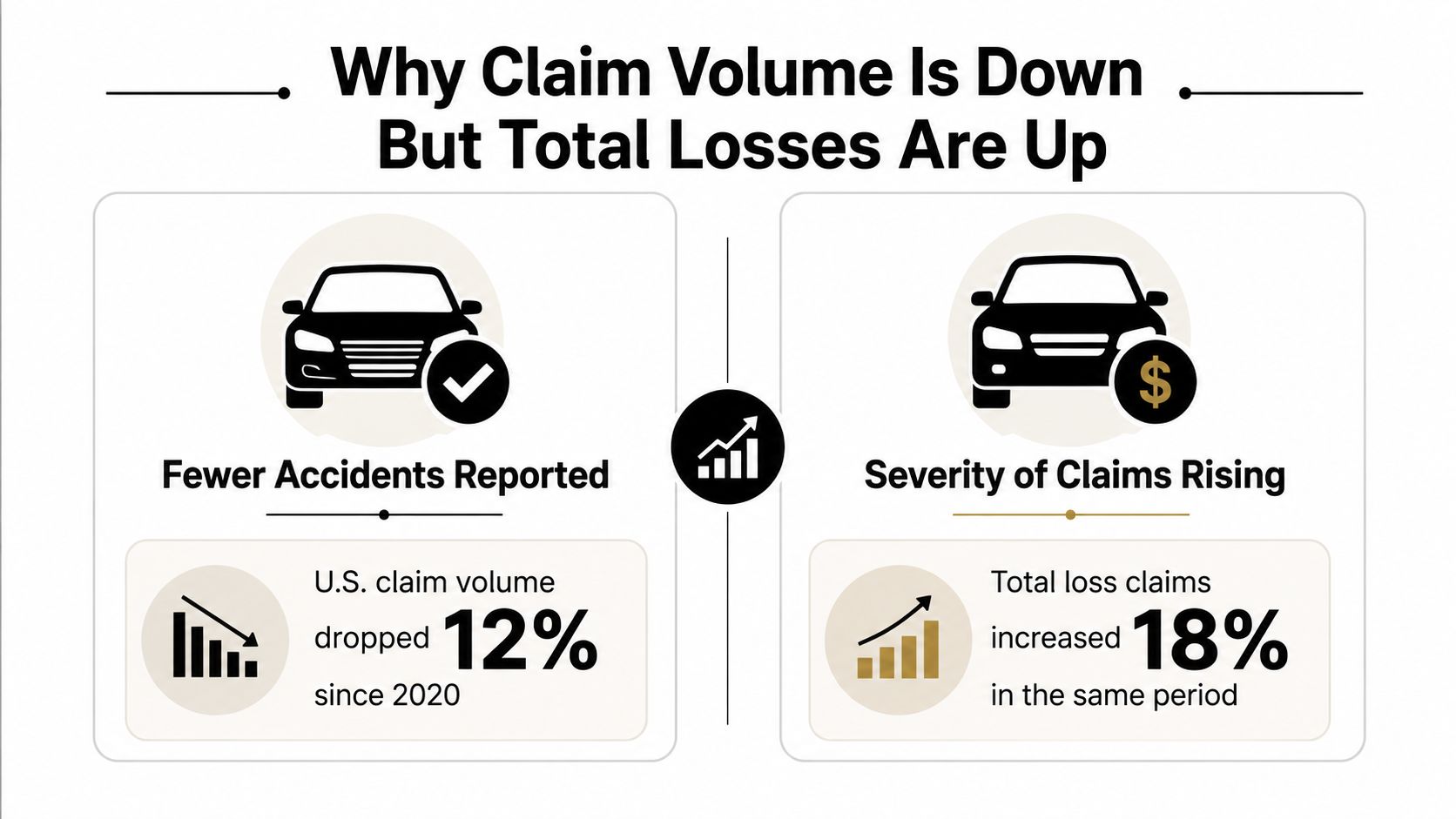
Why Claim Volume Is Down But Total Losses Are Up
Fewer claims can still produce more total losses. In the United States, claim volume declined 8.9% in Q1 2026 and remained more than 13% below the five-year average, while total-loss frequency reached 23.1% of auto claims, according to Insurance Journal. The trend matters to any driver disputing a settlement: insurers may handle fewer files, but each vehicle's repair cost and valuation receive greater weight.
A vehicle becomes a total loss when projected repairs, salvage value, taxes, fees, rental exposure, and related costs make repair less economical than paying its actual cash value. Technical repairability does not settle the issue. The insurer's economic calculation does.
Repair complexity changes the threshold
Modern vehicles include costly sensors, cameras, wiring, structural parts, and driver-assistance systems. Teardown can reveal hidden damage, while calibration, parts delays, and labor costs expand the estimate. A vehicle with moderate visible damage can therefore cross the total-loss threshold quickly.
The HLDI collision report offers a benchmark for 2020 to 2022 model-year passenger vehicles. It reports collision claim frequency of 6.1 claims per 100 insured vehicle years, an average loss payment of $8,739 per claim, and overall losses of $532 per insured vehicle year.
Frequency and severity answer different questions. Insurance Information Institute analysis found that personal auto liability claim frequency fell to 85.2 claims per $100 million of GDP in 2023, while claim severity rose 73% from 2014 through 2023.
Practical rule: A quieter claims environment does not protect you from a bad valuation. It makes the insurer's calculation of your individual loss more important.
Your claim number identifies the file where that calculation, along with your evidence, must be recorded. If the valuation omits comparable vehicles, options, condition, mileage, or local market differences, challenge those specific omissions. The dispute concerns your vehicle's documented value, not the national claim count.
What Your Insurance Claim Number Actually Is
An insurance claim number is the insurer's unique identifier for a reported loss. It isn't your policy number, vehicle identification number, or account number. The claim number points the insurer's employees, vendors, repair facilities, appraisers, and payment systems to the file created for your specific accident or loss.
A policy number identifies the insurance contract. A claim number identifies the event being handled under that contract. One policy can generate multiple claim files over time, and a single accident can produce separate first-party and third-party files with different insurers or departments.
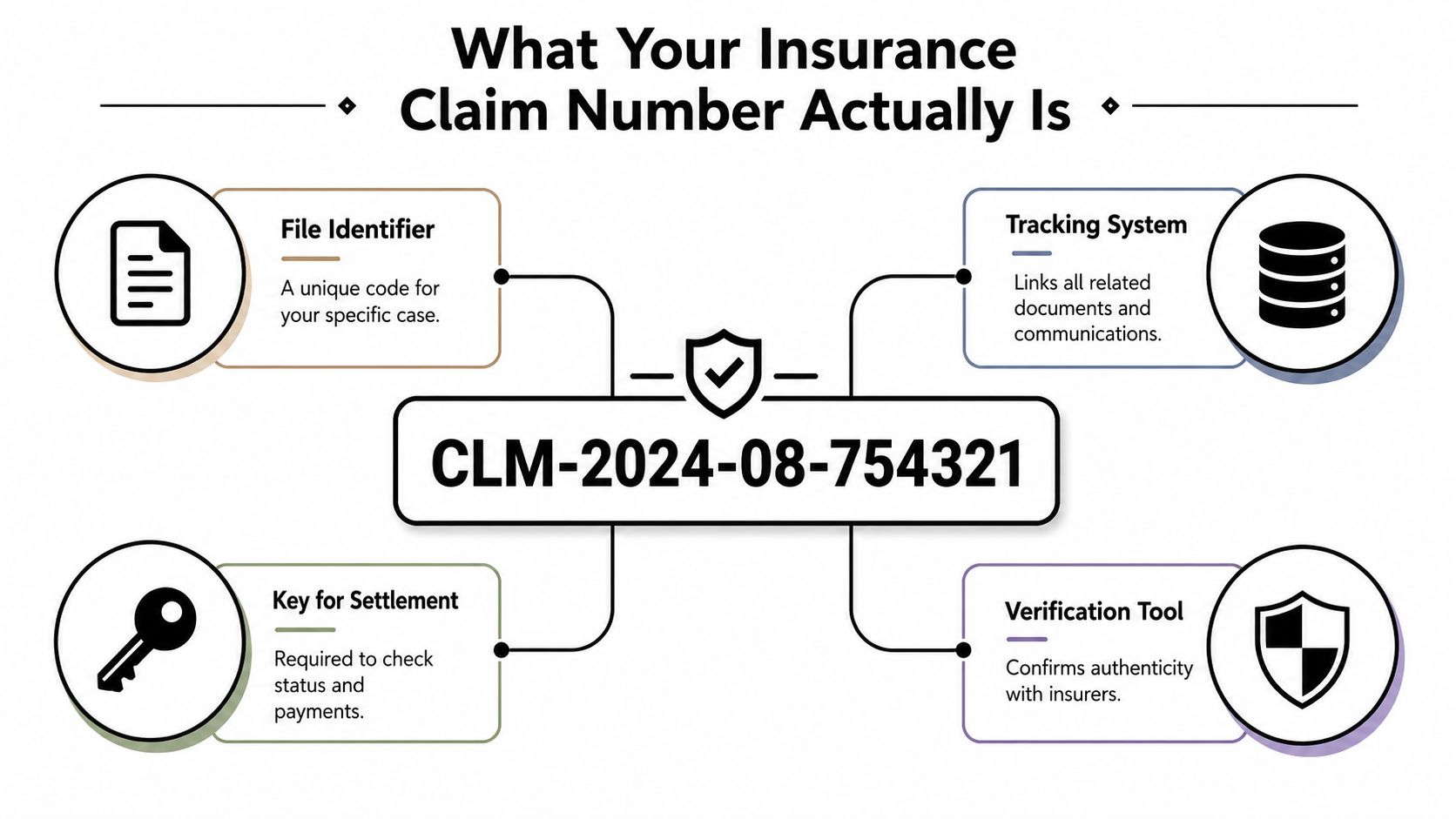
Read the number as an identifier, not a valuation
Carriers use different formats. State Farm, GEICO, Progressive, Allstate, and regional insurers may use combinations of letters, numbers, dates, office codes, or internal sequence characters. You generally can't decode the exact meaning of every character from the outside, and you shouldn't assume that a longer number represents a more serious claim.
What matters is verification. Compare the claim number across the initial acknowledgment, adjuster emails, repair estimate, valuation report, payment explanation, and portal record. The number should match the same accident date, vehicle, coverage type, and named insured.
You can also review Allstate claim number information if Allstate handles your file. The same principle applies across carriers: the number is the reference point staff use to retrieve and update the record.
Before authorizing repairs or signing settlement documents, confirm:
- The accident: The file describes the correct date, location, and loss.
- The vehicle: The VIN, year, make, model, trim, and ownership details match.
- The coverage: You know whether you're dealing with your collision coverage, another driver's liability coverage, or both.
- The decision: The file clearly identifies whether the insurer is evaluating repair, total loss, rental, storage, or another issue.
The claim number doesn't prove the insurer's valuation is correct. It proves which file contains the valuation you're challenging.
How to Locate and Verify Your Claim Number
Start with the first notice of loss confirmation. The insurer may send the number by email, text message, letter, portal alert, or phone. If you reported the accident by telephone, write it down before ending the call and repeat it back to the representative so a transposed digit doesn't follow you through the claim.
If you're still looking, use this sequence.
Search every communication channel
Search your inbox. Use terms such as “claim,” “loss,” “adjuster,” and the insurer's name. Check attachments, spam folders, and automated portal notifications.
Open the insurer's portal or mobile app. The claim number commonly appears on the claim dashboard, status page, document center, or message thread. Save a screenshot for your records, but verify the vehicle and accident details.
Review voicemails. Adjusters often leave the number in a message, especially when asking for photographs, estimates, title documents, or a recorded inspection.
Inspect paper documents. Look at the first notice of loss confirmation, repair estimate, total-loss valuation, payment letter, rental correspondence, and any supplement approval.
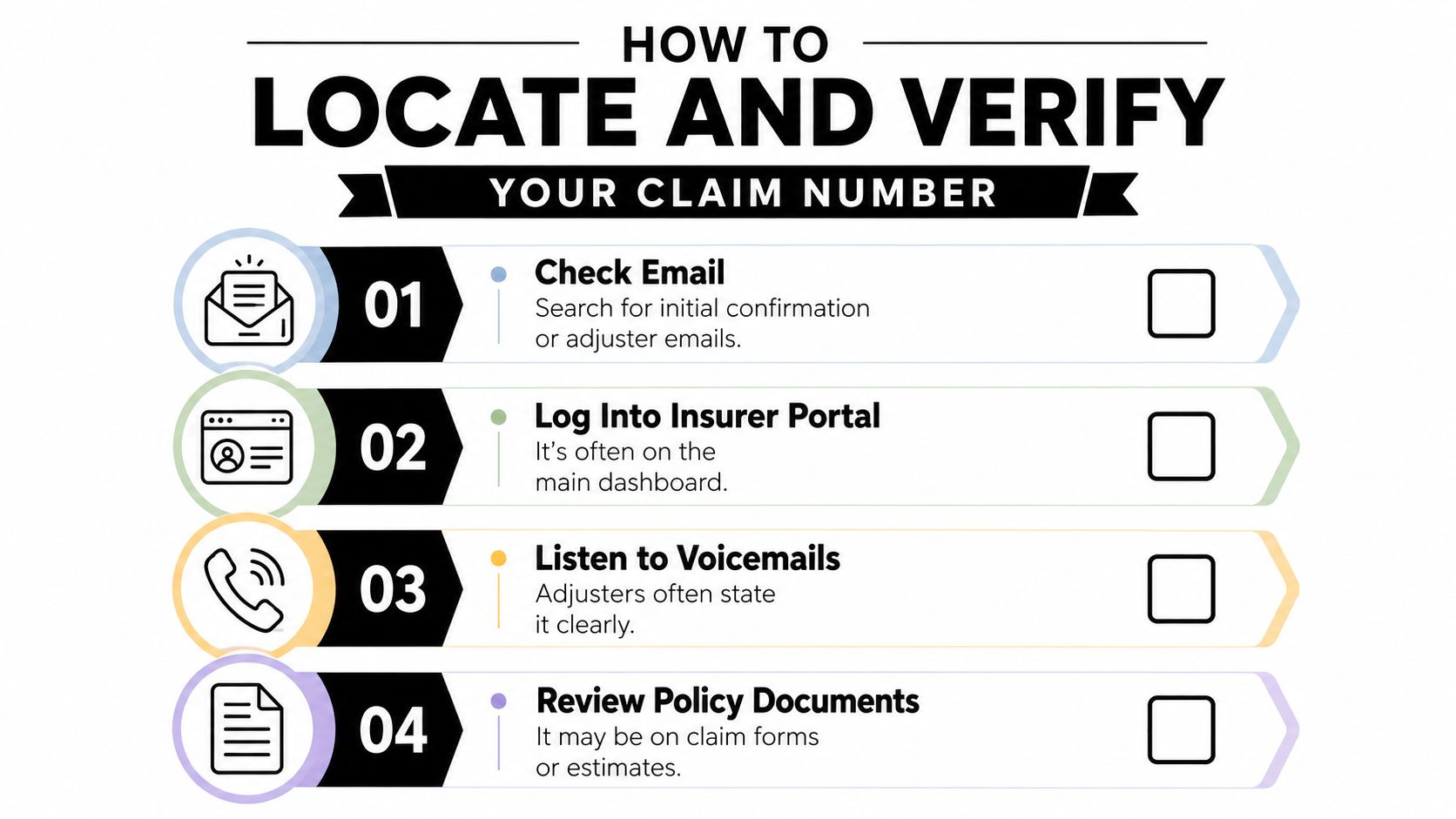
The first notice of loss process establishes the initial record, but it may not be the only file created. If your own insurer opened a collision claim and the other carrier opened a liability claim, record both numbers separately.
Verify before you call
Keep a one-page claim reference sheet with the claim number, policy number, VIN, adjuster name, phone number, email address, accident date, and coverage type. Before every call, compare the number you're about to provide with the latest written correspondence.
Ask the representative to confirm the vehicle and loss date, not merely to repeat the number. If the file contains the wrong VIN, incorrect coverage, or a duplicate accident description, request written clarification and ask which claim number controls the property-damage settlement.
Using Your Claim Number with Shops and Appraisers
Giving a shop your policy number and assuming the insurer will sort it out is a common mistake. The policy number identifies coverage. The claim number tells the shop where to send the estimate, supplement, photographs, invoices, storage charges, and payment questions.
Provide the claim number in writing to every professional working on the property-damage file:
- Body shop: Put it on the repair authorization, estimate, supplement request, and final invoice.
- Rental provider: Confirm the rental agreement references the correct claim, especially if liability responsibility remains disputed.
- Independent appraiser: Include it on the appraisal agreement, vehicle inspection notes, market report, and delivery email.
- Storage facility: Verify the number appears on daily billing and release documentation.
- Diminished-value specialist: Ask that the report identify the claim number and vehicle VIN on every page.
The number should appear in the subject line of your emails. A clear subject such as “Claim 12345, VIN ending 6789, total-loss valuation dispute” gives the recipient an immediate way to route the message.
Audit the file instead of trusting the handoff
Ask the shop or appraiser to confirm the insurer's adjuster and claim number before work begins. Then ask the adjuster to confirm receipt of the document. “I sent it” isn't the same as “it's in the claim file.”
A supplement can also create confusion. Some carriers issue a new reference for a supplement, salvage process, or separate damage review. That number may be valid for one task but not replace the primary claim number. Keep both, label their purpose, and ask which one should appear on future correspondence.
File-control rule: Every important document needs three identifiers, the claim number, the VIN, and the date of loss.
If a report supports a higher actual cash value, don't let it remain in an appraiser's outbox or a shop's billing system. Send it directly to the adjuster and request written confirmation that it was added to the claim record. That step protects the chain of evidence when the negotiation becomes contentious.
Common Pitfalls That Derail Claim Settlements
Most claim-number problems are clerical, but clerical errors can damage a valuation dispute. A digit gets transposed, a supplement is attached to a duplicate file, or the adjuster references an old number while discussing a new valuation. The result is predictable: evidence disappears from the conversation, deadlines become unclear, and the insurer can say it hasn't received material you know was sent.
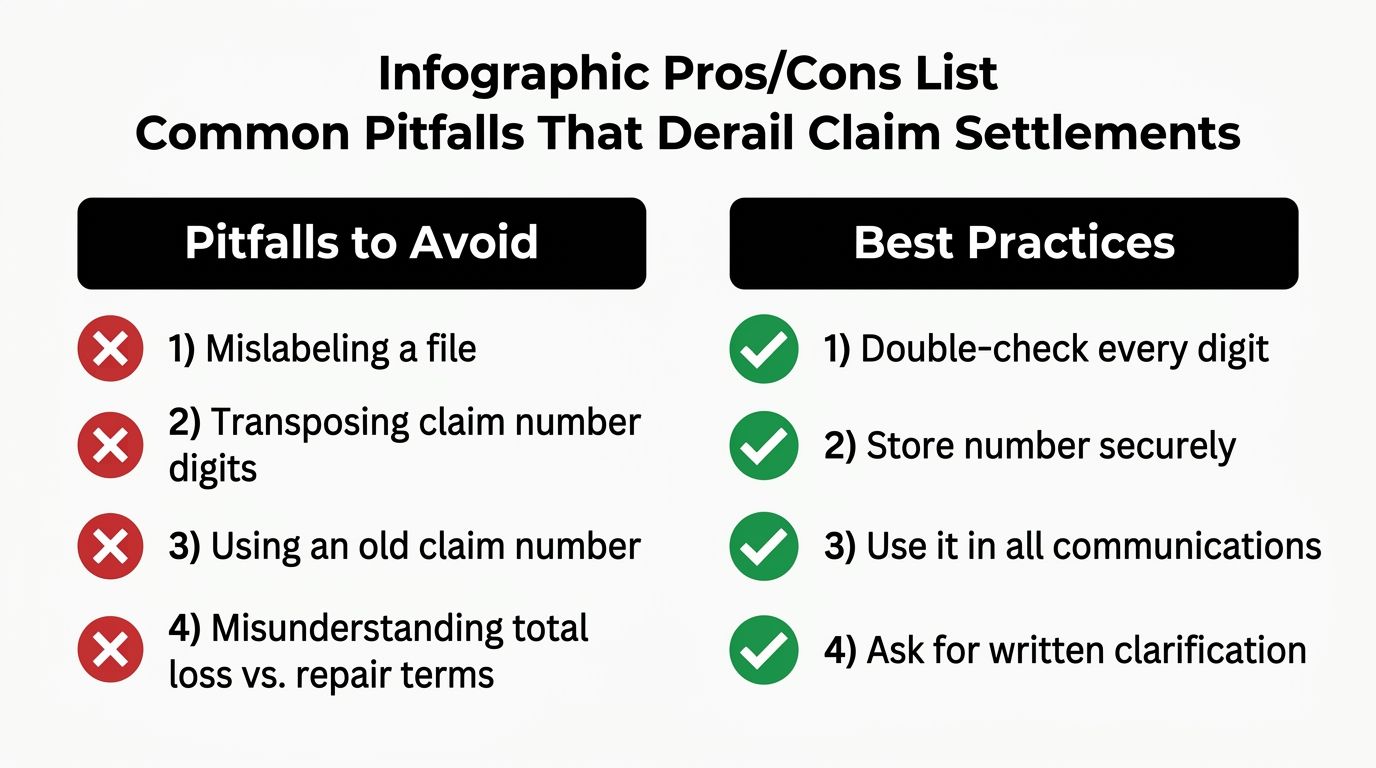
The mistakes I see most often
- Mislabeling a file: A repair supplement gets sent under the wrong claim, so the valuation team never reviews it.
- Transposing digits: One incorrect character can route a document to another loss or make the carrier treat it as unidentified.
- Using an old claim number: A reopened claim, new coverage file, or separate liability file may carry a different identifier.
- Confusing repair and total-loss terms: A repair estimate, total-loss valuation, salvage document, and settlement release don't serve the same purpose.
A low first offer is also common in hard claims. That doesn't mean every offer is improper, but it does mean you should demand the valuation foundation before treating the number as final. Severity pressure gives insurers a reason to control payouts, and the U.S. motor insurance claims data shows why repair economics matter. In the United Kingdom, insurers handled 2.4 million motor insurance claims in 2024 and paid a record £11.7 billion. Average private motor claim payments rose 13% year over year to about £4.9k, reached £5.3k in Q4 2024, and vehicle repairs totaled £7.7 billion for the year.
That data is from a different market, but the valuation lesson is relevant: claim counts alone don't tell you what a file costs. Repair inflation and theft can increase severity, which encourages tighter file handling and more aggressive scrutiny of each settlement.
How to audit a split file
Request a written list of every claim number connected to the accident. Match each number to its coverage, adjuster, vehicle, and document type. If bodily injury and property damage are handled separately, ask both adjusters to confirm whether the files are linked and which file controls the vehicle settlement.
Be suspicious of a “new” number that appears without an explanation. It may be a legitimate administrative transfer, but you should know whether the original negotiation history, submitted evidence, and valuation objections carried over. Request a written confirmation that the complete file history was transferred.
The Economics of Total Loss and Diminished Value
Claim frequency can fall while the cost of each collision rises. That shift affects your individual settlement. Insurers have more reason to scrutinize repair estimates, vehicle values, and claim documentation, so the claim number attached to your file matters. It identifies the record where valuation evidence, objections, and negotiation history must be preserved.
A total-loss decision is an economic calculation, not proof that the vehicle cannot be repaired. The insurer compares expected repair costs with actual cash value, then considers salvage, taxes, fees, and other settlement expenses. If repairs approach the vehicle's value, totaling the vehicle may expose the carrier to less financial risk than authorizing repairs.
For a disputed total loss, demand the underlying inputs:
- Actual cash value: The vehicle's pre-loss market value, adjusted for trim, mileage, condition, options, history, and location.
- Repair estimate: Projected parts, labor, paint, structural, and calibration costs.
- Supplement exposure: Damage likely to appear after teardown or closer inspection.
- Salvage value: The amount the insurer expects to recover from the damaged vehicle.
- Taxes and fees: Costs required to replace the vehicle under the applicable settlement rules.
The calculation is simple. The inputs decide the result. A polished valuation report can still rely on weak comparables, omit factory options, apply unsupported condition adjustments, or compare your vehicle with another trim. Check the report line by line against the VIN, equipment, mileage, and local market.
Collision benchmarks
| Metric | Value |
|---|---|
| Model years | 2020 to 2022 |
| Collision claim frequency | 6.1 claims per 100 insured vehicle years |
| Average loss payment per claim | $8,739 |
| Overall losses | $532 per insured vehicle year |
These collision benchmarks show why repair severity can influence total-loss decisions even as accident frequency changes. They do not establish the value of your vehicle. Your file still requires vehicle-specific comparables and a documented explanation for every adjustment.
Diminished value is a separate question
A repaired vehicle can lose market appeal because its history now includes a significant accident. Diminished-value analysis measures the gap between the vehicle's pre-loss market position and its post-repair market position. A credible report identifies the vehicle precisely, documents damage and repairs, examines comparable market evidence, and explains why buyers may discount the repaired vehicle.
Before accepting a settlement that releases property-damage claims, have an independent appraiser review unresolved valuation issues. Keep the appraisal tied to the correct claim number and VIN. That connection places the report in the insurer's official file and makes it harder to treat your evidence as unrelated correspondence.
When to Invoke the Appraisal Clause
Invoke the appraisal clause when the disagreement is about the amount of loss, not when the insurer is disputing coverage, liability, fraud, or whether the policy applies. Your policy controls the procedure, so read the appraisal language before assuming it works like a lawsuit or appeal.
The usual process requires each side to select an appraiser. Those appraisers evaluate the loss and attempt to agree. If they can't, an umpire may decide the disputed amount under the policy's terms. The appraisers don't automatically decide every legal issue, and an appraisal award doesn't cure incorrect coverage analysis.
Use clear red flags
Bring in independent appraisal support when:
- The insurer's comparable vehicles don't match your trim or options.
- The valuation omits documented upgrades, packages, or condition.
- The carrier refuses to explain adjustments.
- A total-loss decision relies on an estimate that ignores likely supplements.
- Your diminished-value evidence is dismissed without a reasoned response.
- The adjuster keeps changing the claim number or file description.
- You've submitted a market report and can't get confirmation that it was reviewed.
The insurance appraisal clause process can give you a formal path for a valuation dispute, but timing matters. Don't wait until the vehicle is sold, evidence is lost, or a release has been signed.
Protect your leverage from the first call
Keep the claim number on every communication. Save the original valuation, all comparable listings, photographs, repair estimates, inspection reports, and settlement offers. Ask the adjuster to identify the exact valuation date and the specific documents relied upon.
My recommendation is direct: don't argue from frustration, argue from replacement cost and documented market evidence. If the insurer won't correct a flawed valuation, select an independent appraiser who can inspect the vehicle, test the comparables, and present a defensible number under the policy procedure.
Total Loss Northwest offers independent total-loss appraisals, diminished-value support, and appraisal-clause representation for drivers challenging an insurer's valuation. If your settlement offer looks wrong, keep your claim number and valuation documents together, then visit Total Loss Northwest for a claim review and practical next steps.