That Allstate total loss offer seems low. Now what?
You've got the valuation in front of you, and the number doesn't match the car you lost. Maybe the report lists “comparable” vehicles that aren't comparable. Maybe the trim is wrong, the mileage adjustment feels arbitrary, or the options you paid for barely show up in the valuation. That's where many people freeze, then accept an offer they already know is off.
You don't need to do that.
In an Allstate total loss claim, the core fight is usually not about whether the vehicle is damaged badly enough. It's about value. Allstate explains that a total loss settlement is typically based on the vehicle's actual cash value minus your deductible, and the total loss decision generally turns on whether repair cost plus salvage value exceeds actual cash value, which makes the valuation method the pressure point in the dispute under Allstate's total loss explanation. If the valuation is weak, the settlement is weak.
That matters because large insurers set the tone for how these claims are handled. In 2023, Allstate generated about $57.09 billion in annual revenue, held an estimated 10.4% share of the U.S. personal auto insurance market, ranked fourth nationally, and handled roughly six million claims per year across auto, property, and bodily injury lines, according to reported Allstate market statistics. At that scale, valuation disputes aren't unusual. They're built into the system.
This guide gives you the practical toolkit. Independent appraisers, contact routes, negotiation scripts, and escalation options. If you're also sorting out related value-loss questions after a crash, these Texas diminished value claim details are worth reviewing.
1. Total Loss Northwest
Your Allstate adjuster sends over a valuation report, the number looks official, and the pressure starts right away. Accept it, or spend more time proving your car was worth more. In that situation, Total Loss Northwest is one of the first firms I would look at, especially when the report looks polished but the details are weak once you check trim, options, condition, prior upgrades, and local comps.
The practical advantage is not hype. It is structure. An independent appraisal shifts the discussion from, "I think your offer is low," to, "Here is a documented market valuation that addresses the defects in your report." That change in posture often matters more than one more phone call with the desk adjuster.
Where this firm stands out
A lot of appraisal companies say they fight for fair value. The more useful question is whether they are set up to handle the exact pressure point in an Allstate total loss claim: disputed actual cash value. Total Loss Northwest appears focused on that problem, including the appraisal process itself, and their total loss appraisal service details show that focus clearly.
That approach helps when the insurer report has errors like these:
- Wrong trim or package: Your vehicle is matched against lower-spec examples.
- Weak local comparables: The report pulls listings from markets that do not reflect your area.
- Missing options: Safety, towing, premium audio, technology, sport, or appearance packages are missed or undervalued.
- Specialty value issues: Collector, luxury, classic, and custom vehicles are often pushed into generic valuation buckets.
Practical rule: If the report is wrong in several small ways, stop arguing line by line forever. Get an independent valuation that deals with the full picture.
Best fit and trade-offs
Total Loss Northwest looks especially useful for owners in Oregon and Washington dealing with a true total loss fight, and it also handles diminished value work on a wider basis. That regional focus can work in your favor. Local market knowledge is often the difference between a generic comps sheet and a valuation that accurately reflects what similar vehicles sell for near you.
What works:
- Independent certified appraisers: Better positioned to challenge insurer-generated ACV reports.
- Appraisal-clause experience: Helpful if ordinary adjuster negotiations stall out.
- Detailed written reports: Stronger than sending Allstate a short email saying the offer feels low.
What to weigh:
- No public pricing: You will need to contact the firm to understand cost and fit.
- Limited public social proof: Some consumers prefer a large bank of testimonials or awards before reaching out.
- No guaranteed result: A strong appraisal can improve your position, but outcome still depends on policy language, state rules, and how far the insurer is willing to push the dispute.
For a consumer building a real action plan, not just browsing names, this is the kind of service that fits the toolkit approach. If Allstate's number is low, the next move is not more frustration. It is better evidence, a stronger script, and a clear escalation path.
2. Premier DV
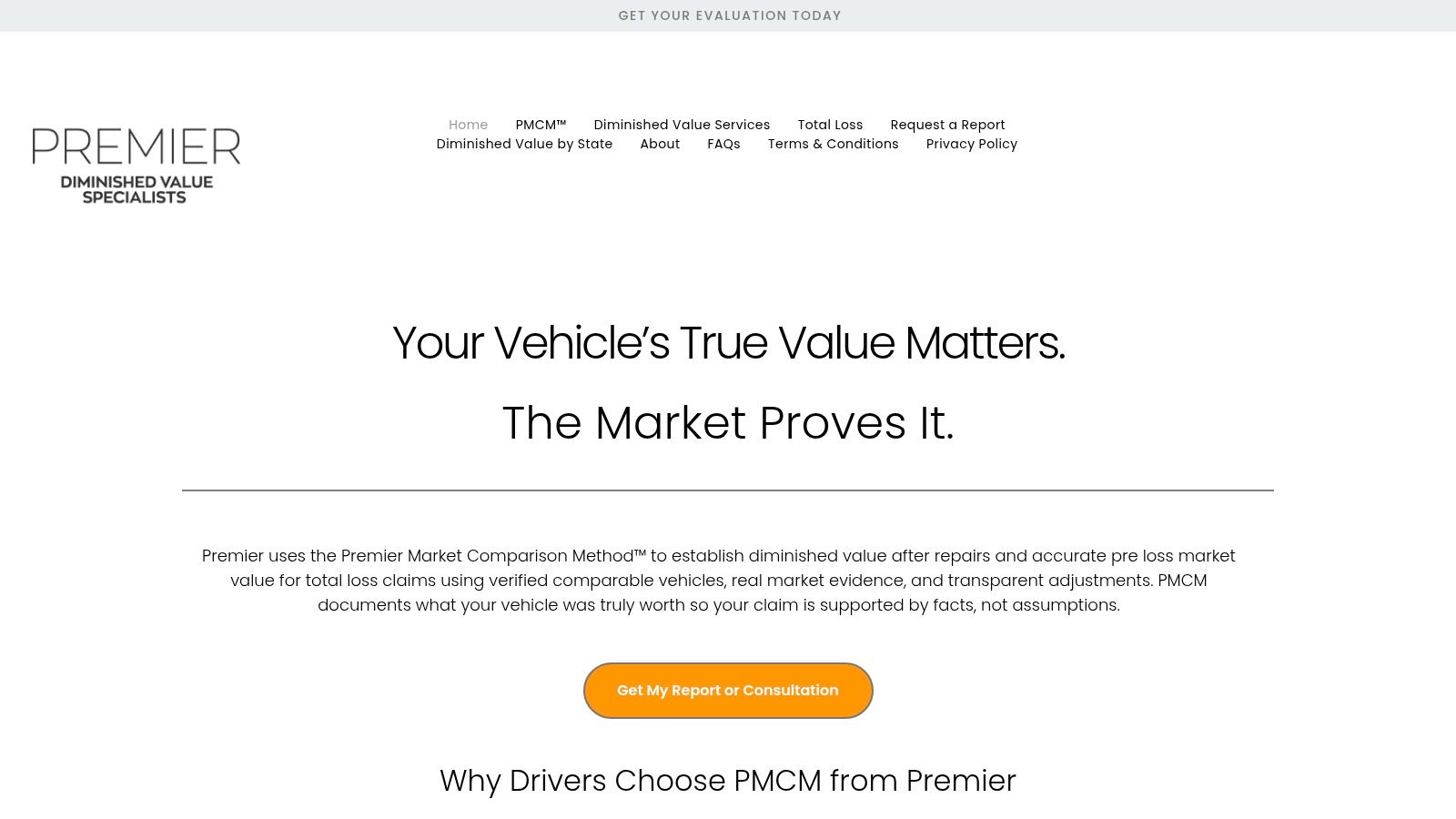
Premier DV is a good option for the person who wants to know the fee structure before making the first call. That sounds basic, but in this niche it's a real differentiator. Many appraisal firms want to talk first and quote later. Premier DV publishes a clearer service menu.
Their appeal is the combination of nationwide service, a fixed-fee structure, and an appraisal-clause service specifically aimed at valuation disputes. If you're the kind of claimant who wants process clarity and fewer pricing surprises, that's a strong point in their favor.
Why some people will prefer it
Premier DV emphasizes verified comparable vehicles and real market evidence. That's the right frame for an Allstate total loss claim because settlement disputes usually rise or fall on the quality of the comparables, not on who writes the most forceful email.
Useful advantages include:
- Published pricing: You can compare costs without a sales call.
- Appraisal-clause focus: Better than a generic valuation-only service when the dispute may need to escalate.
- Long insurance and total-loss experience: Helpful when the report needs to speak the insurer's language.
Don't confuse a clean PDF with a strong appraisal. The question is whether the report can withstand pushback on trim, options, mileage, and market selection.
The trade-off is straightforward. A flat fee gives you certainty, but you're paying regardless of outcome. If you want a contingency-style arrangement, this probably won't be the fit. It's better for organized claimants who want a defined service, clear scope, and predictable cost.
3. DVHIVE
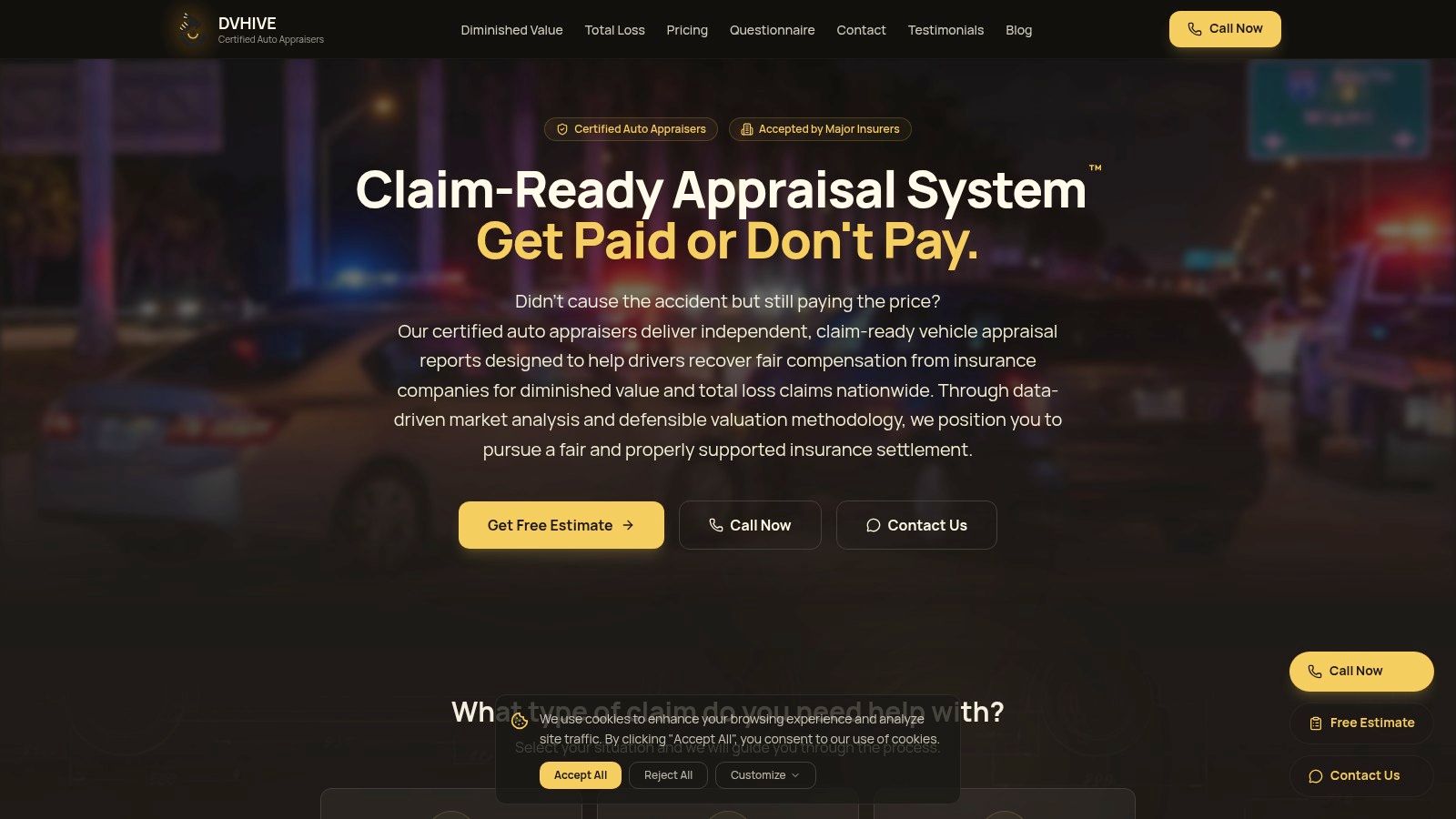
DVHIVE has one feature that gets attention fast: a consumer-facing “Get Paid or Don't Pay” promise. For people already frustrated by a low offer, that lowers the emotional barrier to getting professional help.
That promise isn't the only reason to consider them. They also publish a lot of state-specific guidance around appraisal-clause rules, which is useful because claimants often hear “you can challenge it” without getting any practical explanation of how that challenge works.
What makes it useful in the real world
DVHIVE presents itself as a claim-ready, data-driven appraisal service with USPAP-compliant, licensed appraisers. For a first-time claimant, that kind of structure helps. You want a provider that knows how to build a report that can move from your inbox to the adjuster's desk without a lot of rework.
Reasons to shortlist it:
- Consumer risk is lower: The performance-based promise gives hesitant claimants a safer entry point.
- Strong educational content: Helpful if you're learning the process while you're in it.
- Nationwide reach: Useful if your dispute doesn't line up with a local specialty appraiser.
The main limitation is that exact fees aren't publicly posted, and timelines can depend on how quickly you provide the needed documents. If you're very price-sensitive and want everything mapped out in advance, Premier DV may feel cleaner. If you want more guidance and less upfront risk, DVHIVE is easier to say yes to.
4. Sun Auto Appraisers
Sun Auto Appraisers is one of the more consumer-friendly entries on this list if paying upfront is the issue holding you back. Their positioning is built around no upfront cost and a contingency-style arrangement after settlement is reached.
That model won't be right for everyone, but it can be a relief when you've just lost your vehicle, need replacement transportation, and don't want another immediate expense.
Where Sun Auto Appraisers can help
They also lean into insurer-specific guidance, including Allstate total loss content and material about challenging CCC or Mitchell-style valuation systems. That's practical. A lot of low offers come wrapped in software-generated authority, and many claimants assume that means the number is unchallengeable.
What I like about this model:
- No upfront cost: Easier to act quickly.
- Carrier-specific playbooks: Helpful if you want direct guidance rather than broad theory.
- Focus on common insurer valuation platforms: Useful when your dispute is heavily tied to software-selected comps.
The trade-off is fee visibility. A contingency arrangement can feel safer at the start, but it may cost more than a flat-rate service by the time the claim resolves. If you care most about minimizing immediate cash outlay, Sun Auto Appraisers belongs on your shortlist. If you care most about knowing the exact fee before anyone starts work, choose a flat-fee provider instead.
5. Pinnacle Auto Appraisers (CarAppraisers.com)
Pinnacle Auto Appraisers at CarAppraisers.com is the pick when the vehicle itself is unusual. Modified truck, collector motorcycle, luxury SUV with uncommon packages, RV, boat, commercial unit. This company's broad vehicle coverage makes it more appealing than a passenger-car-only shop.
Another plus is their emphasis on physical inspections when feasible. In some total loss disputes, photos and VIN decoding aren't enough. Condition, custom work, aftermarket equipment, and specialty use all matter.
When in-person inspection matters
A remote-only appraisal can work well for many ordinary vehicles. But if the insurer's valuation missed meaningful features or treated your specialty vehicle like a commodity unit, a physical inspection can sharpen the dispute.
Strong points include:
- Wide vehicle coverage: Helpful for nonstandard claims.
- In-person inspections: Good for documenting features the valuation report missed.
- Negotiation support: Useful if the process turns into appraiser-to-appraiser disagreement.
The downside is predictability. Pricing isn't posted, and scheduling can depend on inspector availability. If your Allstate total loss claim involves a standard commuter vehicle and you just need a fast paper challenge, this may be more service than you need. If the vehicle was uncommon or heavily equipped, this becomes more attractive.
6. Select Auto Appraisals
Select Auto Appraisals solves a common problem. You suspect the offer is low, but you don't know whether it's low enough to justify paying for formal help. Their free preliminary review is the value here.
That intake step can save you from overreacting to a normal settlement or, just as important, underreacting to a flawed one.
A low-friction way to test your case
If you're still deciding whether to fight, use a free review service before committing to a paid appraisal. Select Auto Appraisals offers that softer entry point, and that's useful for claimants who are still gathering their documents.
You can also strengthen your own preparation by reviewing guidance on negotiating a total loss settlement before the appraisal conversation starts.
Why people choose this route:
- Free initial review: Good for uncertainty.
- Nationwide support: Helpful if you don't want to hunt for a local specialist first.
- Education-forward approach: Useful for claimants who need context, not just a report.
What to watch for:
- Pricing comes later: You'll still need a quote for the full appraisal.
- Document gathering may fall more heavily on you: Free reviews usually depend on the quality of what you submit.
A free review is most valuable when you upload the insurer valuation, photos, VIN details, mileage, options, and your own comparable listings. A vague intake gets you a vague answer.
7. Auto Appraise
Auto Appraise makes sense when you think the valuation dispute may spill beyond a routine negotiation. They offer total-loss reports, nationwide inspections, and expert witness work, which matters if the claim starts moving toward litigation or a formal evidentiary fight.
Not every Allstate total loss claim needs that level of backup. Some do. Especially when the vehicle is valuable, the policy issues get messy, or the carrier won't budge despite a documented challenge.
Litigation-aware support
The practical benefit here is the ability to maintain support. A company that can continue supporting the file if the dispute escalates may save you from switching providers midstream.
Good fit situations include:
- High-value or unusual vehicles
- Deep disputes over condition or pre-loss value
- Cases where attorney involvement is becoming more likely
The downside is the usual one in this category. Pricing is quote-based, and you'll need to vet case fit directly. If your dispute is still in the “one bad report” phase, a leaner service might be enough. If the matter already feels adversarial, Auto Appraise gives you more runway.
8. CFL Auto Appraise (Orlando Auto Appraisal)
CFL Auto Appraise through Orlando Auto Appraisal is one of the better choices if you want a lot of free educational help before spending money. They offer free total-loss and diminished-value reviews, along with guidance around appraisal rights and related claim issues.
That makes them appealing to claimants who feel lost in the language of the process. “Actual cash value,” “right to appraisal,” “comparable vehicle adjustments.” The nuances of this world are unfamiliar to many, and they shouldn't have to pretend otherwise.
Why the education piece matters
A licensed independent appraiser and adjuster background can be helpful because these claims often involve equal parts valuation and process. A strong number alone doesn't always solve the problem. You also need to present it the right way.
Best reasons to contact them:
- Several free intake paths: Lower-pressure starting point.
- Educational materials: Good for first-time claimants.
- Phone consult and online booking options: Easier access than some niche firms.
The trade-off is footprint. They appear to have a stronger Florida presence, so if you're outside that region, confirm scheduling and case handling early. For people who want hand-holding at the beginning, that may still be well worth it.
9. Collision Safety Consultants
Collision Safety Consultants is a smart pick when valuation and damage-quality questions overlap. Some vehicles are pushed toward repair, then hidden damage or poor repair issues affect value. Others are declared total losses after a messy estimate history. In those gray-zone cases, a consultant who also understands post-repair and damage inspection can be useful.
They operate as a network with local offices, which can help with scheduling and inspections.
Best for claims with a damage-story problem
This isn't just about “what's my car worth.” It's also about whether missed damage, repair shortcuts, or incomplete inspections changed the value picture. If that sounds like your file, Collision Safety Consultants deserves a look.
Where they help most:
- Total-loss assessments plus diminished value
- Post-repair inspections
- Local-office network for scheduling
The limitation is process transparency. They provide less visible detail online about appraisal-clause negotiation than some firms on this list. If you mainly need a pure valuation fight against an Allstate report, other providers may feel more direct. If your claim has a technical damage component, this network is more compelling.
10. Autoloss
Autoloss has a strong consumer-only positioning, and that matters. When people are shopping for help with an Allstate total loss claim, they often worry that “independent” doesn't really mean independent. A company that emphasizes consumer-side work helps address that concern.
They also offer court-accepted appraisals and expert witness support, which gives them credibility for harder disputes.
Strong option for consumer-side advocacy
Autoloss has been operating since 1999 and presents itself as focused on signed, customized reports with physical inspections when needed. That's a good fit for claimants who want a provider that looks built for contested files, not just casual estimate checks.
If you're early in the process and want a plain-language refresher on the claim itself, it also helps to review what happens when your vehicle is totaled.
Reasons to consider Autoloss:
- Consumer-only orientation: Good trust signal.
- Court-ready posture: Useful if the disagreement hardens.
- Customized reports: Better than generic templates.
The weakness is usability. The site is content-heavy, and pricing isn't posted. A consultation is the practical next step if this firm interests you. It's best for people who want an experienced consumer advocate and don't mind a more old-school intake process.
Top 10 Allstate Total Loss Claim Resources Comparison
| Provider | Core Offering | Unique Selling Points ✨ | Quality ★ | Pricing 💰 | Target Audience 👥 |
|---|---|---|---|---|---|
| 🏆 Total Loss Northwest | Certified independent total-loss & diminished value appraisals; invokes Appraisal Clause | ✨ Appraisal Clause enforcement; forensic, negotiation-ready reports | ★★★★☆ | 💰 Quote-based (contact) | 👥 Oregon & Washington drivers; classic, high‑end, everyday cars |
| Premier DV | Nationwide diminished value & total-loss appraisals | ✨ Flat-rate Total Loss Appraisal Clause Service; veteran-owned | ★★★★ | 💰 Published flat-fee menu | 👥 Consumers wanting transparent pricing |
| DVHIVE | Claim-ready total-loss valuations & diminished value reports | ✨ “Get Paid or Don't Pay” performance promise; state guidance | ★★★★ | 💰 Quote-based (case) | 👥 Risk-averse claimants seeking performance guarantee |
| Sun Auto Appraisers | Total-loss & diminished-value appraisals | ✨ No-upfront-cost contingency; Allstate playbooks | ★★★ | 💰 Contingent / no upfront | 👥 Claimants without upfront funds; Allstate disputes |
| Pinnacle Auto Appraisers | Nationwide appraisals with in-person inspections | ✨ Broad vehicle coverage; physical inspections & negotiation support | ★★★★ | 💰 Quote-based | 👥 Owners of modified, luxury, specialty vehicles |
| Select Auto Appraisals | Diminished value & total-loss support | ✨ Free preliminary “Check My Value” review | ★★★ | 💰 Free initial review; paid quote for reports | 👥 Unsure claimants seeking low-friction intake |
| Auto Appraise | Nationwide inspectors; expert witness testimony | ✨ Litigation-aware, court-ready reports & testimony | ★★★★ | 💰 Quote-based | 👥 Complex disputes or cases heading to court |
| CFL Auto Appraise | Licensed appraiser/adjuster offering free reviews | ✨ Free appraisal-clause guide & e-book; phone consults | ★★★ | 💰 Free intake; quote-based for services | 👥 Claimants seeking education & free consults |
| Collision Safety Consultants | Diminished value, total-loss & post-repair inspections | ✨ Post-repair quality checks + local office network | ★★★ | 💰 Varies by local office | 👥 Those worried repair quality affected value |
| Autoloss | Consumer-only diminished value & total-loss appraisals | ✨ Long track record; court-accepted expert support | ★★★★ | 💰 Quote-based | 👥 Consumers needing courtroom-ready valuation |
Take Control of Your Total Loss Settlement
A low offer in an Allstate total loss claim can make you feel trapped. You need a replacement vehicle, the adjuster sounds confident, and the valuation report looks technical enough that arguing with it feels pointless. It isn't. Most successful challenges begin the same way. The claimant stops treating the insurer's number as final and starts treating it as one valuation that can be tested.
Start with the basics. Ask for the full valuation report if you don't already have it. Read every comparable vehicle, every condition note, every mileage adjustment, and every listed option. If the report understates your trim, misses packages, uses weak comparables, or relies on distant markets, write those issues down in a clean list.
Then make your first contact with purpose. If you call Allstate, keep it simple:
“I'm disputing the total loss valuation. The report appears to use inaccurate comparables and doesn't reflect my vehicle's actual pre-loss market value. I want the claim notes updated to show that I'm requesting a valuation review, and I'd like written instructions for submitting supporting comparables and documentation.”
If the adjuster asks whether you're accepting the offer, don't drift into maybe. Say:
“I'm not accepting the current offer. I'm gathering market evidence and may pursue an independent appraisal if the valuation isn't corrected.”
For general claims contact, non-customers filing against an Allstate-insured driver can use Allstate's claim phone number referenced in Washington claim guidance. If your own policy documents or claim correspondence list a different direct adjuster line, use that first.
If the conversation stalls, escalate in layers. First, ask for a supervisor review. Second, bring in an independent appraiser from this list. Third, if the handling itself becomes a problem, contact your state insurance regulator. Use your state department of insurance complaint portal or consumer help line and stick to documented facts: date of loss, claim number, disputed valuation issues, and copies of your communications.
The biggest mistake I see is waiting too long to get organized. The second biggest is arguing emotionally instead of evidentially. Don't tell Allstate the number feels unfair. Show why the valuation is wrong.
An independent appraiser is often the turning point because the dispute stops being you versus a software report. It becomes one valuation methodology versus another. That is a better fight. Use the resources above, stay concise, keep everything in writing where possible, and don't leave money on the table just because the first number arrived with a corporate logo on it.
If Allstate's offer doesn't reflect your vehicle's real market value, Total Loss Northwest is a strong place to start. They specialize in certified independent total loss and diminished value appraisals, especially for drivers in Oregon and Washington, and they work to replace insurer-driven valuation software with documented market evidence that holds up in negotiation.