You open the claim email, read the valuation, and your stomach drops. The number doesn't match the condition of your car, the options it had, or what it would cost to replace it. Most drivers make the same mistake right there. They either argue from frustration or give up because the insurer sounds final.
It usually isn't final.
Auto insurance dispute help starts with one mindset shift. The first offer is a position, not a verdict. If you want a better result, you need evidence, a clean process, and the discipline to stop debating feelings and start proving value.
For Oregon and Washington drivers, that matters even more in total loss cases, financed vehicle claims, and disputes over older vehicles where condition and comparable sales can swing the outcome. If your policy includes an appraisal clause, you may have far more advantage than the adjuster wants you to realize.
Build Your Case Before You Pick Up the Phone
A low settlement feels personal. Treat it like paperwork.
Insurers and mediators expect the claimant to gather the full policy, photos, written damage estimates, reports, and a clear statement of the disputed amount. California's mediation guidance is useful here because it shows what formal dispute systems require from policyholders, and it also makes a key point: disputes are often lost on missing documentation rather than valuation alone, because the valuation record is the core technical asset in the dispute, as outlined in California's auto mediation guidance.
What to collect before you negotiate
Don't call the adjuster just to say the offer is unfair. Build a file first.
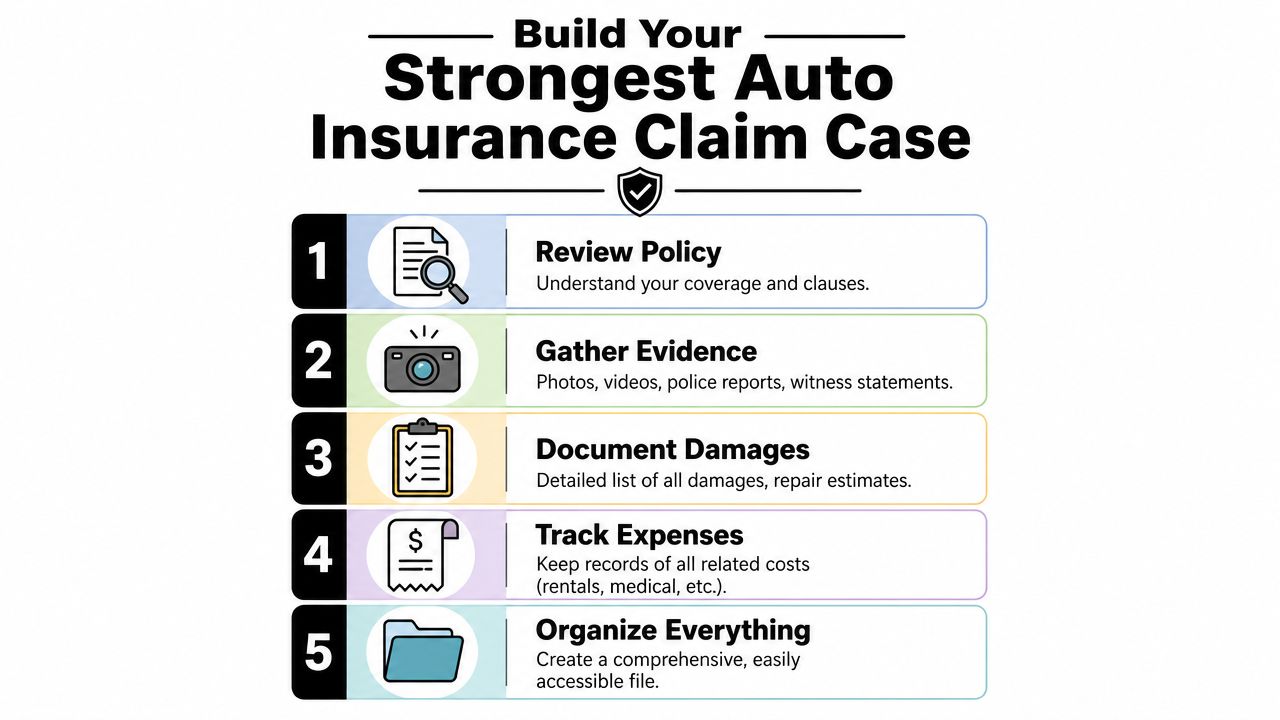
- Your full policy packet. Don't rely on the declarations page alone. You need the appraisal clause language, loss settlement terms, deductible terms, exclusions, and any endorsements that affect valuation.
- The insurer's valuation report. Ask for the full report if they only sent a summary. You need to see the comparable vehicles, condition adjustments, mileage adjustments, and any deductions.
- Photos from before and after the loss. Pre-loss photos help prove condition, upgrades, trim level, interior quality, and damage-free panels. Post-loss photos help show what the car looked like after impact.
- Repair estimates and shop notes. Even in a total loss case, repair estimates can expose whether the insurer's file missed prior condition details, options, or damage severity.
- Maintenance and service records. These don't magically increase value, but they can support condition and help rebut lazy assumptions about deferred maintenance.
- A communication log. Record dates, names, direct phone numbers, email addresses, and a one-line summary of each conversation.
- Proof of options and accessories. Window sticker, purchase paperwork, financing contract, accessory receipts, and photos all help.
How to package it so it gets taken seriously
Messy files lose momentum. Organized files create an advantage.
Use one folder with clear labels. Create subfolders for policy documents, valuation reports, photos, repair estimates, maintenance records, comparable vehicles, and communications. Name files so a stranger can understand them at a glance.
Practical rule: If an umpire, appraiser, or supervisor had to review your file tomorrow, they should be able to understand your dispute in five minutes.
Include a one-page dispute summary. Keep it simple:
- Vehicle year, make, model, trim, mileage, VIN.
- Date of loss.
- Insurer's offer.
- Your disputed amount.
- The reasons the offer is deficient.
If your claim also involves injuries, separate that from the property damage file. Mixing bodily injury issues into a valuation dispute creates confusion. If you're dealing with both, a plain-English resource on understanding Austin injury law can help you see how the legal side differs from a vehicle value dispute.
After the crash, the small administrative steps matter more than most drivers realize. A practical checklist for what to do after a car accident can help you tighten up your file if you missed something at the scene.
What drivers miss most often
The biggest gaps are usually boring ones.
Keep copies of everything you send, and never assume the insurer has attached your prior email to the active file.
Drivers often skip trim verification, forget to challenge bad comparable vehicles, or fail to document pre-loss condition. If your car had rare options, exceptional maintenance, custom equipment, or collector significance, generic valuation software won't capture that on its own. You have to force those facts into the record.
Mastering the First Round of Negotiations
Once your file is built, the first negotiation isn't about winning a debate. It's about forcing the adjuster to address specifics.

One insurer guidance document notes that incomplete or late evidence is a major reason claims drag into supplemental cycles, and it also emphasizes prompt reporting, photo documentation, and keeping every communication record. It further notes that disputed claims often move through written explanations and formal appeals, with some policies setting appeal windows as short as 30 to 60 days, as described in Mercury's claim process overview.
How to open the conversation
Stay calm, but don't be vague. Use language like this:
I reviewed the valuation and I dispute the settlement amount. I am requesting reconsideration based on specific errors in the comparable vehicles, condition assessment, and vehicle configuration. I am sending supporting documentation in writing today.
That script does three things. It tells the adjuster you're not venting, identifies the dispute categories, and puts the matter on a written track.
If the adjuster calls, that's fine. After the call, send a recap email. Confirm what was discussed, what documents you provided, and what response date you expect.
How to attack a low valuation without sounding emotional
Don't say, "My car was worth way more than that." Say what's wrong with the report.
Use a short challenge format:
- Wrong trim or package. If the report valued a base model and you owned a higher trim, point to the exact equipment mismatch.
- Poor comparable selection. If the insurer used vehicles with different mileage, condition, title history, drivetrain, or major options, identify each mismatch.
- Condition errors. If the insurer rated your vehicle average when your records and photos support better condition, say so directly.
- Unsupported deductions. Ask the adjuster to explain every negative adjustment and to show where that assumption appears in the file.
A useful primer on how to negotiate with an insurance adjuster can help if you need examples of how to push back cleanly.
Phrases that keep you in control
The right phrasing matters because it keeps the file professional.
| Situation | Better response |
|---|---|
| Adjuster says the valuation is final | "Please confirm in writing whether the company considers this file closed or still open for review." |
| Adjuster says your comps aren't acceptable | "Please identify the criteria you're using to reject them." |
| Adjuster delays response | "I'm following up on my written dispute and request a written response by a specific date." |
| Adjuster gets dismissive | "I'm not asking for a courtesy adjustment. I'm asking for correction of documented valuation errors." |
Put your strongest points in writing first. Phone calls are useful for tone. Emails are useful for proof.
If the adjuster makes a revised offer, compare it to your evidence, not to your frustration. Sometimes the first revision is a real move. Sometimes it's a small increase meant to test whether you'll quit. Your job is to decide which one it is.
When to Play Your Trump Card The Appraisal Clause
Most policyholders spend too long trying to persuade an adjuster who has already anchored to a number. At some point, more arguing stops helping. That's when the appraisal clause becomes your advantage.
CCC reported that total losses reached a record high, accounting for 22% of all claims through October 2024, with total-loss frequency up 2.0% year over year through October 2024. CCC also noted that nearly 72% of valuations across all loss categories were for vehicles 7 years or older, which helps explain why fair market value disputes keep landing on kitchen tables across the country, as shown in CCC's Crash Course Q4 report.
What the appraisal clause actually does
The appraisal clause is not a lawsuit. It's a contractual process inside the policy for resolving disagreements over the amount of loss.
That distinction matters. Once invoked, the dispute stops being your opinion against the insurer's internal workflow. It becomes a structured valuation process where each side appoints an appraiser and, if needed, an umpire helps resolve the remaining disagreement.
For Oregon and Washington drivers, this is often the moment the file changes tone. Casual pushback can be ignored. Formal appraisal demands a response.
A deeper explanation of the auto insurance appraisal clause is worth reviewing if you want to understand how the clause works before you invoke it.
When it makes sense to invoke it
Appraisal is usually the right move when the issue is value, not coverage.
It fits cases like:
- total loss valuation disputes
- disagreement over actual cash value
- disagreement over vehicle condition and comparable sales
- classic, specialty, or highly optioned vehicles that generic valuation tools miss
It usually isn't the right first move if the insurer is denying coverage entirely, disputing liability, or waiting on basic documentation you still haven't provided.
Here is the practical trigger I use. If you have documented errors, you've given the insurer a fair chance to correct them, and the response is still anchored to the same flawed report, stop arguing and invoke the clause.
The appraisal clause works best when your problem is measurable. Value, condition, trim, options, market comparables. Those are appraisal issues.
This video gives a visual overview of how the process tends to unfold.
Language to use in your written demand
Keep it short and clean. Don't turn it into a manifesto.
Use a letter or email that says, in substance:
I dispute the insurer's valuation of my vehicle and formally invoke the appraisal clause under my policy. Please confirm the company's designated appraiser and provide any procedural requirements the company contends apply. I reserve all rights under the policy.
That's enough. You can attach your support package, but the invocation itself should be direct. The power comes from changing the process, not from sending a longer argument.
Partnering with a Certified Independent Appraiser
Once appraisal is invoked, the quality of your appraiser matters more than the volume of your frustration.
A good independent appraiser doesn't just announce a higher number. They build a report another professional can defend. That means identifying legitimate comparable vehicles, verifying trim and options, accounting for condition, reviewing photos and records, and explaining why certain insurer comps should be rejected.
What a strong appraisal engagement looks like
The process usually starts with document intake. You send the policy language, insurer valuation, photos, maintenance records, purchase documents, payoff information if there is a loan, and anything unusual about the vehicle such as modifications or collector relevance.
Then the appraiser reviews market evidence. This isn't just pulling listings that look expensive. A competent report filters for actual comparability. Wrong engine, wrong drivetrain, wrong package, salvage history, rough condition, and mismatched mileage all weaken a valuation if they're left unchallenged.
One example of this type of work is Total Loss Northwest, which handles total loss and diminished value appraisals for Oregon and Washington drivers and invokes the appraisal clause as part of that process. The point isn't branding. The point is the service model. You want an appraiser who can turn a frustrated owner file into an evidence-backed valuation another appraiser or umpire has to take seriously.
An appraiser should be able to explain not only what your vehicle is worth, but why each insurer comparable fails or survives scrutiny.
What to ask before hiring anyone
Use a short screening list.
- Ask about scope. Will they review the insurer's report line by line, or only issue a replacement value opinion?
- Ask about support. Will they participate through the appraisal process if the insurer's appraiser pushes back?
- Ask about specialty vehicles. Collector cars, modified trucks, luxury trims, and rare packages require different market research than standard commuter cars.
- Ask what documents they need from you. If they don't ask for much, that's a warning sign.
Don't ignore gap coverage and claim history
Financed vehicle disputes have a second layer. The actual cash value fight may affect whether gap coverage becomes necessary and how much paperwork you'll need to finish the claim.
Progressive states that gap claims can require the insurance settlement statement, settlement check, loan or lease contract, loan history, police report, and sales agreement. The CFPB also notes that a LexisNexis C.L.U.E. report can retain up to seven years of auto claims history, which is why the claim file itself matters beyond the immediate payout, as explained in Progressive's gap insurance claims process overview.
That creates a practical reality many drivers miss. A weak claim file doesn't just reduce today's settlement. It can complicate the gap portion, the underwriting record, or both. Your appraiser won't replace your lender, insurer, or attorney, but a careful appraiser can help you understand which documents affect the value fight and which affect the rest of the financial cleanup.
Final Escalation Paths and State-Specific Notes
Most valuation disputes resolve before court if the file is documented and the appraisal process is handled correctly. But you should still know what happens if the appraisers remain apart or the insurer keeps resisting.
The broader financial stakes are real. The Insurance Information Institute reports that the countrywide average auto insurance expenditure rose 6.1% to $1,127 in 2022, up from $1,062 in 2021. It also notes that rating factors include claims history and driving record, which means a low settlement dispute can have consequences beyond the current check because the claim can affect later pricing and coverage decisions, as described in the III auto insurance facts page.
How the last three paths compare
If appraisal doesn't end the problem cleanly, most drivers are weighing three options: stay inside the appraisal framework and let an umpire resolve the gap, file in small claims court, or hire an attorney for a more formal dispute.
| Path | Typical Cost | Time Commitment | Best For |
|---|---|---|---|
| Appraisal hearing with umpire | Varies by appraiser, umpire, and file complexity | Moderate | Pure valuation disputes where both sides already have appraisers |
| Small claims court | Filing and service costs vary by court | Moderate to high | Smaller disputes where the facts are straightforward and the owner is organized |
| Attorney involvement | Legal fees vary by lawyer and fee structure | High | Complex disputes involving bad faith concerns, major dollars, coverage issues, or multiple legal questions |
What each path looks like in practice
Umpire path
If the two appraisers can't agree, they typically submit the remaining disagreements to an umpire. This is still a valuation process, not a general courtroom fight. It works best when the disagreement is narrow and the file is already well developed.
Small claims path
Small claims can work when the amount at stake justifies the effort and the dispute can be explained with documents, photos, valuation reports, and a clean timeline. It becomes less effective when policy interpretation, claim handling conduct, or multi-layer financing issues enter the picture.
Attorney path
An attorney makes sense when the problem is bigger than value alone. Coverage denials, unfair claim handling, refusal to honor policy procedure, or intertwined injury and property damage issues often require legal analysis, not just valuation evidence.
Court is not automatically stronger than appraisal. If the dispute is mainly about vehicle value, a focused appraisal record can be the cleaner weapon.
Oregon and Washington strategy notes
Drivers in Oregon and Washington should start with the policy, not internet folklore. Appraisal rights, deadlines, and wording can vary by carrier and form. Read the exact clause.
A few practical points matter in these two states:
- Keep everything in writing early. Regional adjuster turnover happens, and verbal conversations don't transfer cleanly when files move.
- Document local market relevance. If the insurer relies on distant or weak comparable vehicles, challenge whether those comps reflect your real replacement market.
- Watch financed vehicle paperwork carefully. Payoff demands, lender correspondence, and settlement timing can create pressure that pushes owners to accept low numbers.
- Treat trucks, SUVs, and outdoor-use vehicles carefully. In the Pacific Northwest, equipment, drivetrain, and condition can materially affect marketability, and generic comps often flatten those differences.
- Don't wait too long once the valuation issue is obvious. Delay doesn't make the report improve on its own.
For many Oregon and Washington owners, the best sequence is simple. Build the file, make one serious written challenge, then move to appraisal if the insurer stays anchored. That approach keeps your energy focused on proof instead of endless phone calls.
You Have More Power Than You Think
Most drivers enter this process thinking the insurer holds all the power. That's only true when the owner has no file, no strategy, and no willingness to escalate.
A fair result usually comes from three moves done well. First, document the claim like you're preparing it for a neutral reviewer, not for a sympathetic conversation. Second, negotiate from defects in the valuation, not from outrage. Third, if the insurer keeps leaning on a flawed number, use the appraisal clause and force the dispute into a process built for evidence.
That shift matters because a vehicle valuation dispute is technical. The side that wins usually isn't the side that talks the most. It's the side that proves more.
If you're in Oregon or Washington, don't underestimate how much room there is to improve a bad total loss offer when trim, options, condition, local comparables, or financing details were handled poorly. And if your vehicle is collector-grade, custom, high-trim, or unusually clean for its age, don't expect a generic software output to protect you. It won't.
The insurer wrote the first number. That doesn't mean they wrote the final one.
Auto insurance dispute help isn't about becoming argumentative. It's about becoming organized, deliberate, and harder to dismiss. Once you do that, the process changes. The adjuster has to answer your evidence. The appraisers have to defend their comps. The file stops being a routine payout and starts becoming a real valuation dispute.
A better settlement doesn't come from hoping someone takes another look. It comes from making the next look impossible to ignore.
If your total loss offer doesn't match the actual market value of your vehicle, Total Loss Northwest can help you move from frustration to a documented appraisal strategy. For Oregon and Washington drivers dealing with low valuations, appraisal clause disputes, or diminished value issues, an independent valuation review can clarify whether the insurer's report holds up and what your next step should be.