You've got the claim open. The adjuster sounded friendly. Then the number hits your inbox, and your stomach drops.
You know what your car was worth before the crash. You know the offer doesn't line up with the condition, the options, the maintenance, or the local market. But the insurer presents it like it came from some neutral machine, as if a computer can't be wrong.
It can be wrong. Often, it is. And when that happens, the person you need isn't another customer service rep. You need an Auto Valuation Expert who can turn your objection into evidence.
Why Your Insurance Company's Offer Might Be Wrong
A lot of drivers think the first settlement number must be close to fair because it looks official. It usually comes with a valuation report, a list of comparable vehicles, and language that makes the whole thing feel final. It isn't.
Insurance companies often rely on valuation software and internal processes that serve the claim file first, not your financial recovery. If your car had above-average condition, rare options, recent service, or strong local demand, that software can miss the mark badly. The result is a number that feels precise but doesn't reflect what it would cost to replace your vehicle in your market.
What the lowball usually looks like
You'll often see one or more of these problems:
- Bad comparable vehicles that don't really match your trim, condition, or equipment
- Condition adjustments that seem arbitrary or unsupported
- Missing value for upgrades or documented maintenance
- Dealer listings or sales data pulled from the wrong area
- A settlement framed as unchangeable when it absolutely is negotiable
An insurance valuation isn't sacred. It's an opinion.
You don't have to prove the insurer acted in bad faith to challenge the number. You only have to show the number is wrong.
That's where an Auto Valuation Expert changes the game. Instead of arguing emotionally, you answer with a defensible market-based appraisal. You stop saying, “This feels low,” and start saying, “Here's why this valuation fails.”
If you're still sorting out how insurers calculate actual cash value, read this breakdown of auto insurance actual cash value. It helps you see why “actual cash value” and “fair replacement reality” don't always line up the way they should.
Why this matters right now
The first number sets the tone for the whole claim. If you accept it too quickly, you lose your advantage. If you challenge it early with real support, the insurer has to deal with evidence instead of assumptions.
That's the insurance game. They have a process. You need one too.
Defining the Role of an Auto Valuation Expert
Think of an Auto Valuation Expert the same way you'd think of a real estate appraiser in a home sale. The bank doesn't just ask the seller what the house is worth. It brings in someone whose job is to provide an independent opinion supported by recognized methods and documentation.
That's exactly what this expert does for a vehicle claim.
According to JurisPro's description of automobile appraisal expert witnesses, an automobile appraisal expert witness is a professional with specialized knowledge who provides formal testimony regarding the value of a vehicle in legal contexts, effectively removing biased insurance company valuation software from the decision-making process. Their reports are designed to hold up in negotiations and establish fair market value.
The adjuster is not your appraiser
This part confuses people, and insurers don't rush to clear it up.
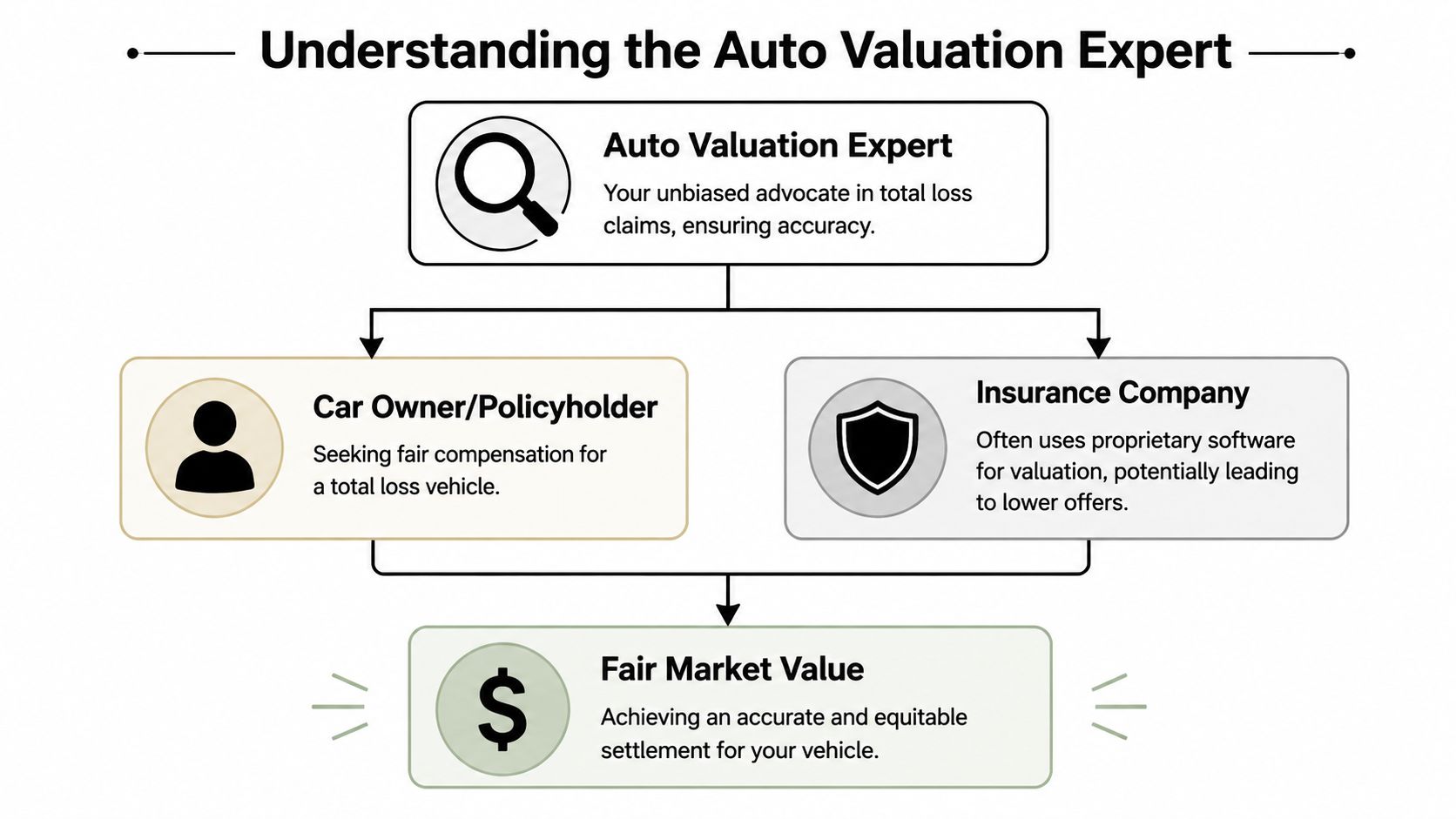
An adjuster works for the insurance company. Even when the adjuster is polite and responsive, that person is still operating inside the insurer's valuation system. An independent appraiser works from a different starting point. The assignment is to determine supportable market value, not to defend the insurer's software output.
Here's the practical difference:
| Role | Who they serve | What they produce |
|---|---|---|
| Insurance adjuster | Insurance company | Claim decision and settlement handling |
| Independent appraiser | Vehicle owner or legal matter | Documented valuation opinion backed by market evidence |
Why credentials matter
A real Auto Valuation Expert isn't just “someone who knows cars.” Plenty of people know cars. That's not enough.
You want someone who understands accepted appraisal standards, legal scrutiny, market comparisons, condition analysis, and report writing. The report has to survive negotiation. In some claims, it also has to survive a courtroom, arbitration process, or formal appraisal dispute.
Practical rule: If the appraiser can't explain their method clearly, don't hire them.
The strongest experts don't just toss out a number. They inspect, document, compare, adjust, and explain. They build a file that another professional can review line by line. That's why their opinion carries weight. It's not just experience. It's experience translated into evidence.
How Experts Determine Your Car's True Market Value
The biggest difference between an insurer's valuation and an expert appraisal is transparency. One often feels like a black box. The other shows its work.
A proper appraisal uses the Market Approach. That means the appraiser doesn't guess and doesn't grab a generic guidebook number. They inspect the vehicle, research actual comparable sales, and make documented adjustments for the things that change value in practice.

It starts with a physical inspection
A serious appraiser needs to see the vehicle. That's not busywork. It's a quality control step.
According to Vehicle Value Experts' FAQ on the appraisal process, appraisals without a physical inspection exhibit a significantly wider range of error. That makes sense. Photos alone can't confirm mechanical condition, hidden damage, interior wear, prior repairs, or the difference between average condition and unusually clean condition.
The inspection should account for the body, engine, interior, service history, and the details that software often smooths over.
Then come the comparable sales
The same source explains that the appraiser typically pulls three to five comparable sales and adjusts each one for differences such as color, options, mechanical condition, and demand. That matters because no two used cars are identical, even when the year and model match.
A good comp set asks hard questions:
- Is the trim level the same
- Is the market local or at least regionally relevant
- Are the options comparable
- Does the condition match reality
- Was the comp a true sale or just an optimistic listing
If you want a better feel for how repair economics and pricing logic shape claim conversations, FixyFlow repair pricing insights offer useful context on how cost structure and estimate logic affect what people think a repair or vehicle is “worth.”
The final report should be traceable
A proper valuation report doesn't just hand over a conclusion. It shows how the appraiser got there.
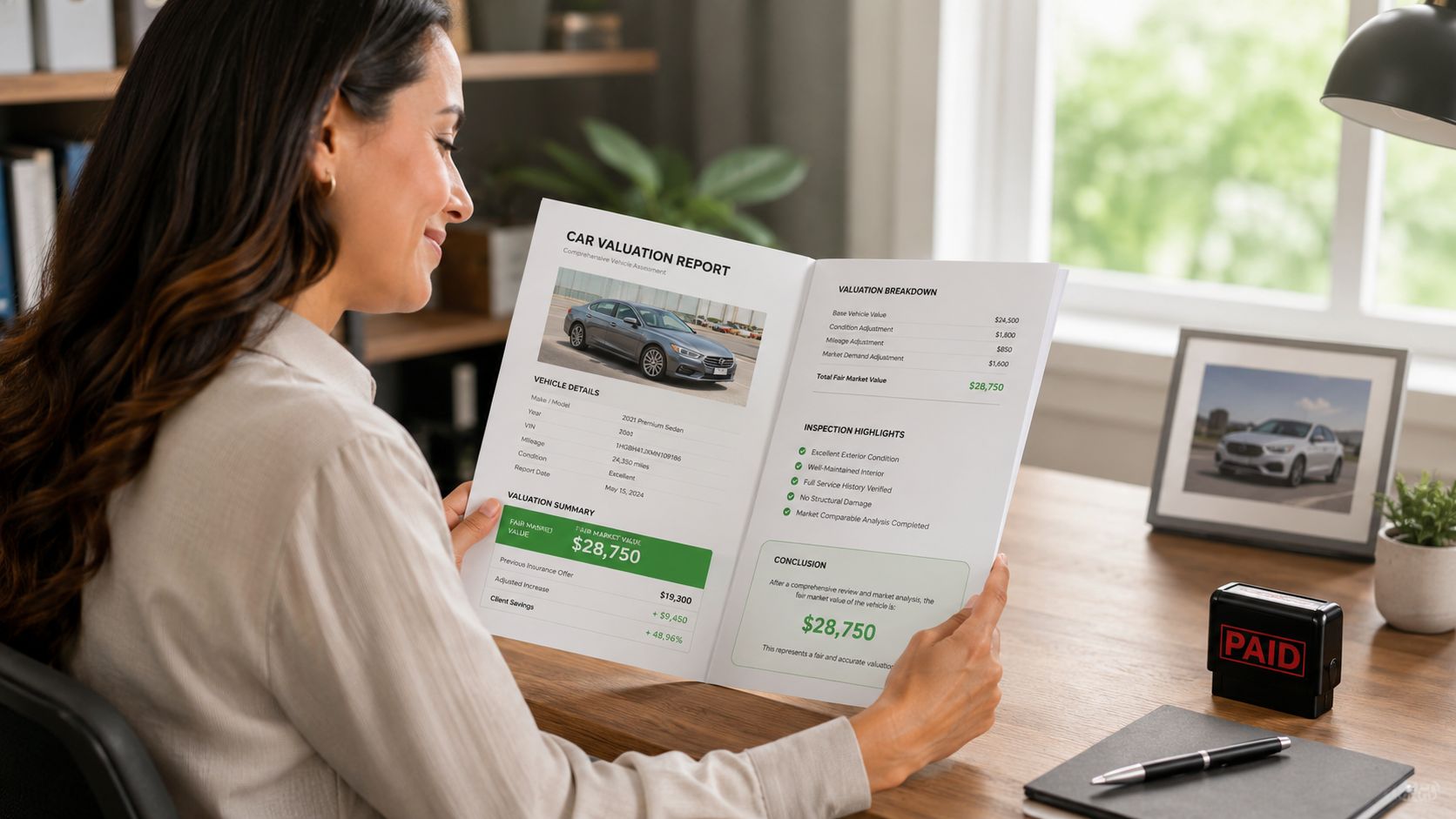
That same appraisal methodology source states the process is traceable and documented, with a secure PDF report delivered within 48 hours in that firm's process. The report should include the comparable analysis, condition notes, adjustment logic, and supporting documentation. If the insurer challenges it, the expert should be able to walk through every line item.
The more traceable the report, the harder it is for an insurer to dismiss it as “just your opinion.”
That's why an expert valuation usually outperforms a software printout in a dispute. One is a calculated output. The other is a documented appraisal.
Key Scenarios for Hiring a Valuation Professional
Not every claim needs outside help. Some do. If your situation falls into one of these buckets, hiring an Auto Valuation Expert is often the smartest move you can make.
Total loss disputes
This is the most obvious one. Your insurer declares the vehicle a total loss and offers a payout that doesn't reflect what it would take to replace your car.
That's the moment many people make a costly mistake. They argue by memory. They say, “I know what my car was worth.” The insurer responds with its report and moves on. What changes the discussion is a competing valuation built on inspection, comparables, and supportable adjustments.
A total loss appraisal is especially important when the insurer's comps are poor, your car was in better condition than average, or your trim and options are being flattened into a generic number.
Diminished value claims
If the car is repaired, you may still have a value problem.
A vehicle with an accident history can be worth less in the market after repairs. Buyers care about prior damage. Dealers care about prior damage. Vehicle history reports care about prior damage. An expert can document that loss in market appeal and turn it into a supported diminished value claim.
In these situations, owners often get brushed off with generic pushback. That doesn't mean the loss disappeared. It usually means nobody documented it properly.
Modified, custom, and enthusiast vehicles
Insurer software often falls apart in such cases.
According to Certified Auto Appraisers' FAQ, modified vehicles can appreciate 15–40% over stock equivalents, yet insurer software often deducts value for modifications or ignores them altogether. That's a major problem if your car has performance upgrades, custom interior work, body modifications, specialty wheels, or other changes that affect market value.
When standard templates stop working
Some vehicles need specialized judgment, not mass-market templates:
- Classic and collector cars with market value driven by condition, originality, and buyer demand
- Custom builds where upgrades are part of the value story, not a defect
- Luxury and exotic vehicles where option packages and provenance matter
- Motorcycles and RVs where market categories and comps can vary sharply
If your vehicle would make a buyer ask detailed questions, it needs an appraiser who asks detailed questions too.
The more unusual the vehicle, the less you should trust a generic valuation tool. That's not cynicism. That's pattern recognition.
Invoking the Appraisal Clause in Your Insurance Policy
Most drivers don't know the Appraisal Clause exists until the claim has already gone sideways. That's backward.
You should think about the Appraisal Clause early, before the insurer's number hardens into the default outcome. It's one of the few tools that can remove the insurance company from the role of sole value-decider.
According to Repairer Driven News' coverage of appraisal experts discussing valuation disputes, 60–70% of auto policies include an Appraisal Clause, and invoking it early can help prevent a vehicle from being declared totally lost and give the owner an advantage in negotiations.

Why early use matters
Appraisal is often treated like a last resort. I don't.
If the insurer is already steering the claim toward a low value, waiting usually helps them, not you. Early invocation changes the posture of the claim. It signals that value will be examined by appraisers, not dictated by software and phone calls.
That's especially important with high-value, collector, or custom vehicles. Once a claim gets boxed into a bad value framework, pulling it back out takes more time and more pressure.
How to use the clause strategically
Look at your policy and find the Appraisal Clause language. Then act with purpose.
Read the clause carefully
Confirm that your dispute is about value, not coverage. Appraisal usually addresses valuation disagreements.Notify the insurer in writing
Be direct. State that you dispute the valuation and are invoking the Appraisal Clause under the policy.Select your independent appraiser
Choose someone with experience in your vehicle type and in insurance disputes.Require a documented valuation process
Your appraiser should inspect, research, and prepare a report that can stand on its own.Prepare for the umpire step if needed
If the appraisers disagree, the umpire process resolves the gap.
For a practical explanation of how this process works in an auto claim, review this guide on the appraisal clause in auto insurance.
Don't wait for the insurer to tell you about your leverage. They usually won't.
What the clause really does
It doesn't guarantee you'll win every argument. It does something more important. It changes who gets to make the value call.
That shift alone can transform a claim.
Finding and Vetting the Right Expert for Your Claim
Not all appraisers are equal. Some know how to value a late-model commuter car. Some know collector vehicles. Some understand custom builds. Some write reports that hold up under pressure. Some don't.
You're not hiring a personality. You're hiring judgment, documentation, and credibility.
What to ask before you hire
Start with direct questions, not vague ones.
Ask about vehicle type experience
If you own a classic, custom, luxury car, motorcycle, or RV, ask for relevant experience with that category.Ask how they inspect and document
You want to hear about physical inspection, comparable research, condition analysis, and report support.Ask for a sample report
A strong report should look organized, specific, and readable. If it's thin, sloppy, or generic, walk away.Ask how they handle insurer disputes
A valuation expert should be comfortable defending the report, not just sending an invoice and disappearing.
Look for specialization, not just confidence
According to JD Power Values' history and industry background, serious appraisal firms often have deep industry roots, and networks like the International Vehicle Appraisers Network (I-VAN) qualify appraisers for unique and modified vehicles. That kind of specialization matters when your vehicle falls outside standard templates.
If you're comparing local options, this resource on finding an independent auto appraiser near you can help you understand what to look for.
Red flags that should end the conversation
Use your gut, but back it up with standards.
| Red flag | Why it matters |
|---|---|
| No physical inspection process | Weakens accuracy and support |
| No sample report available | You can't judge quality |
| Vague talk about “market value” | Suggests weak methodology |
| No experience with your vehicle type | Increases the risk of missed value |
A good appraiser should make you feel more grounded, not more confused.
From Valuation Report to Final Payout with Total Loss Northwest
A fair claim doesn't start with trust. It starts with proof.
If your insurer undervalued your car, you're not being difficult by pushing back. You're doing what a careful owner should do. A strong Auto Valuation Expert brings the claim back to market reality, whether the issue is total loss value, diminished value, or a vehicle that insurer software never had the sophistication to price correctly.
What a good outcome looks like
A good outcome isn't just a higher number. It's a cleaner process.
You know what your vehicle was worth. You know how that value was supported. You know where the insurer's report came up short. And if the claim needs formal pressure, you're ready with an appraisal that can hold up in negotiation.
That's how drivers stop feeling trapped in the claim and start controlling it.
The strongest position in a valuation dispute is calm, documented, and specific.
For drivers dealing with total loss and diminished value issues in Washington and Oregon, Total Loss Northwest is built around that exact job. The company works as a certified independent appraiser, challenges lowball valuations, and invokes the Appraisal Clause to take biased valuation software out of the driver's seat. It also supports diminished value claims in all 50 states.
If you want a quick overview of how the process plays out, this video is a useful place to start.
The bottom line is simple. If the offer is wrong, don't argue harder. Argue better. Get the valuation done right, use the Appraisal Clause early when it fits, and force the claim onto evidence.
If your insurance company is lowballing your total loss or ignoring your vehicle's real post-accident loss in value, Total Loss Northwest can help you fight back with certified independent appraisals, Appraisal Clause support, and market-based reports built to hold up in negotiations. If you're in Washington or Oregon, and you want a fair number instead of a software number, reach out.