After an accident, you're suddenly dealing with insurance adjusters, repair shops, and a whole lot of stress. When the at-fault driver's insurance company finally makes an offer for your damaged car, it can be tempting to just accept it and move on.
But is that offer fair? That's the million-dollar question, and this is exactly where a car appraisal service becomes your most important ally. They provide a professional, unbiased valuation of what your vehicle was really worth, arming you with a data-driven report to counter lowball insurance offers for a total loss or a diminished value claim.
What Car Appraisal Services Do and Why You Need One
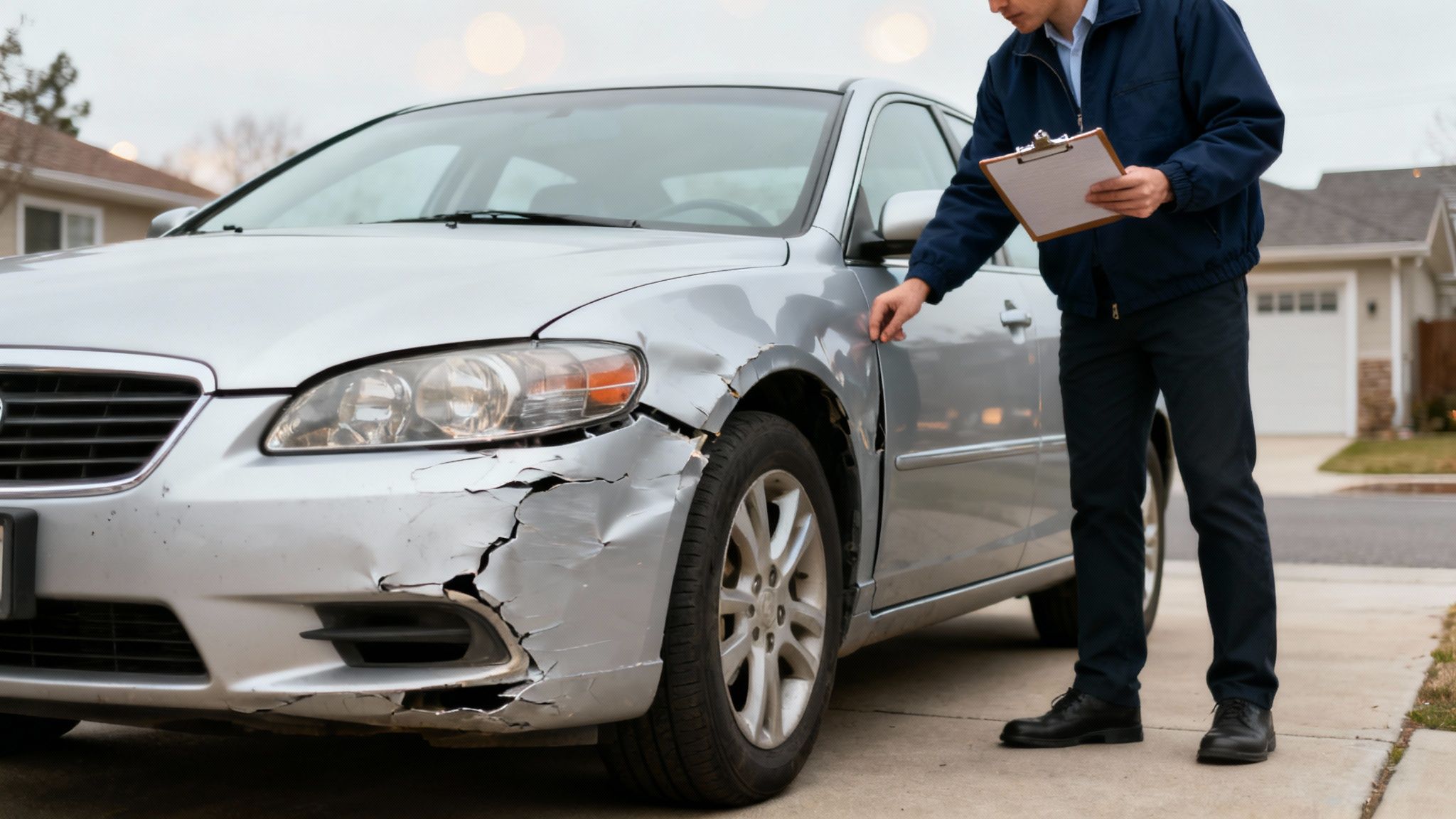
Think of an independent appraiser like a home inspector you'd hire before buying a house. You wouldn’t just take the seller’s word on the condition of the foundation, right? You bring in an expert to give you the real story.
Accepting an insurer's first offer is a lot like that. You're trusting the valuation from a company whose financial interest is to pay out as little as possible. An independent appraiser flips that script. They work for you.
Your Expert in the Valuation Fight
Insurance companies often lean on automated software to spit out settlement values. These systems are notorious for using outdated sales data, comparing your car to less-equipped models, and completely ignoring its pristine condition or recent upgrades. The result? An offer that doesn't come close to your car's true pre-accident value.
An independent appraiser’s job is to cut through the noise with meticulous, manual research. They become your advocate, armed with hard facts and deep industry expertise.
Here’s what a professional appraiser actually does for you:
- A Hands-On Vehicle Inspection: They document everything—your car's exact condition, mileage, optional features, and any recent work like new tires or a major service that adds value.
- Deep-Dive Market Research: They hunt down recent sales of truly comparable vehicles in your specific local market, not just pulling from a generic national database.
- A Rock-Solid Report: They compile all this evidence into a detailed, defensible report that lays out a clear, logical case for a higher valuation.
- Invoking the Appraisal Clause: They help you exercise a powerful but often-overlooked clause in most auto insurance policies that lets you bring in an independent expert when you dispute the company's valuation.
The Two Scenarios Where an Appraiser Is Crucial
Most post-accident claims boil down to two situations. Each one requires a specific type of appraisal to make sure you’re made whole financially.
1. Diminished Value: This is for when your car is repaired. The problem is, it now has an accident history, and that stigma kills its resale value. Even with flawless repairs, nobody wants to pay top dollar for a previously wrecked car. A diminished value appraiser calculates this exact loss so you can claim it.
2. Total Loss: The insurance company decides it's not worth fixing your car and declares it a "total loss." An appraiser’s role here is to determine the vehicle’s true Actual Cash Value (ACV)—what it was worth the moment before the crash—to ensure the insurance payout is enough to actually replace it.
An independent appraisal isn’t just about getting a second opinion; it’s about leveling the playing field. It forces the insurance company to move beyond their automated estimates and address a valuation built on real-world evidence and local market data.
At the end of the day, hiring an appraiser is an investment in protecting yourself. Studies consistently show that a vehicle can lose 10% to 30% of its value after a collision, even if it's repaired perfectly. Without an expert report, you could easily accept a settlement that leaves thousands on the table, forcing you to eat that loss yourself. A professional appraisal gives you the leverage to negotiate from a position of strength and get the full compensation you're legally owed.
Understanding Diminished Value Appraisals
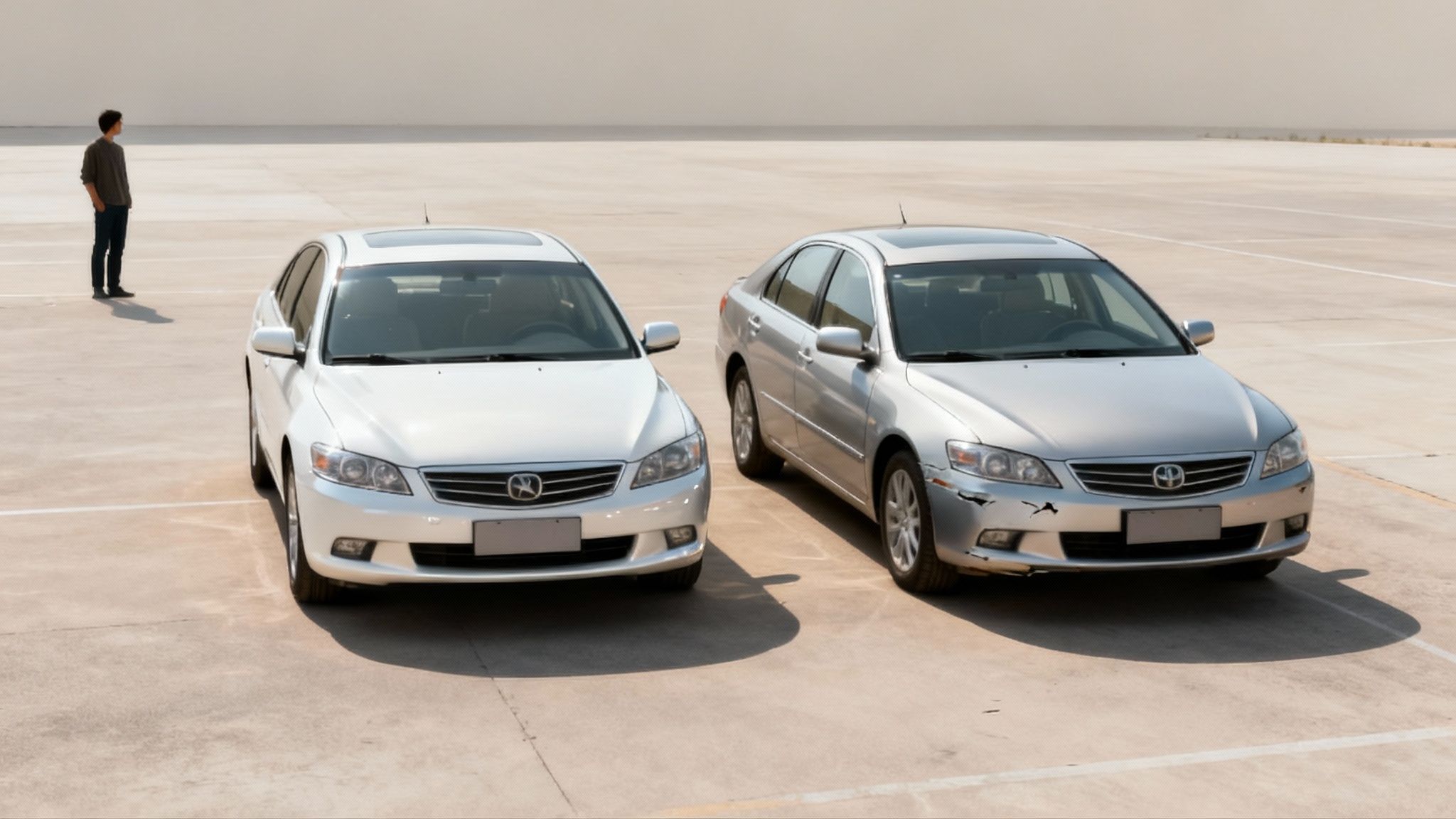
Even after your car leaves the body shop looking brand new, an invisible form of damage sticks around. It’s called Diminished Value, and it’s the quiet financial hit your car takes simply because it now has an accident on its permanent record.
Think about it from a buyer's perspective. You’re looking at two identical used cars—same make, model, year, and mileage. One has a squeaky-clean vehicle history report, but the other shows it was in a collision, even if it was repaired perfectly. Which one are you going to pay top dollar for? The choice is clear, and that price gap is the very essence of diminished value.
This isn't just some abstract concept; it's real money you'll lose when you go to sell or trade in your car. The at-fault driver’s insurance company is technically on the hook for this loss, but they rarely bring it up or offer to pay it. That’s where professional car appraisal services step in to fight for what you're owed.
The Three Types of Diminished Value
Diminished value isn't a one-size-fits-all term. It actually breaks down into three different types, and knowing the difference is key to understanding your claim.
-
Immediate Diminished Value
This is the instant drop in value the second the accident happens, before a single repair has been made. It’s the difference between your car’s pre-accident worth and its value as a damaged vehicle. Insurers typically cover this through the cost of the repairs. -
Repair-Related Diminished Value
This type comes into play when the repair work itself is shoddy. Maybe the paint doesn’t quite match, the shop used cheap aftermarket parts instead of OEM, or a new rattle has appeared. This poor-quality work further damages your car's value. -
Inherent Diminished Value
This is the big one and the focus of most claims. It's the loss in value that exists even after flawless, top-tier repairs. Your car is now permanently branded with an accident history, and that stigma makes it less appealing to future buyers. An independent appraiser is hired specifically to calculate this loss and get you compensated for it.
Inherent Diminished Value is the silent financial penalty for being in an accident. It’s a direct result of how the market views a previously wrecked vehicle, and without a formal appraisal, insurance companies have no reason to acknowledge it.
Why You Need an Appraiser for Your Claim
Let's be blunt: insurance companies are not in the business of handing out extra money. They will almost never volunteer a payout for inherent diminished value. In their eyes, once the car is fixed, their job is finished.
An independent appraiser’s sole purpose is to challenge that view with a detailed, evidence-based report. They calculate the precise dollar amount your car's market value has dropped because of its new accident history. This report isn’t just a number—it’s undeniable proof that turns your claim from a simple request into a formal demand for fair compensation.
To get to that number, an appraiser goes through a meticulous process:
- Establish Pre-Accident Value: First, they determine your vehicle's fair market value right before the crash.
- Analyze Damage Severity: They dig into the repair order to see how bad the damage was. Structural or frame damage, for example, has a much bigger impact on value.
- Inspect Repair Quality: The appraiser will often inspect the car to ensure the repairs were done right and meet industry standards.
- Conduct Market Research: This is the most critical step. They research your local market to see how much less buyers are willing to pay for cars with a similar accident history.
This comprehensive evaluation gives you the leverage you need to negotiate from a position of strength. If you're wondering what your claim could be worth, a professional diminished value claim calculator can give you a solid starting estimate. But remember, without a formal appraisal from an expert, you’re leaving money on the table—money that is rightfully yours.
What to Do When the Insurance Company Calls Your Car a "Total Loss"
That phone call from the insurance adjuster is a moment most of us dread. Hearing them say your car is a "total loss" is bad enough. It means they’ve decided it’s not worth fixing. But the real kick in the teeth usually comes a moment later: their settlement offer.
More often than not, that number feels insultingly low. You know your car was worth more than that—sometimes thousands more—just before the accident.
So, why the huge gap? It’s not just the adjuster playing hardball. It’s the result of a system built to save the insurance company money, not to make you whole. They lean heavily on automated valuation software to calculate your car's Actual Cash Value (ACV). This software is designed to find the cheapest "comparable" vehicles it can, often pulling from distant markets and completely ignoring your car's unique condition and features.
Their First Offer Is Just a Starting Point
The ACV report the insurer sends over might look impressive, with its charts and vehicle listings, but it's rarely a true picture of your car's worth. These automated systems are programmed with a clear bias.
Here are a few of the most common tricks these reports pull:
- Bad Comparisons: The software will happily compare your garage-kept, low-mileage sedan to a beat-up base model with a questionable service history located three states away.
- Ignoring What Made Your Car Great: Did you just put on a brand-new set of tires? Or maybe you had a premium sound system or a tow package? These automated tools almost always miss those crucial, value-adding details.
- Using Stale Data: The car market moves fast. The software might be using sales data that’s months old, completely missing recent shifts in local demand that drove up the value of vehicles like yours.
This is exactly why getting a professional car appraisal is so important. A real, independent appraiser doesn't just punch numbers into a computer. They roll up their sleeves and do a hands-on, detailed investigation to find out what your car was really worth in your local market.
The Power of a Second Opinion
Think of an independent appraiser as your advocate in this fight—an automotive detective working for you. Their entire job is to build a rock-solid, evidence-based case for your car's true value, countering the insurer's lowball report with one grounded in reality.
The global auto market is massive, valued at $3.6 trillion in 2023 and on track to hit $6.9 trillion by 2033. A huge chunk of that involves insurance claims, and studies show that car owners often get shortchanged by 25% or more on total loss settlements simply because of flawed software.
A certified appraiser is your best defense. They create a detailed report that can stand up to intense scrutiny, documenting every last detail about your vehicle and backing it all up with concrete proof.
An independent total loss appraisal isn't just another opinion; it's a factual correction. It replaces the insurer's automated guess with a human-verified, market-driven valuation that gives you the leverage to demand what you're rightfully owed.
How an Appraiser Builds Your Case
So, what does an appraiser do that the insurance company’s software doesn’t? They dig into the specifics. They don’t just look for cars that are a similar make and model; they find true apples-to-apples comparisons.
Here’s a look at their process:
- A Hands-On Vehicle Review: They go over your vehicle's exact pre-accident condition, trim level, optional features, and any recent upgrades or maintenance that added to its value.
- Hyper-Local Market Digging: The appraiser hunts for recently sold vehicles that are genuine matches in your immediate area. This reflects what local buyers were actually willing to pay.
- Fair and Honest Adjustments: They then make documented, line-by-line adjustments to the prices of those comparable cars to account for any differences in mileage or condition.
The final report they hand you is more than just a number; it's a powerful negotiation tool. It lays out a clear, logical argument for a higher payout, all backed by verifiable data. When an insurance company is faced with that level of evidence, their lowball offer becomes much harder to defend.
To get a better sense of how this works, you can explore our full guide on the total loss vehicle appraisal and see how it helps car owners fight back. Taking this step is the best way to ensure you get the money you need to get back on the road without taking a serious financial hit.
Your Step-by-Step Guide to the Car Appraisal Process
After a car accident, trying to deal with the insurance company can feel overwhelming. It's confusing. When you bring in a professional appraiser, you’re hiring an expert to sort through the chaos and build a rock-solid case for what your car was really worth.
The process isn't random; it's a methodical, step-by-step approach designed to give you leverage. Think of it as a crucial reality check against the insurer's initial, often lowball, offer.
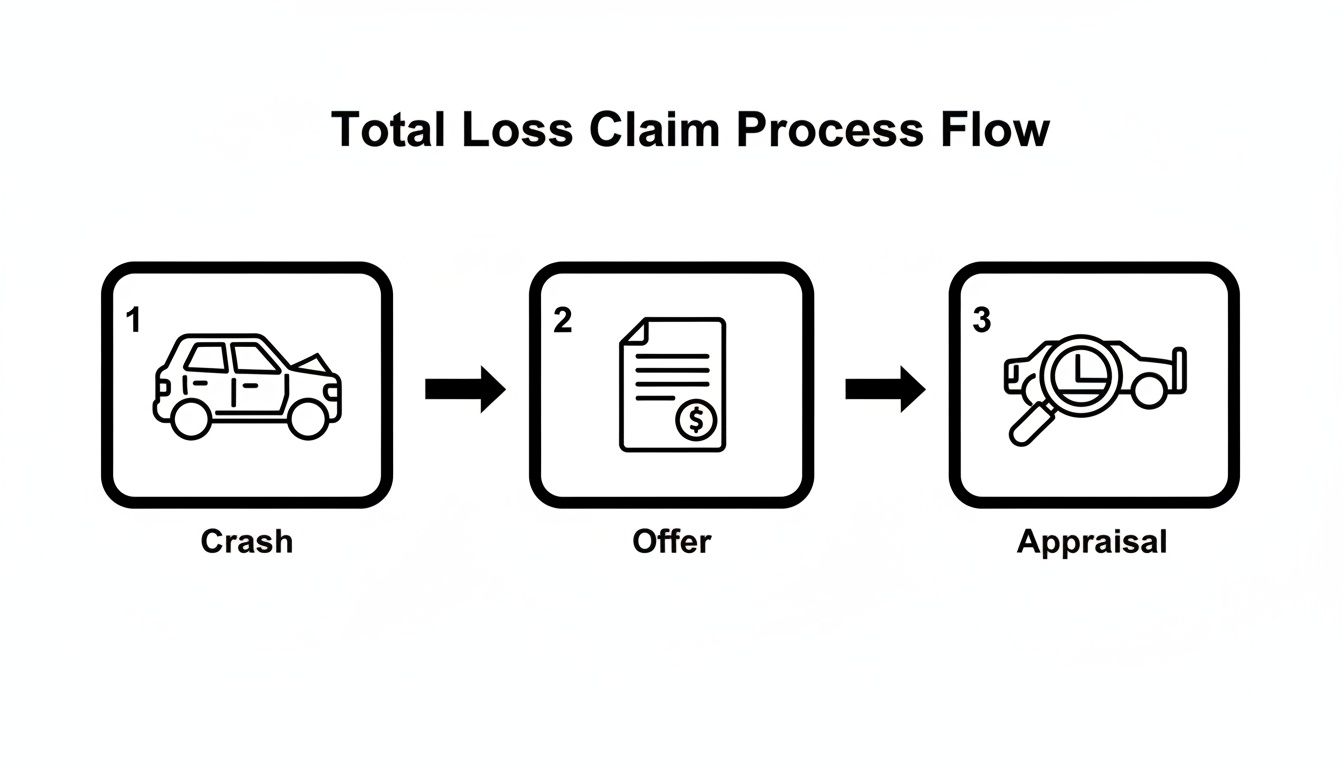
As you can see, an independent appraisal is your chance to challenge the insurance company's number before you're forced to accept an unfair payout.
Phase 1: The Kick-Off Call and Gathering Your Ammo
It all starts with an initial consultation. This first conversation is more than just a quick chat; it's a strategy session. You’ll walk the appraiser through the details of the accident, the condition of your car, and where things stand with the insurance company. This is your opportunity to share the whole story and for the appraiser to figure out the best way to move forward.
Next, it's time to gather the evidence. To build the strongest possible case, your appraiser needs all the relevant paperwork.
This usually means collecting:
- The Police Report to get the official facts of the crash.
- Repair Estimates or final invoices that show the extent of the damage.
- The Insurance Company's Valuation Report, which helps the appraiser pinpoint exactly where their numbers went wrong.
- Vehicle Maintenance Records to prove you took excellent care of your car before the accident.
Think of these documents as the foundation of your entire claim.
Phase 2: The Deep Dive—Inspection and Market Analysis
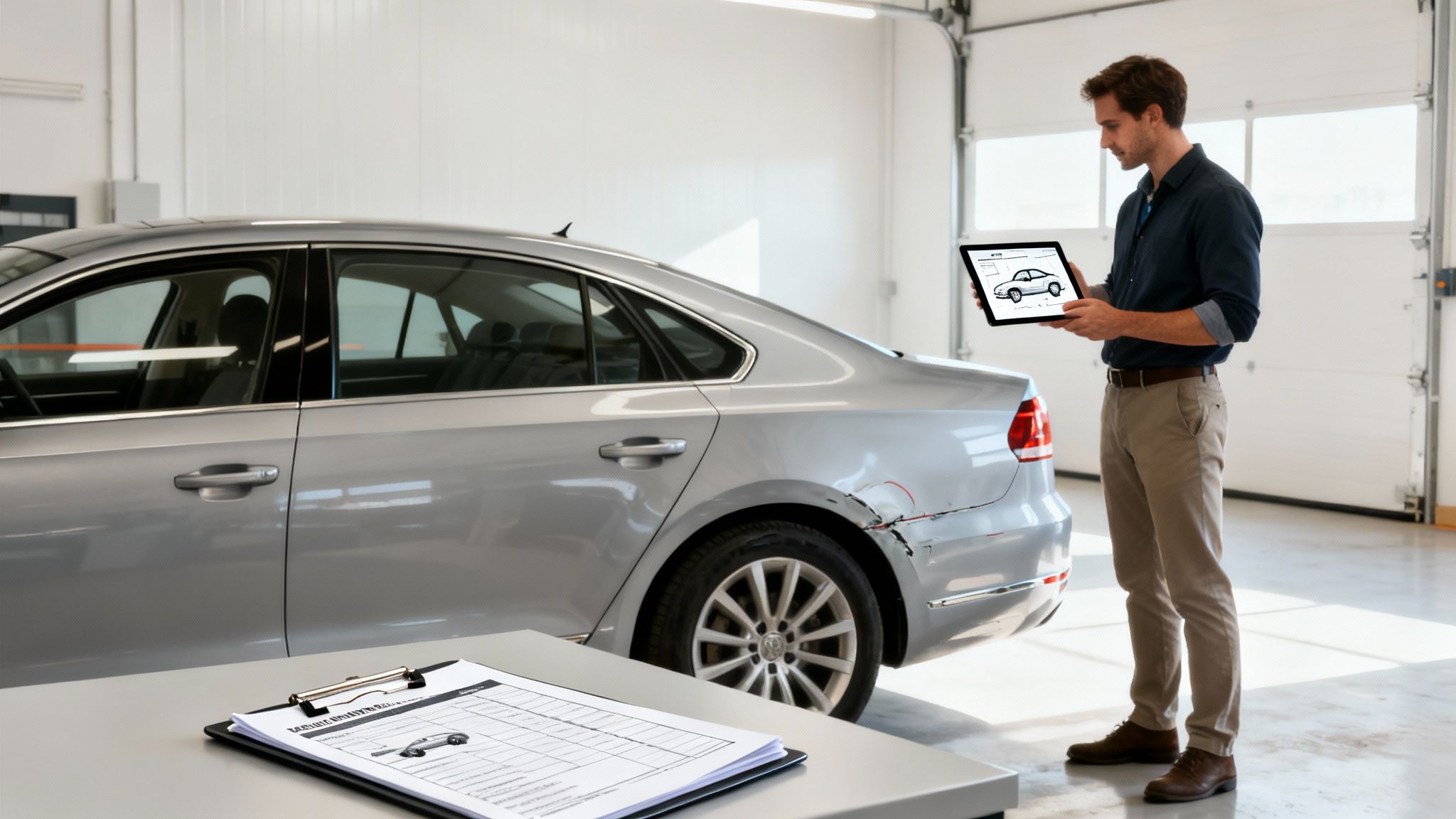
With the paperwork sorted, the real detective work begins. Your appraiser will perform a meticulous, hands-on inspection of your vehicle. Whether it's a total loss or a diminished value claim, this is where the details that insurance software ignores finally get noticed. They’ll document everything from your car's specific trim package and factory options to recent upgrades like new tires or an aftermarket sound system.
Then comes the most important part of the entire process: hyper-local market research. A good appraiser doesn't just pull up some national average from a database. They dig deep into your local market to find actual, comparable vehicles that have recently sold nearby. They look for cars with the same year, make, model, and trim, then make documented, dollar-for-dollar adjustments for differences in mileage and overall condition.
An independent appraiser’s goal is to create a valuation grounded in reality, not algorithms. By comparing your vehicle to what similar cars are actually selling for in your area, they build a report that is nearly impossible for an insurer to dismiss.
Phase 3: The Report and Making Your Move
Once the research is done, the appraiser puts everything together in a comprehensive and defensible report. This isn’t just a single number on a page. It's a detailed document that explains the entire process, showcases the comparable vehicles used for the valuation, and logically proves how they arrived at the final figure. It’s a professional-grade weapon built to withstand scrutiny from the insurance company.
Finally, with this powerful report in hand, it’s time to formally invoke the Appraisal Clause in your auto policy. This is a little-known but incredibly powerful tool that forces your insurance company to take your claim seriously. It triggers a binding process where they must also hire an appraiser, and together, the two sides work to agree on a fair settlement—taking the final decision out of the insurance company's hands.
The current car market makes this more critical than ever. Even with perfect repairs, an accident history can cause a vehicle to lose 10-30% of its value due to the stigma attached. If you'd like to dig deeper into the numbers, you can read the full research about these automotive industry insights and see for yourself why a data-driven appraisal is so crucial.
How to Choose the Right Independent Car Appraiser
Picking an independent car appraiser is a bit like choosing a lawyer to represent you. The right choice can be the difference between leaving thousands of dollars on the table and getting the settlement you're actually owed. Not all appraisers have the same level of skill, so you need to do your homework.
You’re not just looking for someone to give you a number; you need a genuine advocate. A real expert builds a case for your car's value that is so well-supported by evidence that even a skeptical insurance adjuster can't easily dismiss it. They become your partner in the fight for fair value.
Look for Specialized Expertise and Certifications
When you're dealing with a specific insurance claim, a generalist just won't do. You need an appraiser who specializes in diminished value and total loss cases. This focus means they know the ins and outs of these specific claims, including the best arguments and evidence to use.
Beyond specialization, look for professional credentials. Certifications from well-regarded organizations like the International Automotive Appraisers Association (I-ACP) show that an appraiser is committed to high ethical standards and stays current in their field.
A report from a certified appraiser simply carries more weight. It tells the insurance company you’re not messing around and have a serious professional backing you up.
Analyze Their Track Record and Local Market Knowledge
A good appraiser should have a clear history of getting results. Don't hesitate to ask for examples of past settlements they’ve helped secure for clients. A key question to ask is about their experience using the Appraisal Clause—this is a powerful contract provision, and their ability to use it effectively is a great sign of their expertise.
You can also learn a lot from verifiable client testimonials and online reviews. Look for consistent feedback that points to their negotiation skills, professionalism, and success in getting fair outcomes.
An appraiser’s deep understanding of your local vehicle market is non-negotiable. Vehicle values can vary significantly by region, and an expert who knows the local supply and demand will build a much more accurate and defensible report.
The global car sales market is a massive $4.3 trillion industry, but it's made up of over 471,000 separate businesses. This fragmentation causes massive swings in vehicle values, which insurers often use to their advantage, resulting in underpayments of $3,000-$10,000 per claim. A skilled appraiser fights this by using hyper-local data to boost settlements by 20-50%.
What to Look for in a High-Quality Appraisal Report
The appraisal report is the main tool you'll use to negotiate. A top-notch report should be thorough, logically structured, and easy for anyone to understand.
Here’s a quick checklist of what it absolutely must include:
- Detailed Vehicle Information: This means the VIN, mileage, exact trim level, all optional features, and a clear description of its pre-accident condition, all backed up with good photos.
- Transparent Methodology: The report has to clearly explain how the appraiser arrived at their valuation, showing the market data and specific comparable vehicles they used.
- True Local Comparables: It should feature actual, recently sold vehicles from your immediate area that are true apples-to-apples matches for your car.
- Professional Credentials: The appraiser's name, signature, and certifications must be clearly displayed on the document, giving it official authority.
Choosing the right expert is the single most important decision you'll make in this entire process. For more help finding a qualified professional, check out our guide on finding an independent auto appraiser near me. Your final settlement truly depends on it.
Your Top Questions About Car Appraisals, Answered
After a wreck, things can get confusing fast. You're suddenly dealing with insurance jargon and a claims process that feels designed to be overwhelming. It's completely normal to have questions.
Let's clear the air. This section will walk you through the most common concerns people have, giving you the straightforward answers you need to make smart decisions and feel in control. We'll tackle everything from costs and timelines to what to do when the insurance company just won't budge.
Is Hiring an Appraiser Really Worth the Cost?
This is usually the first question on anyone's mind. You’re already facing repair bills and other headaches, so why add another expense? The short answer is a resounding yes. Think of it less as a cost and more as an investment in getting back what your car was truly worth.
The reality is that insurance companies often undervalue claims by thousands. An appraiser's fee is typically a small fraction of the money a professional report can help you recover. For instance, paying $500 for an appraisal that gets you an extra $3,500 on your settlement is a no-brainer. You're using a few hundred dollars to get back a few thousand.
An independent appraisal completely changes the power dynamic. It forces the insurance company to defend its lowball number against a detailed, evidence-based report from a certified expert. This almost always leads to a much higher payout that dwarfs the initial appraisal fee.
Ultimately, you're paying for an expert in your corner. Without one, it's just your word against the insurance adjuster's biased data. With a professional appraisal, you have a powerful tool that levels the playing field.
How Long Does the Appraisal Process Usually Take?
While every claim is a little different, the appraisal process generally follows a predictable path. Knowing what to expect can take a lot of the stress out of the situation. From your first call to getting the final report in hand, the whole thing typically takes about one to two weeks.
Here’s a rough idea of the timeline:
- Step 1: Consultation & Document Review (1-3 Days): This is where you'll talk to the appraiser about your accident and send over key documents like the police report, photos, repair estimates, and the insurer's lowball offer.
- Step 2: Vehicle Inspection & Market Research (3-7 Days): This is the heart of the process. The appraiser will do a deep dive, thoroughly inspecting your vehicle (in-person or virtually) and scouring the local market for truly comparable vehicle sales to establish its real value.
- Step 3: Report Creation & Delivery (2-4 Days): With all the evidence gathered, the appraiser builds a detailed, ironclad report and gets it into your hands.
This timeframe gives the appraiser the time needed to build a solid, well-researched case, not just a rushed opinion.
Can I File a Claim If I Was at Fault?
This is a really important distinction. Diminished value claims are almost always filed against the insurance policy of the driver who caused the accident. So, if you were at fault, you typically can't claim diminished value from your own insurer. Your policy is designed to cover the cost of repairs, not the drop in resale value that happens after an accident.
However, the story changes completely if your car is declared a total loss. In that case, you absolutely can—and should—challenge your own insurance company if their valuation seems low. Your collision coverage entitles you to the Actual Cash Value (ACV) of your vehicle before it was destroyed, and you have every right to dispute their offer with your own independent appraisal.
What If the Insurer Rejects My Appraiser's Report?
It's pretty common for an insurance adjuster to push back or even outright reject an independent report at first. Don't panic—this is usually just a negotiation tactic. This isn't the end of the road; in fact, it’s exactly why your auto policy has an Appraisal Clause.
This powerful tool, which most people don't even know exists, lays out a clear process for settling disputes. When you invoke the clause, it requires your insurance company to hire its own independent appraiser. The two appraisers then negotiate. If they can’t reach an agreement, they bring in a neutral, third-party "umpire" who makes a final, binding decision. This process takes the final say away from the insurance company and puts it in the hands of unbiased experts.
Don't let an insurance company tell you what your car is worth. At Total Loss Northwest, we fight for the true value you're owed. Our certified appraisals give you the ammunition you need to secure a fair settlement. Contact us today to get started.