The tow truck has left. Your car is sitting at a body shop or salvage yard. The other driver's insurer has opened a claim. Then the adjuster calls with a calm voice and a fast answer.
That's the moment most drivers lose money.
The problem isn't just the damage. It's the process. Insurance carriers handle claims every day, and they train their staff to move files toward closure quickly. You handle a collision claim rarely, usually when you're stressed, short on time, and trying to get back to normal. If you don't know how valuation works, what to document, and when to push back, the claim gets decided on the insurer's terms.
Good collision claim assistance changes that. It gives you a way to protect the value of your vehicle, your paperwork, and your negotiating position before the file hardens around a low number.
Your Crash Course in Collision Claim Assistance
After a wreck, most drivers think the hard part is over once the scene is cleared and the claim is opened. It isn't. That's when valuation starts, and valuation is where money is won or lost.
The financial stakes are not small. In 2024, the average collision claim for property damage in the United States reached $5,489, and 4.16% of collision insurance policyholders filed a claim that year, according to the Insurance Information Institute auto insurance facts and statistics. That tells you two things. Claims are common, and even ordinary damage carries real cost.
What collision claim assistance actually means
Real collision claim assistance isn't someone telling you to exchange information and wait for a call. It means building the claim the way an appraiser or claim examiner would.
That includes:
- Preserving evidence early so the carrier can't argue about impact severity, point of contact, or pre-existing damage
- Controlling communication so a recorded statement or casual remark doesn't get used against you
- Reviewing every estimate and valuation line by line instead of treating the first number as official
- Knowing when to bring in an independent appraiser to counter software-driven valuations
Practical rule: The first insurance number is a position, not a verdict.
The mindset that gets better outcomes
Drivers who do best in claims aren't always the loudest. They're the most organized. They keep photos, emails, repair documents, comparable vehicle data, and every name and date tied to the file.
They also understand something important. The insurer's job is to resolve the claim for its policyholder or for its own book of business. Your job is to prove value. If you approach the claim passively, you leave the record incomplete. If you approach it like a file that may need scrutiny later, the carrier has less room to discount what happened.
Securing Your Claim at the Accident Scene
The claim starts at the scene, not when the adjuster opens the file. In the first hour, you're creating the record that will shape liability, repair scope, and value.
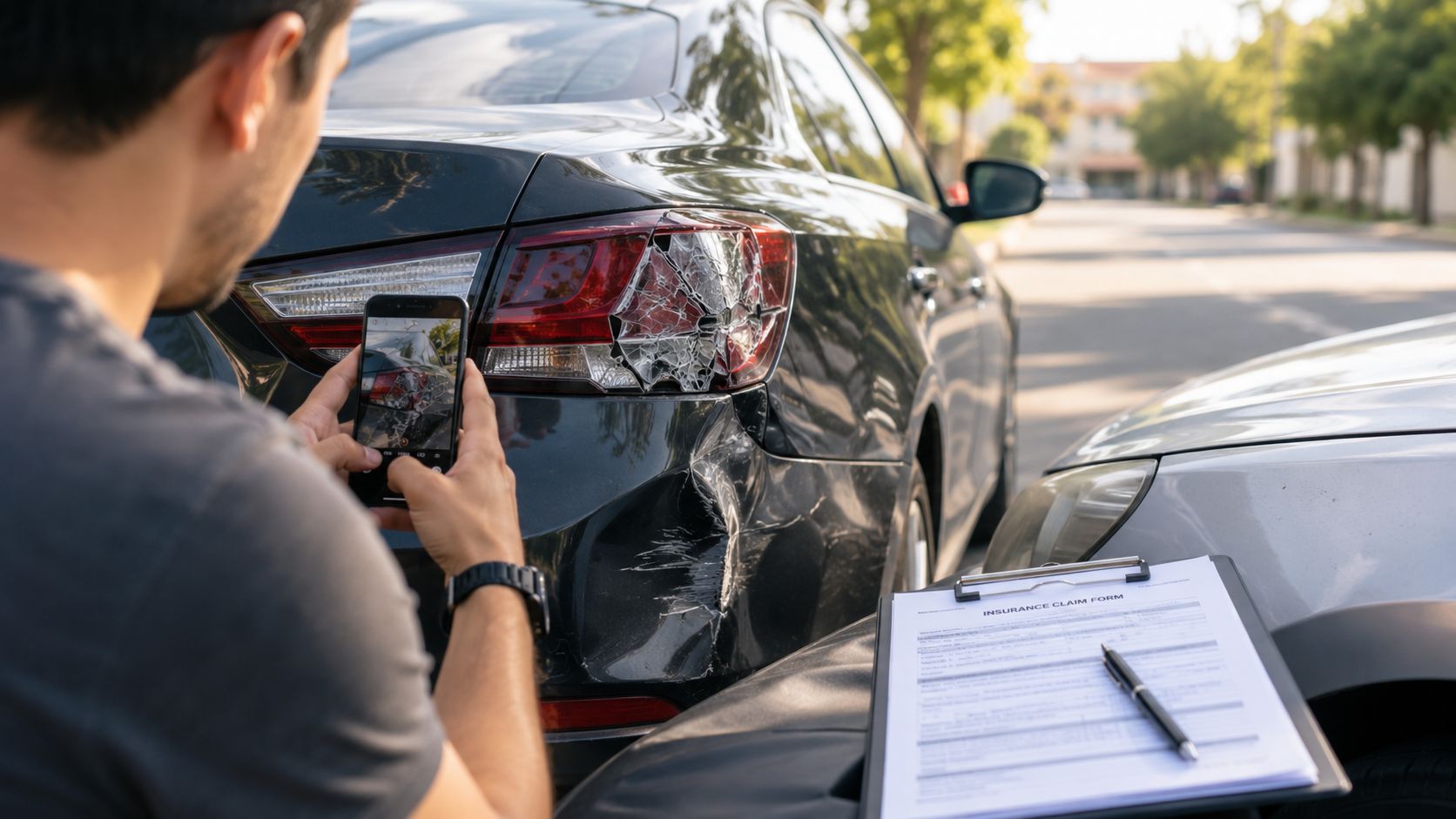
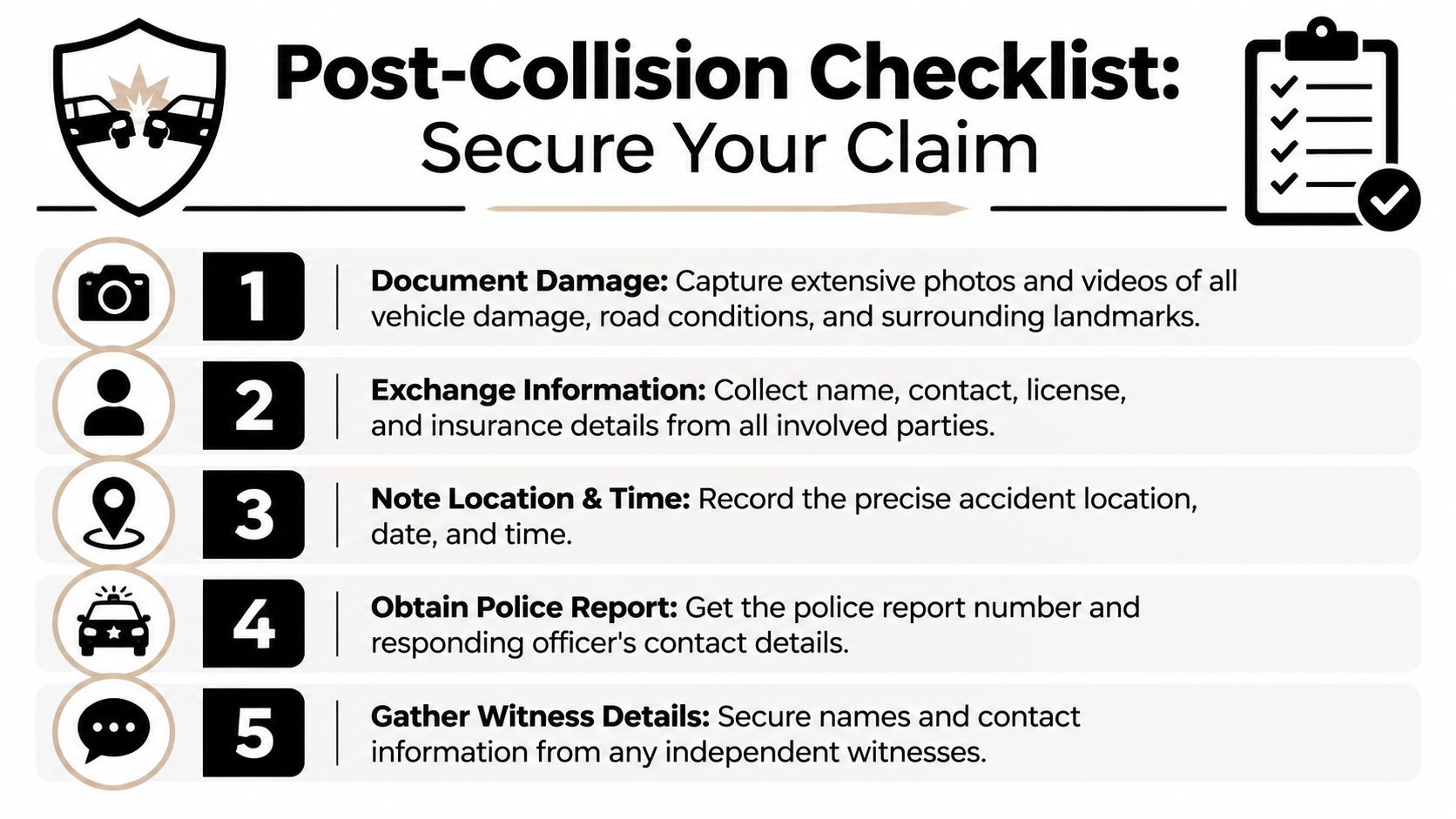
Individuals often take two or three photos of the bumpers and move on. That's not enough. A professional appraiser wants a full visual story. You want close-ups, wide shots, angles that show lane position, debris, skid marks, glass, fluid, road signs, traffic lights, weather, and the resting position of each vehicle before they're moved, if it's safe to do so.
What to capture before memories change
Use your phone like you're documenting evidence for someone who wasn't there.
- Start wide: Photograph the entire scene from multiple corners. Show intersections, lane markings, curbs, and nearby landmarks.
- Move closer: Get each damaged area on both vehicles, including panels that look lightly marked. Small scrapes often sit next to hidden structural or suspension damage.
- Shoot identifiers: License plates, VIN stickers if accessible, company logos on commercial vehicles, and the other driver's insurance card.
- Record conditions: Wet pavement, poor lighting, construction zones, obstructed signs, and broken traffic controls all matter.
- Take video with narration: A slow walkaround can capture context still photos miss.
If you need a concise post-crash reference, this guide on steps after a car accident is a useful checklist to review once things settle down.
What to say and what not to say
Be polite. Be factual. Don't speculate.
Tell the officer what you observed. Don't guess about speed, don't volunteer fault, and don't soften your position with phrases like “I might have” or “I didn't see them until the last second” unless that is a precise and necessary fact. The same rule applies with the other driver.
A few examples:
- Say: “I was traveling in the right lane and was struck on the driver-side rear.”
- Say: “The light was green when I entered the intersection.”
- Don't say: “I'm sorry.”
- Don't say: “I'm fine” if you're shaken and unsure.
- Don't say: “It's probably minor.”
The scene report should contain facts you know, not interpretations the insurer can later stretch.
Witnesses and paperwork that matter later
Independent witnesses are often more valuable than drivers realize. If someone stopped and saw the impact, get their name and contact information immediately. Don't rely on police to do it for you.
Also gather:
- Officer name and report number
- Tow company name and storage location
- Exact date, time, and location
- A quick voice memo to yourself describing what happened while it's still fresh
That last step helps more than people think. Claims drag on. Memory doesn't stay sharp.
Dealing with the Insurance Adjuster
The adjuster is not your driving coach, therapist, or advocate. The adjuster's role is to gather information, evaluate exposure, and close the file. Some are fair and professional. Some push hard. Either way, you should treat every conversation as part of the claim record.
The first call matters because drivers often talk too much. They fill silence, guess at details, or agree to a recorded statement before they understand the damage or even how they feel physically.
Handle the first contact like a business call
You only need to provide basic, accurate facts at the start. Your name, claim number if assigned, contact information, vehicle location, and whether the car is drivable. That's enough to move the file forward.
If the adjuster asks for a recorded statement right away, you can decline and say you'll provide information after you've had time to review the incident and gather documents. That is a reasonable position. Keep your answer short and calm.
A simple script works:
“I'm willing to cooperate, but I'm not giving a recorded statement today. Please send your questions by email, and I'll respond in writing.”
Why written communication protects you
Written communication creates a paper trail. It also slows down the common tactic of pushing a claimant into off-the-cuff answers that later get framed as inconsistencies.
Use email when possible. Confirm phone calls with a follow-up note summarizing what was discussed. If the adjuster makes a verbal offer, ask for it in writing. If the repair estimate changes, ask what line items changed and why.
For drivers who want a sharper sense of how claim scrutiny works on the investigative side, this insurance fraud investigation guide is useful background. It helps explain why loose statements, conflicting timelines, and missing documentation create problems, even for honest claimants.
You can also review a practical breakdown on how to deal with insurance adjusters if the carrier starts pressing for quick answers.
Verbal traps that cost claim value
Adjusters often ask questions that sound harmless but invite damaging answers.
Here are common examples:
| Adjuster question | Better response |
|---|---|
| “Were you hurt?” | “I'm still evaluating that and will document any issues appropriately.” |
| “How fast were you going?” | “I'm not going to guess. I can describe the event as I experienced it.” |
| “So the damage is just cosmetic?” | “I'm not qualified to characterize the full extent until the vehicle is inspected.” |
| “Can we get this wrapped up today?” | “I'll review the written valuation and respond after I've had a chance to verify it.” |
The goal isn't to be difficult. It's to avoid making factual concessions before the evidence is complete.
Decoding the Insurer's Lowball Offer
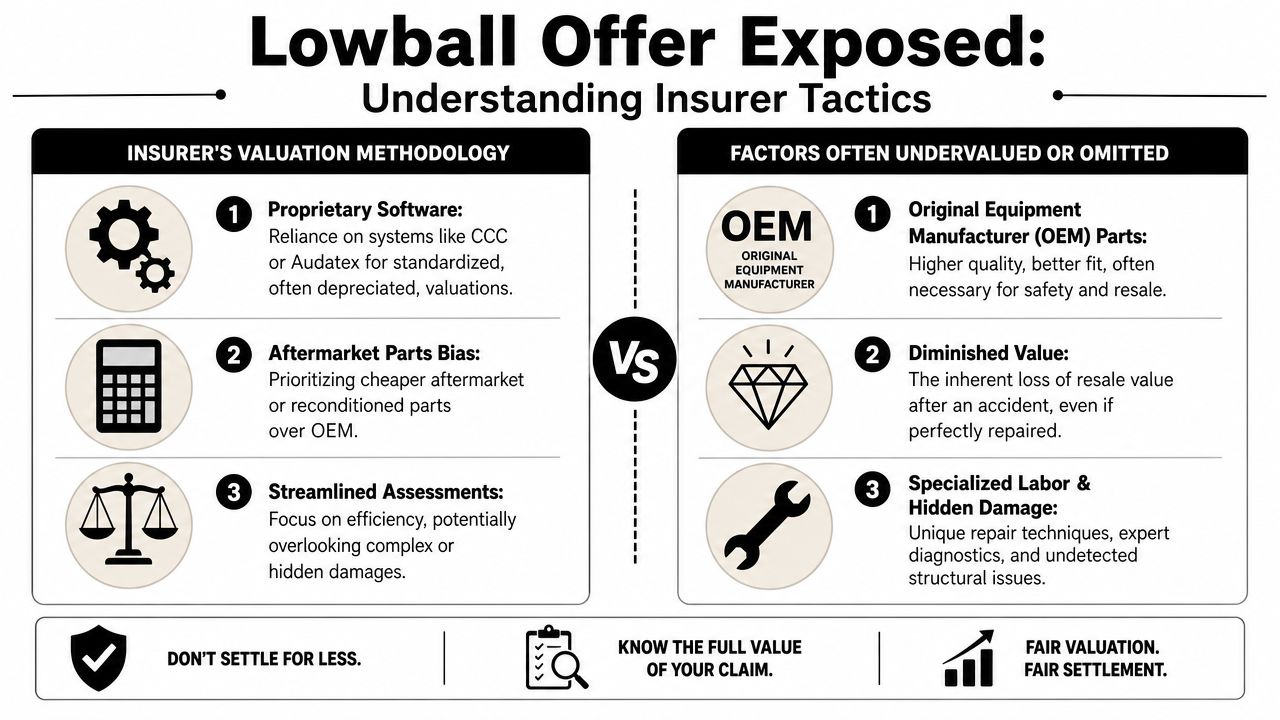
A lowball offer usually arrives dressed up as a clean, official valuation. It may come with estimate lines, comparable vehicles, condition adjustments, or software printouts from systems such as CCC or Audatex. That presentation gives the number an air of finality. It shouldn't.
These systems are only as reliable as the data entered and the assumptions behind them. If the insurer uses weak comparable vehicles, ignores local market conditions, applies aggressive condition deductions, or overlooks repair-related loss in market value, the number will skew low while still looking polished.
Where the offer usually breaks down
The first place I look is not the final number. It's the assumptions underneath it.
A low valuation often includes one or more of these problems:
- Questionable comparables that don't match trim level, mileage, options, or condition
- Parts bias toward cheaper replacement categories when the repair requires better-fit or manufacturer-correct components
- Missed damage because the initial inspection was rushed or done before teardown
- No discussion of diminished value, even when the vehicle now carries an accident history
The money most drivers never claim
The most overlooked issue in collision claims is diminished value, meaning the loss in market value after a vehicle has been wrecked and repaired. A repaired car can function well and still sell for less because buyers, dealers, and auction markets discount accident history.
A 2024 NAIC survey found that 60-70% of drivers are unaware they can claim diminished value, and only 12% of collision claim guides in major U.S. markets mention it as a recoverable item, according to this discussion of little-known legal loopholes in car accident claims. That gap benefits insurers. If drivers don't ask, many carriers won't volunteer the issue.
If your vehicle was worth more before the crash than it is after proper repairs, repair cost alone does not make you whole.
Signs you're looking at a lowball number
You don't need to be an appraiser to spot warning signs. Watch for these:
- The offer comes fast, before a thorough inspection or teardown.
- The valuation report uses vehicles you'd never shop against if you were replacing your own.
- The adjuster treats the software output as definitive.
- The file ignores post-repair stigma for a newer, high-value, collector, or custom vehicle.
When that happens, don't argue from emotion. Ask for the full written basis of valuation, then challenge the components one by one.
The Independent Appraiser Your Secret Weapon
When the insurer's number doesn't reflect reality, the strongest move is usually to bring in an independent appraiser. Not the body shop estimator. Not the carrier's vendor. An appraiser who works for you and documents value with market support.
That changes the conversation from “I think your offer is low” to “Here is a defensible appraisal report showing why your valuation fails.”
What a good independent appraisal actually does
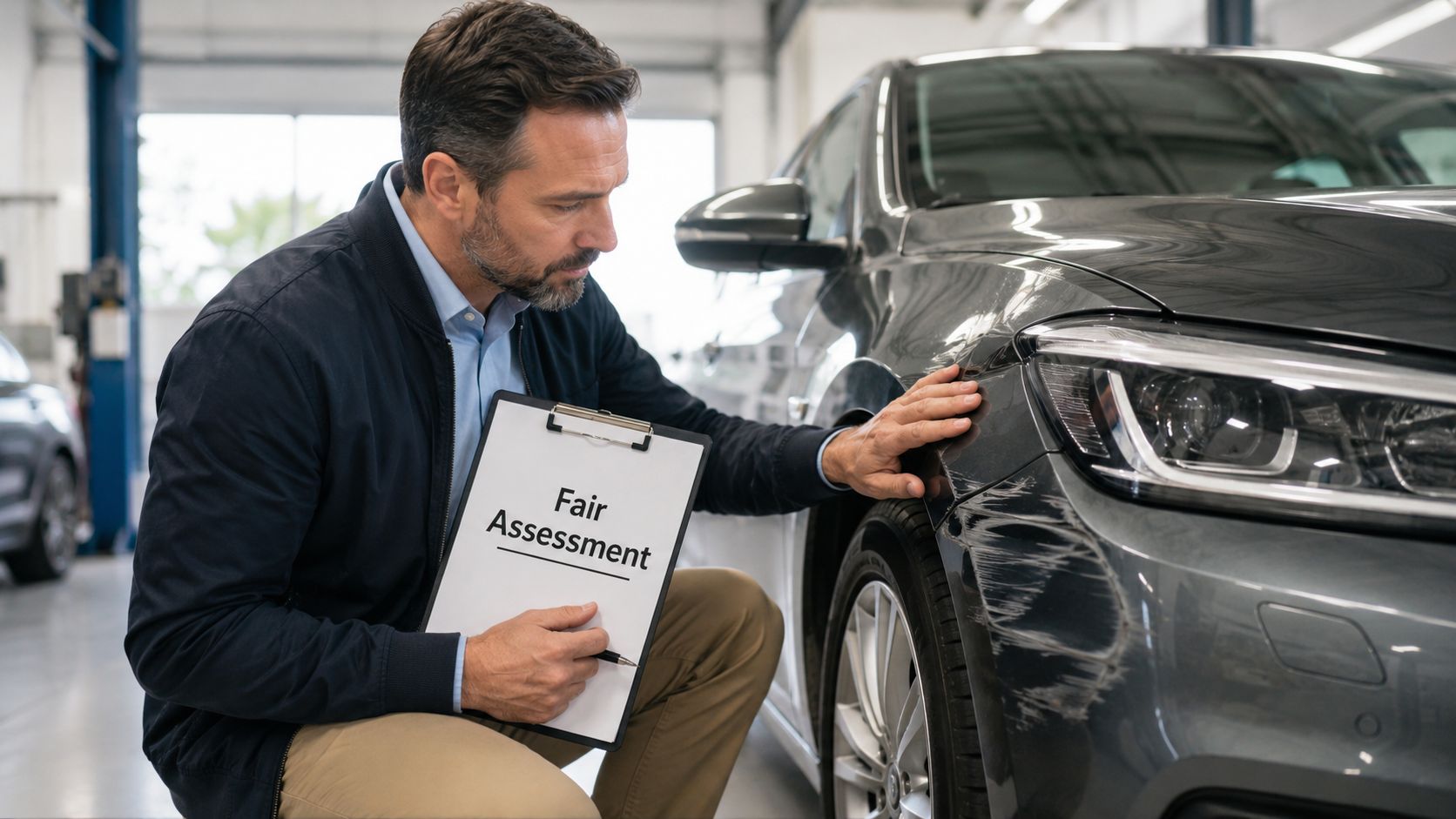
Insurers often rely on standardized systems. An independent appraiser checks the actual details those systems flatten.
For a total loss, that means reviewing comparable vehicles, equipment, prior condition, regional market support, and whether the insurer's comps match your vehicle.
For a diminished value claim, the report needs more than a guess. The success of a diminished value claim hinges on a report that includes a thorough before-and-after market analysis and photographic evidence. In states like Oregon and Washington, that expert assistance yields a 72% success rate, with an average settlement increase of $3,500 for high-value vehicles, based on the same source cited earlier. That's why report quality matters.
What to look for in the report
A credible appraisal should include:
- Vehicle identification details including trim, options, mileage, and condition
- Photographs of damage and completed repairs where relevant
- Market analysis that compares similar vehicles before and after the loss event
- Explanation of methodology so the carrier can't dismiss the result as unsupported
- Clear distinction between repair cost and diminished value
A weak report just states a number. A strong report shows how the number was derived and why it would hold up under scrutiny.
This overview helps explain how appraisal-based disputes work in practice:
When to hire the appraiser
The best time is not after weeks of circular emails and frustration. It's when you first see that the carrier's valuation is built on bad comparables, incomplete damage assessment, or silence on diminished value.
A clean independent report forces the insurer to respond to evidence, not brush off a complaint.
Independent appraisers also help keep the claim focused. They know where carriers cut value, which assumptions fail in the market, and how to frame a rebuttal that speaks the language of valuation instead of the language of anger.
How to Use the Appraisal Clause to Win Your Claim
Most drivers have never used the Appraisal Clause, even though it can be one of the most effective tools in the policy. That clause gives you a contractual process to challenge the insurer's valuation when negotiations stall.
It matters because ordinary back-and-forth often goes nowhere. The adjuster repeats the software output, the claimant says the number is wrong, and the file sits. The Appraisal Clause changes the dynamic because it moves the dispute out of casual negotiation and into a defined valuation procedure.
Why this clause matters so much
Despite a J.D. Power study showing 92% of cases that invoked the Appraisal Clause saw a 25%+ settlement increase, 78% of drivers never use this right. The same source notes this is especially relevant in WA and OR where lowball settlement trends are rising, as discussed in this article on health insurance issues after a car accident that also references appraisal clause data.
That underuse is exactly why the clause has value. Many carriers expect claimants to negotiate informally, get tired, and accept less than fair market support would justify.
How the appraisal process works
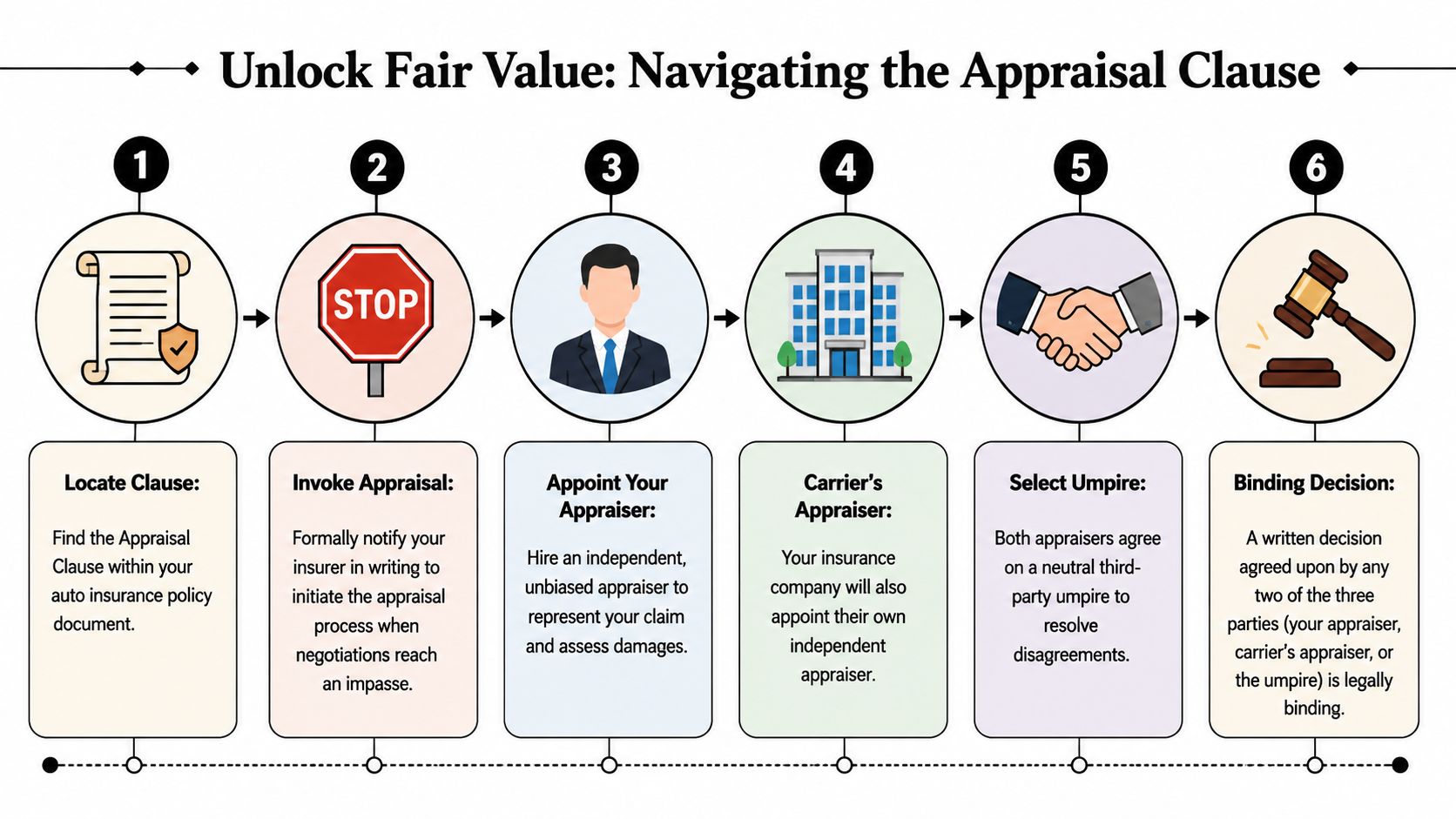
At a practical level, the process usually looks like this:
Read your policy
Find the Appraisal Clause and confirm the language. Policies differ, so the exact steps and scope matter.Send written notice
Tell the insurer you dispute the valuation and are invoking appraisal under the policy terms. Keep it direct.Choose your appraiser
Pick someone independent who understands total loss and diminished value methodology.The carrier names its appraiser
The insurer appoints its own side of the valuation process.An umpire is selected if needed
If the two appraisers disagree, a neutral umpire resolves the disputed points.The written decision controls
In many policies, agreement by two of the three decides the value.
If you want a policyholder-focused explanation of the mechanics, this guide on the appraisal clause in auto insurance is a solid reference.
What to send in your demand
Your written notice doesn't need drama. It needs clarity.
Include:
- Claim number and vehicle information
- A statement that you dispute the insurer's valuation
- A statement that you are invoking the Appraisal Clause under the policy
- A request for the insurer to identify its appraiser in writing
- Any supporting appraisal or valuation documents you already have
A short version can be as simple as this:
“I dispute your valuation of my vehicle and hereby invoke the Appraisal Clause in my policy. Please confirm receipt and provide the name and contact information of the appraiser selected on behalf of the insurer.”
Common mistakes that weaken appraisal
Drivers often wait too long, keep arguing by phone, or invoke appraisal without having their own solid valuation support lined up. Others treat appraisal like a bluff.
It isn't a bluff. It's a formal process. Use it when the carrier's number is unsupported and you're ready to back your position with evidence.
Special Considerations for OR and WA Drivers
Oregon and Washington drivers should pay close attention to valuation disputes because these markets see the same software-driven patterns as the rest of the country, with the added complication of strong regional swings in comparable vehicle pricing. A valuation that looks acceptable on paper can still miss what it would cost to replace your vehicle locally.
That's one reason the Appraisal Clause matters so much in the Pacific Northwest. When insurers use automated valuation models, invoking the Appraisal Clause can statistically increase settlement accuracy by 25-40%, and markets like Oregon and Washington show a 68% likelihood of securing a settlement near true market value with this method, as noted earlier in the discussion of insurer lowball tactics. For drivers here, that isn't an abstract policy right. It's a practical way to counter weak software assumptions.
What OR and WA drivers should do differently
A smart claim in Oregon or Washington usually comes down to discipline.
- Check local comparables carefully because regional pricing can skew the insurer's report
- Document vehicle condition before repairs are completed if diminished value may become an issue
- Push for written valuation support instead of accepting summary explanations over the phone
- Treat appraisal as a real option early when the carrier leans too heavily on automated tools
The bigger takeaway
Whether your claim is in Portland, Seattle, Spokane, Eugene, or anywhere else, the pattern is the same. The carrier wants a fast, defensible close. You want a fair number backed by the actual market and the actual damage.
That means you should document early, speak carefully, review every valuation line, and never assume repair cost is the whole claim. Diminished value and appraisal rights often decide whether you recover what the loss cost you.
If you're in Oregon or Washington, those steps are especially important. If you're outside those states, the same principles still apply. Strong documentation and independent valuation support travel well.
If you're dealing with a low total loss offer or a vehicle that lost value after repairs, Total Loss Northwest helps drivers challenge insurer valuations with certified independent appraisals. They specialize in diminished value and total loss cases in Oregon and Washington, and they also provide diminished value support in all 50 states.