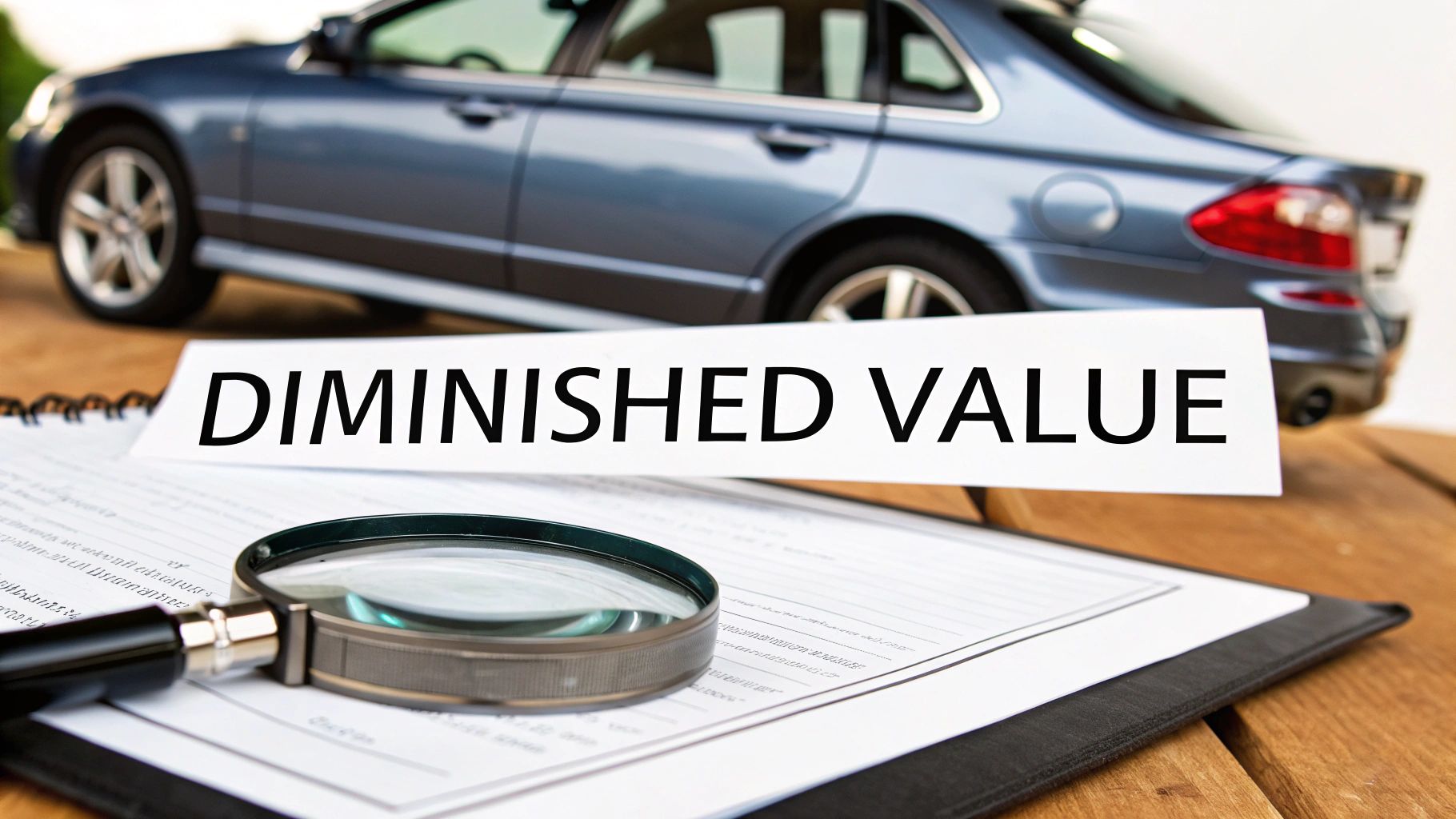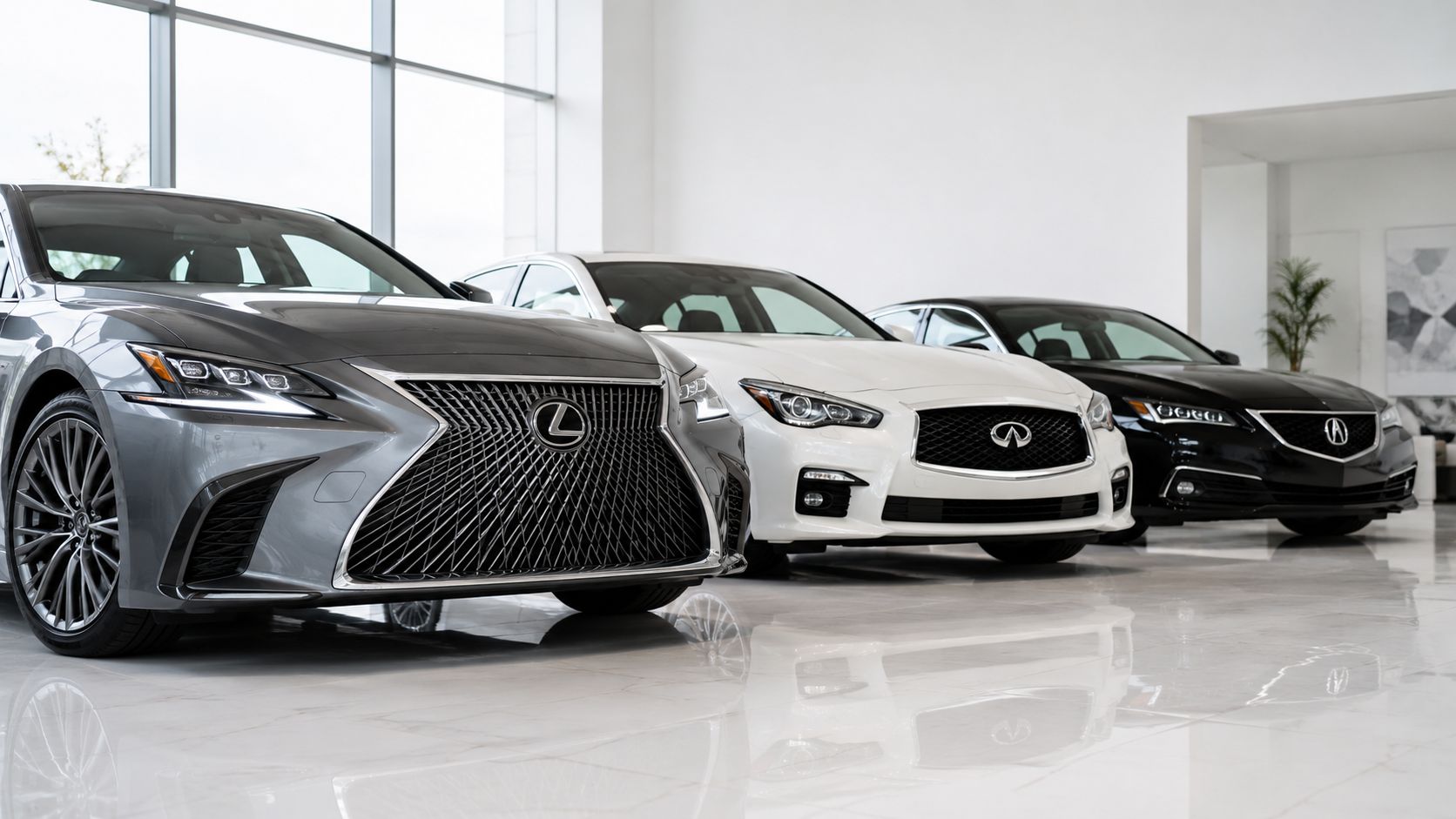
A clean Lexus RX gets hit in a Seattle parking lot. The body shop repairs it well. The panel gaps look right, the paint matches, and the insurer acts like the problem is over. It isn't. The accident history now sits on the vehicle record, and buyers for premium Japanese vehicles pay close attention to that history.
That's where many owners in Washington and Oregon lose money. The insurance company's first number often comes from broad valuation software that treats a Japanese luxury vehicle like just another used car. That approach misses what drives value in this category: reliability reputation, local buyer demand, trim-specific desirability, hybrid appeal, and how easily a comparable replacement can be found.
Japanese luxury car brands sit inside a large and growing premium market. IMARC Group estimates the Japan luxury car market at USD 29.1 billion in 2025 and projects USD 44.5 billion by 2034, with a projected 4.85% CAGR during 2026 to 2034, while noting demand drivers such as advanced in-car technology and eco-friendly electric luxury vehicles in its Japan luxury car market outlook. That matters after a crash because expanding premium demand tends to keep pressure on replacement cost, especially for well-equipped trims, hybrids, and EV-adjacent models.
If you own one of these vehicles and you've been offered a weak diminished value or total loss settlement, brand nuance matters. A lot. Here's how I'd look at the major Japanese names and near-luxury contenders if the goal is maximizing the financial outcome after an accident.
1. Lexus The Benchmark for Reliability and Resale Value
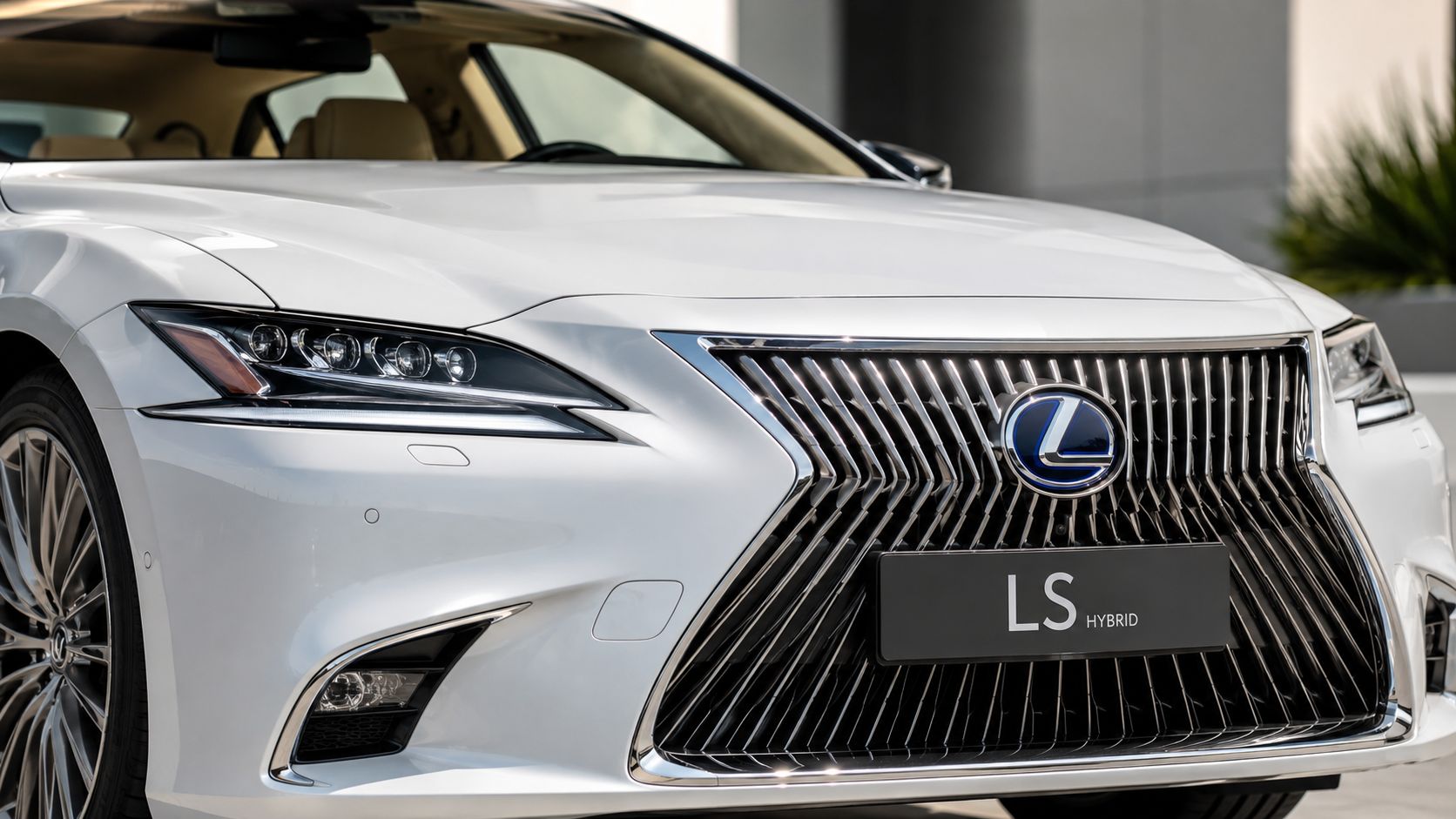
Lexus is usually the easiest Japanese luxury brand to defend in an appraisal. Buyers know what the badge stands for, and that market confidence helps support stronger resale after repairs than you'd often see with weaker premium brands. In Washington and Oregon, that gets even more important on RX, NX, GX, LX, ES hybrid, and RX hybrid claims because the buyer pool is broad and informed.
The mistake owners make is assuming the insurer will automatically respect that premium. It usually won't. If the carrier uses loose comps that pull in accident-history units, lower trims, or non-hybrid versions, the valuation starts drifting down fast.
What strengthens a Lexus claim
Service history matters more on Lexus than many owners realize. A complete dealer or specialist maintenance trail helps prove the vehicle wasn't just a luxury badge. It was a well-kept example in a market where condition and ownership history carry real weight.
Hybrid models need special handling. In the Pacific Northwest, hybrid Lexus vehicles often attract buyers who want luxury, efficiency, and long-term dependability in one package. If your ES hybrid, NX hybrid, RX hybrid, or LS hybrid was hit, don't let the insurer compare it loosely to a gasoline counterpart without matching powertrain and equipment.
Practical rule: If a Lexus had premium package content, Mark Levinson audio, F Sport trim, panoramic roof, larger wheel package, or hybrid equipment, every comp should match those value drivers as closely as possible.
A diminished value claim on a Lexus also benefits from framing the loss correctly. You're not only arguing that the car was damaged. You're arguing that buyers shopping Lexus are often more selective about ownership history because they expect clean, reliable, high-retention vehicles. That buyer behavior is exactly why a repaired Lexus can still lose more value than the insurer wants to admit.
If you're trying to estimate the hit before negotiating, this guide on how much value a car can lose after an accident gives the right starting framework. Use it with local comps, not generic formulas.
Where owners leave money on the table
A common example is a late-model Lexus RX in Portland. The insurer finds a few regional listings, ignores package differences, and claims the vehicle “remains comparable after repair.” That's not how actual buyers shop. They compare clean-history RXs against accident-history RXs, and the history line changes what they'll pay.
For total loss cases, don't accept broad-market comparables from far outside the Northwest if local replacement inventory is tighter or more feature-heavy. Lexus values can swing meaningfully based on drivetrain, package content, and whether the local market favors hybrids.
2. Acura Honda's Showcase of Precision and Technology
Acura often gets undervalued because insurers treat it as “nice Honda” instead of a premium product with its own buyer base. That shortcut costs owners money, especially on MDX, RDX, TLX Type S, and well-optioned AWD models. Acura's appeal is usually strongest when you document the engineering and feature package, not when you argue prestige alone.
The brand benefits from deep roots. Acura is tied to Honda, and Japan's broader auto industry has enormous scale and staying power. Japanese-brand automakers have cumulatively invested USD 53.3 billion in U.S. manufacturing since 1982, produce one-third of U.S.-made vehicles, and support more than 1.6 million U.S. jobs, while domestic brands held about 95% of new vehicle sales in Japan in 2024, with non-Japanese brands at 5%, as summarized in this overview of Japan's automotive industry. In practical terms, Acura isn't a fragile niche. It sits on top of one of the world's deepest automotive ecosystems.
The Acura features that move appraisal value
In Washington and Oregon, SH-AWD matters. It isn't just brochure language. Buyers shopping mountain passes, wet highways, and mixed-weather family use often favor AWD-equipped Acuras over front-wheel-drive alternatives.
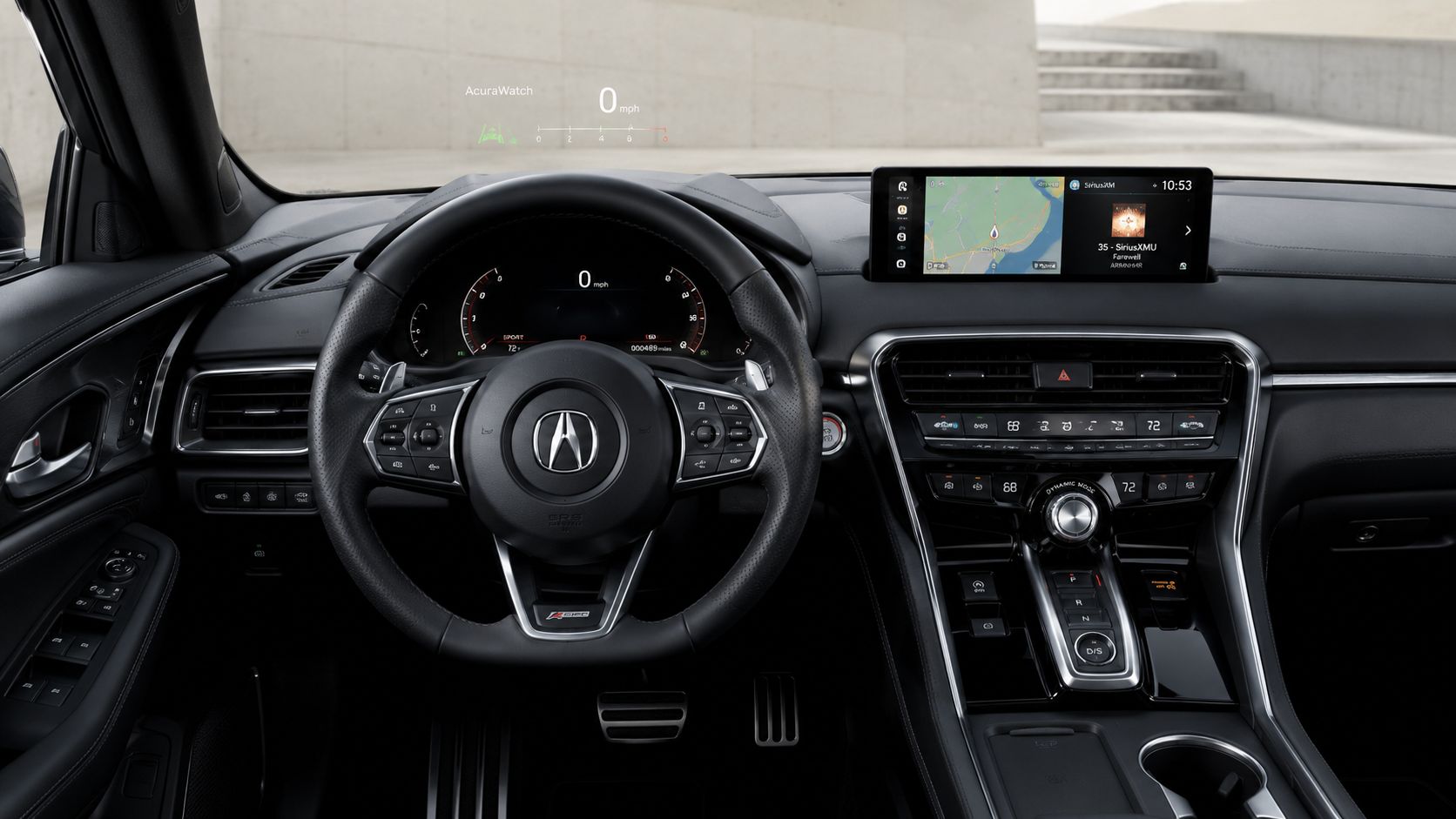
AcuraWatch safety tech also matters in resale arguments. If your vehicle had the full suite of driver-assistance features, document it in the appraisal package. On a total loss, those systems affect replacement cost. On diminished value, they affect how buyers compare your vehicle against competing listings.
A strong Acura valuation file usually includes:
- Exact drivetrain details: SH-AWD versus FWD changes marketability in the Northwest.
- Trim verification: Technology, A-Spec, Advance, and Type S versions shouldn't be blended together.
- Service documentation: Honda and Acura buyers care about maintenance consistency.
- Recent local listings: Use Seattle, Tacoma, Spokane, Portland, Salem, Eugene, and Bend when appropriate, not just broad national databases.
Buyers don't cross-shop an MDX Advance the same way they shop a base three-row SUV. If the insurer does, the number is wrong before negotiations even begin.
What works and what doesn't
What works is making the claim concrete. If an RDX A-Spec with SH-AWD had clean paint, no prior damage, and full service history before the loss, spell that out. Acura values improve when the appraiser shows why your vehicle was a desirable example, not just an average one.
What doesn't work is leaning too hard on generic brand reputation without matching local market evidence. Acura can be strong, but trim spread is wide. A low-mile MDX Advance in Oregon won't appraise correctly if the insurer anchors to older, lower-content MDX comps from outside the region.
The other caution is specialty Acura models. Some deserve separate treatment entirely. A car with low production visibility or enthusiast demand won't behave like a mainstream Acura crossover in the market, which leads directly to the next brand.
3. Infiniti The Performance-Focused Luxury Contender
Infiniti claims are more nuanced. The brand can be harder to value because the market doesn't treat every Infiniti the same. A QX60 or QX80 has a different buyer profile than a Q50 Red Sport or a lower-volume coupe, and that split matters in both diminished value and total loss negotiations.
Owners need to avoid a lazy “luxury is luxury” argument. Infiniti's strongest cases usually come from proving a specific model has either strong feature-based appeal or enthusiast-driven appeal that broad valuation software won't capture well.
Why Infiniti needs model-specific analysis
Some Japanese premium models are far more niche than owners expect. Recent sales commentary highlighted that an Acura NSX sold only 128 units in the U.S. in a recent year, and an Infiniti Q60 sold just 2,792 units, according to this sales discussion video. That doesn't mean every Infiniti is rare. It does mean certain models behave more like specialty products than mainstream luxury cars.
When that happens, standard insurer comps can become useless. A Q60 with the right engine, options, and color combination may attract a very specific buyer. After an accident, that buyer pool can shrink fast. The diminished value hit may be larger than what a formula-driven insurer estimate suggests because the car's appeal depends more on clean-history desirability.
How to handle an Infiniti claim properly
For total loss work, I'd separate Infiniti models into three buckets:
- Mainstream family luxury models: QX50, QX60, and similar vehicles need local replacement comps with close trim and equipment matching.
- Performance-oriented sedans and coupes: Q50 and Q60 variants need enthusiast-aware comparables, especially if they have upgraded wheels, brakes, or sport packages.
- Upper-end flagships: QX80 and heavily optioned examples need careful package and condition adjustments because replacement inventory can vary widely.
If the insurer resists, a formal independent vehicle appraisal usually changes the discussion because it forces the claim back toward actual market evidence.
Don't let an insurer compare a performance-trim Infiniti to a base luxury sedan simply because the model family name matches.
There's another issue with Infiniti. Market perception isn't as consistent as Lexus. That can hurt in some resale situations, but it can also help your diminished value claim. If buyers are already selective, accident history becomes an even bigger objection. That's especially true on sporty trims where buyers care about prior damage, repair quality, and whether the car still feels “right.”
4. Subaru The Pacific Northwest's Unofficial Luxury Vehicle
Subaru isn't a formal luxury marque, but in Washington and Oregon it often has luxury-like value behavior. That surprises people until they see how strongly local buyers respond to all-wheel drive, outdoor utility, winter confidence, and brand familiarity. In this region, a clean Outback Touring XT, Ascent Touring, or low-mile WRX can be defended far more aggressively than generic national pricing would suggest.
This is exactly why some of the best post-accident financial strategy isn't about badge status. It's about regional demand. A Subaru owner in Portland or Bellingham can get hurt badly by insurer software that treats the vehicle like a generic mainstream used car from a flat national average.
Why local comps matter more for Subaru
Grand View Research reports that Japan's luxury car market generated USD 50.7633 billion in 2024 and is expected to reach USD 79.8203 billion by 2030, with a 7.9% CAGR from 2025 to 2030, and that SUVs were the largest revenue-generating vehicle type in 2024 as well as the fastest-growing segment in that outlook for Japan's luxury car market. Subaru isn't part of the formal luxury-brand trio, but the same market lesson applies in the Northwest: utility-oriented vehicles with strong brand loyalty often hold value better than people expect.
For claims, that means your appraiser should stay hyper-local. Seattle and Portland shoppers often pay for AWD confidence, wagon and crossover practicality, and known trim packages. National comps can understate replacement cost because they ignore what local buyers prioritize.
The Subaru cases that need extra care
WRX and STI-related claims are their own category. Enthusiast demand, modification history, and clean-title importance all affect value. If the car was stock, document that. If it had quality reversible modifications, document those carefully and separately because insurers often undervalue them or ignore them entirely.
A strong Subaru appraisal in Washington or Oregon usually emphasizes:
- Regional demand: Local market behavior often beats national averages.
- AWD importance: Buyers in the region treat it as a core value factor, not a bonus.
- Trim and package precision: Touring, Wilderness, XT, Limited, and performance variants shouldn't be blended.
- Use-case desirability: Ski, mountain, and outdoor-oriented buyers keep these vehicles moving quickly when clean.
A Subaru in the Pacific Northwest can be easier to sell, and harder to replace, than a nominally more prestigious sedan with weaker local demand.
What doesn't work is arguing Subaru value solely from owner loyalty. You need actual local market examples. What does work is proving that a clean-history AWD Subaru with the right trim would have drawn immediate buyer interest before the accident, and won't command the same confidence afterward.
5. Mazda The Ascending Near-Luxury Competitor
Mazda is where insurers often get caught using outdated assumptions. They remember an older-market Mazda. Buyers are shopping a newer one. On upper trims, especially CX-5, CX-50, CX-90, Mazda6 Signature, and turbocharged premium configurations, the brand competes much closer to entry-luxury territory than many valuation systems admit.
That doesn't mean every Mazda deserves a luxury premium. It means the trim, interior, powertrain, and presentation matter a lot. A base CX-5 and a turbo Signature-grade Mazda aren't the same claim.
Where Mazda creates hidden appraisal upside
Mazda's value story is strongest when the appraiser documents equipment and finish quality. If the vehicle has Nappa leather, turbo engine, premium audio, larger wheel package, advanced driver assistance, or captain's-chair three-row configuration, that needs to appear clearly in the file.
There's also a category-level point worth making. Coverage about Japanese luxury car brands often overstates how broad and stable the premium field is. Carbuzz noted that only a few Japanese marques have sustained true luxury-scale followings, despite many attempts at premium divisions and nameplates over time, in its discussion of Japanese brands and luxury divisions. That helps explain why some Mazdas pull buyers who might otherwise have chosen entry-luxury products. The market isn't solely “luxury badge versus non-luxury badge.” It's often feature value versus prestige value.
How to position a Mazda after an accident
For diminished value, frame the argument around substitution. A buyer considering a loaded CX-5 Turbo Signature or CX-90 premium trim may also be considering an Acura RDX, Lexus NX, or other near-premium crossovers. Once accident history appears, your Mazda can lose its competitive edge in that cross-shopping environment.
That's why top-trim Mazdas need a sharper strategy than mainstream vehicles. If the carrier uses low-trim comps, challenge them. If it ignores package content, challenge that too. If it prices the vehicle like a basic commuter crossover, the file needs correction.
Use a proper total loss valuation process when the car is not repairable. Replacement cost for a premium-trim Mazda is often higher than owners expect, and insurer software doesn't always track trim-specific demand well.
A real-world example is a late-model CX-5 in Oregon with turbo power, upscale interior trim, and a clean history before the crash. That vehicle often appeals to someone who wants premium feel without luxury-brand ownership costs. After an accident, that same buyer may walk away quickly, which is exactly why diminished value can be substantial even when repairs look excellent.
Top 5 Japanese Luxury Car Brands Comparison
| Brand | 🔄 Implementation Complexity | ⚡ Resource Needs | 📊 Expected Outcomes | ⭐ Key Advantages | 💡 Appraisal Tips |
|---|---|---|---|---|---|
| Lexus | Moderate, dealer/hybrid systems may need specialist verification | Dealer service records, hybrid checks, premium market reports | High residuals; diminished value commonly ~10–15% | Industry-leading reliability, strong resale and dealer network | Provide full dealer maintenance records; cite Lexus-specific resale data and hybrid premiums |
| Acura | Moderate, document tech features (SH-AWD, safety systems) | Feature-specific comps, dealer service history, safety tech evidence | Solid residuals; diminished value ~9–14% when tech is documented | Tech-forward features (SH-AWD, AcuraWatch), reliable engineering | Highlight SH-AWD and AcuraWatch value; use MDX/tech-focused comparables |
| Infiniti | Moderate–High, performance trims need niche valuation and rarity evidence | Performance-market comps, enthusiast forum data, warranty/service records | Variable; diminished value ~12–18%, performance trims often fare better | Performance-oriented engines and distinctive design at competitive price | Emphasize performance-trim rarity and reviews; use enthusiast and dealer pricing |
| Subaru | High, strong regional sensitivity demands hyper-local analysis | Local PNW comps, AWD/EyeSight documentation, regional sales data | Very high regional residuals; diminished value often >15% if national data used | Standard Symmetrical AWD, exceptional PNW demand, top safety ratings | Use Washington/Oregon comps; quantify AWD and safety value with local sales data |
| Mazda | Moderate, must document trim/packages to prove near-luxury status | Trim-level comparables, awards/reviews, interior material documentation | Growing residuals; premium trims see diminished value ~10–16% | Premium design and materials, competitive near-luxury pricing | Frame as near-luxury vs entry-level Lexus/Acura; document trim, materials, and awards |
Protect Your Investment Take Control of Your Appraisal
If you own one of the better-known Japanese luxury car brands, or a premium-adjacent vehicle like a Subaru or high-trim Mazda, the brand name is only part of the value story. What really moves the settlement is how your specific vehicle sits in the market right now. Buyers care about clean history, trim level, drivetrain, options, service records, and how easy it is to find a similar replacement nearby.
That's why insurance company software so often misses the mark. It tends to flatten important distinctions. A Lexus hybrid gets compared to a non-hybrid. An Acura SH-AWD gets grouped with front-wheel-drive examples. A niche Infiniti performance model gets treated like any standard luxury sedan. A Pacific Northwest Subaru gets valued with broad national comps. A premium Mazda gets dragged down by lower trims.
Owners in Washington and Oregon should take that personally, because the local market often behaves differently than the national one. Weather, terrain, fuel preferences, buyer loyalty, and regional taste all influence actual cash value and diminished value. If the insurer ignores those factors, the offer may look polished but still be wrong.
The good news is you don't have to accept the first number. You can challenge comparables, require closer trim matching, document pre-loss condition, and push for local market evidence. If your policy includes an appraisal clause, use it. That process removes a lot of the insurer's control over valuation and shifts the dispute toward evidence that can be tested.
The strongest claims I see are built the same way. Owners keep records, identify mismatched comps, understand how buyers view their brand, and get an independent appraiser involved before the negotiation hardens. That approach works whether the vehicle is a Lexus RX, an Acura MDX, an Infiniti Q50, a Subaru Outback, or a loaded Mazda CX-90.
If your vehicle was totaled or lost market value after a crash, the financial goal is simple. Get paid based on what your vehicle was worth in your market, not what a generic database says it should be worth.
If an insurer has undervalued your Lexus, Acura, Infiniti, Subaru, Mazda, or other premium vehicle after an accident, Total Loss Northwest can help you fight back with a certified independent appraisal. Total Loss Northwest specializes in diminished value and total loss appraisals across Oregon and Washington, using real market evidence and the appraisal clause process to challenge lowball offers and pursue the settlement you're owed.