The call usually goes the same way. The adjuster says the vehicle is a total loss, explains that a valuation is being prepared, and then the questions start fast. Do I still owe the lease? Who gets the insurance check? What if the number is too low? Why am I paying on a car I can't drive?
A leased vehicle total loss feels backwards because the car is gone, but the paperwork and financial exposure are still very much alive. The leasing company owns the vehicle. The insurer is valuing it. You're the one caught in the middle, trying to keep the claim from turning into an expensive surprise.
Most articles stop at the warning. This one focuses on what you can do when the insurer's number doesn't reflect the fair market value of your vehicle.
Your Leased Car Is Totaled Now What?
The hard part starts after the crash scene is over. You've arranged the tow, spoken to police, and opened the claim. Then the insurer tells you the leased car won't be repaired.

At that point, most drivers assume the insurer will write a check and the lease will disappear. That isn't how it works. In a leased vehicle total loss, the settlement usually goes to the leasing company because they hold title. Your concern is whether that amount is enough to satisfy the lease payoff and whether any uncovered charges remain.
There are really three tracks moving at once:
- The insurance claim decides what the vehicle was worth right before the loss.
- The lease account determines what the lessor says is still owed.
- Your out-of-pocket exposure depends on the difference between those two numbers, plus any related charges.
If you're already seeing a number that feels low, that instinct matters. A lot of drivers accept the first valuation because they think they have no bargaining power. In practice, there are established ways of disputing low total loss settlements when the insurer's report misses equipment, condition, local market reality, or comparable vehicles.
A total loss decision ends the repair question. It does not end the value question.
You also need a clear picture of the process itself. A plain-language guide on what happens when your vehicle is totaled can help you keep the insurer, the lessor, and your own obligations straight while the claim is still moving.
The key shift is this. Don't treat the insurer's valuation as a verdict. Treat it as a position, and review it like one.
How Insurers Decide Your Lease Is a Total Loss
Insurers don't total a vehicle because the damage looks dramatic. They total it because the numbers tell them repairing it isn't the cheaper option.
Across most U.S. states, insurers use a common benchmark. When repair costs exceed approximately 65% of the vehicle's actual cash value, the vehicle is typically considered a total loss, as noted in this leased-car total loss overview. For a leased vehicle owner, that matters because the decision is tied to repair economics, not to what remains on the lease.
Two systems you'll hear about
Some claims are handled through a total loss threshold approach. That means the insurer compares repair cost to a percentage of the vehicle's value.
Other claims use the Total Loss Formula, often shortened to TLF. Under that formula, the insurer compares repair cost plus salvage value against the vehicle's actual cash value.
Think of it this way. The insurer is asking a simple business question: is it cheaper to fix the car, or to pay the claim and recover money from salvage?
Why leased vehicles create more stress
With an owned vehicle, the total loss decision is painful but simpler. With a lease, the title sits with the lessor, so the insurer's valuation affects a contract balance you still have to resolve.
That creates a trade-off many drivers don't see coming:
- Repairing the car may preserve the lease, but only if the numbers support it.
- Totaling the car may end the vehicle's usable life immediately, while leaving the lease payoff issue open.
- Accepting the first valuation may speed things up, but it can also lock in a lower settlement than the market supports.
Practical rule: The insurer's total loss decision and the insurer's valuation are related, but they are not the same dispute.
What to review in the insurer's file
Before you argue about dollars, look at the logic behind the total loss designation.
Repair estimate
Review the line items, parts assumptions, labor entries, and whether the estimate reflects visible damage only or also likely hidden damage.Salvage value
In formula-based claims, salvage affects the math. If that figure is inflated or unsupported, it can push the claim toward total loss status faster.Actual cash value basis
The entire decision rests on what the insurer says the car was worth before the collision.
That last point is where many leaseholders regain an advantage. The total loss call may be final. The value attached to that call often isn't.
Understanding ACV Lease Payoff and The Gap
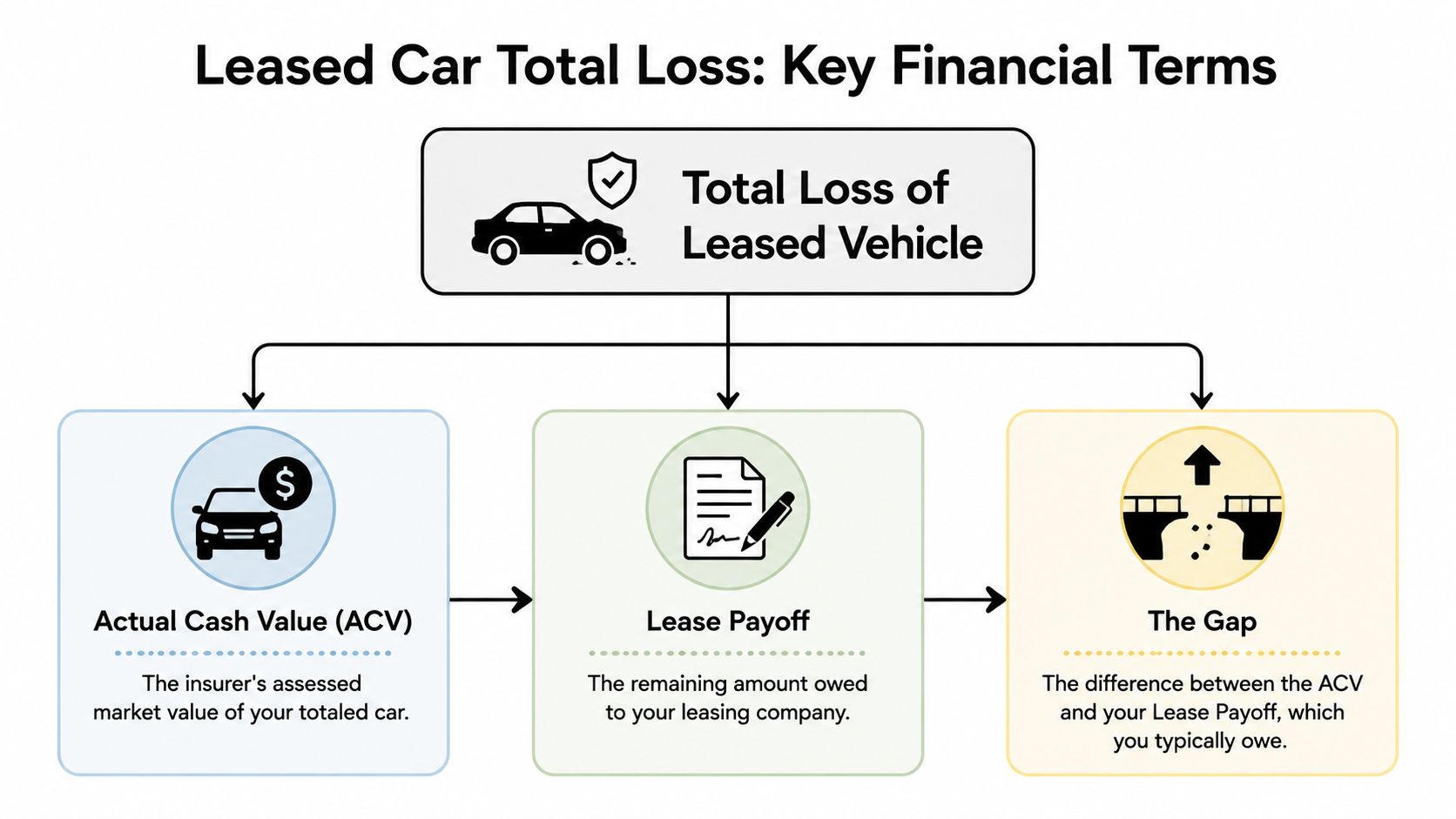
Most leased vehicle total loss disputes come down to three numbers. If you understand them, the claim stops feeling abstract and starts becoming manageable.
Actual cash value
Actual cash value, or ACV, is the insurer's opinion of what your vehicle was worth immediately before the loss. It is not replacement cost, and it is not what you've paid into the lease.
In total loss work, ACV is usually built from vehicle data, comparable listings or sales, mileage, trim, options, and condition adjustments. If the insurer misses factory packages, prior excellent condition, recent tires, or local market comps, the number can come in low.
Lease payoff
Your lease payoff is the amount the leasing company says is required to satisfy the lease after the loss. You don't want to guess at this number. Request it directly from the lessor and ask for the payoff details in writing.
That figure may include more than the monthly payment stream you had in mind. Depending on the contract and how the file is handled, there may be additional charges tied to the early end of the lease.
The gap
The gap is the difference between the insurance settlement and what the leasing company requires to close the account.
The Total Loss Formula used in many settings is Cost of Repairs + Salvage Value ≥ Actual Cash Value, as summarized in this total loss thresholds chart. That same source gives a simple example: if a vehicle's ACV is $15,000 and salvage value is $4,000, repairs above $11,000 can trigger a total loss decision. In leased scenarios, ACV often falls short of what remains owed.
A simple way to read your file
When I review a leased total loss, I separate the claim into these questions:
- What does the insurer say the vehicle was worth?
- What does the lessor say the contract requires today?
- What is creating the spread between those numbers?
If you skip that breakdown, it's easy to focus on the wrong problem. Many drivers spend all their energy arguing that they still owe money on the lease. The insurer usually won't care. Their payment is based on ACV, not your remaining obligation.
The lease balance doesn't raise the vehicle's market value. The way to reduce your exposure is to test whether the ACV itself is accurate.
Where mistakes usually show up
A weak valuation report often has one or more of these problems:
| Issue | Why it matters |
|---|---|
| Wrong trim or options | Higher-value equipment may not be reflected |
| Poor comparable vehicles | Bad comps drag down ACV |
| Overstated condition deductions | Excessive adjustments lower settlement value |
| Thin local market support | Nationalized data can miss what similar vehicles actually sell for near you |
That's why ACV deserves close scrutiny. In a leased vehicle total loss, the settlement amount doesn't just affect the insurer's file. It affects what you still may owe after the car is gone.
The Critical Role of GAP Insurance
GAP insurance exists for one reason. It addresses the shortfall between the insurer's payment and the lease balance when depreciation has moved faster than your payoff.
Industry guidance gives a straightforward example in this discussion of leased vehicles, accidents, and total loss. If the remaining lease balance is $25,000 and the insurer values the totaled vehicle at $20,000, the lessee faces a $5,000 gap without GAP coverage. That same source notes lessees may also face charges like early termination fees and wear-and-tear assessments.
What GAP changes
GAP doesn't make every cost disappear. What it does is remove the main danger, which is being billed for the unpaid difference between ACV and the lease payoff.
Here's the practical comparison.
| Expense Category | Without GAP Insurance | With GAP Insurance |
|---|---|---|
| Insurance ACV payment vs. lease balance | You may owe the shortfall yourself | GAP may cover the shortfall |
| Lease account resolution | Risk of balance remaining after insurer pays lessor | Better chance the lease closes without a large deficiency |
| Ancillary lease charges | Possible exposure remains | Possible exposure may still remain, depending on contract and coverage |
| Financial stress after settlement | Often much higher | Usually reduced, but not always eliminated |
If you're unsure whether your lease includes it, review your agreement carefully or contact the lessor. A practical overview on whether gap insurance is worth it can help you sort out what protection you have and what gaps may still remain.
What GAP does not automatically solve
Drivers are often relieved to learn they have GAP, then disappointed when a leftover charge still appears. That happens because GAP is designed around the payoff difference, not every lease-related cost that can surface after a loss.
Watch for these items:
- Deductible exposure may still be yours under your primary policy.
- Administrative or account fees can survive the total loss settlement.
- Condition-related charges may depend on contract language and the lessor's process.
- Non-insurance products tied to the lease may not be refunded the way you expect.
The practical lesson is simple. GAP is protective, but it isn't a substitute for reading the final lease statement line by line.
Your Obligations and What to Expect Next
Once the carrier confirms a leased vehicle total loss, your job shifts from reacting to managing details. The drivers who avoid unnecessary problems are usually the ones who stay organized early.
The first obligation is often the one people want to hear the least. Keep the lease account current until the claim is fully settled and the lessor confirms the balance is satisfied. Stopping payments too early can create credit trouble and late fees while the insurance side is still unresolved.
What usually happens after the total loss decision
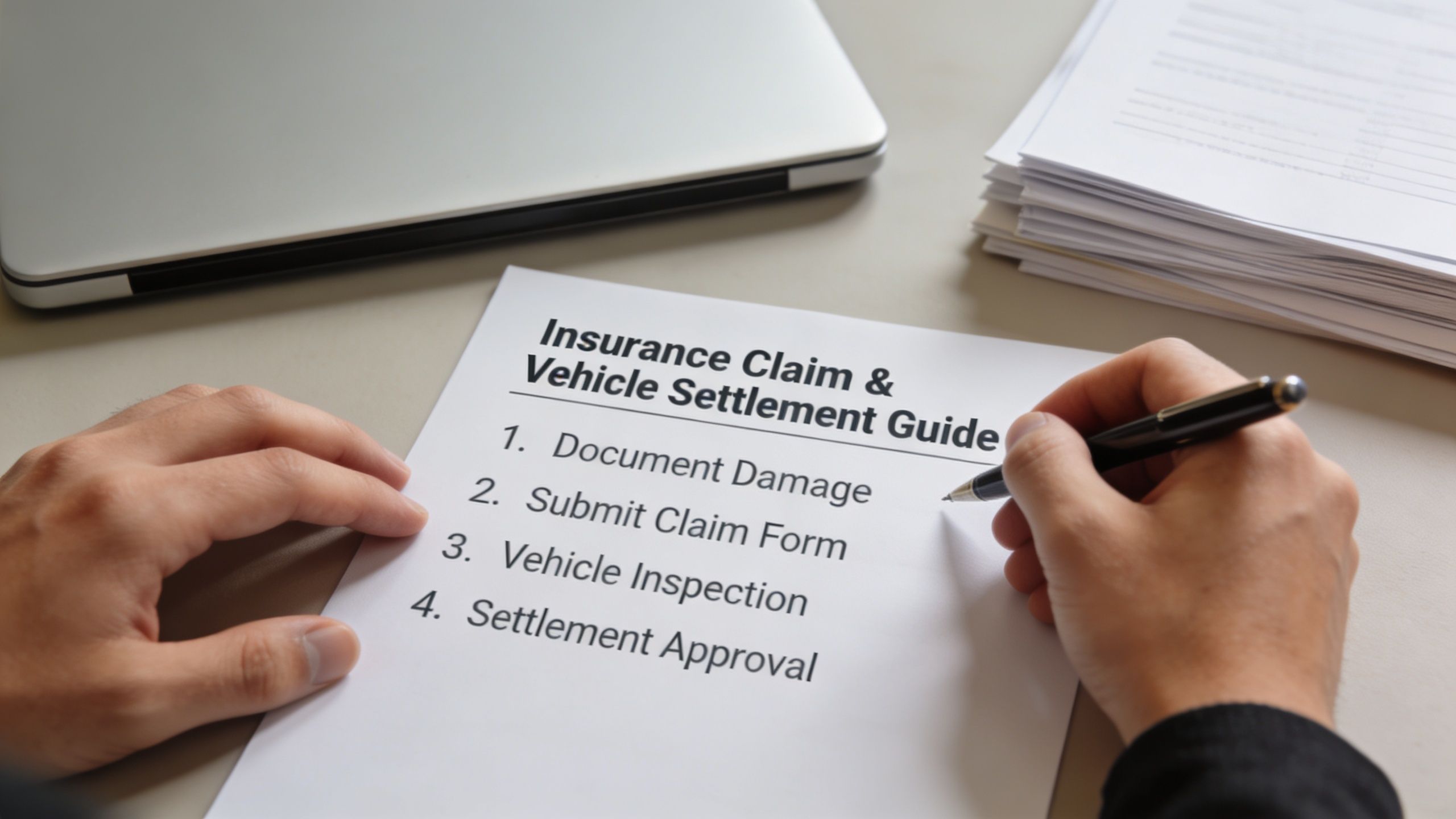
The process tends to move in a set sequence, though timing varies by carrier and lessor.
The insurer prepares the valuation
The ACV is set and the initial settlement figure is generated.The lessor provides payoff information
The leasing company states what it requires to close the account.You review and sign documents
This may include title-related paperwork, a power of attorney, odometer statement, or release forms depending on the file.The insurer sends payment
In most leased losses, payment goes to the lessor, not directly to the driver.The account is reconciled
If there's GAP coverage, that piece is handled after the primary settlement is applied.
What you should do immediately
Use a short checklist and keep records of each contact.
- Call the lessor early and ask for the total loss department if they have one.
- Request the payoff in writing so you're not relying on a phone summary.
- Save every insurer valuation report including comparable vehicle pages and adjustments.
- Track your payments and don't assume autopay or a pending claim will protect you from default.
- Ask what documents are still missing because one unsigned form can stall the file.
Delays often come from missing paperwork, not from the valuation dispute itself.
For a quick walkthrough of the process many drivers find helpful, this video gives a practical overview of the total loss claim experience:
Notes for Oregon and Washington drivers
In Oregon and Washington, insurer discretion in total loss handling can matter more because these claims often turn heavily on the carrier's internal valuation practices and repair economics. That means local market evidence, accurate comparable vehicles, and prompt challenges to weak valuations become especially important.
If you're in either state, don't wait for the file to “work itself out.” Request documents early, review the comp sheet closely, and raise valuation issues before the lessor finalizes any remaining balance question.
The lessor, the insurer, and any GAP provider are not coordinating this around your convenience. You have to keep the file moving from your side.
Fighting for Fair Value The Appraisal Clause
Most drivers assume the insurer's first offer is the number. It usually isn't. It's the insurer's opening valuation, and it deserves the same scrutiny you'd give any estimate that affects your money.

In leased total loss claims, a low ACV hurts twice. It reduces the insurer's payment, and it increases the chance that a balance remains on the lease.
Why the first number is often weak
According to this California leased vehicle total loss discussion, ACV calculations often undervalue vehicles by 15-25% when proprietary algorithms are used. The same source notes that invoking the Appraisal Clause with independent appraisers can bypass insurer valuation tools, and that specialists in Oregon and Washington have recovered $3,000-$15,000 for clients in appropriate cases.
That matters because automated reports aren't always built for nuance. They can miss:
- Factory packages and trim differences that materially affect market value
- Exceptional condition compared with average market vehicles
- Local sale realities when the report leans on weak or distant comps
- Specialty characteristics in high-value, collector, or customized vehicles
For leased drivers, that's where a valuation problem becomes a contract problem.
What the Appraisal Clause does
The Appraisal Clause in an auto policy is one of the most effective tools available when the dispute is about value, not coverage.
Here's how it works in practice:
- You dispute the ACV under the policy's appraisal provision.
- You hire an independent appraiser to prepare a market-supported valuation.
- The insurer appoints its appraiser if it wants to continue contesting value.
- An umpire may be involved if the two appraisers don't agree.
- A binding number is reached under the policy process.
A good explanation of the insurance appraisal clause can help you see whether your policy language supports this route and when it makes sense to use it.
Client advice: Don't argue only from frustration. Argue from comparable vehicles, documented condition, options, and market evidence.
When independent appraisal makes the biggest difference
Independent appraisal tends to matter most when the vehicle doesn't fit neatly into a software-driven average.
That includes:
- Well-maintained daily drivers where the report uses rougher-condition comps
- Luxury or high-trim vehicles where options are undercounted
- Collector and specialty vehicles that generic databases don't price well
- Customized vehicles where standard ACV methods miss real market impact
If the claim starts becoming paperwork-heavy or you need help organizing documents and correspondence tied to the dispute, support services such as Hire Paralegals can be useful for administrative help while you focus on the valuation issue itself.
What works and what doesn't
Drivers usually waste time on the wrong arguments. These are the patterns I see most often.
| What works | What doesn't |
|---|---|
| Challenging bad comparables | Saying “that number feels unfair” without evidence |
| Documenting trim, mileage, and condition | Assuming the adjuster already captured everything |
| Using policy rights like appraisal | Waiting until after every document is signed |
| Getting the lessor payoff in writing | Guessing at what GAP will or won't cover |
The practical takeaway is simple. In a leased vehicle total loss, you usually can't change the fact that the car has been totaled. You can still fight the value, and that fight often determines how expensive the outcome becomes.
Frequently Asked Questions About Leased Total Loss
A few questions come up in almost every leased vehicle total loss file. Here are direct answers you can use.
| Question | Answer |
|---|---|
| Who gets the insurance money when a leased car is totaled? | The payment usually goes to the leasing company because it owns the vehicle and holds title. If anything remains after the lease account is satisfied, the handling depends on the contract and the claim details. |
| Should I stop making lease payments once the car is declared a total loss? | Usually no. Keep the account current until the settlement is complete and the lessor confirms the obligation has been resolved. Stopping early can create late fees or credit damage while the claim is still open. |
| Can I challenge the insurer's value even if the car is already declared a total loss? | Yes. The total loss decision and the valuation are separate issues. If the ACV is too low, you can challenge the comps, the condition adjustments, the options list, and, where your policy allows, invoke appraisal. |
| What should I gather before disputing the settlement? | Start with the insurer's valuation report, your lease payoff statement, photos showing pre-loss condition, service records, purchase or lease documents showing trim and options, and examples of comparable vehicles from your local market. |
One final point matters for peace of mind. You do not need to accept a weak ACV just because the vehicle was leased. The lease complicates the stakes, but it doesn't erase your right to challenge bad valuation work.
If you're dealing with a leased vehicle total loss in Oregon or Washington and the insurer's number looks off, Total Loss Northwest can help you challenge the valuation with an independent appraisal and Appraisal Clause support. The goal is simple: replace software-driven shortcuts with real market evidence so you have the strongest chance at a fair settlement.