Your car has been declared a total loss, or you've repaired it and now you're staring at a diminished value claim. Then a confusing number shows up in paperwork, online records, or an adjuster conversation. You see “value,” but nobody explains which value they mean.
That's where people get hurt financially.
As a certified auto appraiser, I can tell you this is one of the most common points of confusion after an accident. Market value matters in an insurance settlement. Assessed value is an administrative number used for taxation. If you mix those up, you can accept the wrong settlement, argue from the wrong evidence, or miss the strongest challenge to a low offer.
In the Pacific Northwest, that mistake is especially expensive with late-model trucks, hybrids, performance vehicles, and well-kept older cars that don't fit neatly into generic valuation software.
Understanding the Two Core Valuations
When clients call after a crash, they usually want a simple answer: “What was my car worth right before the accident?” That question is about market value.
Market value is the amount a willing buyer and willing seller would agree on in an open market, based on the vehicle's condition, equipment, mileage, and current local demand. It's a real-world sale question. For a vehicle claim, that's the number that anchors a fair settlement.
Assessed value is different. It's an administrative value government bodies use for tax purposes. In property systems, assessors often start with a market-derived estimate and then apply an assessment ratio. One published example notes local ratios often run around 80% to 90%, while another shows a $300,000 market value becoming a $150,000 assessed value where a 50% ratio is used, as explained in Experian's overview of assessed value vs. market value.

Why drivers get tripped up
The problem is that many people have heard these terms in a real estate context, then carry that confusion into an auto claim. They assume any official-looking value must be relevant to insurance. It usually isn't.
For vehicle losses, the practical question isn't what a government record says. It's what your specific vehicle would have sold for immediately before the loss. That's why understanding what fair market value means matters before you respond to an insurer's valuation.
A simple way to separate them
Use this shortcut:
| Value type | What it answers | Who uses it |
|---|---|---|
| Market value | What would this vehicle sell for right now? | Buyers, sellers, appraisers, insurers |
| Assessed value | What number is used for tax administration? | Government tax authorities |
Think of market value as a sale number. Think of assessed value as a billing number.
Assessed value can matter for taxes. It does not tell you what your vehicle should settle for after an accident.
That distinction sounds basic, but it protects your wallet. If you're negotiating a total loss or diminished value claim, you need evidence tied to market behavior, not a tax framework built for administrative convenience.
How Market Value and Assessed Value Are Calculated
A vehicle's market value is built from evidence. An assessed value is built from a system.
That difference is why these figures often drift apart, even before anyone disputes a claim.

How market value is developed
In an auto appraisal, market value starts with comparable sales. I look at vehicles that are similar in year, make, model, trim, drivetrain, mileage range, condition, factory options, and regional market context. Then I adjust for meaningful differences.
That sounds straightforward until you apply it to real claims. A Seattle-area hybrid with documented service history doesn't trade the same way as a neglected version of the same model. A modified 4×4 in Bend doesn't sell like a base commuter car in Portland. A collector vehicle may need a much narrower set of comparables than standard valuation software can handle.
What actually affects a vehicle claim number
A defensible market value analysis usually weighs factors like these:
- Condition: Prior wear, paint quality, interior preservation, mechanical history, and prior damage all matter.
- Equipment: Trim packages, towing packages, technology packages, premium wheels, and other factory equipment can change the result.
- Mileage context: Mileage matters, but not in isolation. How it compares to similar vehicles matters more.
- Local demand: Pacific Northwest demand can shift values for AWD vehicles, trucks, EVs, and outdoor-use vehicles.
- Sale timing: A valuation should reflect the market near the date of loss, not an old snapshot.
How assessed value is developed
Assessed value comes from a different process entirely. In modern property-tax systems, assessed value usually lags market value because assessors rely on prior sales data and mass-appraisal rules. In Washington, county assessors are instructed to value property at 100% of true and fair value, but the assessed figure still reflects the sales and time frame used in the assessment cycle, so in a rising market the market value is generally higher than the assessed value, as described in this Washington assessment explanation.
That's the key concept: mass appraisal. Assessors need consistency across many properties. They aren't trying to determine the exact amount one specific buyer would pay today for one specific asset under claim conditions.
Practical rule: A mass-appraisal system is built for broad administrative uniformity. A claim valuation must stand up at the individual vehicle level.
That's why assessed value is a poor fit for total-loss disputes. It's backward-looking, standardized, and tied to tax administration. A proper vehicle valuation is current, condition-sensitive, and tied to actual market behavior.
Key Differences A Quick Comparison
In claim work, the phrase market value vs assessed value isn't academic. It determines whether you argue from the right standard.
One number is tied to what your vehicle could sell for before the crash. The other comes from an administrative process designed for taxation, not insurance.
Market Value vs. Assessed Value At a Glance
| Criterion | Market Value | Assessed Value |
|---|---|---|
| Purpose | Supports sale, appraisal, and insurance claim decisions | Supports tax calculation |
| Method | Individualized review of comparables, condition, equipment, and timing | Mass appraisal using rules and standard formulas |
| Timing | Reflects the market near the date of loss | Updated periodically, often with a lag |
| Primary users | Appraisers, insurers, buyers, sellers, claimants | County or local tax authorities |
| Use in vehicle claims | Relevant | Generally not relevant |
Why the gap can stay wide
Mass appraisal systems prioritize administrative consistency over individual accuracy, so the gap between assessed and market value can persist even when comparable sales have moved sharply. Reassessments can lag by 1-5 years depending on the jurisdiction, meaning the tax bill may not track real-time value in either direction, as noted in Redfin's explanation of assessed versus market value.
That lag is normal in tax systems. It is not acceptable in an insurance settlement that's supposed to reflect the vehicle's value just before the loss.
If you're also sorting through insurance terminology, it helps to understand actual cash value vs market value, because many policyholders hear “ACV” and assume it's some internal insurer number unrelated to real-world sales. It shouldn't be.
Bottom line: Assessed value does not establish what your car was worth on the open market, and it should not control a total-loss or diminished-value settlement.
Why This Matters for Your Vehicle Insurance Claim
After an accident, the number that matters most is the one tied to your payout. For a total loss, the insurer is typically trying to determine the vehicle's Actual Cash Value, which is tied to its pre-loss market value. For a diminished value claim, the issue is the difference between what the vehicle was worth before the accident history and what it's worth after proper repairs.
That means the claim turns on market evidence.

What insurers should be measuring
Independent guidance on valuation makes the core standard clear: market value is the price a willing buyer and seller would agree on, based on comparable sales and condition, not formulaic software outputs. That distinction matters in total-loss disputes because damaged, high-value, classic, or modified vehicles can diverge sharply from generic valuation models, as discussed in Realtor.com's treatment of assessed value versus market value.
In practice, such scenarios commonly lead to many settlement disputes. An insurer may rely on a vendor report that uses questionable comparables, weak condition adjustments, or regional mismatches. The report may look polished and still be wrong.
Where low settlements usually come from
When I review disputed vehicle valuations, the recurring problems are usually these:
- Bad comparables: The report uses vehicles with the wrong trim, drivetrain, options, or condition.
- Geographic mismatch: Comparable vehicles come from markets that don't reflect Pacific Northwest demand.
- Condition compression: The software treats a clean, well-kept vehicle almost the same as an average one.
- Modification blindness: Upgrades or specialty features aren't properly recognized.
- Post-loss confusion: The insurer talks about “value” generally, without tying it to pre-loss market evidence.
Here's a useful overview of the claim setting many businesses and fleet owners deal with when trying to reduce future exposure: preventing commercial auto policy claims. It won't solve a valuation dispute after your collision, but it does show why careful documentation and claim readiness matter before the next loss happens.
A short video can help if you're comparing terminology while reviewing your offer:
Why diminished value raises the stakes
Total-loss claims ask, “What was the vehicle worth before it was destroyed?” Diminished value claims ask, “How much resale value did the accident history take away?”
That second question gets mishandled all the time. A repaired vehicle can still suffer a measurable market stigma, especially if it's newer, luxury, performance-oriented, or has significant structural repair history. Assessed value doesn't help with that analysis. Market reaction does.
If the insurer's number doesn't reflect the vehicle you owned, an independent appraisal becomes the cleanest way to reset the discussion around evidence instead of software assumptions.
How to Dispute a Valuation in Oregon and Washington
If the insurer's offer doesn't match the actual market, don't argue in circles. Build a record and force the valuation issue onto solid ground.
The first thing to understand is that valuation disputes and liability disputes are different. If the carrier accepts that your vehicle is a total loss, the fight often narrows to one question: what was it worth immediately before the accident? That's a valuation problem, and it requires valuation evidence.
Start with a written objection
Don't rely on phone calls alone. Respond in writing and identify what you dispute. Ask for the full valuation report, the comparable vehicles used, the condition ratings applied, and any adjustments for options, mileage, prior damage, or local market area.
Keep your objection focused. You're not saying, “I don't like the offer.” You're saying the offer doesn't reflect the actual pre-loss market value of your vehicle.
Build your evidence file
A strong challenge usually includes:
- Vehicle-specific records such as maintenance history, option sheets, purchase documents, and prior appraisal records if they exist.
- Market comparables that match your vehicle's trim, mileage band, and condition.
- Photos showing pre-loss condition, upgrades, tires, interior quality, and any premium equipment.
- A timeline that ties the valuation to the date of loss, not a later or broader market average.
A separate reason to be careful here is that assessed values often move much more slowly than market conditions. A 2025 NBER digest found that, on average, a 1% change in market value in a jurisdiction leads to less than a 0.30% change in assessed values, which helps quantify why those systems diverge so often, as summarized by Property Tax Solutions.
Use the appraisal clause when the policy allows it
Many auto policies contain an appraisal clause. This is one of the most useful tools available to a vehicle owner facing a low valuation. The policy language varies, but the basic structure is familiar: you select an appraiser, the insurer selects one, and the dispute moves into a formal valuation process.
That matters because it shifts the discussion away from a one-sided software output and toward competing appraisals.
A written appraisal demand changes the posture of the claim. It tells the insurer the dispute is no longer informal.
Oregon and Washington claim reality
In Oregon and Washington, drivers often wait too long before escalating. They assume the insurer will “come up a little” if they push back enough. Sometimes that happens. Often it doesn't.
If the report is fundamentally flawed, negotiation alone won't fix it. You need a documented valuation challenge, and in many cases you need an appraiser who can review the report line by line, identify unsupported adjustments, and produce a defensible replacement analysis.
When You Must Hire an Independent Appraiser
Some claims can be resolved with a careful owner response. Others need a professional valuation immediately.
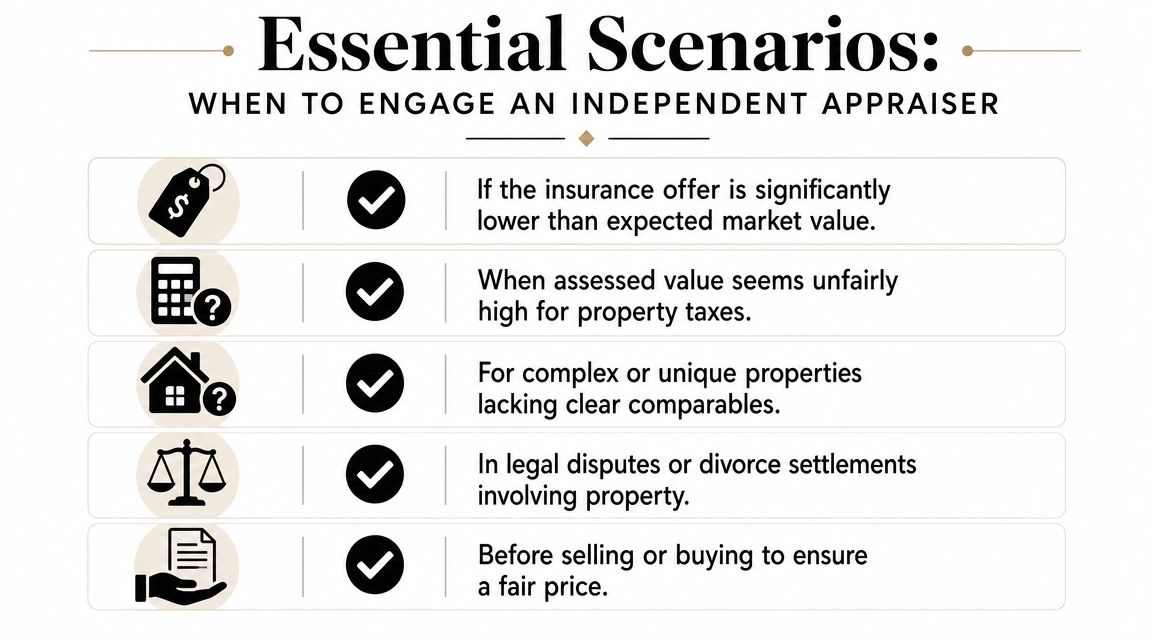
The clearest trigger is simple: the insurer's number doesn't match what comparable vehicles are selling for, and the carrier won't correct obvious errors. At that point, you need someone who works from market evidence rather than internal claim shortcuts.
The biggest red flags
- Unique vehicle: Classic cars, collector vehicles, modified trucks, specialty imports, and high-end trims often don't fit generic valuation systems.
- Weak comparable set: The insurer used the wrong trim, wrong region, wrong condition level, or poor equipment matches.
- Diminished value dispute: The carrier minimizes post-repair stigma or ignores the resale hit tied to accident history.
- Appraisal clause issue: Your policy allows appraisal and you need an appraiser prepared to participate formally.
- Negotiation has stalled: The adjuster repeats the same report without addressing your actual evidence.
What an independent appraiser adds
An independent appraiser should do more than hand you a number. The work should include a defensible market analysis, review of the insurer's methodology, and support for the procedural steps needed to move the dispute forward.
If you need that kind of help, Total Loss Northwest's independent car appraiser service is one example of a firm focused on total-loss and diminished-value vehicle appraisals in Oregon and Washington.
When the issue is valuation, the strongest response is another valuation backed by better evidence.
Hiring an appraiser isn't about being aggressive. It's about using the correct tool for the dispute you have.
Frequently Asked Questions
Is appraised value the same as assessed value
No. Appraised value is a professional opinion of value for a specific purpose. In vehicle claims, that usually means a market-based opinion tied to pre-loss value or post-repair diminished value. Assessed value is a tax-administration figure used by government entities.
Can a low assessed value hurt my vehicle insurance claim
Generally, no. In a vehicle claim, assessed value usually isn't the controlling standard. The primary issue is market value supported by comparable sales, condition, and date-of-loss evidence.
Do aftermarket modifications increase market value
Sometimes, but not automatically. Useful, well-documented modifications may help if buyers in your market pay more for them. Poor-quality modifications or highly personal upgrades may add little or can even narrow the buyer pool. Documentation matters.
What matters more in a total-loss dispute, dealer listings or sold comparables
Sold comparables are usually stronger because they reflect completed market behavior. Listings can still help, especially when inventory is thin, but they need careful adjustment.
Can I dispute diminished value after repairs are finished
Yes. In many claims, the diminished value issue only becomes clear after repairs are complete and the accident history is fixed in the vehicle record. The key is documenting pre-loss condition, repair severity, and post-repair market impact.
If you're dealing with a low total-loss offer or a diminished value dispute, Total Loss Northwest provides independent auto appraisals for Oregon and Washington vehicle owners. The work focuses on market-based valuation, appraisal clause support, and documented reports built for real insurance negotiations.