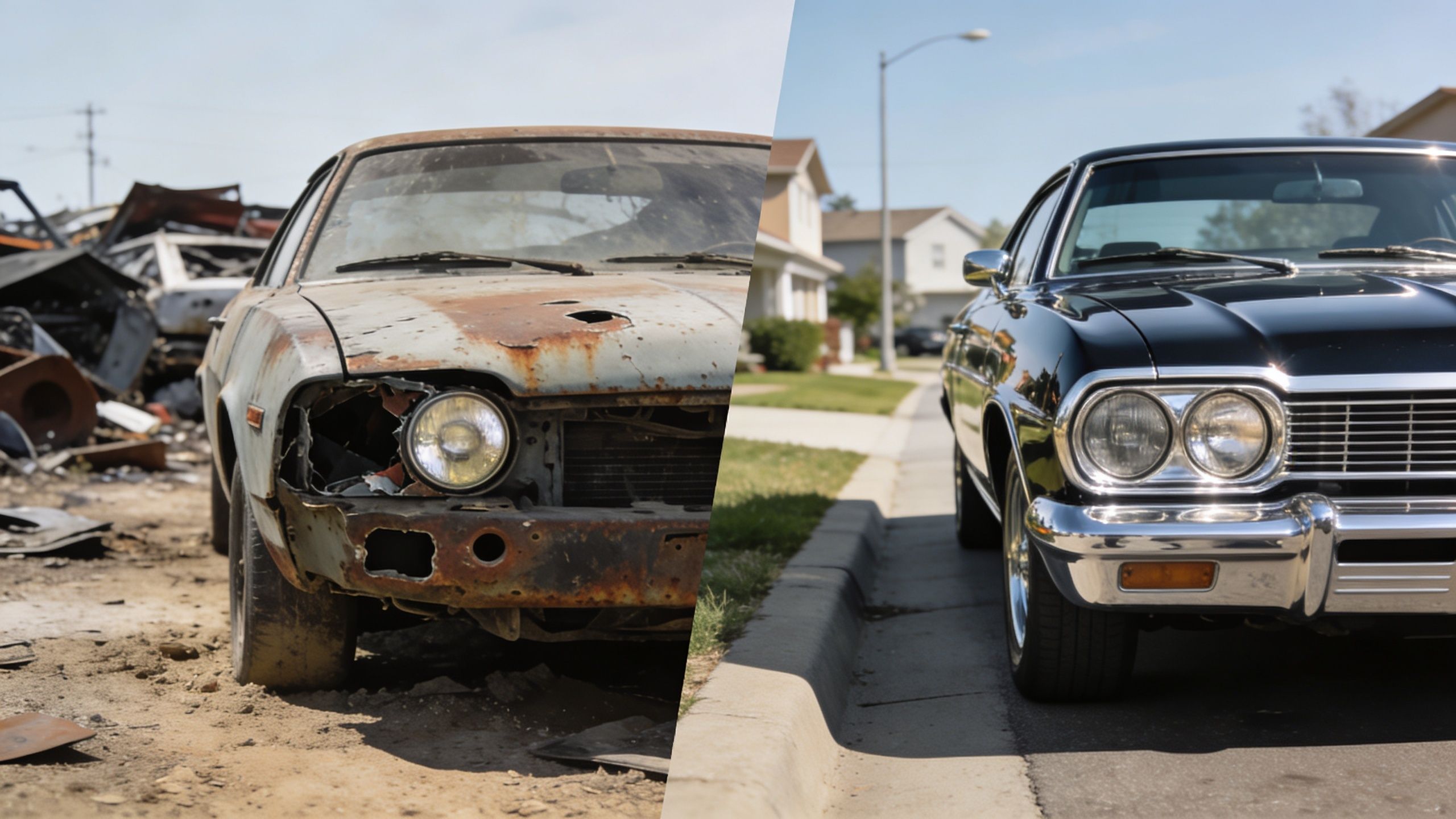
You find the car. Clean body. Good mileage. Price is far lower than similar listings. Then you look at the title history and see one word that changes the deal completely: salvage. Or maybe it says rebuilt.
That's the point where most buyers and owners get bad advice. People treat rebuilt title vs salvage title like a simple paperwork issue. It isn't. The title brand affects whether you can drive the vehicle legally, whether a lender will touch it, what an insurer will pay, and what the car will be worth years from now.
I deal with this from the valuation side. The legal label matters, but the money side matters more. A branded title can reduce what buyers offer, narrow your insurance options, and create problems in a total loss claim if the wrong comparables get used. If you're shopping for a discounted vehicle, arguing with an insurer, or trying to decide whether to repair and keep a totaled car, you need to understand where salvage ends and rebuilt begins.
That 'Too Good to Be True' Car Deal
A common scenario goes like this. A driver needs a replacement vehicle after an accident. Budget is tight, so they search for late-model cars with lower prices than dealer inventory. One listing stands out. The photos look strong. The seller says the car was “professionally repaired” and “runs perfect.” Then the history report shows a branded title.
At that point, many buyers ask the wrong first question. They ask whether the car drives fine today. The better question is what that title brand will cost over the life of ownership.
A salvage title and a rebuilt title are not interchangeable labels. One usually means the vehicle was declared a total loss and isn't road legal in that condition. The other means it went through repairs and the state cleared it for registration again. That sounds simple enough, but the financial gap between those two labels is substantial, and the market never forgets either one.
A branded title doesn't just describe the past. It changes future value, insurance treatment, and resale leverage.
This matters even more if you're already in a claim. I've seen owners of clean-title vehicles receive total loss offers that seem low for one reason: the valuation leans on comparables with branded histories, inferior condition, or both. If you don't catch that, you can accept a settlement based on the wrong market.
Here's the practical question behind rebuilt title vs salvage title. What does this label mean for your wallet, your risk, and your options if the vehicle is damaged again? That's where the actual decision gets made.
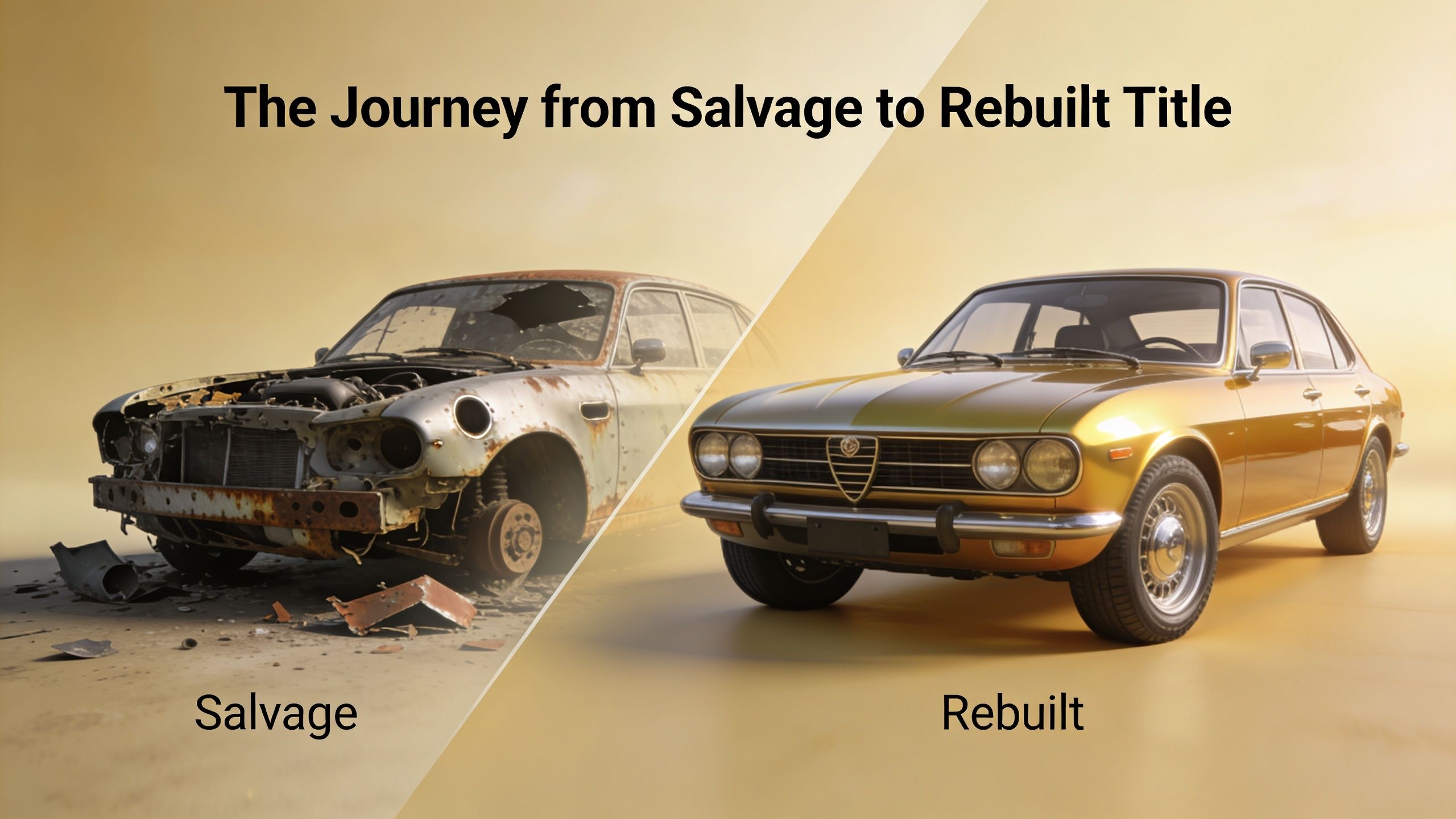
The Journey from Salvage to Rebuilt Title
A vehicle doesn't start life with a rebuilt title. It reaches that status only after passing through the salvage stage first.
What salvage title means
A salvage title is typically assigned when an insurer declares the vehicle a total loss. According to this explanation of salvage and rebuilt title status, a salvage title is the legal status usually assigned when an insurer totals the car under state-specific thresholds. In practical terms, the vehicle is generally not road-legal as-is, and the key distinction is drivability and re-registration.
If you want a plain-language overview, this guide to what a salvage title is is a useful starting point.
A salvage vehicle can still have value. But that value usually sits with a much narrower group of buyers, such as rebuilders, dismantlers, or people willing to take on extensive risk. For most drivers, salvage status means stop and investigate before spending another dollar.
How a salvage vehicle becomes rebuilt
A rebuilt title comes later. The same vehicle gets repaired, then goes through the state's inspection and retitling process. Only after that can it usually be registered for public-road use again.
The important part is this: the state is not certifying that the car is equivalent to a clean-title vehicle. The state is clearing it to return to the road. That is a very different standard.
The path usually looks like this:
- Clean-title vehicle suffers major damage
- Insurer declares a total loss
- State issues salvage title or salvage certificate
- Vehicle gets repaired
- Owner submits receipts, title documents, and inspection paperwork
- Vehicle passes required inspection
- State issues rebuilt title
What doesn't change after rebuilding
The vehicle's history stays branded. That's the part many first-time buyers miss.
Even if the car looks excellent, tracks straight, and passes inspection, it does not return to clean-title status. Buyers, lenders, insurers, and appraisers still treat it as a higher-risk vehicle because hidden damage, repair quality, and future insurability remain open questions.
Practical rule: A rebuilt title tells you the car made it back onto the road. It does not tell you the repairs restored full market value.
Comparing Salvage vs Rebuilt Across Key Factors
The fastest way to understand rebuilt title vs salvage title is to compare what each label changes in daily ownership.
| Factor | Salvage title | Rebuilt title |
|---|---|---|
| Road legality | Generally not legal to drive as-is | Usually legal to register and drive after inspection |
| Registration | Typically blocked until repairs and inspection | Generally allowed after state approval |
| Insurance | Often difficult or unavailable for road use until repaired | Liability may be possible, but coverage can be limited |
| Financing | Usually very difficult | Still harder than clean title financing |
| Buyer pool | Narrow. Often rebuilders, parts buyers, cash buyers | Wider than salvage, but still limited |
| Resale value | Deeply discounted | Discounted for life compared with clean title |

The legal difference
The legal split is straightforward. A salvage vehicle is generally not ready for public-road registration. A rebuilt vehicle has cleared the state's process and can usually return to normal use.
That's why these labels shouldn't be collapsed into one category. One is an unfinished post-total-loss status. The other is a repaired, inspected, but permanently branded status.
The money difference
The economic effect is where people make expensive mistakes. Insurance.com's explanation of rebuilt title vs salvage title notes that salvage title status is typically assigned when repair costs exceed roughly 70% to 75% of the vehicle's value. The same source states that rebuilt-title vehicles commonly sell for about 20% to 40% below comparable clean-title vehicles, while salvage-title cars are often worth 50% or more below market.
If two cars look similar on a listing site, but one has a rebuilt title, they are not market equivalents. The branded history changes the value baseline.
This is why a branded car can seem like a bargain and still be overpriced. A buyer sees a discount from clean-title pricing and assumes there's room to save. But if the asking price doesn't reflect the title brand, the buyer is just prepaying future resale loss.
What works and what doesn't
What works:
- Buying rebuilt only after inspection and documentation review: You need invoices, parts records, before-and-after photos if available, and a pre-purchase inspection by a mechanic you trust.
- Checking insurance before purchase: Don't assume your current carrier will write the same policy on a rebuilt title.
- Planning your exit before you buy: If you'll need to resell in a few years, branded title ownership can become expensive.
What doesn't work:
- Relying on appearance alone: Fresh paint can hide poor repairs.
- Assuming “state inspected” means “same as clean title”: It doesn't.
- Paying close to clean-title money: That erases the only financial reason many buyers consider a branded car in the first place.
How Branded Titles Affect Your Insurance Settlement
A driver buys a rebuilt-title SUV, keeps it for two years, then gets hit and the insurer declares a total loss. The surprise is not the total loss decision. The surprise is how far the settlement falls once the branded title drives the valuation.

Why title status matters in a total loss claim
Total loss settlements are based on actual cash value. That sounds straightforward until you see how the carrier built the number. The valuation usually depends on comparable vehicles, condition adjustments, prior history, and local market data.
A branded title changes that baseline. A salvage title can make the vehicle uninsurable for normal road use or limit coverage sharply. A rebuilt title puts the car back on the road, but it does not restore clean-title market value. Buyers, lenders, dealers, and insurers still treat it as a different risk category.
That distinction matters in two directions. If your vehicle already had a branded title before the crash, the insurer will usually value it below a clean-title equivalent. If your vehicle had a clean title, branded-title comparables should not be used to pull your settlement down.
Why branded titles and diminished value are tied together
Diminished value is the loss in resale value after a vehicle is repaired. Title branding is a more permanent version of that same problem. The market does not just discount the prior damage. It discounts the legal history attached to the VIN.
That matters after a claim because insurers and owners often talk past each other. The insurer may focus on whether repairs were possible. The market focuses on what buyers will pay after the vehicle history report shows a total-loss event or branded title history. Those are different questions, and they produce different numbers.
Where owners lose money
These are the valuation mistakes that cost owners the most:
- Clean-title vehicles valued against branded comps: That can drag the total loss offer down below a fair market range.
- Rebuilt-title vehicles valued too aggressively: A carrier may assume the rebuild erased more of the stigma than the market accepts.
- Diminished value claims treated too narrowly: The repair bill is only part of the loss. The market reaction to the vehicle history can be the bigger hit.
- Condition adjustments made without support: If the report assumes prior damage, poor repairs, or inferior condition, those deductions should be backed by real evidence.
I tell clients to read the valuation report line by line. Check title history, trim level, mileage, options, prior damage disclosures, and dealer status. Then review how the carrier applied actual cash value in an auto insurance claim, because that formula controls the settlement in many total loss cases.
When an independent appraisal matters
An independent appraisal matters when the dispute is about market value, not just repair cost. That is common with branded titles because software reports often flatten important differences between clean, rebuilt, and salvage history.
A proper appraisal should answer a narrow question: what was this specific vehicle worth, in its actual pre-loss condition, with its actual title history, in the market where it would have sold? That is also how you frame a diminished value claim after repairs if the insurer is minimizing the stigma attached to the vehicle history.
In Oregon and Washington, Total Loss Northwest handles total loss and diminished value appraisals and can invoke the appraisal clause when the policy allows. The fundamental point is broader than any one firm. If title history is affecting the number, you need a market-based valuation from an independent appraiser who knows how branded vehicles trade, not a generic report that treats every prior loss the same.
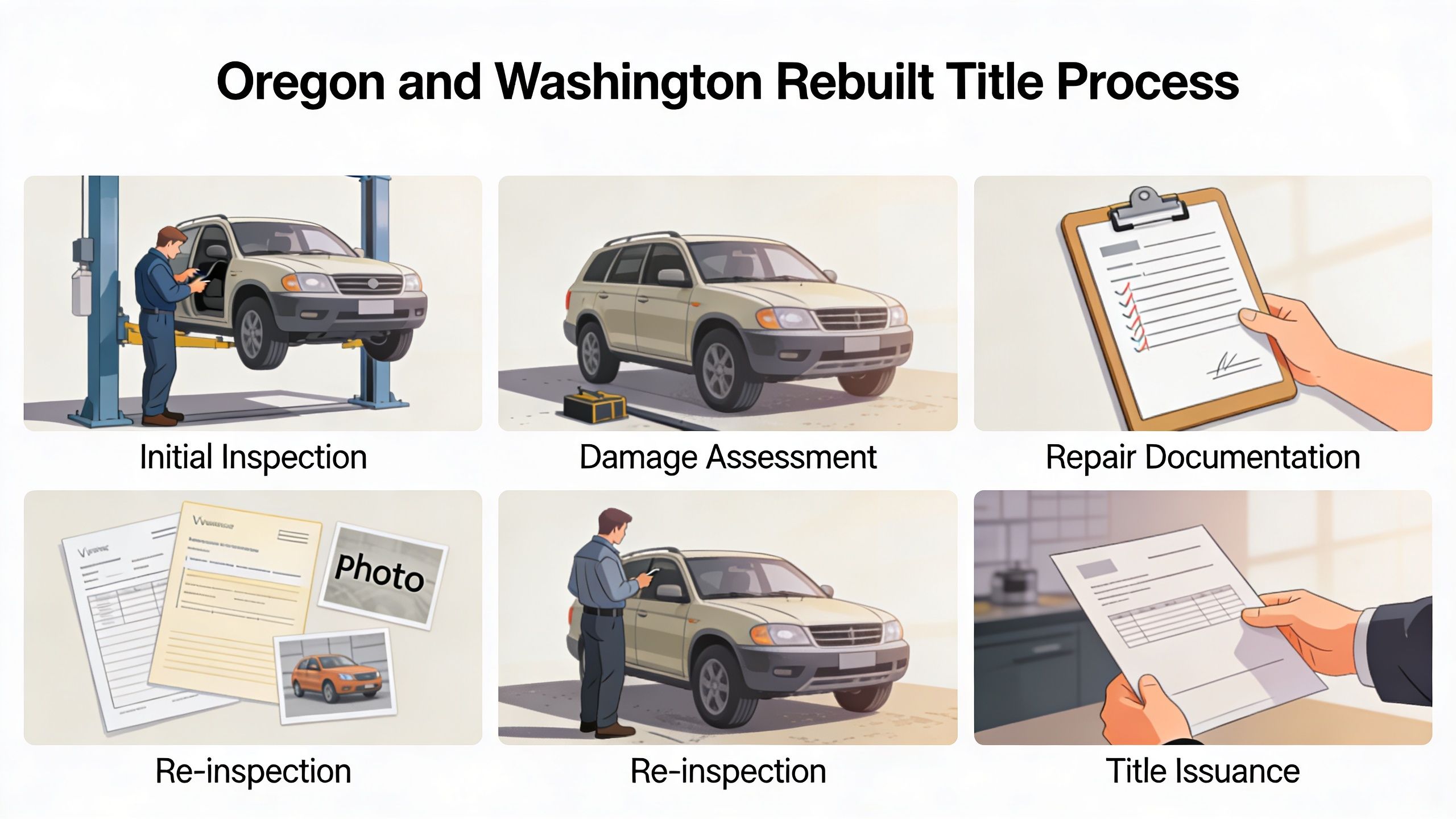
Oregon and Washington Rebuilt Title Process
The salvage-to-rebuilt path is state-specific. Oregon and Washington both require paperwork discipline. If receipts are missing or the inspection file is incomplete, the process slows down fast.
Oregon basics
In Oregon, the owner generally needs the salvage title or ownership documents, repair records, and the required state inspection process before the vehicle can be retitled for road use. The state wants to see a traceable chain for major components and confirmation that the vehicle now meets the standards required for registration.
Keep your file organized from day one. That means receipts for parts, documentation for who performed repairs, and photos if the damage was substantial. If any part of the vehicle's rebuild history looks unclear, expect more scrutiny.
Washington basics
Washington follows the same broad pattern. The owner repairs the vehicle, gathers supporting documents, and moves through the inspection and title process before applying for rebuilt status and registration.
A practical point in Washington is that the paperwork often causes more trouble than the wrench work. If the seller before you didn't preserve records, or if parts were sourced without clean documentation, the title process can become messy even if the car itself looks ready.
What to prepare before the inspection
Whether you're in Oregon or Washington, have these items ready before you schedule anything:
- Ownership documents: Salvage certificate, title paperwork, and transfer records.
- Repair receipts: Especially for major parts and assemblies.
- Proof of identity: Match your title application documents exactly.
- Vehicle readiness: Don't assume cosmetic completion is enough if safety-related items still need attention.
- A realistic valuation mindset: If the car was a constructive total loss, the paperwork history and valuation history may matter later in a claim or resale.
The cleaner your repair file, the easier it is to defend the vehicle's value later.
The part buyers overlook
The rebuilt-title process is administrative and evidentiary. It's not just mechanical. People focus on whether the car runs and forget that the record set around the repair may matter later when selling the vehicle or challenging an insurer's value position after another loss.
If you're buying a rebuilt-title car in Oregon or Washington, ask to see the same file the owner would need to justify the title conversion. If they can't produce it, your risk goes up immediately.
A Practical Checklist for Buyers and Sellers
A branded-title transaction can still make sense. But it only works when the price, documentation, and intended use all line up.
Buyer checklist
- Run a history report first: Use a VIN history tool such as CARFAX or AutoCheck before you schedule a visit. Confirm whether the vehicle was branded salvage first and later rebuilt.
- Ask what caused the total loss: Collision, flood, fire, theft recovery, and other severe damage types create different long-term risks. If the seller gets vague, assume the file is weak.
- Demand repair records: You want invoices, parts receipts, and any inspection documents. A rebuilt title with no paper trail is harder to trust and harder to resell.
- Get an independent inspection: Use a shop that sees collision repair quality issues regularly, not just routine maintenance.
- Check insurance and financing in advance: Don't negotiate price first and discover later that your lender or carrier won't cooperate.
- Price from the title status, not the paint shine: Appraisal Engine's discussion of branded title value notes that rebuilt-title vehicles generally trade 20% to 40% below clean-title equivalents, and gives the example that a $25,000 clean-title vehicle may list for about $15,000 to $20,000 with a rebuilt title.
Seller checklist
- Disclose the brand immediately: Don't make buyers dig for it. Hidden title history kills trust.
- Package the evidence: Put receipts, inspection records, and photos into one folder. Buyers pay more readily when they don't have to guess.
- Set a realistic asking price: If you anchor your price to clean-title retail, serious buyers will leave.
- Expect a smaller buyer pool: Plan for longer selling time and more questions.
- Prepare for insurance concerns: Many buyers will ask whether they can get full coverage. You may not know the answer for their carrier, but you should be ready for the question.
A rebuilt-title car is rarely a casual purchase. It's a risk-managed purchase.
Frequently Asked Questions About Branded Titles
Can a rebuilt title become a clean title again
No. A rebuilt title does not convert back to a clean title. The car can return to legal road use after repairs and inspection, but the brand stays in the vehicle history and continues to affect resale, financing, insurance, and claim value.
Is it ever smart to buy a salvage-title car
Sometimes, but only for a narrow buyer. A rebuilder, parts buyer, or experienced auction buyer may have a valid reason to purchase one. For a daily driver, a salvage-title car usually brings too much legal, repair, and insurance friction to qualify as a sound financial decision.
Will insurance on a rebuilt-title car pay clean-title value
Usually no. A rebuilt-title vehicle is generally valued below a comparable clean-title vehicle, and that gap matters most when the car is declared a total loss. It also matters in diminished value claims, because the vehicle already carries a documented stigma before the new loss. In practice, that means less room to argue for top market value unless the insurer's valuation is checked carefully.
Are flood-damaged or fire-damaged vehicles different
Yes. The title brand may be similar, but the risk profile is not. Flood and fire losses often leave hidden electrical, corrosion, wiring, module, or contamination issues that are expensive to trace and harder to document after the fact.
What's the safest way to think about rebuilt title vs salvage title
Start with the money, not the bodywork. Title status affects what the car is worth before a loss, what an insurer may pay after a loss, and how hard it will be to prove any remaining value dispute. Repair quality still matters, but the financial downside usually shows up later, during resale or a claim.
If you're in Oregon or Washington and an insurer is using weak comparables, undervaluing a clean-title vehicle, or disputing pre-loss market value, Total Loss Northwest provides certified total loss and diminished value appraisals built for negotiation and documentation.