You open the estimate, see the insurer's number, and know right away it doesn't match your car, your local market, or the damage that was done. Maybe it's a total loss offer that ignores trim, options, and condition. Maybe it's a diminished value claim brushed aside with a canned response. Maybe the adjuster keeps repeating the same number and acting like the conversation is over.
It isn't over.
Most drivers get told one of two useless things. Either “accept it and move on” or “file a complaint.” The second answer is better, but it's still incomplete. A State Insurance Department complaint works best when you use it as a pressure tool, not just a form submission. Regulators respond to organized facts, policy language, timelines, and valuation evidence. Insurers respond when they see the dispute is documented well enough to survive regulatory review.
That's the shift that matters. You're not sending an angry message. You're building a file that shows the insurer had a fair chance to correct the problem and didn't.
Your Secret Weapon Against a Lowball Insurance Offer
A low offer usually arrives dressed up as final authority. The letter looks polished. The valuation report has line items, adjustments, and comparables. The adjuster sounds certain. That presentation alone causes a lot of people to back down, even when the number is weak.
In practice, weak offers follow patterns. The insurer may use poor comparables, overlook installed options, ignore pre-loss condition, apply questionable condition adjustments, or sidestep the actual dispute by repeating “our evaluation is complete.” When that happens, arguing directly with the adjuster often continues for too long. That rarely changes the result by itself.
Why the complaint matters
The State Insurance Department changes the setting of the dispute. Instead of a private back-and-forth where the insurer controls the pace, you create a formal record that someone outside the claim file can review. That doesn't guarantee payment. It does force the insurer to explain its handling in writing.
Practical rule: Don't file because you're angry. File when you can show the insurer had the facts, had the chance to fix the issue, and still defended a bad number.
That difference is huge. Regulators take documentation seriously. A complaint backed by a written offer, your evidence, and a clean timeline has more weight than a complaint that says the insurer was unfair.
If you're staring at a bad settlement number now, it helps to understand the common signs of a lowball insurance settlement offer. Once you can identify the valuation failure clearly, your complaint becomes sharper and harder to dismiss.
What this tool does well and what it doesn't
The complaint process is strongest when the insurer has:
- Ignored evidence you already provided such as comparable listings, repair records, photos, or option details.
- Failed to explain its valuation logic in a way that makes sense on paper.
- Refused to address a policy right like appraisal when the contract appears to allow it.
- Handled a valuation dispute like a customer service issue instead of a claims handling issue.
It's less effective when the file is still incomplete, the disagreement is still informal, or you haven't pinned down the exact conduct you're challenging.
That's why the best complaints aren't long. They're structured. They show the gap between what the insurer did and what a fair claim process should look like.
Find and Understand Your State Insurance Regulator
Before you write anything, make sure you're dealing with the right office and understand its role. Some states call it the Department of Insurance. Others use names like the Office of the Insurance Commissioner or Division of Insurance. Different label, same basic job.

What the regulator actually is
Every U.S. state and territory maintains a dedicated insurance regulator, creating a network of 56 primary regulatory bodies that license insurers, approve rates, investigate complaints, and enforce state insurance codes, according to the State Insurance Department network overview. That matters because an insurer can't legally operate in a state without the proper credentials from that regulator.
For a consumer, the practical takeaway is simple. You're not complaining to a private dispute center. You're contacting the government office that oversees whether licensed insurers follow state rules.
How to find the correct office
The cleanest starting point is the NAIC directory, because it points you to the official regulator for your state. Once you're there, look for pages labeled with terms like:
- File a complaint
- Consumer services
- Auto claims
- Market conduct
- Consumer assistance
“Market conduct” is the phrase many people skip past, but it matters. It refers to how insurers conduct their business. Claims handling, communication, valuation practices, response quality, and settlement conduct all live in that lane.
What the regulator can help with
A State Insurance Department is useful when your problem involves claim handling conduct, not just disagreement over feelings. That includes situations like these:
| Issue | Why it matters to the regulator |
|---|---|
| Low total loss valuation | The insurer may need to explain how it selected and adjusted comparables |
| Denied diminished value claim | The regulator may review whether the insurer fairly evaluated the claim |
| Delay or non-response | Claim communication and timeliness are part of claims handling |
| Refusal to honor policy procedure | Contract rights like appraisal can become a regulatory issue if ignored |
The strongest complaints don't ask the regulator to “make them pay.” They ask the regulator to review whether the insurer followed fair claims handling standards and the policy terms.
That framing keeps your complaint grounded in the regulator's real authority.
Prepare Your Complaint for Maximum Impact
Most complaints fail before they're filed. Not because the consumer is wrong, but because the file is thin, disorganized, or emotional. Regulators work from records. If your evidence is scattered across screenshots, half-finished emails, and memory, the insurer has room to control the story.
A strong complaint file shows one thing clearly. You gave the insurer a fair chance to get it right, and the paper trail shows where it went wrong.
The mission behind these departments is consumer protection and fair administration of the insurance code. Idaho's Department of Insurance describes that framework as one built to protect consumers and maintain market integrity, and notes that this regulatory tradition spans over 120 years in some jurisdictions, establishing the department as the central authority for valuation and settlement fairness disputes, as described on the Idaho Department of Insurance about page.
Build the file before you build the argument
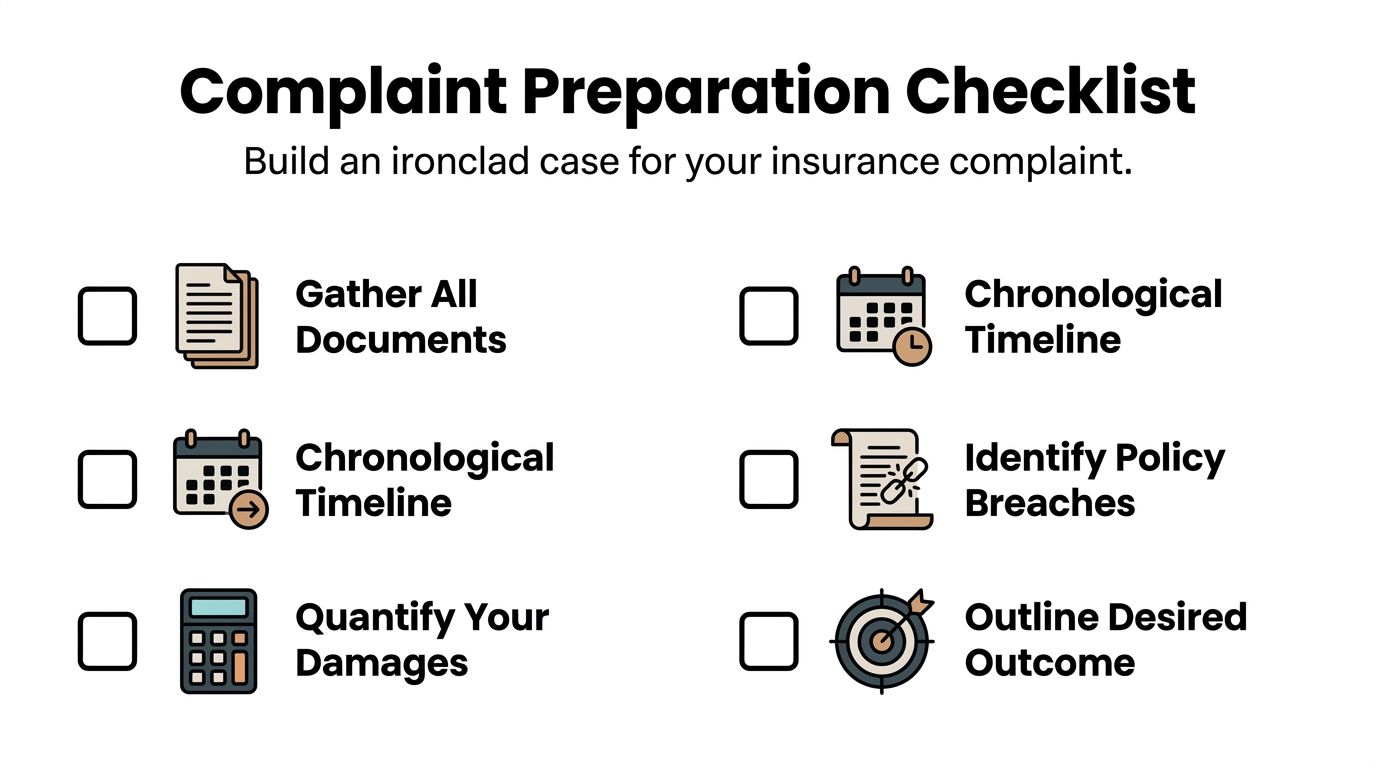
Start with the hard documents. Don't rely on summary statements when the original record exists.
- The insurer's written valuation. Get the CCC report, Mitchell report, total loss valuation, repair estimate, or denial letter in full.
- Your policy language. Pull the exact provisions on valuation, actual cash value, appraisal, duties after loss, and any relevant endorsements.
- All written communications. Save emails, portal messages, letters, and text messages if the insurer used them.
- Vehicle-specific proof. Include photos, service history, option lists, window sticker if available, and records showing pre-loss condition.
- Comparable market evidence. Gather local listings that match trim, drivetrain, mileage band, and equipment.
- Repair and accident records. For diminished value files, include repair invoice, parts list, structural notes if any, and final quality documentation.
What wins attention from an investigator
The single most useful document in a valuation dispute is often an independent appraisal. Not a guess, not a forum opinion, not a dealership trade-in conversation. A real appraisal that explains how the value was reached and what's wrong with the insurer's number.
That matters for two reasons. First, it translates your frustration into evidence. Second, it gives the regulator a clear basis to understand the dispute without digging through unrelated material.
If your complaint says “their number is too low,” you have an opinion. If your complaint says “their report used mismatched comparables and omitted documented options, and the attached appraisal explains the corrected value,” you have a case.
Organize it like a claims examiner would
Use a simple packet structure. I recommend this order because it lets an investigator understand the issue quickly:
- One-page summary
- Chronology of events
- Insurer valuation or denial
- Your rebuttal evidence
- Independent appraisal
- Policy excerpts
- Supporting photos and records
A one-page summary should include the loss date, claim number, insurer name, vehicle details, the amount or issue being disputed, and your requested resolution. Keep it plain. No speeches.
Avoid the mistakes that weaken valid complaints
A lot of consumers damage their own file by adding material that doesn't help prove claim mishandling.
- Don't flood the portal with duplicate uploads and unlabeled images.
- Don't write long emotional narratives about how stressful the accident was unless the facts connect directly to the complaint.
- Don't claim legal violations you can't explain. If you use terms like bad faith or fraud loosely, you lose credibility.
- Don't skip your damages analysis. For total loss claims, identify what was missed in the valuation. For diminished value claims, explain the measurable post-repair loss you're asserting.
A good complaint file looks boring. That's a compliment. Clean labels, dates, policy pages, written offers, and market-based valuation support will always outperform outrage.
File Your Complaint and Write a Compelling Narrative
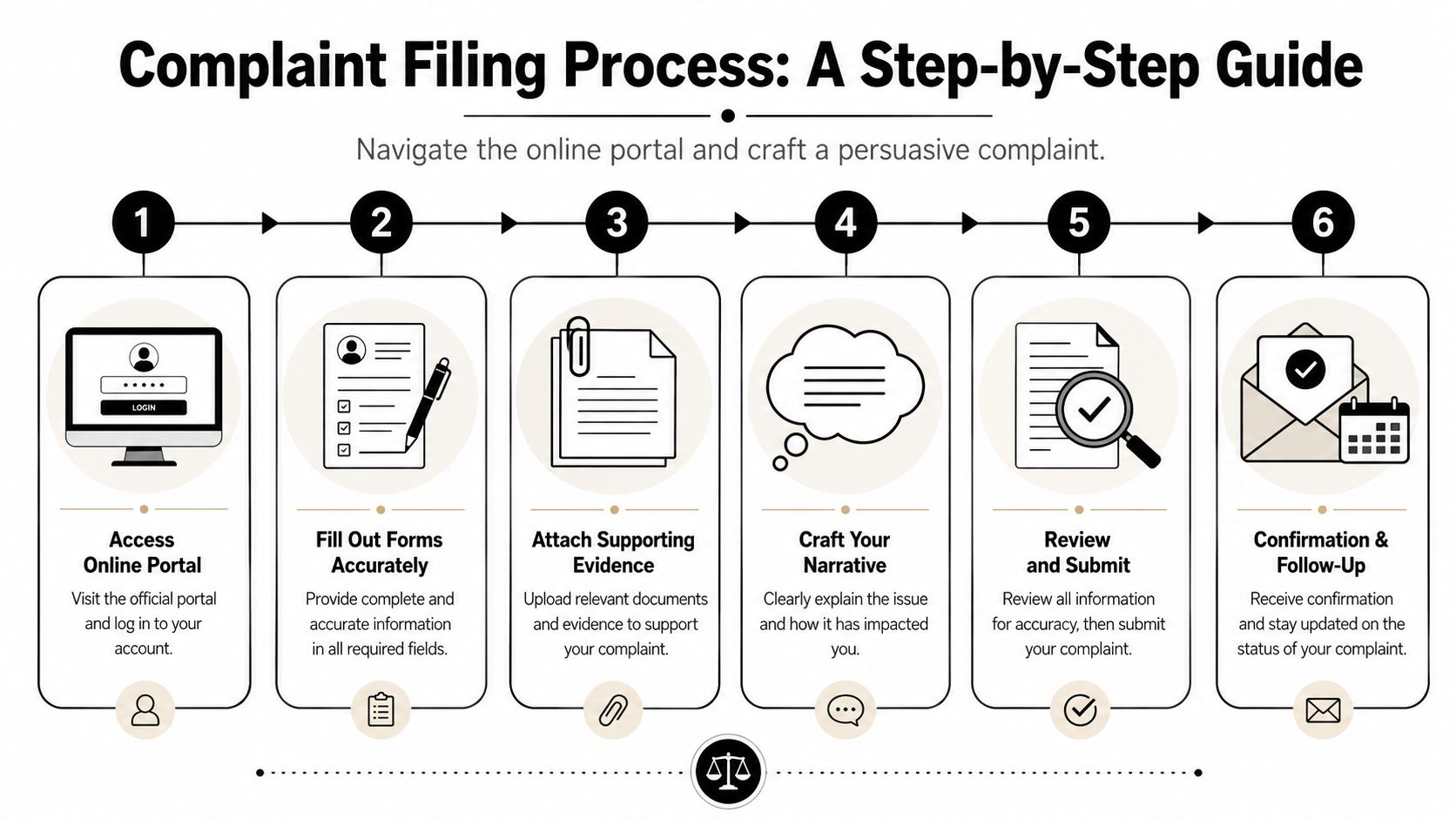
Once your documents are ready, the filing itself is usually straightforward. Most state portals ask for the insurer name, claim number, your contact information, a short issue description, and uploads. The form isn't the hard part. The hard part is the narrative.
Write like you expect a stranger to read it cold
Assume the investigator knows nothing about your file. Your job is to let that person understand the dispute in one read.
Use this structure:
- State the dispute in one sentence
- List the timeline in order
- Identify the insurer's specific action
- Point to the supporting documents
- State the resolution you want
Here's the tone you want:
My complaint concerns the insurer's valuation of my vehicle after a not-at-fault loss. The insurer issued a settlement offer that does not reflect the vehicle's documented condition, equipment, and comparable local market data. I asked the insurer to review the discrepancies, provided supporting documents, and did not receive a meaningful correction.
That works because it's restrained and specific.
A lot of drivers ask for examples before they file. This guide on preparing an insurance commissioner complaint is useful if you want to see how claim facts should be framed without turning the complaint into a rant.
Use claims language, not casual language
The wording matters. Investigators are looking for claims handling issues, not general dissatisfaction.
Better phrases include:
- Unfair claims settlement practice
- Failure to reasonably evaluate evidence
- Failure to provide a clear valuation explanation
- Refusal to address contractual appraisal rights
- Improper settlement valuation
- Inadequate response to documented dispute
Avoid filler like “they're ripping me off” or “this is ridiculous.” It may be true in spirit, but it doesn't help the file move.
A short video can also help if you want to understand the filing mindset before you draft.
How to frame diminished value the right way
Diminished value complaints often get mishandled because consumers are told the issue is impossible unless their state has a specific statute. That's too simplistic. In Washington, the Office of the Insurance Commissioner resolved 1,240 auto insurance complaints in 2024, and 38% involved settlement valuation disputes, according to the Washington Office of the Insurance Commissioner. That same source supports the point that many departments actively mediate disputes where diminished value may be recoverable under fair settlement principles, even without explicit statutes.
So if your diminished value claim was brushed aside, don't frame the complaint as “the insurer must pay DV because I say so.” Frame it as: the insurer failed to fairly evaluate a claimed loss component, failed to explain the basis of denial, or ignored evidence supporting post-repair market stigma.
A simple complaint narrative template
Use this as a practical model and adapt it to your facts:
Opening summary
Identify the vehicle, date of loss, insurer, and claim number.Chronology
State when the insurer inspected, valued, denied, or responded. Keep dates in order.The disputed conduct
Explain the exact handling problem. Poor comparables, omitted options, refusal to review evidence, unsupported DV denial, or ignored appraisal demand.Documents attached
List the appraisal, photos, policy excerpts, valuation report, repair invoice, and correspondence.Requested action
Ask the department to review whether the insurer handled the claim fairly and consistently with policy terms and state requirements.
Short, factual, and documented beats passionate every time.
Use the Complaint to Enforce the Appraisal Clause
The appraisal clause is one of the most underused tools in auto property claims. It is often not brought to attention until the claim has already stalled. Some insurers won't mention it unless you do. Others treat it like an inconvenience and hope you'll drop the issue.
That's where a State Insurance Department complaint can alter the balance.
What the appraisal clause does
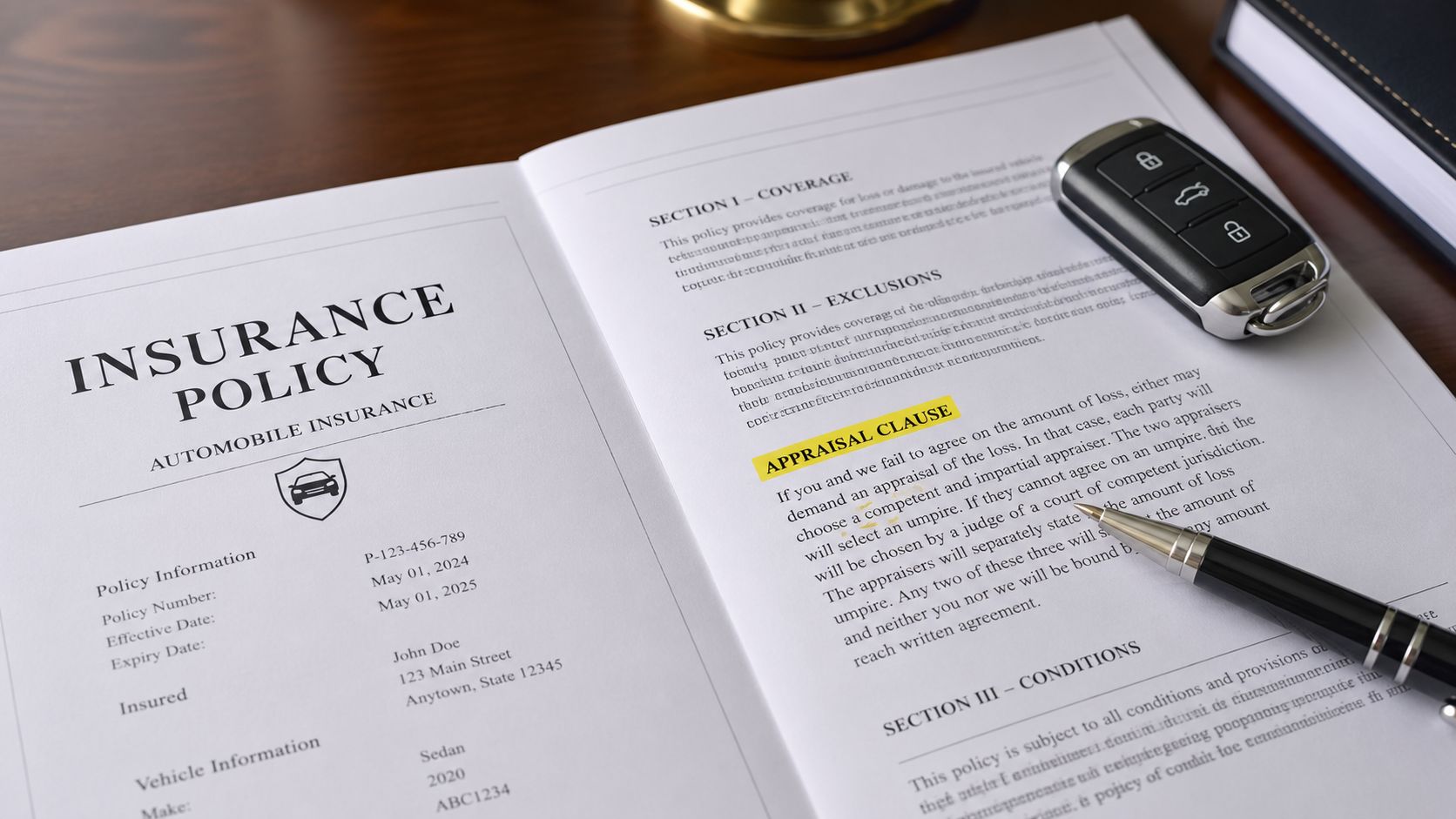
In most auto policies, the appraisal clause is the contract procedure for value disputes. It doesn't decide liability. It doesn't fix coverage disputes. It addresses the amount of loss.
Usually, each side selects an appraiser. If those appraisers disagree, an umpire may be involved under the policy process. The point is simple. The insurer's internal valuation no longer gets the last word.
If you want a plain-English breakdown of the process, this overview of the insurance appraisal clause covers how the clause is used in valuation disputes.
How the complaint strengthens your appraisal demand
A complaint helps when the insurer is slow-walking, ignoring, or soft-denying your appraisal request. Your filing creates a documented question for the regulator: is the insurer honoring the policy's dispute mechanism, or avoiding it?
That changes the insurer's risk calculation. Once the issue is framed as claims handling conduct instead of a routine negotiation, the company has to answer in writing.
“I am requesting review of the insurer's refusal or failure to acknowledge my contractual right to appraisal under the policy despite a documented dispute over value.”
That sentence gets attention because it is narrow and provable.
Why this strategy is becoming more important
Recent 2025 to 2026 trends show that 27% of state insurance departments issue formal guidance letters confirming that appraisal clause invocation is a protected consumer right under administrative codes, and Colorado updated its consumer portal in 2025 to include a dedicated Appraisal Clause Assistance workflow, according to the Colorado Division of Insurance consumer complaint page.
Even if your state doesn't have a dedicated workflow, that trend matters. It shows regulators increasingly recognize that appraisal isn't some obscure insider tactic. It's a consumer protection issue when carriers ignore a contractual valuation remedy.
When this works best
This strategy is strongest when:
- The only real dispute is value and coverage has already been accepted.
- Your policy contains appraisal language that applies to the claim.
- You made a clear written demand and the insurer dodged it or mischaracterized it.
- You can attach valuation support showing the disagreement is legitimate.
It's weaker when the claim still has unresolved coverage issues, fraud allegations, or missing ownership records. In those files, the insurer can often say the valuation process isn't ripe yet.
The complaint doesn't replace appraisal. It helps force the insurer to stop acting like appraisal is optional.
What to Expect After You Submit Your Complaint
Once you hit submit, the process usually becomes quieter but more important. Most departments send an acknowledgment first. Then the file gets routed to a consumer specialist, investigator, or analyst who contacts the insurer for a response.
That response is one of the main reasons to file strategically. The insurer now has to state its position in a formal setting, usually with reference to the policy, the handling notes, and the valuation support it relied on.
What the investigator is and isn't
The investigator is usually a fact-finder and mediator, not a judge. That distinction matters. A State Insurance Department may pressure clarity, require an explanation, review conduct, and push reconsideration. It may not order a check because you asked.
That doesn't make the process weak. In many claim files, the key win is forcing the insurer to revisit a position it had been defending casually.
What you should do while the file is open
Don't disappear after filing. Stay available and organized.
- Respond promptly if the department asks for missing documents or clarification.
- Read the insurer's response carefully. Look for new explanations, changed reasoning, or policy citations that weren't raised before.
- Rebut with documents, not emotion. If the insurer says your comparables weren't similar, answer with your appraisal and specific corrections.
- Keep your follow-up concise. Investigators appreciate direct updates more than repeated status requests.
A useful way to think about this stage is that you're no longer arguing about fairness in the abstract. You're testing whether the insurer can defend its claim handling on paper.
Signs your complaint is working
You may notice movement before you ever receive a formal closure letter. Common signs include:
| Sign | What it often means |
|---|---|
| A new adjuster or supervisor contacts you | The insurer elevated the file internally |
| The insurer asks for more documents it ignored earlier | The complaint triggered a deeper review |
| The company finally addresses appraisal | Regulatory visibility changed the posture |
| The valuation explanation becomes more detailed | The insurer is preparing to justify itself |
Not every complaint ends with a reversal. Some end with a better explanation. Some set up appraisal. Some narrow the dispute enough that the insurer becomes willing to negotiate seriously.
A complaint works best when it changes the insurer's behavior, even before it changes the number.
When to push further
If the insurer's response still dodges the evidence, answer once with precision. Point out what was not addressed. Reattach the key documents. Ask the department to note the unresolved valuation issue or appraisal issue clearly in the file.
If the department closes the complaint without the result you wanted, the effort still matters. You now have a cleaner record, a documented insurer position, and a stronger foundation for the next move.
Used correctly, the State Insurance Department levels the field. Not by replacing your evidence, but by making your evidence harder to ignore.
If you need a professional valuation file before you complain, Total Loss Northwest helps drivers challenge low total loss offers and diminished value disputes with certified independent appraisals. Their work is built for real claim negotiations and appraisal clause disputes, especially for vehicle owners in Oregon and Washington who need documentation that holds up under insurer and regulatory review.