You've probably already had the same thought commonly shared after the adjuster calls: that number can't be right.
Your car was clean before the crash. Maybe it had newer tires, a documented service history, a spotless interior, or upgrades you paid for out of pocket. Then someone from the insurer takes a quick look, runs a valuation through software, and sends over an offer that feels disconnected from reality. That reaction is usually justified.
A proper Vehicle Condition Inspection changes the conversation. It replaces a rushed insurer snapshot with documented facts about what your vehicle was worth, what damage exists now, and what the carrier ignored. If you're fighting a total loss offer or trying to prove diminished value after repairs, this isn't paperwork. It's a powerful tool.
After the Crash The First Offer Is Just a Starting Point
The first offer often arrives before you've had time to process the accident itself. You're dealing with towing, storage, body shop calls, rental car issues, and a carrier that wants a fast answer. Then the valuation lands, and it's low.
That's not an accident.
Insurance companies move claims through systems built for speed and consistency on their side, not precision on yours. The inspection behind that first number may be little more than a quick visual review in a noisy lot or body shop. The adjuster notes visible damage, checks a few data points, and moves on. Your service records, tire condition, prior upkeep, interior preservation, and hidden damage often get little weight unless someone forces the issue.
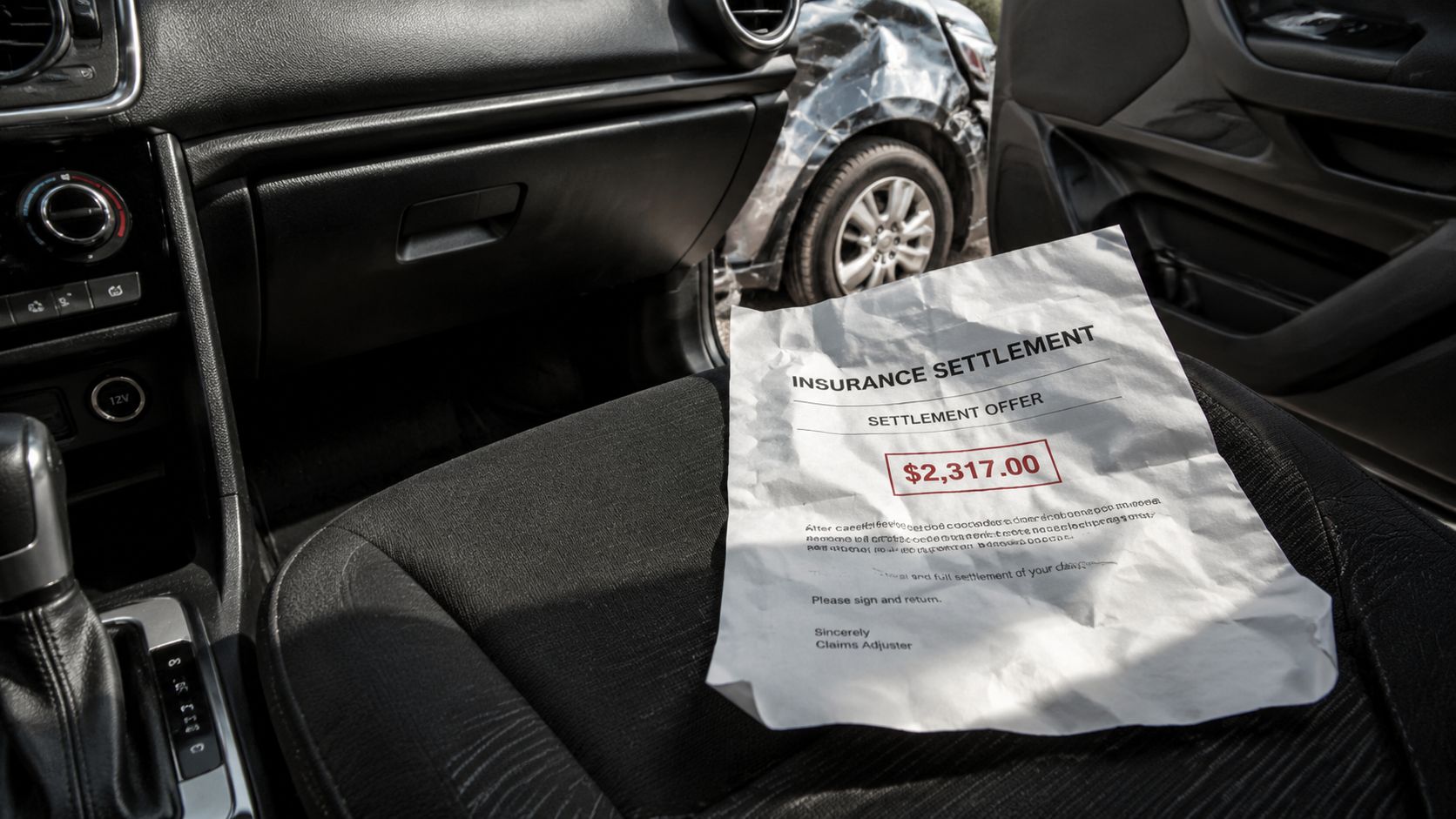
What the insurer is doing
They're trying to close the file. You're trying to get paid fairly. Those are not the same goal.
A carrier's inspection usually answers narrow questions:
- Can we classify this as repairable or total loss
- What's the cheapest defensible number we can support
- Is there enough documentation to move the claim forward
It usually does not answer the question you care about: what was this vehicle worth in its real pre-loss condition?
A fast insurance inspection is built to process claims. An independent inspection is built to prove value.
Why you shouldn't rush to accept
If you accept too early, you lose bargaining power. Once the claim is settled, it becomes much harder to revisit missed condition issues, overlooked options, hidden structural damage, or prior maintenance that supported a higher value.
Put everything in writing. If you need help organizing your position, a practical template for drafting personal settlement offers can help you respond clearly and keep the record straight while the valuation dispute is still alive.
A real Vehicle Condition Inspection gives you something the adjuster's first pass usually doesn't: a documented basis to challenge their number with specifics instead of frustration.
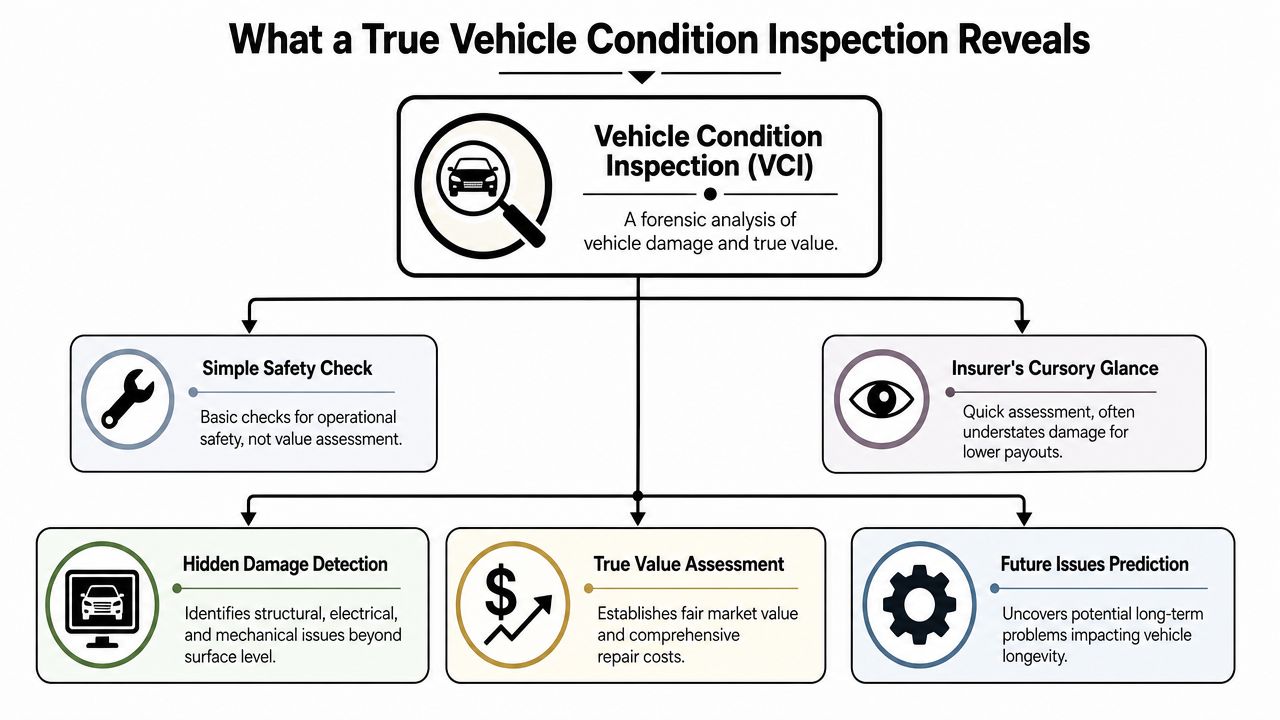
What a True Vehicle Condition Inspection Reveals
A real Vehicle Condition Inspection is not a courtesy walkaround. It's a forensic record of the vehicle's actual condition, pre-loss quality, and value-relevant facts. That distinction matters because insurers often treat “inspection” as if every inspection means the same thing. It doesn't.
A superficial check looks for obvious damage and operational basics. A true inspection builds a defensible story about the car. It tells you what existed before the crash, what the crash changed, what earlier repairs may have affected value, and what evidence supports a higher settlement position.
It reads the car like a biography
Every vehicle carries a history in its surfaces, mechanical condition, structure, and records. Good inspectors know how to read that history.
A proper inspection usually works through four value-bearing layers:
| Layer | What it looks for | Why it matters |
|---|---|---|
| Mechanical | operation, wear items, leaks, fault indicators, maintenance condition | proves whether the vehicle was neglected or well kept |
| Structural | frame condition, prior repair quality, hidden impact signs, welds | separates cosmetic damage from value-changing structural issues |
| Cosmetic | paint finish, panel fit, trim condition, upholstery, glass | affects actual market appeal and comparable value |
| Historical | service records, prior damage clues, title issues, upgrade documentation | confirms what the software often misses |
Even newer vehicles need real inspection
A common mistake is assuming a newer car must have been mechanically perfect before the collision. That's lazy thinking, and it can cut both ways in a claim.
A Pennsylvania inspection analysis found a real-world failure rate of 12% to 18% for light-duty vehicles, and it also found that even vehicles one year old or younger had a non-zero failure rate, which means no vehicle should be assumed flawless without inspection according to the Pennsylvania safety inspection findings referenced in the prompt research.
That matters because assumptions hurt valuation. If the insurer assumes your vehicle was “average” when it was above average, you lose money. If they assume a repaired vehicle is “good as new” when accident history still hurts resale, you lose money again.
Practical rule: Don't let the insurer define your car by age, mileage category, or software defaults. Make them deal with the vehicle you actually owned.
A true Vehicle Condition Inspection does exactly that.
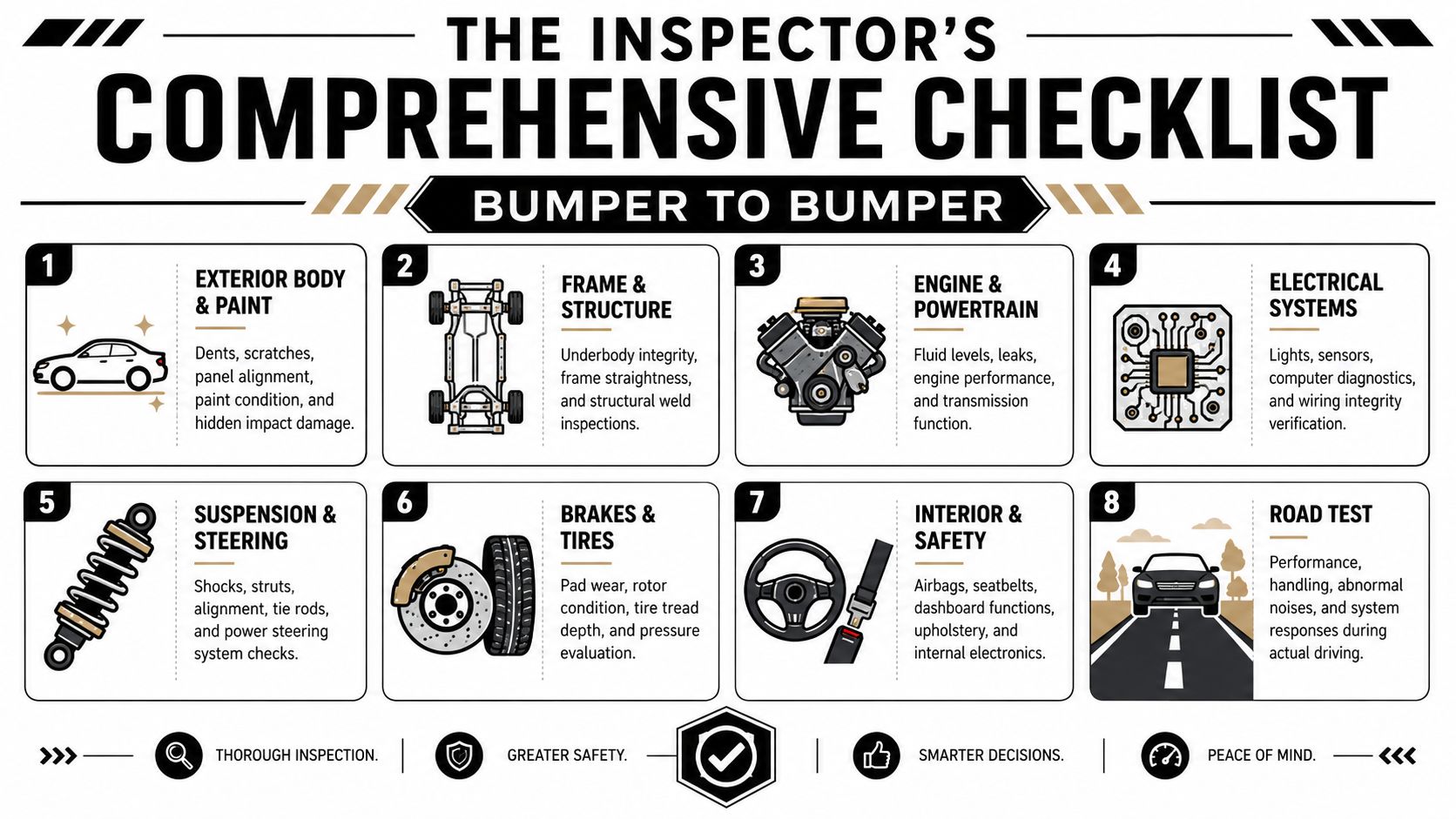
The Inspector's Comprehensive Checklist Bumper to Bumper
After a crash, the insurer's field review often lasts minutes. A real independent inspection does not. If you want a fair total loss or diminished value result, the car needs to be checked the way an appraiser checks a disputed asset, not the way a carrier checks a file it wants to close.
The job is simple. Document what the vehicle was before the loss, what the crash changed, and what the insurer is ignoring. That means working from the outside in, from the underside up, and from physical evidence back to value. If you are still sorting out the claim itself, review these steps to take after a car accident before the inspection gets buried under the insurer's version of events.
Exterior and finish
Start with the obvious, then keep going past it. Paint, panels, lamps, glass, moldings, weatherstrips, and panel alignment all matter, but the real question is what those surfaces reveal.
A trained inspector looks for prior bodywork, poor refinishing, blend lines, waviness, corrosion, inconsistent gaps, aftermarket replacement parts, and signs that the current impact followed an older weak point. Those details can raise or lower pre-loss value, and they can also expose a bad insurer assumption about what damage is new versus what was already there.
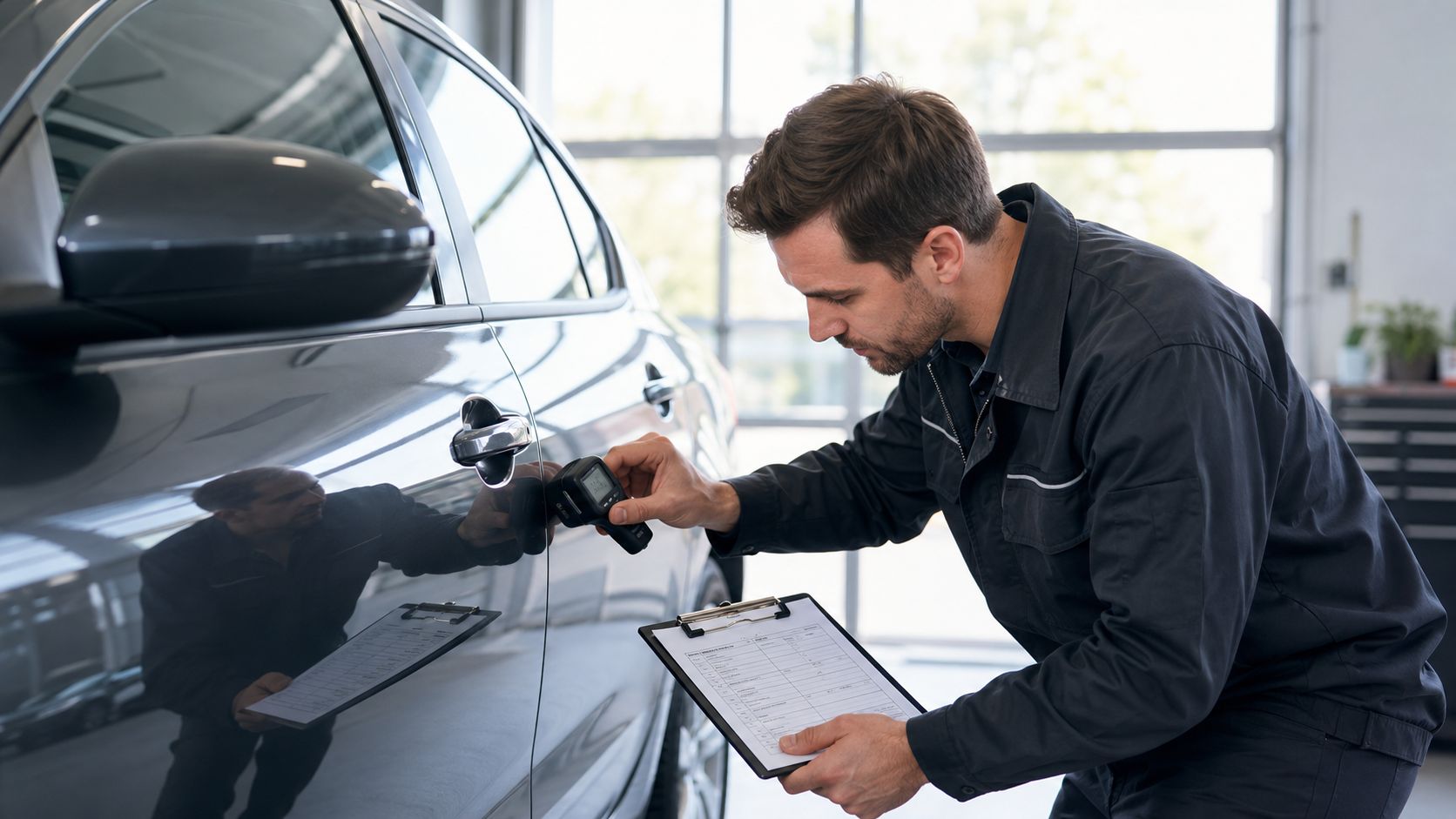
Paint thickness readings help settle arguments fast. If one panel reads far differently than the surrounding panels, there was likely previous repair. That does not automatically kill value, but it does need to be identified correctly so the carrier cannot use vague language to discount your vehicle across the board.
Interior and electronics
Insurers routinely underrate interiors because they are chasing speed, not accuracy. That costs owners money.
Cabin condition affects market appeal, trim level credibility, and option value. An inspector should check seat surfaces, carpet, headliner, dash, switchgear, screens, warning lights, climate controls, charging ports, power accessories, and visible safety equipment condition. Airbag covers, seatbelt pretensioners, and replaced trim pieces deserve close attention because they can point to prior deployment or incomplete repair history.
Inspectors also confirm that factory and added features work. Heated seats that fail, a dead infotainment unit, or a non-functioning camera system are not small details in a valuation fight.
Here's a useful visual reference for what a thorough inspection process can look like in practice.
Mechanical systems and roadworthiness
A superficial insurer review often falls apart. A few lot photos do not tell you how the engine ran, how the transmission shifted, whether the steering had play, or whether the suspension already had wear that should be separated from crash damage.
The inspection should cover engine operation, fluid condition, transmission behavior, steering response, suspension components, brake condition, tire condition, and any warning indicators or stored faults that can be verified. Service history matters here, but so does the actual condition of the parts on the car.
Legal roadworthiness can affect value too. If a vehicle had a serious pre-loss mechanical defect, that can reduce market value. If the insurer hints at poor pre-accident condition without proof, push back. They do not get to downgrade your car by suggestion.
Structure, underside, and records
The underside is where the story usually changes. Cosmetic damage can look minor while the floor, rails, suspension pickup points, or weld areas tell a much more expensive truth.
A proper inspection checks for bent components, crushed pinch welds, rail deformation, buckled sheet metal, disturbed seam sealer, underbody scrapes, replacement welds, corrosion around repaired areas, and signs of earlier impact damage that the insurer did not separate from this loss. That distinction matters in both total loss and diminished value claims. You need the report to show what belongs to this crash and what does not.
Then the physical findings get matched to the paper trail:
- Service records show how the vehicle was maintained
- Repair invoices show what was fixed before and how it was repaired
- Title history can confirm or contradict prior damage disclosures
- Upgrade receipts can support added value for wheels, suspension, audio, or specialty equipment
If the inspector does not connect the physical evidence to the records, the report is weak. If they do, you have something the insurer has to answer.
Documenting Damage Photos and Evidence That Win Claims
A Vehicle Condition Inspection without strong documentation is just an opinion. Insurance companies know how to ignore opinions. They have a harder time ignoring organized evidence.
That means your report should include more than a few cell phone photos and a bottom-line value. It should show exactly what was observed, where it was observed, how it was measured, and why it matters. The stronger the file, the harder it is for the carrier to brush you off with generic language.
What solid evidence looks like
A useful inspection file usually includes a mix of visual, mechanical, and written proof. Each piece should support the next.
You want:
- Wide-angle overview images that establish the vehicle's overall condition
- Close-up photos of cracks, misalignment, torn metal, wheel damage, trim damage, and paint transfer
- Underside images where structural or suspension damage may be hiding
- Diagnostic support when warning lights, module faults, or electronic issues are involved
- Written notes tied to photo numbers so the insurer can't claim the evidence is vague or out of sequence
Why measurement matters
Claims fall apart when the evidence looks subjective. That's why official inspection protocols matter. They require specific calibrated tools, including tire tread gauges measured in 32nds of an inch and even one-hole paper punches for compliance procedures, which helps turn inspection findings into hard data rather than guesswork according to this overview of vehicle inspection protocols and tools.
That same principle applies in an appraisal dispute. If the report documents measurable wear, fitment differences, material damage, and condition details with consistency, the insurer has less room to dismiss your position as “customer opinion.”
Better evidence doesn't guarantee a fair offer. It does remove the insurer's favorite excuse for a low one.
What you should do right away
Before anyone moves the car, take your own photos if you can do it safely. Capture every angle, the VIN area, the wheels, the interior, the odometer, deployed airbags, fluid leaks, and the crash scene. Then keep every tow receipt, repair estimate, and message from the carrier.
If you need a practical checklist for the immediate aftermath, review these steps after a car accident. It helps you preserve the kind of evidence people often lose in the first few days.
The report should read like a file built for dispute, not a memo built for convenience.
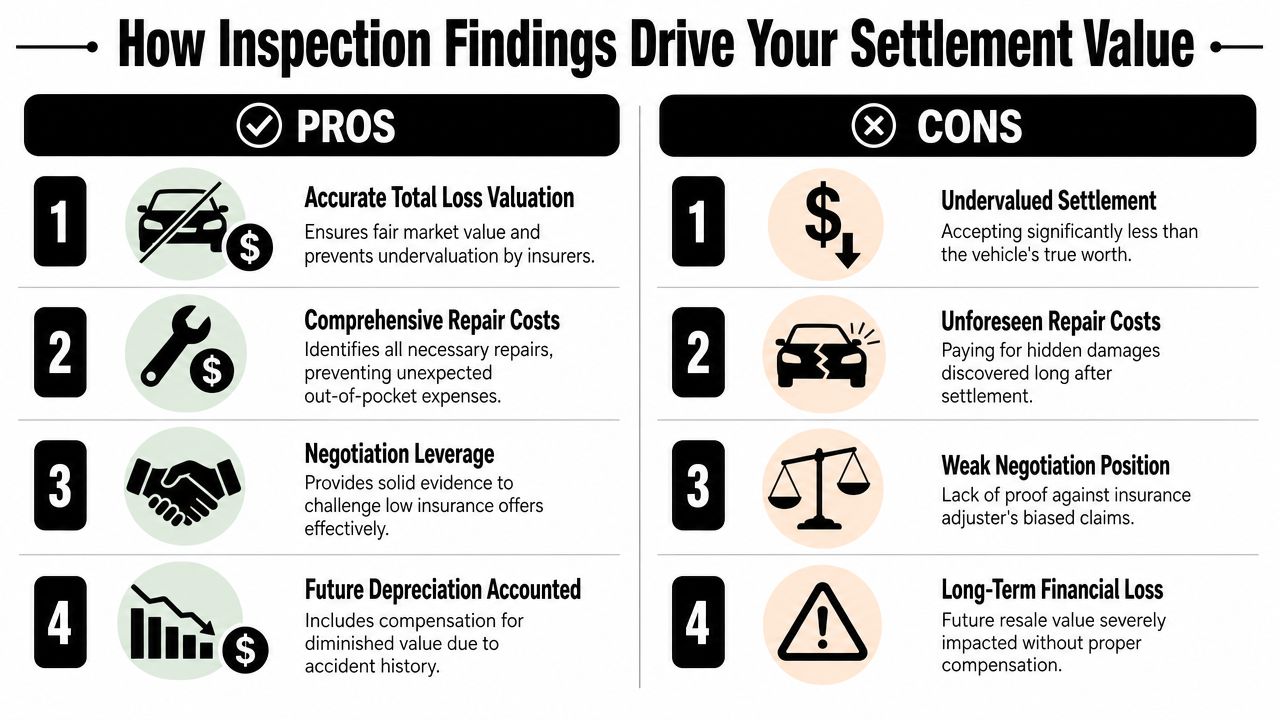
How Inspection Findings Drive Your Settlement Value
After a crash, the insurer wants your car reduced to a template. Year, make, model, mileage, a few option codes, then a number. That shortcut saves them money. A real inspection interrupts it.
Inspection findings affect settlement value in two places that matter. They support a higher total loss valuation by proving what your vehicle was worth before the collision. They also support a diminished value claim by showing why the market will still discount the vehicle after repairs.
Total loss value is not just year make and model
Carrier valuation systems are built for speed, not accuracy. Your settlement goes up or down based on condition adjustments, equipment accuracy, maintenance history, prior repair quality, and how well the comparable vehicles match yours.
That is why inspection findings matter. They give you proof the insurer has to answer.
A strong inspection can support higher value by documenting things like:
| Finding | Settlement effect |
|---|---|
| Clean interior and exterior preservation | supports better condition adjustments |
| Recent maintenance and quality upkeep | supports a challenge to average or rough-condition comparables |
| Working options and accessories | supports a more accurate equipment profile |
| No prior poor-quality repairs | supports a stronger pre-loss market position |
If you want to see where insurers shave value off a claim, read this guide on how an insurance company values a car. It explains how a generic valuation can miss real condition, options, and maintenance.
Diminished value depends on evidence insurers usually do not collect
The insurer's inspection usually asks a narrow question. Can the vehicle be repaired, or has it been repaired enough to close the file? That does not answer the question you care about, which is what the car is worth on the open market after an accident shows up on its history.
A forensic vehicle condition inspection fills that gap. It documents structural involvement, panel replacement, welds, paintwork, refinish lines, parts quality, warning lights, calibration issues, and visible signs that make buyers and dealers pay less. Clean repairs still carry stigma. Poor repairs make the discount worse.
That difference matters in negotiation. A superficial insurer inspection supports claim processing. An independent inspection supports value.
Why this changes the number on the table
Settlement disputes are won when you can tie specific findings to dollars. Clean pre-loss condition can justify better comparable vehicles and stronger condition ratings in a total loss claim. Post-repair evidence can support a diminished value demand that is based on market impact, not guesswork.
Insurers push back hardest when the owner has nothing but an opinion. They get more careful when the file includes measured condition, documented damage, and a report that explains how those facts affect value.
That is how you move the conversation from their software output to your actual loss.
How to Prepare for Your Independent Vehicle Inspection
Preparation affects outcome. If the inspector gets a half-empty file and a dirty, inaccessible vehicle, useful details get missed. If they get records, photos, upgrade receipts, and a vehicle that can be examined properly, the report gets stronger.
Start gathering paper before the appointment. Don't wait until the appraiser is standing in your driveway asking questions you could have answered with documents.
What to collect before the inspection
Pull together anything that shows pre-loss condition, ownership history, maintenance quality, and added value.
Bring these if you have them:
- Service records from oil changes to major repairs
- Tire and brake receipts if those parts were replaced recently
- Original purchase paperwork or window sticker if available
- Upgrade receipts for wheels, suspension, audio, paint protection, or specialty parts
- Accident scene photos and towing documents
- Repair estimates or insurer photos already generated in the claim
What to expect on inspection day
A real inspection takes time. The appraiser may need to review the exterior, interior, underbody access, mechanical condition indicators, documentation, and market-impact details. You may also be asked about maintenance, prior damage, custom parts, and any repairs made after the collision.
Use the appointment to point out anything the insurer brushed past, especially preserved interior condition, expensive options, unusual packages, or aftermarket components that add value and need to be documented correctly.
Choosing the right appraiser
Don't hire the first person who says they “do appraisals.” Ask direct questions.
- Do they handle insurance disputes regularly
- Do they inspect condition physically or rely mostly on databases
- Can they explain diminished value and total loss methodology in plain English
- Have they worked with custom, luxury, or collector vehicles if yours falls into that category
If you're looking for one option to evaluate, review this page for an independent car appraiser. Then compare that service against others using the same criteria. What matters is independence, documentation quality, and experience dealing with carriers that push back.
A prepared owner gets a better report. A better report gives the insurer fewer escape routes.
Answering Your Top Questions About Total Loss Inspections
You get the insurer's valuation, read the number twice, and know something is off. That reaction is usually correct. Their inspection is built to close the file. Your inspection should be built to prove what the vehicle was worth, what the damage means, and why their number does not hold up.
Can I refuse to rely only on the insurer's inspection
Yes.
You can dispute the carrier's valuation and support your position with your own inspection and appraisal. Do that early. The insurer's adjuster is not the final authority on your vehicle's condition or value, especially when the inspection was quick, photo-based, or limited to what fit their estimating system.
A superficial insurer inspection often answers one question: what is the cheapest defensible number? An independent Vehicle Condition Inspection answers the question that matters to you: what can be documented and defended if the claim turns into a real dispute?
If my car was repaired well, why would value still drop
Because the market punishes accident history.
Buyers, dealers, and appraisers do not value a repaired vehicle the same way they value one with no collision record. Good repairs help. They do not erase prior damage, structural concerns, paintwork, parts replacement history, or buyer hesitation. That loss shows up in resale offers, trade-in numbers, and diminished value claims.
Doesn't a clean history report prove the car had no prior damage
No. History reports miss plenty.
Minor collisions, poor-quality repairs, owner-paid work, and private transactions often never appear the way people expect. A clean report is useful background. It is not proof. Physical inspection still carries more weight than a database summary, especially when you are arguing over total loss value or prior-condition adjustments.
What if I own a custom or collector vehicle
Then a standard insurer inspection is even more dangerous.
Custom and collector vehicles carry value in details generic forms skip or misclassify. Suspension work, specialty paint, rare trim, restoration quality, fabrication, driveline upgrades, period-correct parts, and documented provenance can change value dramatically. If the person inspecting the vehicle does not know what they are looking at, those items get ignored, and your settlement drops with them.
That is why these claims need a forensic inspection, not a checklist filled out in a hurry.
Do I need paperwork for upgrades or prior ownership details
Yes. Paperwork turns your position from a complaint into evidence.
Keep receipts, build sheets, restoration records, prior listings, sale documents, and photos that show the vehicle before the loss. If ownership or transfer records become part of the file later, this guide on how to create a car bill of sale can help you keep the paper trail clean.
Is a total loss inspection only for totaled cars
No.
It also matters when the insurer wants to repair the vehicle but is understating severity, missing pre-loss condition, overlooking value-bearing features, or brushing aside diminished value. In both situations, the inspection gives you documented facts the carrier has to address.
The insurer's report reflects what they are prepared to pay today. An independent inspection creates a record they must explain, justify, or rebut.
If your claim is stuck because the valuation is too low, get the vehicle inspected before you sign a release. Total Loss Northwest provides certified appraisals for owners dealing with disputed total loss and diminished value claims. The value is not the logo on the report. It is whether the inspection is detailed enough to hold up when the insurer pushes back.