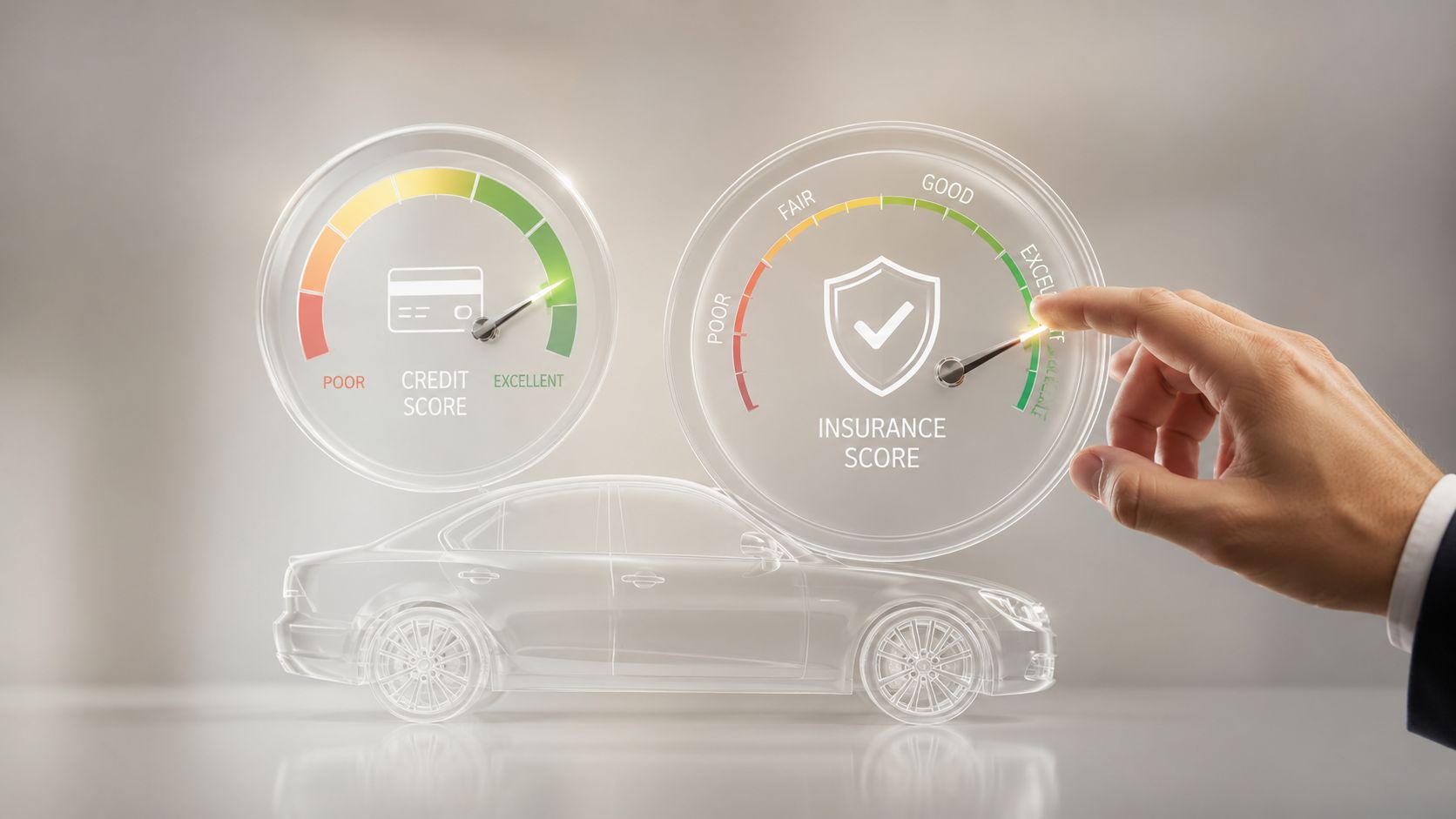
You just got a quote that feels too high, and nothing about your driving record explains it. You haven't had tickets, you haven't had a crash, and yet the price still came back stubbornly expensive. That's where an insurance score often enters the picture, influencing how an insurer sees your risk, especially for auto and homeowners policies, as described in the background on insurance scoring.
If you're dealing with a claim right now, that number can feel mysterious and even unfair. It helps to separate two very different questions, what it costs to insure you, and what your car is worth after a total loss. For drivers worried about theft risk as well as premiums, practical security habits can still matter, and tips for keyless car security are a useful place to start.
The Hidden Number That Drives Your Car Insurance Rates
A lot of people run into the same problem. Their driving record looks clean, their vehicle is ordinary, and the insurer still comes back with a price that seems out of step with reality. That gap often comes down to an insurance score, a number the insurer uses behind the scenes when setting premium rates for personal auto and homeowners coverage, according to the III's overview of insurance scoring.
Think of it as a quiet underwriting filter. It does not replace your driving history, and it does not erase your claim record, but it can tilt the quote higher or lower because insurers use it as one signal of future loss likelihood. In plain terms, the insurer is asking, “How likely is this person to file claims that cost us money?”
That's why two drivers can look similar on paper and still see different prices. The score is built from credit-report information, not from your mileage or your car color, and it helps insurers estimate risk in a way that feels invisible to most consumers. If you want another reason the hidden tech inside cars matters, theft exposure is one of the practical issues that can shape the risk conversation, which is why resources like the Blade Auto Keys guide on keyless theft prevention can be helpful context for everyday drivers.
Practical rule: A high insurance quote is not proof that your car is bad or your driving is reckless. It may simply mean the insurer thinks your overall risk profile is less favorable.
Decoding Your Insurance Score
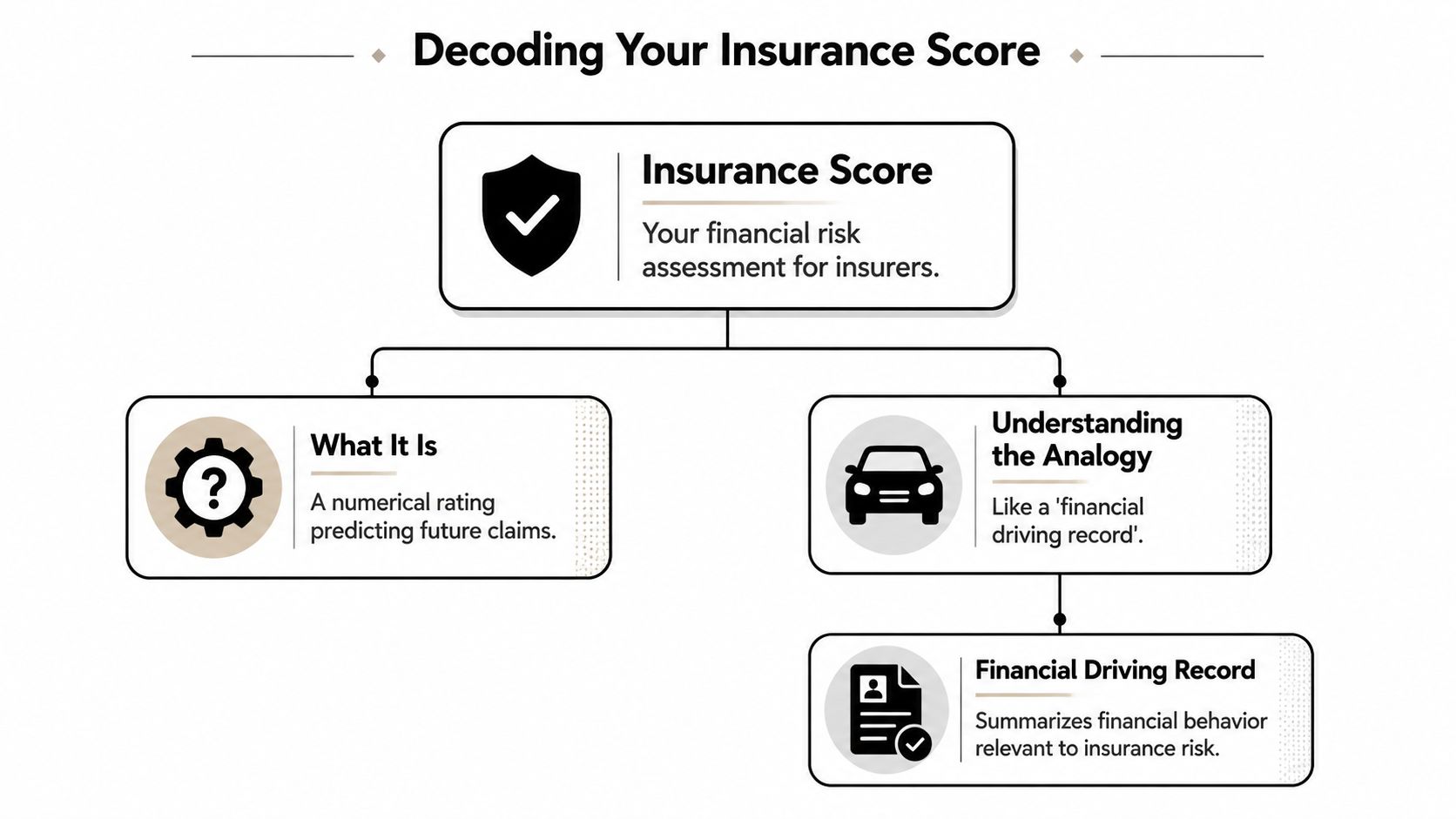
An insurance score is best understood as a financial risk snapshot for insurers. It is a proprietary, credit-based statistical model used to predict the likelihood of future claims and insurance losses, not to measure whether you're “good with money” in a general sense, as noted in the insurance score overview. The easiest way to picture it is as a kind of financial driving record. Instead of tracking turns, braking, and speeding, it summarizes credit behavior that insurers believe relates to claim patterns.
What goes into the score
The raw ingredients usually come from your credit report. Major models use things like payment history, outstanding balances, collections, bankruptcies, inquiries, and credit utilization, and one cited framework breaks the score into 40% payment history, 30% outstanding debt, 15% credit-history length, 10% pursuit of new credit, and 5% credit mix in the insurance.com explanation. That weighting isn't universal, but it shows the kinds of behaviors insurers pay attention to.
Here's the important part. The score is not judging whether you'll repay a loan, it's estimating whether you're more or less likely to generate an insurance loss. That distinction is why the same credit file can be interpreted differently by a lender and an insurer.
Why the model matters
Insurers aren't using this as a moral scorecard. They're using it as a risk proxy in underwriting and pricing, especially for personal auto and homeowners policies, because the model is tuned to claims data rather than repayment behavior. The number itself is usually shown on a three-digit scale, and the III notes ranges commonly cited from 200 to 997, with scores of 770 or higher considered favorable in that reference.
Your insurance score doesn't tell an insurer how responsible you are in every part of life. It tells them how their own historical model thinks you may perform as a policyholder.
Insurance Score vs Credit Score A Crucial Distinction
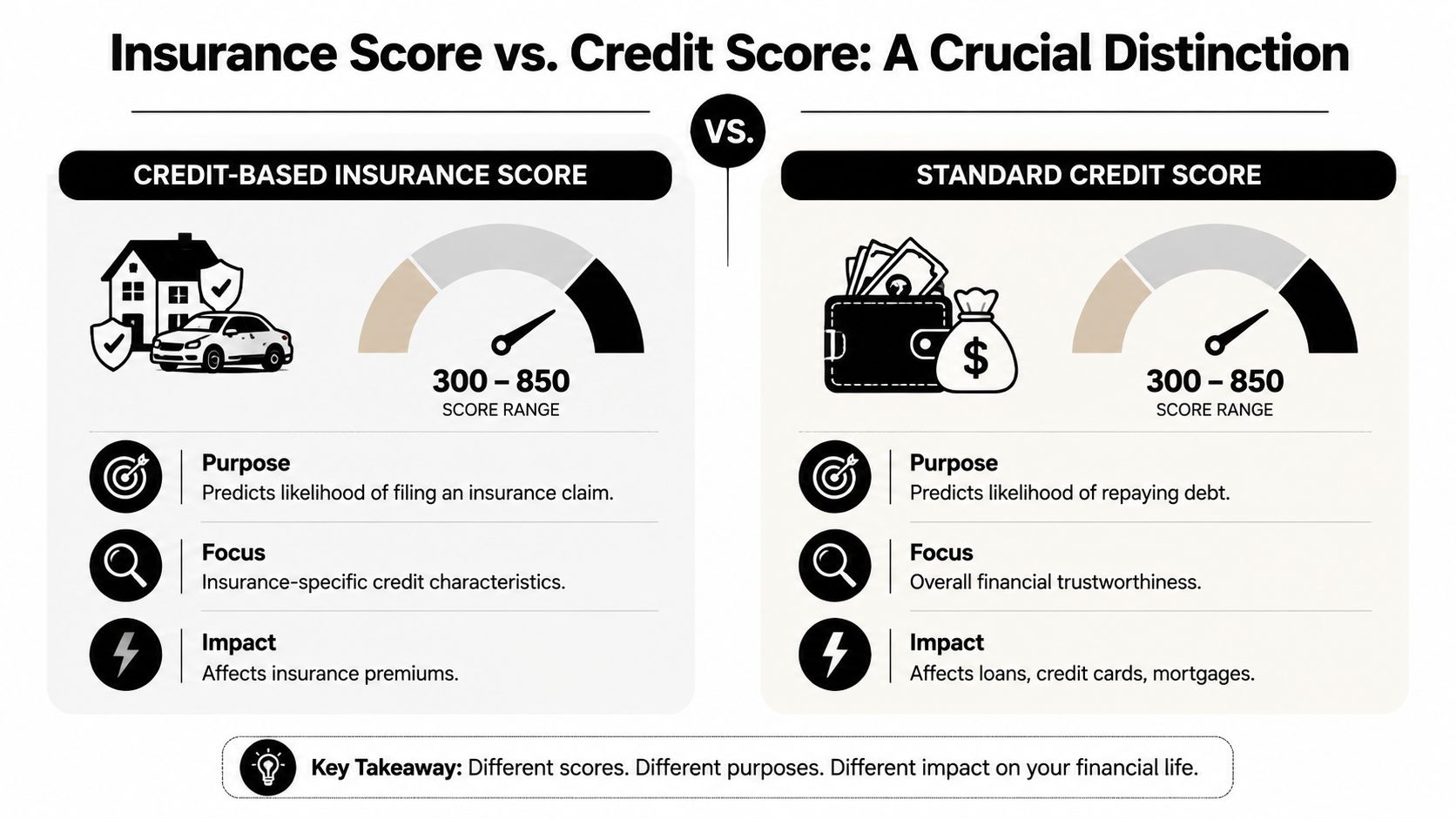
Confusion often stems from this point. A credit score and an insurance score can draw from the same credit-report data, but they answer different questions. A credit score is built to estimate repayment risk, while an insurance score is built to estimate insurance loss likelihood, as stated by the FTC and NAIC framing in the III reference.
Side by side
A lender wants to know whether you'll pay back a card balance or a mortgage. An insurer wants to know whether your file suggests a higher probability of future claims. Those goals sound similar, but they are not the same, and they don't always produce the same result for the consumer.
That's why people sometimes notice that a change in one score doesn't feel identical in the other. Both models may look at payment behavior, debt levels, and credit history, but each one weights those details differently. So a person can have solid general credit and still not get the most favorable insurance pricing, or vice versa.
Why the difference matters in real life
For consumers, this distinction matters because it changes expectations. A strong traditional credit score doesn't automatically guarantee the best auto premium, and a weak one doesn't automatically mean you're a bad driver. The insurance side is trying to predict claims, not loan default, which is why the score works as a pricing tool rather than a general financial judgment.
This also matters if you've been dropped or non-renewed. The issue may be broader than one score, and the actual reason can depend on state rules, underwriting appetite, and the carrier's filing practices. If you're comparing policy decisions, this overview of why auto insurance companies drop drivers helps separate underwriting choices from everyday driving behavior.
How Your Score Impacts Your Insurance Premiums
Insurers use the score as a risk proxy because they believe it helps predict future claims and losses. That's why the score can affect what you pay for auto and homeowners insurance, even when your driving history looks clean on the surface, as described in the insurance score model reference. In underwriting, the company is building a rate that reflects its view of how likely a policy is to generate claims.
A lower score generally signals more risk to the insurer. That doesn't mean you're about to file a claim, only that the model groups you with consumers the company has historically seen as costlier to insure. From the insurer's standpoint, the premium is the price of that expected risk.
What that looks like in practice
Two drivers can own the same car, live in the same area, and have similar clean records, yet still receive different quotes because the insurer weighs their insurance scores differently. That difference doesn't come from the paint color, the trim level, or a random guess. It comes from the pricing model the company uses.
Here's the practical takeaway. The score affects the policy price, not the accident itself. If you want to reduce premium pressure, your most effective approach is usually in the factors the score is built from and in how you shop for coverage. That's why guidance like advice from Georgia DUI Schools on lowering insurance premiums can be useful when you're trying to manage the cost side of the equation.
What insurers are really pricing
They are not pricing your character. They are pricing a statistical expectation. That distinction is uncomfortable, but it matters, because it helps you focus on what can change the quote, instead of chasing myths about what the insurer “must have” seen in your file.

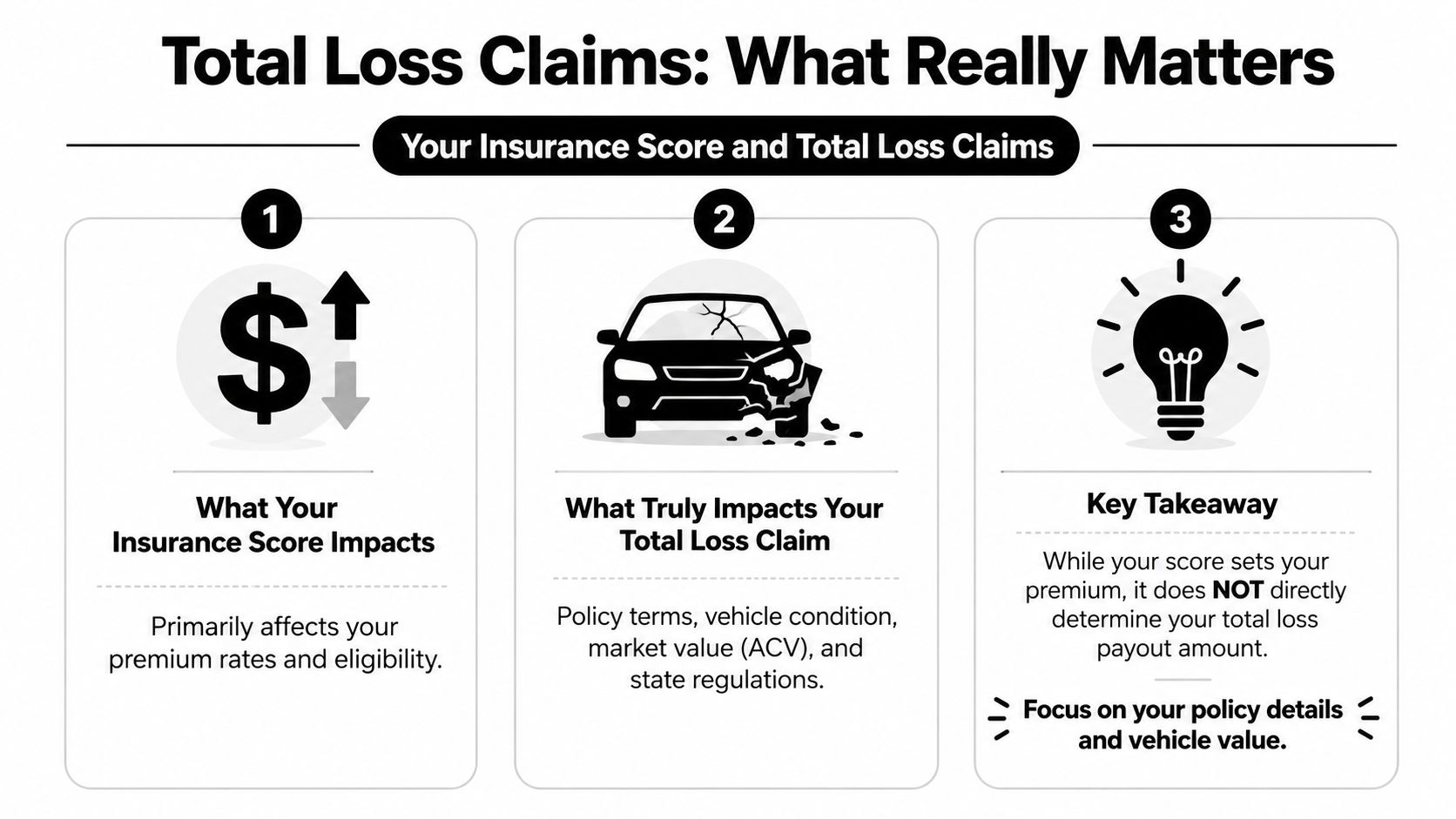
Your Score and Your Total Loss Claim What Really Matters
This is the part many guides miss. An insurance score may affect premium pricing, but it does not determine the value of a vehicle claim, as the NAIC explains in its credit-based insurance scores guidance. That means a low score does not justify a lower total loss settlement, and it should never be treated as a shortcut for reducing what your car was worth.
Premium pricing and total loss valuation are different jobs
Premium pricing looks forward. It asks what it may cost the insurer to cover you next. Total loss valuation looks backward and outward. It asks what your vehicle was worth in the market before the loss, based on its condition, features, and comparable sales.
Those are separate processes. The score belongs to underwriting and pricing, while the settlement belongs to valuation. If an adjuster blurs that line, the issue isn't your score, it's the claim handling.
What really drives a total loss payout
A vehicle's payout should turn on Actual Cash Value, or ACV, not on the policyholder's financial habits. ACV is a market-based value question, not a credit question. That's why your payment history, debt load, or credit inquiries should not be used as a backdoor argument for a low settlement.
If your car has been declared a total loss, the right focus is on the vehicle itself, the policy terms, and the valuation method being used. This guide to what happens when a vehicle is totaled is a useful companion if you're trying to understand the claim process without mixing it up with pricing issues.
A fair settlement starts with the car's market value, not with the owner's financial file.
Why this distinction protects you
This separation matters because accident victims often hear vague language that sounds technical but isn't tied to the actual claim value. If someone suggests your insurance score explains the settlement amount, ask them to point to the valuation report and the comparable vehicles used. That keeps the discussion where it belongs, on the car, not on your credit-based insurance profile.
How to Check and Improve Your Insurance Score
Start with the reports that feed the model. Because insurance scores are built from credit-report information, the first move is to check your credit files for errors and to review any consumer reports that may be used in insurance underwriting. If something is inaccurate, disputed, or outdated, fix that first. Cleaning up the input is better than guessing at the score itself.
Smart habits that support a better score over time
Focus on the behaviors the models tend to reward. The score framework cited earlier puts heavy weight on payment history and debt levels in the insurance.com breakdown, so consistency matters more than quick fixes.
- Pay on time: Late payments can hurt the underlying file, so set reminders or autopay where it makes sense.
- Keep balances manageable: High revolving balances can weigh on the debt side of the file.
- Avoid unnecessary applications: Every new credit inquiry can matter, so don't open accounts just to chase a small short-term benefit.
- Review old accounts carefully: Long-standing, well-managed accounts can help show stability.
- Dispute errors quickly: If a collection, account balance, or inquiry doesn't belong to you, challenge it with the bureau and document the result.
Know your rights and limits
You also have rights under credit-reporting rules and state insurance laws. Some states place limits on how much insurers can rely on credit-based rating, and some insurance contexts use this information more narrowly than others. If you're switching carriers, comparing quotes, or trying to understand a notice from your insurer, this guide on how to switch car insurance companies can help you think through the process without losing track of coverage.
The best mindset is simple. Improve the financial behaviors that shape the file, verify the data, and don't assume the insurer's score is the final word on your rates or your claim.
If you're sorting out a total loss settlement, get a second set of eyes on the valuation before you accept the number. Contact Total Loss Northwest for help pushing back on a low offer and making sure the payout is based on your vehicle's real market value, not on a credit-based insurance score.