So, you're asking, "what is an appraisal for a car?" Chances are, you're in the middle of a frustrating back-and-forth with an insurance company after an accident. Let’s cut through the jargon.
A car appraisal is an independent, expert valuation of what your vehicle is truly worth, put together by a certified professional. It’s a detailed, evidence-backed report that serves as a powerful counterpoint to the automated, and often low, assessment your insurer gives you.
Your Strongest Tool After a Car Accident
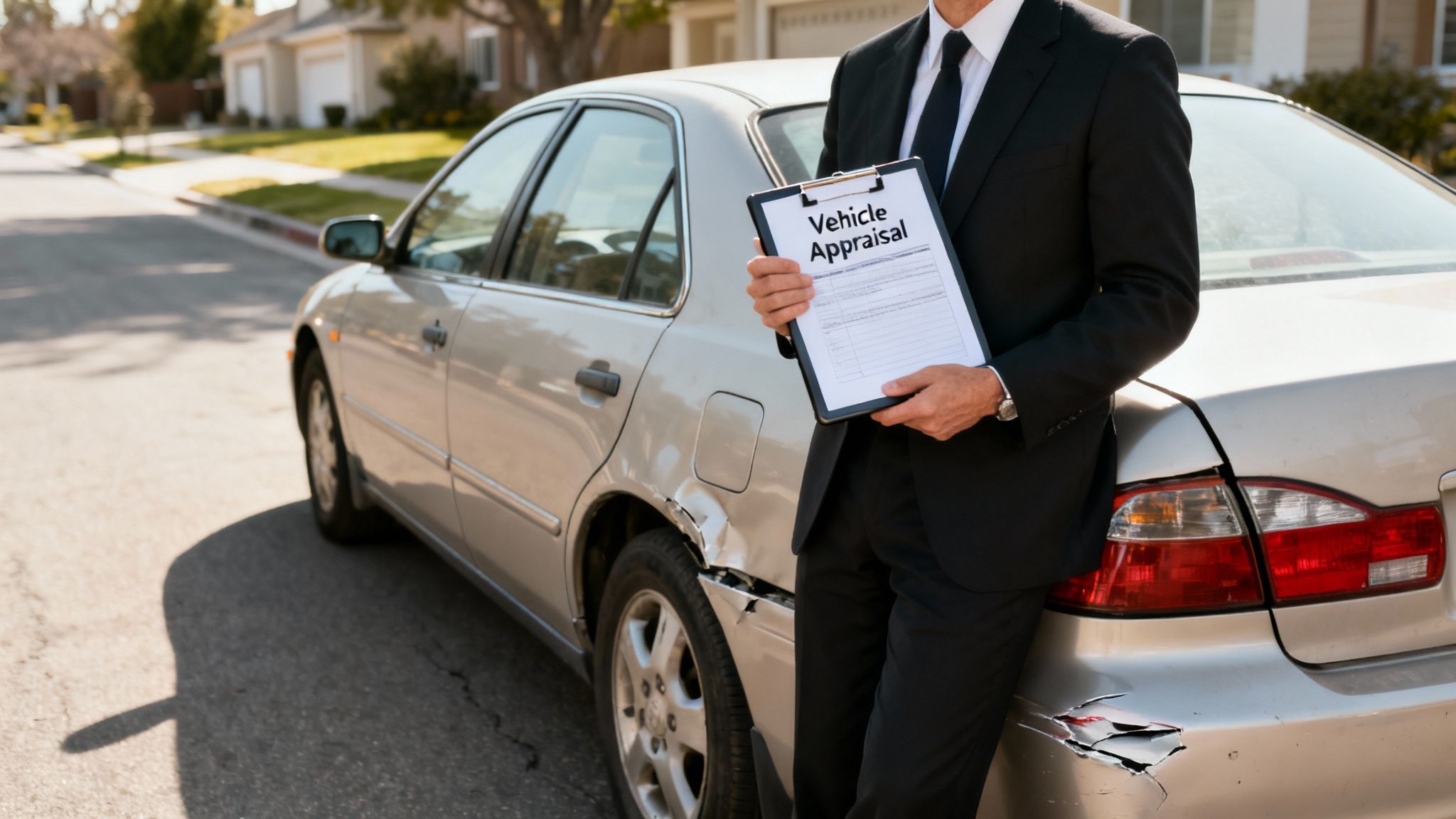
After a crash, your insurance company will conduct its own valuation to figure out what to pay you. The problem is, this process often relies on generic software that is built to protect their bottom line, not get you the money you deserve. An independent appraisal is your official counter-offer—it's the most effective tool you have for securing a fair settlement.
Think of it this way: you wouldn't just accept a serious medical diagnosis from a walk-in clinic paid for by the insurance company. You'd get a second opinion from a specialist. An independent appraiser is that specialist, working only for you to ensure your vehicle's unique features, pristine condition, and true local market value are properly accounted for.
Why It Matters for Your Claim
A professional appraisal becomes absolutely crucial in two specific situations:
- Total Loss Claims: When the insurance company declares your car a total loss, the appraiser establishes its Actual Cash Value (ACV)—what it was worth moments before the accident. This number is almost always higher than the insurer's first offer.
- Diminished Value Claims: Even after repairs, a car with an accident history is worth less. An appraiser calculates this loss in resale value, which is money you are legally owed.
In both cases, the appraisal report gives you the concrete proof needed to challenge the insurance company’s lowball numbers. Research has shown that inconsistencies in these valuations are rampant. In fact, 40% of appraisals that use default repair cost estimates are off by $1,000 or more. A good independent appraiser takes the guesswork out of the equation.
An appraisal isn't just a price check; it’s your leverage. It transforms a subjective argument into an objective, fact-based discussion, forcing the insurer to justify their low offer against a credible, expert analysis.
This is especially true for drivers here in Oregon and Washington. Local market conditions play a huge role in what our vehicles are worth, and a specialized appraisal ensures your settlement reflects what your car was actually worth in our community—not what some national algorithm dictates. Getting an appraisal is your right, and it puts you back in control of the outcome.
Choosing the Right Type of Car Appraisal
Not all car appraisals are the same, and picking the right one is critical to getting what you're owed from an insurance claim. The appraisal you need really hinges on your specific situation after the wreck. It’s like having a toolbox—you wouldn't grab a sledgehammer to fix a watch. Using the wrong type of appraisal is just as ineffective.
Knowing the difference between them means you’ll have the right tool for the job, helping you recover the money that's rightfully yours. Let’s walk through the main types you're likely to come across.
Total Loss Appraisal
A Total Loss Appraisal is your best friend when the insurance company calls your car a "total loss" but their settlement offer is just plain wrong. This usually happens when the repair costs are more than the car is worth, at least according to them. Their offer is supposed to reflect the car's Actual Cash Value (ACV) right before the crash, but it often comes from a generic database that completely misses what made your car special.
Think about it: maybe you just put brand new tires on your meticulously cared-for 2018 Subaru Outback in Portland. Or you just had a major service done. The insurer's automated system probably won't account for that. A total loss appraisal from an independent expert, on the other hand, digs into those details. They find actual, local comparable vehicles for sale and build a report grounded in real-world evidence to prove your car's true, higher value.
Diminished Value Appraisal
Let's be honest—even after flawless repairs, a car with an accident on its record just isn't worth as much. A Diminished Value Appraisal is how you calculate that loss in resale value. It's a real, measurable loss, and you have a right to be compensated for it by the at-fault driver's insurance.
Key Insight: Diminished value is simply the difference between your car's value seconds before the crash and its value right after repairs, now with a permanent accident history. You are legally entitled to be made whole for that drop in value.
This hit is especially hard for luxury vehicles. A BMW might lose 25-35% of its value after a seemingly minor collision, whereas a more common car like a Toyota might see a 10-15% drop. The only way to officially prove this loss and demand proper payment is with a certified appraisal. Without it, you’re just leaving money on the table.
Fair Market Value Appraisal
A Fair Market Value Appraisal is a broader type of valuation that's often used outside of an active insurance claim. It simply determines what your car would likely sell for in a normal transaction between a knowledgeable buyer and seller, with neither being under any pressure.
This kind of appraisal comes in handy for a few different reasons:
- Estate Planning: To figure out a vehicle's value when settling an estate.
- Charitable Donations: To get the proper documentation you need for a tax deduction when donating a car.
- Private Sales: To set a realistic and justifiable price, especially for a classic, custom, or rare vehicle.
By figuring out which of these situations you're in—whether you're fighting a lowball total loss offer, trying to recover lost resale value, or just need to know what a car is worth—you can choose the appraisal that will get you the best financial result.
What Does an Independent Car Appraisal Actually Involve?
Ever wondered what goes on behind the scenes of a car appraisal? It’s not as mysterious as it sounds. Think of it as a detailed investigation into your car’s true value, performed by an expert who’s working for you, not the insurance company. This whole process replaces the insurer's generic software with a valuation based on real, local market data—what your car was actually worth right before the accident.
The process kicks into gear when you exercise your rights under the Appraisal Clause in your insurance policy. This is a powerful contractual right that legally requires the insurance company to participate in an independent appraisal process. Once you do that, your chosen appraiser steps in and starts building a solid, evidence-based case for your vehicle's value.
The Inspection: Getting to Know Your Car
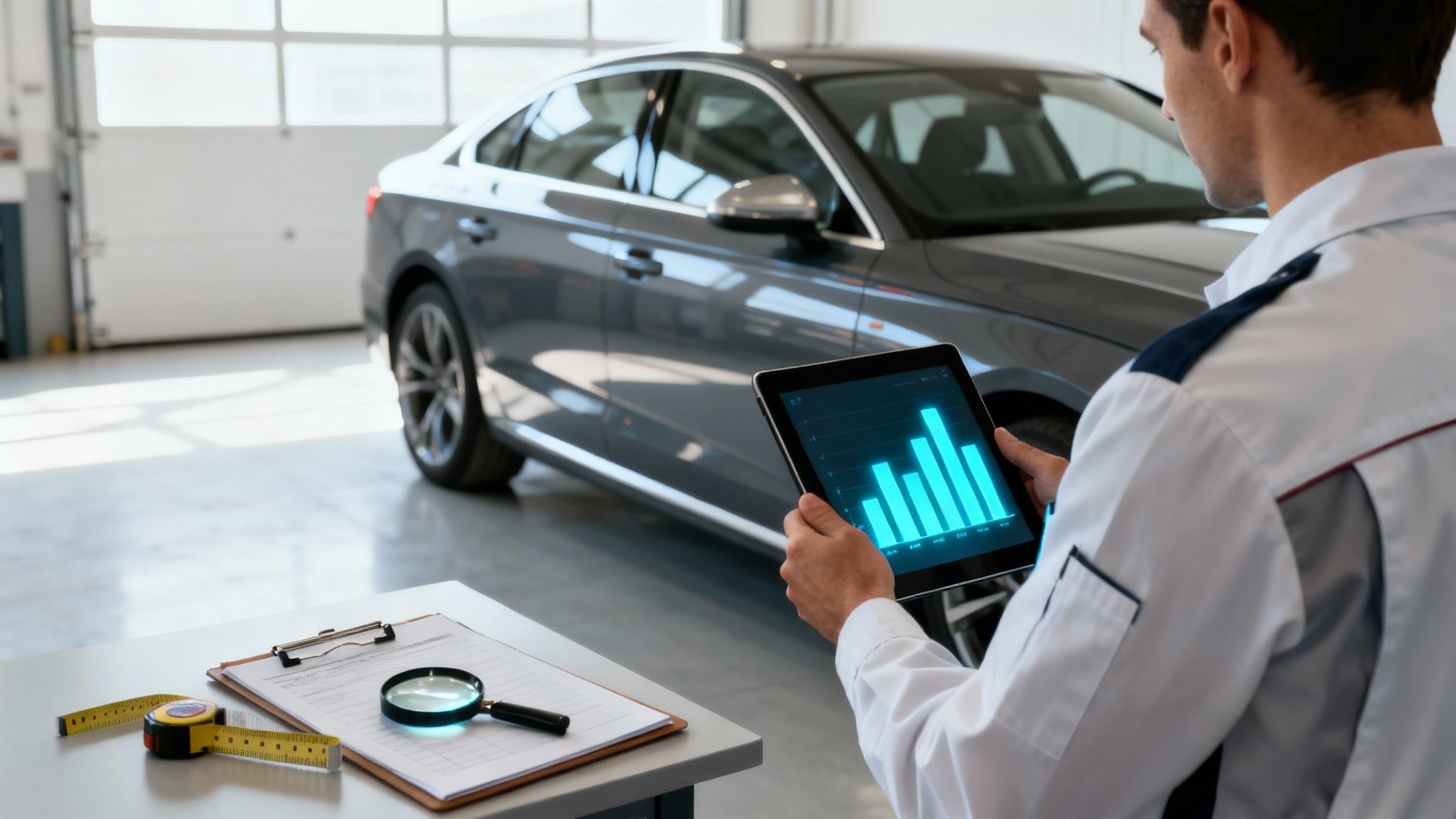
First things first, the appraiser conducts a thorough inspection. This isn't just a quick walk-around. They'll meticulously document every detail of your vehicle’s pre-accident condition, from its specific features and trim level to any recent upgrades you've made. Have you kept detailed maintenance records? Replaced the tires recently? Those are the kinds of things an appraiser looks for—details that an automated system would completely miss.
The Research: Finding Real-World Evidence
After the hands-on review, the real detective work begins. Your appraiser dives deep into market research, hunting for real, comparable vehicles right in your local area, whether that's Portland, Seattle, or a smaller town. They scour listings for cars that have recently sold or are currently for sale to get a true pulse on the market. This step is absolutely critical because it grounds the final value in today's local economy, not in some outdated national average.
The appraisal process can branch out depending on your specific needs, whether it's for a total loss, diminished value, or a simple fair market valuation.
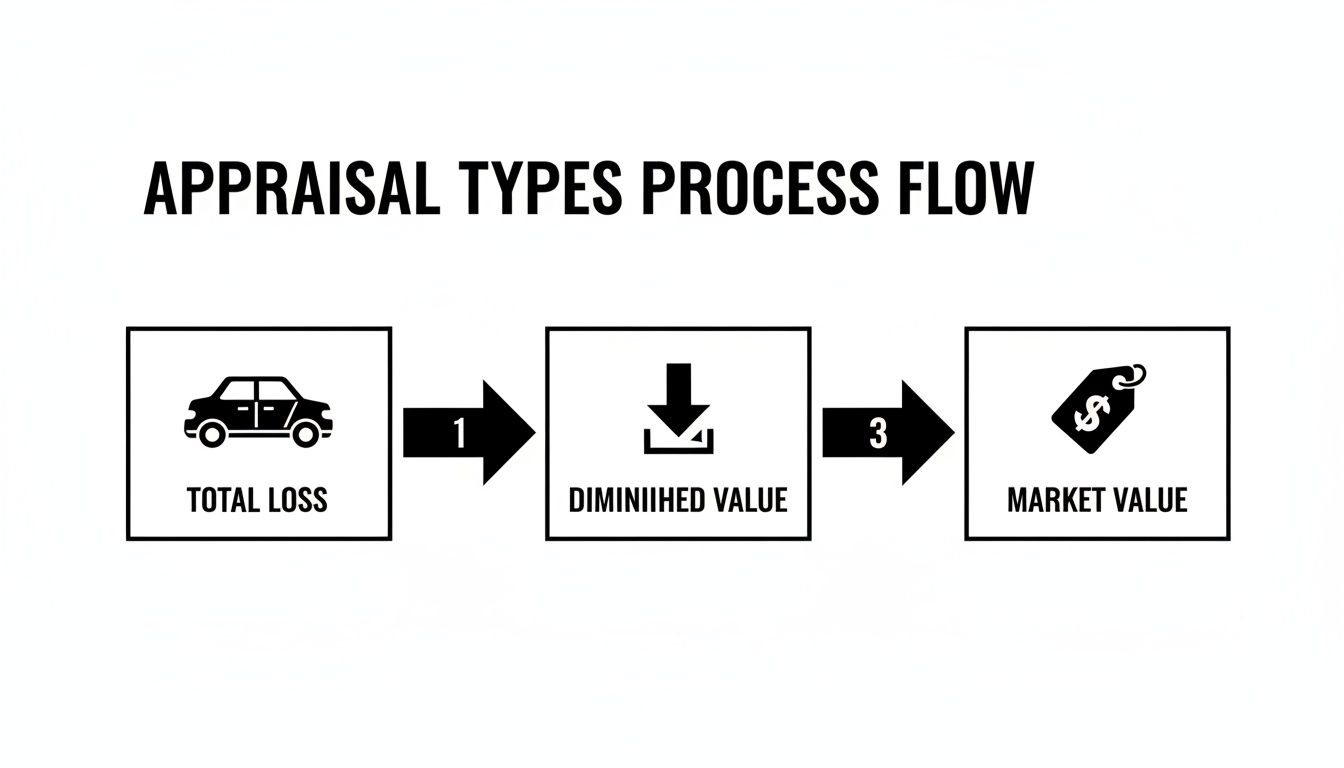
While the goal might change, the core of the process remains the same: it's all about gathering undeniable evidence to support your car's true value.
Putting It All Together: The Final Report
With all the evidence collected, the appraiser compiles everything into a comprehensive, legally sound report. This isn't just a single page with a number on it. It’s a detailed document that clearly lays out the why behind the value, citing the specific comparable vehicles and all the data points used in the analysis.
The final appraisal report is more than a number—it’s an evidence-backed argument. It’s the tool that shifts negotiation power back to you by replacing the insurer’s opinion with verifiable facts.
To give you a clearer picture, the appraisal process generally follows these key stages.
Key Stages of an Independent Auto Appraisal
| Stage | What Happens | Your Role |
|---|---|---|
| Initial Contact | You hire an appraiser and invoke the Appraisal Clause in your policy. | Provide your policy info, claim number, and the insurer's initial offer. |
| Inspection | The appraiser performs a detailed physical inspection of your vehicle. | Make the vehicle accessible and provide any maintenance or upgrade records. |
| Market Research | Your appraiser finds comparable vehicles in your local market. | Mostly hands-off for you; the appraiser does the heavy lifting here. |
| Report Creation | The appraiser compiles all findings into a detailed valuation report. | Review the report and ask your appraiser any questions you may have. |
| Submission | The final report is submitted to the insurance company and their appraiser. | Stay in communication with your appraiser for updates on the negotiation. |
This meticulous, human-driven process is what makes all the difference in getting an accurate valuation. Independent appraisals for total loss and diminished value claims often uncover significant gaps between what an insurer offers and what a vehicle is truly worth. The investment in a professional appraisal is often a small price to pay for a much larger, fairer settlement. You can get a better sense of what to expect by reviewing our guide on auto appraisal costs.
Once completed, this final report is sent to the insurance company, serving as the factual foundation for negotiating the settlement you deserve.
Using an Appraisal to Strengthen Your Negotiation
An independent appraisal isn't just a piece of paper—it's the strongest tool you have when negotiating with an insurance company. When you present a certified report, the entire dynamic of the conversation changes. You're no longer just someone disagreeing with a low offer; you're presenting a case built on undeniable, fact-based evidence of what your vehicle is actually worth.
The first step is formally invoking your policy's Appraisal Clause. This isn't a friendly suggestion; it's a contractual right you have that legally requires your insurer to participate in a formal dispute resolution process. They can't just ignore you anymore—they have to come to the table.
From Opinion to Objective Fact
Without an appraisal, you're stuck in a "he said, she said" argument. It's your opinion versus the adjuster's, and frankly, they have a whole system backing them up that's designed to pay out as little as possible. An independent appraisal completely flips that script.
The appraiser's detailed report directly challenges the insurer's lowball number by replacing their computer-generated value with one based on the real, local market. For drivers here in Oregon and Washington, this is a game-changer. A good appraiser digs up actual comparable vehicles for sale right in your area, proving what a car just like yours was selling for moments before the accident.
An independent appraisal forces the insurance company to justify its low number against a mountain of credible evidence. The burden of proof shifts from you to them, compelling them to negotiate in good faith.
This evidence-backed approach gives you the confidence—and the legal standing—to flat-out reject an unfair offer and demand the full settlement you're actually owed.
The Power of an Expert on Your Side
Think of your appraiser as your expert witness. They are literally building a case for your car, meticulously documenting every feature, upgrade, and detail about its condition that adds to its value. Their final report becomes the counter-argument to the insurer's low valuation, and it's a powerful one.
This holds true whether you're fighting a total loss claim or just preparing for a future sale. For instance, when buying a used car, having a professional appraisal in hand gives you incredible leverage by establishing a fair, defensible price from the get-go.
When you bring an appraisal to the negotiating table, you're armed with:
- Verifiable Data: Real-world examples of similar vehicles for sale.
- Expert Analysis: A professional breakdown of your car's specific condition and features.
- Legal Standing: The power of the invoked Appraisal Clause in your policy.
At the end of the day, this whole process is about making sure you are made whole after a loss. To get a deeper look at how this works with your insurance company, check out our guide on auto insurance appraisals. With a certified professional in your corner, you stop being just another claimant and become a well-prepared negotiator ready to get the settlement you deserve.
How to Find a Qualified Car Appraiser
The success of your insurance claim doesn't just ride on getting an appraisal—it hinges on finding the right appraiser. This person is your advocate, the expert in your corner, so choosing a qualified, independent professional is one of the most critical steps in recovering the money you're actually owed.
Let's be clear: not all appraisers are the same. You need someone who is completely independent and has zero ties to any insurance company. Their only job is to provide an accurate, unbiased valuation of your vehicle. This ensures their report is based on hard evidence and real-world market facts, not a desire to protect an insurer’s bottom line.
Core Qualifications to Look For
When you start vetting potential appraisers, there are a few non-negotiable credentials and experiences you should be looking for. Think of these as the foundation that ensures your claim is built on solid ground.
First, look for key industry certifications. These aren't just fancy acronyms; they signal a deep, proven understanding of how vehicles are built, repaired, and valued.
- ASE (Automotive Service Excellence): This is the gold standard. An ASE certification means the appraiser has a strong background in automotive mechanics and repair.
- I-CAR (Inter-Industry Conference on Auto Collision Repair): This one is huge. An I-CAR certification indicates advanced, up-to-date knowledge of modern collision repair standards and techniques.
A proven track record is just as important as any piece of paper. Don't be shy—ask for examples of past cases where they successfully challenged low-ball insurance offers. An experienced appraiser should have no problem talking about their history of helping clients in situations just like yours.
Questions to Ask a Potential Appraiser
Before you hire anyone, you need to get them on the phone for a quick interview. Asking a few sharp, direct questions about their process and experience will tell you everything you need to know about their professionalism and if they're the right fit for your case. Knowing what to ask can help you find a great independent auto appraiser near you.
Here's a quick checklist of must-ask questions:
- What is your methodology for determining vehicle value? You want to hear them talk about using local market data and real, comparable vehicles—not just plugging numbers into a generic database.
- Do you have experience with my specific type of vehicle? This is non-negotiable for classic, custom, or luxury cars that require a specialist's eye.
- How do you handle disputes with the insurance company's appraiser? A confident, seasoned appraiser will have a clear, established process for negotiation and umpire resolution. They won't be intimidated.
- Are you familiar with Oregon and Washington state-specific regulations? Local market expertise is absolutely vital for an accurate appraisal in the Pacific Northwest.
Key Takeaway: The right appraiser is more than just a numbers person; they're a strategic partner in your claim. Their credentials, hands-on experience, and transparent process are your best assets in securing a truly fair settlement.
Your Top Questions About Car Appraisals, Answered
Even with a good grasp of the process, it's normal to have some real-world questions about what a car appraisal means for your specific situation. Dealing with an insurance claim can be a real headache, but getting solid answers can give you the confidence you need to see it through.
Let's dig into the most common questions we hear from drivers after a wreck. We'll cover everything from cost and timing to what to do when the insurance company pushes back.
How Much Does a Car Appraisal Cost, and Is It Worth It?
It's best to think of an independent appraisal as an investment, not just another bill. While the exact cost can vary depending on how complex your situation is, you can generally expect to pay a few hundred dollars for a solid total loss or diminished value report.
I know what you're thinking—another expense right after an accident? But you have to weigh that cost against what's at stake. The insurance company's first offer is often thousands of dollars less than what your car was actually worth.
Here's the bottom line: A professional, evidence-backed appraisal report almost always results in a higher settlement that more than covers the fee. Most of our clients walk away with significantly more money than they would have otherwise, making it a very smart financial move.
It's about making a calculated decision to get the full amount you're owed, instead of leaving your own money on the table.
How Long Does the Appraisal Process Take?
We aim for a process that's both thorough and efficient. From start to finish, you can typically expect the entire appraisal to take between 7 and 14 business days. This window gives us the time to do everything right.
This timeframe covers all the critical steps:
- Performing a detailed, hands-on inspection of the vehicle.
- Digging into local market data to find true comparable vehicles.
- Putting together the final, comprehensive report that tells the whole story.
The biggest thing that can slow us down is simply getting access to the car, especially if it's locked away at a tow yard or a swamped body shop. But as professional appraisers, we're used to navigating those logistics to keep things moving. The goal is always to get an accurate, undeniable report into your hands as quickly as possible so you can get your claim moving again.
Can I Get an Appraisal if My Car Has a Loan or Is Leased?
Absolutely. Who holds the title has no impact on your right to an independent appraisal. In fact, if you have a loan or lease, getting a fair valuation is even more important.
If you have a loan, a fair settlement is what ensures you can pay it off. A lowball insurance offer could leave you "upside down," meaning you owe the bank more than the car was worth. You’d be stuck making payments on a car you can't even drive anymore.
For leased vehicles, a proper settlement gives you the funds to settle your contract with the leasing company. The appraisal is laser-focused on one thing: the vehicle’s Actual Cash Value (ACV). This number is the key to resolving your financial obligations cleanly after a total loss.
What if the Insurance Company Rejects My Appraisal?
This is exactly why the Appraisal Clause exists in your auto insurance policy. It's a standard part of most policies, and it's your most powerful tool for resolving a dispute.
When you and your insurer are at a stalemate over your vehicle's value, either of you can invoke this clause. Here’s how that works:
- You hire your own independent appraiser.
- The insurance company hires theirs.
- The two appraisers then negotiate to try and agree on a value.
- If they can't reach an agreement, they bring in a neutral, third-party "umpire" who reviews the facts and makes a final, binding decision.
By invoking the Appraisal Clause, you legally require the insurance company to participate in this process. They can't just throw your report in the trash. It forces the issue to be settled based on evidence and facts, not just their initial low offer.
If you're dealing with a lowball total loss offer or need to prove your car’s diminished value, don't let the insurance company have the final say. Total Loss Northwest provides certified auto appraisals for drivers across Oregon and Washington to ensure you get the fair settlement you deserve. Contact us today to put an expert in your corner.