You walk up to your car, hit the fob, hear the chirp, and nothing moves. Or the key turns halfway and stops like it hit concrete. Most drivers treat that as a nuisance problem until it turns into a lockout, a theft risk, or an insurance fight after a collision.
A jammed car door lock sits at the intersection of security, repair judgment, and vehicle value. Sometimes the fix is simple. Dirt in the cylinder, light corrosion, a sticky latch, or a tired actuator can all mimic a major failure. Other times, especially after a crash, the lock is the warning light for deeper door or frame misalignment.
That distinction matters. The right first step can save the mechanism. The wrong one can turn a small repair into a bent linkage, broken trim clips, or a damaged door panel. If the vehicle has accident damage, poor documentation can also cost you money when the insurer values the car.
Why Your Car Door Lock Is Jammed
You notice it in a hurry. One door refuses to open in the grocery lot, or the key stops halfway like something inside the cylinder shifted. In the shop, those small clues usually point to one of three causes. Contamination, a failed lock mechanism, or damage that changed the door's alignment.

The three failure types
The first category is physical obstruction. Dirt, ice, rust, old grease, or a damaged shutter can stop the key from going in fully or make the cylinder feel rough. This is common on older vehicles, cars parked outside, and doors that rarely get used.
The second is mechanical failure inside the door. Latches wear. Plastic clips break. Rods pop loose. Cables stretch. In that case, the handle may move normally but the latch never releases, or the lock knob may travel only partway and spring back.
The third is electrical failure. Modern doors rely on actuators, switches, wiring, and body control modules. If the fob works on the other doors but one door stays dead, that usually points to a door-specific actuator or wiring problem, not a bad key.
After a collision, there is a fourth wrinkle many DIY articles miss. The lock may not be the actual failure point. A light side hit, a hard slam after repairs, or subtle hinge movement can shift the door enough that the latch and striker stop lining up cleanly. I see this often in post-accident inspections. Owners focus on the stuck lock, but the appraisal issue is the underlying door fit, repair quality, and whether the damage was fully addressed.
Shop rule: If the lock problem started after impact, treat the door, latch, and striker alignment as part of the diagnosis.
That matters for more than convenience. A jammed lock can leave the vehicle unable to secure properly, and it can also become evidence that the car still has unresolved accident damage. On a diminished value claim, a sticking or non-functioning door lock raises questions about structural alignment, door replacement quality, and incomplete repairs. On a total loss file, it helps establish pre-loss or collision-related condition if you document it correctly.
Early clues that narrow it down
A few symptoms can save time and prevent the wrong repair.
| Symptom | Most likely direction |
|---|---|
| Key won't insert or turn cleanly | Debris, corrosion, cylinder issue |
| Fob works on other doors only | Actuator, wiring, switch, or door-specific issue |
| Handle moves but door stays shut | Latch, cable, rod, or internal clip problem |
| Problem started after a crash or hard door hit | Door shell, latch alignment, or structural shift |
If you're sorting out coverage while the vehicle is still drivable, review what insurance usually covers for theft, weather, and other non-collision losses. A jammed lock caused by wear is handled differently from one tied to attempted theft, storm intrusion, or collision damage.
Immediate Fixes for a Stuck Car Lock
You come back from a body shop estimate, hit the fob, and one door still won't secure or release correctly. That is more than a nuisance. On an appraisal file, it can point to lingering door damage, poor repair work, or missed alignment issues after an accident.

What to try before removing a panel
Start with simple checks that do not add damage. The job here is to narrow the problem, not force a result.
Use the physical key if the vehicle still has one. A weak fob battery, a failed actuator, or a door-specific wiring fault can send you in the wrong direction. If the key works normally in the trunk or another door but binds at the problem door, focus on that door's cylinder or latch area.
Check the rest of the vehicle next. Try every door, the hatch, and the fuel door release if it shares central locking behavior. A single bad door usually means a local fault. Several doors acting up points more toward battery voltage, a fuse, the body control system, or water intrusion.
Then put a light on the obvious spots. Five seconds of inspection can save an hour of teardown.
- Lock cylinder opening. Look for grit, corrosion, or a damaged shutter.
- Latch area on the door edge. Dirt, sticky residue, or paint buildup after repair can keep the latch from moving freely.
- Weatherstrip. A folded seal can make the door drag and feel like the lock is jammed.
- Door skin and jamb. Fresh scuffs, uneven gaps, or striker marks matter, especially if the issue started after a collision.
That last point matters for value. A door that suddenly sticks after impact is often read by adjusters and appraisers as a repair-quality or alignment problem, not ordinary wear.
Use the right lubricant
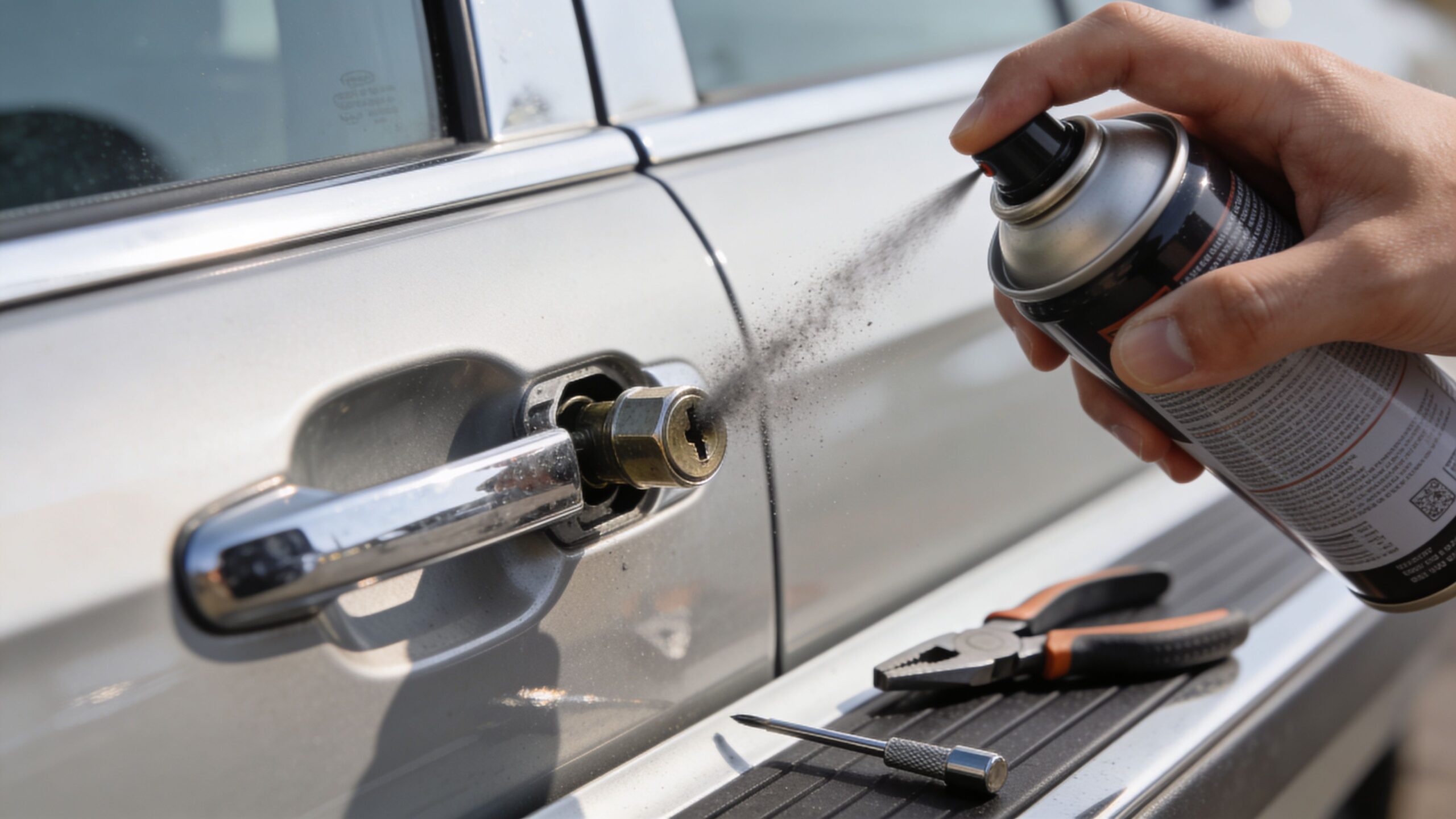
If the cylinder or latch feels dry or gritty, use a dry graphite lubricant in the key cylinder and a lock-safe product on the latch where appropriate. Apply a small amount. Work the key or latch gently. If resistance gets worse, stop before you twist a key head off or bend an internal part.
Avoid treating a penetrating spray as the final fix. It may free things up for the moment, but it also masks the underlying problem if the latch is dragging because the door shifted in the opening.
A few low-risk checks can help:
- Relieve latch pressure. Press inward on the door near the striker while gently operating the handle or lock control.
- Test inside and outside operation separately. One working and the other failing often points to a cable, rod, or clip issue.
- Warm the area in freezing weather. Mild heat can clear light ice around the seal or latch. Skip boiling water. It can crack trim, shock the paint, and leave more ice behind.
- Listen closely. A faint click from inside the door suggests the electrical side may be trying to work even if the mechanism is not moving freely.
A lock that frees up only with repeated force is still a problem. On a post-accident vehicle, that symptom is worth documenting before anyone adjusts the striker or tears the door apart.
If you want to see a basic visual walkthrough before digging deeper, this video is a useful reference point:
What not to do
Do not pry the frame, slam the door harder, or keep forcing a half-turned key. Those mistakes turn a sticky lock into a bent linkage, cracked handle, damaged weatherstrip, or chipped paint around the latch.
If the vehicle has recent collision history, do not let anyone "fix" the symptom by just moving the striker without photos. That can erase evidence of poor panel fit or door misalignment, which matters if you're building a diminished value claim or questioning the quality of a prior repair.
Diagnosing and Fixing the Lock Mechanism
Once the easy fixes fail, you need a controlled inspection. That means trim tools, patience, and a clear distinction between mechanical linkage and electrical actuation. Guessing gets expensive fast.

Start with the actuator test
A lot of modern lock complaints come down to the actuator. According to the T1A Auto diagnostic methodology for stuck door locks, a door lock actuator fails in approximately 70% of electronic lock jamming cases. The same guidance says you can diagnose it with 95% accuracy by listening. No sound when you press lock or release points to a dead actuator. Grinding or clicking suggests worn internal gears. It also notes that verifying 12V power with a multimeter before replacement prevents misdiagnosis.
That sequence is the one worth following:
- Auditory test. Toggle the lock while standing at the bad door.
- Power check. Confirm the actuator is receiving command voltage.
- Only then replace parts. Don't throw an actuator at a wiring problem.
Removing the panel without making a second repair
Door panels break because people rush them. Use a trim tool, not a flat pry bar. Remove hidden screws first, usually behind a handle bezel, switch panel, or trim cap. Lift the panel in the direction the manufacturer designed, then disconnect switches carefully.
Shop habit: Broken clips create rattles, poor panel fit, and unhappy owners. Slow removal is part of the repair.
Once you're inside, inspect these areas first:
- Linkage rods and plastic clips. A disconnected rod can leave the inside or outside handle dead even when the latch itself is fine.
- Latch assembly. Check for sticky movement, corrosion, or obvious impact distortion.
- Cables. Some doors use cables instead of rods, and stretched or frayed cables won't fully release the latch.
- Wiring at the door jamb. Repeated opening and closing can fatigue wires inside the rubber boot.
Mechanical versus electrical signs
A mechanical problem usually shows itself through feel. The handle is loose, the latch doesn't spring back, or the manual lock feels rough and inconsistent. An electrical problem usually announces itself through silence, erratic central locking, or a lock pin that twitches but doesn't complete travel.
A basic bench-level workflow looks like this:
| Check | What it tells you |
|---|---|
| Handle moves with no latch release | Rod, cable, clip, or latch fault |
| No sound from door during lock command | Likely dead actuator or no power feed |
| Clicking or grinding in door | Actuator gears may be worn |
| Voltage present but no actuator movement | Replace actuator |
| No voltage at actuator | Chase wiring, switch, fuse, or control issue |
If you replace the actuator, disconnect the battery first and keep track of fasteners and rod positions. Reusing damaged connectors is a common way to create intermittent lock behavior after the repair. If the door took a hit, inspect alignment before blaming the actuator alone. A shifted door can load the latch and make a healthy motor look weak.
Why newer electronic handles deserve caution
Modern flush electronic handles add another failure point. Consumer Reports, discussing Bloomberg's reporting, notes 140 reported cases of occupants trapped in Tesla vehicles due to electronic door handle failures, including 15 deaths in crashes where doors wouldn't open. It also notes a Consumer Reports petition signed by over 35,000 people around safer manual fail-safes in these designs, covered in its article on escaping a car when the electronic release fails.
That doesn't mean every electronic handle is dangerous. It does mean you shouldn't treat a no-open condition on a modern EV like an old sticky cylinder. Some systems depend on power, hidden manual releases, and precise calibration. If you're working on one of those vehicles, caution beats improvisation.
Knowing When to Call a Locksmith or Mechanic
Some lock problems are reasonable DIY jobs. Others are where experienced people stop, pick up the phone, and save the door panel from abuse. The decision comes down to access, tools, and whether the failure belongs to the key and cylinder side or the door system side.

Locksmith versus mechanic
A locksmith handles entry, key issues, and physical lock cylinder work. A mechanic handles actuators, wiring, latch assemblies, door alignment, and collision-related fit problems.
If the lock failed after an accident, call a mechanic or collision repair professional before a locksmith. If the problem is a broken key, damaged cylinder, or complete lockout with no spare, the locksmith is the faster first call.
DIY versus professional repair for a jammed door lock
| Factor | DIY Repair | Professional Service (Locksmith/Mechanic) |
|---|---|---|
| Best use case | Light debris, minor sticking, basic actuator diagnosis | Lockout, key/cylinder failure, wiring faults, post-accident issues |
| Tools needed | Graphite lubricant, trim tools, screwdriver set, multimeter | Brand-specific tools, scan tools, lock tools, repair data |
| Risk level | Moderate if panel removal is required | Lower for the owner, higher cost but more precise |
| Time | Fast for simple checks, longer if diagnosis stalls | Usually faster once scheduled |
| Good stopping point | If the panel won't release cleanly or power tests are unclear | When exact failure source is known and repair can proceed |
Red flags that mean stop
- Airbag proximity. Many door panels sit near side-impact components. Random probing isn't worth it.
- Post-collision lock failure. A jammed lock after impact often points to alignment or structural issues, not just a bad part.
- Smart handle or keyless system issues. These systems can involve software logic, calibration, and hidden manual overrides.
- Multiple electrical symptoms. If windows, mirrors, alarms, or warning lights are acting up too, the lock isn't the only problem.
For rough budgeting, the verified repair figures are useful. Mechanical lock repairs can run $55 to $137 USD according to the data tied to the unlocked-vehicle theft discussion. Electronic lock repairs tied to actuator-type failures can run $110 to $220 USD, as noted in the verified data associated with the electronic-handle safety discussion already covered above. Those ranges help frame the choice. They don't replace a proper diagnosis.
If you're deciding whether to spend on diagnosis, compare it to the cost of a broken panel, bent linkage, or a wrong part you can't return.
Documenting a Jammed Lock for Insurance and Appraisal
This is the part most repair guides miss. After an accident, a jammed car door lock isn't just a repair item. It's evidence. It can signal door shell distortion, latch misalignment, hinge movement, or deeper structural shift that affects what the vehicle is worth.
The verified appraisal angle matters here. This explanation of post-accident lock damage and value loss states that post-accident jammed door locks can be a hidden sign of structural misalignment that reduces a vehicle's resale value by 10-20%. It also notes that the issue is often overlooked in standard insurance estimates and can support a Diminished Value claim or push a vehicle toward the total loss threshold.
What to document right away
Don't just tell the insurer the lock is jammed. Show it.
- Take wide photos of the whole side of the vehicle. Get the door gaps, fender relationship, rocker area, and latch side.
- Take close-ups of the latch, striker, lock area, and door edges. Look for scrape marks, fresh paint disturbance, or shifted weather seals.
- Record a short video. Show the key, fob, inside handle, outside handle, and lock pin behavior in one continuous clip.
- Write down when the problem started. If the lock worked before the loss and failed after impact, say that plainly.
- Save the estimate and repair notes. If a shop mentions alignment, latch load, hinge movement, or door fit, keep that language.
What adjusters often miss
Standard estimates tend to capture visible damage first. A sticky or non-functioning lock can get reduced to a small line item, especially if the door opens eventually. That's where owners lose ground. The lock problem may be the symptom that proves the door wasn't restored to proper fit, or that the damage reaches farther than the sheet metal suggests.
A clean file helps an independent appraiser make the argument. Include photos before teardown if possible, videos after repair if the problem persists, and notes about any difference between inside and outside handle operation.
A lock failure that appeared only after a collision is not something to shrug off as ordinary wear.
If you're preparing that file, it helps to understand what an appraisal for a car involves. The stronger your documentation, the easier it is to show that the lock issue isn't cosmetic inconvenience. It's a value and condition issue.
Securing Your Vehicle and Protecting Its Value
A jammed lock creates two jobs at once. You need to secure the car now, and you need to protect the vehicle's value if the problem traces back to an accident. The repair side starts with careful diagnosis and the right lubricant, not force. The claim side starts with photos, video, and good notes before the evidence disappears.
For prevention, a practical maintenance routine helps. This guide to proactive car care for Plano drivers is a solid reminder that small checks often prevent larger failures. If a crash caused the issue, learn how automobile diminished value works before you accept a quick settlement.
If your insurer is downplaying post-accident lock damage, or you're being lowballed on a diminished value or total loss claim, Total Loss Northwest can help. They specialize in independent auto appraisals for Oregon and Washington owners and support diminished value cases in all 50 states. When a jammed lock points to more than a simple repair, a proper appraisal can put real market value back into the conversation.