You open the insurance valuation and your stomach drops.
The carrier has treated your collector car like an old used car with a VIN, a mileage figure, and a generic condition bucket. It doesn't see the factory-correct drivetrain, the original trim that took years to source, the documented restoration, or the fact that buyers in this market care immensely about originality and workmanship. In a total loss or diminished value claim, that gap is where owners lose money.
A careful collector car review helps close it. Not a casual walk-around. A defensible review built to survive scrutiny from an adjuster, an appraiser, or the other side's valuation software. That means facts first, condition second, market support last. When those pieces line up, your position gets harder to dismiss.
Your Collector Car Deserves More Than a Standard Valuation
Most owners only realize how weak standard valuation methods are after a claim. The offer arrives, the description is vague, and the number doesn't reflect the car they owned before the loss. That frustration is reasonable.
Collector vehicles sit in a market that is far too large and active to be brushed aside as a fringe exception. Hagerty estimates there are about 43 million collector vehicles in the United States, representing roughly 16% of the nation's 275 million registered vehicles, with a combined insurable value of about $1 trillion (Hagerty collector market data). If a vehicle class carries that kind of value, it deserves more than a canned depreciation formula.
Why standard tools miss the point
A collector car's value often turns on details that mass-market systems flatten or ignore:
- Originality matters: A factory-correct engine, trim package, or interior can change how buyers respond.
- Condition isn't generic: Fresh paint alone doesn't make a car top-tier if panel fit, underbody quality, or trim authenticity are poor.
- Documentation changes confidence: Buyers and insurers place more weight on a car when receipts, photos, and historical records support the story.
- Enthusiast demand shifts fast: Some cars become easier to defend with current market evidence, others require tighter comparables and better explanation.
That's why a strong preliminary review is worth doing even if you already expect to hire help. It organizes the facts before assumptions take over.
A weak claim file invites a low valuation. A documented file forces a serious response.
When an owner brings order to the evidence, the negotiation changes. Instead of arguing in general terms, you can point to the exact build, the exact condition, the exact documentation, and the exact reasons a generic valuation doesn't fit. If you need formal support later, a specialist in classic auto appraisals can turn that groundwork into a report built for a dispute.
What a defensible review actually does
A personal condition report says, “This car is nice.” A defensible collector car review says, “Here is what this car is, here is its documented condition, and here is why the proposed value does not match the market for this specific example.”
That distinction matters most in two situations:
| Claim type | What you must support |
|---|---|
| Total loss | The pre-loss replacement value of your specific vehicle |
| Diminished value | Why a repaired collector car is worth less than an undamaged comparable car |
If you approach the review that way from the start, you're no longer reacting to the insurer's file. You're building your own.
Preparation Before You Inspect
Treat the prep stage like setting up a command center. The inspection itself goes better when the paperwork is already sorted and the car's identity is anchored before anyone starts talking about condition.
Professional appraisers don't begin by circling flaws in the paint. They start with baseline identity. The accepted workflow is to verify the car's VIN and build data, reconcile factory equipment against what's on the car now, and only then inspect condition and compare it to the market (JMK Classic Cars on appraiser workflow). That order matters because it prevents condition from distorting the more basic question of what the car is.

Gather the documents that establish identity
Start with the records that tell you what left the factory.
- VIN and trim tag photos: Capture them clearly and compare them to title records and known model decoding references.
- Build sheet or factory documentation: If you have it, this is the anchor. Engine, transmission, trim, colors, and options should be listed out.
- Window sticker or dealer invoice: Useful for option verification and confirming how the car was equipped when new.
- Ownership history: Old registrations, prior titles, and sale documents help support continuity and provenance.
If the car doesn't have every document, don't panic. Missing paperwork doesn't kill a claim. It just means you need stronger physical documentation and more careful market support.
Build the provenance file
Collectors and insurers don't value undocumented stories the same way they value documented history. Put these records in date order:
- Service records that show care and usage over time
- Restoration invoices identifying shops, parts, and scope of work
- Photo albums from restoration or preservation work
- Show sheets or judging records if they exist
- Parts receipts for rare or factory-correct components
A folder with scattered receipts is better than nothing. A timeline with labels is much better. It lets a third party follow the car's history without guessing.
Practical rule: If a record explains originality, quality, or cost, include it.
Assemble a simple inspection kit
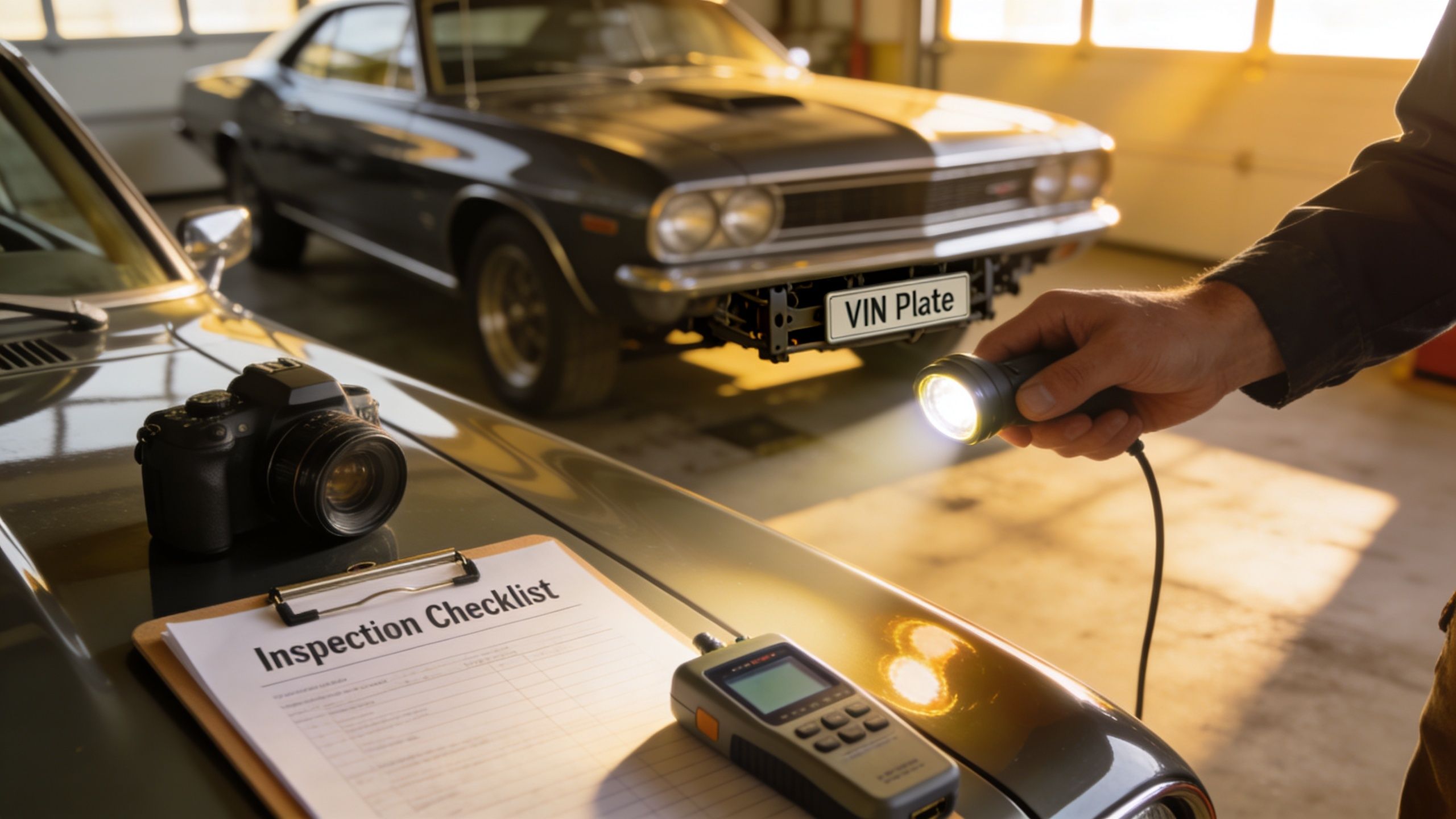
You don't need a full shop to do a useful preliminary collector car review. A few basic tools will reveal a lot.
| Tool | Why it helps |
|---|---|
| Bright flashlight | Shows paint issues, corrosion, leaks, and trim defects |
| Inspection mirror | Helps view hidden stampings, underbody corners, and hard-to-see areas |
| Smartphone or camera | Your evidence tool. Use it deliberately, not casually |
| Notebook or tablet | Record findings in real time before memory cleans them up |
| Magnet with a soft cloth barrier | Can help identify likely filler areas on steel-bodied cars |
| Disposable gloves | Useful when checking underhood and undercarriage areas |
If you own a paint depth gauge and know how to interpret readings, use it. If you don't, don't fake precision. Misread tool data can weaken your credibility.
Check the setting before you start
Inspect in good light. Indoor overhead lighting can hide defects and flatten contours. Early morning or late afternoon outdoor light often reveals waviness, paint mismatch, and panel issues better than a dim garage.
Also, inspect the car clean and dry. Dirt hides problems. Water disguises them.
The Comprehensive Physical Inspection Checklist
A useful collector car review moves in a consistent pattern. Start outside. Then go underneath. Then underhood. Then inside. That keeps you from bouncing around and missing evidence.

Start with the condition scale
The collector market widely uses a 1-to-6 condition scale because vague labels like “good” or “fair” create inconsistent valuations. In that system, a #1 car is a world-class show car, a #3 is a very good driver with some wear, and a #5 may be complete but non-running (Old Cars Weekly on the 1 to 6 rating system).
Use that language in your notes. It gives your review structure and makes your findings easier to compare.
| Rating | Condition Label | Description |
|---|---|---|
| #1 | Concours | World-class show condition with exceptional presentation and finish |
| #2 | Excellent | High-quality vehicle with minor signs of use or age |
| #3 | Very Good | Fully usable, attractive driver with visible wear and age |
| #4 | Good | Presentable car with notable cosmetic or mechanical needs |
| #5 | Restorable | Complete or mostly complete car needing major work, often non-running |
| #6 | Parts car | Major deterioration, incomplete, or suitable mainly for parts/reference |
Body and paint
Body quality affects value far beyond cosmetics. On a collector car, bodywork often reveals hidden history.
Check these areas carefully:
- Panel fit: Look at door, hood, and trunk gaps. Uneven spacing can suggest previous damage, poor restoration work, or structural movement.
- Paint consistency: Stand at angles and look for shade changes, tape lines, dry spray, sanding marks, and overspray on trim or weatherstrips.
- Rust-prone areas: Lower fenders, rocker panels, wheel arches, windshield channels, and trunk floors deserve close attention.
- Trim and brightwork: Pitted chrome, incorrect fasteners, and mismatched trim pieces lower confidence fast.
- Glass and weatherstrips: Date-coded glass, correct logos, and intact seals can support originality.
A magnet test can help on steel-bodied cars, but use it carefully and respectfully. It's only a clue, not proof.
The question isn't “Does it shine?” The question is “What work was done, how well was it done, and can you prove it?”
Undercarriage and chassis
A glossy top side can distract owners from the part that often matters most in a claim dispute. The underside tells you whether the car was preserved, cosmetically freshened, or fully restored.
Look for:
- Frame or unibody integrity
- Corrosion, patching, or fresh undercoating
- Signs of collision repair
- Brake and fuel line condition
- Suspension wear and bushings
- Fluid leaks and seepage points
Fresh undercoating without photo documentation should raise questions, not confidence. It may be legitimate. It may also be hiding repairs, corrosion, or poor metalwork.
A moving visual can help you compare your process to a more systematic walk-around:
Drivetrain and mechanical presentation
You're not doing a full mechanical teardown. You are documenting what appears original, what appears changed, and what condition signals are visible.
Check for:
Engine identity and presentation
Casting numbers, stampings, decals, paint colors, hose routing, and fastener types all matter.Leaks and maintenance signs
A light film and an active leak are not the same thing. Note the difference.Modification quality
Modified cars can still carry strong value, but sloppy wiring, crude bracket work, and undocumented changes undermine that value.Start and run behavior
If the car starts, note cold-start behavior, smoke, idle quality, noises, and charging indications.
Interior and completeness
The interior often gets reduced to “clean” or “worn,” but serious buyers look much closer.
Review:
- Seat upholstery quality and pattern correctness
- Dash pad condition and cracks
- Carpet fit and edge finishing
- Headliner quality
- Gauge function and lens clarity
- Switchgear, radio, and heater controls
- Odors from mold, fuel, coolant, or prolonged storage
- Presence of loose, missing, or reproduction pieces
A complete but aged interior may support a better valuation than a freshly redone interior with incorrect materials. Authenticity often wins over cosmetic freshness.
Documenting Everything Like a Professional
Most claim files fail because the owner has opinions, not evidence. “The car was excellent.” “The restoration was high quality.” “The damage is obvious.” None of that carries much weight by itself.
Documentation changes the discussion because it turns observations into verifiable facts. A photo with no caption is just an image. A photo tied to location, date, angle, and explanation becomes evidence.
Build a disciplined photo set
Start broad, then narrow.
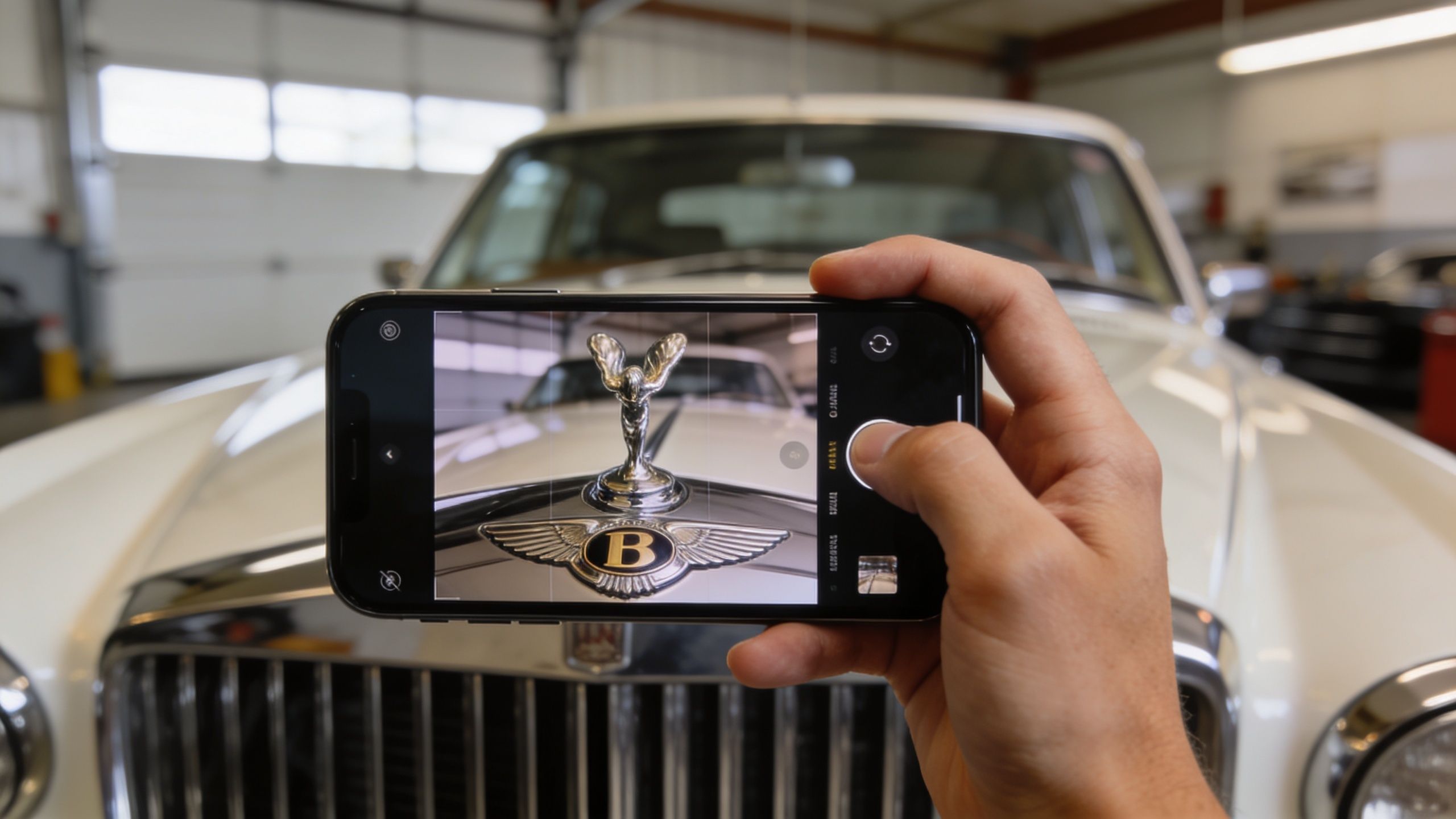
Take:
- Overall shots: Front, rear, each side, and four corner angles
- Panel-level shots: Each door, fender, quarter panel, hood, roof, and trunk
- Detail shots: VIN, tags, stampings, wheels, trim, glass markings, and notable factory features
- Defect shots: Chips, rust bubbles, cracks, repairs, scratches, upholstery wear, leaks
- Positive evidence shots: Restoration quality, original finishes, date-coded components, organized underhood presentation
For damage or flaws, use the ruler rule. Place a ruler or a common reference object near the issue so size can't be minimized later.
Write captions like an appraiser would
Each image should answer four questions:
| Element | Example |
|---|---|
| Where | Left rear quarter lower section |
| What | Paint blistering and bubbling at wheel lip |
| Severity | Localized but visible at standing height |
| Why it matters | Suggests corrosion beneath finish, affects condition grade |
This doesn't need legal language. It needs neutral language. Avoid emotional phrasing like “horrible” or “perfect.” Those words usually hurt more than help.
Field note: Document favorable features with the same care you use on defects. If originality helps value, prove originality.
Use video to capture what still photos miss
A short walk-around video adds context that still images can't always provide. Keep it slow and narrated. Mention the date, the vehicle identity, and what you're showing.
Useful clips include:
- Cold start and idle
- Slow walk-around in natural light
- Interior sweep with gauges and controls
- Undercarriage pass if safely accessible
- Audio of knocks, rattles, exhaust note, or accessory operation
If you're detailing the car before documenting it, surface preparation matters because harsh products or poor shop practices can create swirl marks, staining, or coating issues that later complicate condition discussions. Shops that work with specialty finishes often look for longer-lasting surface protection systems such as durable coatings for detailing studios, especially when they need repeatable results on high-end paint and trim.
Organize the file so someone else can follow it
Use folders with simple names:
- Identity records
- Historical documents
- Exterior photos
- Interior photos
- Undercarriage and drivetrain
- Damage or defect log
- Video files
- Comparable vehicle evidence
An adjuster, umpire, or independent appraiser should be able to open the folder and understand the car without calling you first. That's the standard to aim for.
Researching Value and Market Comparables
Once the car's identity and condition are documented, you can start asking the valuation question. Not “What are these cars worth?” but “What is this specific car reasonably supported at in the current market?”
That distinction matters because collector values move. Hagerty reported in 2025 that dealer asking prices fell 9% from their 2023 high, from $49,044 to $44,701, while online auctions were selling more than 50,000 collector vehicles per year, up 6% from the prior year (Hagerty 2025 market review). If asking prices and transaction channels are shifting, your comps need to be current and date-stamped.

What makes a strong comparable
A strong comp is close in the ways that matter most:
- Same year, make, and model
- Same body style
- Same or similar drivetrain
- Comparable originality or modification level
- Comparable condition grade
- Recent enough to reflect today's market
A weak comp is one that's merely related. Same brand isn't enough. Same body style without matching engine or trim isn't enough. A highly modified example usually won't support an original car, and an original survivor won't cleanly support a restomod.
Understand the source before trusting the number
Different market sources do different jobs.
| Source type | Best use | Main weakness |
|---|---|---|
| Completed auction sales | Good for verified public transactions | May reflect unusual buyer emotion or venue effects |
| Dealer listings | Helpful for replacement-cost context | Asking price is not the same as sold price |
| Private sale evidence | Useful when documented well | Harder to verify and standardize |
| Price guides | Good as broad context | Can lag fast-moving segments |
One caution matters more than most owners realize: pricing guides and appraisers alike warn against relying on auction data alone. Auctions are useful, but they do not represent the full market for most vehicles. If you're building a claim package, blend public sales, current listings, and condition-based reasoning.
Build a comp package, not a single-number argument
Three to five well-chosen comparables usually do more work than a stack of random listings. For each one, record:
- Year, make, model, and spec
- Sale type or listing type
- Condition observations
- Similarities to your car
- Important differences
- Adjustment notes
If your car has stronger documentation, a more original drivetrain, better trim correctness, or superior restoration evidence, say so plainly. If your car has weaknesses, acknowledge them. Credibility rises when your review reads like analysis instead of advocacy.
For owners trying to understand how market evidence fits into a formal classic valuation, this guide on how to value a classic car is a useful reference point.
Don't chase the highest number you can find. Find the numbers you can defend.
Building Your Case for the Insurance Company
By this point, you should have four things: identity records, condition findings, photographic proof, and market support. The last step is packaging them in a way an adjuster can use.
A messy claim file gives the insurer room to ignore what matters. A clean file narrows that room. The goal isn't to overwhelm with volume. It's to present a structured, supportable position that ties value to evidence.
Organize the report in a logical order
A practical report layout looks like this:
| Section | What it includes |
|---|---|
| Cover page | Owner, vehicle, VIN, claim number, date of loss, requested review purpose |
| Vehicle identity summary | Build data, drivetrain, options, originality notes |
| Condition summary | Overall grade with supporting observations |
| Photo log | Key images with captions and dates |
| Documentation file | Service history, restoration invoices, provenance records |
| Comparable market package | Best comps with comments and adjustments |
| Valuation conclusion | Your supported value position and why the carrier's figure falls short |
That order works because it answers the adjuster's questions in sequence. What is the car? What condition was it in? What proof supports that? What does the market say?
Frame a total loss claim differently from a diminished value claim
These two claim types overlap, but the argument is not identical.
For a total loss claim, the central question is replacement. What would it take, in the actual collector market, to replace this specific vehicle with one of similar identity, condition, and documentation?
For a diminished value claim, the central question is marketability after repair. Even when repair quality is competent, many collector buyers discount repaired examples because they prefer cars without accident history, repaired panels, refinishing, or structural stigma.
One factor deserves special attention here. Parts availability and specialized labor can materially affect post-repair perception. For many collector cars, parts scarcity, specialized labor needs, and restoration risk make repaired examples less attractive to buyers, which can strengthen a diminished value argument (Hemmings on restoration risk and undervalued collector cars).
Use calm language and specific claims
An adjuster is more likely to engage with a file that sounds professional than one that sounds angry. That doesn't mean soft. It means precise.
Good phrasing sounds like this:
- “The valuation does not reflect the vehicle's documented build specification.”
- “The comparable set appears to include vehicles with materially different condition or equipment.”
- “The report should account for documented restoration quality and originality evidence.”
- “The accident history affects collector-market desirability beyond a standard formulaic deduction.”
Poor phrasing usually sounds personal, exaggerated, or unsupported.
A firm report beats an outraged email.
Know when self-assessment has done its job
A careful owner can build a strong preliminary file. But some disputes need formal escalation, especially when the insurer leans on software that treats a specialty vehicle as interchangeable inventory.
That's where an independent appraisal process can matter. Services like what an appraisal for a car is and why you may need one become relevant when the disagreement is no longer about paperwork quality but about how value is being determined. In that setting, your self-review still matters. It gives the appraiser a cleaner starting point and often shortens the path to a defensible result.
A collector car review doesn't need to read like a museum catalog. It needs to prove the car's identity, record its condition accurately, and tie that evidence to the market in a way a third party can follow. Do that well, and you've already improved your position.
If you're facing a low total loss offer or a diminished value dispute on a classic, collector, or specialty vehicle, Total Loss Northwest provides independent appraisals focused on real market support rather than insurer valuation shortcuts. For owners in Oregon and Washington, and for diminished value support more broadly, that can be the next step when your preliminary collector car review shows the insurance number doesn't match the vehicle you owned.