You open the claim email, look at the total loss number, and your stomach drops. The vehicle you know, maintained, and maybe just put money into is suddenly worth far less on paper than it is in the current market. That reaction is justified. A low settlement offer doesn't mean you're out of options, and it doesn't mean the insurer's number is the correct one.
Most drivers don't realize their policy may already contain a built-in way to challenge that valuation. That tool is an independent insurance appraisal, and when it's used correctly, it changes the discussion from "this is what our software says" to "show the market evidence."
The Shocking Settlement Offer and Your Secret Weapon
A common pattern looks like this. Your car is declared a total loss after an accident that wasn't your fault. The insurer sends over a valuation report, often full of line items, condition adjustments, and comparables that don't feel comparable at all. Maybe the report ignores recent work. Maybe it uses vehicles from outside your actual market. Maybe it misses options, trim differences, or the fact that your car was cleaner than the average example.
At that moment, a lot of people assume they have only two choices. Accept the number or start a lawsuit. In many claims, there is a third option sitting inside the policy language: the appraisal clause.
That matters because vehicle valuation is not some fringe side hustle. The profession is large and established. The U.S. Bureau of Labor Statistics reports that in May 2024, the median annual wage for claims adjusters, examiners, and investigators was $76,790, and the median annual wage for auto damage insurance appraisers was $76,650, which shows this is formal valuation work inside a major professional field, not guesswork or hobby math (BLS occupational outlook for claims and appraisal roles).
Why this matters right after a low offer
An independent appraisal gives you a structured response. You're not just arguing. You're presenting a competing valuation through a recognized process.
Practical rule: If the insurer's offer feels low, don't start by venting. Start by collecting the valuation report, your policy, your photos, and your maintenance and upgrade records.
If you're still in the early negotiation stage, this is also where a basic claims strategy helps. A practical primer like Onsite Pro Restoration's negotiation guide can help you organize your communication before the dispute hardens.
The key point is simple. The first number is often just the insurer's opening position. It is not automatically the final value of your vehicle.
Why Insurer Valuations Fall Short
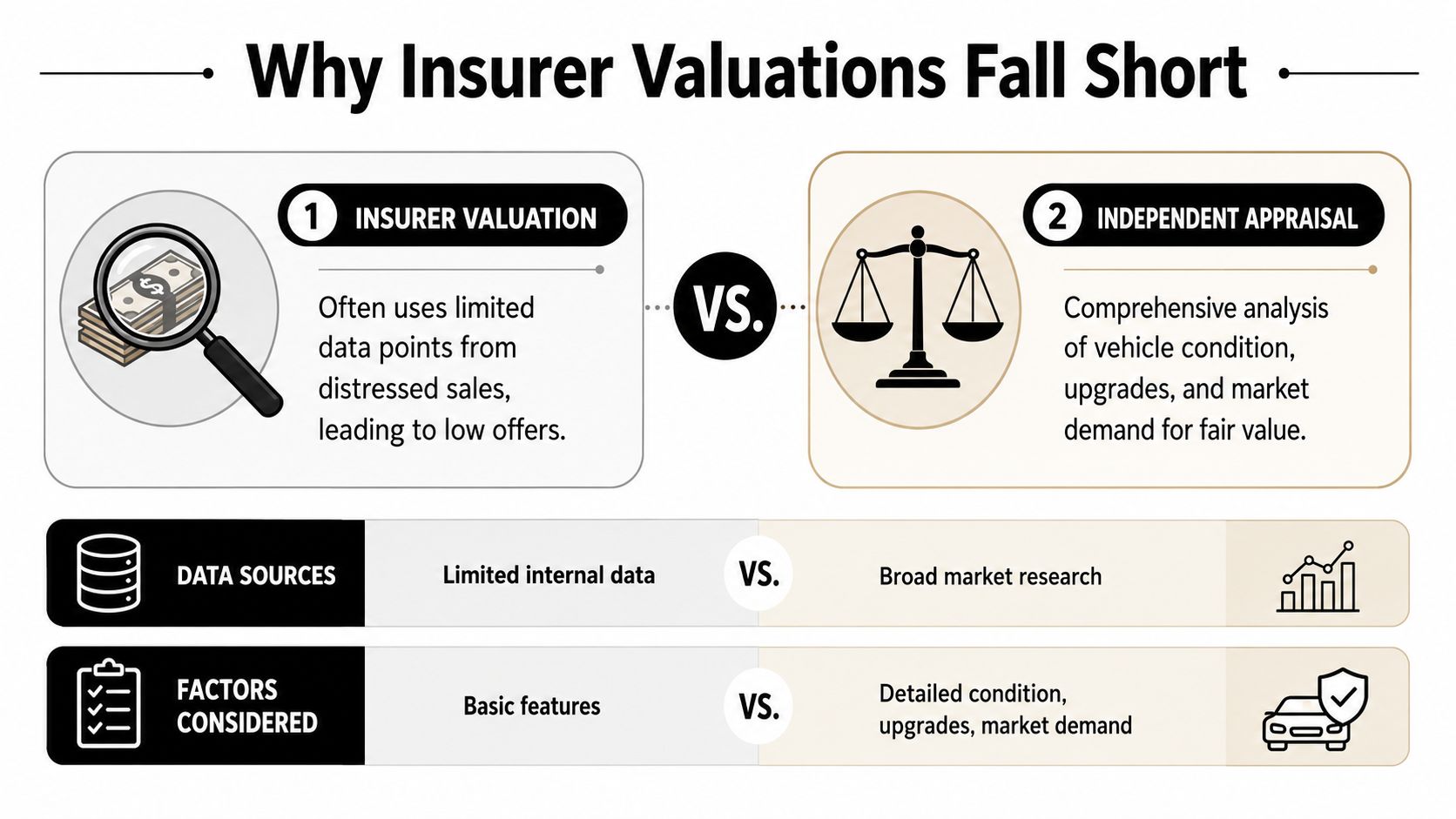
Insurers usually don't send someone into the market to shop for your exact vehicle the way a serious buyer would. In many claims, they rely heavily on valuation platforms such as CCC, Mitchell, or J.D. Power. Those systems can be useful tools, but they are still tools. They are only as good as the data selected, the adjustments applied, and the market assumptions built into them.
Software value versus market value
The easiest comparison is real estate. A homeowner can look up an automated estimate online, but when the number really matters, people still hire an appraiser who inspects the property and studies the local market. Auto claims work the same way.
The known problem is the gap between insurer software and the actual market. These systems often underweight local and specialty markets, and some regulators have questioned how consistently insurers validate software outputs against actual sale data. Independent appraisers close that gap by using auction reports, dealer-only platforms, and niche marketplaces instead of relying on a single internal valuation model (industry overview of insurance appraisals and valuation gaps).
Where the low number often comes from
A software-driven valuation can miss value in several ways:
- Local market mismatch. A Portland or Seattle buyer doesn't shop the same way as a buyer in a completely different region.
- Trim and equipment errors. One missed package or wrong drivetrain can skew the comparables.
- Condition flattening. Clean, well-kept vehicles often get treated like average ones.
- Specialty blind spots. Collector, modified, luxury, and hard-to-source vehicles don't fit neatly into standard data sets.
- Comparable quality. Some reports lean too hard on distressed sales or weak listings rather than stronger market indicators.
| Factor | Insurer's Valuation (e.g., CCC) | Independent Appraisal |
|---|---|---|
| Data sources | Often relies on internal databases and standardized comparable selection | Pulls from broader market research, including auctions, dealer networks, and niche listings |
| Vehicle condition | May apply generalized condition adjustments | Reviews pre-loss condition in detail using photos, records, and inspection evidence |
| Modifications and upgrades | Often minimized or overlooked | Evaluates whether upgrades affect market desirability and resale value |
| Local demand | Can underweight regional pricing differences | Anchors value to the market where the vehicle would realistically sell |
| Specialty vehicles | May struggle with uncommon trims or collector markets | Uses comparables from specialty channels when standard software falls short |
A valuation report can look polished and still miss the market.
What works and what doesn't
What works is evidence tied to your actual vehicle and your actual market. What doesn't work is telling the adjuster, "I just know it's worth more." A stronger response points to condition, options, recent repairs, and real comparables that reflect Oregon or Washington demand, not generic averages.
That's why independent insurance appraisal matters. It isn't anti-insurance. It's a correction mechanism when the software output doesn't line up with reality.
The Appraisal Clause A Step by Step Guide
The appraisal clause sounds legalistic, but the mechanics are straightforward. It is a contractual remedy inside many policies. If you and the insurer disagree on value, each side selects an appraiser. If those appraisers can't agree, they select a neutral umpire. The umpire's decision on the amount of loss is typically binding, and this route is generally faster and less expensive than litigation for valuation disputes (Next Insurance glossary explanation of the appraisal process).
A more detailed explanation of clause language and how it works in auto policies is available through this appraisal clause resource.
Start with the policy and the dispute letter
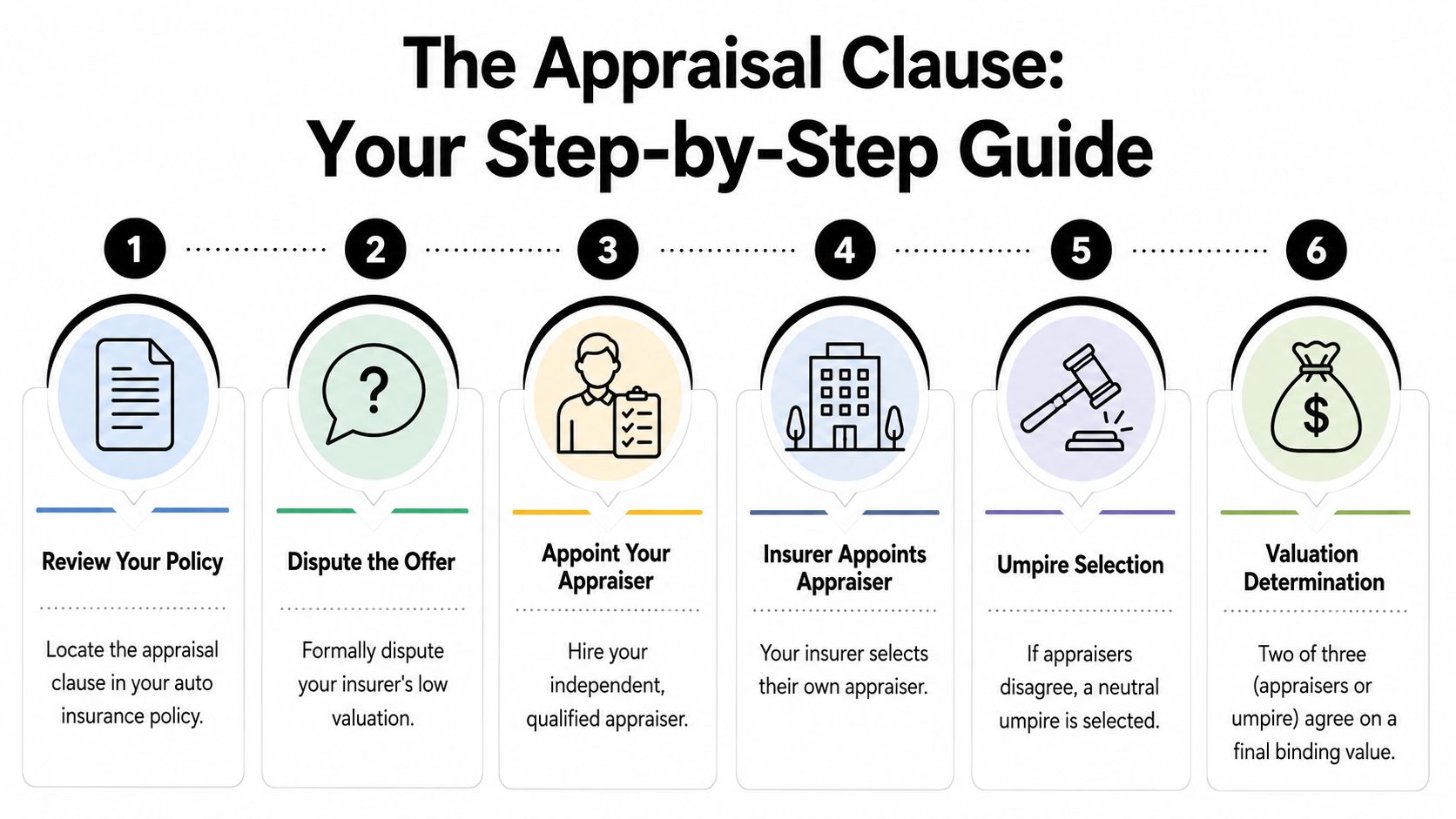
First, pull the declarations page and full policy, then locate the appraisal clause. Some policies place it in the physical damage or conditions section. You need the exact wording because the clause controls the process.
Then dispute the valuation in writing. Keep it concise. State that you disagree with the actual cash value, repair value, or diminished value determination and that you are invoking the appraisal clause if the policy allows it.
What happens after invocation
Once invoked, the sequence usually looks like this:
- You appoint your appraiser. Choose someone who works in auto valuation, not a general claims consultant who doesn't build market-supported reports.
- The insurer appoints theirs. This is the carrier's valuation representative in the appraisal process.
- The appraisers exchange data. They review condition, options, comparables, prior repairs, title history, and market evidence.
- They try to agree. Many disputes resolve here if the stronger market evidence is clear.
- If they don't agree, they select an umpire. The umpire reviews the disagreement points and helps determine the amount of loss.
- Any two of the three can set the value. That becomes the appraisal award under the policy terms.
Later in the process, it helps to hear the steps explained conversationally. This short walkthrough is useful:
Important limits of the clause
The appraisal clause usually decides value, not coverage or liability. If the insurer says a part of the claim isn't covered at all, that's usually a separate issue.
What to remember: Appraisal is designed to answer "how much is the loss?" It usually does not answer "is the loss covered?"
The strongest claims come from drivers who treat appraisal like a formal evidence process, not an angry appeal. Good documentation moves cases. Emotion doesn't.
Preparing for Your Appraisal What You Will Need
A strong appraisal starts before the appraiser writes a single line. The cleaner your file, the easier it is to prove what the vehicle was worth before the loss and why the insurer's number misses the mark.
If you want a plain-language overview of the underlying process, this explanation of what a car appraisal is gives a useful baseline.
Build the file the appraiser actually needs
Start with the documents that show what the vehicle was, not just what the insurer says it was.
- Photos before the loss. Exterior, interior, wheels, dash, seats, bed, cargo area, and any special features.
- Maintenance and repair records. Recent mechanical work matters because buyers care about it.
- Upgrade receipts. Tires, suspension, audio, camper shell, performance parts, protective film, or specialty accessories may affect marketability.
- Window sticker or build information. This helps confirm packages and options.
- Comparable listings you've found. They aren't the final word, but they can point the appraiser toward the right market.
- The insurer's valuation report. This is essential because it shows what needs to be challenged.
The details people forget
Owners often remember the big-ticket items and forget the items that support condition. Include receipts for recent service, reconditioning, detailing, or major wear items. If the vehicle had unusually clean paint, premium tires, documented service history, or rare factory equipment, say so and back it up.
For collector, luxury, or modified vehicles, provide the appraiser with context. A modification doesn't always add dollar-for-dollar value, but it can change who the likely buyer is and where that buyer shops.
The best appraisal files are boring in a good way. Every important fact is documented, organized, and easy to verify.
Timeline and costs
Appraisal is not instant, but it is usually more efficient than suing over value. The timeline depends on how quickly the parties appoint appraisers, exchange data, and decide whether an umpire is needed.
Costs are part of the decision. Each side usually pays its own appraiser, and if an umpire is needed, that cost is often shared. The practical question isn't whether there's a fee. It's whether the evidence supports challenging a bad number. On stronger claims, appraisal isn't just an expense. It's the cost of putting a credible valuation on the table.
What doesn't work is waiting until paperwork is already moving, title issues are developing, and key records are missing. The earlier you prepare the file, the more control you maintain.
Special Considerations for Oregon and Washington Drivers
In Oregon and Washington, the valuation fight doesn't happen in a vacuum. You also have to watch the administrative side of a total loss claim, especially when title branding or salvage reporting is in play. Many drivers lose ground in this area without realizing it.
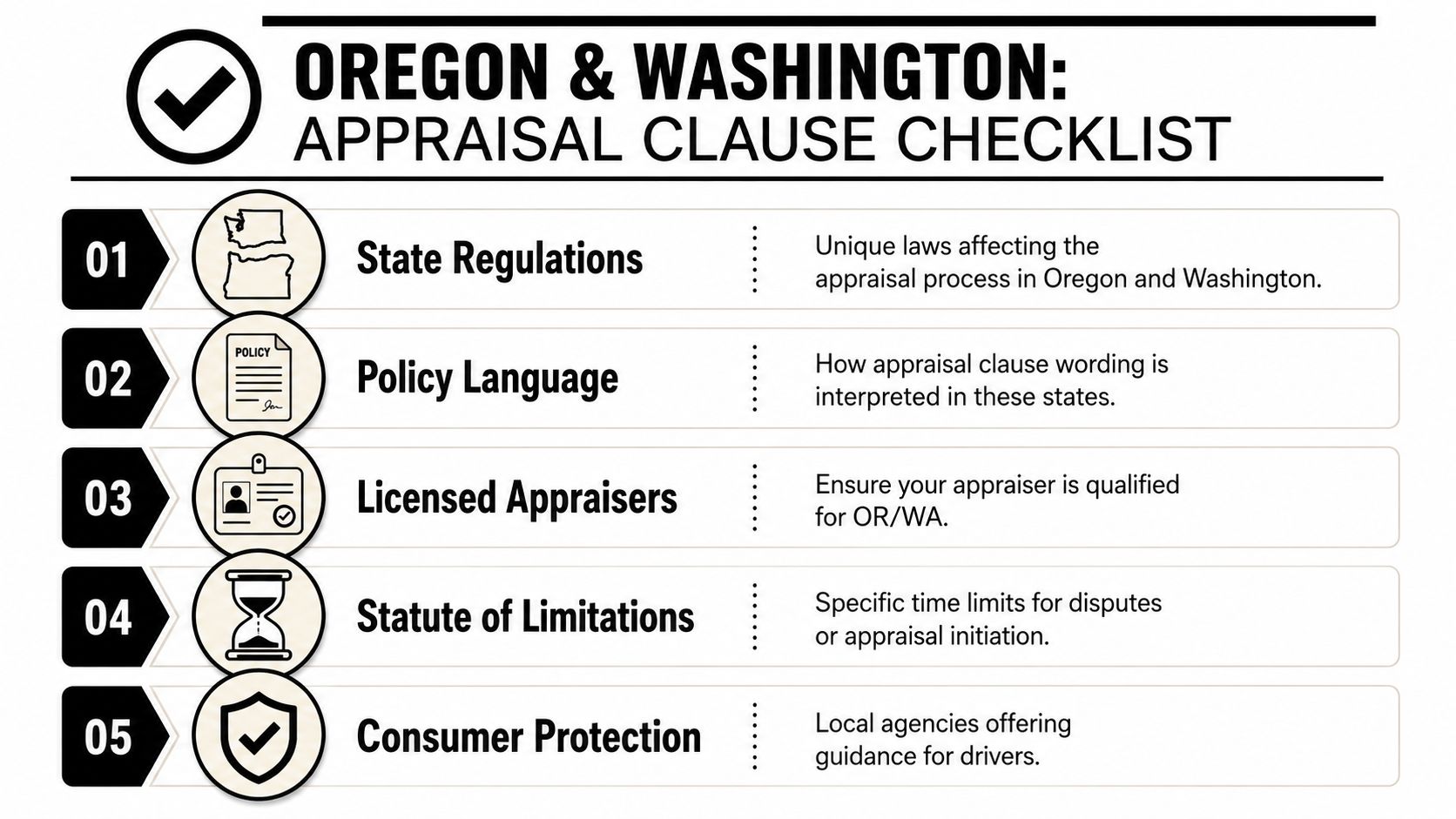
A major gap in most consumer guides is the collision between appraisal timing and statutory duties like title branding. In many states, insurers must report a total loss within 30 to 60 days, and that deadline can run independently of the appraisal clause. If appraisal starts too late, title branding can move ahead and diminish the vehicle's equity (discussion of appraisal timing and title-branding risk).
The Oregon and Washington timing problem
For Oregon and Washington drivers, the practical issue is not just "Can I dispute value?" It's "Can I dispute value before title status and claim administration create new problems?"
That matters in situations like these:
- You want to retain the vehicle. Title branding and settlement timing can affect how that process unfolds.
- You own a specialty vehicle. A collector or enthusiast-market car can suffer extra harm if the claim timeline isn't handled carefully.
- The insurer has already labeled it a total loss. Once that machine starts moving, delay becomes expensive.
This is also where diminished value conversations can overlap with broader valuation issues. If the vehicle wasn't totaled but the insurer still isn't addressing the post-repair loss in market value, this diminished value overview for auto claims is relevant to the Oregon and Washington audience.
What drivers in OR and WA should do early
The practical checklist is simple:
- Read the valuation report immediately. Don't let it sit in your inbox for a week.
- Ask whether title paperwork has started. You want clarity, not assumptions.
- Decide quickly whether you're disputing ACV. Hesitation can narrow your options.
- Preserve records and photos now. Once storage, salvage handling, or release paperwork advances, evidence gets harder to organize.
If you're in Oregon or Washington, don't treat appraisal as separate from title and DMV timing. They can move on parallel tracks.
The hidden trap isn't always the valuation itself. Sometimes it's the calendar.
Real World Results and Proving Your Value
A low offer feels personal when you know the vehicle was worth more. The way to correct it is not anger. It is proof that holds up under review.
In real claims, better results come from showing where the carrier's valuation software missed the market. CCC and similar systems can be useful tools, but they are only as good as the inputs, condition ratings, option coding, and comparable selection behind the report. In Oregon and Washington, I regularly see insurer reports built from vehicles that would not compete with the loss vehicle in the actual local market. That gap is where independent appraisal earns its keep.
A credible appraisal report has to stand on professional standards. USPAP requires an appraiser to provide an "unbiased opinion of value" based on investigation and analysis, not advocacy. That is why a serious report explains the market, documents the vehicle, and supports each adjustment with evidence rather than opinions alone (overview of insurance appraisals, USPAP, and professional standards).
What a persuasive appraisal file looks like
The strongest files are built the same way I would expect to defend them in front of another appraiser or an umpire:
- Comparable vehicles that match the loss. Year, make, model, trim, drivetrain, mileage, condition, and equipment all matter.
- Condition documentation. Clear photos, maintenance records, prior appraisals, receipts, and pre-loss listings can change the value materially.
- Correct option and package identification. A missed technology package, premium trim, wheel package, or towing setup can skew the insurer's number fast.
- Real market placement. Retail listings, dealer offerings, private-party sales, and enthusiast-market data do not carry the same weight in every case.
That last point gets missed often. A software report may pull a broad set of regional comps because the program allows it. An independent appraiser has to ask a harder question. Where would this specific vehicle have sold, and what would a real buyer in Oregon or Washington have paid for it?
Where owners lose value
The pattern is usually straightforward.
A clean daily driver gets priced against weaker comparables with higher mileage or fewer options. A modified truck gets treated like a stock unit. A collector or enthusiast vehicle gets run through standard valuation software that does not reflect the buyers who shop that segment.
None of those problems fix themselves. They have to be identified and documented line by line.
I also tell clients to separate "I loved this vehicle" from "here is what the market supports." Sentiment is understandable. It does not move an appraisal decision. Photos, records, accurate trim data, and market-supported comparables do.
Good appraisal work stays measured in tone and exact in documentation.
That approach matters because the other side will test the file. If your evidence is sloppy, unsupported, or pulled from random online listings, the insurer's appraiser will attack it quickly. If the report is clean, well-sourced, and tied to the actual Oregon or Washington market, it becomes much harder to dismiss.
Take Control of Your Claim Today
The insurer's number is not the final word on your vehicle's value. If the settlement offer doesn't match market value, you have the right to challenge it through a structured process. That process is the independent insurance appraisal clause, and when it's handled correctly, it gives you a much stronger position than a string of frustrated emails ever will.
For Oregon and Washington drivers, speed matters just as much as evidence. The valuation dispute, title timeline, and claim administration can move at the same time. If you wait too long, you can weaken your position before the appraisal even begins.

If you've been lowballed on a total loss or diminished value claim, act while the file is still movable. Get the valuation report. Pull your policy. Preserve your records. Then have the dispute reviewed by someone who understands both the appraisal process and the Oregon and Washington market.
A fair settlement usually doesn't happen because the insurer suddenly changes its mind. It happens because someone puts better evidence in front of the decision-makers.
If you're dealing with a low total loss offer or a diminished value dispute in Oregon or Washington, contact Total Loss Northwest to discuss whether an independent appraisal fits your claim and timing.