You're standing at the kitchen table with a totaled-car email open on your phone, and the number looks wrong. The adjuster says it's based on market value, but the offer doesn't match what you'd have to spend to replace the car you just lost. That gap is exactly where a total loss car appraisal near me stops being a search term and becomes the move that changes the settlement.
When the Insurer's Offer Doesn't Match Your Car
The first bad sign is usually the same. The carrier sends a valuation sheet, the numbers are thin, and your vehicle gets treated like a generic trim level instead of the specific car you drove every day. If your car had options, condition advantages, or local-market strengths, a rushed internal valuation can miss the actual value fast.
I've seen drivers accept the first figure because they think the insurer's number is final. It isn't. A proper independent appraisal rebuilds pre-loss Actual Cash Value from local comparable sales, then turns that reconstruction into a written evidence package that can be used in negotiation.
What the low offer is really missing
The carrier usually starts with software and a narrow set of assumptions. That's where the gap opens. A local appraiser looks at the car as it existed right before the crash, not as a line item in a database.
That matters because the appraisal isn't about arguing emotion. It's about showing real market evidence that the insurer didn't weigh correctly. For drivers who want a practical example of how those valuation fights play out in other states, Mai & Associates has useful context in its California insurance insights.
Practical rule: if the offer feels generic, it probably is. Generic offers are easier to produce than defensible ones, and they're usually the ones worth challenging.
A serious total loss car appraisal near me search is really a search for someone who can replace the carrier's shortcut with market proof. That's the difference between taking the check and forcing a real review.
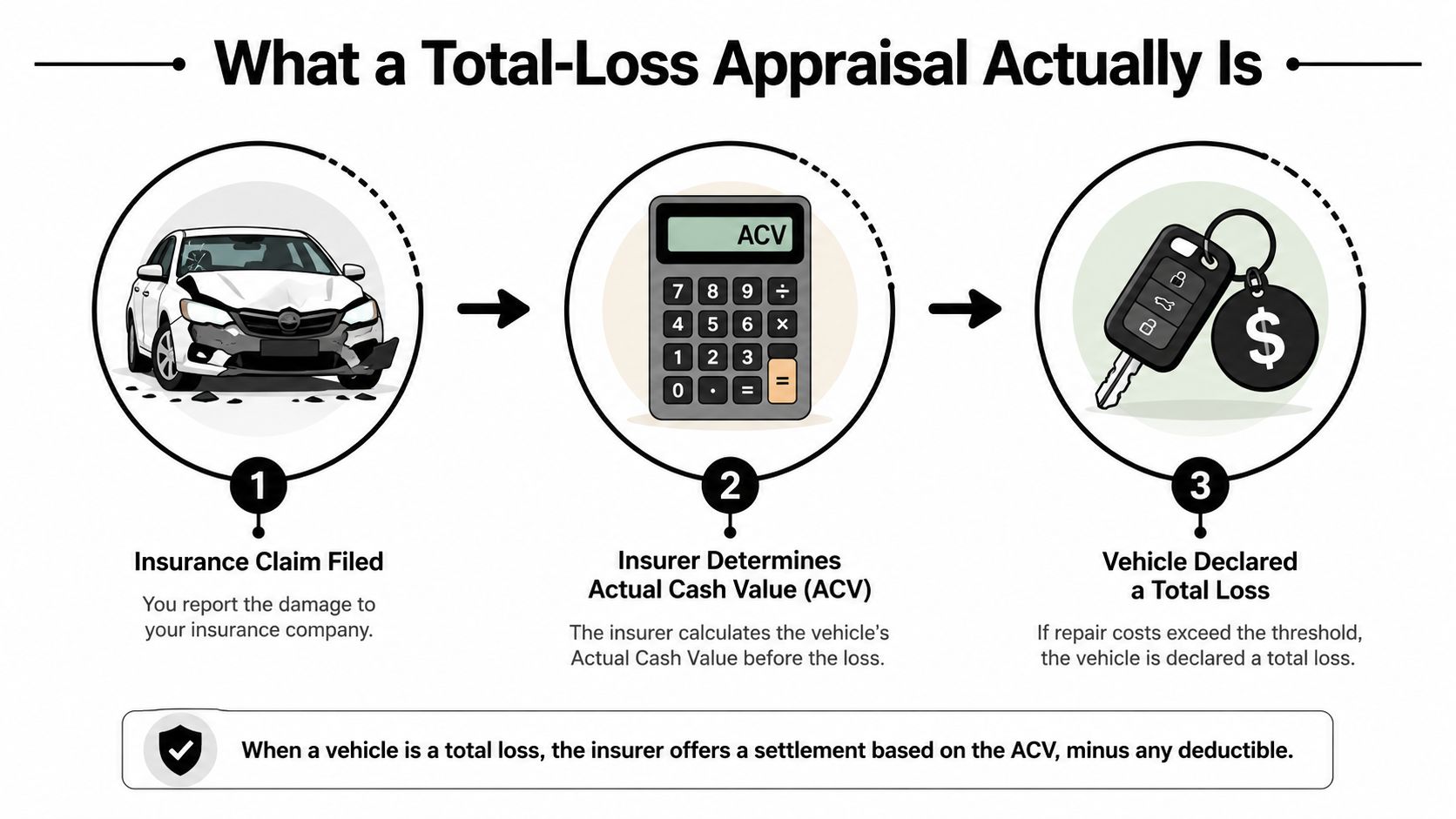
What a Total-Loss Appraisal Actually Is
A total loss appraisal is not a guess, and it's not a sympathy letter. It's a valuation dispute process built to answer one question, what was the car worth the moment before impact. In practical terms, Actual Cash Value is the pre-crash market value of the vehicle, adjusted for mileage, condition, trim, and options.
The cleanest legal mechanism for fighting that number is the Appraisal Clause. A published workflow from Oregon explains the structure plainly, each side hires its own appraiser, and if the two appraisers disagree, a neutral umpire resolves the gap. That process is why the clause matters, but it only works if your side brings real evidence to the table, not a casual opinion.
The proof standard that actually moves the number
The report has to do more than say the car is worth more. It needs to reconstruct value from comparable sales and present that logic in a format the insurer can't wave away. A USPAP-compliant report is the standard I'd want in front of an adjuster or umpire every time, because it shows the work instead of just stating a conclusion.
For drivers trying to understand how total-loss decisions are treated in practice, Scher, Bassett & Hames has a helpful California legal guidance for totaled cars that adds useful context on the dispute side. The key point is simple. The clause gives you a mechanism, but the report is what carries the argument.
Why the clause matters
Without your own appraiser, you're stuck reacting to the insurer's file. With one, you can force the dispute into a structured process where evidence, not the first number on the screen, drives the outcome. That's the whole game.
Why an Independent Appraiser Beats the Insurance Company's Number
The insurer's valuation is built for speed. An independent appraisal is built for proof. That difference shows up in how each side treats the car, the market, and the evidence behind the number.
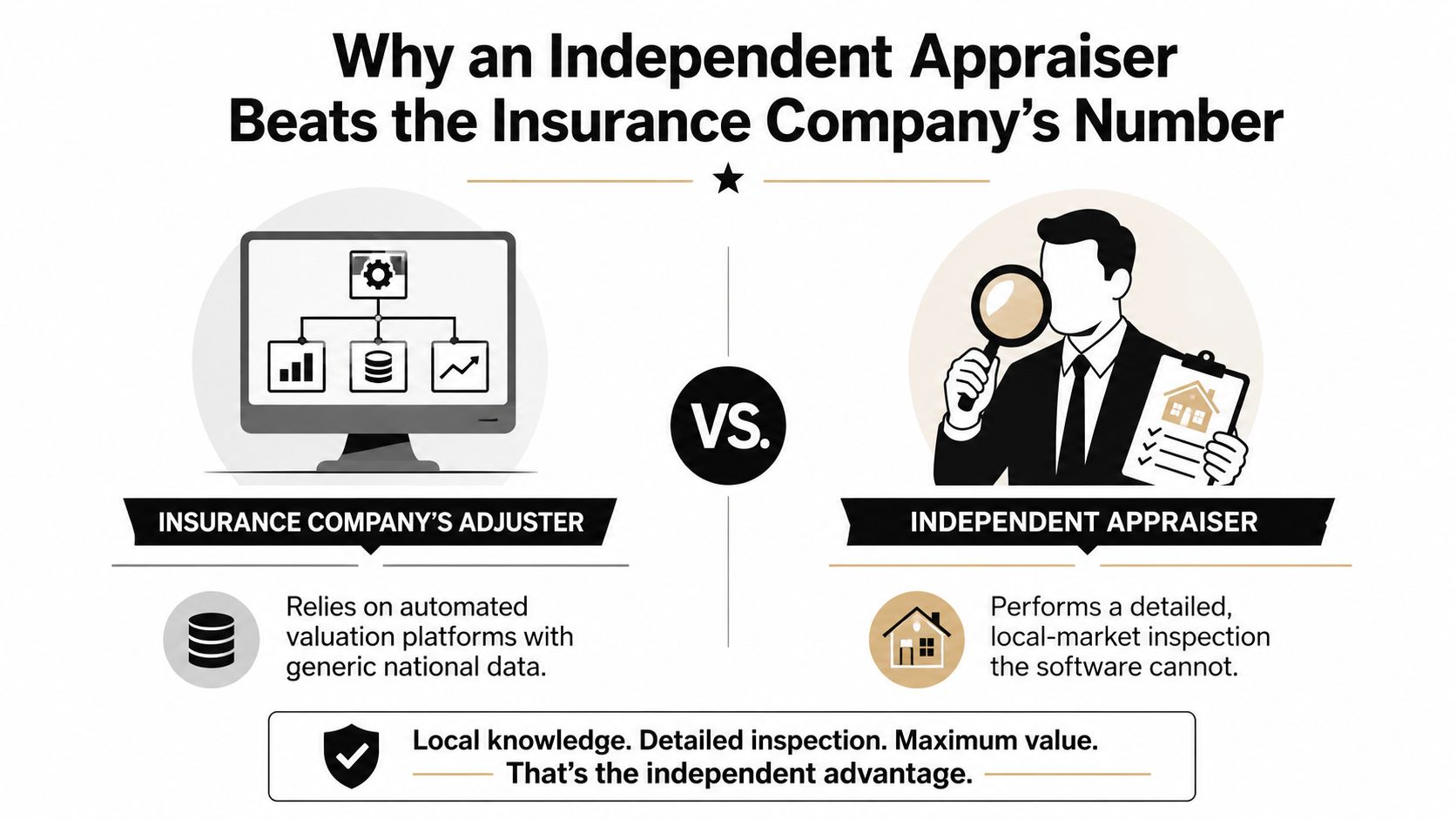
Software versus market reconstruction
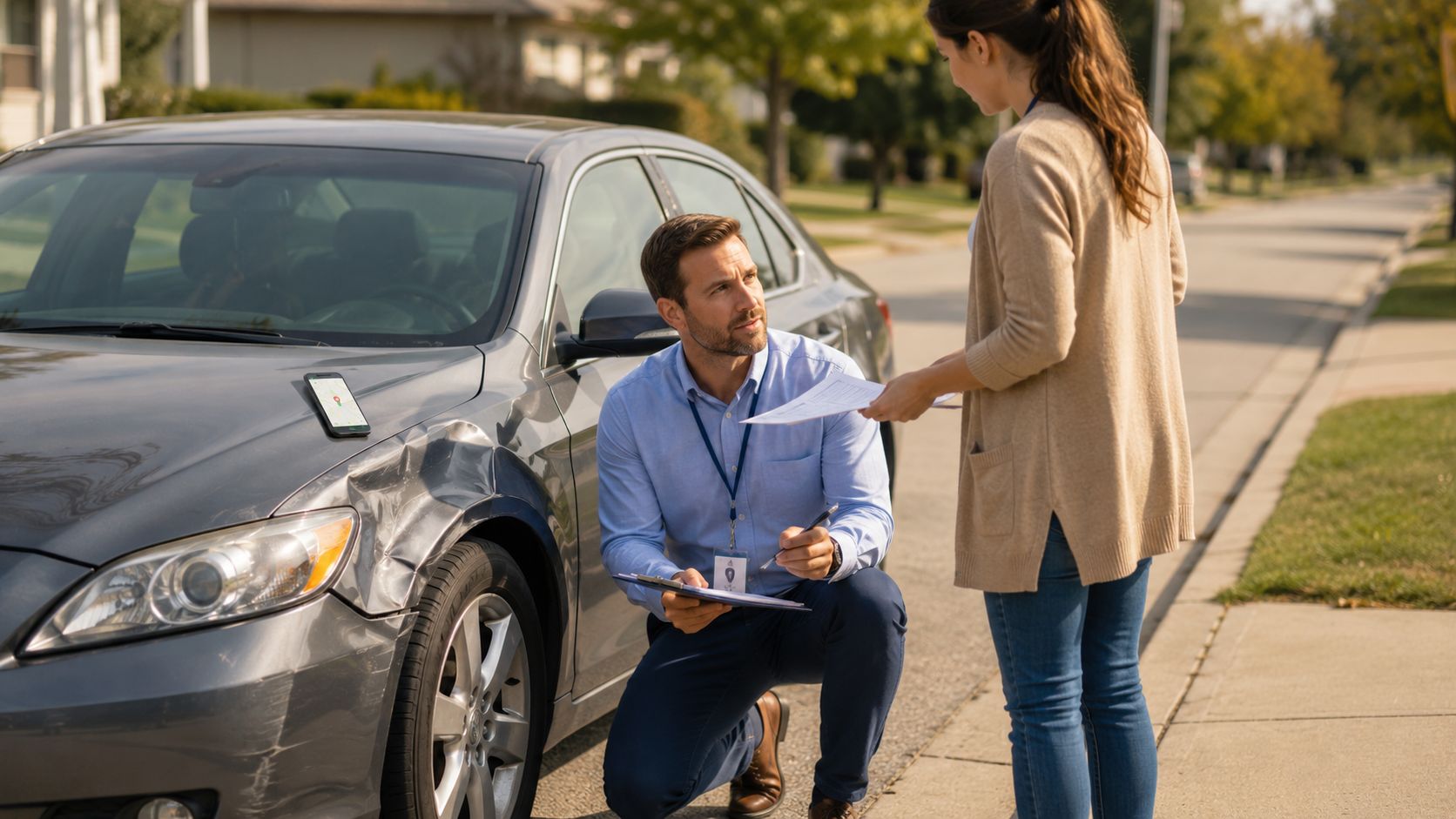
Automated valuation tools are fast, but they're blunt. They tend to lean on broad data and a preset logic tree. An independent appraiser has to do the harder work, inspect the vehicle or its repair history, pull comparable sales from the last 90 days, and adjust for condition, mileage, options, and accident history.
That difference is why comparable-based appraisals can secure $2,000 to $10,000 more than the first offer in many total-loss disputes, according to the appraisal-methodology overview in the verified data, which also notes that the supporting report is often 20 to 30 pages long. The money isn't coming from magic. It's coming from better evidence.
If you want a deeper look at how local appraisers challenge carrier numbers, the internal guide on why independent car appraisers lays out the same basic principle in plain language.
What the negotiation actually responds to
The negotiation doesn't move because you're frustrated. It moves when you hand over a report that documents comparable sales, explains adjustments, and shows why the insurer's internal number missed the mark. That's why the appraisal report itself is the key, not just the fact that you hired someone.
An umpire doesn't care how annoyed you are. The umpire cares whether your valuation file is built from real market evidence.
The local edge
A local appraiser understands the regional sales picture better than a national platform does. That matters in the Pacific Northwest, where vehicle supply, trim desirability, and condition adjustments can change the market number quickly. If you're searching for a total loss car appraisal near me, what you want is someone who can prove the valuation, not just repeat it.
How to Find a Certified Appraiser Near You
Stop looking for a generic “car appraiser” and start filtering for the right credentials. You need someone who handles total-loss claims, understands the Appraisal Clause, and can document a valuation with real comparable-sales support. Classic-car hobbyists and general inspection shops are not automatically qualified for this job.
What to ask before you hire anyone
Ask direct questions on the first call. Do they produce USPAP-compliant reports. Do they handle diminished value and total-loss disputes. Do they document recent local comparables, or are they just giving an opinion from memory.
Bring the paperwork before they start. The file should include the police report, claim number, photos from before the crash, repair invoices, your vehicle history report, and the insurer's written offer. That is the evidence set that lets the appraiser do real work instead of guessing.
Good rule: if the appraiser doesn't want the insurer's written offer and your upgrade records, they're not building a dispute file. They're winging it.
What the timeline and cost usually look like
A complete report often takes time because the evidence has to be checked carefully. In many cases, a qualified appraiser can turn around the work within a few business days once the documents are in hand. In Oregon, the appraisal costs are financially important because the published workflow says the insurer must reimburse appraisal costs under OAR 836-080-0240 after the value is agreed.
That reimbursement rule matters. It changes the math from “should I risk it” to “can I build a credible file.” For a local search, the internal page on independent auto appraiser near me is the kind of resource drivers use when they want someone who handles total-loss disputes.
What a Defensible Appraisal Report Looks Like
A report that wins is built like evidence, not like a sales pitch. The first thing I look for is whether it reconstructs pre-loss ACV instead of just tossing out a replacement number. If that foundation isn't there, the rest of the report is weak.
The pieces that should be inside
The core of the file should be obvious. It needs comparable sales, market listings, auction data, and a clear explanation for each adjustment. It also needs to show what the appraiser inspected, what records were reviewed, and where the market evidence came from.
A strong report usually pulls from 10 to 20 comparable vehicles sold in the last 90 days, and the finished appraisal is often 20 to 30 pages long, according to the verified methodology source. That length isn't padding. It reflects the amount of documentation required to make the value defensible.
| Report Section | What It Should Contain | Why It Matters |
|---|---|---|
| Vehicle Identification | VIN, trim, mileage, options, condition notes | Anchors the correct car |
| Comparable Sales | Local, recent, sourced vehicles with citations | Shows market reality |
| Adjustments | Mileage, condition, trim, options, accident history | Explains differences fairly |
| Limitation Notes | Missing data, title issues, salvage history | Prevents overstatement |
| Conclusion | Final ACV and valuation logic | Gives the umpire a usable number |
What weak reports get wrong
Weak reports are usually short, vague, and impossible to audit. They don't show how the comparables were selected, and they often skip the math behind adjustments. That's a red flag because you can't defend a number you can't trace.
The best question to ask is simple. Who wrote the comparables, what date range did they use, and how did they calculate the adjustments. If the answer sounds hand-wavy, the report probably won't move the claim.
The Tax, Title, and License Fee Angle Most Drivers Miss
Insurers often talk as if the settlement should stop at market value. That's convenient for them, but it's not the full replacement cost for you. In Washington, consumer-facing guidance says policyholders may dispute the offer and seek full retail market value inclusive of tax, title, and licensing fees.
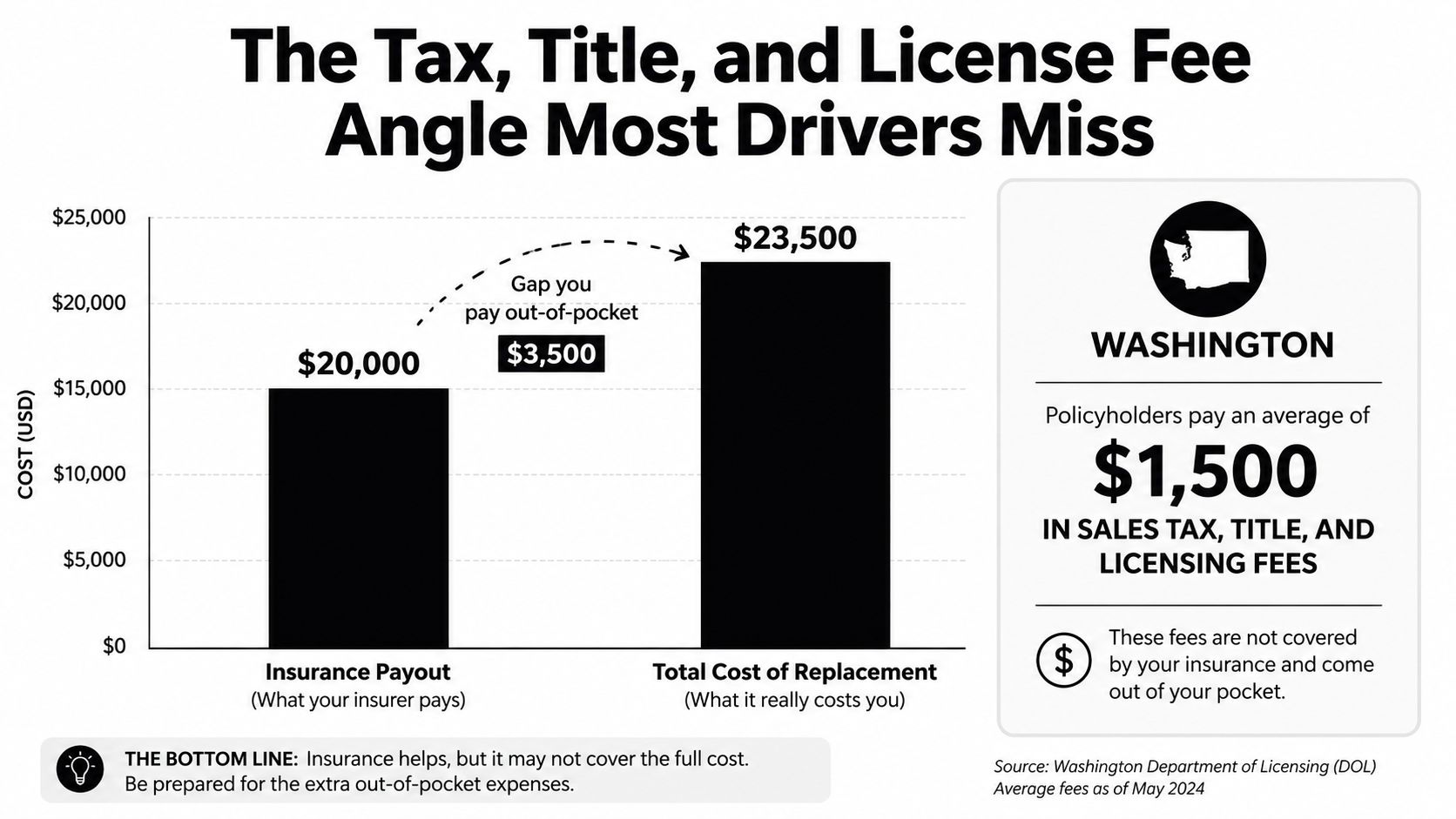
Why the fee issue changes the settlement
A lot of drivers get boxed in. The insurer pays the pre-loss value and expects you to absorb the replacement fees on the next car. But those fees are part of what you have to spend to get back on the road.
Washington's guidance on total-loss settlement math makes that point directly, and it's why a local appraiser familiar with the state rules matters. A generic out-of-state valuation may miss the replacement-cost reality that your check has to cover.
If the valuation ignores fees you'll actually pay on replacement, the payout is incomplete. That's not a technicality, it's the difference between replacing the car and covering the shortfall yourself.
Where the local appraisal helps
An appraiser who knows the Washington settlement conversation can build the value conclusion with the fee issue in mind. That doesn't mean every file automatically includes every fee. It means the appraisal should reflect the replacement math, not just a narrow pre-loss number.
For the salvage side of the process, the internal guide on salvage title process gives useful context on what happens when the vehicle moves into a different title category. If you're negotiating a totaled-car payout in Washington, the tax and licensing question is not minor, it's part of the real-world settlement picture.
What to Do Once Your Appraisal Lands
Treat the appraisal report like opening evidence, not the finish line. Send it to the adjuster in writing, ask for the insurer's valuation file, and compare their comparables against yours line by line. That's how you force the conversation onto facts.
If the offer still doesn't move, invoke the Appraisal Clause formally. Once both appraisers are in play, the umpire step exists to break the deadlock, which is exactly why your report has to be tight, documented, and easy to defend. The earlier sections matter because this is the point at which they get tested.
The next moves that actually matter
- Request the valuation file: Ask for the insurer's comparables, adjustments, and methodology in writing.
- Submit your evidence package: Include the appraisal report, upgrade records, and any missing market comps.
- Invoke the clause cleanly: Follow the policy language and keep your notice short and direct.
- Stay open to negotiation: Some claims resolve before the umpire ever gets involved.
If the car was repaired instead of totaled and you weren't at fault, the same evidence file can also support a diminished value claim. That's a different lane, but the same rule applies, strong documentation beats opinion every time.
I'm not shy about the recommendation here. If you're in Oregon or Washington and the offer is weak, get a certified independent appraisal before you sign anything. Total Loss Northwest handles that kind of dispute work through its own appraisal process, and the driver who prepares the file first usually has the stronger hand.
If your total-loss offer looks thin, don't take a guess at whether it's fair. Get a local appraisal that rebuilds the value from comparable sales, tests the insurer's numbers, and puts the tax and fee issue on the table where it belongs. Visit Total Loss Northwest and ask for an independent total-loss appraisal that's built to challenge the settlement, not just echo it.