Most drivers treat a police report like a verdict. That's the wrong mindset, and it costs people money. A police report can help an insurance claim, but it does not control the claim by itself. The adjuster still weighs the rest of the file, and that is where you either win or lose.
The smarter approach is to treat the report as one piece of a negotiation package. If it helps your position, use it. If it contains mistakes, challenge it fast and back your position with better evidence. That's how settlement power is built in a police report insurance claim.
Why a Police Report Is Not the Final Word on Your Claim
A police report is the officer's version of a crash, not a binding fault decision. Insurers use it as a starting point because it gives them a documented snapshot, but they are not required to accept every conclusion in it. That matters because a peer-reviewed study on insurance claims noted that much of the published crash analysis tied to alcohol or speeding relies on police-reported data, not every crash, and police involvement affects what can even be measured in the claim file (PubMed study).
That distinction is not academic. It changes how the claim is framed from day one. If the report is incomplete, the insurer's file is incomplete too.
Practical rule: Never argue as if the report is the final verdict. Treat it as one exhibit in a larger evidence file.
What the adjuster cares about
Adjusters want a clean liability story, but they are not chained to the report alone. They look for consistency between the report, the damage pattern, witness statements, photos, and any independent data. If the report says one thing and the physical evidence says another, the report loses weight.
The reason insurers care so much about documentation is scale. The Insurance Information Institute reported that in 2024, 0.80% of people with liability insurance had a bodily injury liability claim, 2.50% had a property damage liability claim, 4.16% of collision policyholders had a claim, and 3.95% of policyholders with full coverage had a claim, with average claim severity of $28,278, $6,770, $5,489, and $2,306 respectively (III auto insurance facts). Even a small file can involve real money, so adjusters care about clean proof.
A police report helps only when it fits the rest of the record. When it conflicts with photos, repair estimates, vehicle positioning, or neutral witness statements, push the better evidence hard. That is the key point in a police report insurance claim.
If you want the report to help you, use it. If it hurts you, challenge it fast and build the stronger record.
How to Obtain Your Police Report Quickly
Get the report as soon as the agency will release it. Waiting gives the insurer more room to shape the narrative without your correction. If you already have the case number, incident date, location, and the names of involved drivers, you're ahead of many who request their report too late.
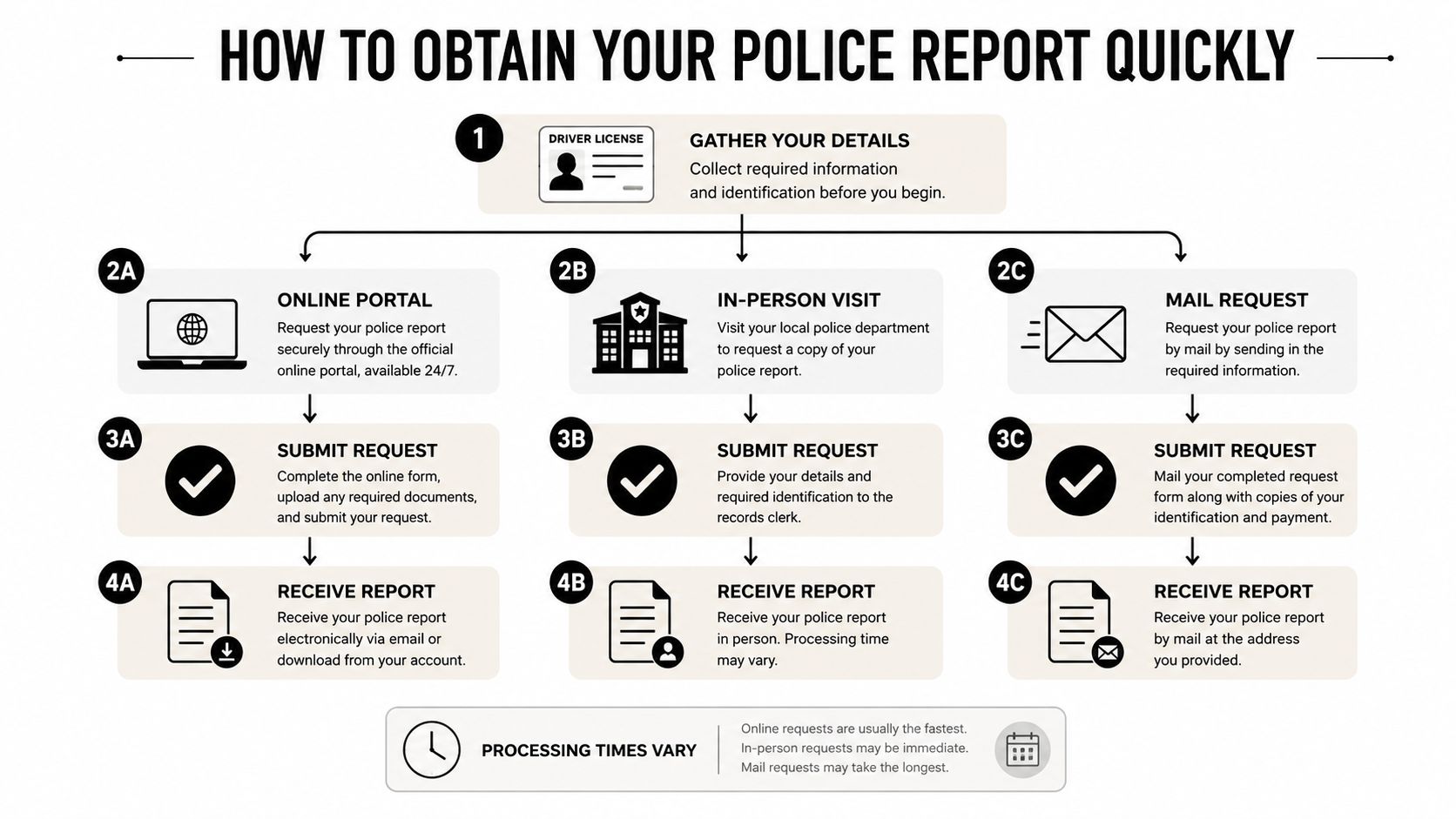
Use the fastest access path first
Most agencies offer one of three request channels, online, in person, or by mail. Start with the online portal if the responding agency has one, because that usually gets you to the report fastest. If the report isn't posted yet, call the records unit and ask whether it's still being processed or if you need to request it from a different department.
If you're in Oregon or Washington, don't assume every crash is handled the same way. Reporting rules and access methods can differ by city, county, and state agency, so the correct move is to identify the responding agency first, then use that agency's records process. That saves time and cuts down on bounced requests.
Request with the right details
Have these items ready before you ask for the report.
- Case number or incident number: If you have it, use it. It prevents mix-ups.
- Crash date and exact location: Agency databases are often indexed by these fields.
- Names of involved drivers: This helps when there are multiple vehicles or similar addresses.
- Proof of identity: Many agencies want ID before they release a full report.
If the report is pending, ask for the expected release date and whether a supplemental report might be added later. Don't file your claim into a vacuum and hope the report appears on its own.
Use the claim file while you wait
If the agency is slow, send the insurer your photos, witness details, repair estimates, and any scene notes right away. That keeps your claim moving even before the report lands. For first-contact claim paperwork, the insurer's intake process matters too, and this first notice of loss guide is useful if you're trying to avoid sloppy claim setup from the start.
A delayed report is annoying, but it isn't a reason to stop documenting. It just means you need to build the claim file harder and faster.
How Insurance Adjusters Use Police Reports
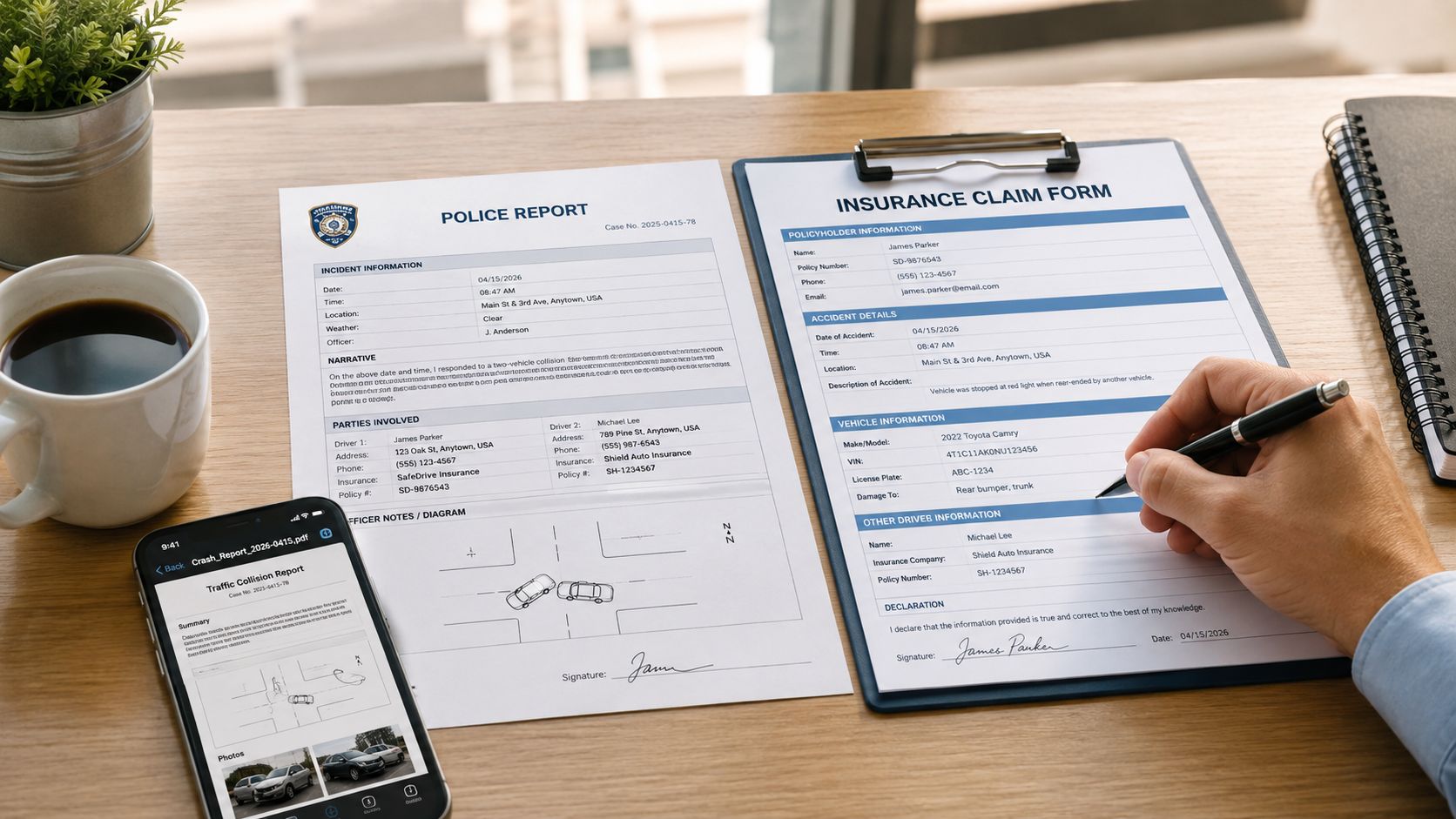
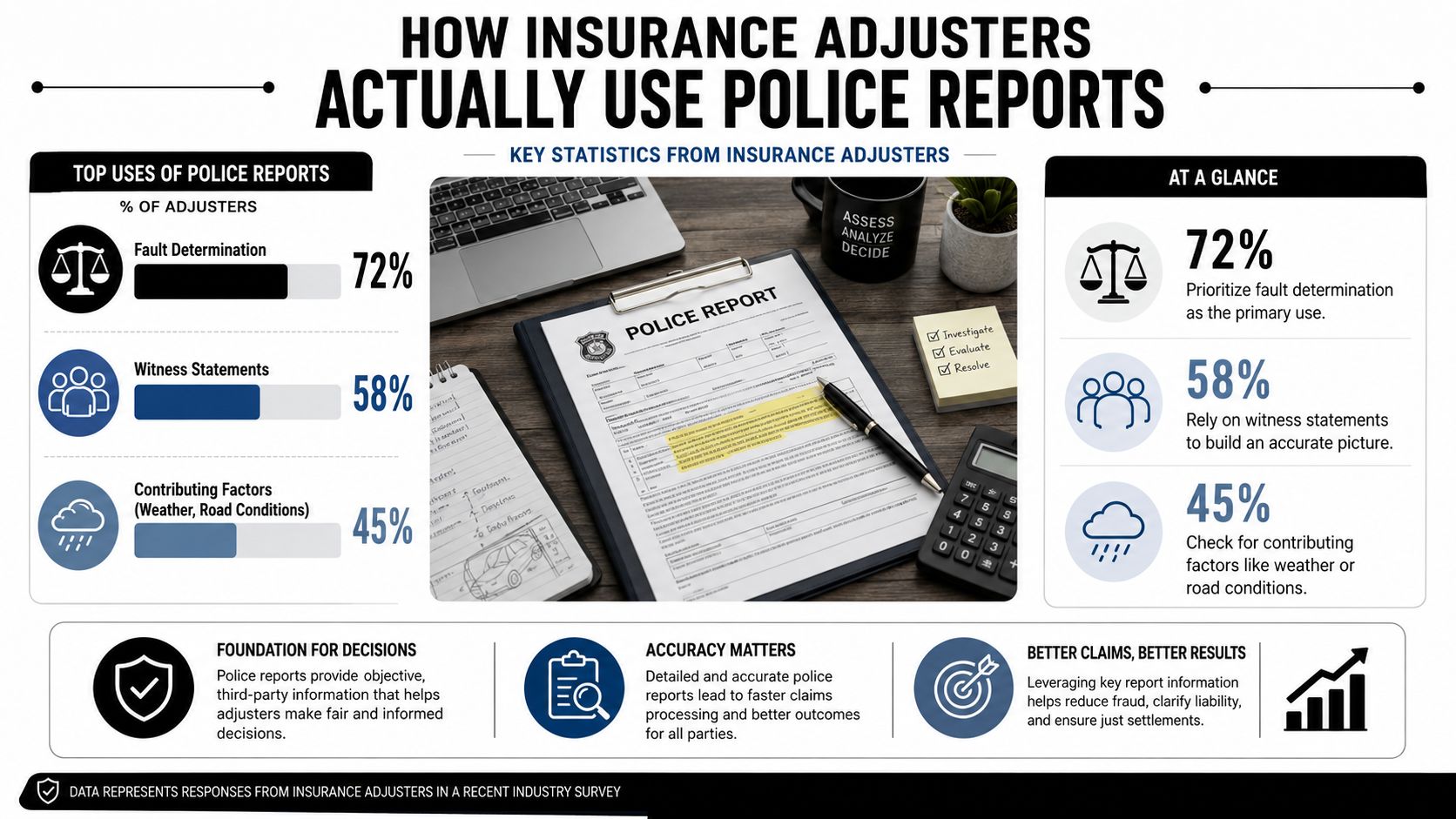
Adjusters read reports for insight, not for drama. They look for fault language, citations, contributing factors, witness names, and whether the officer's version matches the damage. If those pieces line up, the report helps them close the file. If they do not, the report becomes one more contested document in the claim file.
The report is a sorting tool
A strong report does three jobs for an adjuster. It identifies the vehicles and people involved. It gives a liability theory. It gives the insurer a place to start verifying the file.
That is why report quality matters so much in a police report insurance claim. A clean report can speed review. A sloppy one forces the adjuster to do more work, which usually means more questions, more delays, and more resistance to your number.
Larger claims get more scrutiny
Claim severity is why adjusters care so much about documentation quality in bigger files, as noted in the III auto insurance facts cited above. When a claim is small, the insurer may move fast. When bodily injury or major vehicle loss is involved, every missing detail turns into a point of attack.
A report does not win a claim by itself. It helps only when the rest of the file matches it.
Read the report like an adjuster would
Focus on three things first.
- Fault language: Does the report assign responsibility, or just describe the scene?
- Witness support: Are there names and statements, or just a vague note that people were present?
- Contributing factors: Weather, road conditions, visibility, and impact point can matter as much as a citation.
If you want to see how insurers build the claim file from the first call, review Total Loss Northwest's auto claim documentation guide. It tracks the same paper trail adjusters expect, starting with early claim setup and clean documentation. If you are still getting the claim organized, this first notice of loss guide is useful for keeping the intake clean from the start.
The bad habit is assuming the report ends the argument. It does not. It just tells you where the fight starts.
What to Do When the Police Report Is Wrong or Missing
An inaccurate report is not the end of the claim, it's the beginning of a better one. If the officer got the sequence wrong, missed a vehicle, or assigned fault based on incomplete facts, don't plead with the insurer. Build a contradiction the insurer can't ignore.
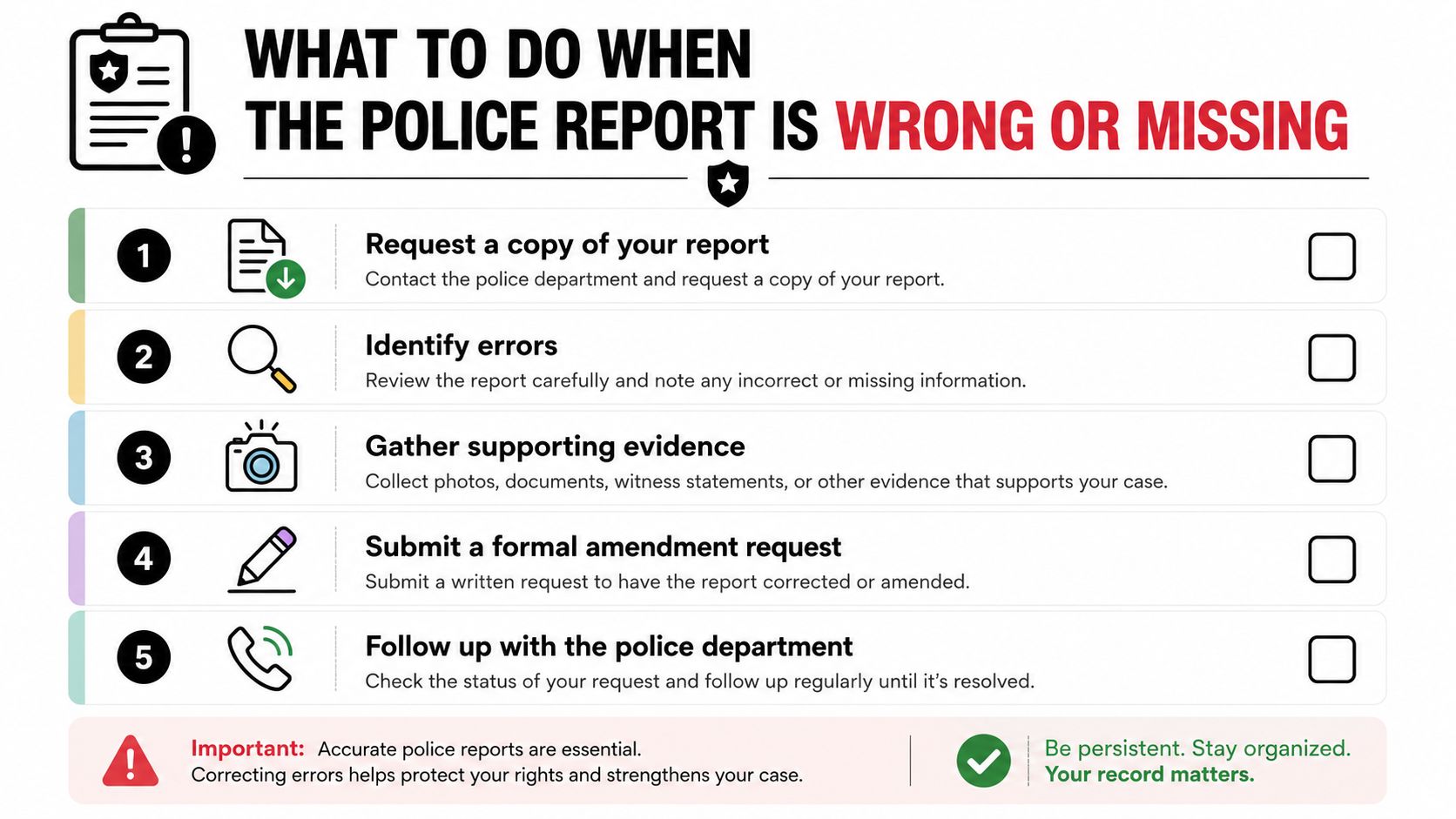
Challenge the report with structure
Start with the report itself. Mark every factual error, not just the parts you dislike. Then separate hard facts from the officer's interpretation. A wrong vehicle description is different from a disputed opinion on right-of-way.
Use a short, direct dispute statement in your claim file. This is the tone that works:
“The report's fault conclusion does not match the physical damage, witness account, and scene photos. I'm requesting that this be re-evaluated based on the full evidence package attached.”
That kind of language keeps the issue focused. It does not sound emotional, and it gives the adjuster something concrete to review.
Build the counter-evidence package
If the report is wrong, your job is to outrank it. The best evidence is the evidence that was created closest to the crash.
- Dashcam footage: Best if it shows impact, lane position, or traffic signal timing.
- EDR data: Useful when speed, braking, or impact timing is disputed.
- Witness statements: Better when they're signed, dated, and consistent.
- Physical damage analysis: Critical when the damage pattern contradicts the report narrative.
If there is no report at all, don't panic. Low-speed collisions, parking-lot hits, and delayed claims often get handled that way. In those cases, photos, witness contacts, repair documentation, vehicle identifiers, and prompt notice to the insurer become the substitute record. The insurer may still pay, but the burden shifts harder onto you.
Push for amendment, then escalate
If the agency allows a supplemental statement or amendment request, file it. Keep it factual and short. If the department won't change the report, use the correction attempt itself as part of your claim file. That tells the insurer you didn't just complain, you tried to fix the record.
The practical rule is simple. If the report is weak, supplement it. If it is wrong, challenge it. If it is missing, replace it with better proof.
Using the Police Report to Fight for Diminished Value or a Fair Total Loss Settlement
The report can pay you back. In diminished value and total loss disputes, the report isn't just background noise. It can support fault, vehicle impact severity, and the storyline that insurers use to justify low offers.
If you're dealing with reduced resale after repairs, this diminished value claim resource explains the kind of documentation insurers and appraisers pay attention to. The report matters most when it lines up with repair records, photos, and market evidence.
Use the report to anchor the demand
When you write your demand, tie the report to the specific issue you're pressing. For diminished value, focus on liability, point of impact, and the fact that the damage was not minor cosmetic wear. For total loss, focus on the vehicle's identification, pre-loss condition, and anything in the report that supports the severity of the crash.
A practical demand line looks like this:
“The police report, repair photographs, and damage analysis show a collision severe enough to support my settlement position. I'm asking that the evaluation reflect the actual loss, not a compressed valuation built on incomplete assumptions.”
Keep it plain. Do not over-explain.
Use independent appraisal when the number is wrong
If the insurer's valuation is off, the Appraisal Clause exists for a reason. Independent appraisers use the report as one input, then test it against the actual vehicle and market data. That is especially useful for classic, custom, or high-value vehicles, where a generic valuation model tends to miss the actual condition and equipment.
A police report can also help expose a bad total loss write-down when the insurer pretends the damage was superficial. If the report, photos, and repair estimate tell a different story, you have a stronger negotiating position. That negotiating position is strongest when the valuation fight is tied to a clear factual record.
For drivers who want a third-party dispute path, Total Loss Northwest provides auto insurance claim dispute help and appraisal clause support for total loss claims. That kind of service is not magic, but it does put an independent valuation process in place instead of letting the insurer dictate the number alone.
The core move is this. Use the report to prove the event, then use the rest of the file to prove the dollars.
Your Complete Police Report Claim Action Plan
Move fast, keep the file organized, and do not let the insurer write the story before you do. The cleanest claim files are built in layers, scene evidence first, report second, demand third. Miss one layer, and the next one has to carry more weight.
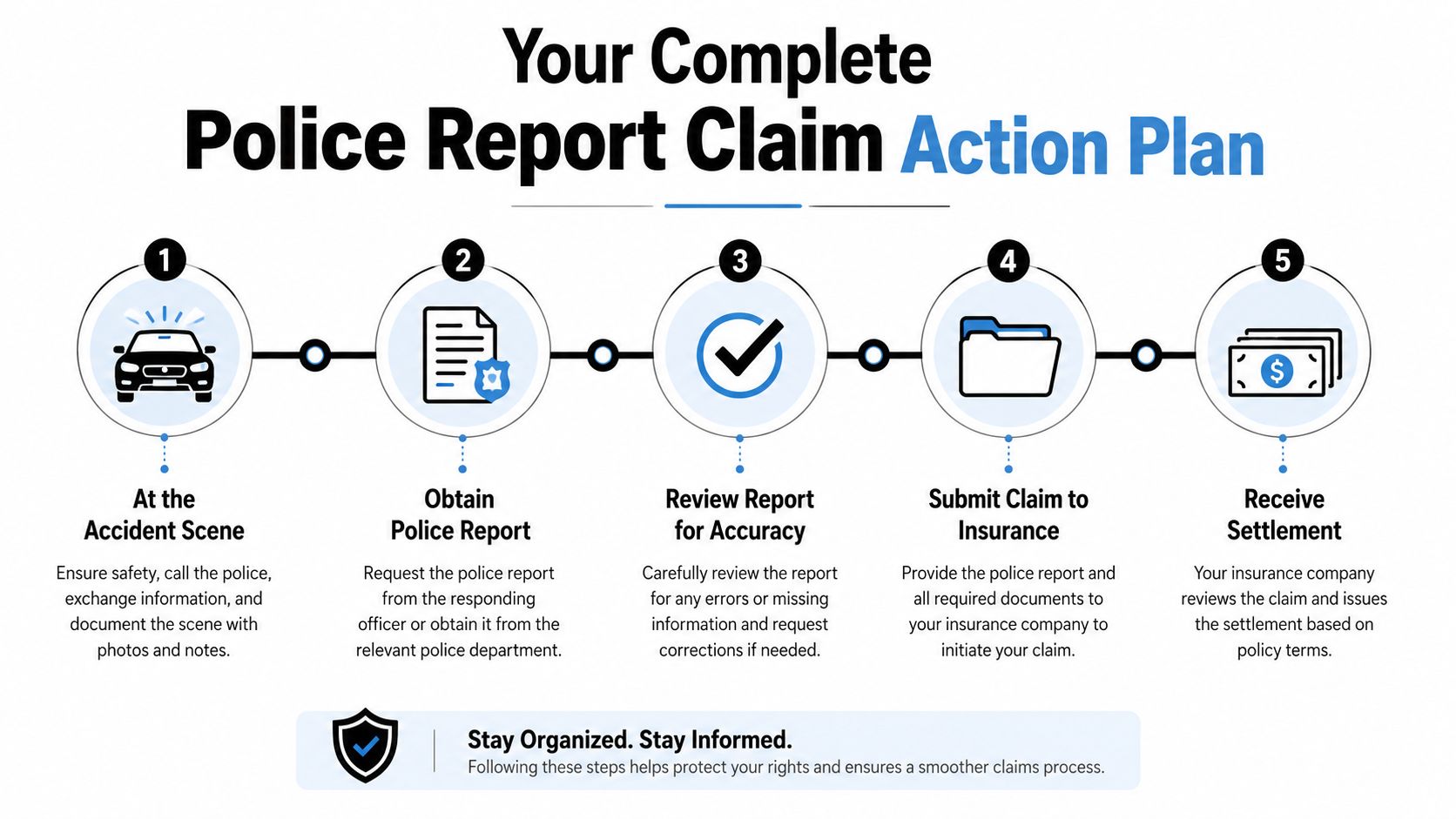
Follow the sequence that protects your case
- At the accident scene: Get photos, witness names, plate numbers, and vehicle positions. Do not rely on memory later.
- Obtain the police report: Request it from the correct agency as soon as it's available.
- Review report accuracy: Check fault language, vehicle details, and anything the officer missed.
- Submit claim to insurance: Send the insurer the report plus your photos, notes, and witness information.
- Receive settlement: Compare the offer to the facts, not to the insurer's confidence.
If the report is wrong, missing, or too thin to support your position, that is the signal to escalate. That can mean a formal amendment request, a stronger demand package, or an independent appraisal. If you need a practical checklist for evidence gathering, use the documentation guide above as a reference point while you build your file.
For drivers who want more general claim strategy beyond the report itself, Shea Culgin Law insurance claim advice is a useful reference point for claim handling discipline. The best advice across every source is the same. Document early and argue from proof.
The police report helps, but it does not close the deal. If you are facing a disputed liability file, a diminished value fight, or a low total loss offer, Total Loss Northwest works on the valuation side of those disputes and can help you push the number back toward reality. Visit Total Loss Northwest if you want an independent appraisal approach that treats the report as evidence, not gospel.