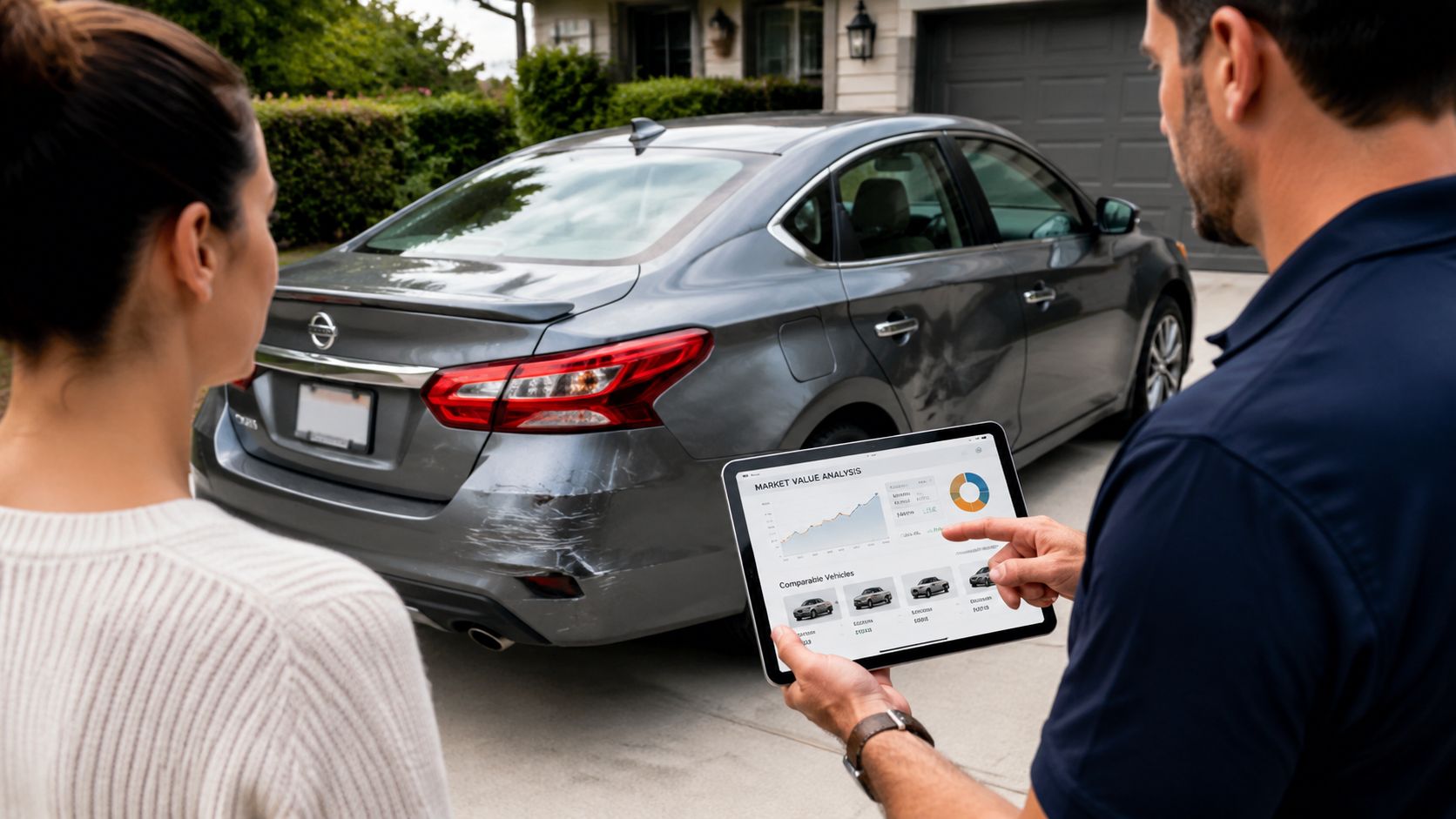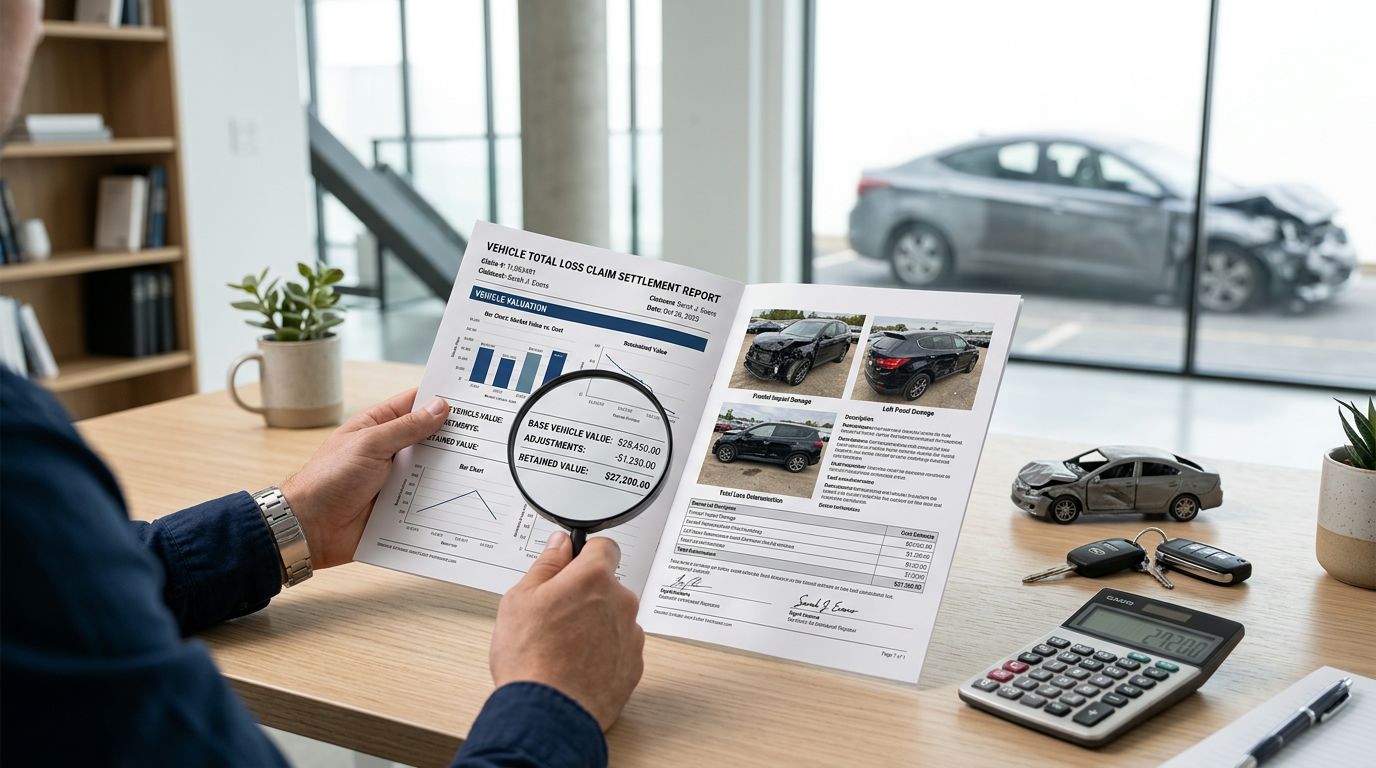
You're standing at the counter with a repair estimate in one hand and a title in the other, trying to figure out how a Washington driver can end up with a salvage-branded car that doesn't even look that bad. The adjuster's call can land fast, and once the insurer treats the vehicle as a total loss, the paperwork starts moving whether you feel ready or not.
In Washington, that moment isn't just about dents, airbags, or whether the car still runs. It's about a market value threshold, title branding, and a paper trail that can follow the vehicle for years. If you're trying to keep the car, buy it back, or just understand why the offer feels lower than expected, the key is to follow the state's process in the right order.
Why Washington Salvage Titles Catch Drivers Off Guard
A lot of Washington drivers first hear the word salvage after a collision, not before it. The car may still roll, the body damage may look repairable, and the interior may seem fine, yet the insurer can still decide the vehicle is a total loss because the numbers point that way. In Washington, that decision is tied to the state's market value threshold, not a simple repair-percentage rule, and the current threshold in regulation is $11,780 (WAC 308-56A-460).
That's why the surprise happens. Two cars can take similar damage, but if one had a lower pre-loss value, the same repair bill can push it into total-loss territory while the other stays clean. The branding event feels like a judgment on the car's condition, but the state framework treats it as an economic and administrative decision.
Practical rule: if the claim is close, the pre-damage value matters as much as the damage estimate.
Most drivers then face four decisions in a short window. They can accept the settlement, dispute the valuation, buy the car back, or walk away. Those choices matter because once the vehicle is reported destroyed or wrecked, the title path gets more complicated, and the next steps depend on the DOL record, not just the repair shop's opinion (Washington State Patrol rebuilt/salvage guidance).
A Washington salvage title problem usually starts as a claims problem. The insurer sees a total-loss file. The driver sees a car that might still be fixable. The state sees a vehicle whose ownership history now needs to be tracked carefully.
How Washington Defines a Salvage-Branded Vehicle
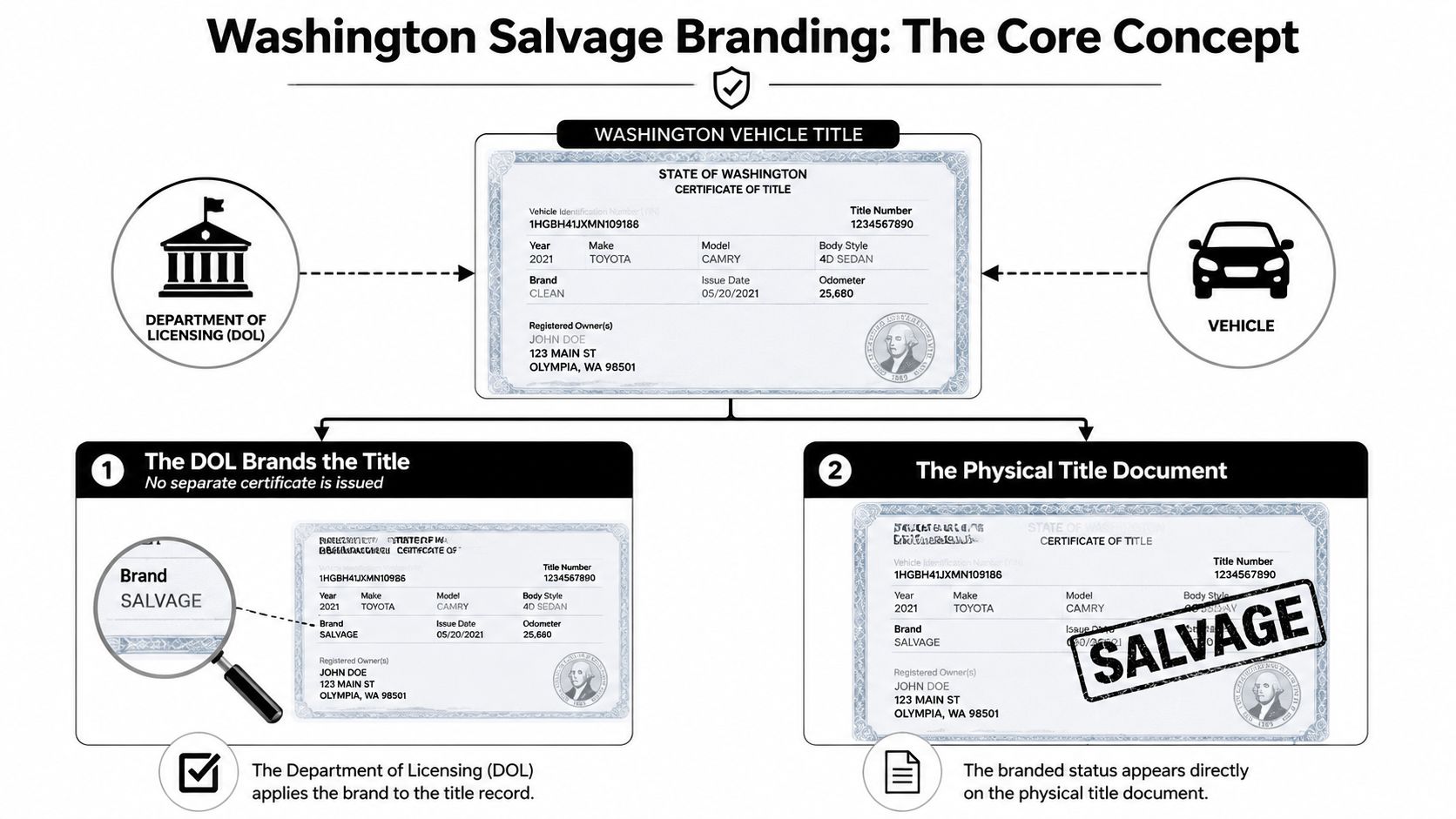
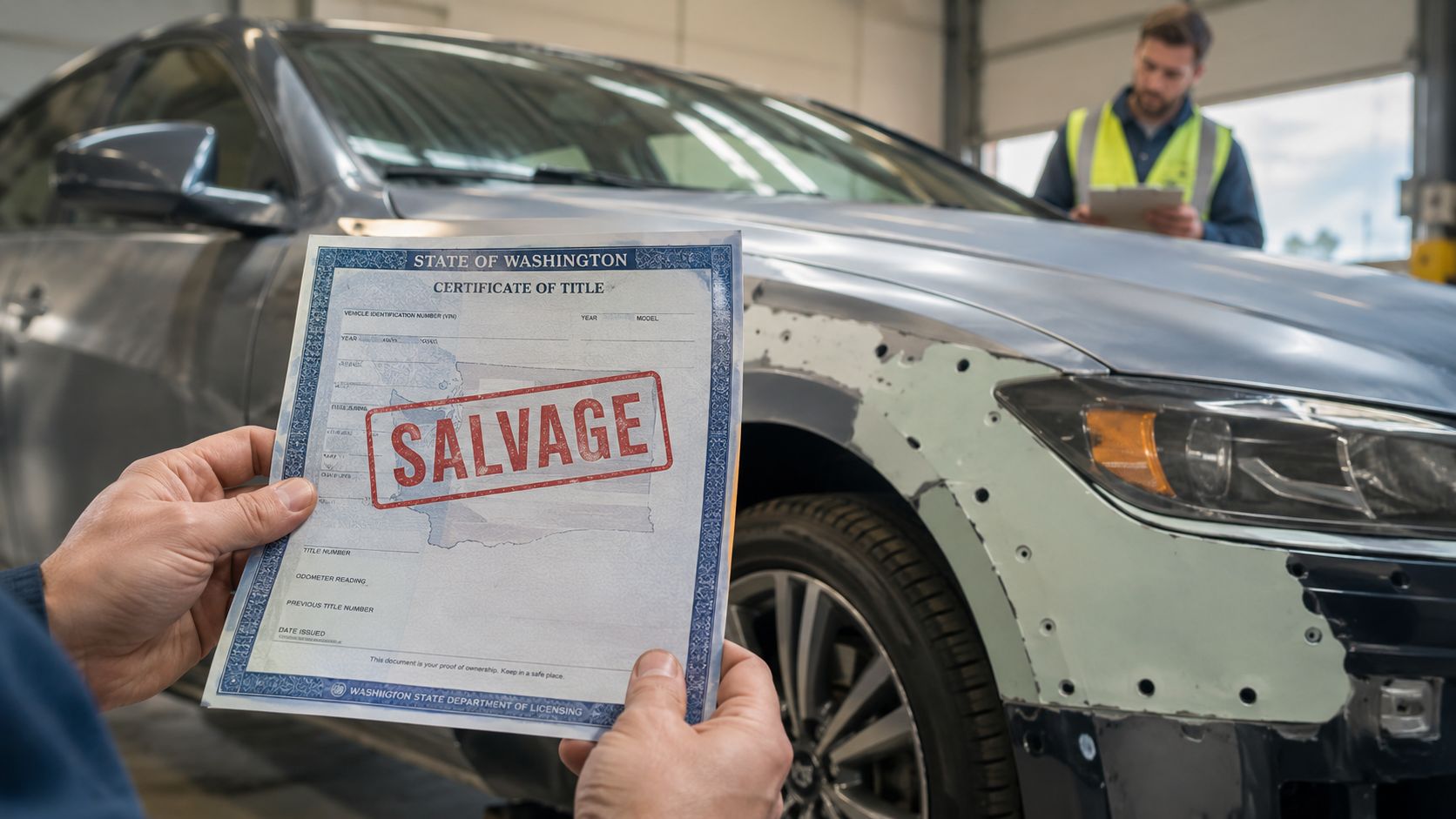
A Washington driver can hear “salvage title” and assume the state prints a separate document with that exact label. The process is a little different. Washington does not issue a separate salvage title certificate. Instead, the Department of Licensing brands the title history, and if the vehicle is later rebuilt and approved, the result is a title branded Rebuilt, not a fresh clean title (Washington DOL salvaged vehicles).
The report usually starts with the insurer, self-insurer, or wrecker that declares the vehicle destroyed or wrecked. Under WAC 308-56A-460, the rebuild track later requires the title paperwork, a vehicle inspection certificate, and a bill of sale from the insurer, owner, or wrecker that reported the destruction (WAC 308-56A-460). In practice, the DOL record becomes the file that matters. A mechanic's opinion can help explain the repairs, but it does not replace the branded title history.
What the brand really tells the next owner
The brand is a history marker. It tells the state and future buyers that the vehicle went through a total-loss or destruction process, then came back through inspection and paperwork before it could return to the road. That does not automatically mean the car is unsafe. It does mean the car carries a documented past that buyers, lenders, and insurers will see differently from an unbranded vehicle.
The easiest way to read it is this, the brand follows the vehicle, not the mood of the seller. A driver can make a car look presentable again, but the title record still shows that it passed through a salvage and rebuild process.
If you want a plain-English overview before you compare it with the state rules, this explanation of what a salvage title means gives a useful starting point.
Bottom line: Washington brands the record, not just the metal. The paperwork is the event.
That is why buyers should ask what the DOL record shows, not just whether the car appears repaired. A vehicle can drive well and still carry a branded title that changes how insurers, lenders, and future buyers treat it.
Why the Threshold and Model Year Change the Outcome
A Washington driver can look at the repair estimate and still miss the turning point. The state is not asking whether the car feels worth fixing, it is looking at pre-loss value and whether the loss crosses the salvage threshold. Washington's current threshold is $11,780 under the state regulation, and that amount changes only when the annual increase reaches $50. A claim that seems modest on paper can still tip into totaled territory once that number is applied.
Model year changes the result too. Washington treats vehicles 5 years old or newer under a different rule than older vehicles, and vehicles 6 to 20 years old can be handled differently depending on pre-damage value and the threshold criteria. That means age is not just a background detail, it changes how the state reads the loss. Value still sits at the center, but the vehicle's age bracket decides which version of the rule gets used.
A quick comparison of how the rule works
| Vehicle Profile | Model Year Bracket | Threshold Met? | Likely Branding Result |
|---|---|---|---|
| Newer car with strong market value | 5 years old or newer | No | Less likely to be branded |
| Newer car with unusually low pre-loss value | 5 years old or newer | Yes | Can still be branded |
| Older daily driver with modest value | 6 to 20 years old | Yes | More likely to be branded |
| Higher-value older vehicle | 6 to 20 years old | No | May avoid branding |
That chart shows the practical pattern. Two cars can have similar damage, but the title outcome can still differ because Washington looks at pre-damage retail value and the model-year bracket, not just the repair bill. A bumper, a light, or a fender may be what you see first, yet the valuation file is what decides whether the loss crosses the line.
For claim handling, that is where owners need to pay attention. If the insurer sets the pre-loss value too low, the vehicle can fall under the threshold more easily, and the brand can follow. If the value is corrected upward, the total-loss decision may shift, or at least become harder for the carrier to defend.
For a broader look at how branded paperwork affects registration after the fact, see this guide to salvage vehicle registration in Washington.
The Washington Rebuilt Title Process Step by Step
A rebuilt Washington title begins with paperwork, not with the repair bay. When a vehicle has been reported destroyed or wrecked and later rebuilt, the state wants the ownership trail, inspection proof, and title documents lined up before it will issue the next title. For a Washington driver, that means the file matters as much as the work under the hood. If the documents are incomplete, the rebuilt title path slows down even when the repairs look finished.
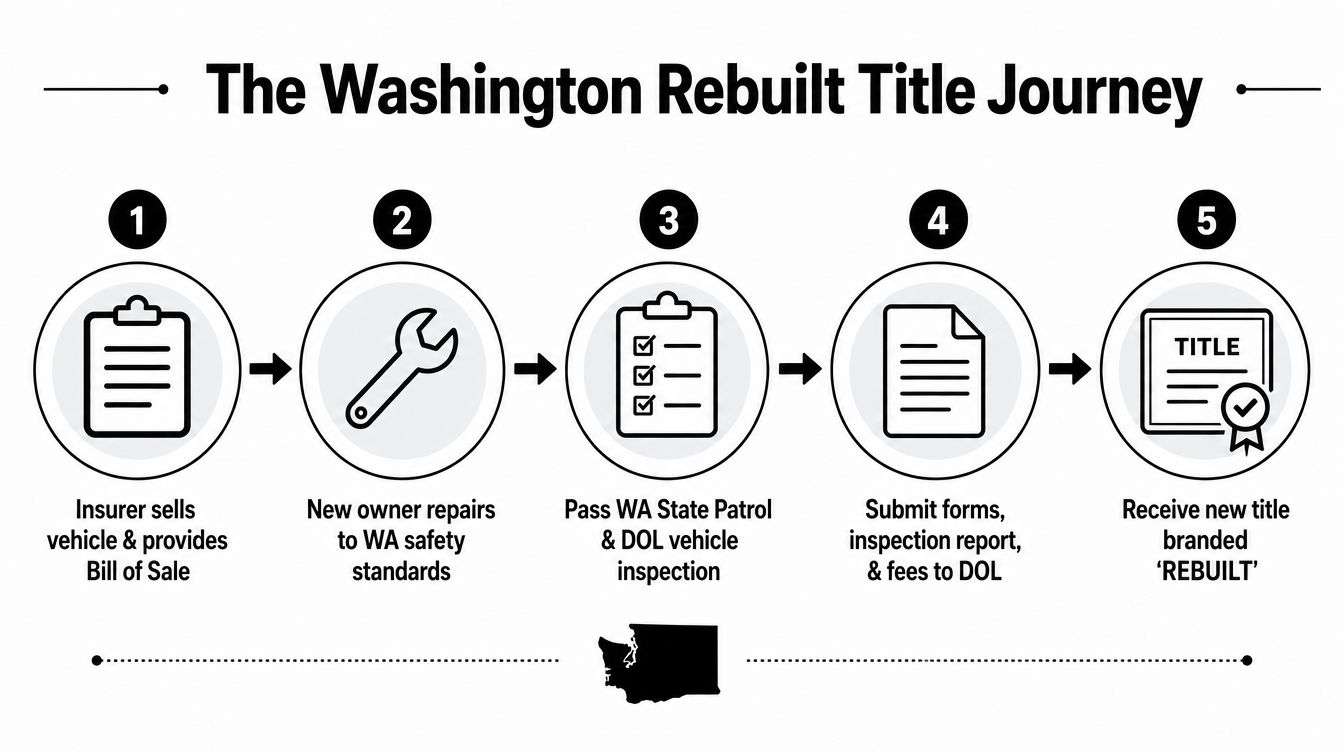
The usual starting point is the bill of sale from the insurer, owner, or wrecker that handled the loss. From there, the applicant completes the DOL paperwork and follows the inspection step tied to that title path. Only after those pieces fit together does the rebuilt title get issued. If the paperwork is out of order, the state treats the application like an incomplete claim file, which is often how it feels to the owner too.
The inspection part confuses a lot of people because the path depends on how the vehicle changed hands and why it is being titled again. The Washington State Patrol explains that if you own a vehicle considered a total loss and want to rebuild it for personal use, you do not need a WSP inspection, but the DOL still requires the inspection certificate and ownership documents when a title is issued after the rebuild path is completed (WSP rebuilt/salvage guide). That is the kind of detail that can save a buyer from assuming every rebuild needs the same inspection sequence. It does not.
The path many owners miss
Some owners also run into the ownership-in-doubt route. State guidance says a person can apply for a three-year registration without title, then request a Washington title later. That option matters when a vehicle comes from another state or when the ownership paper trail is too messy for a normal transfer.
For drivers who are trying to keep the process moving, a Washington licensing agent is usually the first stop. The state's inspection system is built around that front-end paperwork, and the WSP will not inspect a vehicle without the proper request form and original documents in hand. The sequence works like a chain, each link has to hold before the next one can be used. If you want a broader registration explanation tied to this path, this page on salvage vehicle registration in Washington is a useful companion.
Practical rule: do not schedule work, buy parts, or assume the title path is fixed until you know which DOL process is actually required.
A rebuilt title is less about one signature and more about proving identity, ownership, and rebuild status in the order the state will accept. That order is what separates a car that is merely repaired from one that can legally re-enter the title system.
For drivers who also want to understand how insurers handle the same vehicle on the front end, insuring a salvage title vehicle shows why title status keeps affecting the claim even after the loss is settled.
How Branding Affects Insurance Settlements and Resale Value
A Washington salvage-branded vehicle affects money in two directions. First, the insurer's total-loss call is shaped by the same threshold framework that triggers branding. Second, once the title is branded, the car's market story changes for the rest of its life. Buyers read the brand as a warning sign, even when repairs were done properly and the vehicle passes inspection.
That's why settlement timing matters so much. The first offer often becomes the baseline for everything that follows, and if the valuation is off, the owner may be accepting a lower number than the market really supports. In that moment, the strongest response is often to challenge the vehicle's pre-loss value rather than argue about every repair line item.
For drivers who want a broader view of post-loss coverage and title issues, insuring a salvage title vehicle is a practical external reference to compare insurance questions with the title process.
Why branded history keeps costing money
The resale hit usually doesn't stop when the repairs are finished. A branded title narrows the buyer pool, and many shoppers walk away once they see the record. Even a well-repaired vehicle can sit in the market with a built-in trust problem, because the brand tells a story that a clean title never has to explain.
That's where diminished value enters the conversation. If the car was not at fault, the owner may have a stronger argument that the market loss happened the moment the claim was opened, not months later after repairs. A careful valuation report can help show what the vehicle was worth before the loss and why the first offer should not be the final answer.
Helpful frame: the title brand is not just a paperwork issue, it becomes a resale issue every time the car changes hands.
Some Washington owners also use an independent appraisal to push back on a total-loss figure before the title brand is locked in. Total Loss Northwest offers certified, independent auto appraisals for total-loss and appraisal-clause disputes in Washington, which can be useful when a carrier's software doesn't reflect the actual local market. That kind of report is often most effective before the paperwork hardens into a branded history.
What Washington Buyers and Sellers Should Do Before Signing
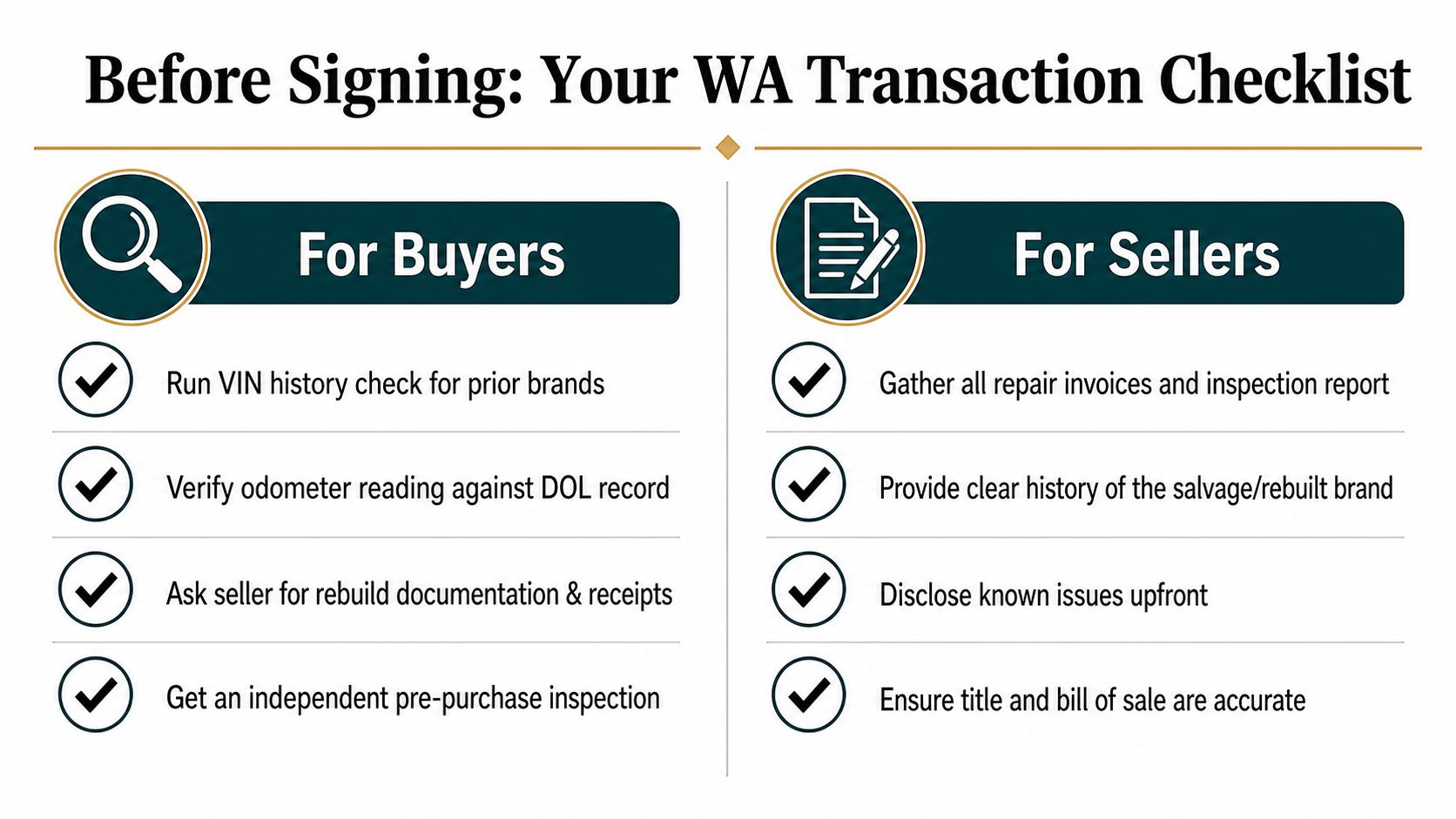
Buyers should treat a Washington salvage title or Rebuilt brand as a starting point for questions, not a final answer. Start with the VIN history, then compare the odometer reading, the DOL record, and the seller's story about what was repaired. If the paperwork doesn't line up, the safest move is to slow down.
Sellers need to be just as careful. A branded title already communicates that the vehicle went through a total-loss or rebuild path, so hiding that history usually creates more trouble at closing than it solves. The cleanest private-party sale is the one where the seller can show the inspection report, the rebuild records, and the title brand without hesitation.
Red flags that should slow the deal down
- Missing rebuild paperwork: If the seller can't produce the WSP-related documents or the bill of sale tied to the destroyed vehicle, keep asking questions.
- No clear title brand: A vehicle with a hidden salvage history but no matching Washington brand deserves extra scrutiny.
- Inconsistent repairs: Panels, airbags, frame work, and receipts should tell the same story.
- Seller pressure: Anyone rushing you to sign before you review the title and history is creating risk, not urgency.
A buyer doesn't need to know every repair wrench turn, but the paperwork should make sense. A seller doesn't need to overexplain the past, but they do need to tell the truth about it. In Washington, the title brand is the state's memory, and private-party deals should respect that memory.
When to Bring in an Independent Appraiser
If the insurer's offer feels too low, an independent appraiser is worth a hard look. That's especially true when the vehicle is high-value, collectible, customized, or when you were not at fault and the valuation is fighting the local market instead of reflecting it. A good appraisal can give you a documented pre-loss value that's harder for the carrier to dismiss.
The strongest use case is a disputed total-loss settlement. If the number is close to the threshold and the valuation seems thin, a certified report can change the negotiation posture fast. That's also where the independent car appraiser route makes sense, because the dispute isn't really about sentiment, it's about proof.
Practical rule: if the offer feels generic, ask for a valuation that matches your actual vehicle, not a software average.
DIY negotiation can work when the gaps are small and the paperwork is clean. When the vehicle is unusual, the loss is contested, or the total-loss decision could shape the title brand, professional help is often the more efficient move.
If you're staring at a Washington total-loss offer or trying to make sense of a branded title, Total Loss Northwest can help with independent appraisals and valuation disputes tied to the claim. Visit Total Loss Northwest to review your options and see how a documented valuation can support your next step.