A branded title vehicle is a car whose official title carries a permanent state-issued brand, such as salvage, flood, or lemon, and that brand stays with the vehicle for life. In practice, that mark can mean 50%–70% lower value for salvage titles, 30%–50% lower value for rebuilt or reconstructed titles, and 40%–60% lower value for flood or fire brands, compared with clean-title vehicles source.
You're probably here because a listing looks good, the price looks tempting, and the title history doesn't feel simple. That's exactly where people get burned, because the brand isn't a temporary note, it's a permanent legal signal that follows the car through resale, financing, and insurance decisions California DMV branded titles.
What a Branded Title Vehicle Actually Means
A driver can do everything right after a serious crash, get the car repaired, and still end up with a title that follows the vehicle like a scar on the record. That's the point of a branded title vehicle. The brand is there to preserve the history of what happened, and that disclosure stays with the vehicle through future sales and registrations California DMV branded titles.
The brand is part of the ownership record
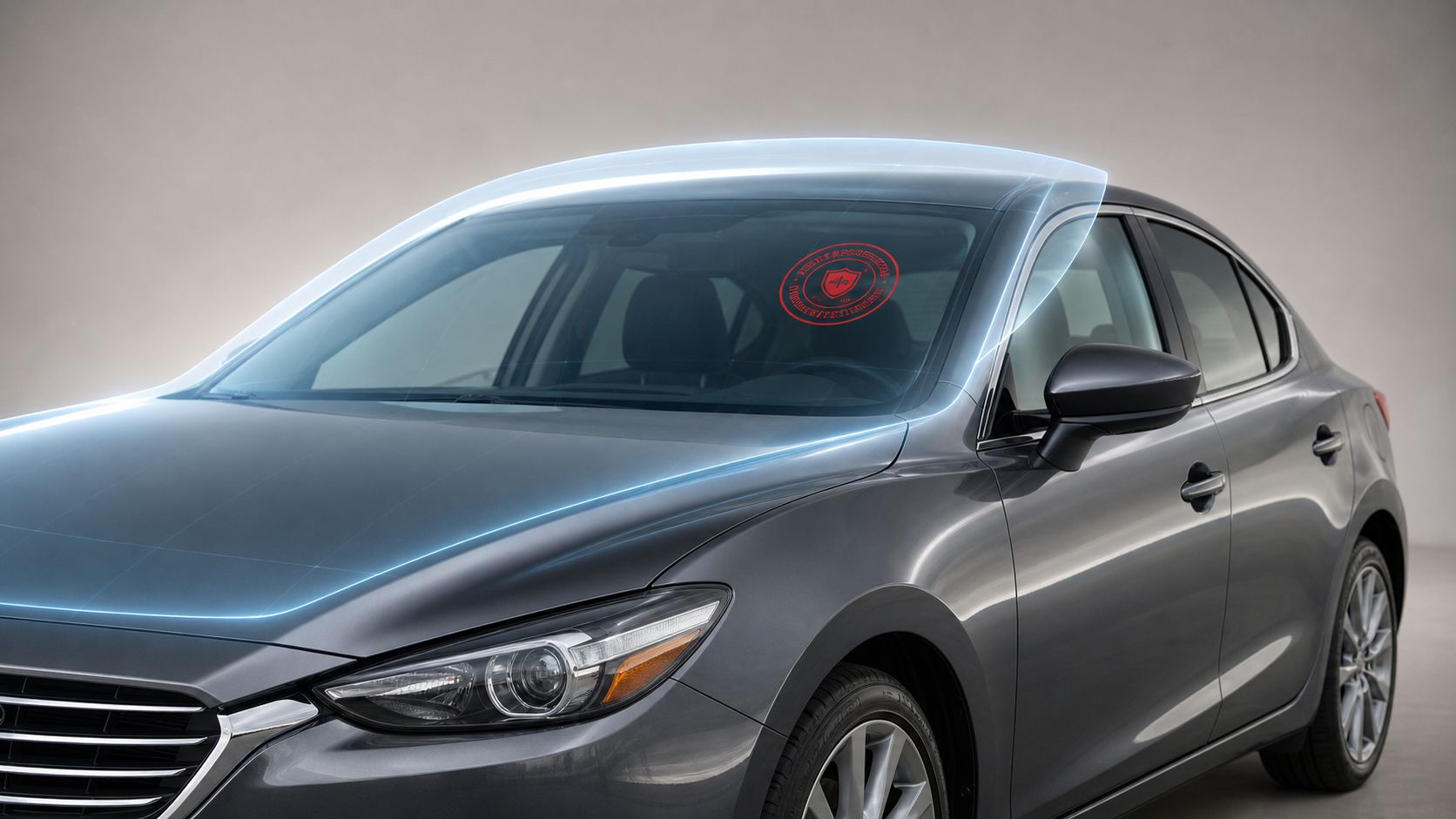
California places the brand in a red “VEHICLE HISTORY” box on the title document, which makes the disclosure hard to miss when the title is reviewed California DMV branded titles. AAMVA also standardizes where title brands and odometer disclosures appear so the information is human-readable and machine-readable across jurisdictions AAMVA certificate of title specifications.
That permanence matters because the brand changes the way the market sees the car. Buyers, lenders, and insurers can verify it through title records and history reports, which affects underwriting, resale liquidity, and valuation methodology. It functions like a permanent note in the ownership file, one that tells future decision-makers something important happened.
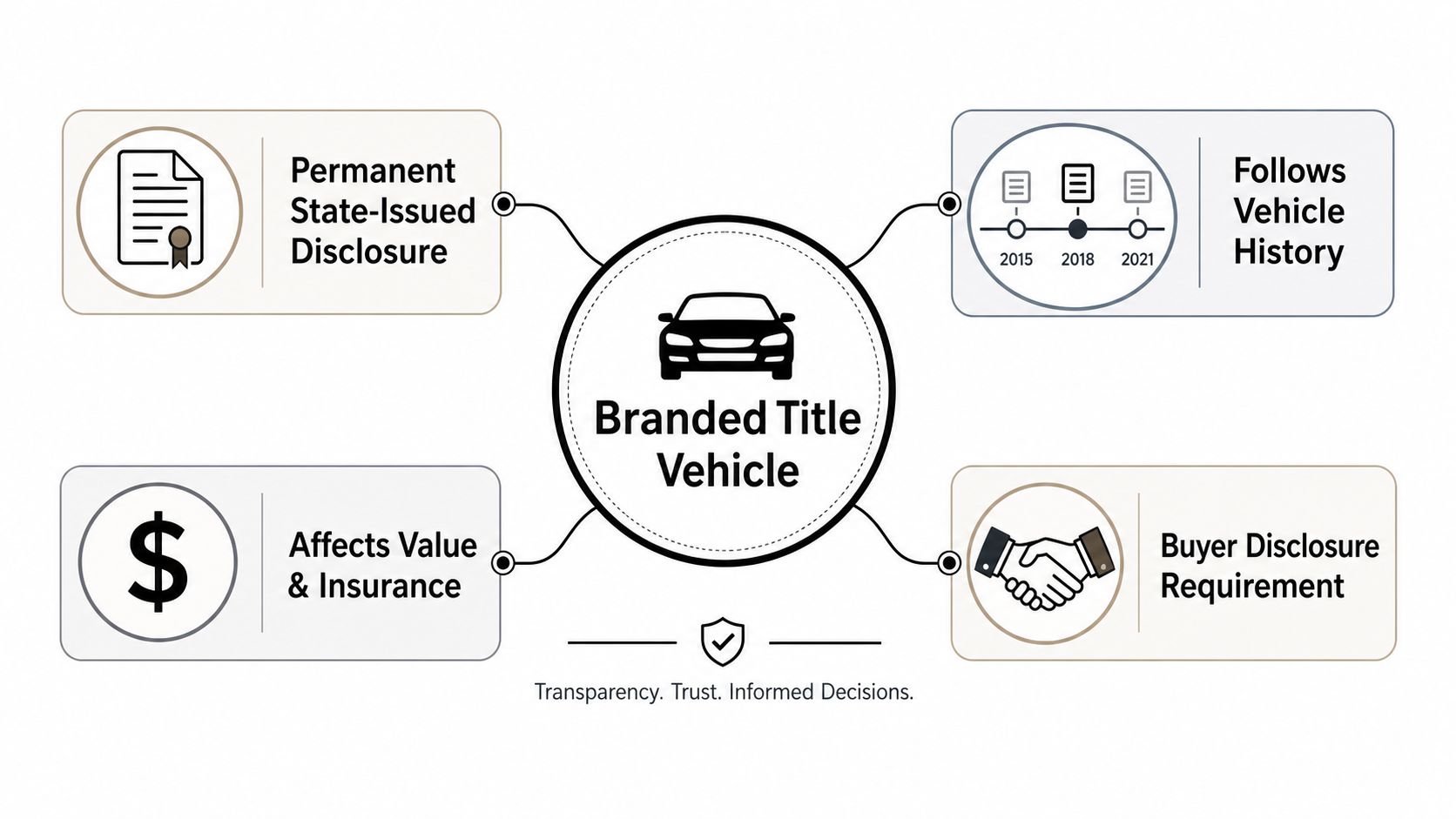
Practical rule: if the brand is on the title, the car is no longer a clean-history vehicle, even if the repair work looks tidy.
The reason this catches people off guard is simple. A clean-looking car can still carry a history that changes the deal entirely, and that's why a branded title is a legal disclosure, not a seller's opinion California DMV branded titles. If you are evaluating one, read the title first and the paint second. For a plain-language explanation of how salvage branding works in practice, see what salvage title means in practice.
The Main Types of Title Brands and What Triggers Each One
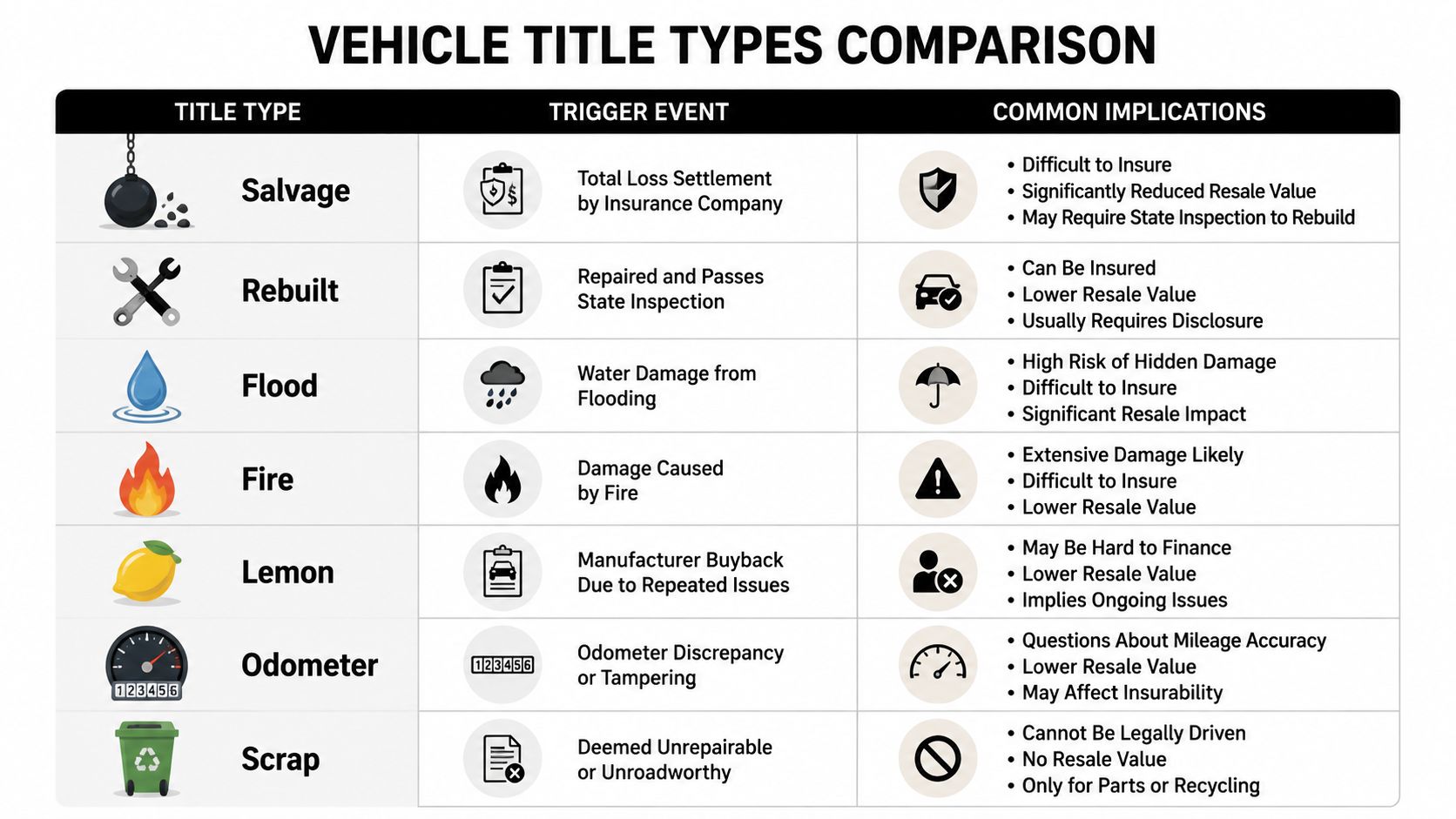
Different brands tell different stories, and the trigger matters more than the label. A salvage brand doesn't mean the vehicle is junk, it means the loss calculus crossed a threshold and the state recorded that event. A rebuilt car, by contrast, is one that came back through inspection, but the history still stays on the title branded title guidance.
Salvage, rebuilt, flood, and fire
Salvage is usually tied to a total-loss decision, often when repair costs reach a statutory threshold, with one cited example at 75% or more of a vehicle's current value branded title guidance. That's a repair-economics rule, not just a damage-severity label. Once the insurer declares the car a total loss, the brand is issued, and any return to the road usually requires a state inspection.
Rebuilt or reconstructed means the salvage vehicle was repaired enough to pass inspection, but the brand remains permanent branded title guidance. Flood and fire brands deserve extra caution because hidden electrical, corrosion, and heat-related damage can survive a cosmetic repair and show up later in ways a quick walkaround won't catch branded title guidance.
Lemon, odometer, and scrap
A lemon brand usually points to a manufacturer buyback caused by repeated defects that couldn't be fixed within the warranty process branded title guidance. An odometer brand means the mileage record was compromised, which is a different problem from body damage because it distorts wear, maintenance planning, and value. Scrap or junk-related branding signals the car's road use is at the end of the line in many states, so any roadworthy return is a state-by-state legal question, not a guess.
The brand type tells you what happened. The repair quality tells you whether the car is worth considering at all.
Salvage vehicle registration and related title steps
How Title Brands Impact Vehicle Value and Insurance Settlements
A branded title changes the deal long before anyone opens the hood. Buyers price in uncertainty, lenders do the same, and insurers know the vehicle no longer sits in the clean-title lane. That is why a car with a branded history can sell for far less than a similar car with no brand, even when it looks repaired on the surface impact of branded titles on vehicle values.
Why the value gap exists
The gap starts with the loss event itself. Once an insurer decides the repair cost has crossed the state's total-loss threshold, the car is pushed into a different market category, and that history follows it through resale and financing. Some jurisdictions use cutoffs such as 75% in New York, 80% in Florida, and 100% in Texas, while Washington is listed with a total loss formula approach instead of a fixed percentage impact of branded titles on vehicle values.
| Title Brand | Typical Value Loss |
|---|---|
| Salvage | 50%–70% |
| Rebuilt or reconstructed | 30%–50% |
| Flood or fire | 40%–60% |
Those ranges reflect what buyers are willing to risk after a loss record shows up. A salvage brand tells the market the vehicle was severe enough to be totaled. A rebuilt or reconstructed brand says it returned to the road after repairs, but the past damage is still part of the price. Flood and fire brands usually draw even more caution because the risk is not just body damage, it can include hidden electrical, corrosion, and heat-related problems that are hard to confirm in a quick inspection.
Insurance costs don't disappear after the repair
Insurance can stay expensive after the body shop work is done. Branded titles can raise insurance costs by 20%–40% versus an equivalent clean-title vehicle, because the insurer has a harder time verifying prior damage and repair quality. The practical result is simple. A lower purchase price may still leave you paying more over time through coverage, financing friction, and weaker resale value impact of branded titles on vehicle values.
The settlement side can be just as unforgiving. In a total-loss claim, owners get shortchanged most often when the carrier's valuation misses trim, options, condition, or local market scarcity. A branded-title history makes that fight more delicate, because the vehicle cannot be compared like a standard clean-title car. The repair history, the title brand, and the actual market for that specific vehicle all matter, and an owner who does not challenge bad assumptions can lose value twice, once at purchase and again at settlement.
For owners trying to document the registration side after a loss or rebuild, the salvage vehicle registration guide is a practical place to start.
Oregon and Washington State Title Brand Rules You Need to Know
Oregon and Washington buyers need local discipline because title-brand rules do not behave the same everywhere. A car can look ordinary on a national history report and still deserve a closer read at the state level, especially after a cross-border sale or a repair that happened before the paperwork caught up. The practical habit is to verify the title against the state record, then confirm the vehicle's status in NMVTIS, because permanent brands can follow the car from one state to another branded title overview.
What to check first in the Northwest
Washington's total-loss formula approach means the trigger is not tied to one universal percentage, so the carrier's paperwork and the state record carry extra weight. Oregon and Washington both reward the same discipline, do not trust the seller's summary until it matches official records and the VIN history. That is how title washing hides the trail, by making a branded past harder to spot after transfers impact of branded titles on vehicle values.
If you are in Washington and dealing with a salvage or rebuilt situation, the registration side can matter as much as the inspection side. This salvage registration guide is useful because it lays out the paperwork burden that follows a branded title, especially when a vehicle is being returned to road use after repair.
Why permanent records matter
NMVTIS exists to preserve the brand even when the car moves across state lines, and that makes the history harder to erase than the color of a title document or a seller's description branded title overview. A clean-looking title issued elsewhere does not always mean the car has a clean past. That is why the title record, the VIN report, and the state DMV file need to agree before you move forward.
If the paperwork is inconsistent, assume the risk is real until you prove otherwise.
For buyers, the best move is simple. Use the title record as the anchor, then compare it with the vehicle history report and the state's requirements for re-registration or inspection. That extra step is what separates a careful purchase from an expensive lesson.
Steps to Verify, Inspect, and Dispute a Branded Title
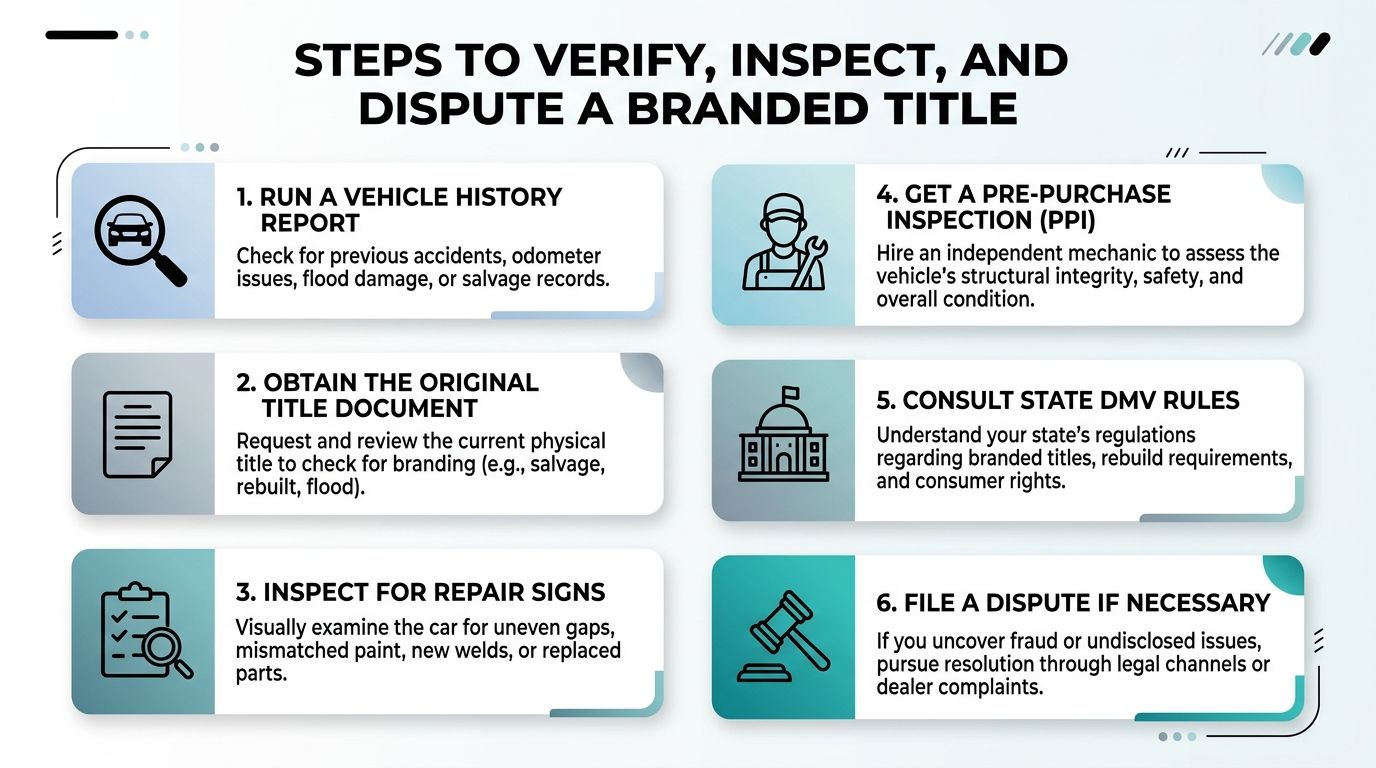
A branded title issue is easiest to handle early, before money changes hands or a claim file closes. The process is part records check, part physical inspection, and part stubborn follow-through. A seller's paper packet can be neat and still leave out the one thing you need to know, which is whether the car's repaired condition matches its branded history branded title verification guidance.
Start with records, then test the car
- Run a vehicle history report. Match the VIN against the brand history and look for inconsistency across states.
- Obtain the original title document. The actual title matters more than a verbal description or a copied listing.
- Inspect for repair signs. Uneven panel gaps, mismatched fasteners, and suspiciously fresh coatings tell you where to focus.
- Get a pre-purchase inspection. A qualified mechanic is especially valuable for flood and fire cars because hidden electrical and corrosion damage can survive cosmetic repair branded title verification guidance.
Push for evidence, not promises
Ask for repair invoices, photos from the rebuild, and any state inspection documentation. If the car was rebuilt properly, there should be a traceable repair path, not just a story about “light damage” and a clean-looking detail job. The buyer shouldn't have to guess whether airbags were replaced, wiring was dried out, or structural work was done by someone qualified.
For owners disputing a brand or a settlement decision, the same records discipline applies, but the target changes. You're trying to prove the vehicle was either branded incorrectly, valued too low, or repaired better than the insurer assumed. A dispute without documents is just frustration, so anchor it to the title record, inspection findings, and the repair trail.
Know when the issue needs escalation
If the title brand doesn't match the car's condition, or the damage history seems incomplete, file the dispute while the evidence is still fresh. The earlier you reconcile the records, the better your odds of avoiding a bad purchase or a weak claim outcome. A branded title doesn't disappear because someone cleaned up the interior and printed a shiny listing.
How an Independent Total-Loss Appraisal Can Help
A branded title problem often turns into a valuation problem, and that's where many owners lose ground. If an insurer leans on software and broad averages, the number can come in low before anyone has challenged the condition, equipment, or market context. Independent appraisal work gives the owner a separate valuation path grounded in the actual vehicle rather than the carrier's first pass.
Where independent appraisal fits
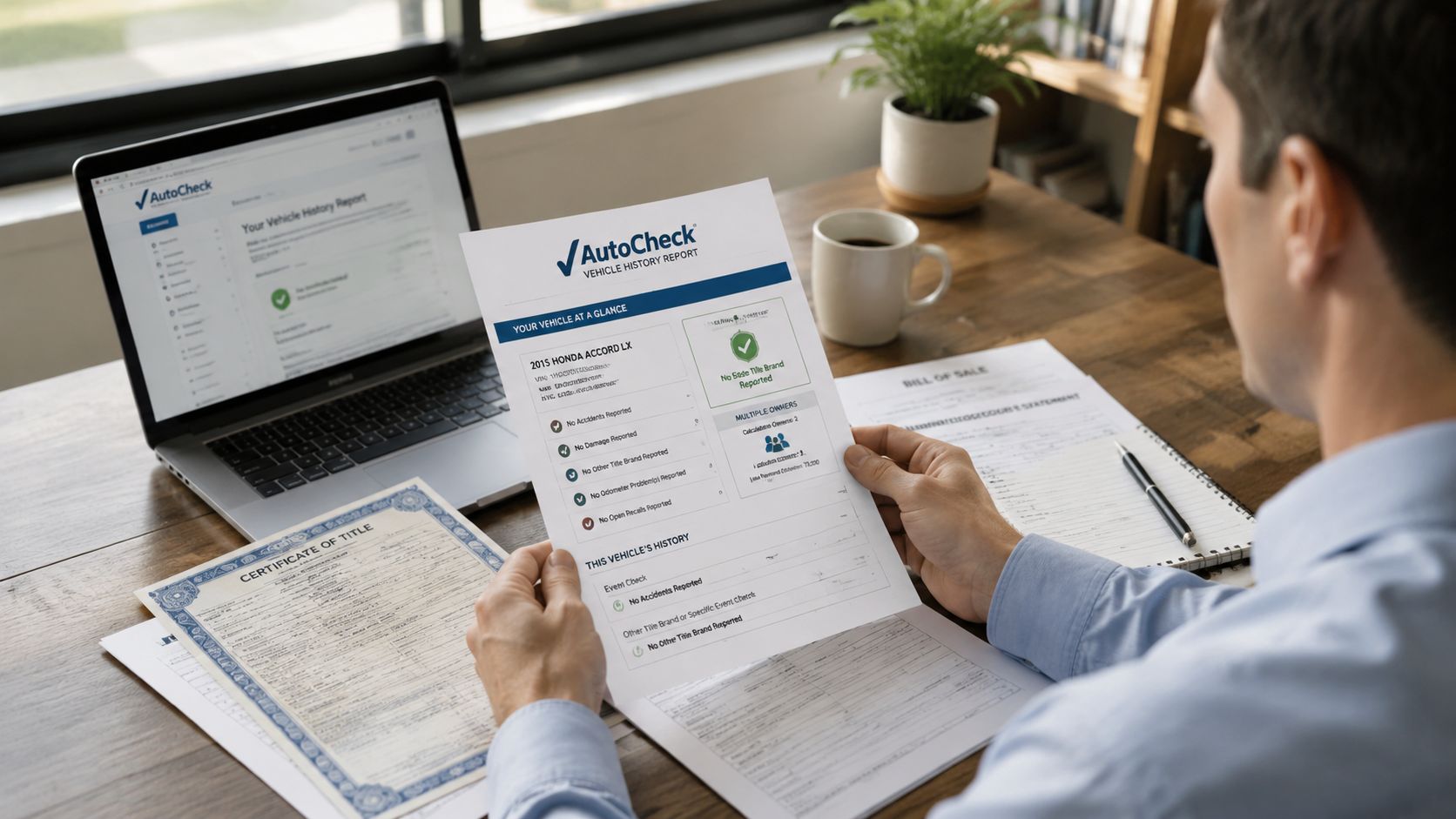
A certified independent appraiser can invoke the Appraisal Clause and replace the insurer's biased valuation software with a market-based report that reflects real comparable vehicles and documented condition. That matters most for not-at-fault accident claims, total-loss files, and higher-value vehicles where trim, options, rarity, or collector status can move the number significantly. Total Loss Northwest offers independent insurance appraisal work for that exact kind of dispute, and the point is not to argue theory, it's to document value in a way that can hold up in negotiation independent insurance appraisal.
When a branded title is involved, the repair trail matters just as much as the title brand itself. If the vehicle lost data or repair records along the way, a resource such as professional data recovery can be relevant when owners are trying to rebuild the documentation chain that supports a claim or a dispute.
The right time to bring in a pro
This is most useful after you've verified the brand, checked the state record, and inspected the vehicle or claim file with a critical eye. At that point, the question is no longer, “Is this car branded?” It's, “What is the car worth, and what can I prove?”
Independent appraisal doesn't make a bad title clean, and it doesn't erase repair risk. It does give owners a better shot at fair treatment when the carrier's number ignores the vehicle in front of them.
If you're dealing with a branded title, a total-loss offer, or a diminished-value dispute, Total Loss Northwest can help you put the numbers back on solid ground. Visit Total Loss Northwest to review independent appraisal options and get a valuation built around the actual vehicle, not the insurer's first pass.