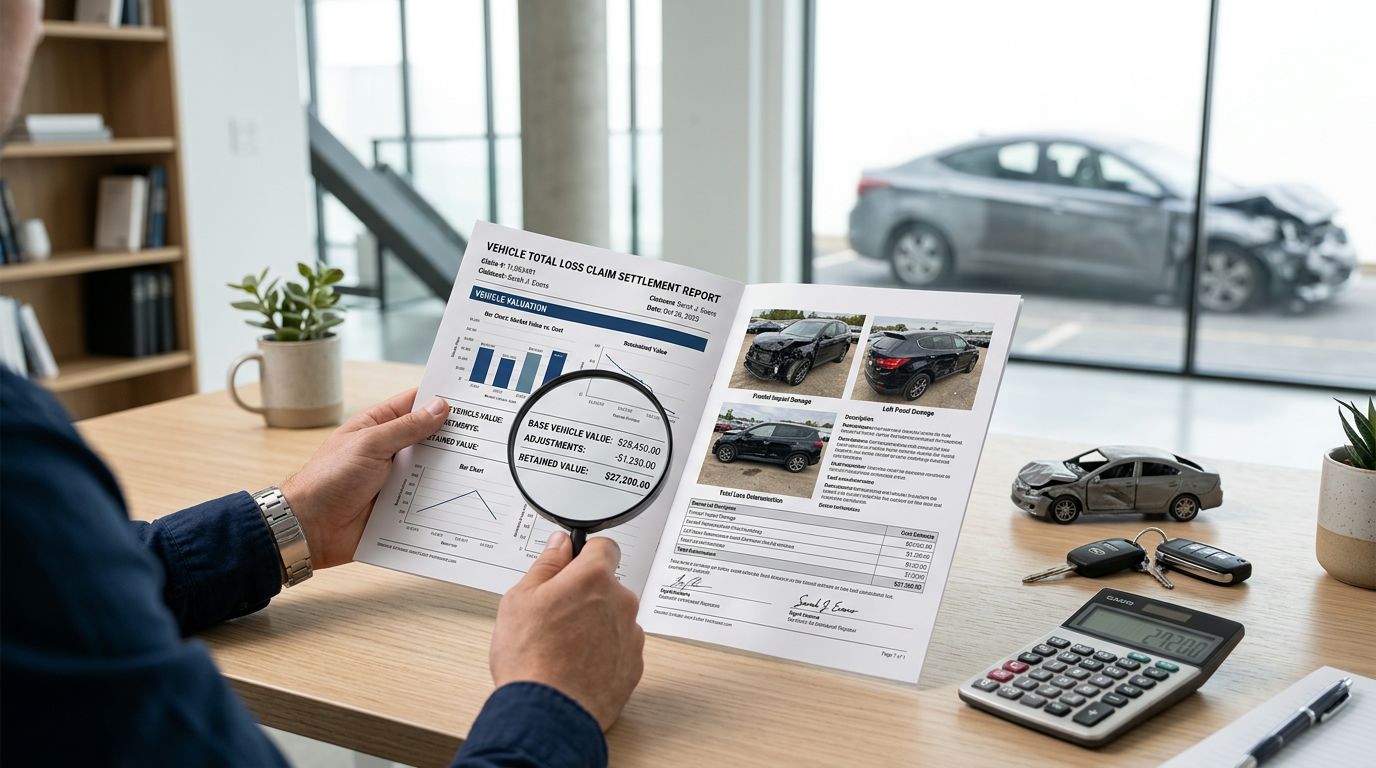
Your insurer calls it a valuation dispute, but you're usually staring at something more immediate. The vehicle's been declared a total loss, the diminished value number feels too low, or the comparables don't match your car at all, and now you have to decide whether to push for a negotiated fix or move toward something binding. That choice matters because it changes who looks at the evidence, how much pressure you can create, and whether the result depends on goodwill or enforceable authority.
| Criterion | Mediation | Litigation |
|---|---|---|
| Main purpose | Facilitated agreement | Binding court outcome |
| Cost burden | Usually lower | Usually higher |
| Time burden | Usually shorter | Usually longer |
| Control over outcome | Shared by the parties | Shifted to judge or jury |
| Enforceability | Depends on agreement | Backed by court power |
| Best fit | Close valuation disputes, room to compromise | Refusal, bad faith, or need for binding leverage |
When that disagreement starts, many claimants also need better claim-file organization before they can do anything useful. Tools that help extract and compare insurance data can make the record easier to work with, especially when a valuation dispute turns on comparables, condition notes, or missing documentation, and one example is insurance data extraction tools.
When a Vehicle Valuation Dispute Becomes a Process Decision
A claimant usually doesn't wake up wanting a legal process. They wake up to an offer that doesn't match the car, the repairs, or the loss. The insurer may say the vehicle is a total loss, offer a diminished value figure that feels disconnected from the market, or reject the requested valuation entirely. At that point, the dispute isn't just the number, it's who gets to test it and what happens if the other side won't budge.
The number is only half the fight
In auto claims, the valuation issue often starts as a data problem. Which comparable vehicles count, how were the adjustments made, and did the insurer account for mileage, trim, packages, or prior condition? Those questions matter because a claimant can have a good number and still lose advantage if the file is thin or the next step is unclear.
That's why process choice matters so much in total loss and diminished value disputes. A voluntary negotiation path can preserve room to trade information and settle without formal escalation. A court-driven path can force the issue, but it also changes the tone immediately and usually adds layers of procedure.
Practical rule: if the dispute is really about valuation, don't choose the process before you know what evidence you have.
For claimants who are still collecting records, the choice is even more sensitive. The strongest position usually comes from understanding the claim file first, then deciding whether the dispute needs a facilitated conversation, an independent valuation, or a binding forum.
Understanding Mediation, Litigation, and Appraisal
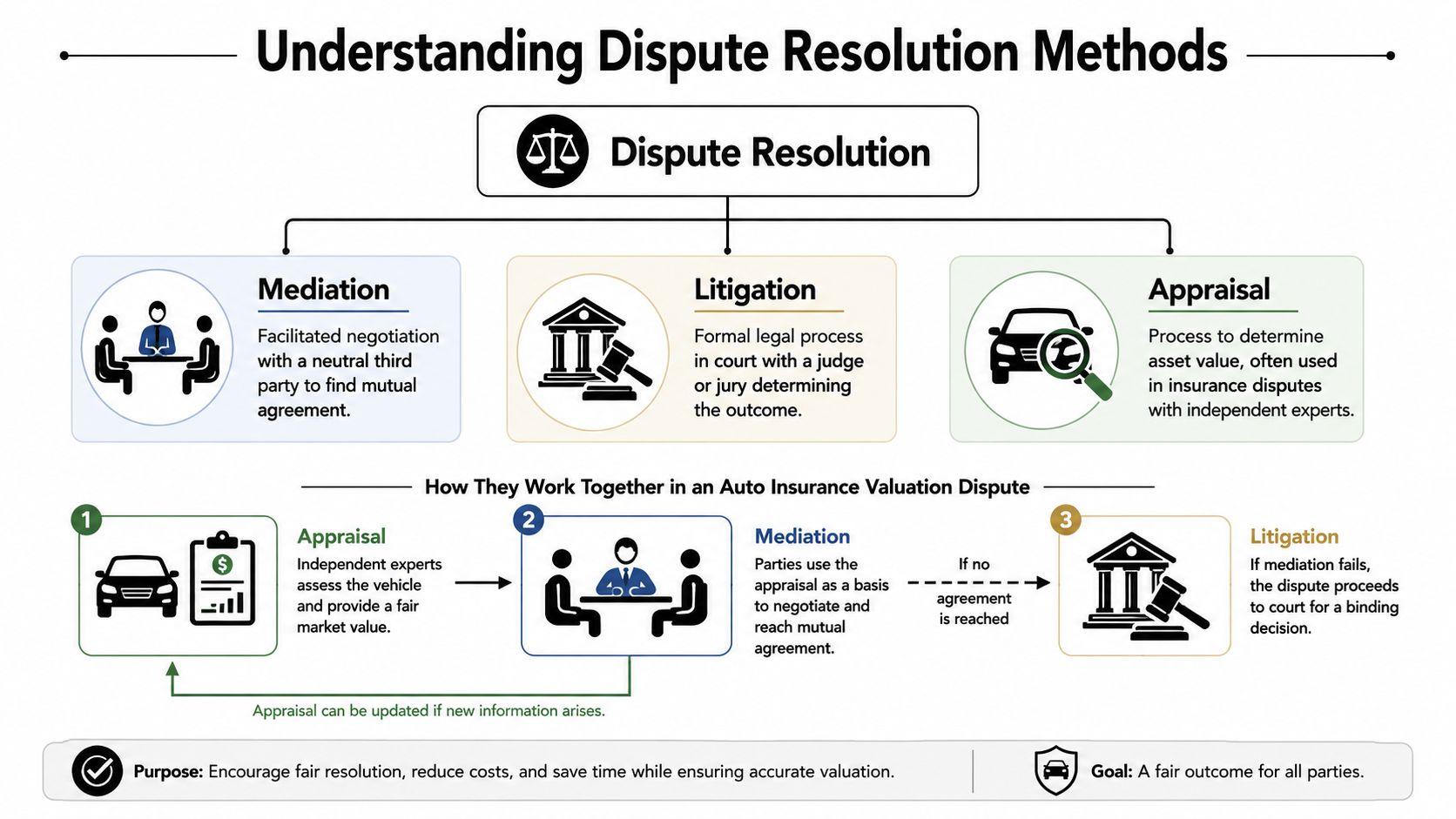
A vehicle valuation dispute can follow three different paths, and each one answers a different question. Mediation is a facilitated negotiation, where a neutral helps the parties try to reach a voluntary agreement. Litigation is the formal court path, with pleadings, discovery, hearings, motion practice, and trial, and it can end in a binding judgment. Appraisal is separate again, it is a valuation process that may be available under the policy's appraisal clause and is used to determine the amount of the loss rather than to decide every legal issue.
What each path really does
In a typical auto valuation fight, mediation tries to close the gap by getting both sides to agree on a number or a compromise. That works best when the disagreement is real but still has room for movement. Litigation does not start with compromise. It creates a formal process for evidence exchange, legal rulings, and enforcement if the case reaches judgment.
Appraisal sits in a narrower lane. It is not a friendly conversation, and it is not a full lawsuit. It is a structured valuation route that can be useful when the number is the dispute and the policy gives both sides that mechanism. The appraisal clause matters because it can change the sequence of the dispute without pushing every issue into court.
Why the distinction matters in claims work
A lot of confusion comes from treating appraisal like a lawsuit in miniature. It is not that. It is often better understood as a policy-based valuation track that can support later negotiation, or sometimes reduce the need for court at all. A claimant should read the policy language carefully and preserve records before pushing into any formal step.
For a plain-language overview of the process used in valuation disputes, Total Loss Northwest's insurance appraisal process page is a useful reference point.
Comparing Costs, Timelines, Control, and Influence
A vehicle valuation dispute often turns into a process choice because each path carries a different level of friction. Mediation is usually the lower-cost route, while litigation tends to demand far more time, lawyer effort, and procedural work. One comparative analysis at GCAAM puts mediation around $2,000–$5,000 per party and litigation around $15,000–$20,000 per party, with mediation usually resolving in 2 to 6 months compared with 12 to 27.7 months for litigation. The same source says mediation can be about 60% faster and cut legal costs by 60% to 80%, while a separate European Parliament analysis found average litigation costs in the EU of €10,449 versus €2,497 for mediation.
Settlement timing matters because a valuation dispute can sit unresolved long enough to affect how quickly money moves. For a broader sense of how settlement timing varies in car claims, this overview of average car accident settlement time gives helpful context. A U.S. Department of Justice review also found mediation groups had an average 11% improvement in settlement rate versus comparison groups, along with gains in time, staff hours, hearings, and cost savings, as summarized by the Justice Department review. That does not mean mediation always produces the right number, only that it often moves cases through the system with less drag.
| Criterion | Mediation | Litigation |
|---|---|---|
| Decision-maker | The parties, with help from a neutral | Judge or jury after formal process |
| Valuation evidence | Can be used to narrow the gap quickly | Used inside a broader legal contest |
| Settlement control | High, because both sides must agree | Lower, because the court can decide |
| Compliance pressure | Depends on voluntary agreement | Backed by judgment and enforcement |
| Procedural burden | Lower | Higher |
| Best use case | A valuation dispute with room to compromise | A dispute that needs coercive authority |
What claimants feel in real life
Control is the part claimants notice first. In mediation, a claimant can reject a low number, press for better comparables, or adjust the proposal without giving up the whole claim. In litigation, a stronger result is possible, but the case also moves on the court's schedule and under the court's rules.
Confidentiality is another practical difference. Mediation is usually private, while litigation creates a public record. That can matter when the file involves a high-value vehicle, repeated insurer conduct, or a claimant who does not want the dispute laid out in open court.
The least expensive route is not useful if the other side can ignore it.
That is the practical split. Mediation is negotiation with structure. Litigation is authority with structure. The right path depends on whether the claimant needs flexibility, enforceable pressure, or both.
How Independent Appraisals and the Appraisal Clause Change Influence
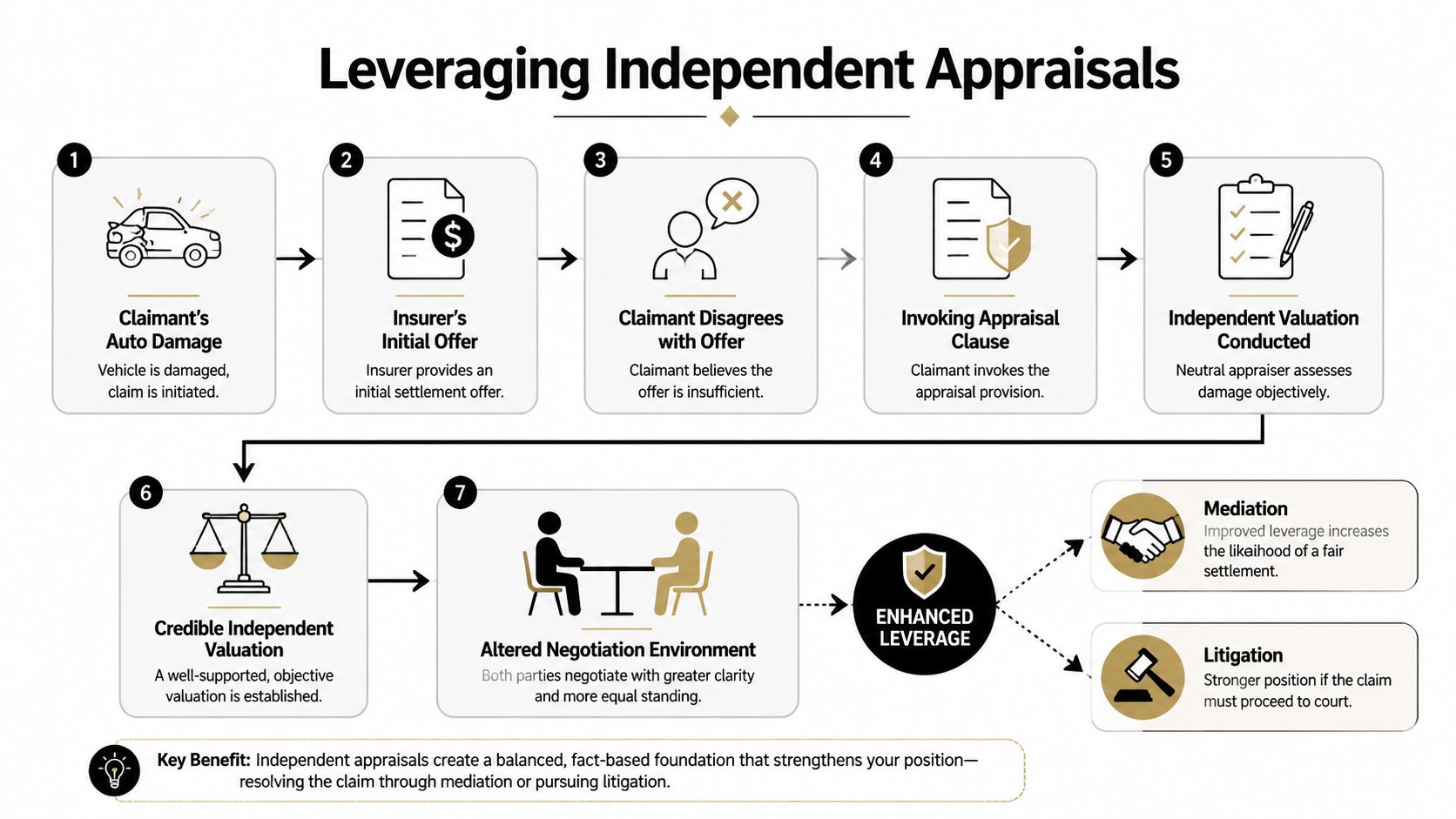
Independent valuation can shift a claim before anyone sits down with a mediator or files in court. A detailed report gives the claimant a documented basis for the requested total loss or diminished value number, so the discussion moves from opinion versus opinion to evidence versus evidence. The appraisal clause matters because it can create a policy-based route for resolving the amount in dispute without turning every disagreement into a courtroom fight.
What a strong appraisal file changes
A claimant who arrives with photos, repair records, mileage, equipment details, and comparable vehicles is in a stronger position than someone repeating a number without support. A solid file does not force the insurer to pay the requested amount, but it gives the claim a market-based foundation that can be used in negotiation and, when needed, in later dispute resolution.
Total Loss Northwest's insurance appraisal process reflects that practical approach. Certified independent appraisers invoke the Appraisal Clause for claimants and build detailed reports that challenge insurer valuation software with competing market evidence.
That difference matters in real files. The claimant gets an informed opinion on value, not a guarantee of payment, and that opinion can tell the claimant whether to keep negotiating, move into mediation, or prepare for litigation.
Why the clause matters before the next step
The appraisal clause can change the sequence of a dispute. In some files, it gives both sides a structured way to address valuation without turning the whole disagreement into a court case. In others, it tightens the numbers enough that the claimant can bargain from a credible position instead of arguing from a guess.
Its operation depends on the policy language and the jurisdiction, so the clause has to be read carefully. The practical value is simple. It can create a negotiated valuation first, while litigation remains available if the insurer refuses to deal with the number in a reasonable way.
Choosing a Path Based on the Dispute's Facts
A small gap in comparable-vehicle selection calls for a different response than a hard stop from the insurer. If the insurer and the claimant's appraiser disagree about a few vehicles but both sides are still talking, an independent appraisal can narrow the field without forcing the case into court. If the gap is large and the insurer is leaning on weak data or ignoring better comparables, the claimant may need appraisal evidence first, then mediation.
When the middle path works
Mediation tends to make the most sense when the number is close and the underlying problem is whether the parties can bridge the last stretch. In that setting, the mediator is useful because both sides still have room to move. The process works best when the claimant wants a structured negotiation, not a judicial ruling.
When the problem is more technical, appraisal often comes first. A credible valuation report can clean up the evidence before anyone tries to settle. That sequence helps because a settlement conversation is more productive when both sides are looking at the same market picture.
When the dispute has to become harder
Litigation starts to make sense when the insurer won't negotiate in good faith, the amount is material, or the claimant needs a binding judgment and enforcement power. Harvard's dispute-resolution guidance notes that mediation is typically nonbinding, while litigation produces court enforcement powers, which is exactly why the choice changes when compliance is the issue rather than valuation alone.
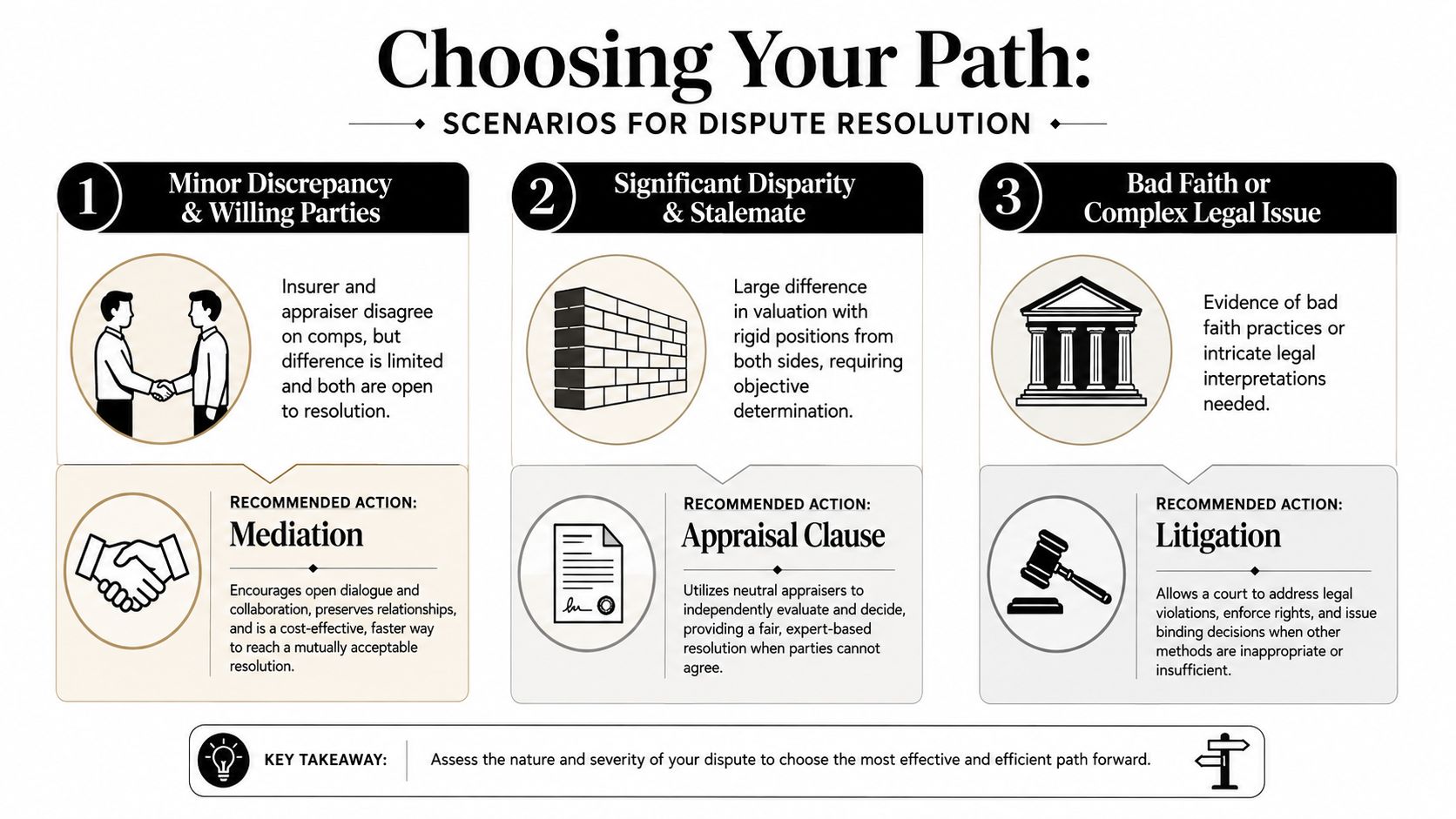
The cleanest way to think about it is this. Appraisal helps define the number. Mediation helps test whether the parties can live with it. Litigation exists when neither of those routes is enough to secure a fair and enforceable outcome.
Preparing Evidence and Protecting the Next Step
A lower-cost process still depends on a good record. Claimants should gather the claim file, repair estimates, photos, mileage, equipment lists, comparable-vehicle data, prior offers, correspondence, deadlines, and the appraisal language in the policy before they choose the next move. A documented file turns an appraisal from a general opinion into something the insurer has to address.
What to lock down early
- Vehicle condition evidence: Keep dated photos, repair records, and any pre-loss documentation that shows trim, options, and overall condition.
- Comparable data: Save the specific comparables you believe are fair, not just a summary of the amount.
- Offer history: Keep every valuation letter, email, and call note so the dispute timeline stays clear.
- Policy language: Read the appraisal clause before assuming the next step is mediation or suit.
- Written assumptions: Ask an independent appraiser to show how the number was reached, including the comparables and adjustments used.
A certified independent appraisal is strongest when the report explains the reasoning, not just the conclusion. That's what makes it useful in negotiation and, if needed, in a later dispute process.
If you're still trying to work through the claim before paying for a full legal fight, this negotiation guide for car accident settlements without a lawyer can help you organize the conversation around evidence instead of frustration.
Preserve the paper trail first. Once deadlines pass, leverage gets harder to rebuild.
Why Faster Is Not Always Better
Mediation is attractive because it's usually quicker and less expensive, but speed only matters if the resolution sticks. A nonbinding agreement can solve a file, but it can't force payment or action on its own. If the other side won't negotiate in good faith, or if compliance is a problem, litigation may be the only process that creates enforceable pressure.
That said, litigation has its own cost. It brings procedural burden, delay, and uncertainty, and it can swallow time that might have been used to settle a cleaner valuation dispute. The right choice isn't “fast versus slow,” it's whether the dispute needs flexible problem-solving, a credible valuation opinion, or binding authority.
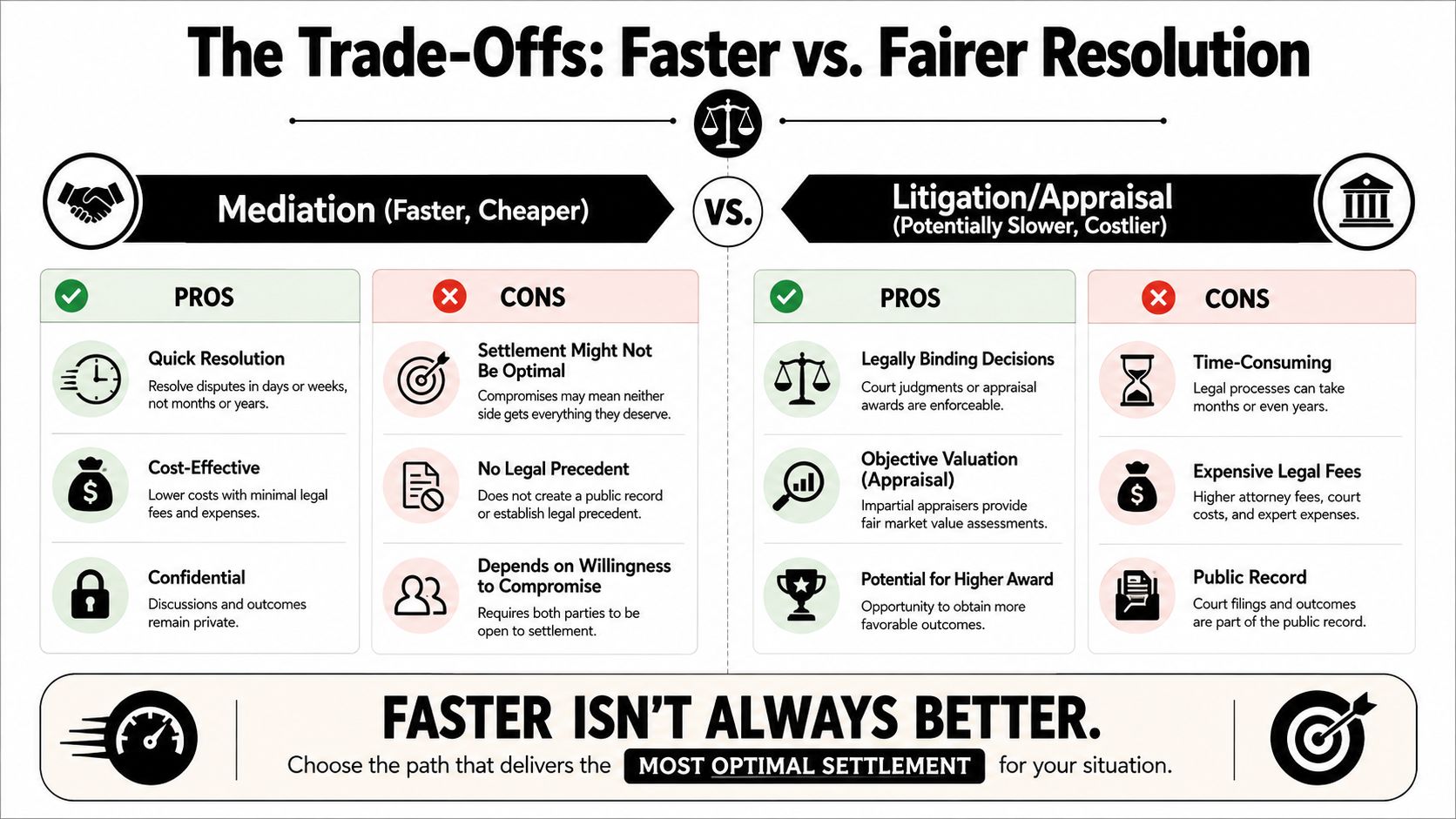
For a claimant with a solid market-value dispute, the sequence often looks like this. Get an independent appraisal, use that evidence in direct negotiation, then consider mediation if both sides are close enough to settle. If the insurer refuses to engage or enforcement is a primary concern, move toward litigation with the file already documented.
A Practical Recommendation for Claimants
Start with the dispute facts, not with a preferred process. If the issue is mainly the vehicle's value, get the file reviewed and use a documented appraisal to anchor the negotiation. If both sides are still close, mediation can help turn a narrow valuation gap into a settlement.
If the gap is substantial, the insurer is stonewalling, or you require binding influence, litigation may be the better fit. And if you need independent total loss or diminished value appraisal support in Oregon, Washington, or elsewhere, Total Loss Northwest is one option for building the valuation record before you decide whether to mediate or sue.
If your claim is stuck on value, the next move should be evidence, not guessing. Total Loss Northwest can prepare an independent appraisal that helps you see where the number really stands and how strong your position is before you accept a low offer or escalate the dispute. Visit Total Loss Northwest to review appraisal support for total loss and diminished value claims and decide what fits your file next.