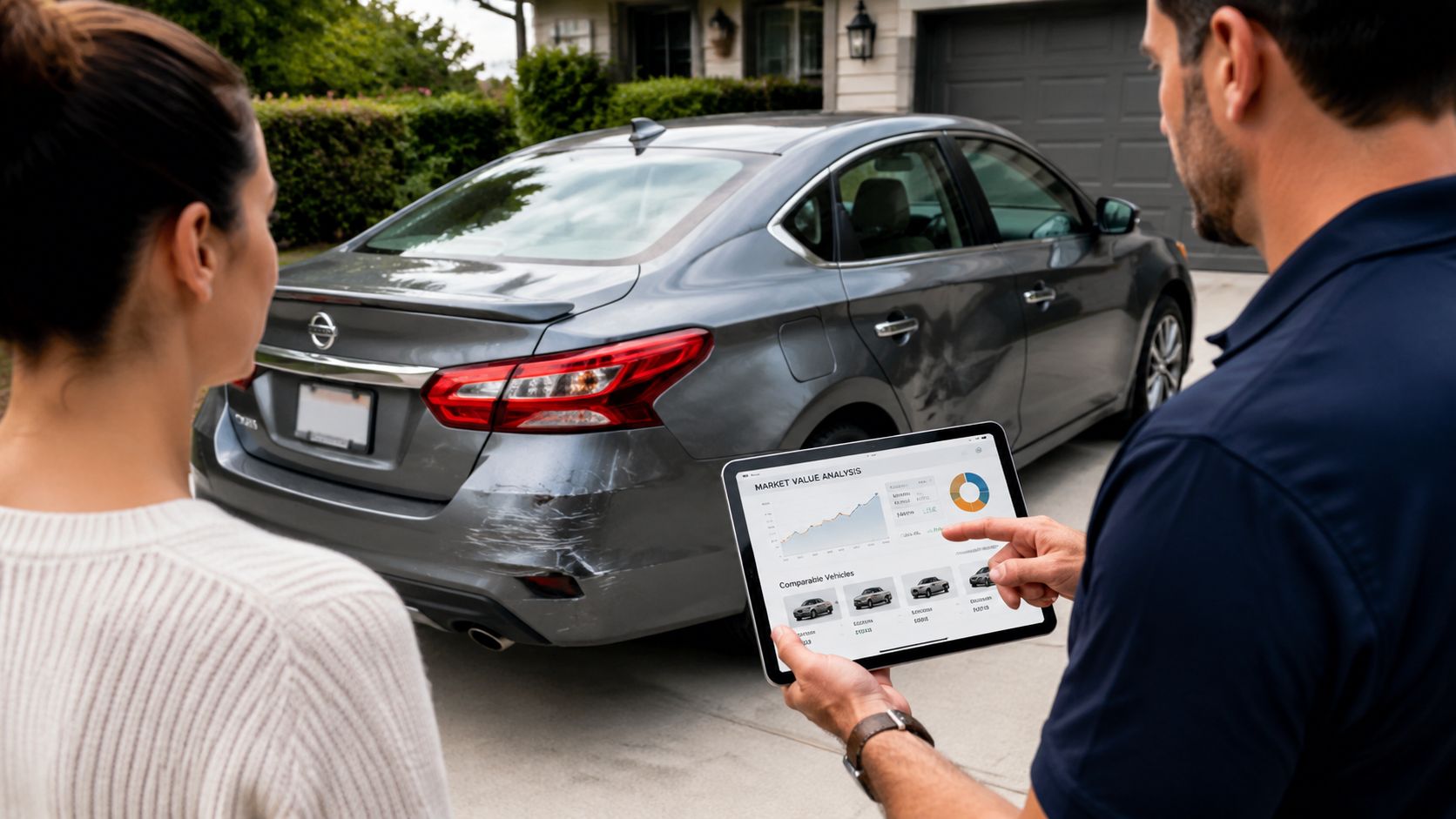
You're standing in a repair shop parking lot, staring at a car the insurer may declare a total loss. Your job still starts tomorrow. Your children still need rides. The adjuster says someone will call you, but the rental clock, coverage limits, and settlement negotiations are already moving.
The wrong transportation choice can create an unpaid bill, while poor documentation can weaken your position when the insurer values your vehicle. Transportation alternatives are not just a convenience after a crash. They're part of your claim strategy. You need mobility, but you also need a record showing why you needed it, what it cost, and whether the insurer caused the delay.
What to Do When Your Car Is Suddenly Undrivable
The first morning after a serious collision usually feels practical rather than legal. You're arranging a ride to work, finding a way to get the kids to school, and trying to understand whether your vehicle will be repaired or declared a total loss. Then an adjuster asks whether you need a rental, without explaining how long the benefit lasts or what happens if the claim takes longer than expected.
Treat that conversation as the beginning of a paper trail. Ask for the rental or transportation coverage in writing, including the daily limit, total limit, approved vehicle class, start date, and end date. If the other driver caused the crash, ask the at-fault insurer how it handles reasonable loss-of-use expenses. Don't assume a verbal promise means every rideshare receipt, upgrade, fuel charge, or mileage expense will be reimbursed.
Practical rule: Secure transportation first, but don't spend freely before you know who agreed to pay and under what conditions.
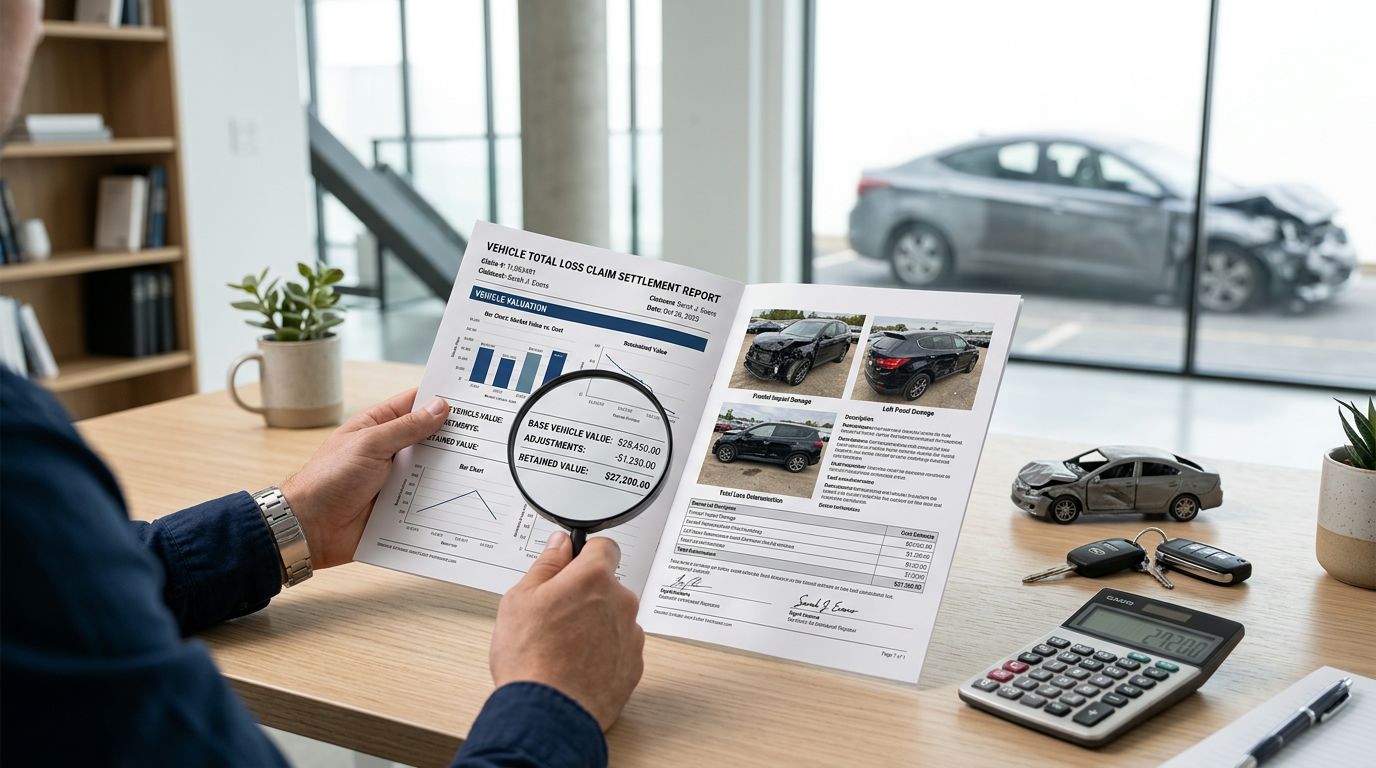
A total loss often creates a longer mobility problem than a straightforward repair. The insurer may need to inspect the vehicle, confirm the title status, prepare a valuation, review comparable vehicles, and process settlement paperwork. If you return a rental before you have replacement transportation, you may be forced into expensive last-minute choices. If you keep it without authorization, the insurer may challenge the additional charges.
Your priorities should be simple:
- Preserve coverage: Get the policy provisions and claim instructions in writing.
- Match the vehicle to the need: A commuter may need a compact car, while a parent or tradesperson may require more capacity.
- Track every gap: Save receipts for rentals, rideshare trips, transit, borrowed-vehicle costs, parking, and other transportation expenses.
- Protect your health: If an injury makes walking or ordinary transit difficult, use appropriate recovery equipment and review a practical recovery mobility equipment guide.
The goal isn't to choose the fanciest replacement vehicle. It's to maintain necessary access without giving the insurer an avoidable argument that your expenses were unreasonable.
Immediate Transportation Alternatives That Keep You Moving
Start with a 72-hour transportation plan. Don't wait for an adjuster who hasn't returned your call. Build a temporary solution, confirm payment responsibility, and keep upgrading or changing the arrangement only when the facts require it.
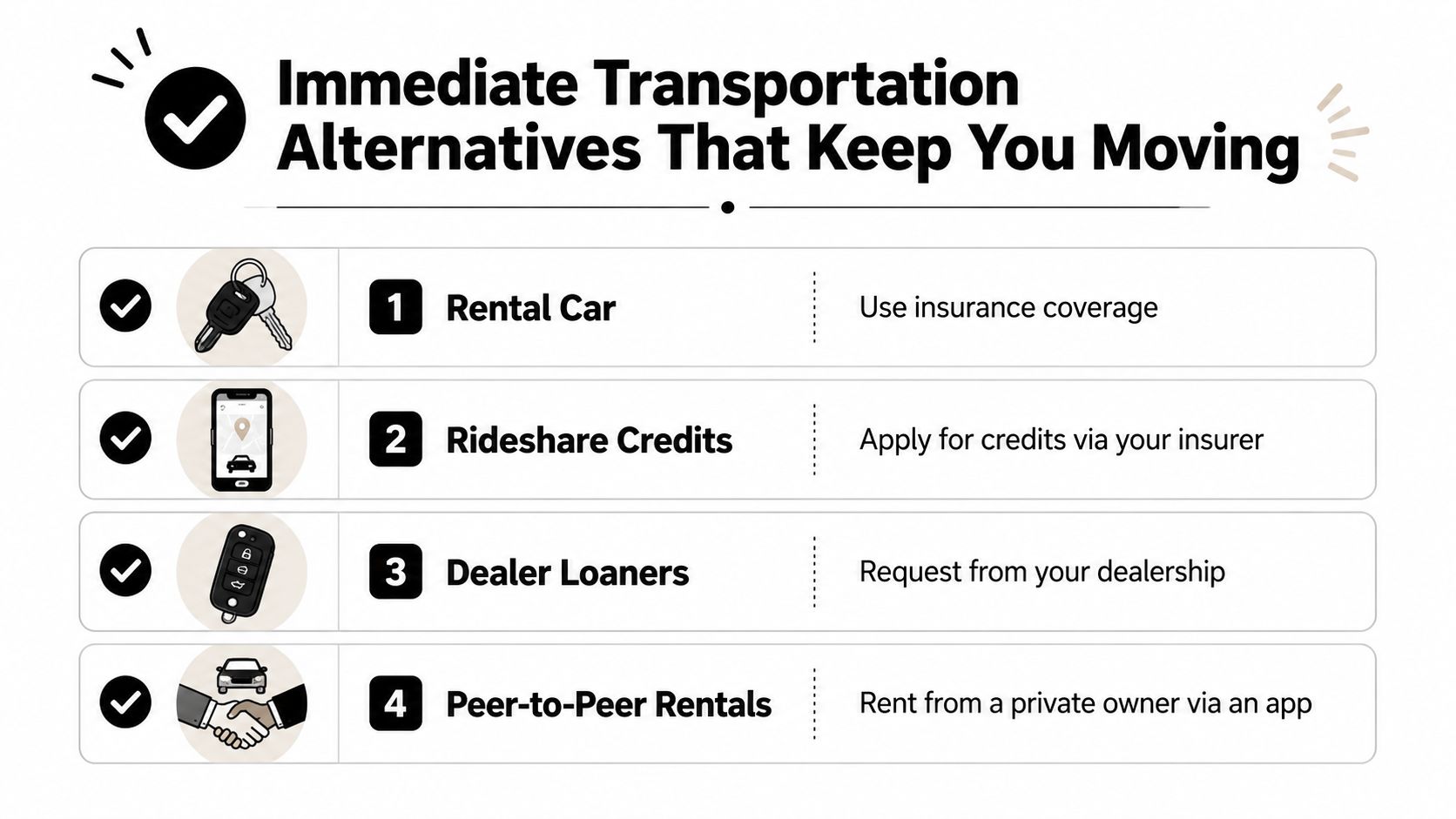
Choose the option that fits the trip
Rental cars are usually the cleanest short-term choice when your own policy includes rental reimbursement or the at-fault carrier accepts responsibility. Confirm the approved class before signing. If your work requires substantial driving, tell the insurer immediately. A basic compact may be acceptable for ordinary commuting but impractical for equipment, client visits, or family transportation.
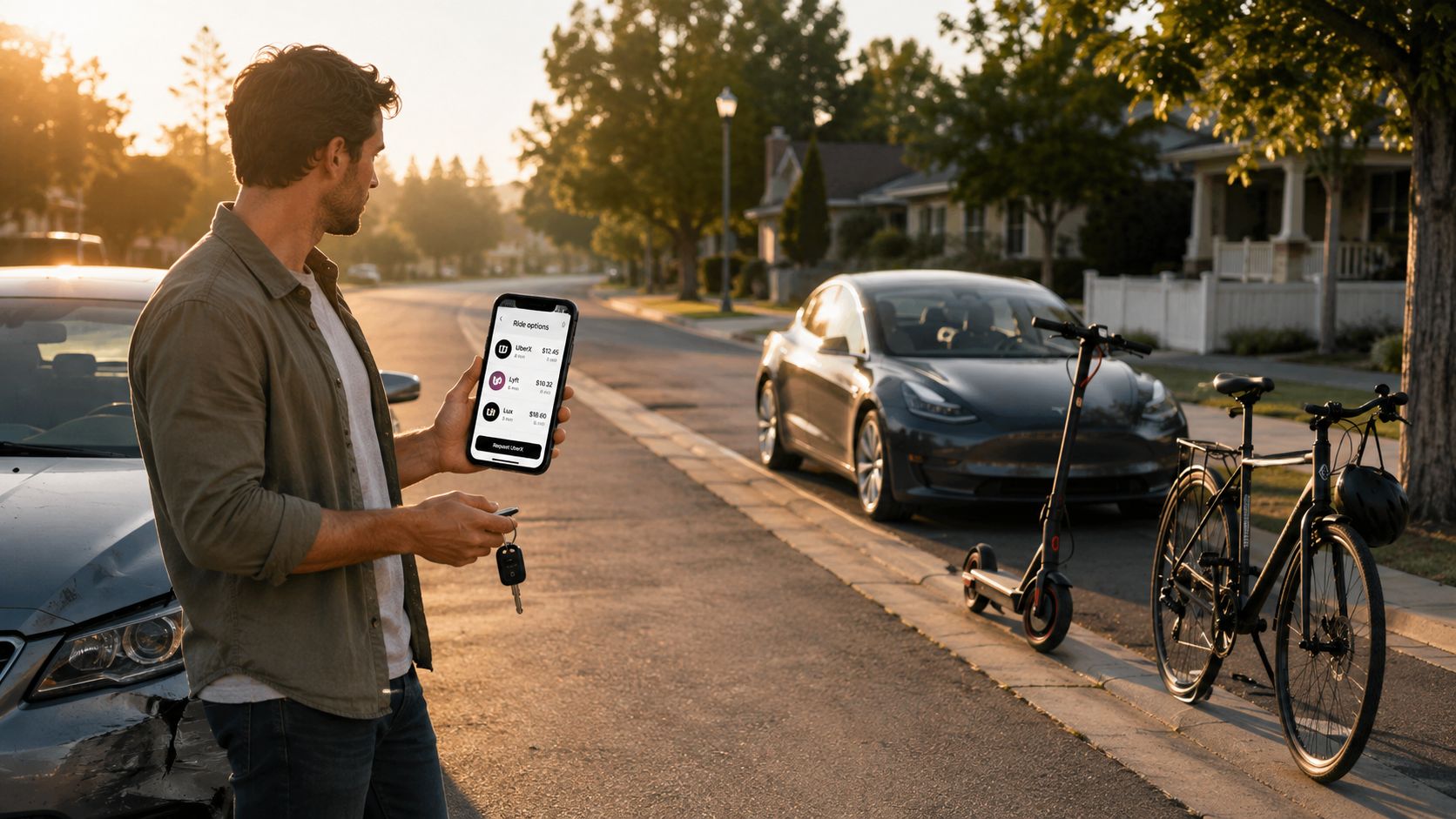
Rideshare credits can bridge the first few days while coverage is being confirmed. Ask whether the insurer offers credits directly or requires you to pay and submit receipts. Save the trip receipt, pickup and drop-off locations, date, purpose, and payment record. Rideshare is often sensible for occasional trips, but repeated daily use can become expensive and difficult to justify if a covered rental was available.
Dealer loaners make sense when you're buying a replacement vehicle or when your regular service provider has a courtesy fleet. Get the arrangement in writing. A dealer's informal promise may cover use but not fuel, damage responsibility, mileage, or the period after a purchase decision changes.
Peer-to-peer rentals can fill a local availability gap, especially when conventional agencies have no suitable vehicle. Read the platform's protection terms carefully, confirm who handles damage claims, and preserve the complete rental agreement. Convenience doesn't eliminate the need to prove reasonableness.
Build a backup without creating a billing dispute
Borrowing a vehicle from family can be the least expensive option, but it still deserves a written record. Note the dates, vehicle, agreed contribution, fuel expenses, and any mileage reimbursement. Don't describe a gift as a reimbursable rental if no payment occurred.
For short trips, walking, cycling, public transit, and local day passes can reduce immediate spending. National travel data indicate that a large share of trips are 3 miles or less, a distance where walking and biking can realistically capture mode share. The same short-trip logic supports public investment in pedestrian and bicycle routes through the U.S. Transportation Alternatives Program, which funds safety-oriented non-auto projects.
Check your credit card's rental benefits, employer transportation programs, transit discounts, and roadside-assistance membership. Technology is also changing how people combine shared, active, and on-demand mobility, as explained in this overview of smart tech reshaping cities. If you need a longer rental after an accident, review the carrier's process for car rental after an accident before booking an extension.
How Rental Reimbursement and Loss of Use Really Work
Rental reimbursement and loss of use are different paths to transportation compensation. Rental reimbursement comes from your own policy, if you purchased that coverage. Loss of use is generally a claim against the responsible party for the reasonable value of transportation you couldn't access because of the collision.
Your policy may state a daily allowance and a total cap. A policy written as $30 per day with a $900 maximum doesn't mean the carrier will pay any vehicle you choose. It usually means the insurer pays covered rental charges up to the daily and total limits, subject to the policy's conditions. Another policy might provide $50 per day, but the higher daily amount doesn't remove the overall duration limit or vehicle-class restrictions.
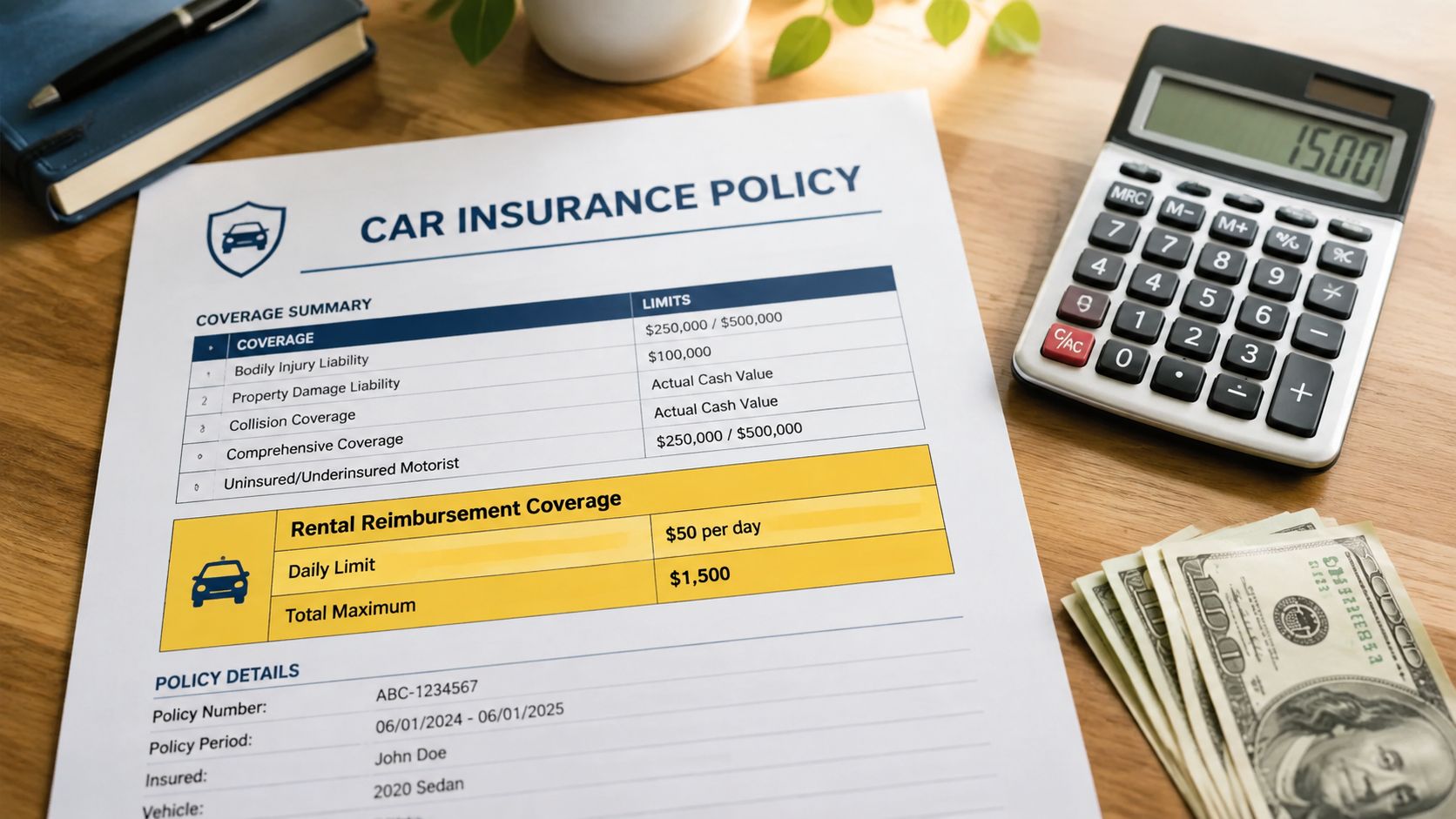
Read the trigger language before you spend
Ask five questions before accepting keys:
- When does the benefit begin, the accident date, inspection date, repair authorization, or another event?
- When does it end, when repairs finish, when the vehicle is declared a total loss, or when the settlement is offered?
- Does the limit include taxes, fees, insurance products, deposits, and fuel?
- What vehicle class does the policy approve?
- Must you use a carrier-selected rental agency?
A total loss can create a particular cutoff problem. The insurer may argue that rental reimbursement ends when it determines the vehicle is a total loss, even if you still haven't received settlement funds or found a replacement. That position may be permitted by the policy, but you should request the exact clause and ask the adjuster to explain how it applies to your claim.
Loss of use requires a different record. If you don't have rental coverage, document the reasonable market value of comparable transportation, the dates you lacked use, and the steps you took to limit the expense. An insurer may challenge luxury upgrades, avoidable delays, duplicate transportation, or costs unrelated to the vehicle's loss.
Federal transportation programs also show that mobility isn't limited to private rentals. The U.S. Transportation Alternatives Program provides roughly $1.3 billion per year for safety-oriented pedestrian, bicycle, and trail projects, according to the Federal Highway Administration's Transportation Alternatives fact sheet. That public investment doesn't create a private insurance entitlement, but it reinforces why transit, walking, and biking can be legitimate parts of a documented access plan.
For a focused explanation of the claim issue, review loss of use and rental car compensation. Then send the adjuster a written request for coverage confirmation before incurring a substantial charge.
Negotiating Extended Transportation During a Total Loss Settlement
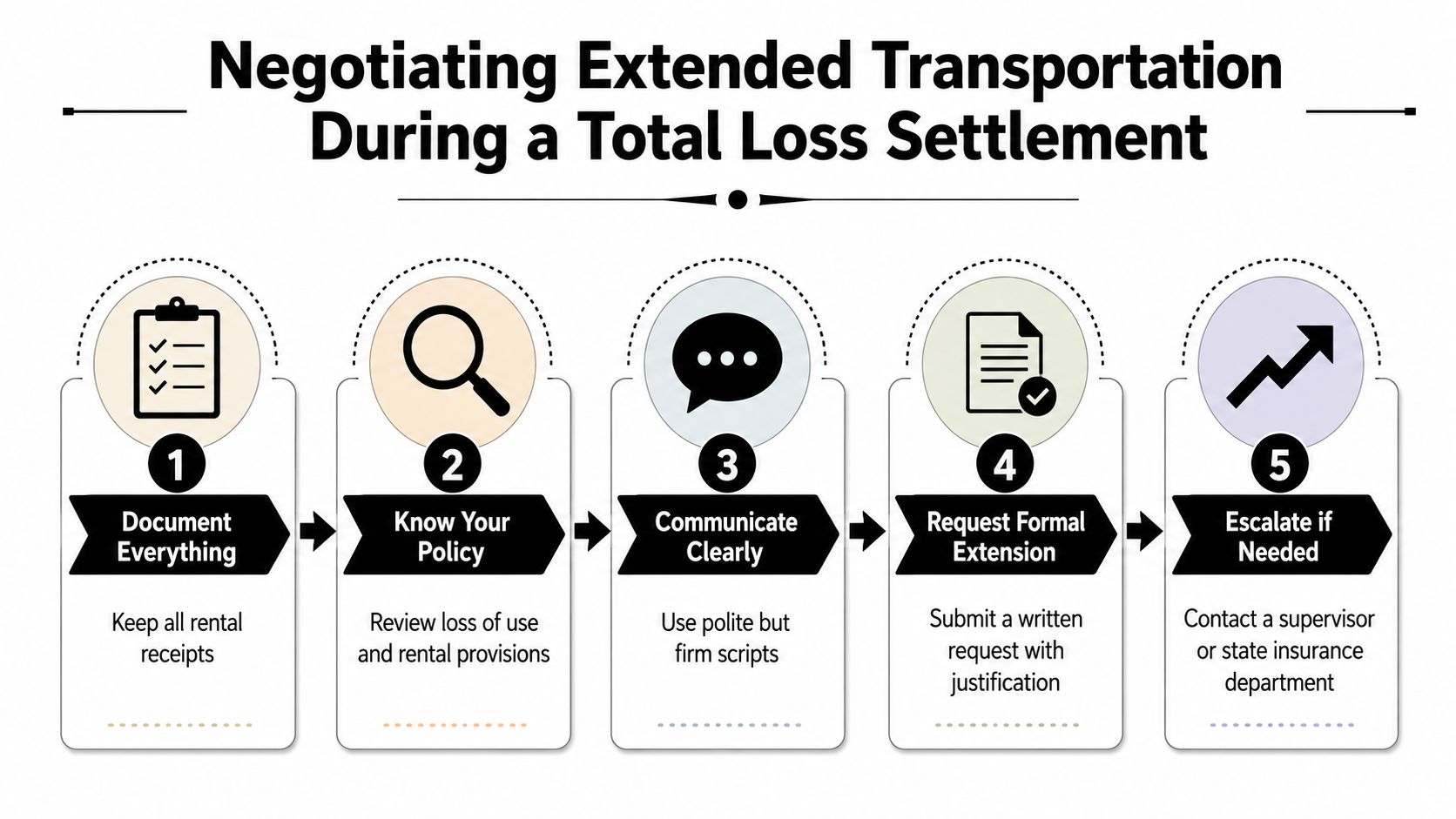
An insurer's rental deadline isn't automatically the same thing as the date your claim is fairly resolved. If valuation work, title processing, inspection delays, or settlement disputes keep you without a usable vehicle, request an extension before the existing authorization expires.
Turn delay into a documented issue
Start by creating a timeline. Record the date of the collision, inspection appointments, valuation delivery, requests for comparable vehicles, title or lien issues, unanswered messages, and every settlement offer. The strongest request connects the transportation need to a specific claim delay rather than saying you want more rental time.
Send a concise email:
Transportation extension request: My vehicle remains unavailable, and the total loss claim has not reached a completed settlement because [specific unresolved issue]. Please extend the rental authorization through [date], or confirm in writing the alternative transportation benefit available while this issue remains unresolved. I'm continuing to mitigate expenses and will provide supporting receipts.
If the insurer says the rental will end, ask for the decision, policy language, and supervisor review in writing. Don't threaten an appraisal demand as a substitute for transportation documentation. The appraisal process addresses the vehicle's value dispute. It doesn't automatically decide every coverage or loss-of-use question.
Keep the valuation fight separate, but connected
Suppose the insurer offers an amount that doesn't reflect your vehicle's actual condition, options, maintenance, or local comparable vehicles, while the rental deadline approaches. Respond to the valuation with organized evidence, and separately request transportation continuation because the settlement remains unresolved.
You can write:
The proposed actual cash value remains disputed. I'm providing comparable-vehicle information and condition documentation for review. Because the valuation dispute prevents completion of the total loss settlement, please continue transportation authorization or identify the payment basis for reasonable loss-of-use expenses until the claim is resolved.
Use the escalation path in order. Contact the adjuster, then a supervisor, then the insurer's complaint channel or the relevant state insurance department if the carrier ignores a documented request. Keep every message professional. An angry email may feel justified, but a clear timeline and precise request are more useful when someone else reviews the file.
The practical reality is that many drivers still need a car even while exploring greener transportation alternatives. Survey data cited by Europ Assistance's 2025 Mobility Barometer report that 60% of Europeans say they changed daily mobility habits toward greener alternatives, while 86% still own at least one car. The lesson for a total loss claim is straightforward: choose a transportation method that reliably serves your actual commute, school run, medical appointment, or work route, then document why that choice was reasonable.
Documenting Every Dollar Without Hurting Your Diminished Value Claim
Receipts don't just support reimbursement. They preserve the timeline that explains why you needed transportation while the insurer investigated, valued, or delayed the claim. Keep the original digital receipt, the rental agreement, payment confirmation, mileage record, and every email approving or denying the expense.
Create one claim folder with subfolders for rental, rideshare, transit, borrowed vehicles, adjuster communications, and vehicle valuation. Name files consistently, such as 2026-08-15_Rideshare_Work_Receipt.pdf. A clean file is easier to review than a phone full of screenshots.
| Date | Transport Type | Cost | Receipt Saved | Reimbursable Status |
|---|---|---|---|---|
| [date] | Rental car | [amount] | Yes or No | Pending, approved, denied |
| [date] | Rideshare | [amount] | Yes or No | Pending, approved, denied |
| [date] | Public transit | [amount] | Yes or No | Pending, approved, denied |
| [date] | Borrowed vehicle contribution | [amount] | Yes or No | Pending, approved, denied |
Record purpose, not just price
For each trip, note why you needed it. “Work commute,” “medical appointment,” “school transportation,” and “vehicle inspection” provide useful context. Don't inflate a claim with personal travel that had no connection to the loss.
Save rejection messages and cutoff notices too. A denied request can help establish that you tried to obtain insurer-approved transportation before paying out of pocket. If you accept a cheaper alternative, record the reason, such as no rental inventory, a medical limitation, or a route that public transit couldn't serve.
Protect the settlement documents
Don't sign a broad release while transportation expenses, total loss value, or diminished value issues remain unresolved. Read language that says the payment settles all claims, all property damage, or all known and unknown losses. Ask the insurer to identify exactly what the release covers before signing.
Transportation evidence can support the chronology of your claim, but it doesn't automatically create a diminished value payment. Keep the issues distinct. Vehicle value, repair quality, market evidence, rental expenses, and loss of use may require different proof and different negotiations.
Use a structured auto claim documentation checklist to organize the file before sending anything. Submit copies, retain originals, and avoid casual statements such as “I'm satisfied” or “this resolves everything” unless you understand the legal effect.
Your Next Moves to Stay Mobile and Maximize Your Settlement
Choose transportation based on necessity, coverage, and documentation, not panic. A rental may be appropriate for a daily commuter or family, while transit, rideshare, walking, cycling, or a borrowed vehicle may cover a short gap. The right choice is the one that keeps you functional without creating an expense the policy or at-fault carrier can reasonably challenge.
Send three documents today:
- A written coverage request listing rental limits, approved vehicle class, start date, and cutoff rules.
- A transportation log showing every expense, trip purpose, receipt, and payment method.
- A settlement timeline showing inspections, valuation delivery, unanswered messages, delays, and unresolved objections.
If the insurer offers a fair value and transportation ends cleanly, finish the claim with a complete file. If the carrier lowballs the vehicle, refuses to explain its valuation, cuts off transportation while the dispute continues, or pressures you to sign a broad release, get independent help before accepting payment.
An independent appraiser becomes especially useful when the vehicle has unusual options, collector status, custom work, strong maintenance history, or comparable vehicles that the insurer's valuation misses. Transportation and vehicle value are connected because both depend on the same principle: you shouldn't surrender bargaining power just because the insurer wants the file closed quickly.
Act before the rental authorization expires, before receipts disappear, and before you sign settlement language you haven't reviewed.
Total Loss Northwest provides independent total loss and diminished value appraisals, with detailed reports designed to challenge biased insurer valuations and support fair negotiations. If transportation delays and an unfair vehicle value are affecting your claim, visit Total Loss Northwest to request help with the next step.