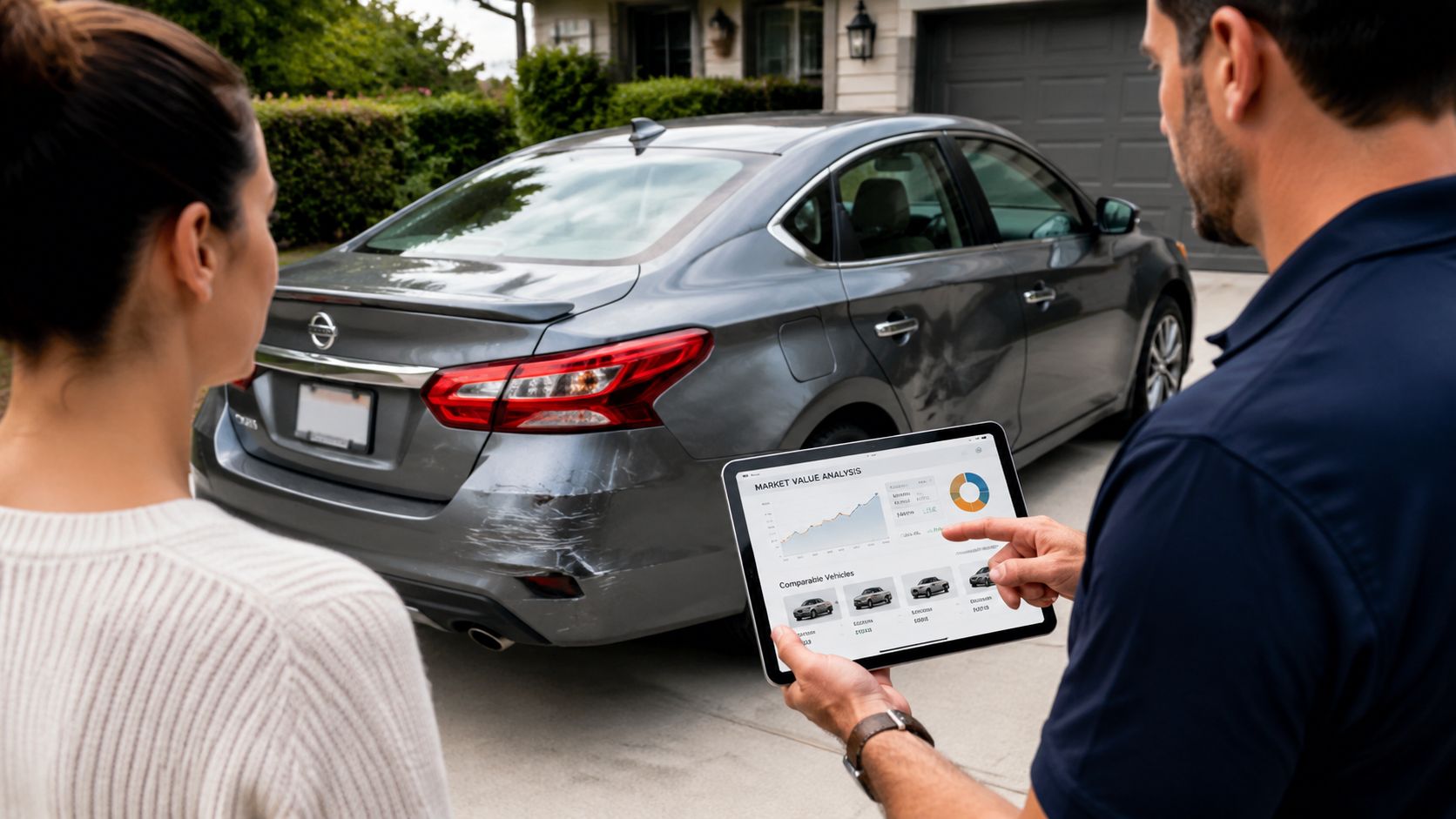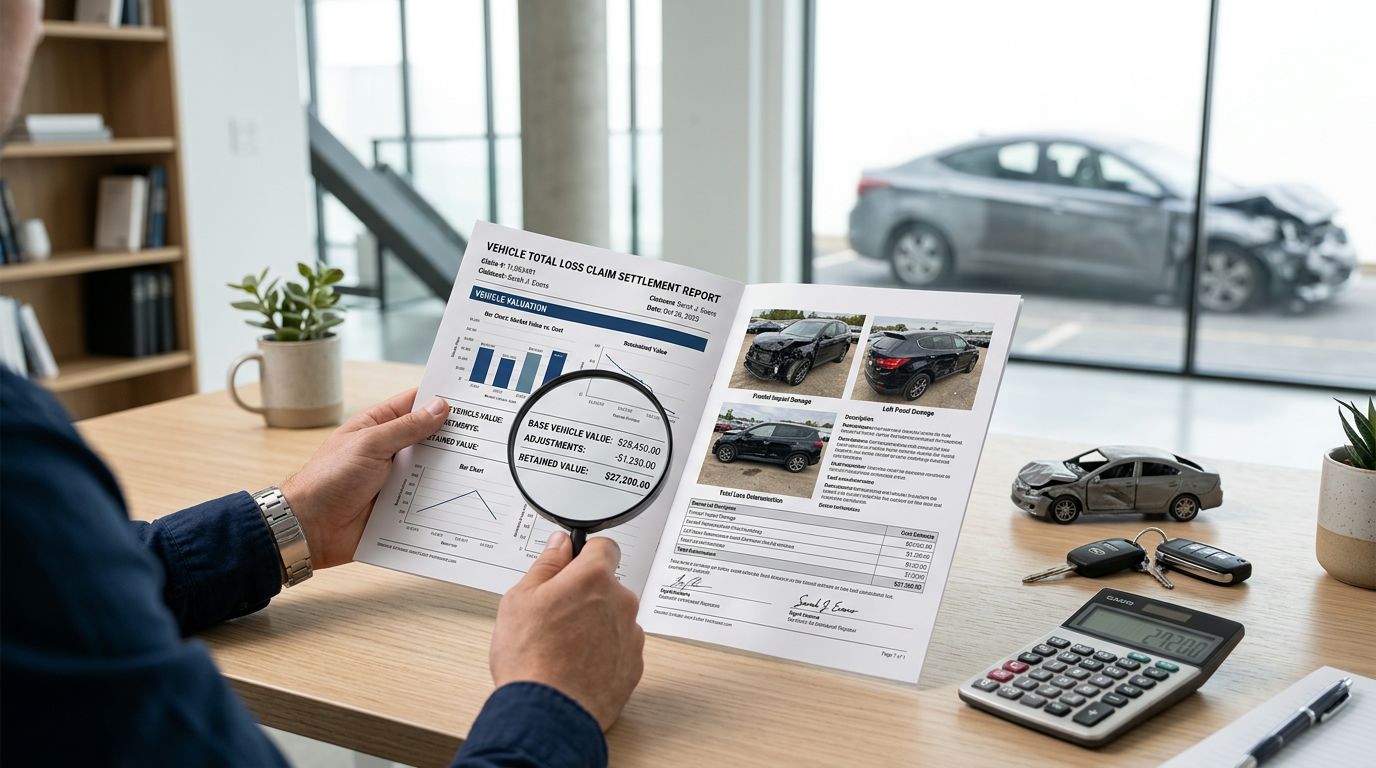
You're standing at a body shop, looking at a rear quarter panel that's still bent, and the adjuster's number on your phone feels low the second you read it. The car isn't fixed, the medical paperwork is a mess, and the first offer already sounds like a decision someone made before they even looked at the evidence. That's the fight in an accident claim settlement, not a courtroom drama, but a valuation battle over what your file proves and what the insurer can get away with paying.
Most drivers are pushed toward a weak frame: medical bills, pain, and a quick signature. That frame is too narrow. A fair settlement is often about vehicle value, diminished value, total loss math, rental exposure, repair documentation, medical chronology, wage records, and fault evidence, and the insurer's first number usually reflects its internal assumptions, not your actual loss.
What Accident Claim Settlement Actually Means for Drivers
The driver in the body shop thinks the settlement is the offer on the screen. It isn't. A settlement is the amount both sides agree will close the claim, and that number can cover several different losses depending on what the crash did to the car, the body, and the paperwork trail.
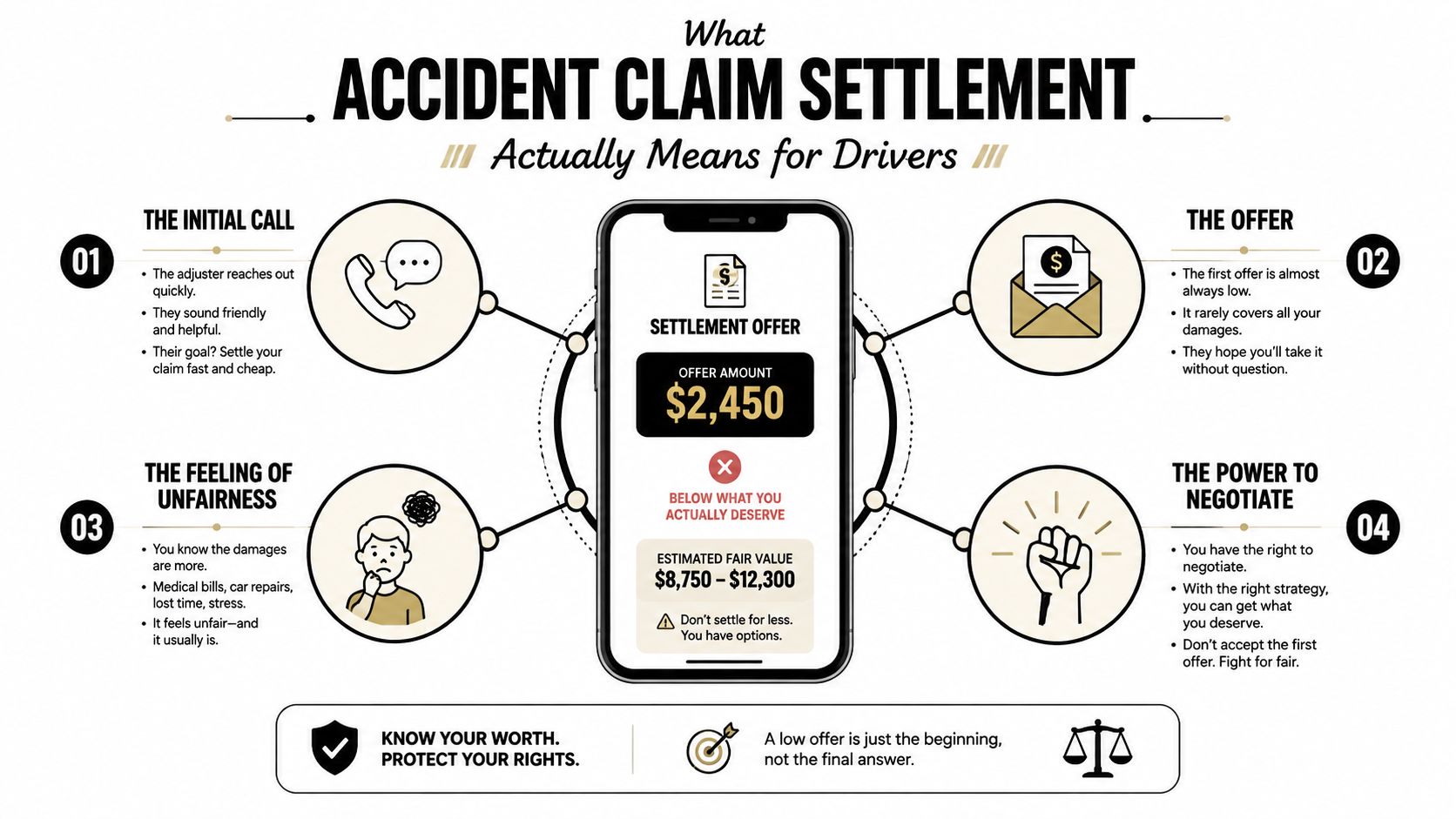
At this point, the only thing that matters is whether the insurer can defend its number. The file gets built around property damage, diminished value, rental loss, medical treatment, and wage loss where those losses exist, but the settlement outcome depends on evidence, not sympathy. That's why the first number is usually a starting position, not a verdict.
What the check really covers
If the car is repaired, the claim may still include the loss in resale value after repair. If it's a total loss, the claim turns into a market-value dispute over what the vehicle was worth right before the crash. Medical bills and lost income can sit alongside either path, but they don't replace a weak valuation file.
Practical rule: if the insurer's number is not tied to repair records, market data, or documented losses, it's just an opening position.
The process also moves through negotiation far more often than trial. In personal injury cases, around 95% settle before trial, leaving only about 5% to reach a verdict (fairsettlement.org statistics). In the UK's Official Injury Claim system, 76,873 claims had settled by the October to December 2022 publication, and the average time from claim to settlement was 227 days, up from 207 days in the prior period (fairsettlement.org statistics). That doesn't mean your claim will take that long, but it does prove the obvious point, insurers settle by negotiation, and speed changes when the file is weak or incomplete.
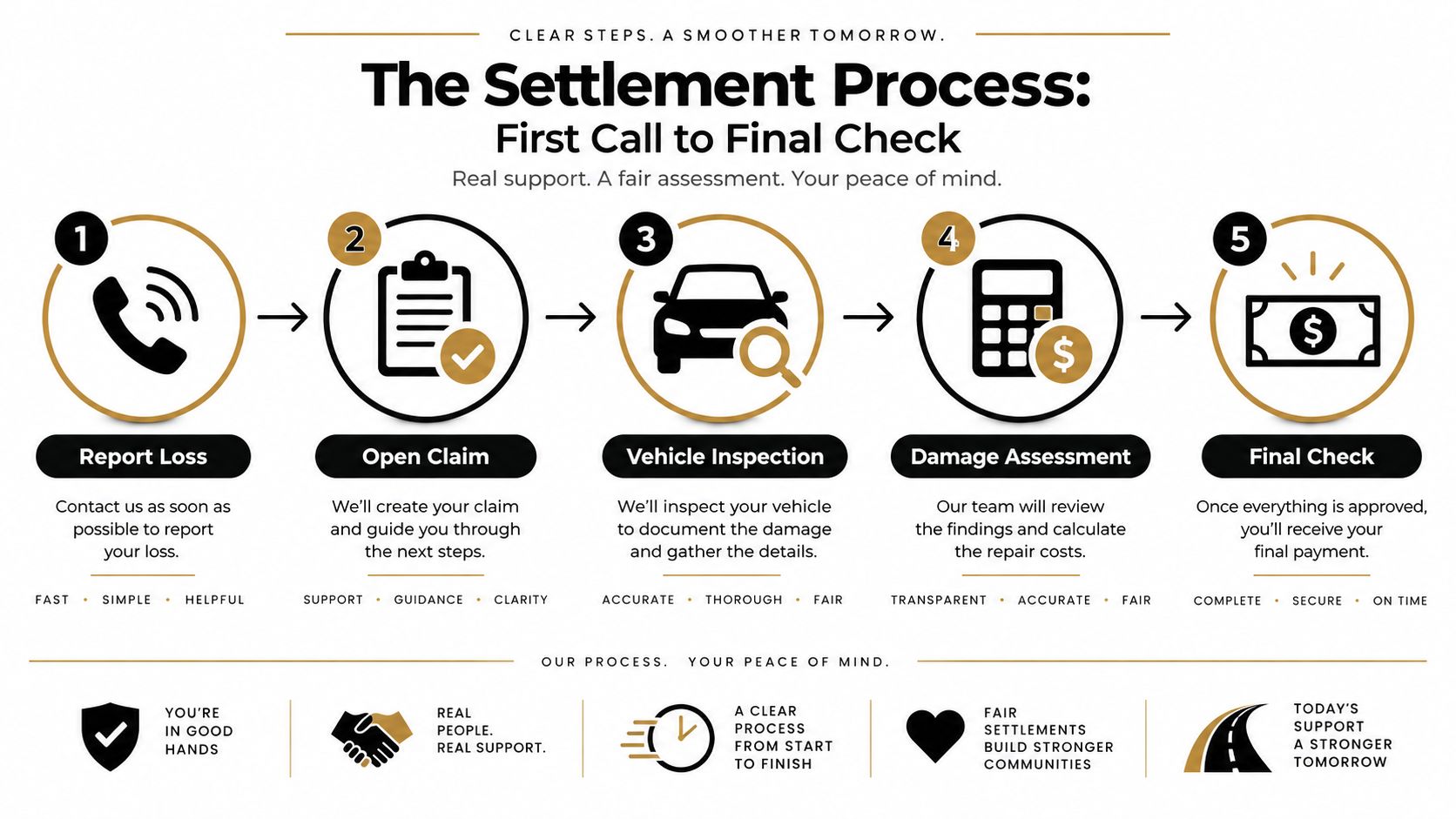
The Settlement Process From First Call to Final Check
A claim starts the moment you report the loss. The insurer opens the file, captures the basic facts, and immediately starts sorting the case into a payout problem it can price. A weak start, missing repair proof, vague damage descriptions, or an underreported claim, tends to follow the file all the way through settlement.
Your first job is to preserve everything. Save photos, repair estimates, medical visits, and every message with the adjuster. If you just opened the claim, the intake stage matters, so read the insurer's first-notice process in this guide to first notice of loss.
The moving parts behind the scenes
The insurer is checking liability, valuation, treatment consistency, and whether the file supports a lower reserve. That is why one careless phone call can damage a clean claim if the driver starts filling gaps with guesswork.
The body shop inspection comes next, then the damage assessment, then the first offer. After that, the work begins. The driver accepts the number, counters with evidence, or pushes the claim higher. If the vehicle is repaired, the file may still need a final check. If it is a total loss, title paperwork and valuation support matter more than polished wording.
The adjuster wants a file that fits the company's model. Your job is to make the file impossible to underread.
For a closer look at how the claim opens on the insurer's side, the intake and assignment logic in how insurance companies value a car is worth studying. The point is simple. The claim is not waiting to be fair. It moves through a chain of decisions, and each delay or omission changes the insurer's position.
How Insurers Actually Value Your Claim
Insurers don't pull a number out of thin air, even when the offer feels random. They run the claim through an internal valuation logic that rewards consistency with prior closed claims and punishes gaps in the record. CAS research on claim settlement estimation shows that closed-claim outcomes can be modeled from claim characteristics using generalized linear models, or GLMs (CAS research).
That matters because it tells you where the power lies. The payout is tied to variables such as severity, exposure, and closure history, so the claim file itself becomes the primary negotiation object. If the file is clean, complete, and internally consistent, the insurer has less room to squeeze the number down.
What raises the value signal
Verified diagnosis coding, treatment timelines, wage-loss records, and objective evidence of functional limitation all help because they make the file easier to price in the insurer's own system. Missing or inconsistent records do the opposite. The adjuster doesn't need to “disbelieve” you in a dramatic way, it just needs a reason to keep the offer conservative.
The same logic applies to vehicle loss. If the vehicle data, repair history, trim details, and comparables are clear, the valuation argument gets stronger. If the file is sloppy, the insurer gets to treat uncertainty as a discount.
What drags the value down
A vague diagnosis. A treatment gap that nobody explains. Wage records that don't line up with the claimed loss. Those problems don't just weaken your story, they weaken the insurer's ability to justify a higher reserve.
Direct advice: stop arguing about fairness before you've fixed the file. Better paperwork beats better charm.
The practical move is boring, but it works. Build the claim so the insurer's own pricing logic has fewer excuses to stay low. That is the fight, not a debate over sympathy.
The Documentation Checklist That Actually Moves Offers
The strongest claim files are not fancy, they're orderly. Adjusters move faster when the evidence is easy to classify, and they stall when the record is scattered across texts, screenshots, shop emails, and missing dates. The right folder can change the settlement conversation before the first counter-offer is written.
What to gather and why it matters
| Category | Item to Collect | Why It Matters |
|---|---|---|
| Crash scene | Photos of vehicle damage, road position, traffic controls, and visible debris | Shows impact severity and supports fault analysis |
| Vehicle | Repair estimate, supplements, tow bill, storage bill, and pre-repair photos | Anchors the property damage valuation |
| Medical | ER records, diagnosis notes, treatment timeline, prescriptions, and follow-up visits | Proves injury timing and consistency |
| Financial | Pay stubs, wage-loss proof, out-of-pocket receipts | Supports wage-loss and related economic loss |
| Communications | Adjuster emails, claim notes, and written offer letters | Creates a clean record of what was said and when |
If fault is disputed, preserve the vehicle before repair or salvage and request EDR extraction as early as possible. Vehicle event data recorders can capture speed change, braking, steering input, seatbelt use, and airbag deployment in the seconds before impact, and that objective data can materially affect liability allocation (black box evidence overview). That kind of proof is harder to brush aside than memory or guesswork.
How to package the file
Put every document into one labeled folder. Separate medical, vehicle, and communications materials. Date the files. Name them clearly. If you're sending a counter-package, make the adjuster work with facts, not clutter.
Best practice: if you can't explain what a document proves in one sentence, the insurer won't use it well either.
A complete file doesn't guarantee a fair number, but an incomplete one almost guarantees a discount. That's why organized proof is the first real settlement tactic, not an afterthought.
Diminished Value and Total Loss Claims Side by Side
Most drivers talk about “the claim” as if every vehicle loss works the same way. It doesn't. A repaired car and a totaled car are different valuation problems, and if you mix them up, you'll accept the wrong type of offer.
Diminished value
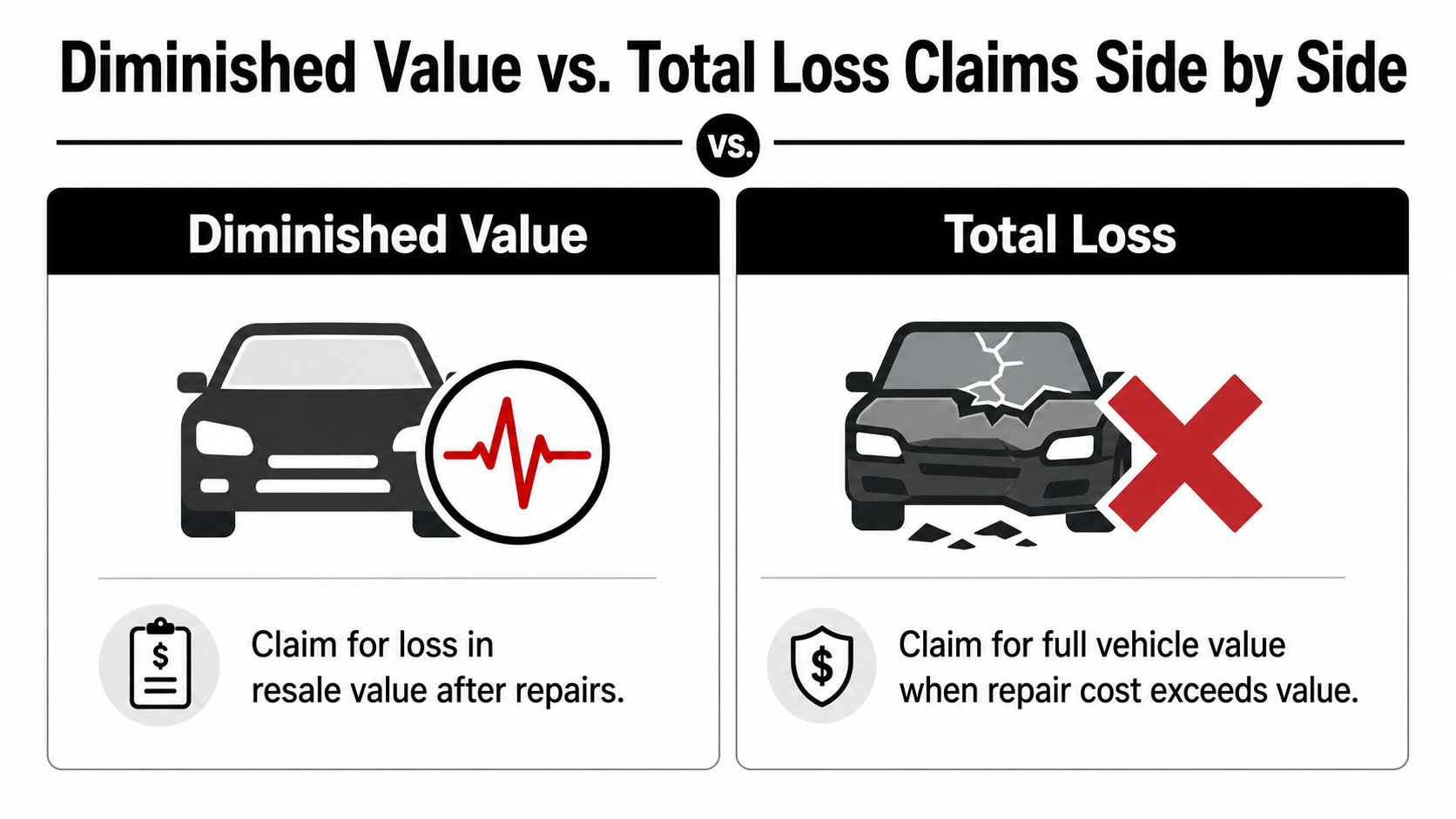
A diminished value claim is about the loss in resale value after the car is repaired. The vehicle is still yours, and it can still drive fine, but the market often treats it as worth less because it has a crash history. That loss is real, especially for newer, high-value, collector, or unusual-trim vehicles.
The documentation has to show pre-crash condition, post-repair condition, market comparables, and the reason the market would discount the car. Thin local comparables, custom equipment, rare trim, or a changing market can make the insurer's first estimate lazy or flat-out wrong. The Bradley Law Firm's coverage on underpriced auto claims notes that these valuation gaps are especially common where vehicles are unique or the market is shifting (how insurers undervalue car accident claims).
Total loss
A total loss settlement pays the vehicle's actual cash value when the repair cost crosses the insurer's threshold. At that point, the fight is not about repair quality, it's about whether the valuation reflects the market for that exact car. Equipment, trim, mileage, location, prior condition, and comparables all matter.
The mistake drivers make is treating a total loss like a generic book-value exercise. It isn't. A unique vehicle with rare options can be underpriced fast when the insurer leans on weak comparables or broad averaging.
For a practical example of how companies undercut vehicle values in claim handling, this discussion of unfair auto accident settlement responses points to a common problem, claimants are told to accept the framework, not challenge the benchmark itself.
If the car is the main loss, don't let the insurer force a body-injury mindset onto a valuation problem.
The path you're on changes the evidence you need. Repaired vehicle, think diminished value. Destroyed vehicle, think total loss valuation. Mixing those up is how people leave money on the table.
How to Invoke the Appraisal Clause and Use an Independent Appraiser
The appraisal clause is the cleanest tool most drivers never use. It lets each side hire an appraiser, the two appraisers try to agree, and if they can't, an umpire steps in. That turns a one-sided valuation dispute into a structured market-value fight.
How to trigger it
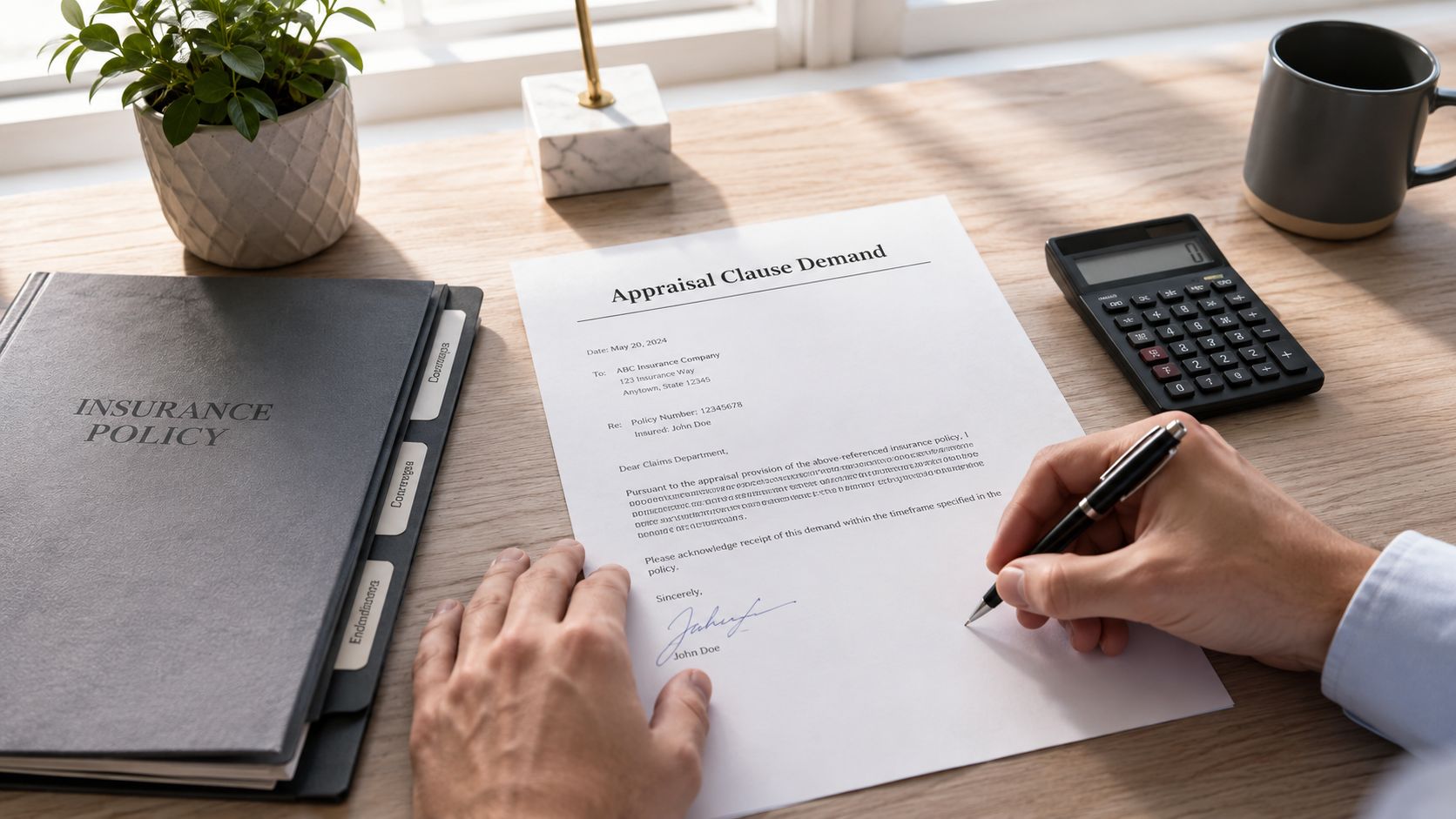
The demand should be written, direct, and tied to the policy language. Don't ramble. State that you dispute the valuation, request appraisal under the policy, and identify the specific loss issue, diminished value or total loss. That's the move that forces the insurer out of its comfort zone.
Once the clause is invoked, each side typically hires an appraiser, and those appraisers try to reconcile the number. If they can't, an umpire decides the dispute. That process matters because it removes the insurer's unilateral control over the final figure.
A certified independent appraiser is not a cheerleader. Their job is to build a report that survives scrutiny, with market comparables, condition analysis, equipment identification, and a coherent valuation path. A printout from a carrier database is easy to dismiss if the report doesn't match the car sitting in front of the shop.
For a closer look at the mechanics of that process, the insurer dispute path is laid out in insurance appraisal process.
How to brief the appraiser
Give the appraiser the repair estimate, VIN, trim level, photos, prior condition evidence, service records, and any features that affect value. Be specific about modifications, collector features, or unusual market factors. Don't hand over a pile of documents and hope for the best.
I've seen people try to wing it and end up with a report that mirrors the insurer's laziness. I've also seen a clean independent report force a meaningful correction because the vehicle was worth more than the carrier's first pass admitted. If you need outside help, Total Loss Northwest provides certified auto appraisals, appraisal-clause support, and dispute help for diminished value and total loss claims.
Negotiation Strategies and Sample Counter-Offer Language
Negotiation is usually won before the phone call. If your counter is just “that's too low,” you've already handed the adjuster the upper hand. A serious counter-offer is a written argument with documents, math, and a deadline.
Build the letter like a valuation memo
Start with a clear disagreement. Say the offer does not reflect the vehicle's actual value or the documented loss. Then identify the records you're relying on, repair estimates, photos, comparables, medical chronology, or wage records depending on the claim type.
Use simple, firm language:
“I dispute the current offer because it does not reflect the documented condition, equipment, and market value of the vehicle. Attached are the repair estimate, comparables, and photos supporting a higher valuation. Please review and respond in writing by [date].”
That structure works because it forces the insurer to answer the evidence, not the tone. If the number is wrong, say why it's wrong and show the math. If the insurer ignored a feature, a repair supplement, or a comp set, call it out directly.
Know when to escalate
If the adjuster won't move after a well-supported written counter, stop circling the same conversation. Escalate to appraisal if the policy allows it. If the conduct looks unreasonable, a state department of insurance complaint can add pressure. If the file has become adversarial, attorney demand letters have a way of getting attention fast.
A quiet, polite phone call rarely fixes a structural under-valuation. A disciplined paper trail usually does.
Your Settlement Action Plan and the Three Decisions That Decide the Outcome
Run the claim like a valuation case, not a sympathy request. Build the evidence folder, identify whether the loss is diminished value or total loss, and force the insurer to answer documents instead of impressions.
The three decisions that matter most are simple. Invoke appraisal early if the number is obviously off. Use an independent appraiser if the vehicle is unusual, high-value, or underpriced. Anchor the counter-offer on documentation, not generic demands.
Miss those calls, and you'll probably accept a weak number just because the adjuster sounds confident. Make them right, and the insurer has to justify the offer with real evidence.
If your vehicle was undervalued after a crash, Total Loss Northwest can handle diminished value disputes, total loss appraisals, and appraisal-clause support with a written report built around market evidence. Visit Total Loss Northwest if you want a certified independent appraisal that's focused on the number the insurer should've offered in the first place.