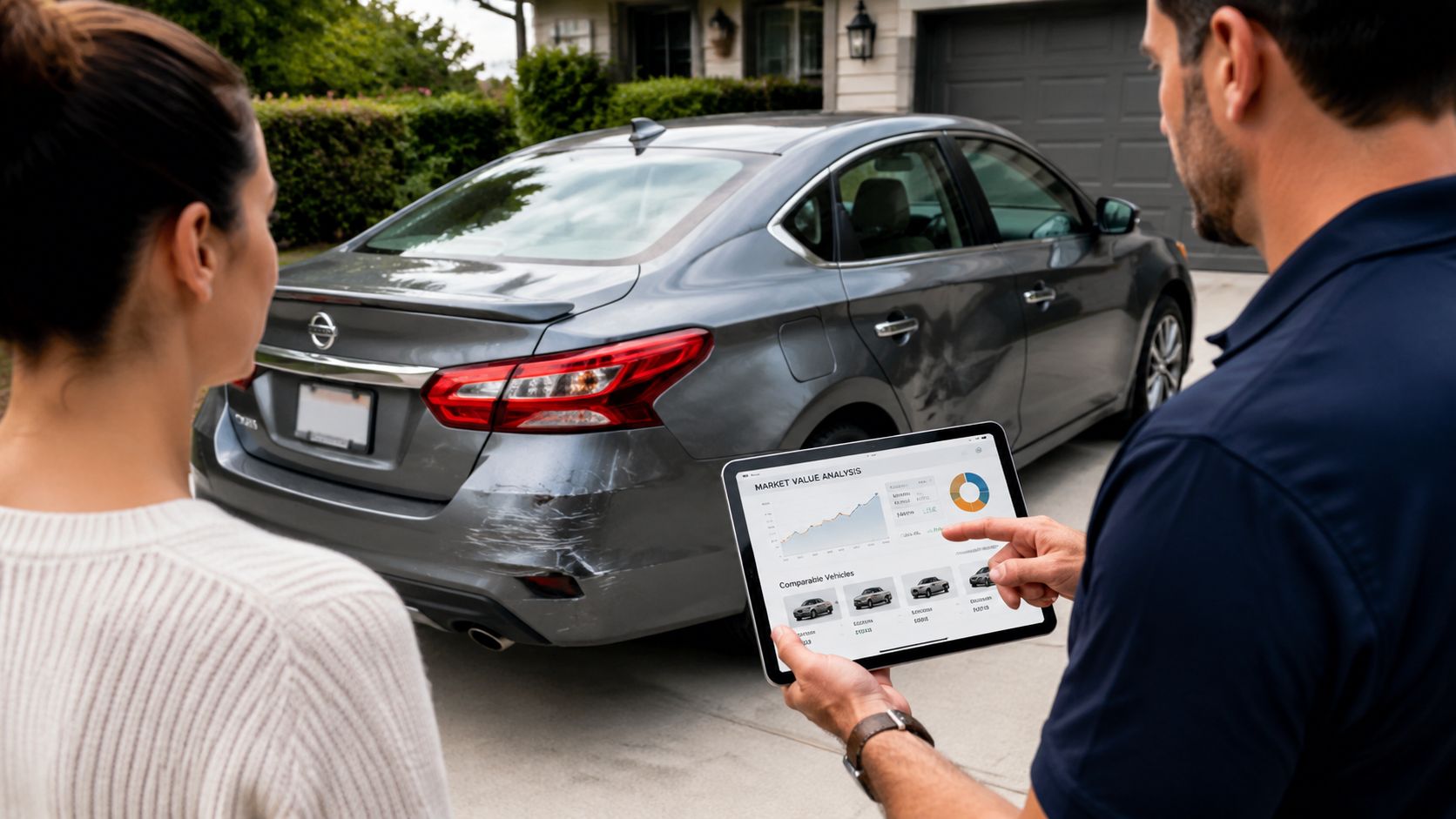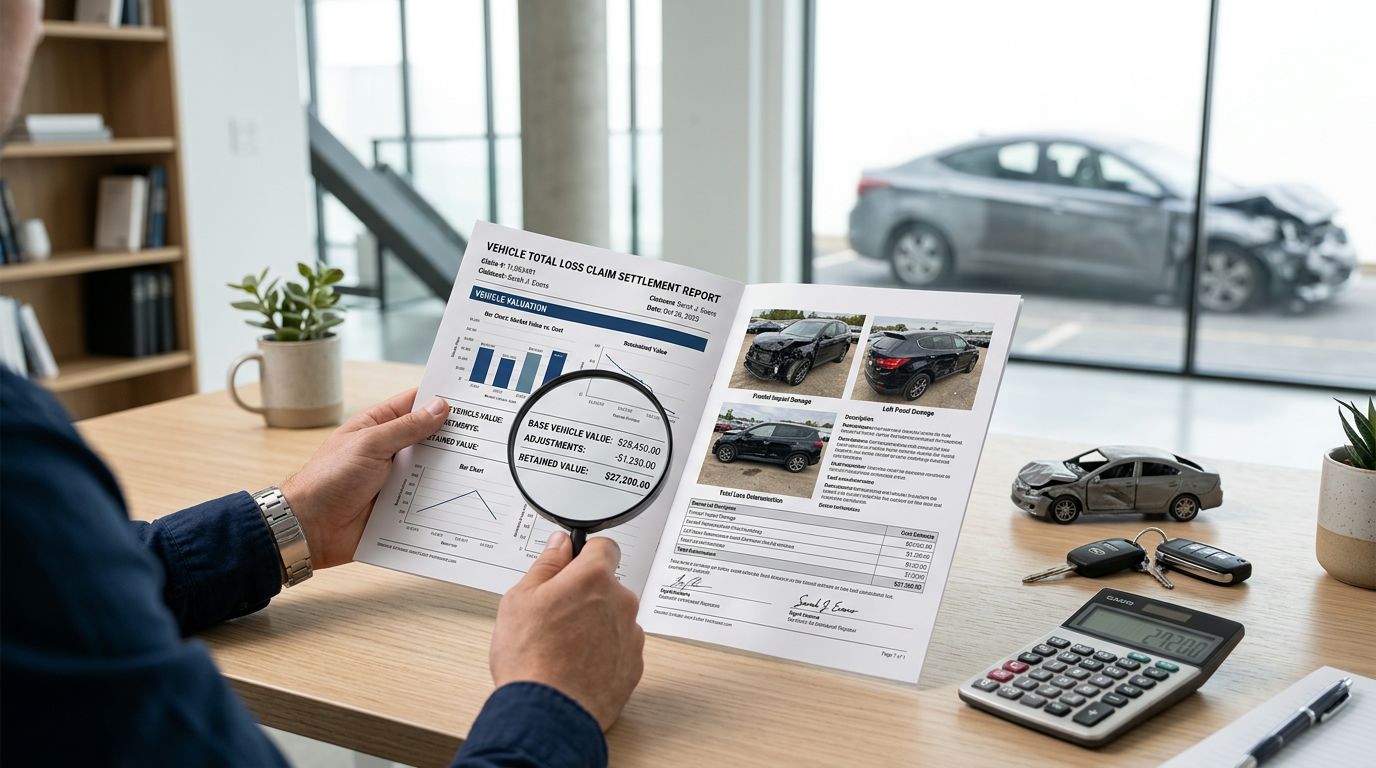
You're probably staring at an adjuster's number that looks tidy on paper and wrong in real life. Your car got totaled, the shop or dealer is quoting a replacement that costs more than the insurer's first check, and suddenly actual cash value feels like a trap dressed up as a formula.
The mistake many make is accepting the first valuation as if it's final. It usually isn't. ACV vs replacement cost is not just a coverage label fight, it's a settlement fight over what you can buy, repair, or replace after the loss.
| Coverage Type | What It Pays | What Gets Deducted | How It Usually Feels at Claim Time |
|---|---|---|---|
| Actual Cash Value | Depreciated value of the item or vehicle | Depreciation | Lower first check, more out-of-pocket pain |
| Replacement Cost Value | Cost to repair or replace with like kind and quality | No depreciation in the final benchmark | Better coverage on paper, but cash flow can still be tight |
| Common Claim Reality | First payment may look like ACV even under RCV | Holdback until receipts are submitted | Policyholders often need to spend first and claim later |
What Most Drivers Miss About ACV vs Replacement Cost
The problem starts when a driver assumes the insurer's first offer equals the true cost to get back on the road. It doesn't. A not-at-fault driver can receive an ACV check that looks reasonable until they sit down with a dealer and discover the same vehicle costs far more to replace today.
That gap is not a rounding error. For a one-year-old car, one consumer-insurance explainer notes the ACV can run $8,000 to $12,000 below replacement cost. By three years old, the gap can widen to $15,000 to $20,000 because depreciation keeps chewing away at the settlement even when replacement prices stay high. MoneyGeek's ACV explainer makes the point plainly, and it's the reason so many total loss checks feel disconnected from reality.
Practical rule: if the first number won't buy a comparable vehicle in your market, treat it as a starting point, not a verdict.
Many generic articles stop at "ACV is depreciated value, RCV is full replacement." That leaves out the part that matters most. The key issue is not the label; it's whether the insurer's valuation matches the market you shop in, and whether you have the ability to challenge it before signing a release.
If you want the simplest version of the problem, it's this. The insurer values the car as an asset. You have to replace it as transportation. Those are not the same thing.
For a deeper primer on the carrier's valuation process, see how insurers frame actual cash value in total loss claims.
How Insurers Actually Calculate Each Valuation Method
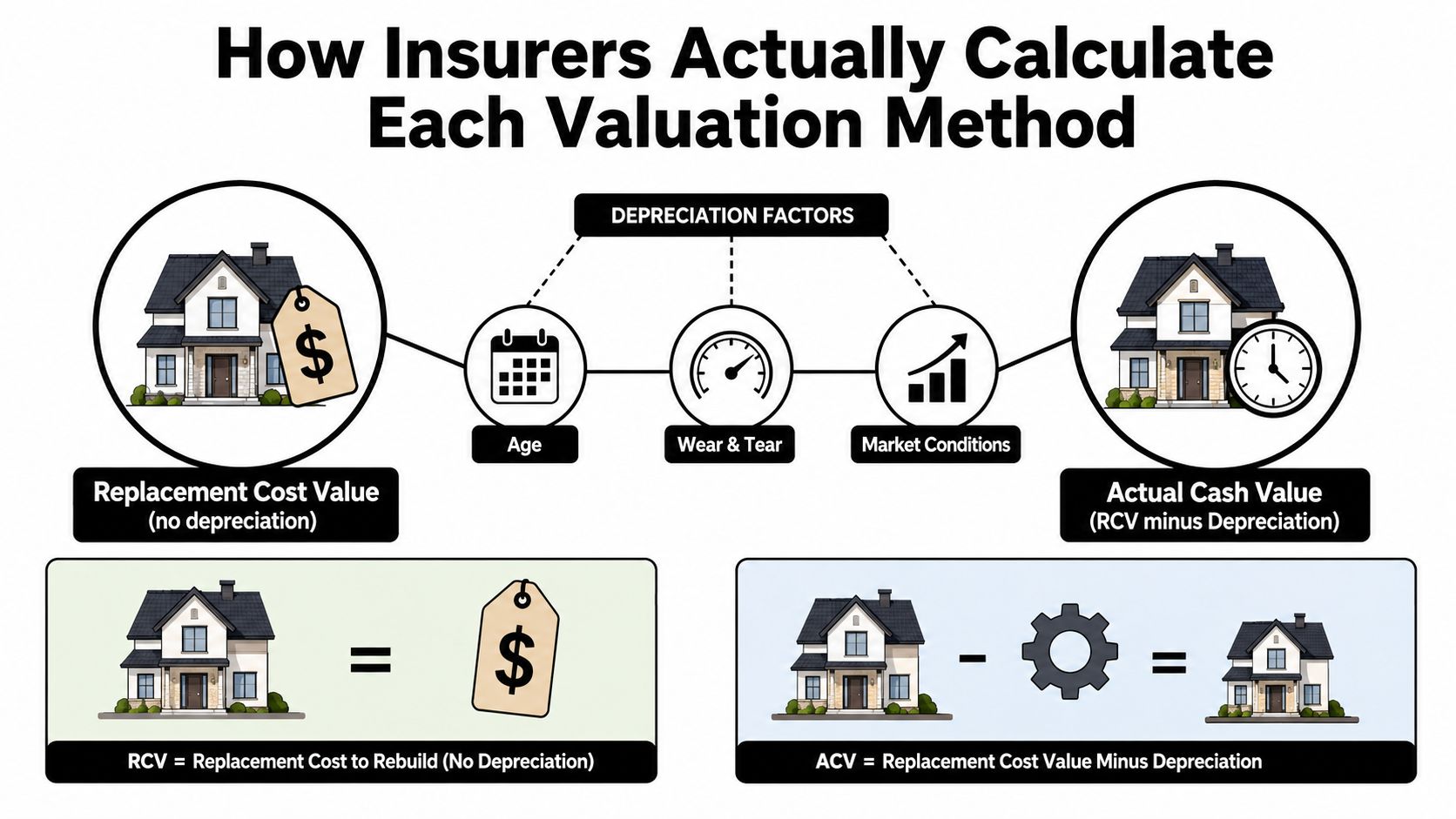
Actual cash value is the item's replacement cost minus depreciation. That is the core formula, and the NAIC's consumer explanation of ACV and replacement cost coverage states the same basic distinction. Replacement cost value pays to repair or replace with materials of like kind and quality without taking depreciation off the top.
The label matters less than the method
Insurers don't always calculate ACV the same way. In disputes, they may rely on fair market value, the broad evidence rule, or straight depreciation. That choice matters because a valuation method can drive the number more than the policy label on the declarations page.
A market-value approach looks at what comparable vehicles sell for. Straight depreciation starts with a replacement estimate and subtracts age, wear, and condition. The broad evidence rule lets more evidence into the room, which matters when the car is unusual, modified, collectible, or just not well served by generic database logic.
If you want a clean way to pressure-test a valuation, compare the insurer's worksheet against actual comps, not just the software summary. CCC and Mitchell outputs are tools, not gospel. When their numbers lean on stale, thin, or out-of-region comparables, the issue is not the software name, it's the evidentiary foundation underneath it.
For a practical view of how carriers price loss vehicles, this independent appraisal resource for total loss disputes is useful because it shows how a contested valuation gets built and challenged. I'd also review how a car is valued by an insurance company before agreeing that the first figure is fair.
Bottom line: if the insurer can't show you the comparables and assumptions behind the number, the number is vulnerable.
Two Real Settlement Examples Side by Side
The gap is where the story lives. A settlement can sound fair on paper and still leave you short when you try to buy the same vehicle in the same market. The examples below show how fast that happens, and why the first check is often only the opening move in an ACV dispute.
One-year-old vehicle
Take a newer sedan that costs one amount to replace at retail today. If the insurer applies depreciation, the ACV check can come in $8,000 to $12,000 below replacement cost for a one-year-old car. That spread can wipe out your down payment, your tax buffer, and part of the loan payoff cushion at the same time. MoneyGeek lays out that one-year-old gap clearly.
Now use the same structure on a higher-trim SUV instead of a basic sedan. The dollar gap still comes from depreciation, but the damage feels larger because the replacement target is higher and the cash flow hit lands harder. The math does not care whether the car is practical or premium. ACV is still a depreciated settlement.
Three-year-old vehicle
By year three, the gap gets uglier. The ACV-to-replacement-cost spread can widen to $15,000 to $20,000 for a three-year-old car. The same depreciation logic drives that result, and anyone pricing a late-model replacement already knows the first offer rarely matches the actual market.
The mistake is treating the insurer's valuation snapshot as if it were current reality. It is not. By the time you shop for the same model, the market may have moved, and the carrier's worksheet may already be stale. That is why the first offer should be treated as a starting point, especially when your own search shows the same car trading higher in your area.
| ACV vs Replacement Cost Settlement Comparison | Typical Replacement Cost | Typical ACV Payout | Estimated Gap |
|---|---|---|---|
| One-year-old vehicle | Market replacement price | Depreciated first check | $8,000 to $12,000 below replacement cost |
| Three-year-old vehicle | Market replacement price | Depreciated first check | $15,000 to $20,000 below replacement cost |
For a set of real-world disputes that tracks with what drivers run into, these car accident settlement stories are worth reading after you finish your own valuation worksheet.
Why an RCV Policy Can Still Feel Like ACV at the Bank
This is the part that catches people off guard. Replacement cost coverage sounds like it should solve the problem, but in practice it often works like pay first, reimburse later. The insurer may issue an initial check that looks and feels like an ACV payment, then hold back the rest until you complete the repair or replacement and submit proof. Legal analysis on the topic notes that replacement cost coverage often does not fully pay until the expense is incurred, which changes the cash-flow picture in a very real way. Butler Legal's discussion of ACV and replacement cost addresses that exact issue.
If you can front the repair, RCV is better than ACV because the holdback eventually comes back to you. If you can't front the money, the policy can feel meaningless at the exact moment you need it most. That's the hidden pressure point, especially for drivers already dealing with towing, rental, loan payments, and the stress of replacing a car before life has slowed down.
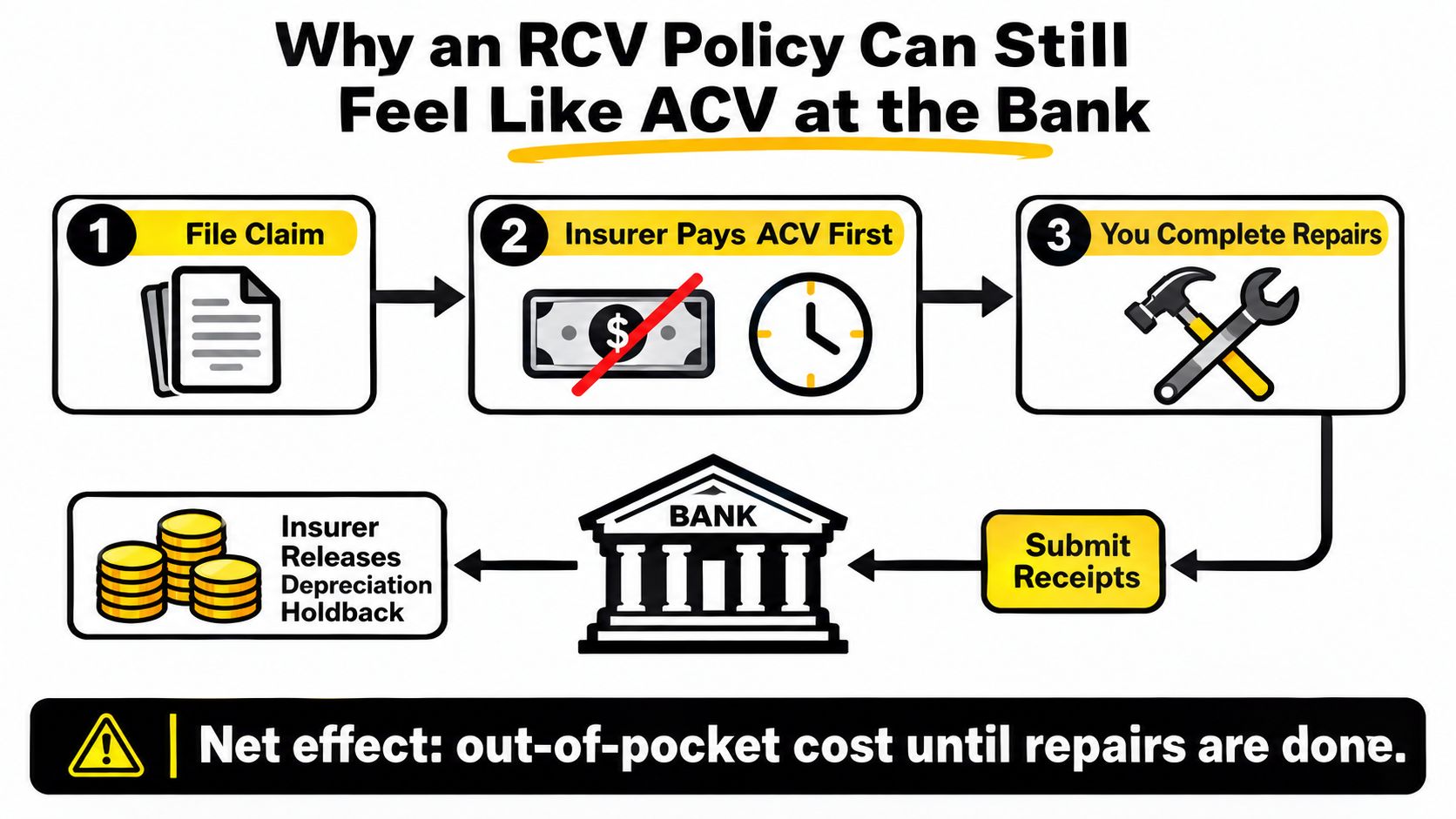
The question to ask your carrier is simple. When do you release the holdback, and what proof do you require? If the answer depends on invoices, final inspection, and completed repairs, you're dealing with a reimbursement structure, not instant full value.
If you can't afford to spend first, RCV still creates a real gap between policy promise and usable money.
Oregon and Washington Rules That Change the Outcome
Oregon and Washington give you more advantage than a generic national blog post would suggest. That starts with the unfair claims settlement practices framework in both states, which gives you a basis to challenge sloppy valuation work when the carrier leans on stale comparables or unexplained adjustments. It doesn't mean every low offer is unlawful, but it does mean the insurer has to defend its process, not just repeat its conclusion.
The rule book is local
In these states, total loss handling also turns on the threshold structure the carrier uses to decide whether a car is repairable or a total loss. The exact threshold mechanics matter because they affect when the insurer pushes the file into a total-loss valuation workflow instead of a repair path. Once that happens, the quality of the valuation evidence matters a lot more.
That's where a certified independent appraisal earns its keep. A consumer complaint letter rarely moves an adjuster who is leaning on a valuation system. A documented appraisal with local comps, condition analysis, and a clear methodology can.
My view: if the insurer's comps are thin, out of market, or not comparable, you should assume the first offer is challengeable.
Diminished value is its own claim
A total loss settlement and a diminished value claim are not the same thing. In both Oregon and Washington, if the vehicle is repaired rather than totaled, diminished value becomes the next fight, because the car's post-loss market value can still be lower even after decent repairs. That's why owners of late-model, high-value, modified, or well-kept vehicles should not stop at “the repair was approved.”
The strongest play in either state is to document the loss with an independent appraiser early, before the record gets buried under the carrier's preferred worksheet. If you're in Oregon or Washington and the vehicle is worth fighting over, local influence matters more than canned national advice.
Invoking the Appraisal Clause to Break a Stalemate
When the gap is real and the comparables are strong, I'd rather invoke the appraisal clause than keep trading emails. The clause is straightforward. You pick a competent appraiser, the insurer picks one, and if those two can't agree, they select an umpire. Any two of the three can bind the result, which is why the process has teeth.
The clause is not a lawsuit and it doesn't cancel the claim. It is a contractual valuation tool, and it exists for exactly this kind of dispute. You pay your appraiser, and you usually split the umpire cost, so this is not free. It is, however, often cheaper than staying stuck at a bad number while the vehicle age, rental cost, and stress keep climbing.
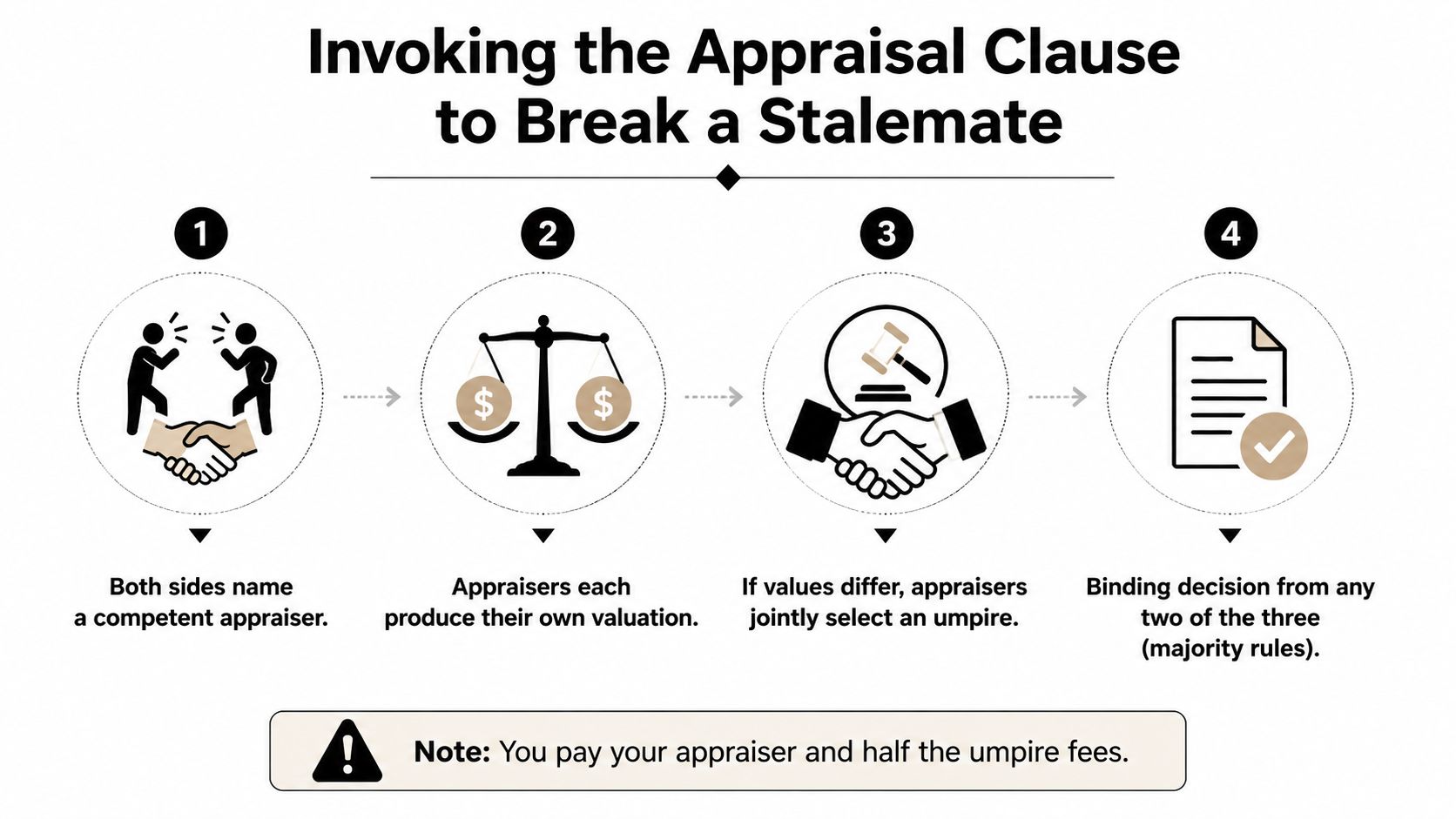
The right trigger is simple. If the dollar gap is large, your comps are clean, and the insurer refuses to move after a supervisor review, invoke the clause. If your evidence is weak or your comp set is sloppy, fix the file first.
Here's the kind of language that works in practice.
Appraisal notice: I dispute the valuation of my loss vehicle under the policy's appraisal clause. Please confirm your appointed appraiser and provide the valuation worksheet, comp list, and adjustment logic used to reach the current offer.
I've seen carriers respond faster when the claimant sounds prepared to escalate than when the claimant just says the number is “too low.” The point isn't to threaten. It's to show that the file is ready for a formal valuation review.
Negotiation Tactics and a Sample Dispute Letter
Start with the comps. Pull five to seven true market comparables that match trim, mileage, options, condition, and geography. If the insurer's list includes weak matches, call them out one by one, because each bad comp drags the whole valuation down.
Next, isolate the depreciation assumptions. Ask what they assumed for age, wear, prior damage, and condition, then challenge any adjustment that isn't explained in writing. If the valuation worksheet is vague, make them put the logic on the record.
Sample dispute letter template
Subject: Dispute of total loss valuation and request for written worksheet
I'm disputing the current settlement amount for my vehicle under the policy. Please send the full itemized valuation worksheet, the comparable vehicles used, and the specific adjustments applied to each comparable.
Several of the listed comparables are not comparable to my vehicle. Please review the attached market comparables, identified by VIN or stock number where available, and revise the valuation to reflect real market data.
If the current offer is your final position, please treat this as a request for supervisor review and confirm the insurer's appraisal clause process in writing.
Keep the tone firm, not emotional. Use the words “itemized valuation worksheet”, “VIN or stock number”, and “written revision” because those phrases force a response from the desk adjuster and narrow the room for hand-waving. If the reply still doesn't move, you're ready for appraisal instead of another round of circular email.
Which Strategy Fits Your Situation and Common Questions
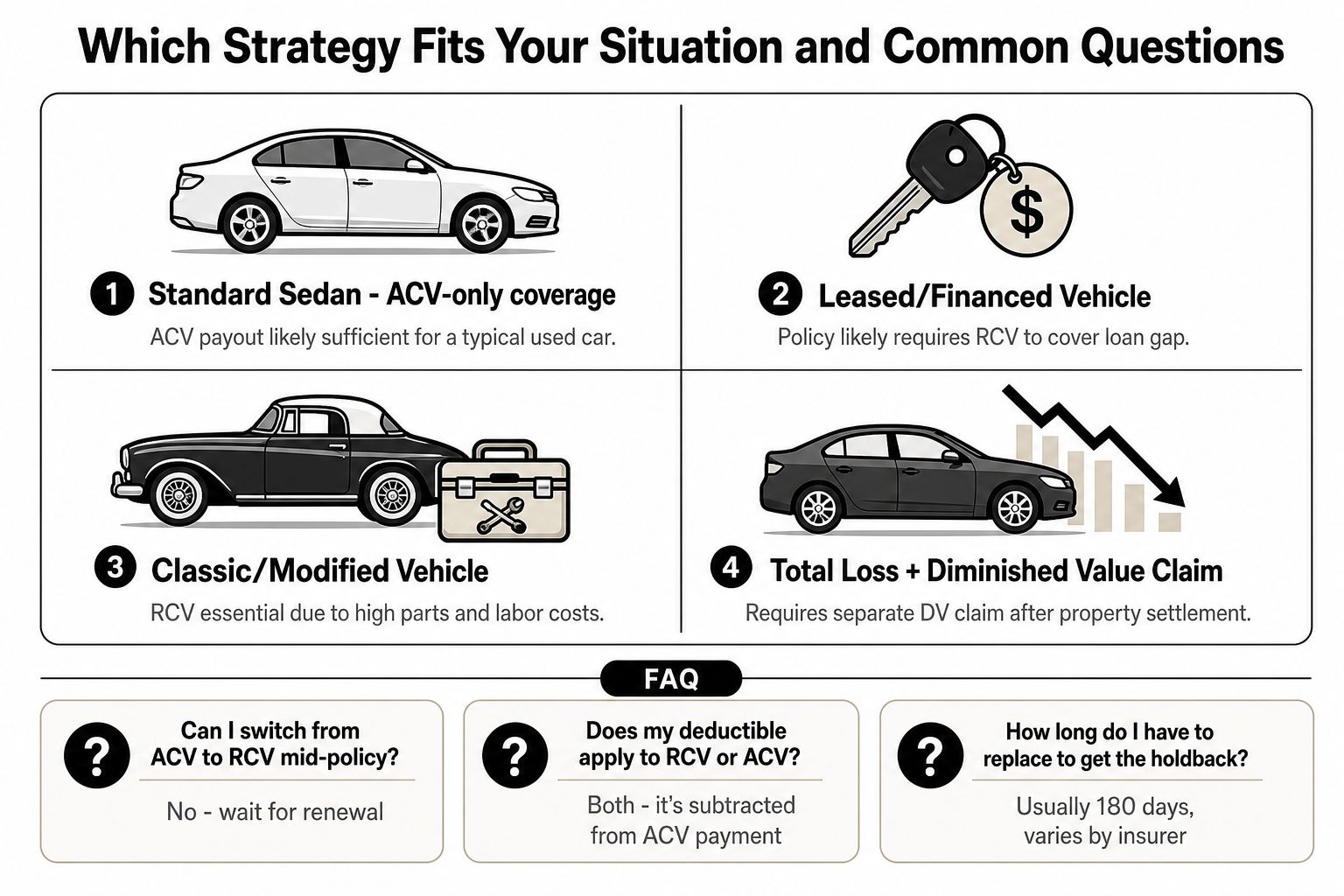
If you drive a standard sedan with ACV-only coverage, focus on the market comps and the appraisal clause if the gap is real. If the vehicle is leased or financed, read the payoff terms carefully, because the valuation problem and the loan problem are not the same thing. If you own a classic or modified vehicle, don't let the carrier pretend straight depreciation tells the whole story. And if you have a total loss plus diminished value issue, treat the property settlement and the diminished value claim as separate fights.
Can I switch from ACV to RCV mid-policy? Usually no. That's a renewal decision, not a same-day fix.
Does my deductible apply to RCV or ACV? In practice, it's taken from the ACV payment first, with any holdback handled later if the policy has one.
How long do I have to replace to get the holdback? It's usually a policy-specific window, so check the declarations page and the endorsement language.
If you're already staring at a low total loss offer, stop treating the first check like the final word. Gather your comps, push the valuation, and if the file still won't move, get a certified independent appraisal before you sign away the negotiating power you still have.
Total Loss Northwest handles total loss appraisals, diminished value support, and appraisal clause representation for Oregon and Washington drivers who think the insurer's number is too low. If your settlement doesn't match the market, visit Total Loss Northwest and get a valuation review that's built to hold up in a dispute.