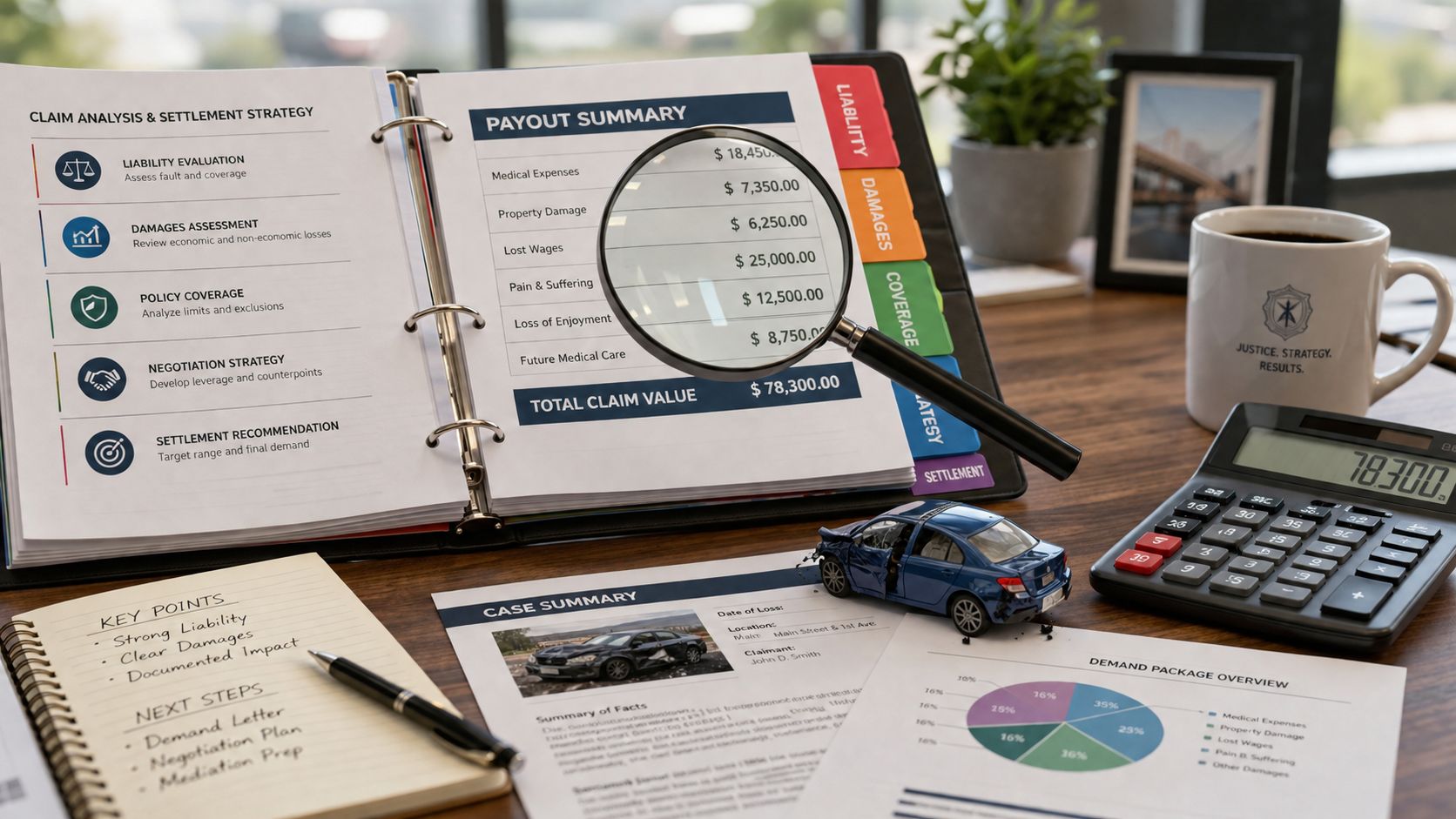
The first number on a claim file often looks official. It usually isn't final. I've seen owners move a weak offer by bringing better comparables, better condition evidence, and a cleaner valuation method. If injuries are part of the claim, good documentation matters there too, including records for specialized care for pelvic injuries.
These car accident settlement stories focus on what changes outcomes. Not slogans, not pressure tactics, but the kind of appraiser-level evidence that forces an insurer to justify its math. The pattern is simple. Software sets the opening position, then real market data, repair logic, and policy language decide whether that position holds up.
1. High-End Vehicle Total Loss Settlement
A luxury EV claim can go sideways fast when the insurer relies on generic valuation software. The biggest misses usually involve trim, battery-related market demand, optional equipment, and local comparables that don't match the actual vehicle.
In one high-end total loss dispute, the owner did the right thing early. They saved service records, photographed the car before storage and tow-related deterioration, and pushed back when the insurer's comparable vehicles didn't line up on features or condition. That changed the discussion from “accept our number” to “show your work.”
What moved the valuation
The turning point wasn't anger. It was a structured appraisal demand.
An independent appraiser typically looks at:
- Exact configuration: Premium wheels, interior packages, software-related desirability, and other options that broad databases often flatten into one line item.
- Condition evidence: Prior detail photos, maintenance records, and pre-loss cosmetic condition can separate a clean example from an average one.
- Local market proof: Luxury EV values can vary sharply by region, so the most persuasive comparables are recent, similar vehicles in the owner's market.
Practical rule: If the insurer's comparable cars have different trim, different mileage, or weaker condition, they are not good comparables. They are negotiation props.
The Appraisal Clause is significant. When a policy allows it, the owner can challenge the carrier's number through a defined valuation process instead of arguing with an adjuster who keeps pointing back to software. For premium vehicles, that process often matters more than any single phone call.
What works is detail. What doesn't work is assuming the badge alone will carry the value. Owners of Tesla, Porsche, Rivian, and other high-end vehicles need a file that proves why this vehicle was worth more than a generic market average on the date of loss.
2. Diminished Value Recovery for a Late-Model Daily Driver
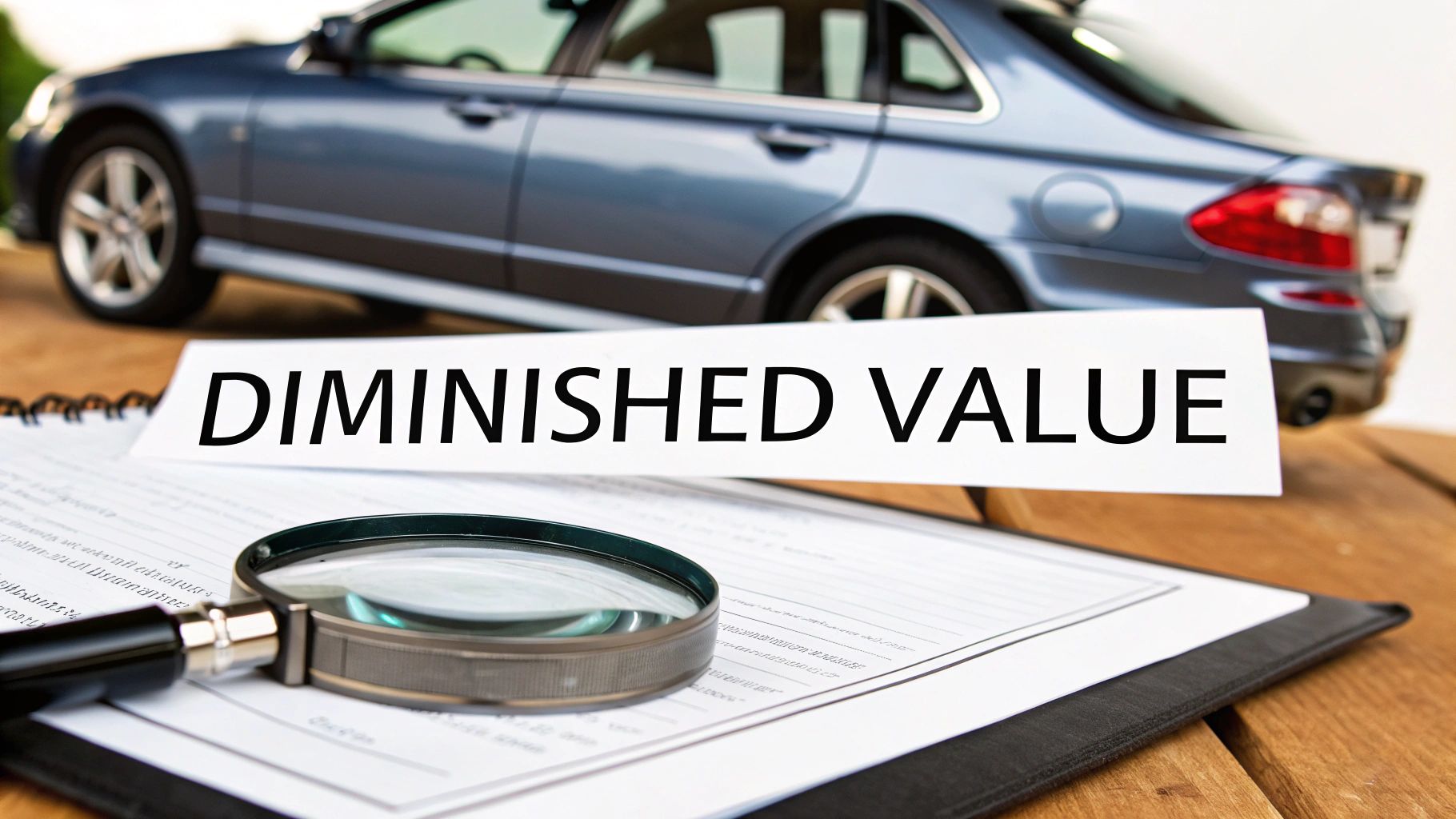
A lot of car accident settlement stories stop at repair payment. That's incomplete for a not-at-fault owner whose car now carries accident history. A properly repaired vehicle can still be worth less in the resale market, and that gap is the diminished value claim.
This issue stays underserved. One legal commentary on settlement examples notes that many owners don't realize they can claim diminished value, and that software-driven insurance tools may undervalue those claims without an independent appraisal. It also highlights that a large share of drivers are unaware of the claim entirely (discussion of diminished value awareness and software undervaluation).
Why repaired doesn't mean fully restored in value
Buyers shop with history reports in mind. Dealers do too. Once an accident appears, marketability changes even if the body work is excellent.
A strong diminished value file usually includes:
- Accident-free baseline: Prior history matters. A clean pre-loss history supports the argument that the accident created the market stigma.
- Repair documentation: Final invoices, parts details, paint work, and structural or panel replacement records help an appraiser assess severity.
- Comparable market analysis: The right comparison is between similar accident-free vehicles and similar post-accident vehicles, not just book values.
For owners trying to understand the claim itself, this guide to a diminished value claim explains the basic framework.
What usually fails here is timing. If you sign too early, cash the check, and move on before valuing the post-repair market loss, you lose your advantage. What works is getting the repair file complete, then having an independent appraiser quantify what accident history did to the vehicle's resale position in your actual market.
3. Collector Car Total Loss on a Restored Classic
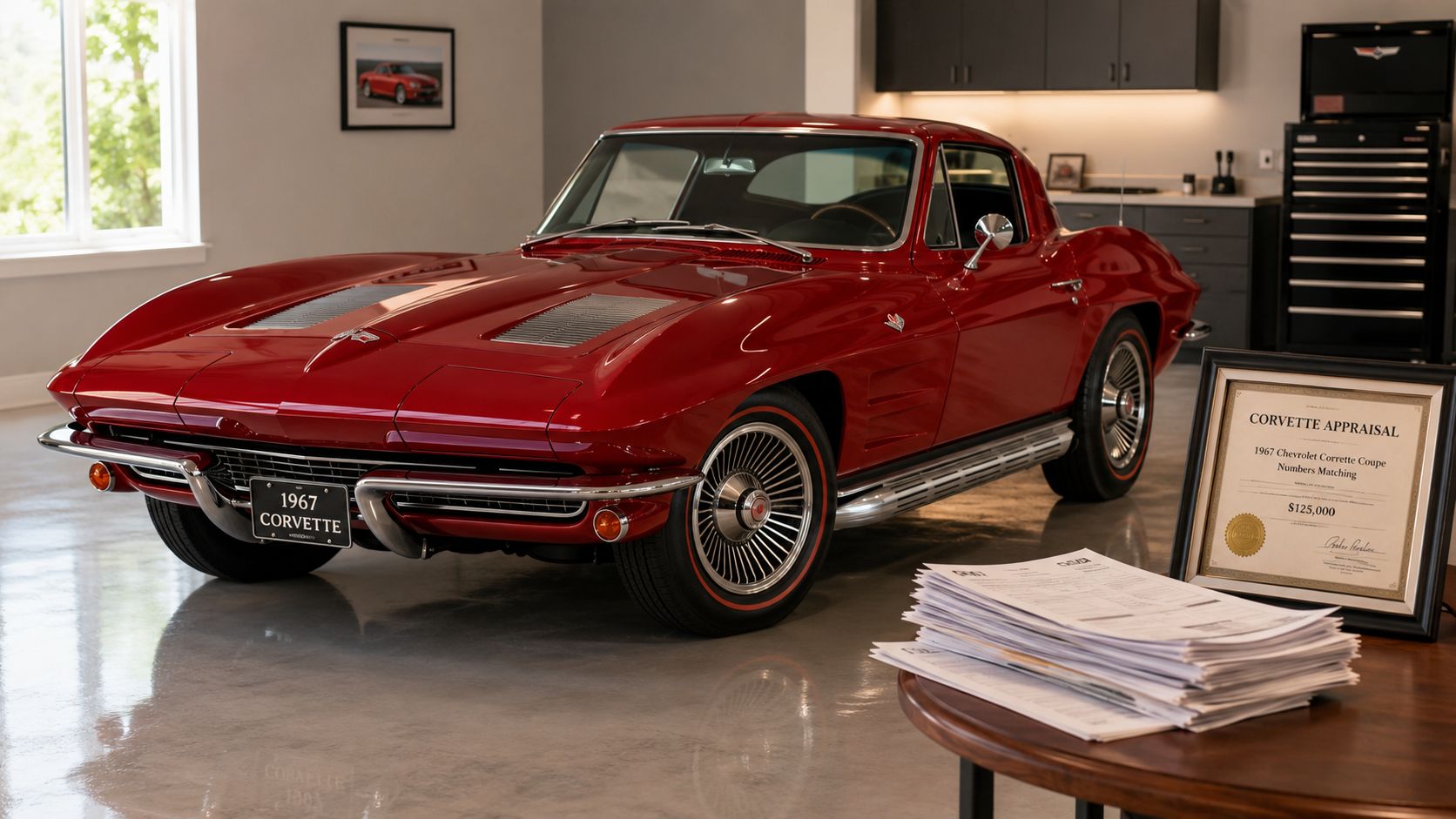
Classic-car claims expose the limits of automated valuation better than almost any other category. A restored collector car is not interchangeable with an average same-year driver. Restoration quality, originality, driveline correctness, bodywork quality, and documentation all matter.
I've seen owners make one avoidable mistake here. They assume receipts alone settle the issue. Receipts help, but insurers still need a valuation narrative that ties those receipts to present market value, not just money spent.
What a collector appraisal does differently
A credible collector valuation builds the car from the ground up:
- Restoration record: Invoices, parts sourcing, labor history, and photos from the restoration process show the quality and scope of work.
- Authenticity support: Numbers-matching components, trim correctness, and specialty documentation can materially affect market opinion.
- Collector market context: The appraiser has to speak the language of the collector market, not just retail used-car databases.
For owners of specialty vehicles, this overview of collector car valuation helps explain why a standard total loss formula often misses the mark.
A classic-car claim is won on documentation density. The owner who can show provenance, restoration quality, and current market relevance usually stands in a much stronger position than the owner who simply says, “I know what it's worth.”
What doesn't work is relying on broad price guides as the whole case. Those guides may help set a range, but they don't replace a file showing why one restored example belongs at a stronger point in that range than another.
4. Commercial Vehicle Total Loss for a Contractor's Truck
A work truck isn't just transportation. It's part rolling inventory, part productivity tool, and part business infrastructure. Yet carriers often value it like a standard pickup with no revenue role and no business-specific equipment.
That gap matters most when the truck has racks, bins, power systems, storage builds, towing equipment, or trade-specific modifications. If those items were added over time and the owner kept weak records, the insurer will often treat them as incidental or excluded unless someone rebuilds the file carefully.
The evidence that usually matters
Commercial claims respond to practical proof.
Start with these:
- Modification records: Receipts for shelving, service bodies, tool systems, electrical additions, or towing gear.
- Use evidence: Registration class, job photos, and ordinary business use records can help show the truck's functional role.
- Condition and maintenance: A contractor who maintained the truck well should prove it with invoices, fleet records, and inspection history.
The valuation question isn't only, “What is this pickup worth?” It's also, “What would it cost to replace this actual work-ready unit in the same business condition?” Those are different questions, and insurers often answer only the first one unless challenged.
What works is separating permanently attached vehicle value from removable tools and equipment, then documenting both. What doesn't work is handing over a pile of mixed receipts and expecting the adjuster to organize the business loss properly. A clean schedule of modifications, dates, and purpose gives the appraiser and the carrier something they can evaluate.

5. Lowball Settlement Recovery for a Family SUV
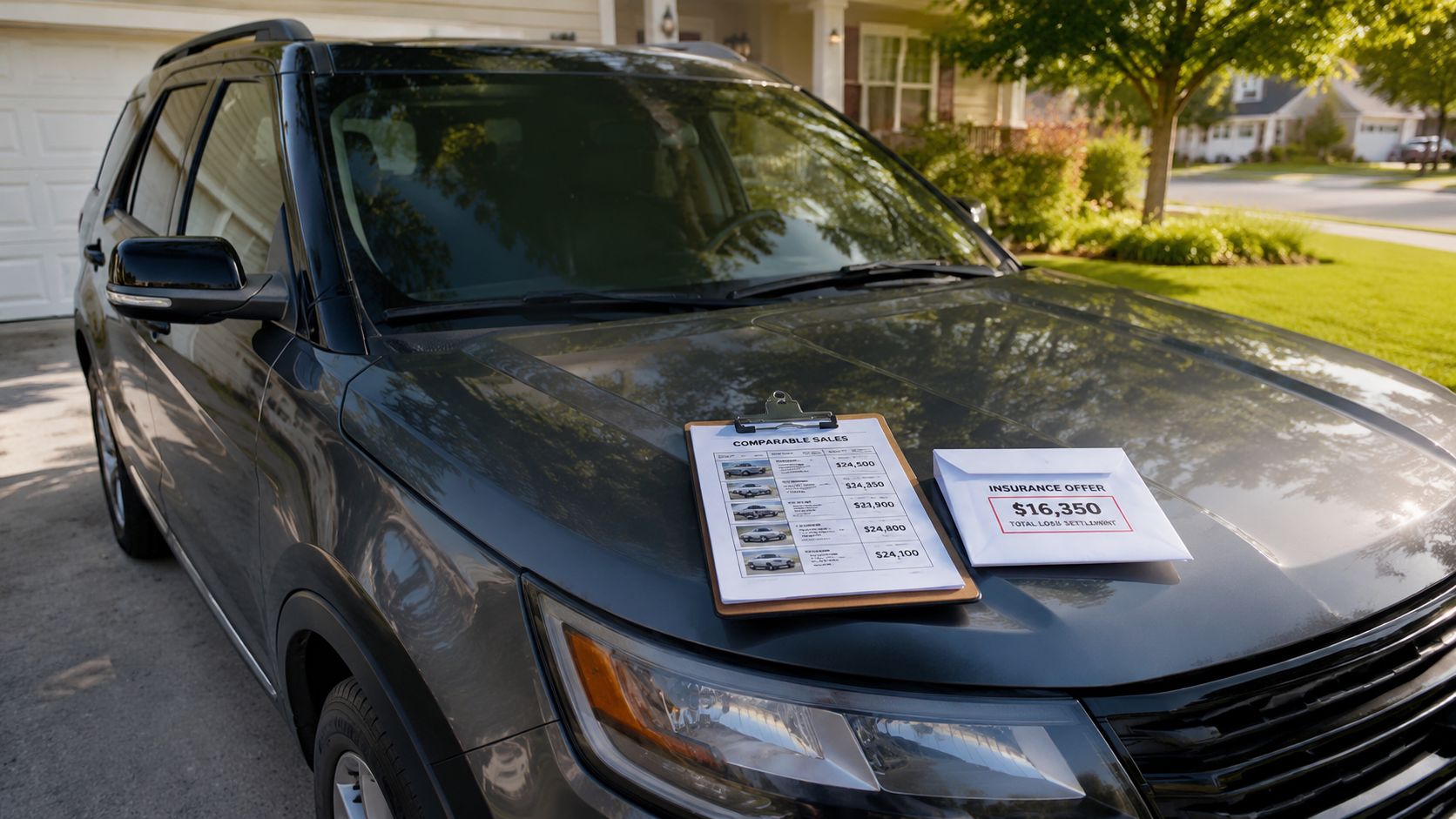
Family SUV claims are where many owners get trapped by familiarity. Because the vehicle seems common, they assume the insurer's number must be close enough. That's exactly why low offers often stick. People don't challenge them.
I've reviewed plenty of mainstream vehicle files where the actual issue wasn't bad faith. It was bad comparable selection. Wrong trim. Older sales. Different drivetrain. Inferior condition. Once those comparables are cleaned up, the offer often looks much weaker than it first appeared.
Where lowball offers usually come from
Most weak total loss offers share the same flaws:
- Outdated market data: Fast-moving used markets punish stale comparables.
- Loose matching: A base model used to price a better-equipped vehicle will drag the number down.
- Condition flattening: Clean interiors, better tires, recent maintenance, and ownership history often get underweighted.
For owners facing that kind of dispute, a totaled vehicle appraisal can replace guesswork with a market-based report built for negotiation.
Field note: Never respond to a low total loss offer with “I need more.” Respond with corrected comparables, condition proof, and a valuation theory the carrier has to answer.
This matters even more when injuries are also in play. In one documented multi-claimant rear-end case with a limited policy, the motorcycle driver received more than the other injured parties, while two rear-seat occupants received much less despite comparable chiropractic costs. The case shows how insurers allocate limited coverage across people and injuries, often leaving less-serious claimants undercompensated when the total available coverage is strained (rear-end collision policy allocation case study).
The practical lesson is broader than one SUV or one injury claim. Early numbers reflect pressure points. Better evidence changes them.
6. Accident Reconstruction and Valuation in a Significant Damage Case
Some claims are mishandled because the insurer reaches the total loss conclusion too early. That happens in multi-vehicle collisions, side-impact crashes, and complicated damage cases where the first estimate is incomplete or the damage path is misunderstood.
An appraiser looking at valuation alone may miss part of the opportunity. In these files, the better move is often a paired analysis. One part asks what the vehicle was worth before the loss. The other asks whether the repair decision itself was sound.
When the total loss call is premature
A second look often changes the claim when:
- The estimate omitted line items: Hidden damage gets attention, but so do omitted repairable components or incorrect replacement assumptions.
- The repair plan lacks model-specific knowledge: Aluminum structures, ADAS calibration needs, and manufacturer procedures can alter the economics.
- The valuation side is too low: A depressed pre-loss value can make a repairable vehicle look like a total loss on paper.
A detailed visual explanation helps owners understand why this analysis matters. This video on vehicle damage and valuation disputes is useful for seeing how these disagreements take shape.
Some owners want repair because of condition, rarity, or personal attachment. That preference doesn't control the claim, but it does justify scrutiny when the insurer's numbers are thin. If the repair estimate was rushed and the valuation was weak, the total loss decision may rest on two bad inputs instead of one.
What works is getting an independent assessment before storage fees, salvage assumptions, and settlement momentum lock the file into one path. What doesn't work is waiting until title paperwork is already signed.
7. High-Mileage Vehicle Fair Market Value and Warranty Impact
High-mileage vehicles get undervalued for a different reason. The insurer sees the odometer and stops there. The market doesn't. Buyers still care about service history, trim, condition, transferable protection, and whether the vehicle sits inside or outside the normal risk profile for its class.
That's why some of the best car accident settlement stories come from ordinary vehicles with unusually strong documentation. A high-mileage car with complete dealer service, major recent maintenance, and transferable coverage can sell very differently from a neglected one with the same mileage.
The hidden premium in a well-documented car
A stronger file usually includes:
- Warranty and service contract records: If protection remained and was transferable, that affects buyer confidence.
- Major maintenance proof: Tires, brakes, scheduled service, and component replacements matter because they change replacement cost in practical terms.
- Condition narrative: Clean paint, interior care, and one-owner or carefully maintained history can support a stronger market position.
This issue overlaps with injury settlements too. In one documented injury case, focused negotiation around severity and ongoing therapy needs led to a final outcome of $1.265 million, along with more than $100,000 in medical debt reduction after an initial low offer (settlement example involving injury severity and medical bill negotiation). Different claim type, same principle: the first number isn't the actual number when the file is incomplete.
What doesn't work with a high-mileage vehicle is arguing from emotion. What works is proving that the insurer priced it like an average worn example when the market would have treated it as a better one.
7-Case Car Accident Settlement Comparison
| Case | Complexity 🔄 | Resources & Speed ⚡ | Expected Outcomes 📊 | Ideal Use Cases 💡 | Key Advantages ⭐ |
|---|---|---|---|---|---|
| High-End Vehicle Total Loss Settlement – Tesla Model S Case | High, multi-step appraisal, credential disputes, technical review (~90 days) | High resource intensity: certified EV appraiser, technical/service records, market comps; longer timeline | Recovered $48,000+ vs insurer offer; established EV valuation precedent | Luxury electric vehicles with premium options and low mileage | Recovers large undervaluation for specialty EVs; strengthens appraisal precedence |
| Diminished Value Recovery – Late-Model Daily Driver Settlement | Moderate, focused comparable analysis, standard appraisal (4–6 weeks) | Moderate resources: certified appraiser, market comps, repair records | Recovered $6,800 in diminished value; method valid across states | Late-model daily drivers claiming post-repair market loss | Demonstrates legal diminished-value recovery; scalable to many claims |
| Collector Car Total Loss – Classic 1967 Chevrolet Restoration Settlement | High, specialized collector appraisal, in-depth restoration review (30–45 days) | Very high: collector appraiser, Hagerty/specialty data, restoration receipts | Recovered $56,000+ additional; fair market value aligned with restoration ($91,000 total) | Fully restored classics and collector vehicles with documented investments | Captures restoration investment and specialty market premiums |
| Commercial Vehicle Total Loss – Contractor's Pickup Truck Settlement | Moderate–High, commercial modification valuation, income impact documentation | High: commercial appraiser, equipment receipts, business-use evidence; may lack comparables | Recovered $18,500 for modifications; supported business continuity | Work trucks with business-specific modifications and tools | Accounts for business-critical equipment and income impact in settlements |
| Lowball Settlement Recovery – Family SUV Dispute Case | Low–Moderate, pre-settlement appraisal verification (7–10 day delay) | Low–moderate: independent appraisal, local comparables, quick turnaround | Recovered $6,500 by overturning outdated insurer data | Owners presented with initial/low settlement offers | Prevents acceptance of insufficient offers; quick ROI for appraisal cost |
| Accident Reconstruction & Valuation – Significant Damage Recovery Case | Very High, dual damage + valuation expertise, structural analysis (time-intensive) | High: damage reconstruction, repair estimates, certified appraisers; dispute-prone | Converted $19,000 total loss offer to $24,000 repair coverage; ~$5,000 net gain | Multi-vehicle or disputed total-loss cases where repairs may be viable | Enables repair option vs replacement; uncovers incomplete insurer estimates |
| High-Mileage Vehicle Fair Market Value Settlement – Warranty Impact Case | Moderate, warranty market-premium analysis, mileage adjustment | Moderate: warranty documentation, market comps of warranty-protected vehicles | Recovered $4,200 for lost warranty value; recognizes market premium | Newer vehicles losing transferable warranty coverage with high mileage | Highlights overlooked warranty premium; expands valuation factors considered |
Your Next Step: Take Control of Your Settlement
The strongest pattern across these car accident settlement stories is simple. Owners get better results when they stop debating opinions and start presenting valuation evidence. That matters whether the dispute involves a luxury total loss, diminished value on a daily driver, a restored classic, or a work truck with business modifications.
Insurers usually begin with systems designed for speed and consistency. That doesn't make the result wrong every time, but it does mean the opening number may miss what makes your vehicle different. High-end trims get flattened. Collector value gets generalized. Commercial modifications get ignored. Accident history gets treated like a repair issue instead of a resale issue. Those are process failures, not mysteries.
Policy structure matters too. Some claims hit a valuation wall because the vehicle number is weak. Others become more complicated because the liability coverage itself isn't enough. Commentary on underinsured and policy-limit disputes notes that serious injury cases often exceed the at-fault driver's coverage and that many consumer guides still don't explain UIM activation or policy exhaustion clearly (discussion of policy limits and UIM gaps). If your file includes both property loss and injury issues, you need to know which bucket each loss belongs in and who pays it.
The practical move is to slow the process down before you sign. Read the valuation report. Check the comparables. Verify trim, mileage, condition adjustments, and market area. If the vehicle is unusual in any way, document that difference immediately. If the number still doesn't hold up, use the process your policy gives you.
The Appraisal Clause isn't a trick. It's a structured path for resolving value disputes without letting one side's software control the outcome. A certified independent appraiser can build the record, identify weak comparables, and put a supportable market number in front of the carrier.
If you suspect a lowball offer, don't rely on a phone argument. Build a file the insurer has to answer.
If you're dealing with a total loss or diminished value claim and the insurer's number doesn't make sense, Total Loss Northwest can help you challenge it with an independent, data-backed appraisal. They specialize in Oregon and Washington claims, invoke the Appraisal Clause, and build reports designed to replace insurance software estimates with real market value.