You're probably reading this with a claim number open on one screen, body shop photos on your phone, and a sinking feeling that the repair estimate is only part of the problem.
That instinct is usually right.
After a car accident Portland OR drivers often get pushed into a narrow conversation about towing, repairs, and whether the other driver's insurer accepted liability. What gets missed is the money question that shows up a few days later. Was your car undervalued as a total loss? If it was repaired, is it now worth less because the crash is on its history? Those are different problems, and they need different responses.
Portland isn't a low-risk driving environment. The city typically sees between 10,000 and 12,000 reported crashes each year, and a 2019 analysis found 5,231 injury-only crashes, 45 fatal crashes, and nearly 56% of all crashes at intersections, according to Portland crash data. That matters because the claims that look routine on paper often come from impact points and traffic conditions that create more serious damage than an adjuster's software first assumes.
Your First Moves at a Portland Crash Scene
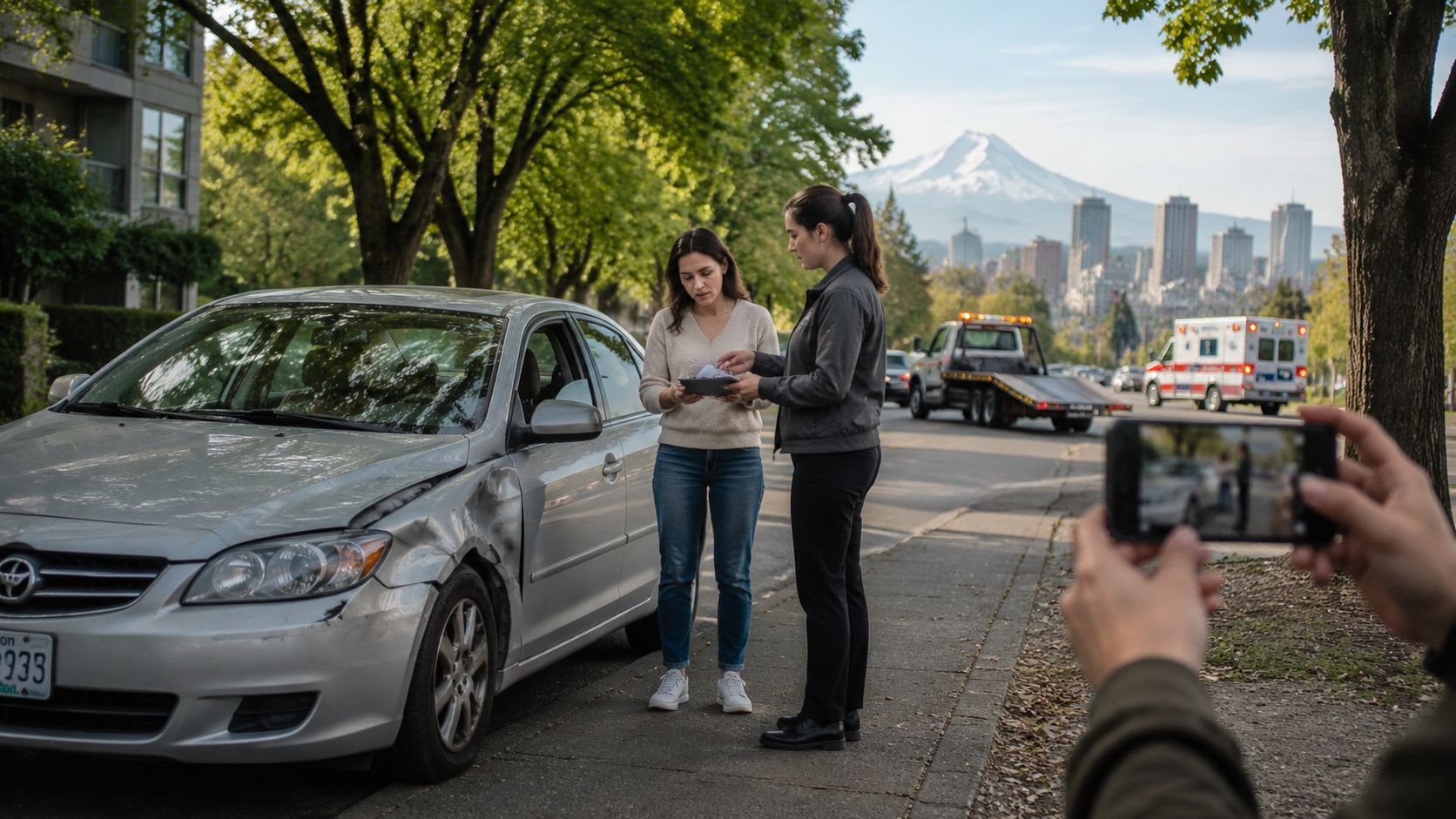
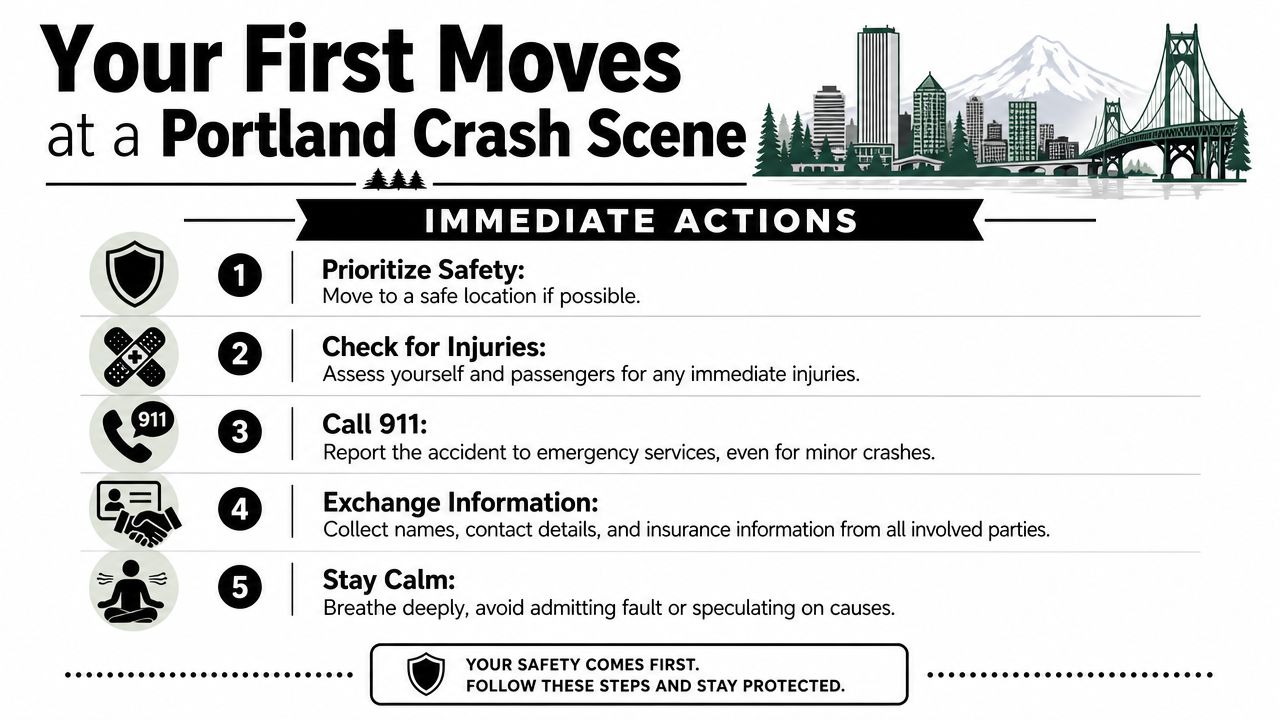
You are sitting at a Portland intersection with a bent fender, a racing pulse, and traffic stacking up behind you. In that moment, the goal is not to sort out fault. The goal is to keep people safe and avoid mistakes that can cost you money later, especially if the damage turns into a total loss or a diminished value fight.
Secure people first
Follow a simple order.
- Get out of immediate danger if you can. If the cars still move and staying put creates a risk of another hit, pull to a shoulder, parking lane, or other safe spot nearby.
- Check yourself and your passengers. Adrenaline hides symptoms. Look for dizziness, confusion, pain, numbness, or trouble standing and walking.
- Call for help if anyone may be hurt, traffic is blocked, or the other driver seems impaired or aggressive. If the scene feels unsafe, call 911. If it is minor and stable, follow local reporting rules and keep your focus on the basics.
Portland crashes often happen in busy conflict points like intersections, where drivers feel pressure to talk fast, move fast, and make roadside judgments they cannot take back. A calm first five minutes usually protects a claim better than a loud fifteen.
Practical rule: Handle safety first. Gather facts next. Save opinions for later.
Exchange information without hurting your claim
Keep the conversation short and professional. Roadside politeness is fine. Roadside speculation is expensive.
Get:
- Driver identity: Full name, phone number, address, and driver's license information
- Insurance details: Carrier name, policy number, and the named insured if different from the driver
- Vehicle identifiers: Plate number, make, model, and if possible the VIN from the dashboard or driver-door label
- Witness contacts: Independent witnesses can help if the stories change
Avoid statements that get repeated later as admissions:
- “I'm sorry” if it sounds like fault
- “I didn't see you”
- “I'm fine” when you are not sure yet
- “This looks minor”
I have seen plenty of vehicles called “minor” at the curb that later needed structural work, suspension parts, or airbags. Those details affect repairability, resale impact, and in some cases whether the car should have been treated as a total loss.
Keep the scene calm and protect the money side of the claim
Notify your insurer as soon as practical. Before that call, or right after it, use a clear step-by-step checklist after a car accident so you do not miss the small details that end up controlling value.
Be careful if the other driver wants to “handle it privately.” That agreement often disappears once the estimate grows, a supplement gets added, or the vehicle starts showing hidden damage. What feels like a simple repair decision on the roadside can become a much larger financial issue a few days later.
Documenting Everything and Reporting Your Accident
The driver with the best records usually has the stronger claim. Not the loudest driver. Not the angriest one. The one who can show what happened, where it happened, and what the vehicle looked like before anyone touched it.
Start before the tow truck hooks up the car, if it's safe to do so.
What to photograph
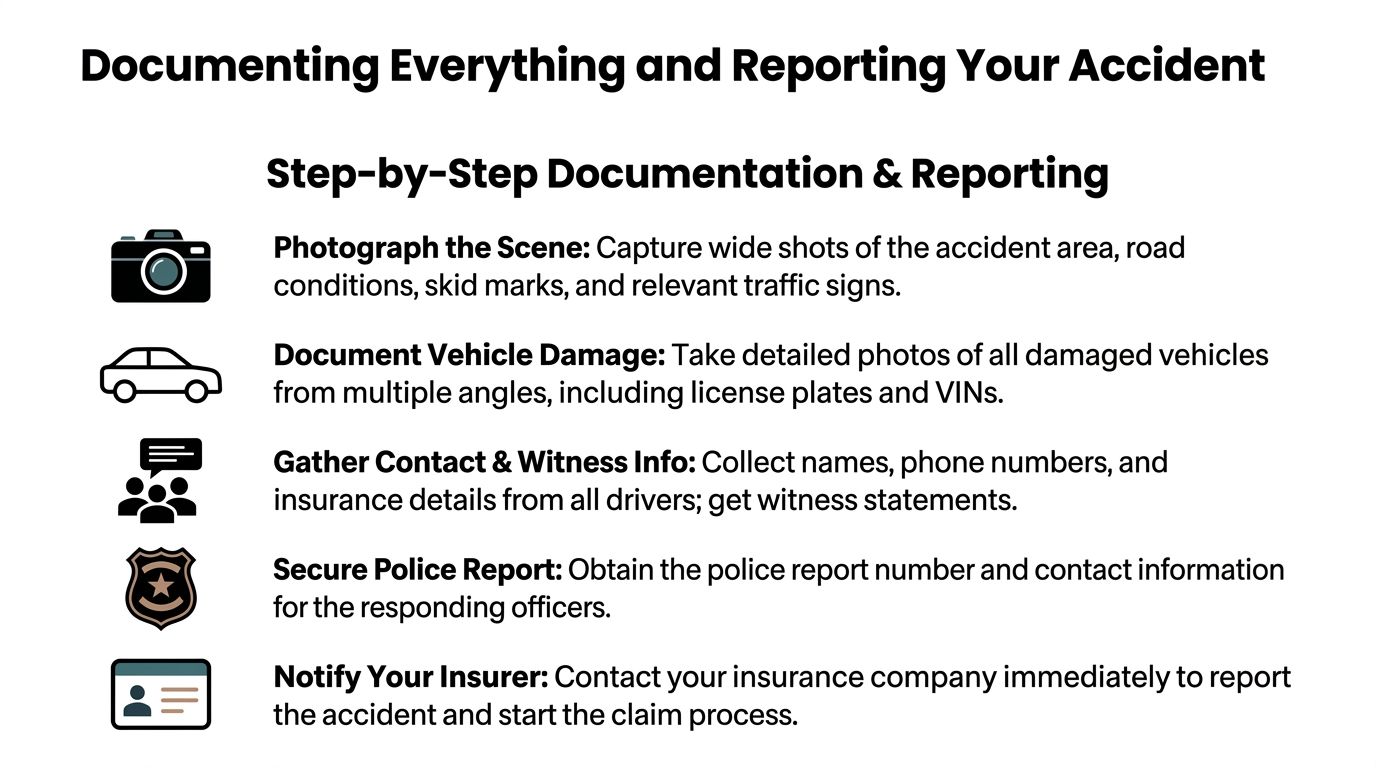
Take more photos than you think you need. Storage is cheap. Missing evidence isn't.
- Wide scene shots: Show lane layout, traffic controls, cross streets, curb lines, and vehicle resting positions.
- Approach views: Photograph what each driver would have seen coming into the collision point.
- Damage close-ups: Corners, wheels, suspension stance, airbags, glass, interior contact points, and fluid leaks.
- Context details: Skid marks, debris field, gouges, weather, lighting, and any construction or signal issues.
- Identifiers: Plates, insurance cards if shared, and VIN labels.
Portland's severe crash geography is concentrated. The city's High Crash Network covers only 8% of streets but accounted for an average of 67% of traffic deaths from 2020 to 2024, according to Portland's High Crash Network data. That's one reason the exact location matters. A crash on a major arterial or at a complex intersection can support a different severity narrative than a simple parking-lot scrape.
The road itself can become part of the claim. Save the intersection name, direction of travel, nearest address, and signal pattern while it's fresh.
This walkthrough can also help if you want a visual refresher on what to gather at the scene:
What to write down before memory fades
Photos are good. Notes make them usable.
Write down:
- Time and location: Include direction of travel and the lane you were in.
- Road and weather conditions: Wet pavement, glare, darkness, standing traffic, or blocked sight lines.
- What you observed: Traffic signal phase, whether the other driver was turning, backing, merging, or crossing.
- Who responded: Officer name, agency, badge number if available, and report number.
- What changed after impact: Warning lights, alignment pull, noise, vibration, fluid leak, or inability to open doors.
Police report and DMV report are not the same thing
Many drivers think the police report handles everything. It doesn't.
A police report documents the officer's response. A DMV crash report is a separate reporting obligation that may apply depending on the facts of the crash. Check Oregon DMV requirements promptly and don't assume a responding officer completed every form that protects your side of the claim.
Also tell your insurer early, even if you weren't at fault. Waiting creates room for coverage issues, delayed inspections, and arguments about later-discovered damage.
Navigating the Oregon Insurance Claim Workflow
Insurance claims look linear from the outside. They aren't. They branch.
Once you report a loss, the path usually depends on two decisions. Are you using your own coverage first, or pursuing the at-fault carrier directly? And is the vehicle repairable, or heading toward a total loss dispute?
Who you'll talk to and what each person does
A claim can involve several people, each with a narrow role:
| Claim contact | What they usually handle | What to watch for |
|---|---|---|
| First notice representative | Opens the claim and takes the initial statement | Don't speculate about speed, visibility, or fault |
| Liability adjuster | Decides fault and coverage position | Keep answers factual and concise |
| Damage appraiser | Reviews repair estimate or total loss valuation | Ask for the basis of every valuation input |
| Rental coordinator | Manages temporary transportation | Confirm dates in writing |
| Bodily injury adjuster | Handles injury-related exposure | Don't minimize symptoms early |
If the crash happened in a severe environment, expect more scrutiny. Portland's 2025 traffic death analysis reported 39 people killed, with speeding contributing to 41% of deadly crashes and 72% occurring between dusk and dawn, according to Portland's annual deadly traffic crash report. In practical terms, crashes tied to speed, darkness, or arterials often produce harder liability arguments and more pushback on damage severity.
What to say in the first recorded call
Use plain facts.
Good examples:
- I was traveling eastbound.
- The light was green when I entered.
- My vehicle was struck on the driver-side front corner.
- The airbags deployed.
- The vehicle was towed and is not safely drivable.
Bad examples:
- I might have been going a little fast.
- I never saw them until the last second.
- It's probably fixable.
- I don't think I'm hurt.
The insurer is building a file. You should be building one too. Save every email, estimate, text, voicemail, storage invoice, and rental record in one folder.
The claim fork that matters most
Many Portland drivers lose money in this situation.
If the carrier repairs the car, the file may still need a diminished value review later. If the carrier totals the car, the fight shifts to actual cash value, comparable vehicles, condition adjustments, options, prior condition, taxes and fees where applicable, and whether the valuation reflects the local market.
That's when independent appraisal becomes relevant. If you're getting a low total loss offer or an insurer-produced valuation that doesn't match the vehicle you owned, an outside review of the numbers can change the conversation. A breakdown of that process is available in this guide to car insurance appraisal.
If you're also reviewing your broader coverage choices after the dust settles, a plain-language place to compare options is Find auto insurance quotes. It's useful after a claim because many drivers only notice gaps like rental reimbursement or uninsured motorist property damage when they need them.
Don't let the first estimate become the final story. Early claim documents are often incomplete, especially before teardown or a detailed market review.
Understanding Total Loss and Diminished Value Claims
Repairs are one financial outcome. They aren't the whole outcome.
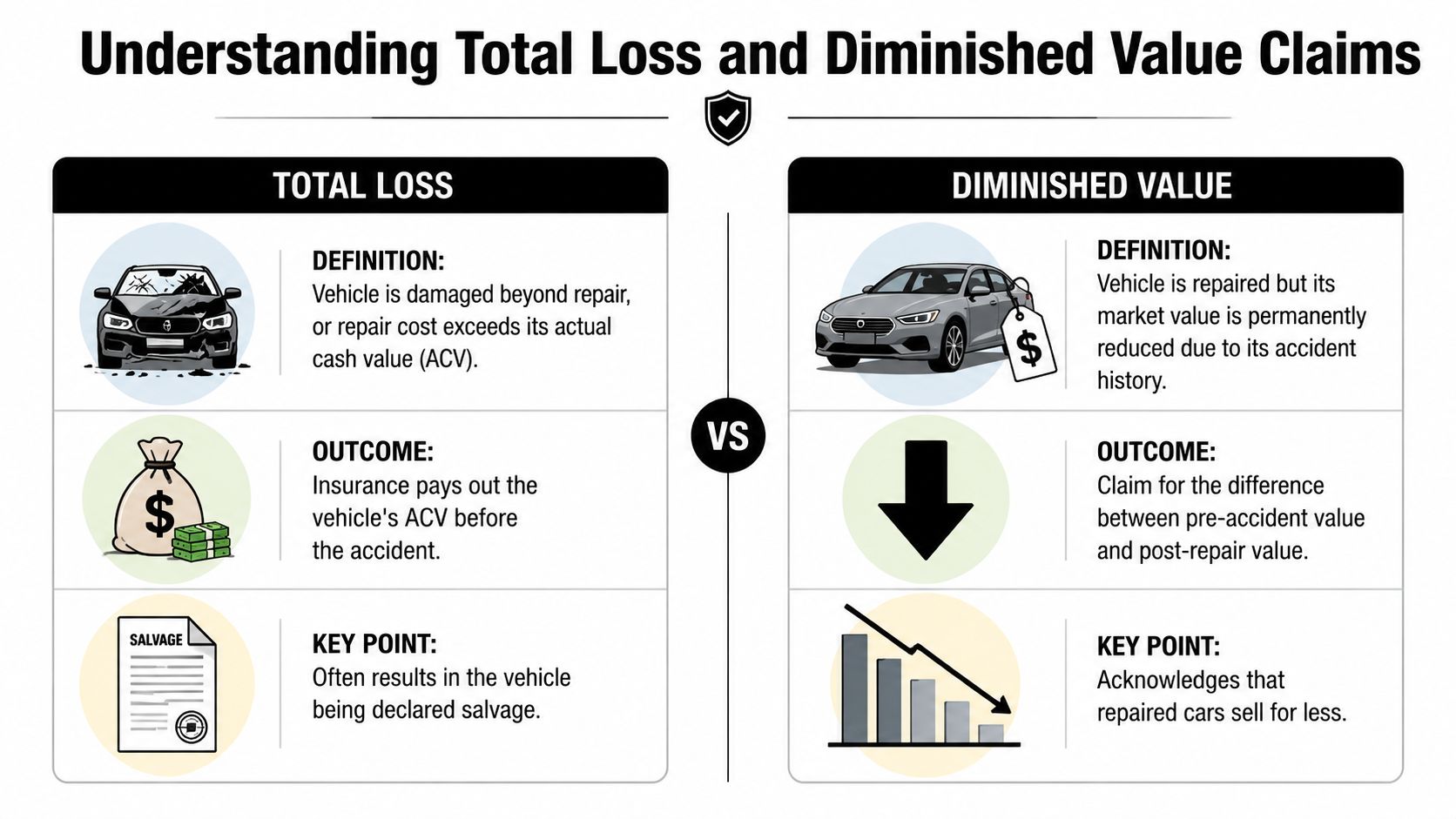
A crash can reduce what your vehicle is worth in two very different ways. One is obvious because the insurer declares the vehicle a total loss. The other is quieter. The vehicle is repaired, but buyers still discount it because it now carries an accident history. That second loss is diminished value.
Total loss means a value dispute, not just a damage decision
When an insurer totals a vehicle, the practical question becomes, “What was this car worth one minute before the crash?”
That sounds straightforward. It often isn't.
Insurers commonly rely on valuation systems that pull comparable vehicles, apply condition and mileage adjustments, and produce a settlement figure. The problem is that bad comparables, missing options, wrong trim, overlooked prior condition evidence, and broad market assumptions can drag that figure down. I see this most often with newer vehicles, scarce trims, well-kept older cars, and anything with upgrades the report didn't properly capture.
Here's what helps:
- Window sticker or build sheet
- Service history
- Recent photos showing pre-loss condition
- Receipts for major options or improvements
- A close read of every comparable vehicle in the insurer report
What doesn't help is telling the adjuster what you “feel” the car was worth without backup.
Diminished value is a separate loss after repair
This is the part many drivers never hear about until someone in the trade points it out.
If you weren't at fault and your vehicle was repaired, the vehicle may still sell for less because buyers, dealers, and appraisers treat accident history as a market negative. They usually look harder at structural repairs, airbag deployment, panel replacement, repaint work, frame or unibody concerns, and severity cues from the crash file.
Portland crash conditions can strengthen that argument when the impact context suggests hidden damage risk. A 2025 Portland traffic fatality summary reported that 72% of deadly crashes occurred between dusk and dawn and speeding was a factor in 41%, with the analysis noting that those high-energy, low-visibility conditions strengthen the case for independent valuation because they raise the probability of hidden structural damage affecting market value, according to this Portland crash analysis.
That does not mean every repaired car has the same diminished value. It means crash severity and repair type matter.
What insurers miss and what works better
A good diminished value analysis asks different questions than a repair estimate:
| Question | Why it matters |
|---|---|
| Was there structural or safety-system involvement? | Buyers and dealers discount those vehicles more heavily |
| How visible is the repair on a history report? | Market reaction often follows report visibility |
| Was the car newer, rarer, or unusually clean before loss? | Better pre-loss vehicles often suffer more noticeable stigma |
| Did the repair restore function but not market perception? | Mechanical repair and market value are not the same thing |
A repaired car can be roadworthy and still be worth less. Those two facts do not conflict.
If you need help documenting that type of loss, a dedicated review of diminished value auto claims can clarify what evidence carries weight. One option in this space is Total Loss Northwest, which handles independent appraisals for total loss and diminished value disputes. The useful part of that model is the valuation work itself: market-based analysis, report review, and appraisal-clause support when the carrier's number doesn't reflect the vehicle.
Essential Portland and Oregon Accident Resources
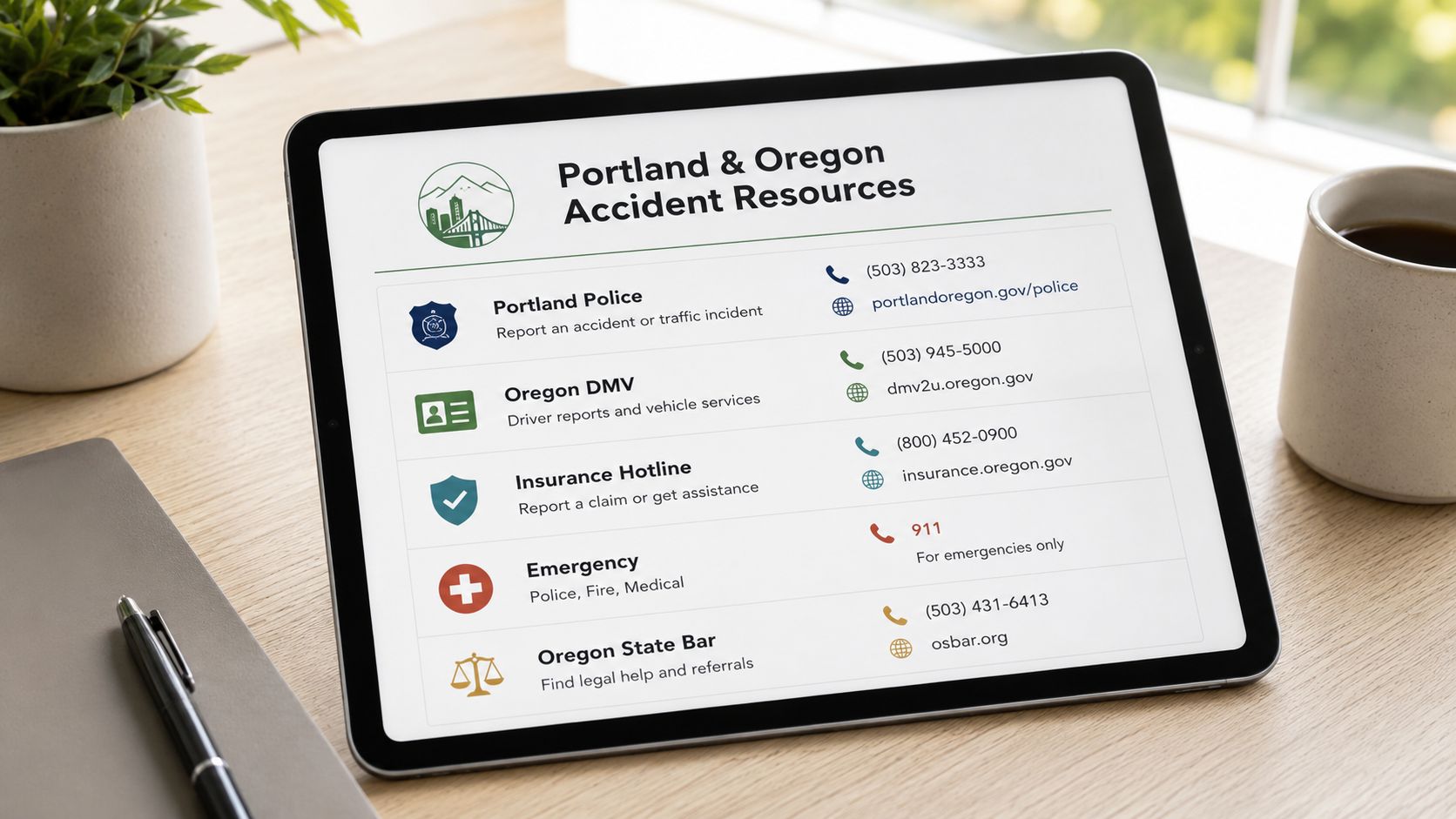
After the first few days, individuals don't need more advice. They need the right contacts.
Keep a short list and use it in the order your claim requires.
Core contacts to line up early
- Emergency response: If anyone is hurt, traffic is blocked, or the scene is unsafe, call emergency services first.
- Your insurance carrier: Open the claim promptly and ask for the claim number, adjuster contact, and inspection process.
- Tow yard or storage facility: Confirm where the vehicle is, daily storage status, release requirements, and who is paying.
- Body shop of your choice: Ask whether they photograph teardown findings and whether they'll share supplements directly with you.
- Oregon DMV resources: Verify whether you need to file a separate DMV accident report and note the deadline that applies to your situation.
When to call a body shop, a lawyer, or an appraiser
Not every crash needs the same professional.
Body shop
Call a repair facility when the insurer is discussing repairability, hidden damage, parts delays, or supplement approvals. A good shop documents what's found after disassembly, not just what was visible in the parking lot estimate.
Ask practical questions:
- Will you document structural findings with photos?
- Can you provide a final repair invoice with all supplements?
- Did any safety systems, sensors, or calibration items trigger additional work?
Personal injury attorney
Call a lawyer when there are injury symptoms, unclear liability, pressure for a recorded statement, or a settlement offer that bundles injury and property issues too early. Property damage and injury claims often move on different timelines. Don't let one rush the other.
Independent appraiser
Call an appraiser when:
- The vehicle is declared a total loss and the offer looks low
- The valuation report has wrong options, trim, mileage, or comparables
- The vehicle was repaired but now carries a measurable stigma in the market
- You own a collector, custom, luxury, or unusually clean vehicle
What to keep in one folder
Use a paper file, phone folder, cloud drive, or all three. Just keep it organized.
Include:
- Claim correspondence
- Police and DMV documents
- Photos and videos
- Repair estimates and supplements
- Rental and towing receipts
- Storage invoices
- Medical notes related to the crash if applicable
- The insurer's valuation report if it becomes a total loss
A clean file saves time, reduces contradictions, and makes it easier for any professional you hire to help quickly.
Protecting Your Rights and Your Vehicle's Value
A Portland crash claim can look settled long before the financial damage is fully settled. The car gets repaired or declared a total loss, a payment is issued, and the file starts to close. Then the primary issue emerges. The number may not reflect what your vehicle was worth before the crash, or what it is worth now with an accident history on record.
That gap is where drivers lose money.
Public crash reporting and general accident advice usually focus on injuries, fault, and repairs. They spend far less time on the two property issues that affect your bottom line most: whether a total loss valuation is accurate, and whether a repaired vehicle now carries measurable diminished value. In Portland, where busy corridors produce plenty of moderate and severe collision claims, those questions come up often.
What fair handling looks like
A fair property damage claim should include a few basics:
- A valuation tied to your actual vehicle: Correct trim, options, mileage, prior condition, and local comparable sales
- A repair file that reflects the full scope of damage: Including hidden damage found after teardown
- A separate review of post-repair value loss: Especially if another driver caused the crash
- Written explanations for denials or reductions: So you can evaluate the reasoning instead of guessing
If any of those pieces are missing, pause before signing releases or accepting the final number. Speed helps the insurer close a file. Accuracy protects your equity.
What weakens a claim
Drivers usually lose ground when they treat the insurer's first number as final or assume a good repair erases all market stigma.
Other common mistakes include:
- accepting a total loss offer before checking the valuation report for errors
- overlooking missing options, wrong trim, or bad comparable vehicles
- keeping key conversations on the phone instead of in email
- skipping pre-loss evidence such as service records, upgrade receipts, or clean condition photos
- choosing a shop or mechanic without confirming how thoroughly the work is documented
If you need help vetting the repair side, Kwik Kar's guide to auto repair offers a practical checklist for choosing a trustworthy mechanic. Repair documentation often becomes part of the support for a diminished value claim later.
If the insurer's number does not match the vehicle you actually owned, treat it as a valuation dispute and answer it with evidence.
Know when to escalate
Every claim does not require a fight. Some do require backup.
Escalation usually makes sense when the total loss offer misses the Portland market, the report uses weak comparables, the adjuster dismisses diminished value without looking at repair severity, or the vehicle is uncommon enough that generic pricing software misses its real market position. I see this more often with very clean older vehicles, higher trims, luxury models, and cars with recent major maintenance that adds real market appeal but does not always show up cleanly in an automated report.
At that point, independent appraisal becomes a practical step. It gives you a structured way to challenge the number with market support, repair context, and vehicle-specific facts instead of frustration.
If your Portland claim has turned into a dispute over total loss value or post-repair diminished value, Total Loss Northwest can review the file and help you understand whether the insurer's number reflects the actual market value of your vehicle. That difference often decides whether you close the claim quickly or close it fairly.