You bought the car because it meant something. Maybe it was the exact model you wanted in high school, maybe it came out of a long restoration, or maybe you finally found a clean, documented example after years of searching. Then a fire, theft, or collision turns that car into a claim file.
That's when owners learn whether their policy was built for a collectible asset or for ordinary transportation. If the policy settles on standard depreciation logic, the check may reflect a generic used car value instead of the money tied up in condition, originality, provenance, restoration quality, and rarity. For a classic, that gap is where most of the damage happens.
I see the same problem from the appraisal side. The insurance decision you make before a loss often determines whether you are in a strong position after a loss. For owners in Oregon and Washington, that matters not only in a total loss, but also when a repair leaves behind measurable diminished value.
Why Your Classic Car Needs More Than Standard Insurance
I often see the same mistake with clients. The car is restored properly, photographed, stored indoors, and backed by receipts. The owner carries “full coverage” and assumes that means the investment is protected. Then a fire, theft, or major collision turns the file over to a claims adjuster who values it like an older used car instead of a documented collector vehicle.
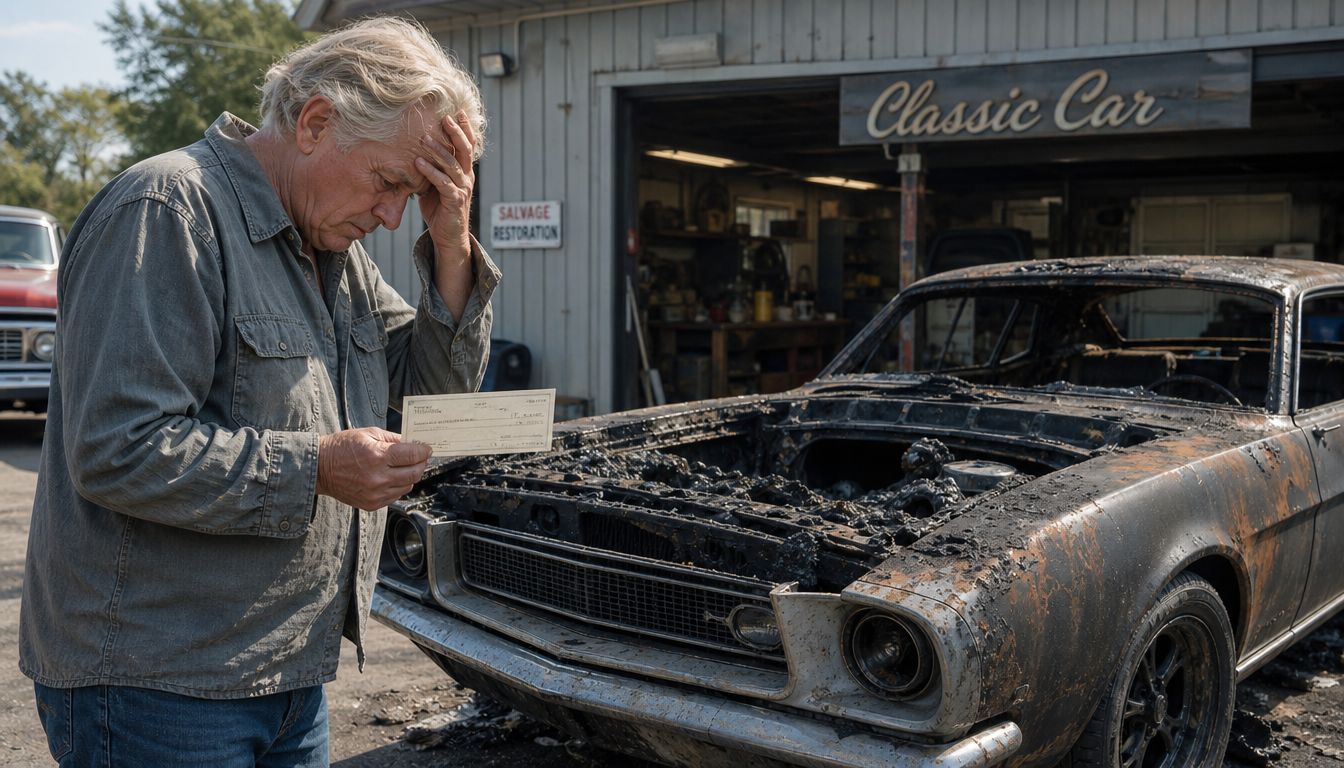
That gap is the primary risk. Standard auto insurance is built for transportation assets that depreciate in predictable ways. A classic car does not follow that pattern once condition, originality, restoration quality, rare options, and market demand start driving value.
Owners usually get blindsided long before the loss occurs. The problem starts when the policy is written without a defensible value attached to the car. After a total loss, the carrier controls the starting number unless the policy was set up to fix value in advance. At that stage, the owner is no longer planning protection. The owner is arguing over settlement.
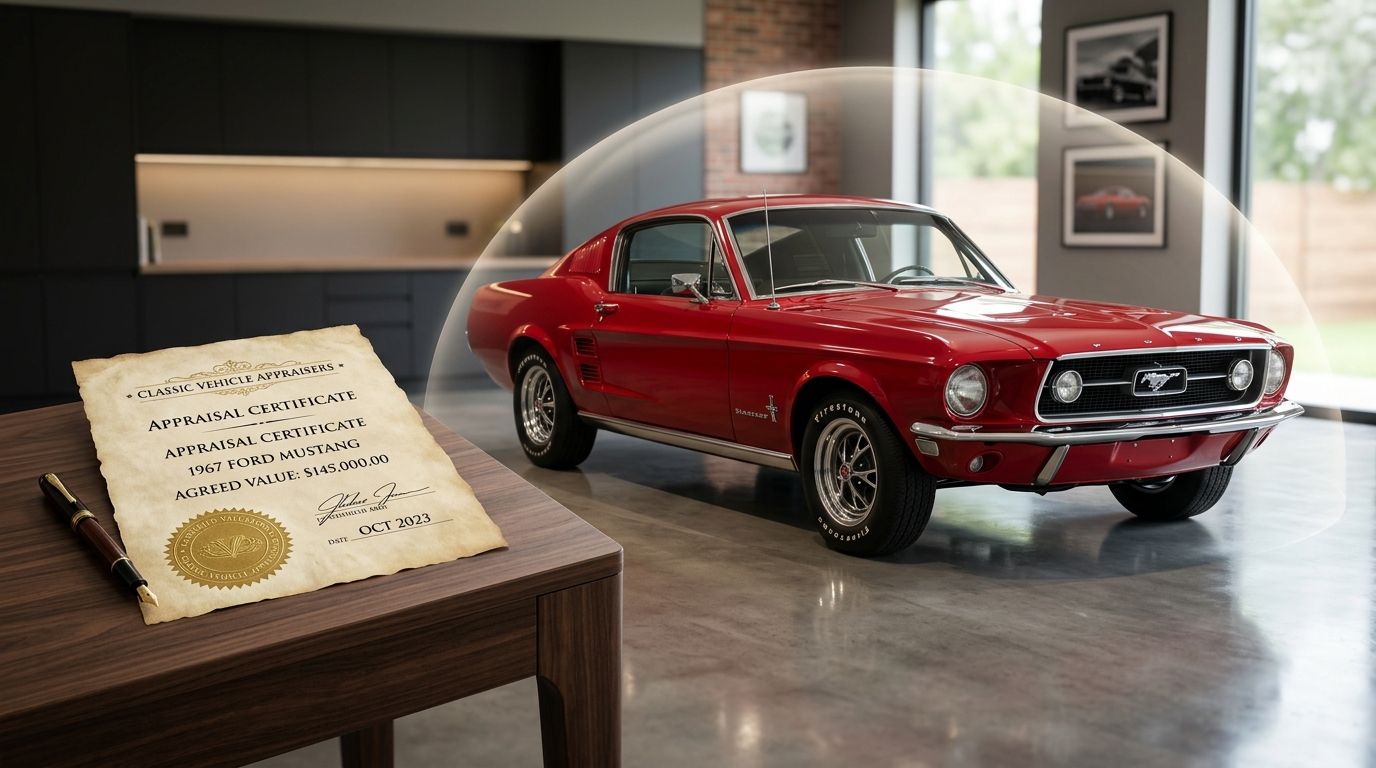
That is why agreed value coverage matters. It does more than improve the policy language. It puts a number in place before the claim, which gives the owner a far better position if the car is stolen, burned, or totaled. In my work, that pre-loss decision often determines whether the settlement is straightforward or disputed.
The same logic applies after repairs. If a collector car in Oregon or Washington suffers structural damage, paintwork, or replacement of major original components, the financial loss may continue even after the shop finishes the job. A weaker policy setup makes it harder to support a diminished value claim later, especially if the car was never properly documented at the front end.
A practical rule works well here. If your car would be difficult to replace with a generic market search, it should not be insured on a generic market basis. Before renewing coverage, review the carrier's collector vehicle standards against a clear list of classic car insurance requirements.
The goal is not just to have insurance in force. The goal is to have a policy and a value record that can stand up under scrutiny after a loss, which is exactly where an independent appraiser helps protect the owner's position.
Understanding the Three Types of Car Insurance Value
A loss file often turns on one question. Was the car's value fixed before the damage, or does the carrier get to argue value after the damage? That choice controls far more than the premium. It controls the starting point for a total loss settlement and can affect how much support you have later if the vehicle suffers repaired damage and a diminished value dispute.
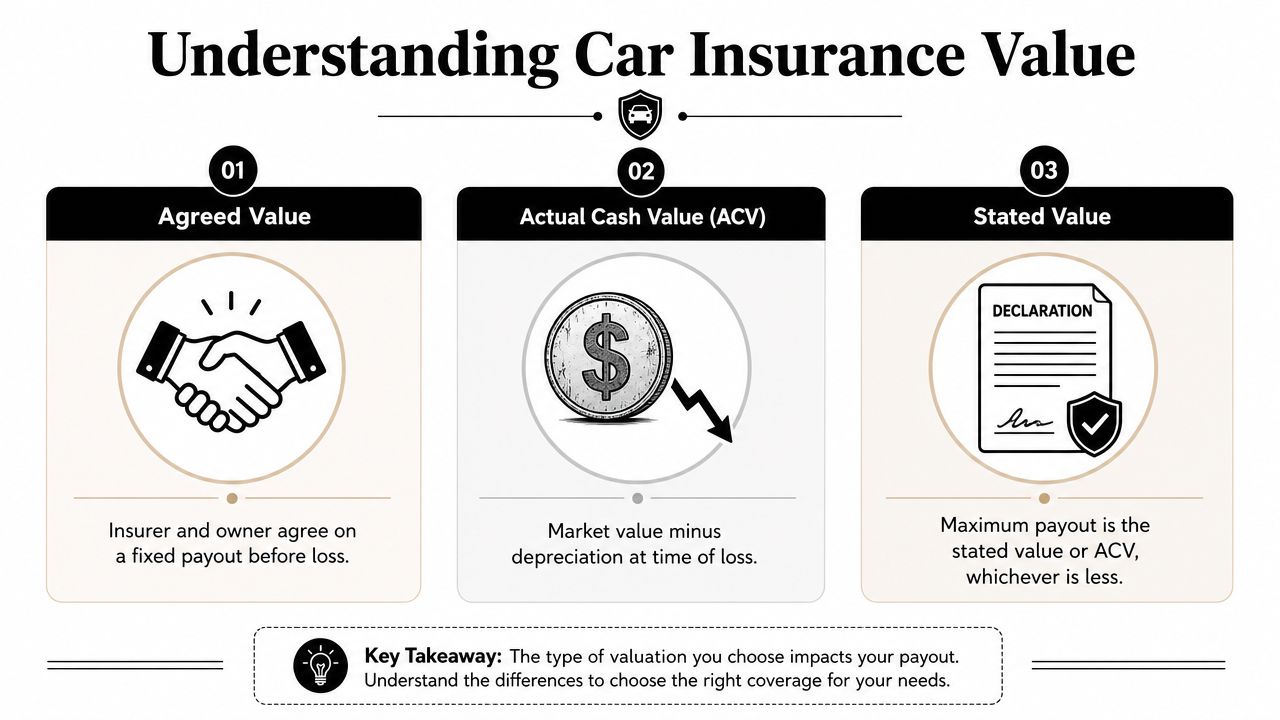
Collector policies usually use one of three valuation methods: agreed value, actual cash value, or stated value. The labels sound similar. The claim results are not.
Agreed Value
With agreed value, the owner and insurer approve a specific amount before any loss occurs. If the policy terms are satisfied and the car is a covered total loss, that agreed number is the settlement basis. The carrier does not reduce it later by ordinary depreciation.
For a collector vehicle, that is usually the cleanest structure. It gives both sides a defined number to work from, and it gives the owner a much stronger position if the claim becomes contested. In appraisal work, this is the format that most often prevents arguments about originality, restoration quality, rare options, and prior market evidence after the car is already gone.
Actual Cash Value
Actual Cash Value, or ACV, is the standard auto insurance model. The insurer decides what the vehicle was worth at the time of loss, usually by applying depreciation and comparing it to available market data.
That approach fits daily drivers better than collector cars. A pricing tool may recognize year, make, and model, but miss the factors that drive collector value, such as numbers-matching drivetrains, documented restoration work, period-correct components, low production options, or regional demand for a particular model. Once the claim starts on an ACV basis, the owner has to prove why the car should be worth more than the carrier's initial figure.
Stated Value
Stated value causes the most confusion. The owner states an amount to the insurer, but that number is not always the guaranteed payout.
In many policies, stated value works as a cap, not a promise. If the carrier concludes the car's actual cash value is lower at the time of loss, the settlement can be reduced to that lower figure. Owners often discover that difference only after a serious claim, which is the wrong time to learn how the policy reads.
Side-by-side comparison
| Valuation type | When value is set | How total loss settlement works | Main risk for collector owners |
|---|---|---|---|
| Agreed Value | Before the loss | Based on the pre-agreed amount in the policy | Requires current documentation that supports the number |
| Actual Cash Value | After the loss | Based on the carrier's value analysis at claim time | Collector-specific value can be missed or discounted |
| Stated Value | A value is listed before the loss | Payout may be limited to a lower value determined after the loss | Owners mistake the stated amount for a guaranteed settlement |
A simple rule helps here. If your car cannot be valued fairly by a generic market search, it should not be insured on a generic value method.
For a closer explanation of how these claim formulas differ, review agreed value vs actual cash value insurance for collector cars. The policy type you choose before a loss often decides whether the settlement process is straightforward or whether an independent appraiser has to step in later to correct a low number on a total loss or diminished value claim in Oregon or Washington.
How to Establish and Document Your Cars Agreed Value
An agreed value policy is only as good as the file behind it. If the number was guessed, borrowed from an online listing, or carried over from an outdated appraisal, it won't hold up well when the carrier reviews the risk or when a claim lands on a desk.
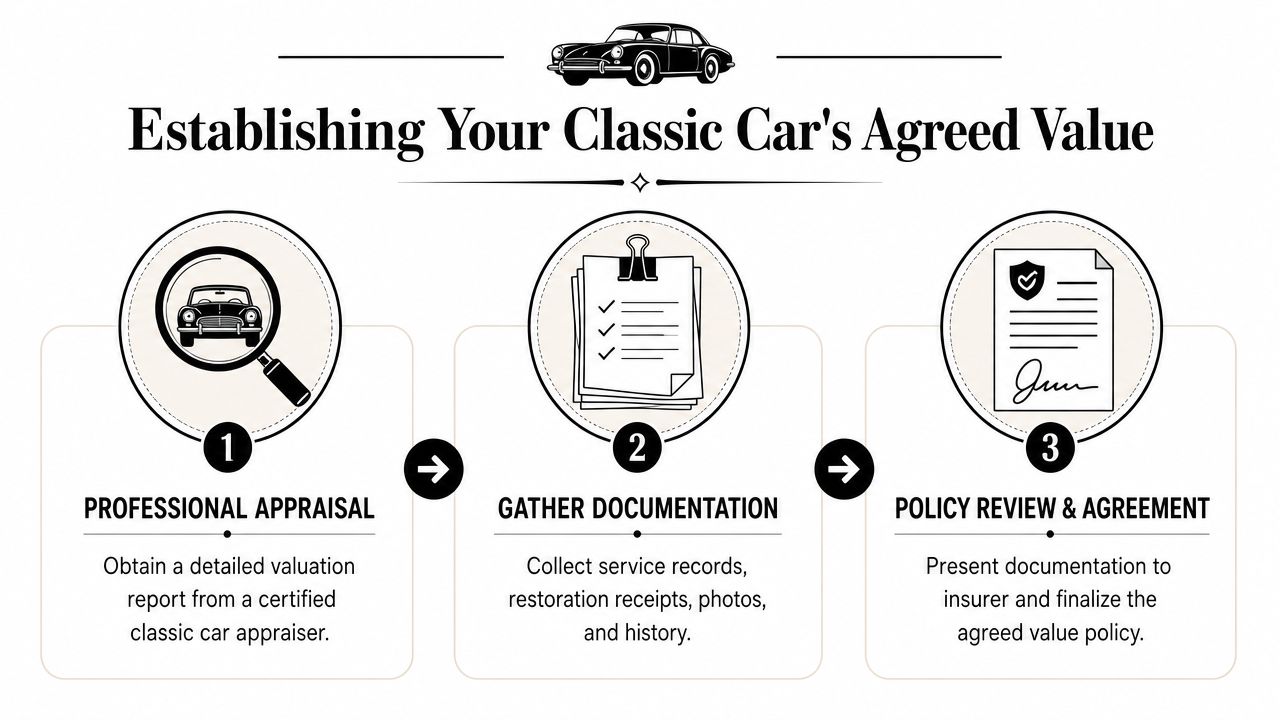
Start with an independent appraisal
The strongest agreed value files begin with a professional appraisal that documents the car as it exists today. Avery Insurance's classic car insurance guidance states that the policyholder and insurer contractually lock in a specific dollar amount based on a professional appraisal documenting condition, originality, and provenance. It also notes that the appraisal should be supported by 12 to 24 months of auction results for comparable vehicles, and insurers typically want updates every 2 to 3 years so the insured value tracks the market.
An independent appraiser matters because the assignment is to document market reality, not to make the number fit a premium target. That distinction becomes important later if the same vehicle suffers a total loss or a diminished value claim.
What the appraisal should include
A solid collector appraisal goes beyond a quick walkaround and a few photos. It should capture the details that separate your car from a lesser example.
- Condition evidence: Exterior, interior, underhood, undercarriage, glass, trim, paint quality, and signs of prior damage or corrosion.
- Originality and specification: Matching-numbers status if applicable, factory-correct equipment, period-correct changes, and documented deviations.
- Restoration quality: Fit and finish, workmanship, parts quality, and whether the work reflects driver-level, show-level, or something in between.
- Provenance and history: Ownership history, restoration file, awards, notable documentation, and records that support the vehicle's story.
- Market support: Comparable auction activity and market commentary that place your car in a defensible value range.
The owner's documentation checklist
The insurer doesn't see what you know unless you package it clearly. Before you submit for agreed value, gather:
- Current photographs from every angle, including VIN plate, odometer, engine bay, interior, and trunk.
- Receipts and invoices for restoration, paintwork, engine work, upholstery, and significant parts purchases.
- Historical records such as prior appraisals, build sheets, ownership records, certificates, or marque documentation.
- A written summary of modifications, corrections, upgrades, and any features that affect collectibility.
Don't leave value trapped in receipts stuffed into a glove box. If the insurer can't see it, the policy probably won't reflect it.
Keep the file current
A collector policy shouldn't be “set and forget.” If the car receives a major restoration update, a drivetrain change, a correction to originality, or a change in collector demand, revisit the agreed value before renewal.
For owners who need a defensible report for underwriting or future disputes, a service such as an agreed value appraisal can help organize the evidence into a format carriers can evaluate. What works is specificity. What doesn't work is assuming the insurer will discover hidden value on its own.
What Agreed Value Insurance Costs and What It Requires
Many owners assume collector coverage must cost more because the car is worth more. In practice, that's often not how these policies are priced.
According to Dataintelo's classic car insurance market report, classic car insurance policies typically range from $200 to $600 per year, while a typical standard auto policy costs about $1,592 per year. The same report says the difference exists because classic car insurance comes with strict usage limitations.
Why the premium can be lower
Collector policies are cheaper because insurers expect less exposure. The car usually isn't commuting through daily traffic, sitting in parking lots all day, or being driven in every kind of weather.
That lower risk profile often depends on rules such as:
- Limited use: Daily driving is usually off the table.
- Mileage controls: Some policies cap annual use.
- Secure storage: A private garage is commonly required.
- Driver screening: A clean record helps qualify for preferred terms.
The trade-offs that matter
Owners need to be honest about how they use the vehicle. Agreed value coverage is excellent when the car is a collector asset first and transportation second. It's a poor fit if you want unrestricted use and don't want to monitor policy conditions.
A simple way to think about it is this:
| If you use the car like this | This policy setup usually fits better |
|---|---|
| Weekend drives, events, storage in a private garage | Collector policy with agreed value |
| Frequent commuting, open-ended daily use, casual storage habits | Standard policy structure may be more practical |
Cost should not be the only filter
The premium matters, but the settlement method matters more. A cheaper policy that values the car correctly can outperform a more expensive policy that leaves the number open for argument after a loss.
The market itself reflects how established this niche has become. Dataintelo reports the global classic car insurance market was valued at $9.4 billion in 2025 and is projected to reach $17.8 billion by 2034, with a projected 7.4% CAGR over that period. That growth suggests carriers see sustained demand for policies designed for collectible vehicles, not just ordinary depreciation models.
Handling Total Loss and Diminished Value Claims
A good agreed value policy does its best work on the worst day. If the vehicle is stolen or declared a covered total loss, the settlement process is usually cleaner because the value was settled at policy inception instead of being fought over afterward.
That doesn't mean every claim becomes effortless. Carriers still review coverage, use conditions, documentation, and the facts of the loss. But the central argument over what the car was worth is far more limited when the agreed amount was properly supported on the front end.
Total loss is where preparation pays off
For a collector owner, a total loss claim should not be the first time anyone assembles the vehicle's story. The appraisal, photos, records, and underwriting file should already exist.
That preparation changes the claim dynamic in two important ways:
- The insured amount is easier to enforce: The carrier already accepted the valuation framework.
- The owner spends less time proving the obvious: You're not scrambling to explain why a rare or highly documented example isn't interchangeable with an average one.
Repairable damage creates a second problem
Classic car owners often focus on total loss and overlook a different exposure. A repairable accident can still reduce market value even after competent repairs. Buyers care about damage history, prior structural involvement, paintwork visibility, and whether the incident changes the car's desirability.
That loss is diminished value. For collectible vehicles, it can matter a great deal because the market rewards originality, clean history, and confidence.
Even a well-repaired classic can carry a value penalty if the market now sees it as a damaged-and-repaired example rather than an untouched one.
How an appraiser helps after the accident
The role of an independent appraiser transitions from underwriting support to claim support. The work is different, but the principle is the same. Document the vehicle carefully, compare it to the relevant market, and explain the value impact in a way that can survive scrutiny.
For total loss disputes and diminished value disputes in Oregon and Washington, appraisers may also become central to the Appraisal Clause process when the insurer's number and the owner's number are too far apart. Firms like Total Loss Northwest handle certified appraisal work used to challenge low valuations, remove reliance on insurer valuation software alone, and support negotiations with market-based reports.
What works is a disciplined file, clear comparable support, and a valuation professional who understands collector vehicles. What doesn't work is assuming a body shop invoice, a generic market guide, or a casual opinion from a friend will establish the loss in a claim dispute.
Special Insurance Rules in Oregon and Washington
Oregon and Washington owners face the same basic collector insurance choices as everyone else, but local claim handling adds a practical layer. The issue usually isn't whether a classic deserves special treatment. It's whether the owner can prove value in a way that fits the policy language and stands up during negotiation.
Why local appraisal context matters
Collector markets are not perfectly uniform. Pacific Northwest buyers often place weight on rust history, storage conditions, originality, and the quality of restoration work. A local appraiser who works Oregon and Washington claims will usually understand how those factors affect real negotiations.
That matters in two places:
- Before a loss: The agreed value should reflect how the regional market views the car, not just a broad national average.
- After a loss: Diminished value arguments often turn on credibility, documentation quality, and whether the valuation logic matches how buyers in the region think.
Oregon and Washington claim reality
In both states, the paper trail matters more than owners expect. Carrier files tend to become stronger when they have a clean underwriting record, a recent appraisal, and organized supporting documents. Owner files become weaker when value support is old, incomplete, or based on asking prices without context.
A collector claim is easier to resolve when the appraiser can show why this exact car belonged at this exact value before the accident ever happened.
If you own a classic in Oregon or Washington, don't separate insurance selection from claim planning. They're the same decision viewed from different points in time.
Answering Your Top Agreed Value Questions
A claim file gets stronger or weaker long before any loss occurs. These are the questions owners ask when they want the policy to hold up under real claim scrutiny, not just look good on the declarations page.
Does agreed value cover modifications?
Yes, if the modifications are specifically disclosed and supported. Upgrades, custom fabrication, engine swaps, suspension work, and non-original equipment should appear in the appraisal with photos, parts details, and receipts. If the insurer never saw the changes, do not assume the agreed value includes them.
Should you update the agreed value after restoration work?
Yes. Major paint and body work, mechanical rebuilding, interior restoration, and originality corrections can change market value in either direction. Update the file after material work is completed, then send the revised support to the carrier before renewal or any policy rewrite.
Is stated value ever good enough?
It can work for an owner who accepts more settlement uncertainty. For a collector vehicle with meaningful market spread, stated value often leaves room for the carrier to argue for a lower actual cash value after a loss. Agreed value is usually the cleaner choice when the goal is a predictable payout.
What if the market rises after the policy is written?
Review the value at renewal and after notable market movement, restoration work, or major upgrades. A well-written policy still underperforms if the insured amount is stale. Owners in Oregon and Washington run into this problem more than they expect, especially when the car improves faster than the paperwork.
Can you rely on an insurer-provided valuation service?
For common collector cars with standard equipment, sometimes yes. For rare cars, high-level restorations, unusual documentation, or modified examples, those systems can miss what buyers and appraisers pay attention to in the market. A generic tool may be acceptable for underwriting speed, but it is not always strong value support.
Is an independent appraisal really necessary?
For a defensible policy, yes. An independent appraisal gives the insurer credible third-party support for the agreed value at underwriting, which helps prevent disputes before they start. It also leaves a usable record of condition, quality, and market position if the car later becomes a total loss or suffers diminished value after repair.
If you need a defensible appraisal for a classic car total loss or diminished value claim in Oregon or Washington, Total Loss Northwest provides certified independent appraisals built for negotiation, Appraisal Clause disputes, and fair settlement support.