You just got the call or the email nobody wants. The insurer says your car is totaled, the numbers look clean on paper, and the offer feels too low the second you compare it to what similar vehicles are bringing in Houston. That gap is where Houston auto appraisers earn their keep, because a rushed settlement can leave real money on the table when the carrier's valuation software misses options, condition, or local market evidence.
A lot of drivers assume the first offer is basically final. It isn't. Texas insurance rules let you dispute the amount, and the state's appraisal process exists for exactly this kind of disagreement, because insurers are not always sizing up your car the way a real buyer would.
The first mistake I see is people treating a total-loss offer like a take-it-or-leave-it verdict. It's just a number, and numbers can be challenged with better comparables, better condition evidence, and a cleaner valuation file. If you want the policy-level mechanics in plain English, the independent car appraisers guide is a useful starting point.
Houston makes this more important than it is in smaller markets. Compensation data shows Houston appraisers are tracked across multiple job platforms, which lines up with a market that has real claim volume and real specialization, not a one-size-fits-all valuation environment. Indeed lists an average auto appraiser salary of $65,576 per year based on 22 salary submissions, and says that figure is 9% below the national average for the role. Salary.com lists a Houston-area Field Auto Appraiser average of $75,175 as of February 1, 2025, with a typical range from $69,127 to $83,029 and an overall span from $63,621 to $90,180. ZipRecruiter also places Houston auto appraiser pay at $58,934 as of May 25, 2026, with most workers between $49,400 and $65,900. Those scattered but consistent figures point to a competitive market where appraisers are used to handling more than simple fender-benders. Indeed's Houston auto appraiser salary data
Practical rule: if the gap between the insurer's offer and a defensible market value is real enough to matter, stop debating the adjuster verbally and start building evidence.
Why Houston Drivers Need Independent Auto Appraisers
A Houston driver gets the total-loss letter and sees a number that barely clears the loan balance. That number should not be treated as proof the carrier got it right. Insurance valuations move fast, rely on software, and lean on generic condition assumptions. An independent appraiser works from the actual market the car would have sold in, which is where real value gets established.
Houston is exactly the kind of market where generic valuation logic breaks down. Daily drivers, work trucks, lifted pickups, luxury sedans, collector cars, hybrids, and modified builds all pass through the same claims system. Two vehicles with the same year, make, and model can land at very different actual cash values once mileage, trim, options, condition, and aftermarket work are counted correctly.
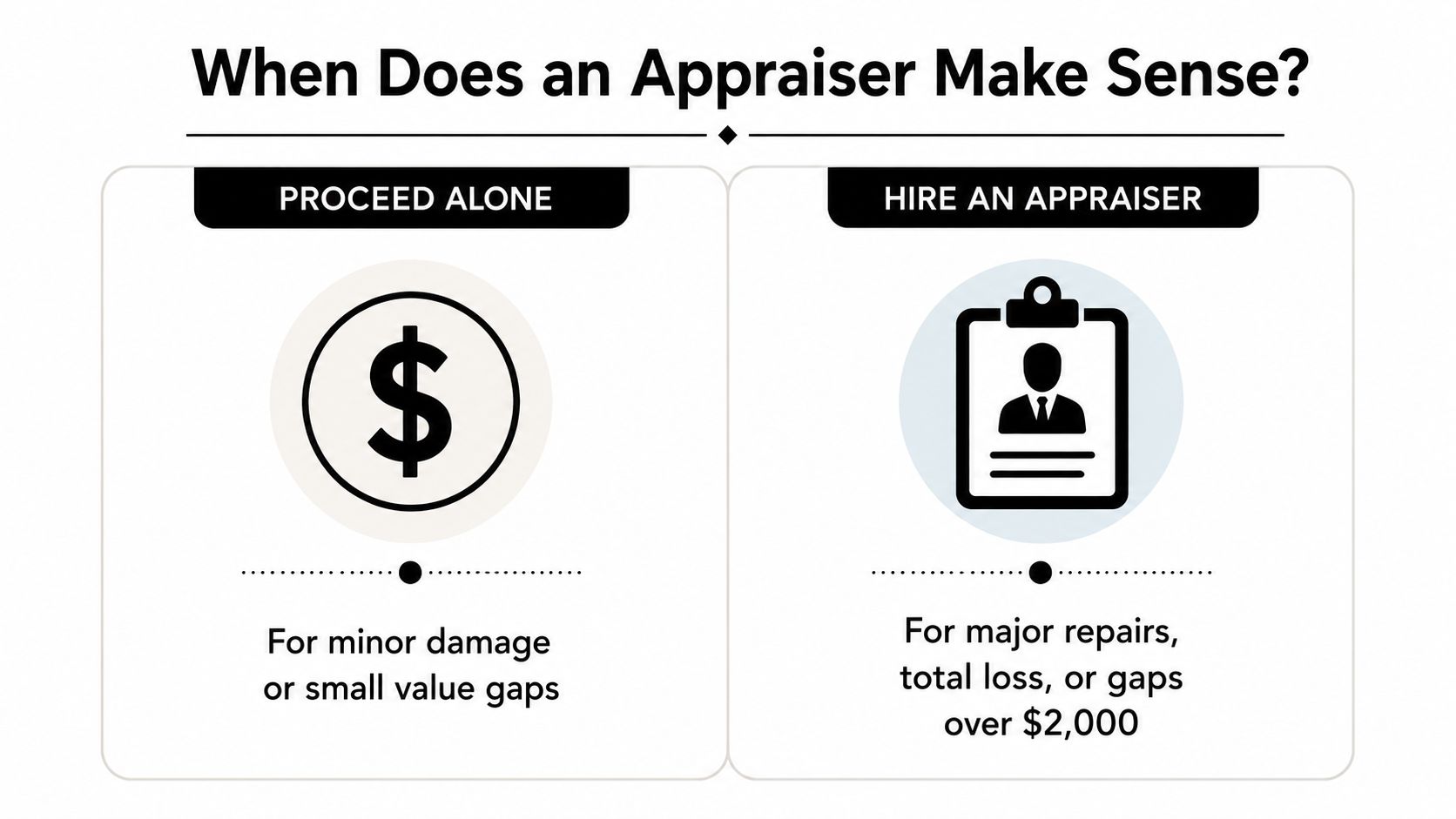
You do not need every dispute to become an appraisal case. You do need a clean read on the economics. A useful starting point is this guide to independent car appraisers, because the decision should start with the likely settlement gap, not with frustration.
Claim volume also matters here. Texas Department of Insurance data on appraisal-clause disputes shows about 98% of personal auto appraisal awards exceeded the insurer's initial offer, and the average personal auto award was $29,541. That does not mean every file belongs in appraisal. It means the first number from the carrier is often a negotiating position, not a final value. TDI's 2024 appraisal experience data call report
The local market has enough activity to support real valuation work, and Houston drivers should expect that kind of scrutiny on higher-stakes files. The point is simple. If the insurer's number is only a little off, push with better documentation. If the gap is large, or the vehicle has custom work, special options, or unusual market appeal, independent appraisal is the cleaner move.
A Houston appraisal firm's service page describes extended daily availability and a detailed inspection process for specialty vehicles, which tells you the market has real demand for more than quick estimate writing. It also describes valuation methods tied to market-based references, which is what you want when the carrier has lowballed the file and you need a number that holds up under scrutiny. Houston Auto Appraisers service page
For drivers who are weighing outside help in a broader dispute, the same discipline applies in other valuation fights too, including the guide to business valuation in divorce. The rule is the same. Pay for expertise when the likely gain is bigger than the fee, and walk away when it is not.
When Hiring an Appraiser Makes Financial Sense
Start with the size of the disagreement, not your frustration level. If the insurer is off by a few hundred dollars on a basic repair file, you can often push that through with better documents and a firmer call to the adjuster. If the offer is off by thousands, or the vehicle has special features the carrier ignored, you're past casual negotiation and into appraisal territory.
Use this rule: hire an appraiser when the likely settlement uplift is big enough to cover the fee and still leave you ahead. If it won't, walk away and keep your money.
The best candidates for appraisal are usually total-loss claims, classic or modified vehicles, and disputes where the insurer used weak comparables. Houston's market supports a lot of those cases because the city has a wide spread of vehicle types, and the state watchdog report found independent appraisal increased payouts by an average of $3,889.27 for total-loss claims and $5,307.35 for repair claims. That's not a promise on your file, but it is enough to show why serious disputes deserve serious attention. Texas Watch's auto appraisal impact report
For daily drivers, the math is stricter. If you'd spend a large chunk of the likely recovery just to squeeze a modest bump in value, don't force the case. For a collector car, custom build, or high-trim SUV with options the carrier missed, the logic changes fast because the report has to prove condition, originality, and market context, not just average pricing.
A useful comparison is the same one attorneys use in other valuation disputes. If you've ever needed a guide to business valuation in divorce from The Law Office of Bryan Fagan, you already know the principle, valuation fights turn on evidence quality, not confidence. Insurance appraisal works the same way. If your evidence can't overcome the carrier's assumptions, the fee is wasted.
For diminished value, be even more selective. A separate appraisal makes sense when the accident history itself has real resale consequences and the vehicle is valuable enough that the market will care. If the car was already worn, high-mileage, or low-value before the crash, the upside usually shrinks.
Understanding the Texas Appraisal Clause Process
A Houston driver who gets a low settlement offer does not need to turn the claim into a courtroom fight. Texas gives you a separate dispute path for value, and the appraisal clause is built for that exact problem. It applies to the amount of loss, not fault, so you can challenge what the car is worth without reopening liability.
The process is simple on paper. You choose your appraiser, the carrier chooses theirs, and both sides try to reach the same value. If they do not, they select an umpire, and the umpire breaks the tie. Once the award is issued, it is binding on both sides, which is why the appraisal clause carries real weight when the numbers are far apart. TDI's auto insurance consumer guide
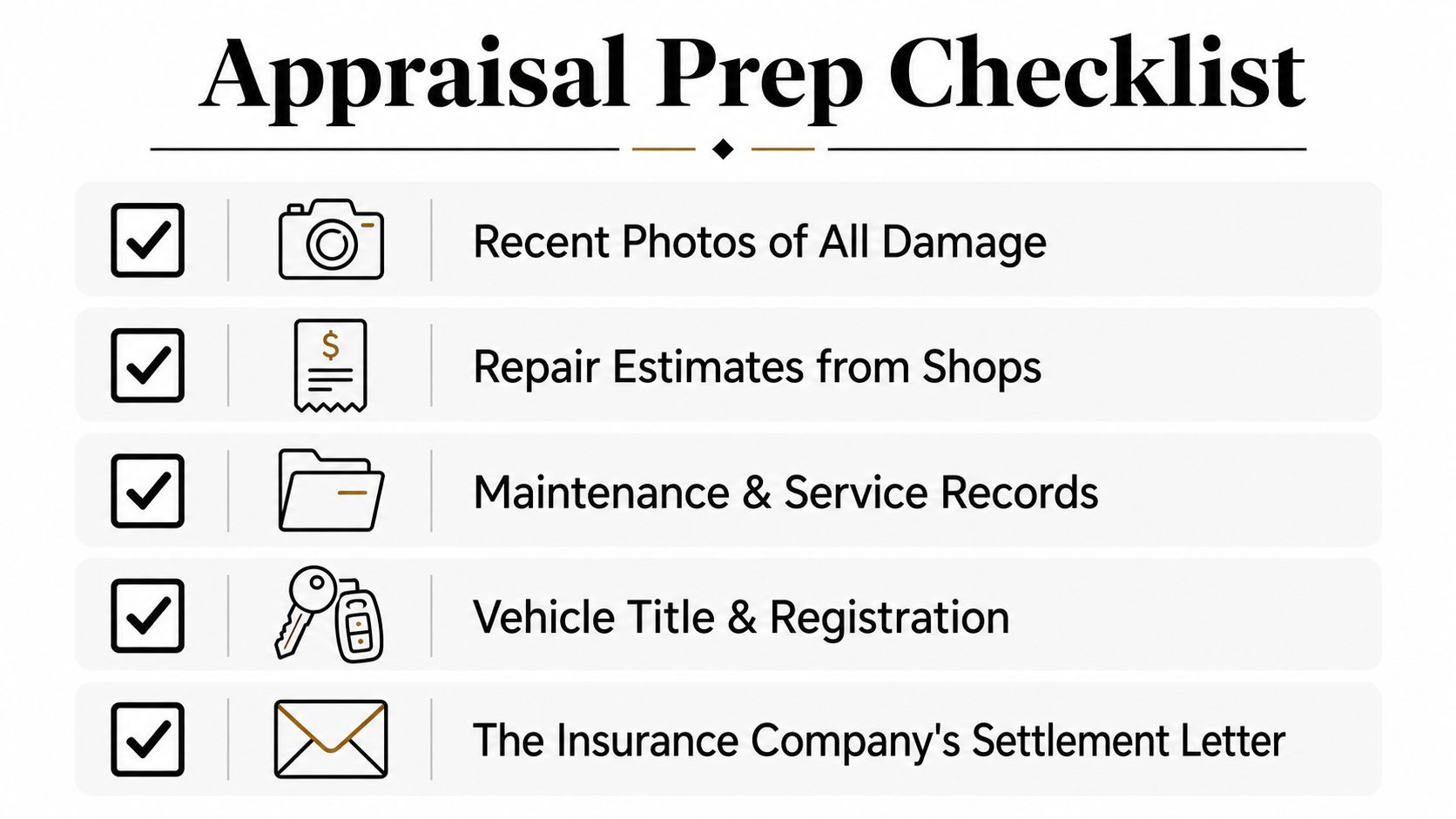
Start with documents, not emotion. Collect the settlement letter, photos, repair estimates, maintenance records, title or registration, and anything that proves mileage, trim, options, or prior condition. Then send a written demand to invoke appraisal under the policy. Keep it short and precise. State that you dispute the value and are invoking appraisal. Do not waste the first notice arguing every line item.
If the carrier called the car a total loss, the threshold issue matters. Texas total loss threshold guide explains why insurers make that call in the first place. The threshold question and the appraisal clause question are related, but they are not the same. One decides whether the vehicle is totaled. The other decides what it is worth once that decision has been made.
Strong appraisal files are boring in the best way. Clean records, clear photos, and solid comparables are harder for an insurer to brush off than a heated argument.
Expect the insurer to ask for more documentation before it moves. That is normal. Carriers are supposed to acknowledge the claim, inspect the damage, and make a decision within required timelines, and if they need more time they have to say so. The point is not speed for its own sake. The point is to force the carrier to deal with your evidence instead of guessing around it.
For Houston drivers, the core question is whether the appraisal clause can raise the settlement enough to justify the cost. If the gap is small and the vehicle is ordinary, the fee can eat up too much of the upside. If the car has strong options, unusual condition, or a value the carrier clearly missed, the clause can move the number in a way that matters. The appraisal award usually controls the settlement, so this is one of the few tools that can change the bottom line without filing suit.
Choosing the Right Houston Auto Appraiser for Your Vehicle
A claim can look straightforward and still need the wrong appraiser. A general damage estimator can handle a basic collision file, but that same person may miss the value issues that matter on a lifted truck, a rare trim package, or a classic car with nonstandard parts and thin comparables.
Start with the vehicle itself. For a daily driver, you need someone who can read the market fast and defend comparable sales without padding the file. For a modified vehicle or classic, the appraiser needs to understand originality, aftermarket parts, and condition grading, because weak assumptions cut value fast. Specialty work also calls for a closer inspection than a routine estimate.
Claim type matters just as much. Ask whether the appraiser has handled total-loss disputes, diminished value, or specialty vehicles before. If they cannot explain how they choose comparables, how they adjust for condition, or how they handle mileage and VIN-specific options, keep looking. You are hiring a file builder whose work can survive carrier pushback, not someone who just sounds confident.
What to ask before you hire
- Comparable-sample method: Ask how many local comparables they normally use and how they handle distance from the loss location.
- Vehicle specialty: Ask whether they have worked on your exact type of car, especially if it is modified, luxury, or collectible.
- Turnaround expectations: Ask how quickly they can inspect and issue a report, because delay helps the insurer, not you.
- Fee clarity: Ask whether the fee covers inspection, report writing, and any follow-up tied to the appraisal clause.
- Documentation standards: Ask what records they want from you and how they present that material in the report. If they do not care about organized proof, expect a weaker number.
Availability matters, but only up to a point. A Houston business with open appointment slots can help if your car is stuck in storage and the clock is working against you. Speed only helps when the report is tight. A fast, weak appraisal loses to a slower one that holds up.
Use the fee as a business decision. If the appraiser can realistically move the settlement enough to clear the cost, hire them. If the vehicle is ordinary, the value gap is small, and the numbers will barely move, walk away and keep your money. That is the math Houston drivers should use before they pay for the appraisal process.
One more point. The carrier's own appraisers are trained to work fast and stay inside software limits. That does not make them bad people. It just means they are not there to volunteer a number that strains the insurer's first pass unless your evidence forces the issue.
Preparing Your Vehicle and Documentation for Appraisal
A strong appraisal starts before the inspection, and most drivers underprepare. They hand over a settlement letter, a few photos, and a repair estimate, then wonder why the report doesn't move the number much. The appraiser can only defend what you can prove.
Start with the records that change value
The most useful documents are the ones that prove what the vehicle was before the loss. Save service records, title and registration, repair bills, and anything showing the vehicle's trim, factory options, or modifications. Then add your photos of the damage, because clear images help show where condition changed after the loss, not just that damage exists.
For claim documentation strategy, the auto claim documentation guide is a helpful companion. The logic is simple. If it cannot be supported on paper, it is hard to defend against insurer software.
Your appraiser also needs accurate mileage, honest condition notes, and any evidence of upgrades that add market value. Don't overstate cosmetic improvements. A clean detail job is not the same as a documented value increase. What matters is whether the market would pay more for the exact vehicle you owned, with the exact equipment it had.
A clean prep file should include
- Recent damage photos: Take wide shots and close-ups from multiple angles.
- Repair estimates: Keep shop estimates, even if they conflict with the carrier's number.
- Maintenance records: Oil changes, tires, major repairs, and receipts all help establish care.
- Title and registration: These confirm ownership and vehicle identity.
- Settlement letter: This shows exactly what the insurer offered and why.
One mistake hurts people constantly. They clean the car up so well that the appraiser loses evidence of pre-loss condition, or they strip away aftermarket parts before they're documented. Do not do that. Photograph everything first, then leave the vehicle alone until the report is locked down.
If the car has special equipment, list it plainly. If it was a collector car or custom build, say so early. An appraiser can't defend rare value with vague language and generic claims. They need specifics that a buyer, dealer, or umpire can verify.
Using Your Appraisal Report to Negotiate a Fair Settlement
The report only matters if you use it to pressure the number on the offer. Forwarding it and hoping for a better result wastes time. The goal is simple, force the carrier to answer a real market valuation with something stronger than a canned response.
Start with a short message. Say you disagree with the settlement amount, attach the appraisal report, and ask for reconsideration based on the documented comparables and condition analysis. Keep the argument tied to actual cash value, because that is where adjusters either defend their number or back off.
Negotiation rule: stay calm, stay specific, and keep repeating the gap between the carrier's value and the documented market value.
If the adjuster pushes back, ask exactly which comparable sales they used and why those vehicles were chosen. Good comparables should line up on mileage, trim, condition, options, and location. A 2019 sedan with similar miles in Houston is useful. A lower-trim car from another market with different equipment is not. If they cannot explain those adjustments, they are relying on software, not a defensible file. Escalate to a supervisor and keep every exchange in writing.
Some disputes are bigger than value alone. If the carrier is also mishandling the claim, get outside help early. A hard-number dispute is one thing. A carrier that keeps shifting its position is another. If you want a broader valuation or family-law reference point, you can also find a property division lawyer from Law Office of Bryan Fagan, Atascocita TX Lawyers to see how attorneys frame disputes built around numbers and documentation. The same discipline applies here. You want written positions, supported evidence, and a clear record of what was offered and when.
Use the appraisal award as the tool that forces a real response. The point of appraisal is to replace posturing with a number both sides have to respect. If the company still drags its feet, ask for the reason in writing and preserve every email, letter, estimate, and report. That paper trail matters if the insurer starts treating the award like it is optional.
Next Steps and When to Involve Additional Professionals
If the appraisal award lands where it should, take the payment and close the file. If the carrier still refuses to pay correctly, the next move depends on the core problem in front of you. A value fight calls for one response. Bad claim handling calls for another.
When the carrier ignores the award, stalls without explanation, or keeps changing its position, start saving everything. Keep the settlement letters, inspection notes, emails, text messages, phone logs, and the full appraisal report. Those records matter if the dispute is no longer just about value. At that point, you may need an attorney, a public adjuster, or a complaint to the Texas Department of Insurance, depending on what the insurer is doing. Texas allows a written complaint, and it also limits how much help it gives on fault and damage amount questions. TDI's consumer auto insurance guide
Use cost-benefit math before you spend more money. If the amount in dispute is modest, a court fight can eat up the same dollars you are trying to recover. Texas law says claims under $20,000 can go to Justice Court, which is the kind of small-claims path that can make sense when the numbers are tight. For a local procedural reference, the small claims court steps for Humble residents from Law Office of Bryan Fagan is a practical guide. The right path is the one that leaves you with more net recovery, not the one that feels satisfying for a day.
If you're deciding whether to keep pressing, ask three questions. Is the extra money real and documented. Is the fight worth the time you will spend. Will the next step improve the settlement number. If the answer is yes on all three, keep going. If not, stop feeding a claim that will not pay for itself.
If you're staring at a low total-loss offer and want a documented path forward, Total Loss Northwest can help with independent appraisal and appraisal-clause support. Visit Total Loss Northwest to see how their reports are used in total-loss and diminished-value disputes, then decide whether the claim justifies the appraisal fee and the time it will take to push back.