You get the settlement email, read the number, and immediately know something feels off. The repair shop saw one thing, the insurer saw another, and now the gap sits on your screen like a bill you did not expect. Insurance appraisal services give that disagreement a formal path, so the dispute is not just one more back-and-forth over emails and phone calls.
That matters because the scope of the disagreement can be hard to pin down. Sometimes the issue is the repair estimate. Sometimes it is the vehicle's value. Sometimes it is whether the claim has been treated as a total loss too quickly. Appraisal helps sort out those value disputes by bringing in independent opinions instead of leaving both sides locked to the same initial number.
The process is useful, but only in the right kind of dispute. If the problem is a coverage denial, a policy exclusion, or a separate legal fight, appraisal may waste time because it does not answer every insurance question. When the issue is the amount of loss, though, it gives both sides a structured way to reach a new figure without treating the first estimate as the final word.
Introduction to Insurance Appraisal Services
A lot of drivers only hear about appraisal after a collision, when the insurer's offer feels too low and the repair estimate doesn't match what the shop found. The first reaction is usually frustration, then confusion. Is this a coverage problem, a repair problem, or just a disagreement over value?
Insurance appraisal services give you a way to challenge the amount of loss with an independent process instead of arguing case by case with the same adjuster who produced the first number. That matters when a vehicle's value, repair scope, or total loss settlement has been compressed by a rushed estimate or incomplete inspection. It's a practical tool, not a magic wand, but in the right dispute it can change the conversation.
The key is knowing what it can fix. Appraisal can't solve every insurance problem, and that narrowness is part of its strength. When the issue is value, it gives both sides a formal path to a new number.
Understanding Key Concepts in Insurance Appraisals
A repaired car isn't automatically worth what it was before the crash. Even when the paint matches and the panel gaps look right, the market may still treat the vehicle as different because it now has an accident history. That's the basic idea behind diminished value, a loss in worth after repairs are completed.
Value, loss, and what appraisal does not decide
Appraisal is about the amount of loss, not about whether the policy covers the claim in the first place. That distinction gets blurred a lot in consumer content, but it's central here (policyholders can win in appraisal). If the insurer says the crash isn't covered, appraisal usually isn't the right fight. If the insurer accepts the claim but undervalues the damage, appraisal may fit.
Think of three different questions:
- Coverage: Does the policy respond to the loss at all?
- Causation: What damage came from the crash, and what didn't?
- Value: What is the cost or worth of the covered loss?
Those questions often get mixed together, but they're not the same. Appraisal is strongest when the argument is about value, repair scope, or total loss math, not when the primary issue is policy interpretation. That's why using the clause in the wrong situation can waste time and create delay instead of fixing the claim.
Practical rule: If you're arguing about what the policy means, appraisal may be the wrong tool. If you're arguing about what the damage is worth, it may be the right one.
Appraisal Clause and Legal Context
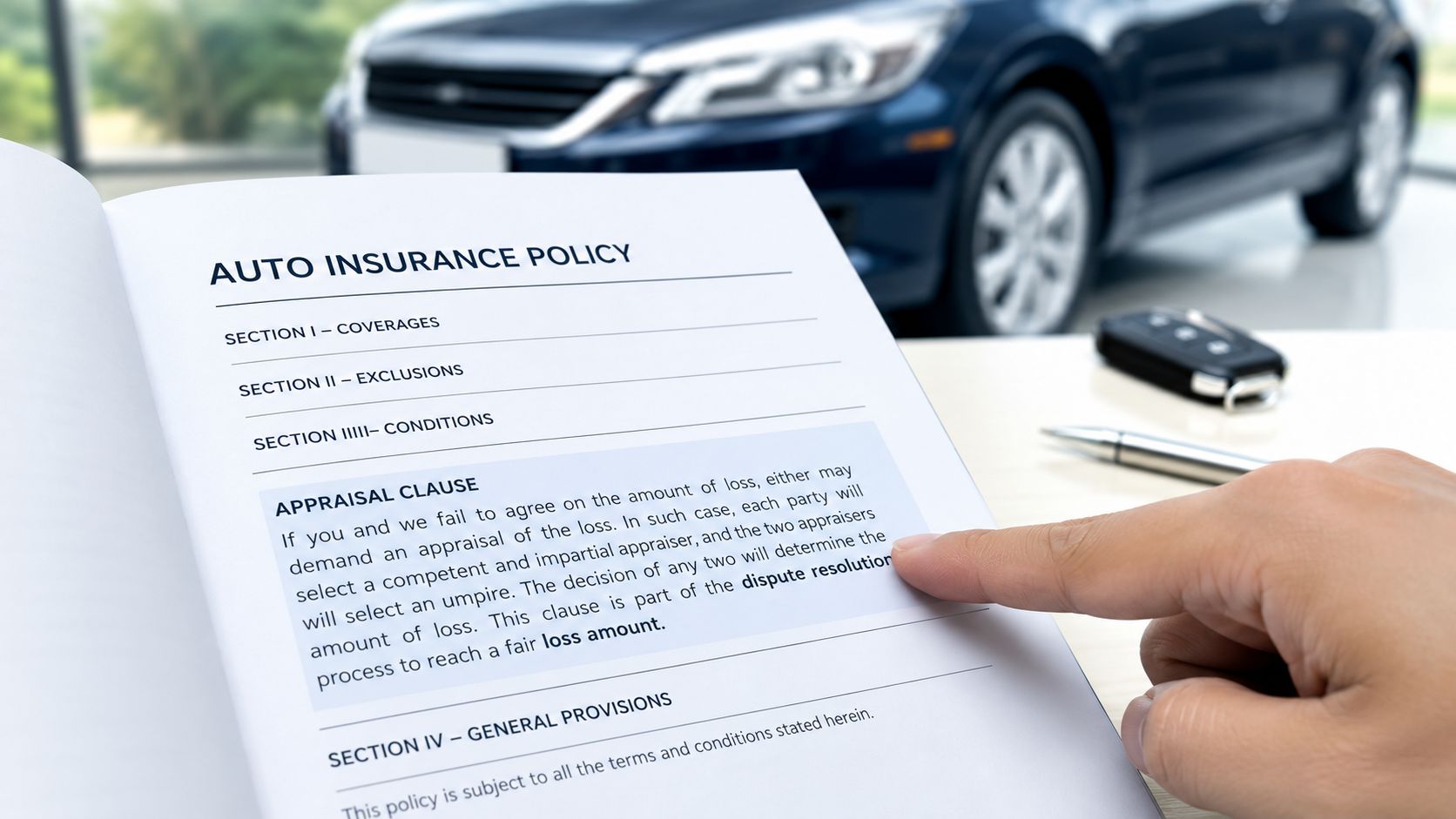
Most auto policies treat appraisal as a built-in dispute-resolution clause. The structure is simple on paper. Each side chooses an appraiser, the appraisers try to agree on the value, and if they can't, a neutral umpire steps in. If any two of the three agree, that award becomes binding (DCSPIA insurance appraisal overview).
The easiest analogy is a sports replay booth. Two people on the field call the play, then a neutral official decides the dispute if they disagree. The point isn't to revisit the whole game, just the contested call.
For drivers comparing policy language across vehicle types, a practical reference point is commercial vehicle insurance requirements from Max's Luxury Rides Inc., because commercial policies can use different wording and risk assumptions than personal auto coverage.
The key legal boundary is still the same. Appraisal is designed to resolve the value dispute, not to serve as a second coverage appeal. That's why the request has to be framed carefully, and why many policyholders first review the clause itself, including an explanation like this appraisal clause guide, before taking action.
The clause works best when both sides accept that a real valuation dispute exists. If the issue is really coverage, appraisal can stall the claim instead of moving it.
Independent Appraisal Process Explained
The independent appraisal process works best when you treat it like building a file for a skilled mechanic, not just sending in a complaint. A strong appraiser needs the facts, not a story that changes every time the insurer asks another question. The file should read like a clean history of the loss.
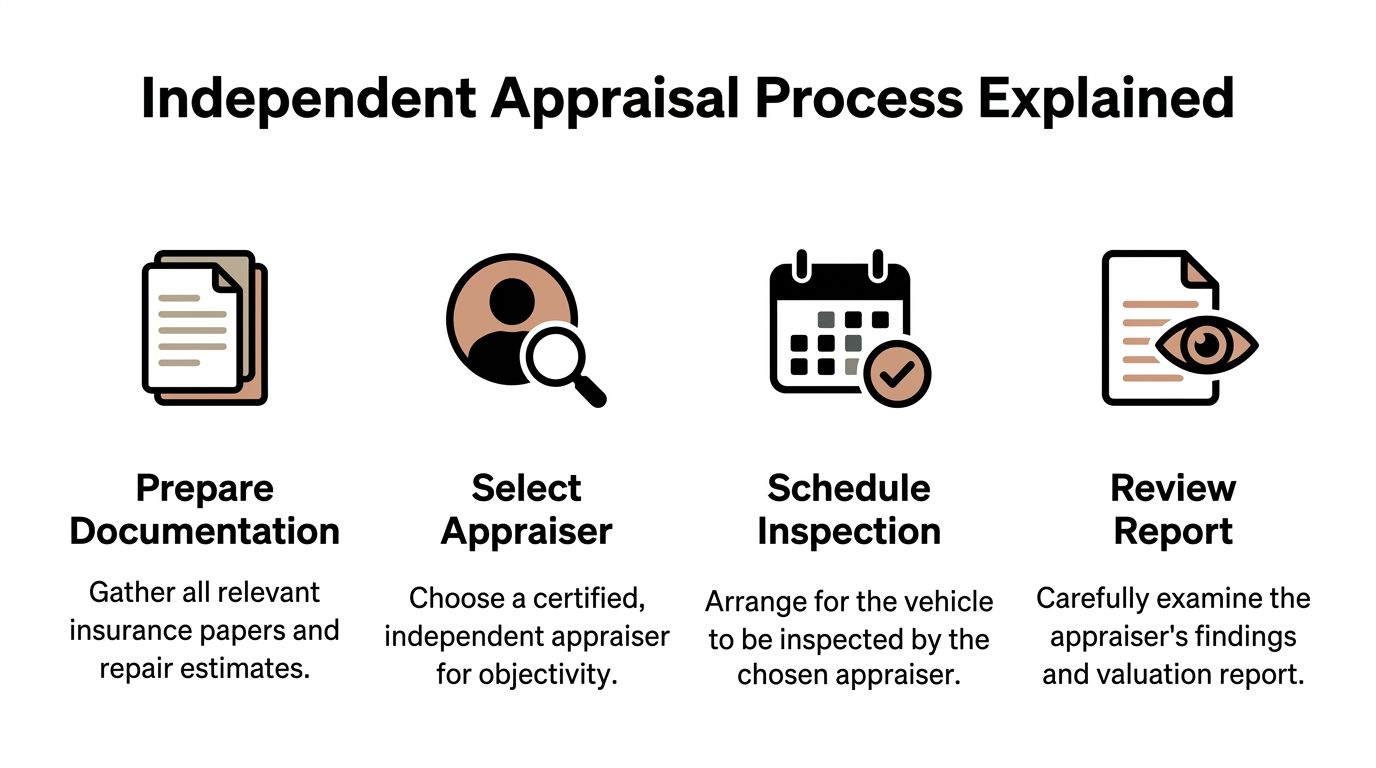
Step 1, prepare the documentation
Start with the obvious paperwork, then add the details people usually forget. That includes the insurer's estimate, the repair shop's estimate, photos of damage, prior condition photos if you have them, and any records showing upgrades or special equipment.
A vehicle's history works like a medical chart. If the record is thin, the doctor guesses. If the record is complete, the doctor has something real to evaluate. The same logic applies here, especially when the dispute centers on hidden damage, replacement parts, or prior condition.
Step 2, select an independent appraiser
Independence matters. A good appraiser should be able to explain the valuation basis, walk through the inspection, and justify the numbers without sounding like they're reading a carrier script. If the person can't explain how they reached the figure, the report may be hard to defend later.
For policyholders, a useful resource is Cleffex Digital's claims processing guide, especially if you want to understand how software-driven workflows shape insurer estimates before you challenge one.
Step 3, schedule the inspection
The inspection should be documented carefully. The appraiser should record measurements, photograph conditions, and note visible and hidden damage where possible. That level of detail matters because appraisal isn't just about having an opinion, it's about building a valuation file that can withstand pushback.
Step 4, review the report
A defensible report should use the cost approach, which is often the most defensible basis in auto and property appraisals because it isolates replacement costs instead of subjective market guesses (Aion Appraisals on insurance appraisal). In plain English, that means the report should show how the loss was built, line by line, rather than just dropping in a number.
The selection of a qualified appraiser is easier when you know what the process should look like. A helpful overview is the independent car appraiser guide, which lines up with the kind of documentation and inspection discipline a real claim demands.
Key Report Elements and Sample Outcomes
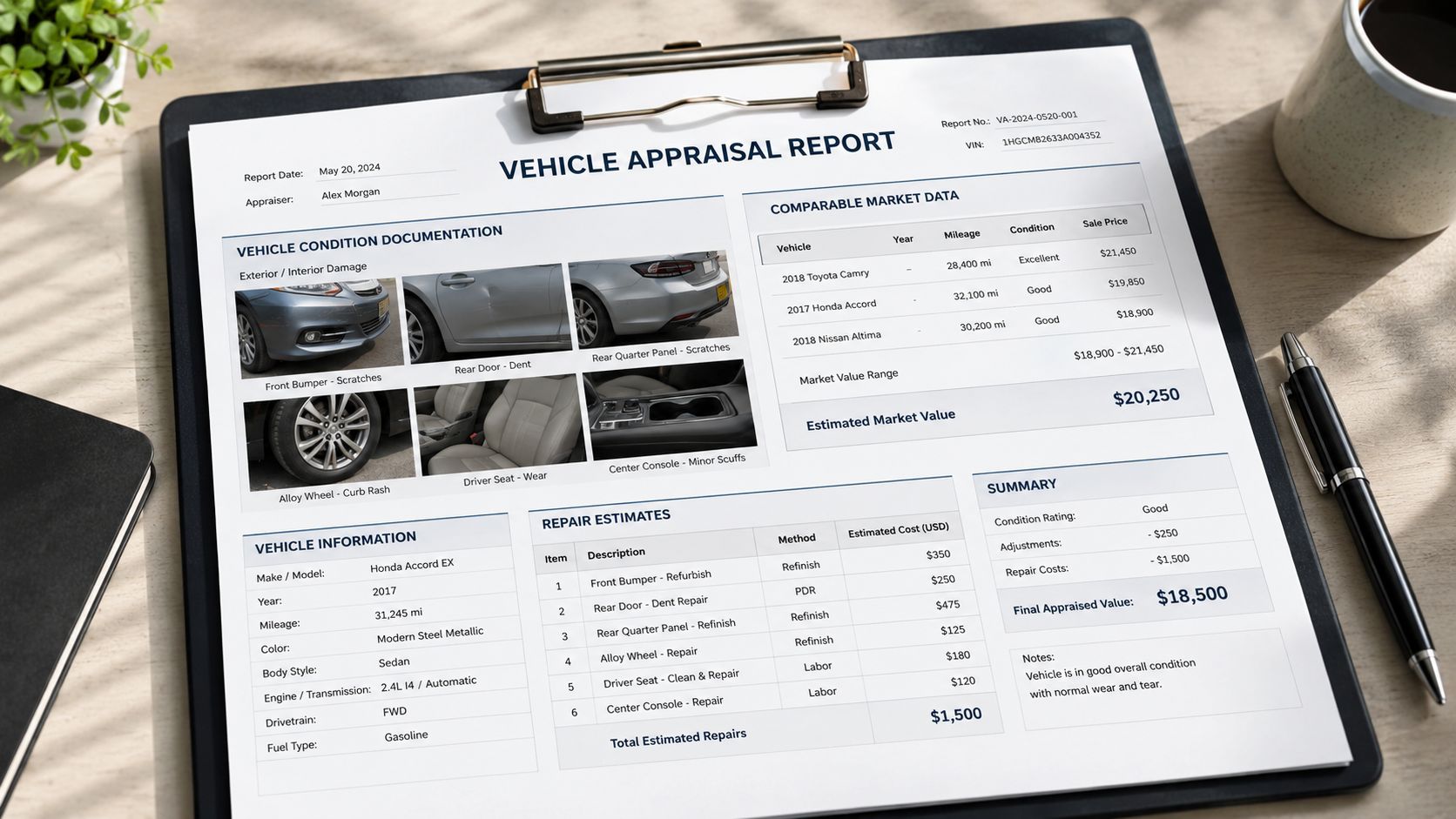
A useful appraisal report doesn't just say a number. It shows how the number was reached. That's important because a report that looks polished but skips the underlying facts can fall apart as soon as the insurer asks for support.
What a defensible report usually includes
A strong file often reads like this:
- Condition notes: “Front bumper cracked, passenger-side fender scraped, wheel alignment affected.”
- Supporting photos: Clear images of visible damage and any exposed internal components.
- Repair scope: Itemized repairs tied to the damage observed.
- Valuation worksheet: The math behind the final value or repair amount.
Each part serves a different purpose. Condition notes prove the appraiser inspected the car. Photos help show what was seen. The repair scope keeps the dispute focused on actual damage instead of assumptions.
A sample line in a report might say that hidden frame damage was discovered after teardown. That matters because hidden damage often changes the economics of the claim. If it appears in the file, the insurer has to deal with it. If it doesn't, it can be treated as speculation.
For readers comparing appraisal outputs to claim settlements, a useful reference is this total loss claim settlement report guide. It shows how final numbers should connect back to the file, not just to a carrier estimate.
A good outcome isn't always the highest possible number. It's the number that's easiest to defend. That's what strengthens a policyholder's position, because a well-supported report is harder to dismiss than a vague complaint about being underpaid.
Comparing Independent Appraisals and Insurer Valuations
The fight here is rarely about who has a calculator. It's about what goes into the calculation. Independent appraisers and insurer valuers can look at the same vehicle and produce very different answers because they don't always start from the same assumptions.
A 2024 discussion notes that the pool of independent appraisers is shrinking, and that can slow the process and affect fairness as insurers lean more heavily on software valuations (independent auto claim appraisal discussion). That capacity issue matters because if there aren't enough independent experts available, the policyholder's choice can become more limited in practice than it looks on paper.
| Criteria | Independent Appraisal | Insurer Valuation |
|---|---|---|
| Valuation basis | Builds from observed damage, repair scope, and replacement cost | Often starts from carrier workflow and software estimates |
| Objectivity | Designed to be independent of the claim payment decision | Produced inside the insurer's adjustment process |
| Evidence style | Prioritizes inspection notes, photos, and detailed support | May rely more heavily on standardized inputs and system pricing |
| Use in disputes | Helps when the loss amount is genuinely contested | Works best when the claim is straightforward |
The practical takeaway is simple. If your disagreement is small and purely clerical, a direct negotiation may solve it faster. If the gap is tied to scope, condition, or total loss value, an independent appraisal can create the outside review you need.
Useful filter: If the insurer won't change its number after you provide stronger evidence, appraisal starts to make more sense.
Timelines Costs and Choosing Appraisal Services
A stalled claim usually creates the first question, how long will appraisal take, and is it even worth starting? The answer depends on the size of the loss, the location of the vehicle, and how quickly both sides hand over records. A simple file with clear photos and a reachable appraiser can move like a short repair line at a busy shop. A disputed total loss with missing paperwork moves more like a car waiting on a hard-to-find part, everything slows until the missing piece shows up.
Availability matters as much as process. If there are too few independent experts in the area, the policyholder may have the right to appraisal on paper, but still face delay in practice. That is why asking about scheduling before you hire someone is not a side issue, it is part of judging whether appraisal is the right tool for the dispute.
Cost belongs in the same conversation. In Texas, the insurer's average expense for a personal auto appraisal was about $570 without an umpire and about $890 with an umpire in the Texas Department of Insurance appraisal experience report. Those figures do not set your bill, but they do show why appraisal usually fits disputes where the gap is meaningful, not small clerical disagreements.
Choosing an appraiser works better when you ask plain questions before any work starts:
- What claims have you handled? You want someone who understands auto damage, not just abstract valuation language.
- How do you document the inspection? Photos, measurements, and notes should be part of the normal file, like receipts in a store return.
- Are you independent from the carrier? Any relationship that could affect judgment should be disclosed before the assignment begins.
- What will the report include? You need to know whether the final work product explains the valuation basis clearly enough to withstand review.
Scope confusion is common here. Some policyholders assume appraisal can solve every disagreement, but the process is narrow. It is usually a fit when the argument is about the amount of loss, the repair scope, or the value placed on the vehicle, not when the fight is over policy language or coverage.
A useful filter is simple. If the insurer still will not move after you submit stronger evidence, appraisal starts to make more sense. If the disagreement is only about a missed line item or a clerical correction, a direct conversation may be faster and cheaper.
In practice, the right appraiser is not the lowest bidder and not the most confident speaker. It is the person who can explain the file clearly, support the valuation with actual inspection work, and stay focused on the loss itself. For readers who want a practical operations angle on handling claims communications, dedicated answering for insurance firms can help keep the file moving while the valuation question is sorted out.
Conclusion and Call to Action
Insurance appraisal services are most useful when the dispute is real, the file is organized, and the question is about value instead of policy interpretation. They're narrow, but that's why they work. In the right case, they can move a stalled claim toward a defensible number without dragging the whole dispute into court.
If you're dealing with a low settlement, a total loss disagreement, or a diminished value issue, it helps to get a second set of eyes before you accept the insurer's number. For readers who want a practical operations angle on handling claims communications, dedicated answering for insurance firms from Eden is one example of the kind of support infrastructure that keeps claim files moving, but the valuation itself still needs independent judgment.
Total Loss Northwest handles independent vehicle appraisal work for policyholders who need help challenging a settlement number, including total loss and diminished value disputes. If your file already contains photos, repair estimates, and the insurer's offer, send it in and ask for a review before time slips away.
A CTA for Total Loss Northwest.