You can do everything right at the scene and still get treated like a problem file. The tow truck shows up fast, the other driver starts talking nonsense, and two days later your carrier is suddenly acting like your clean claim looks suspicious because your car is rare, modified, or worth more than a basic commuter. That is where insurance fraud prevention stops being an insurer's buzzword and becomes your own survival tool.
Fraud is not a side issue. The Coalition Against Insurance Fraud estimates at least $308.6 billion is stolen from American consumers every year, and the FBI's property-and-casualty fraud estimate is about $40 billion per year (insurance fraud stats). The NAIC says fraud can happen at buying, using, selling, or underwriting stages, and that means honest drivers get caught in the same controls built to catch criminals. If you own a high-value, custom, or unusual vehicle, you need to know how those controls work, because they can slow payment, trigger extra scrutiny, or turn a legitimate claim into a fight.
Why Insurance Fraud Prevention Matters to Honest Drivers
A clean claim can still get treated like a dirty one. I've seen drivers with well-kept cars, full coverage, and no funny business get stalled because the file looked different enough to trigger a fraud review. A rebuilt title, aftermarket wheels, a big-ticket stereo, a collector trim, or a total loss that does not fit the carrier's model can make an honest owner look like a data problem.
Most fraud articles miss the point. Insurance fraud prevention also protects legitimate claimants from being swept into the same filtering system used to catch criminals. The NAIC's point is blunt, fraud can happen across the insurance lifecycle and involve consumers, agents, adjusters, or insurers themselves. If you are the person who has to prove your innocence, that scope matters.
The money side matters too. Fraud-related costs get pushed back onto ordinary policyholders, which is why carriers are aggressive about verification and why honest people sometimes feel like they are being treated as suspects before they have even finished the claim form.
Practical rule: if your vehicle is unusual, document it like it is already in dispute.
That mindset matches what independent adjusters deal with every day, and it is why fraud prevention services are built around verification, documentation, and early anomaly detection. If your carrier starts stonewalling instead of investigating fairly, that is not just a fraud-control issue, it can become a bad-faith issue too, which is why drivers also need to understand bad faith insurance practices.
The Types of Fraud Drivers Actually Encounter
Not every fraud scheme looks like a movie scam. Some are loud and obvious, some are quiet, and some happen inside the claim process where the average driver never expects trouble. If you're filing or disputing a claim, these are the patterns that can touch your case.
Staged wrecks and fake passengers
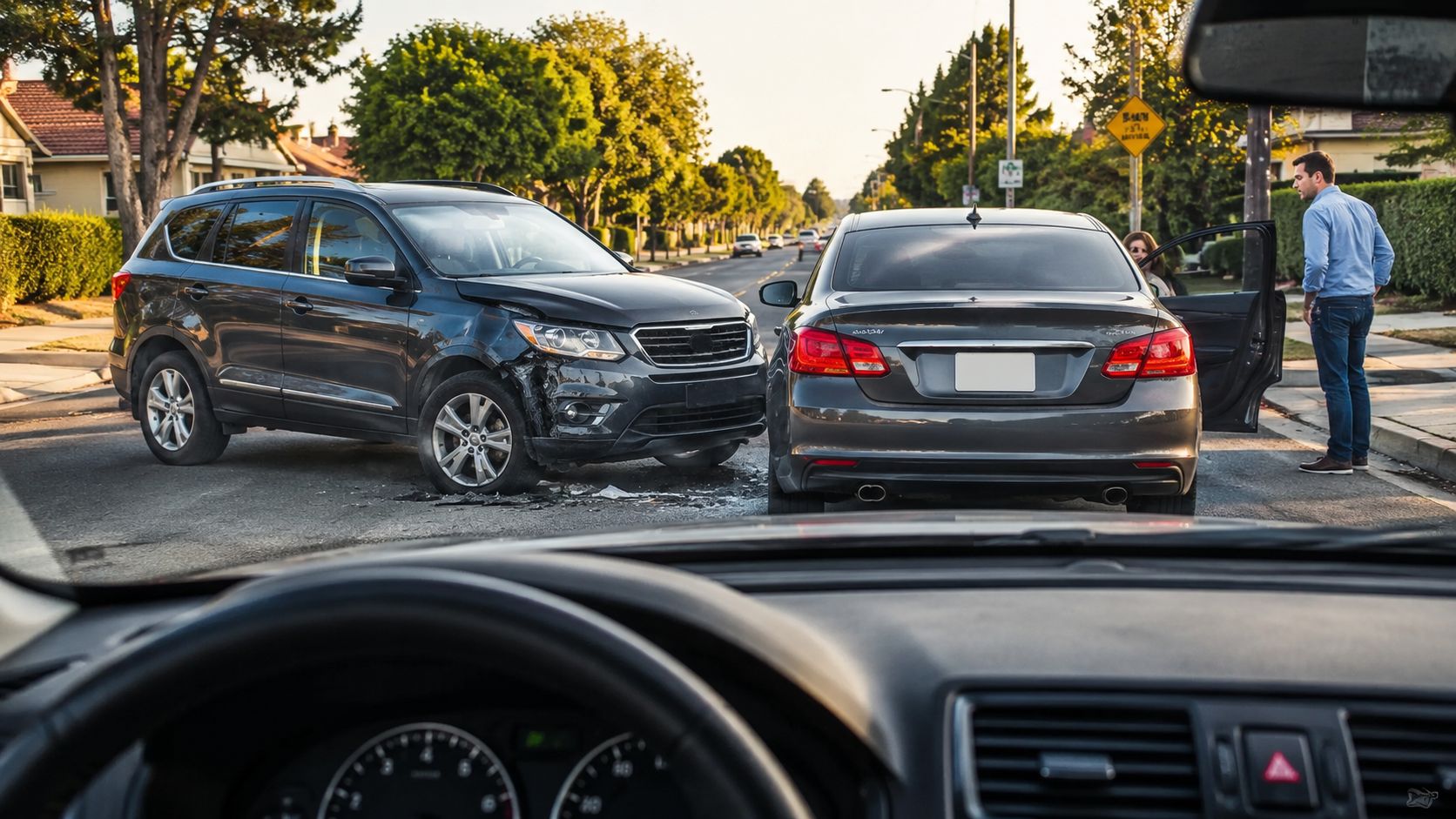
A staged accident is exactly what it sounds like, someone engineers a crash to generate claims. Phantom passengers make it worse, because extra people suddenly appear in the story to inflate medical or injury exposure. If your car is involved, you may be pressured to accept a version of events that doesn't match the damage, the road layout, or the timeline.
Inflated repairs and owner give-up pressure
Inflated damage estimates are common in fraudulent repair schemes, and honest claimants can get dragged into them when a shop or handler pushes a number that doesn't fit the evidence. Owner give-up scams are more subtle. That's when someone steers you toward abandoning the vehicle, signing too fast, or accepting a bad settlement because “the paperwork will be easier that way.”
Insurer-side valuation abuse
Here's the part people hate hearing, but it needs to be said. A carrier can use biased valuation tools, weak comparables, or a rushed total-loss number to underpay a legitimate claim while still calling it routine claims handling. That isn't the same as criminal fraud in the street sense, but for the claimant it can feel identical, because the result is the same, less money than the vehicle is worth.
The UK Insurance Fraud Taskforce specifically pushed insurers to invest in technology and rigorous application and renewal processes (taskforce report). That tells you something important. The industry has moved from simple paper checks to heavier screening because fraud has become more advanced. The honest driver has to be equally disciplined.
Red Flags Every Driver Should Recognize
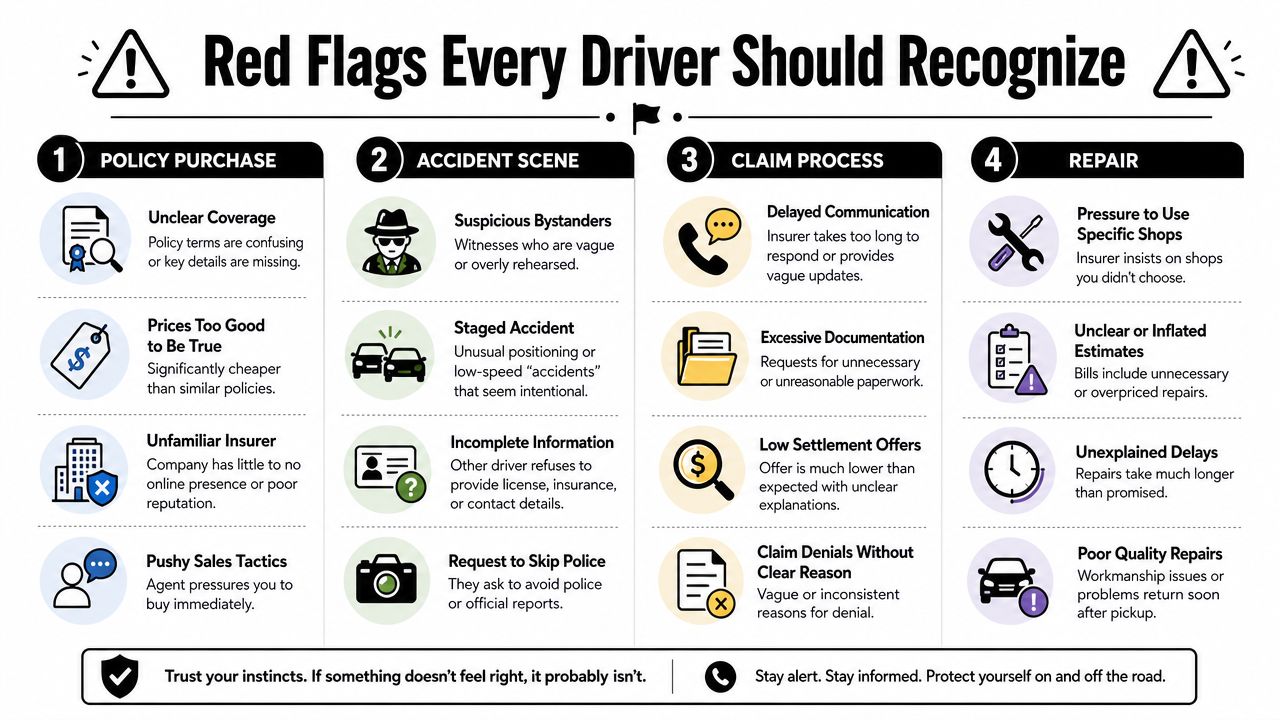
The fastest way to stay out of trouble is to notice bad setups early. Some red flags show up before you even buy coverage, some appear at the crash scene, and some show up when the settlement offer lands in your inbox looking too neat and too fast.
At the policy purchase stage
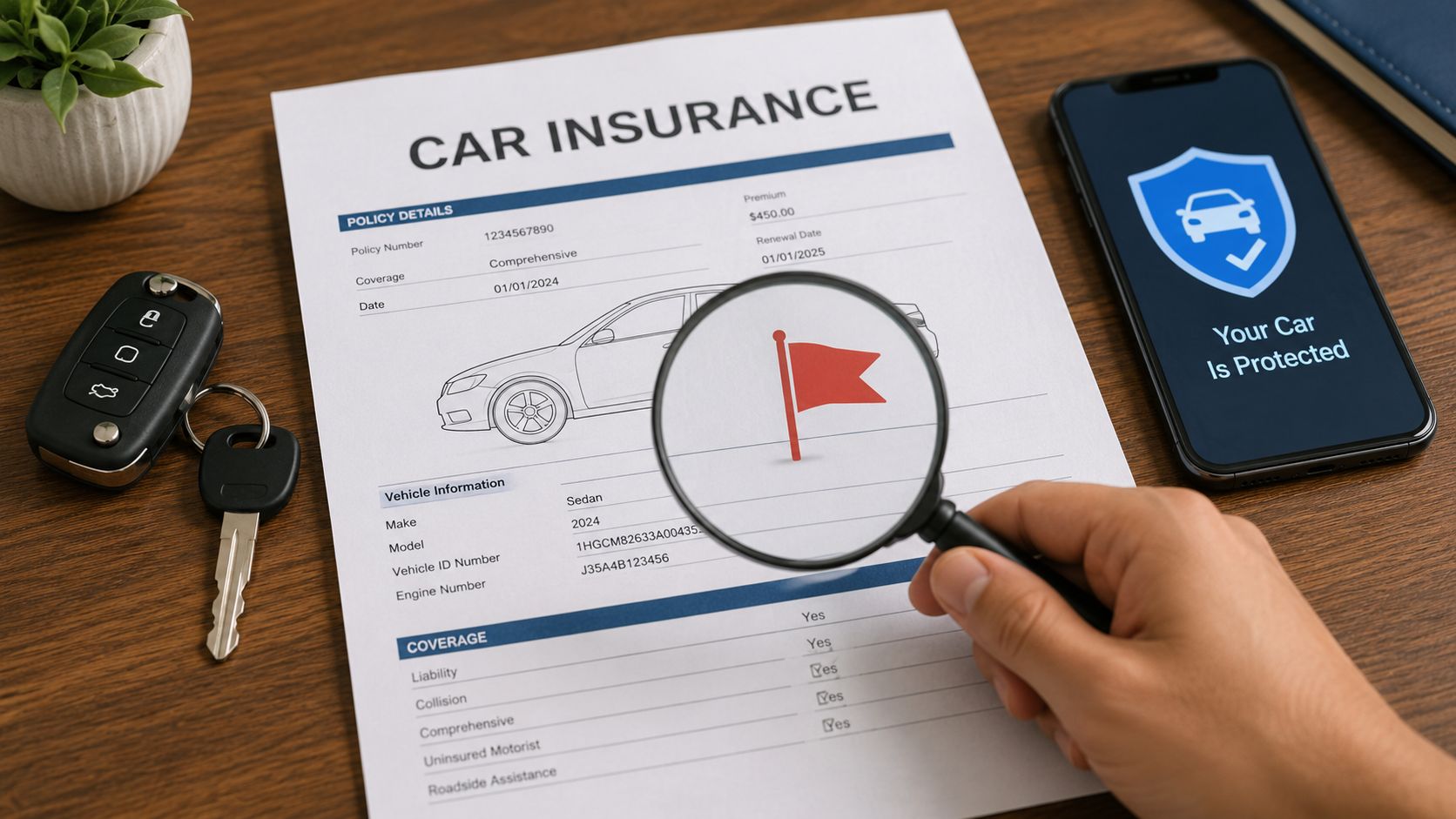
Watch for anyone who wants money through cash apps, asks you to skip normal carrier channels, or won't let you verify the policy directly with the insurer. A real agent does not fear verification. A fake one depends on your trust and your hurry.
At the accident scene
Unsolicited tow operators are a problem. So are vague witnesses who seem to know the script already, or anyone nudging you to “just keep it simple” in a way that deletes facts. If someone asks you to change the story “for the paperwork,” that's your cue to stop talking and start documenting.
During the claim process
A good adjuster can ask hard questions without pressuring you to fill gaps with guesses. A bad one pushes you to accept a conclusion before the file is complete. If they want a recorded statement before you've gathered your facts, slow down.
During repair and settlement
Be careful when an adjuster steers you toward a specific shop without explaining why, or when a settlement offer arrives before a proper inspection. Quick offers often benefit the carrier, not the claimant. If the numbers feel rushed, they probably are.
Don't let speed substitute for accuracy.
The claim process is where fraud controls and claim handling intersect, and the wrong conversation can turn a normal file into a suspicious one. That's why I'd rather see a driver pause for an hour than sign something that later becomes impossible to unwind. The infographic below is the short version you should keep in mind before the phone starts ringing.
Documenting Your Claim Like a Fraud Investigator
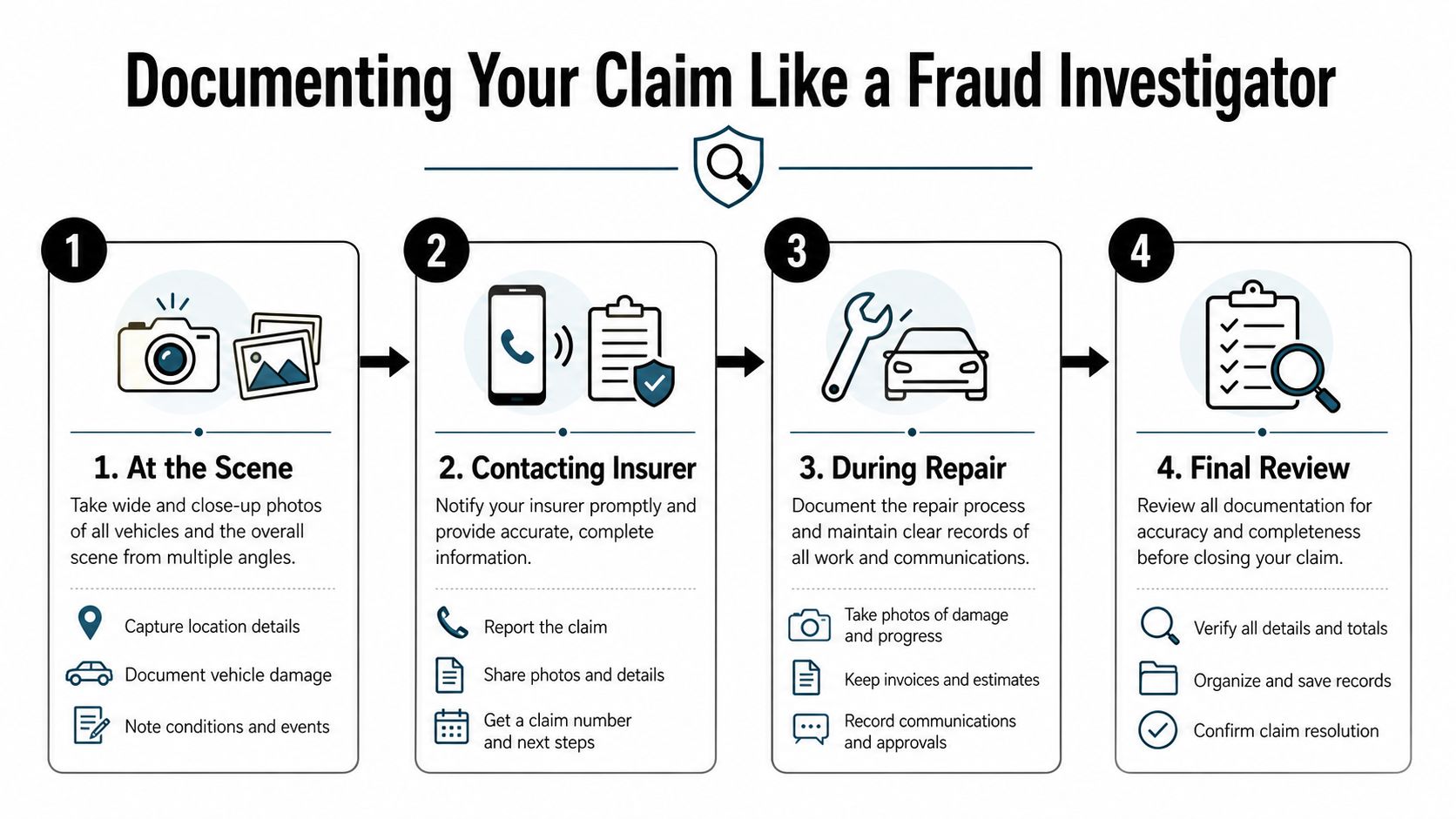
The strongest honest claim is a documented claim. If you wait until the adjuster asks for proof, you're already behind. A serious file starts before the accident if possible, because the best way to beat fraud assumptions is to show what the vehicle looked like before anything happened.
Build the record before trouble starts
Keep dated photos of the car from all sides, inside and out. Save service records, modification receipts, tire invoices, wheel specs, and any paperwork that proves condition and ownership. For collector, custom, or higher-value cars, this isn't overkill, it's the difference between a real valuation and a guess.
Capture the scene while it's fresh
At the crash scene, take wide shots and close-ups from multiple angles. Photograph both vehicles, skid marks, traffic signs, debris fields, and anything that shows impact sequence. Get witness names and contact details right then, because memory gets bad fast and people disappear faster.
Organize the claim file like evidence
Keep repair estimates, rental receipts, medical bills, and every email in one place. Don't let photos live only on a phone gallery or a chat thread. If you submit digital evidence, preserve the original files, because editing, compression, and re-sending can muddy the trail.
For total-loss and diminished-value claims, proof of pre-loss condition is everything. If your car had upgrades, rare trim, or market value that doesn't show up in generic valuation software, document it early and in writing. That's also why a homeowner's proof of loss guide can be useful as a mindset reference, even though the claim type is different, because the basic rule is the same, prove the loss cleanly and completely.
The same logic applies to auto claim files, and drivers who need a deeper checklist should review auto claim documentation. The less room you leave for guesswork, the less room there is for a carrier to call your claim questionable.
Communicating With Insurers and Adjusters the Smart Way
A lot of claim damage comes from loose talk. People want to be helpful, so they guess, they soften details, or they say yes to things they haven't checked. Then the carrier writes those words into the file as if they were sworn testimony.
Keep important statements in writing
If the issue matters to the value of the claim, put it in writing. Email is fine, but be precise. Say what happened, what you observed, what you have documented, and what you are still waiting to verify.
Be careful with recorded statements
A recorded statement is not a casual chat. If you're not prepared, you can accidentally create contradictions that look worse than the accident itself. Ask what questions will be covered, gather your paperwork first, and don't improvise.
Stop feeding the file with speculation
Don't post about the crash on social media. Don't guess at speed, fault, injury severity, or the cost of the damage. If you don't know, say you don't know.
A quick settlement is not automatically a fair settlement. Especially on a total loss, a fast offer can be a way to lock you into a low number before the file is fully complete. Never sign a release until you've independently checked the value, the deductions, and the condition assumptions the adjuster is using.
If they want a signature before the numbers are solid, the carrier is protecting itself, not you.
The smart move is to keep every material point traceable. That doesn't slow a legitimate claim down nearly as much as people fear, but it does stop sloppy handling from becoming a permanent record. In fraud prevention, your own words can either support the file or wreck it.
Where and How to Report Suspected Fraud
If something looks off, report it early and report it to the right place. Waiting out of politeness only helps the people gaming the system. The useful rule is simple: collect facts first, then send them to the channel that can act on them.
Start with your state insurance fraud bureau or state insurance department, because those offices handle local complaint intake and insurer oversight. You can also report organized or suspicious patterns to the National Insurance Crime Bureau and, when the conduct rises to a federal level, use the FBI's insurance fraud tip channel. Carrier-specific fraud hotlines matter too, because insurers often route internal reviews through dedicated units.
Before you file, gather names, dates, policy numbers, photos, estimate copies, emails, texts, and anything that shows a pattern rather than a hunch. Good-faith reporting usually does not require perfect proof, but it does require a real basis. If you suspect your own insurer is gaming the settlement, don't just complain verbally, use formal paths like an insurance commissioner complaint and keep pushing for a documented response.
The IAIS recommends cross-checking claim details with internal and external databases, peer review, interviews, and document-authentication tools (IAIS fraud paper). That tells you why your report matters. Once a pattern enters a system, it can affect more than one file, which is why clean, organized complaints are far more useful than angry calls.
Your Fraud Prevention Checklist Before, During, and After a Claim
Before anything happens, build your paper trail. Keep photos, service records, modification receipts, and ownership documents in one folder. If your vehicle is collectible, custom, or just worth more than a standard valuation model understands, get ahead of that problem now.
During the claim, control the facts. Photograph everything, write down every call, and don't say yes to a number, a release, or a repair path until you understand what's being assumed. The best defense is simple, consistent documentation that makes guesswork unnecessary.
After settlement, save the entire file. If the number is low, if the value basis is weak, or if the carrier ignored real comparables, challenge it while the record is still fresh. For total-loss and diminished-value claims, an independent certified appraisal is often the cleanest way to show ownership, condition, modifications, and true market value upfront.
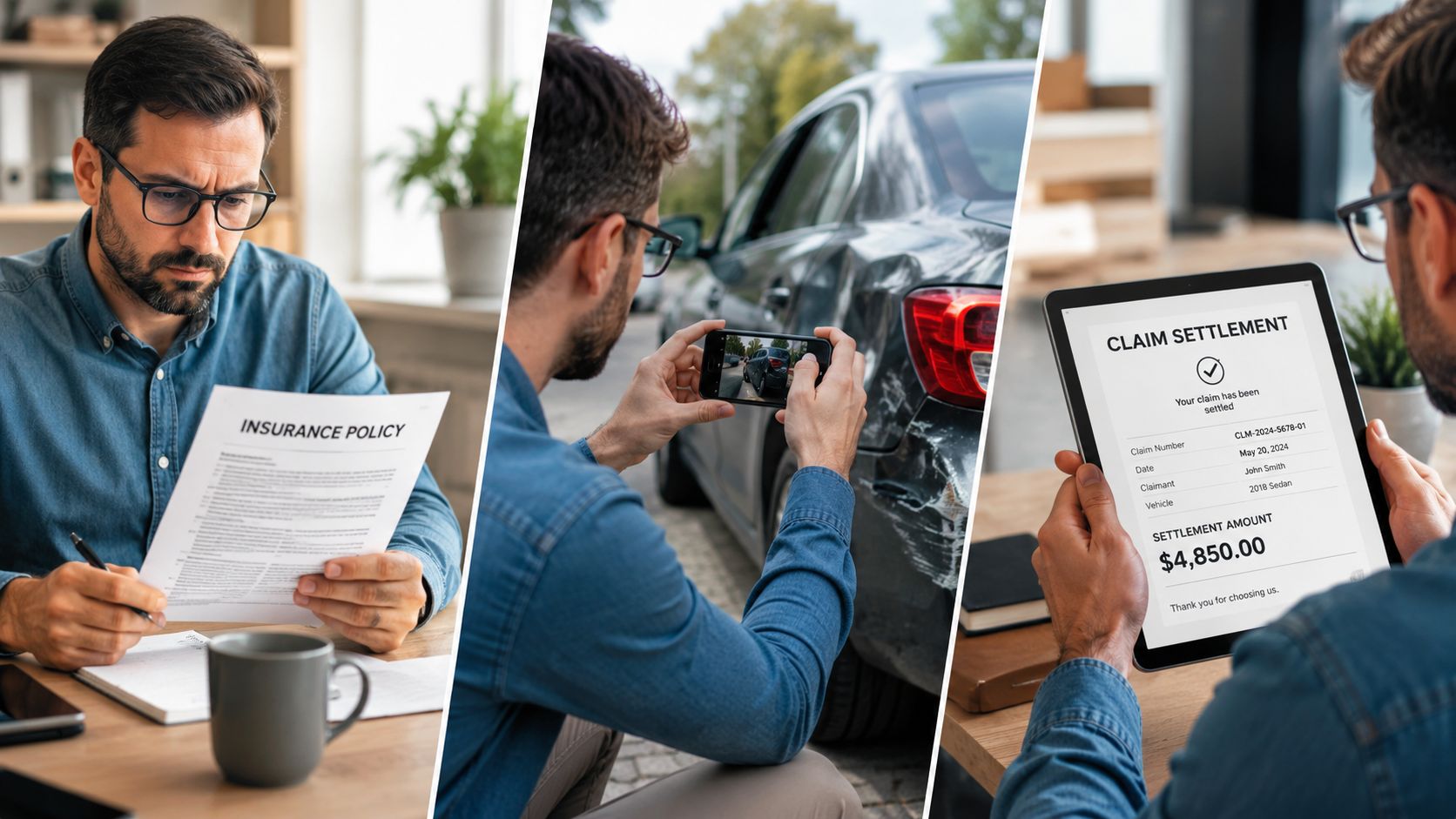
If you're dealing with a total loss or a diminished-value dispute, don't let the carrier's first number become the final word. Total Loss Northwest helps drivers build the documentation and appraisal support needed to push back on low offers and unfair valuations. Visit Total Loss Northwest if you want a stronger claim file and a fairer shot at the payout you're owed.