You just got the settlement email, and the number is suspiciously low. The adjuster wrote down your vehicle like it was a generic badge on a spreadsheet, not the specific car you bought, insured, and maintained, which is exactly how real money gets left behind in a total loss claim.
If you drive a Japanese car model, that mistake is more common than most owners realize. Japanese vehicles live in deep trim ladders, market-specific variants, and factory option combinations that valuation software often flattens into the base version, even when the car in your driveway is clearly not base anything. That gap matters because the market does not pay base-model money for a loaded trim, a rare package, or a variant that was built for a different market.
Why Your Exact Japanese Car Model Determines Your Settlement
Your insurer wants to value the car by the badge, maybe the year, and then a guessed trim pulled from a database. That's how a fully equipped Toyota, Honda, Subaru, or Mazda ends up priced like the stripped version on the bottom rung. If you want the short version, the wrong trim assignment is not a clerical issue, it's a payout problem.
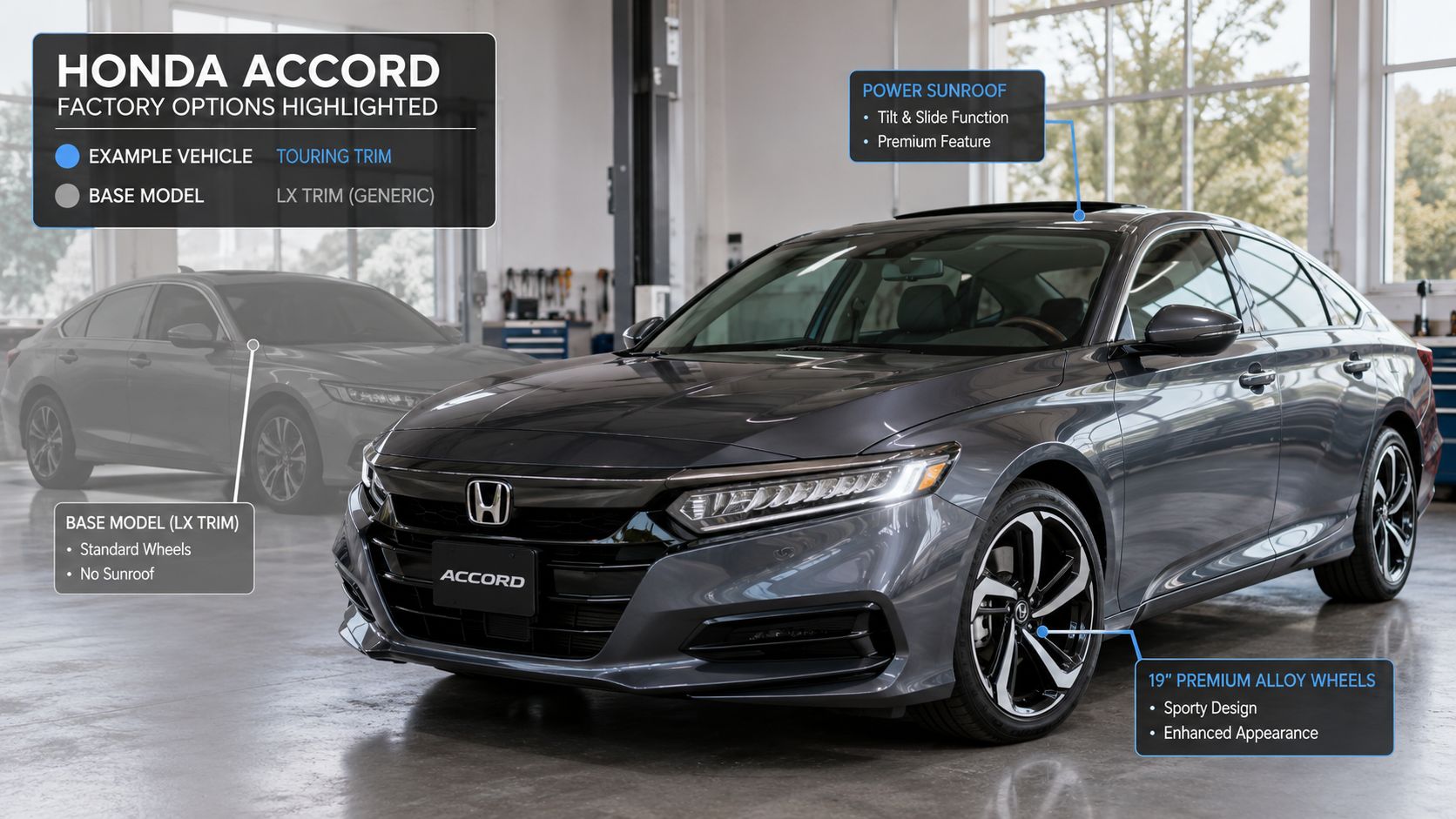
A client with a loaded Toyota Camry XSE can get quoted like a base LE if the appraiser never verifies the factory equipment. The same problem shows up across the Japanese car model market because the differences between trims are often subtle on paper and huge in resale value. Heated seats, driver-assist packages, premium audio, wheels, cameras, and appearance packages all change what the vehicle is worth in the local market, and the market is what matters in a total loss.
Read the broad market context in this Japanese car brand guide, because the issue is bigger than one nameplate. Japan's market is heavily shaped by compact, efficient vehicles, especially kei cars, and that culture of trimming and packaging carries into export models too, which is why “same model” is a lazy valuation shortcut.
Practical rule: if the settlement sheet doesn't match the window sticker, build sheet, or factory equipment, the number is wrong until proven otherwise.
The insurer's software usually assumes sameness where none exists. That's the opening they use, and it's the opening you have to close with documentation.
Understanding Make Model Year and Trim Hierarchy
Make, model, year, and trim are not interchangeable labels. They're a hierarchy, and each step narrows the car's identity. A 2024 Honda CR-V LX is not the same vehicle as a 2024 Honda CR-V EX-L with added equipment, even though the badge on the hood says CR-V either way.
The same logic applies to Toyota RAV4 and Subaru Outback owners. The make tells you the brand, the model tells you the platform family, the year places it in a specific production cycle, and the trim tells you the feature package the factory installed. Insurers often stop at the first two layers, then wonder why the offer is too low.
The Japanese market makes this worse because manufacturers build long trim ladders with naming conventions that look similar but value very differently. That's not a trivia problem, it's a valuation problem. A vehicle with advanced safety equipment, larger wheels, upgraded upholstery, or a factory navigation package can trade higher than a near-identical base version even when mileage and condition are close.
Use the documents that came with the car. The window sticker, dealer invoice, Monroney label remnants, build sheet, and factory order paperwork tell you what the car really was when it left the line. If those papers are missing, the VIN and equipment list become your backup proof, not a nice-to-have.
| Identification layer | What it controls | Why it changes value |
|---|---|---|
| Make | Brand family | Sets broad market demand |
| Model | Vehicle platform | Determines size, layout, and buyer pool |
| Year | Production cycle | Affects design revision and feature availability |
| Trim | Feature package | Drives real resale and replacement cost |
The vehicle identification system infographic makes the hierarchy obvious, but the point is practical. If the insurer recorded only the model name, you're not arguing about semantics, you're arguing about money.
How to Verify Your Vehicle Identity Using VIN Decoding
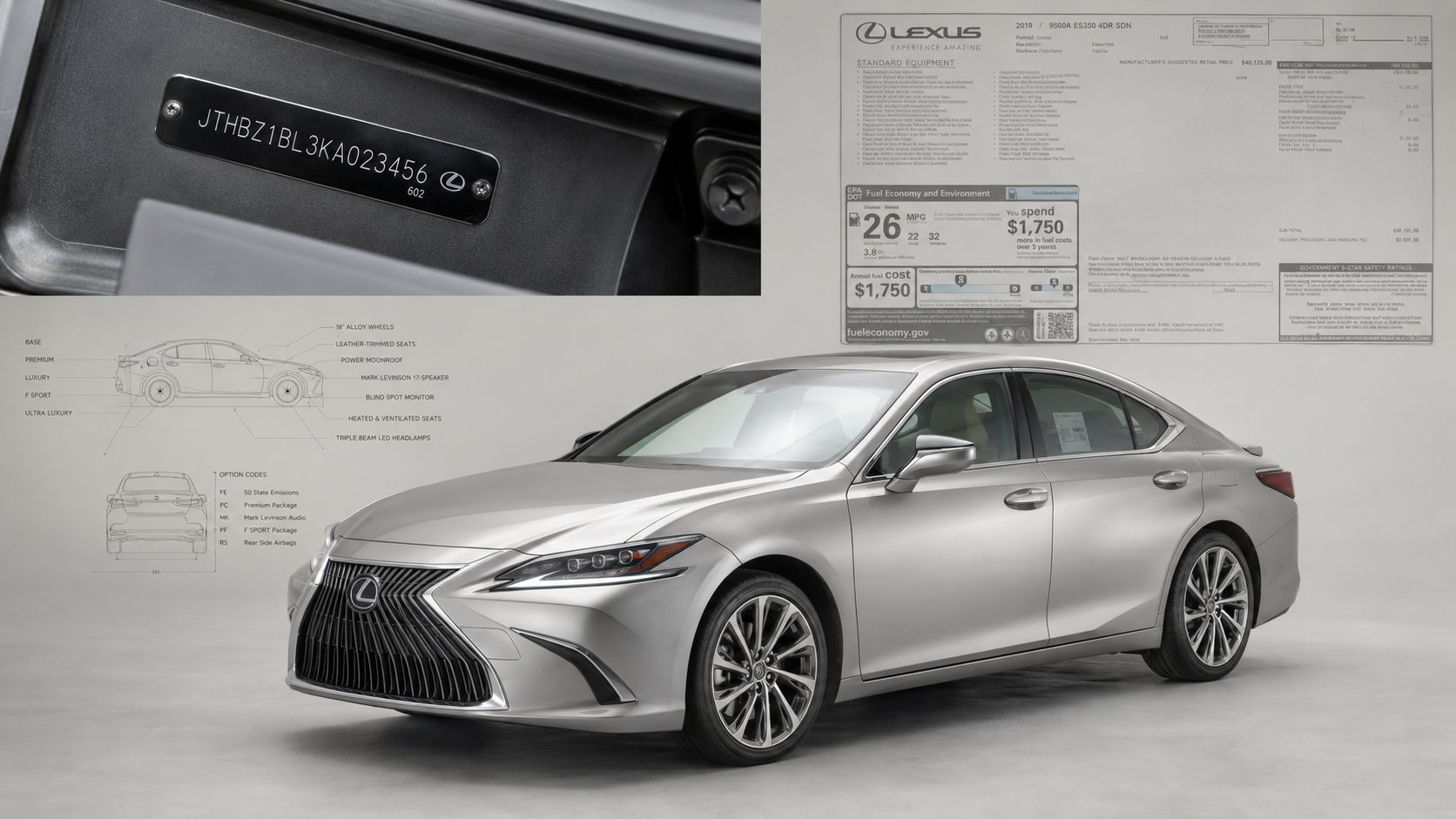
The VIN is the cleanest way to prove what the factory built, but only if you decode it and compare it to the vehicle sitting outside. Start with the dashboard plate near the windshield, the door jamb sticker, and the title documents. If those numbers don't line up with the trim and equipment on the car, you already have a valuation dispute.
A proper VIN check does more than confirm the make and year. It should help identify engine type, body configuration, plant, and often enough detail to catch a trim mismatch before the adjuster does. The JDM vehicle appraisal resource is useful because Japanese-market and import-style vehicles can carry equipment distinctions that generic valuation tools flatten out.
Don't trust the appraiser's first screen. Trust the car, then force the paperwork to match it.
Use this sequence:
- Locate the VIN on the dash, door sticker, or title.
- Decode the VIN with a reputable decoder that's known to handle the manufacturer well.
- Compare decoded data with the actual badges, wheels, seats, and safety equipment.
- Flag mismatches before you accept the initial report.
Where insurers miss the details
Valuation software often misses market-specific options and factory accessories that matter in real sales. Paint codes, cold-weather packages, dealer-installed accessories, and regional equipment bundles can all change the buyer pool. If your car has a special package or nonstandard equipment, document it with photos and paperwork, then line it up against the decode.
The technical note in most VIN systems is straightforward. Characters 1 to 3 identify the make, 4 to 8 describe model and features, 9 is the check digit, 10 is the year, and 11 is the plant. Use that structure as a cross-check, not as your only proof, because the car's real market value still comes from the actual configuration.
Japanese Models That Hold Value Versus Those That Depreciate
Some Japanese vehicles stay stubbornly expensive because buyers keep chasing them after an accident, while others fall faster once the title gets branded. That matters in diminished value claims, because the more demand a model has, the more negotiating power you have when the insurer tries to lowball the loss.
The broader market helps explain why. The U.S. International Trade Administration says kei cars make up more than one-third of all new vehicle sales in Japan, domestic brands hold about 95% of the market, and Toyota Group alone accounts for about 41%. It also says that in 2024, Japan sold 4,421,494 new passenger vehicles, hybrid vehicles represented 54.8% of new passenger-car sales and exceeded 2 million units for the first time, and EVs were still only 59,736 units, or 1.35% of new vehicle sales, according to the Japan automotive market guide. That's not a side note, it's the market structure that shapes demand.
| Japanese Model Value Retention Comparison | Value Retention Profile | Key Value Drivers |
|---|---|---|
| Toyota Tacoma | Stronger retention | Truck demand, broad buyer pool |
| Subaru WRX | Stronger retention | Enthusiast demand, limited substitutes |
| Honda Civic Type R | Stronger retention | Performance reputation, scarcity |
| Mainstream commuter sedans | Weaker retention | Wider supply, more trim overlap |
The point is simple. Enthusiast models and low-supply trims usually hold up better, while common commuter cars are easier for insurers to underrate because they assume every version is close enough. That assumption is lazy.
Japan's domestic market also shows why compact efficiency matters. The kei segment is engineered under very tight size and engine limits, which rewards packaging efficiency over raw power. If a model was designed around those constraints, its real-world value often comes from practical usability, not headline horsepower.
A good local example is the Daihatsu Tanto, which sits inside kei limits at 3.395 m long and 1.475 m wide, with 658 to 659 cc engines producing 52 to 64 ps and fuel economy of 24 to 28 km/L, according to its published specifications. That kind of design is why valuation databases built for generic sedans can miss what buyers pay for in dense-city markets.
Documenting Your Vehicle Configuration for Maximum Claim Value
Start documenting before the car disappears into a tow yard or body shop. Once the vehicle is stripped, moved, or repaired, you lose evidence that should have been in your settlement file from day one. Your job is to build a paper trail that an appraiser can't wave away.
Use this checklist immediately:
- Photograph every angle of the car, plus the interior, while the vehicle is still intact.
- Capture the VIN plate and the tire pressure sticker in sharp, readable photos.
- Record the odometer so no one can argue mileage later.
- List every option package and accessory, including dealer-installed items.
- Save the original window sticker if you still have it.
- Note factory modifications and any market-specific equipment.
The post-accident documentation checklist belongs in every claim file for a Japanese car model because trim precision is where the money lives. If the car had a premium audio system, safety package, or appearance package, make that impossible to ignore.
One smart move is to keep your claim paperwork organized as if you expect a dispute, because you probably should. If you need to streamline your insurance paperwork, use a system that lets you assemble photos, equipment lists, and comparable listings into one clean packet. The easier you make it for the appraiser to see the configuration, the harder it is for the insurer to pretend the equipment doesn't matter.
Common Valuation Mistakes Insurers Make With Japanese Vehicles
The most common mistake is treating a model name as if it were the whole vehicle. It isn't. A Toyota, Honda, Nissan, Mazda, or Subaru badge tells you the family, not the exact market version, and Japanese cars are especially vulnerable to this error because their option content can swing sharply across trims and markets.
Insurers also get tripped up by imported or market-specific variants. A car that looks familiar can carry different connector types, option packages, body codes, or factory equipment depending on where it was built and sold. That matters for parts compatibility too, because a “same model” assumption can be wrong for mirror assemblies, trim pieces, electrical plugs, and other replacement components.
If the part catalog doesn't match the car in your driveway, the settlement math is already off.
There's also a lot of garbage online about "hidden features" in Japanese cars. Viral clips often mix real functions with model-specific guesses, and that confusion helps nobody. Owners care about what exists on a specific trim, whether it affects safety or warranty, and whether it has any resale impact. If the feature isn't documented on your VIN-decoded build or factory paper trail, don't let it distract from the valuation issue.
Kei-class vehicles create a separate problem because American databases don't always handle their proportions and packaging correctly. These cars are engineered under strict dimensional and displacement limits, so they can look similar to a small hatchback while carrying completely different value logic in their home market. That's why you challenge the exact trim, body code, and option list, not just the badge.
The cleanest response to these mistakes is to compare the insurer's report against factory evidence, dealer listings, and your own photos. If the adjuster valued the base version, but your car clearly had the higher package, point to the mismatch and make them revise it.
Taking Action When the Settlement Offer Falls Short
If the number is wrong, don't argue in circles. Put the insurer on notice, submit your documentation, and ask for a corrected valuation based on the exact trim and equipment. If they still won't move, the appraisal clause is the lever that forces a real market review instead of a software shortcut.
Independent appraisers win these fights by using the evidence most insurers ignore, the VIN decode, the configuration photos, the option codes, and local comparable sales that match the car. That matters most in Washington and Oregon, where a strong file can shift a settlement from a generic database guess to a defensible market number.
Use a hard rule here. If the offer doesn't reflect the trim, the package, or the market-specific variant, don't accept it just because the company says it's “final.” Push back with documents first, then escalate if needed.
The first number is usually the insurer's cheapest number, not the correct one.
For a total loss claim, the best evidence is the car's exact identity and the listings that prove what similar vehicles sell for. For a diminished value claim, you need the same discipline, plus proof that the accident history affected market perception. Either way, the same mistake hurts you, letting the insurer value a complex Japanese car model like a generic commuter box.
If you're staring at a weak total loss offer, don't let the insurer bury your car's real trim, options, or market position. Total Loss Northwest helps owners challenge low settlements with independent appraisals that focus on the exact vehicle, not the database shortcut. Visit Total Loss Northwest if you want a stronger file and a fairer number.