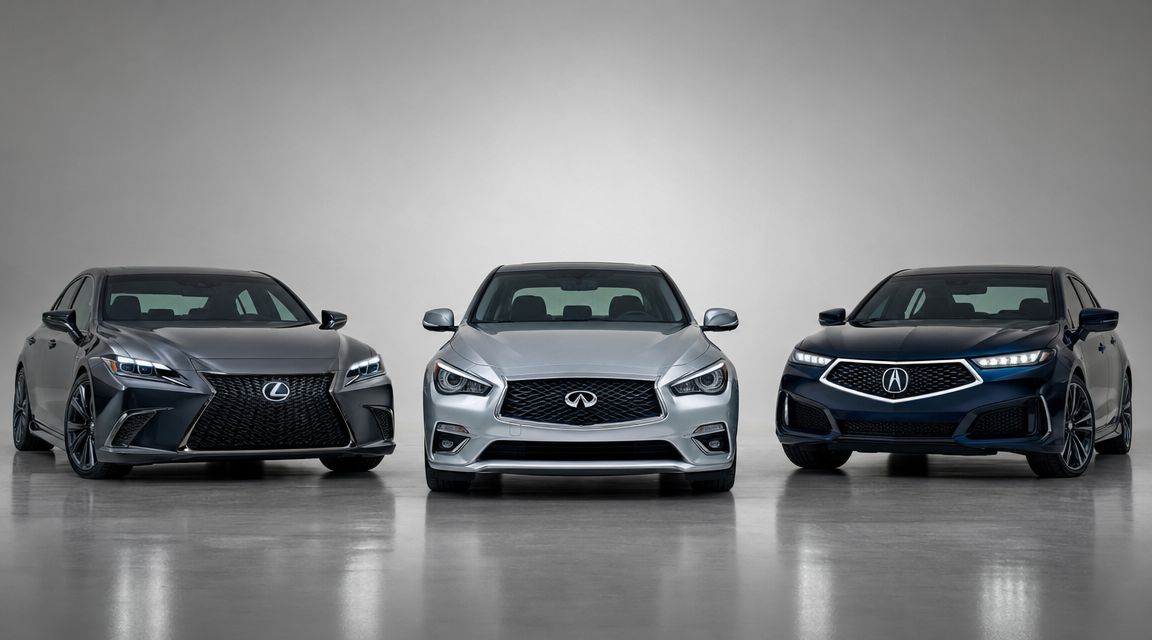
Your Lexus is clean, serviced, and harder to replace than an insurance worksheet suggests. Then the settlement offer lands, and it treats your car like a generic used vehicle with leather seats. That gap is where many owners lose money.
Japanese luxury car brands create a valuation problem that standard insurance software often handles badly. The software may catch year, make, model, and mileage, but it often misses trim-specific equipment, hybrid desirability, regional demand, condition history, and the difference between a mainstream Japanese model and a premium one with stronger buyer appeal. That matters in both total loss and diminished value claims.
The broader market context helps explain why these brands deserve closer attention. Japan sold 4,421,494 new passenger vehicles in 2024, even after a 7.5% year-over-year decline. Inside that large automotive ecosystem, premium Japanese nameplates aren't just niche vanity badges. They sit in a mature market where domestic brand trust, dealer networks, and technology adoption shape resale and replacement value.
From an appraiser's standpoint, the key question isn't just which brand is best. It's which brand gets misread most often by insurance valuation tools, and what evidence moves the number back toward a fair settlement.
1. Lexus
A Lexus owner usually feels the problem after the first offer arrives. The carrier values a clean RX 350, GX 460, or LS as if the market treats every same-year Lexus alike. It does not.
Lexus tends to produce smaller valuation fights than some rival brands, but the misses still cost real money because adjusters often rely on broad database matches. Those matches can ignore the exact trim, hybrid setup, luxury package, audio package, third-row configuration, or unusually strong maintenance history that separates one Lexus from another in the retail market. If you want to see the mechanics behind that process, review how insurance companies value a car after a loss.
The brand's strength is also the trap. Insurance software recognizes Lexus, but that recognition can create false confidence. A valuation report may pull in lower-grade comparables because they share the same model name, even if your vehicle has better condition, better equipment, and a stronger buyer profile than the comps on the worksheet.
I see this most often with RX and GX claims. A base or mid-trim vehicle gets mixed with a higher-content example, or the reverse, and the number drifts fast. On LS sedans and LC coupes, the spread is often tied to condition, ownership history, and option content, which generic systems flatten too aggressively.
Practical rule: Do not let the adjuster describe your Lexus as just an SUV, sedan, or coupe. Make them account for the exact trim, drivetrain, factory packages, and documented upkeep.
A strong Lexus claim file should include:
- Service records: Dealer or qualified specialist invoices that show consistent maintenance.
- Equipment documentation: Original window sticker, build sheet, or a VIN-based options report.
- Condition evidence: Pre-loss photos of the exterior, interior, wheels, glass, and any recent reconditioning.
- Comparable listings: Same trim, same engine or hybrid system, similar mileage, and similar condition.
If the carrier still pushes a low figure, a certified vehicle appraisal for a total loss or diminished value claim gives you a market-based rebuttal grounded in actual comparables. That matters with Lexus because buyers routinely pay more for clean history, known reliability, and well-documented ownership, and those premiums do not always show up in insurer software.
2. Infiniti
You get a total loss offer on an Infiniti, scan the comps, and the problem shows up fast. The carrier priced a loaded Q50 against lower-content sedans, or treated a clean QX80 like any aging full-size SUV with miles. That is how Infiniti owners lose money. The brand has uneven mainstream recognition, and valuation systems use that gap against you.
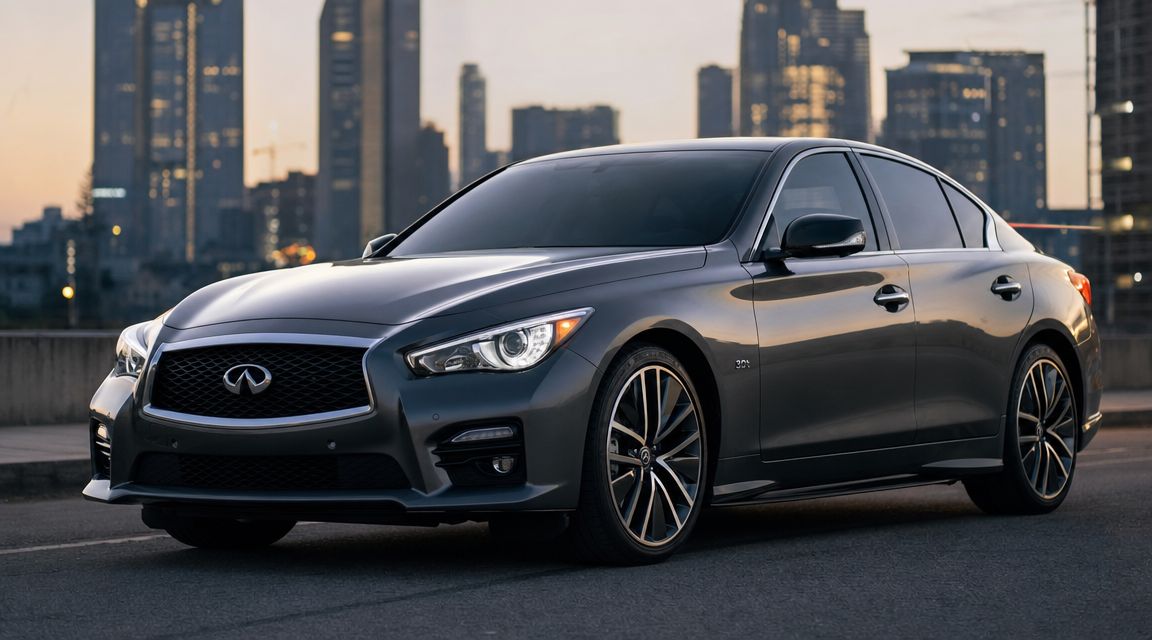
Why Infiniti needs model-specific comps
Infiniti values are less forgiving than many owners expect. In my appraisal work, I see bigger swings here when the software misses trim, drivetrain, or package content. A Q50 Red Sport, a well-kept QX60, and a clean QX80 each attract different buyers for different reasons. If the report collapses those differences into a generic sedan or SUV bucket, the settlement usually comes in low.
Insurance companies also tend to treat Infiniti's softer resale reputation as permission to discount the vehicle broadly. That shortcut misses how replacement shopping works. Buyers still pay for the right spec, clean history, and documented condition, especially on performance trims and higher-content SUVs.
Owners usually get more traction once they understand what a car appraisal is and how it supports a value dispute and compare that process to the insurer's worksheet. That is where weak comps, missing options, and mileage adjustments start to stand out.
A stronger Infiniti claim file usually focuses on details the valuation software flattens:
- Exact trim and powertrain: Red Sport, Luxe, Sensory, AWD, and engine differences can change market behavior.
- Factory and dealer-installed equipment: Wheels, technology packages, driver-assist features, tow equipment, and premium interiors need to be accounted for.
- Regional market reality: Infiniti pricing can vary more by area than owners expect, especially for larger SUVs and rear-wheel-drive sedans.
- Condition and history: Clean paint, reconditioning work, newer tires, service records, and a no-surprise history report support a higher replacement figure.
I also tell owners to read the insurer's comparable list like a buyer, not like an adjuster. If one comp has cloth seats, accident history, higher mileage, or fewer features, it is not a harmless difference. On Infiniti claims, small spec errors often stack up into a meaningful drop in value.
The first offer on an Infiniti often reflects software grouping, not what it costs to replace your vehicle with one that matches it.
3. Acura
Your Acura is declared a total loss. The insurer's report pulls in a few broad comps, misses the SH-AWD setup, and treats a loaded Technology or Advance package like a base luxury crossover. That is how Acura owners get shorted.
Acura sits in a valuation pocket that insurance software often handles poorly. It shares DNA with Honda, but the market does not price an MDX Type S, a well-optioned RDX, or a clean TLX the same way it prices an upper-trim Honda. In claim work, that gap matters because the system may anchor too low before anyone checks the actual equipment, drivetrain, and replacement availability.
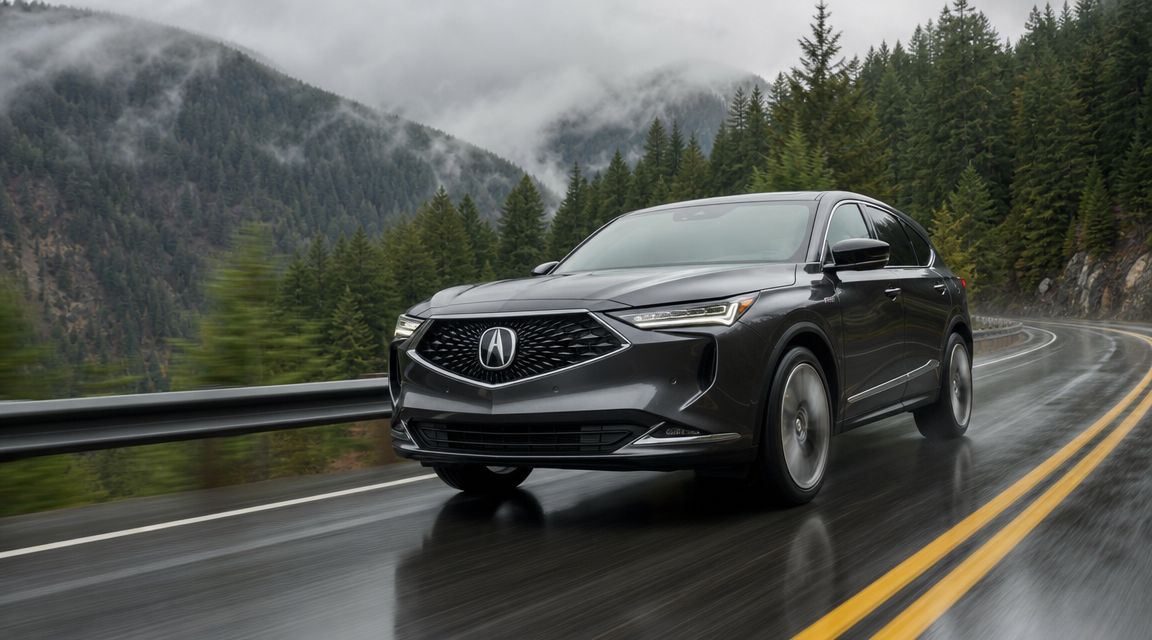
The Acura pricing trap
Acura usually performs best in the used market when the vehicle offers a clear step up in cabin quality, powertrain, and feature content without the ownership costs some buyers associate with European brands. That sounds simple, but total-loss systems tend to flatten that middle ground. They may group an Acura too close to mainstream alternatives, or compare it to other luxury vehicles without matching the package and drivetrain that supported the higher sale price.
I see this most often on MDX and RDX claims. A clean example with dealer service history, current tires, and the right trim can bring stronger replacement dollars than the report suggests, especially if local inventory is thin.
What helps an Acura owner in practice is specificity, not volume:
- Exact trim and package proof: Technology, A-Spec, Advance, Type S, and other package differences affect real asking prices.
- Drivetrain documentation: SH-AWD is not a minor line item. In many markets, it changes demand and replacement cost.
- Ownership and service records: Acura dealer invoices, scheduled maintenance, and recent reconditioning support condition adjustments.
- Comparable vehicle screening: Reject comps with weaker trims, front-wheel drive when yours is AWD, prior damage, or materially higher mileage.
Owners often ask what kind of evidence moves a disputed value. Start with a clear understanding of what a car appraisal is and how it supports a value dispute, then compare that process to the insurer's worksheet line by line. On Acura files, the errors are usually small on their own and expensive in combination.
One more point matters with this brand. Acura claims are rarely won by broad arguments about reputation. They are won by proving that the insurer priced the wrong vehicle profile.
4. Mazda Premium
A CX-90 Premium Plus gets totaled. The carrier's report prices it like a mid-pack family SUV with a few options. That is how Mazda owners lose money.
Mazda sits in a valuation gap that shows up often in appraisal files. The brand does not carry a separate luxury badge, but upper-trim Mazdas are often shopped against entry-level luxury vehicles, especially by buyers who care more about interior quality, powertrain refinement, and design than the emblem on the hood. Insurance valuation systems often miss that buyer behavior and fall back to mainstream category matches.
The risk is not abstract. I see it in trim coding, package omissions, and weak comparable selection. A loaded CX-90 PHEV, turbo Mazda3, or Signature-trim CX-5 can be pulled into a pool of lower-content vehicles that look similar on paper and sell for less on the market.
Where Mazda values break down
Mazda claims usually turn on configuration discipline. If the report misses the exact trim, the engine, the premium interior package, or the electrified drivetrain, the final number drifts fast. A valuation system may recognize the model name while flattening the equipment that made the vehicle more expensive and harder to replace.
That problem gets worse with Mazda because premium content is often bundled in ways adjusters overlook. Nappa leather, larger wheels, ventilated seats, upgraded audio, turbocharged powertrains, and plug-in hybrid hardware are not cosmetic details. They affect buyer demand and replacement cost.
Appraiser's note: On premium Mazda claims, the badge matters less than the build sheet. I would rather have the original window sticker than three pages of general arguments about brand reputation.
The strongest owner file usually includes a few specific pieces of proof:
- Exact trim and package records: Window sticker, purchase agreement, and VIN-specific equipment list.
- Powertrain documentation: Turbo, PHEV, and AWD setups need to be identified correctly because insurers often compare them to cheaper alternatives.
- Condition support: Service history, recent tires, brake work, detailing, and dealer reconditioning help justify condition adjustments.
- Comparable screening: Remove lower trims, prior-damage units, high-mileage listings, and vehicles with different drivetrains or missing premium features.
Mazda owners do better when they argue substitution cost, not prestige. The question is simple. What would it cost to replace this exact vehicle, in this market, with the same level of equipment and condition? Once that question is asked properly, weak insurer comps usually fall apart.
That is the practical profile for Mazda Premium. These claims are rarely underpaid because the vehicle lacks quality. They are underpaid because the insurer priced a simpler Mazda than the one the owner lost.
5. Subaru Premium
Subaru isn't a traditional luxury marque. In appraisal practice, that doesn't mean it lacks premium valuation patterns. In some regions, especially wet-weather and mountain markets, loaded Subarus command attention that generic valuation systems don't capture well.
That matters with Outback Touring or Limited models, upscale Legacy trims, and select Crosstrek configurations that buyers seek for capability, not just transportation. The insurer may classify them as practical all-wheel-drive vehicles. The local market may treat them as premium daily drivers with strong desirability.
A good example of the larger market shift is where premium demand is moving. Grand View Research says Japan's luxury car market was USD 50.8 billion in 2024 and is projected to reach USD 79.8 billion by 2030, with SUVs identified as both the largest revenue segment and the fastest-growing one. Even though Subaru isn't a classic luxury badge, that SUV-centered buying behavior helps explain why premium-positioned, capability-driven vehicles can outperform basic category assumptions.

Regional value is the whole case
This is one of those brands where geography changes the appraisal argument. In the Pacific Northwest, mountain states, and snow-belt regions, a clean Subaru often has replacement pressure that national software averages miss.
That doesn't mean every Subaru is a luxury claim. It means premium trims can behave like one when demand is local and equipment matters.
Useful evidence includes:
- Regional listings: Show what similar all-wheel-drive examples are selling for nearby.
- Seasonal demand context: Timing can affect replacement cost in weather-sensitive markets.
- Trim-level proof: Leather, premium audio, advanced safety tech, and top-end packages need to be identified clearly.
A short visual example can help clarify what owners are often trying to preserve in a claim discussion.
6. Daihatsu and Mitsubishi
These two don't belong in the same bucket from a brand-history standpoint, but they do create a similar appraisal issue. Both can fall outside the comfort zone of standard insurance databases, though for different reasons.
Mitsubishi still shows up in valuation disputes tied to plug-in hybrid positioning, niche trims, and mixed brand perception. Daihatsu is more of a specialty discussion in this context, because the challenge is usually scarcity of clean comparables and limited mainstream recognition, not broad luxury prestige.
When the database has weak comparables
The main risk here is over-simplification. A Mitsubishi Outlander PHEV, for example, can be treated like just another compact SUV if the valuation tool fails to recognize how buyers distinguish electrified powertrains, trim content, and use case. A niche Daihatsu import or specialty-market vehicle can be discounted because the adjuster doesn't have enough good comps.
The current shopping environment adds another layer. One underserved angle in coverage of Japanese luxury car brands is how the market role of older prestige nameplates changes in a world dominated by luxury SUVs, and whether legacy badges still translate into present-day demand, as discussed in CarBuzz's commentary on older Japanese prestige models and current buyer behavior. That same disconnect can hurt owners of less common Mitsubishi or Daihatsu vehicles. The insurer may rely on outdated brand assumptions instead of current buyer behavior.
If the vehicle is uncommon, don't let the insurance company use convenience comps just because they're available.
For these claims, owners should focus on process:
- Broaden the comparable search carefully: Look beyond the nearest dealer inventory if local supply is thin.
- Document specialized equipment: Electrified drivetrains, premium trim content, and imported-market features need explicit support.
- Challenge category errors early: Once a niche vehicle is coded into the wrong segment, the valuation often stays low until someone forces a reset.
6 Japanese Luxury Car Brands Compared
| Brand / Model | Complexity 🔄 | Resource Requirements ⚡ | Expected Outcomes 📊⭐ | Ideal Use Cases 💡 | Key Advantages |
|---|---|---|---|---|---|
| Lexus – Japanese Luxury Pioneer | High, advanced hybrids, customization, dealer service complexity | Moderate–High, specialist appraiser, full maintenance records, market comps | Higher, more accurate valuations; strong diminished-value legitimacy ⭐📊 | Total-loss on hybrid/flagship models; low‑mileage, well‑optioned cars 💡 | Exceptional reliability, strong residuals, dealer support |
| Infiniti – Performance-Focused Luxury | High, turbo/V‑engine and sport components need expertise | High, performance comparables, enthusiast data, mechanical verification ⚡ | Captures performance premiums when documented; variable by market ⭐📊 | Sport sedans/SUVs with performance packages and low-run examples 💡 | Sport tuning, distinctive design, enthusiast demand |
| Acura – Honda's Dynamic Luxury Division | Medium, AWD systems and integrated tech require knowledge 🔄 | Moderate, dealer records, AWD/SHAWD understanding, regional comps ⚡ | Reflects tech and regional premiums; improves claim outcomes ⭐📊 | PNW AWD market, tech-rich trims, family luxury use cases 💡 | SH‑AWD, reliability, fuel efficiency, strong regional presence |
| Mazda Premium – Luxury Craftsmanship Focus | Medium, design-focused features often overlooked by software | Moderate, document premium packages, design awards, comparable trims ⚡ | Recovers understated luxury value for premium trims ⭐📊 | Premium non‑badge models where craftsmanship and driving feel matter 💡 | Premium materials, refined dynamics, growing premium perception |
| Subaru Premium – All‑Wheel Drive Luxury Niche | Medium, AWD/safety premiums plus regional valuation factors 🔄 | Moderate, climate/region data, safety ratings, comparable sales ⚡ | Higher regional valuations; AWD and safety value captured ⭐📊 | Pacific Northwest buyers, outdoor/safety‑focused luxury crossover claims 💡 | Symmetrical AWD, top safety ratings, strong regional demand |
| Daihatsu & Mitsubishi Premium Segments | Very high, limited data and emerging EV/PHEV tech complicate appraisals 🔄 | High, incentives documentation, EV comps, specialist appraisers required ⚡ | Variable; potential uplift if incentives/EV premiums documented; uncertainty remains ⭐📊 | Emerging EV/PHEV claims, niche compact premium entrants, early adopters 💡 | EV/hybrid tech, niche premiums, government incentive support |
Protect Your Investment and Your Claim
Your Lexus gets totaled. The carrier's report arrives fast, and the number looks polished. Then you read the valuation and see what happened. The software matched your well-documented hybrid to lower trims, ignored local demand, and treated option content like noise.
That is a common claim problem with premium Japanese vehicles. Insurance valuation systems are built to process volume, and they often miss the details that separate an average comp from a proper one. On these cars, those details matter. Hybrid drivetrains, performance packages, advanced safety tech, AWD systems, premium audio, and trim-specific resale strength can change replacement cost in a meaningful way.
As an appraiser, I do not start with "this brand holds value well." That argument is too vague to move a settlement. I look for valuation errors an adjuster or vendor can verify. Wrong trim. Wrong drivetrain. Wrong package content. Poor condition adjustment. Comparables pulled from the wrong market. Dealer retail vehicles treated like private-party sales, or the reverse. Those are the points that raise a weak total loss report from opinion to evidence.
Owners should build that file early. Save the window sticker if you have it. Keep service records, tire receipts, recent detail work, battery documentation on hybrids, and proof of factory or dealer-installed options. If the insurer misses a technology package or premium trim group, the burden often shifts to the owner to prove it existed.
If your policy includes an appraisal clause, use it. A certified independent appraisal can replace a generic software output with a report tied to actual comparable vehicles and documented equipment. For owners in Oregon and Washington, Total Loss Northwest is one option for that kind of appraisal support. If you collect other luxury assets too, this expert guide for watch collectors is a useful reminder that niche value usually depends on better records than a generic pricing tool can account for.
Do not accept the first offer because it looks official. On Japanese luxury car brands, a fair settlement usually comes from correcting the valuation method, not arguing harder about the brand name.