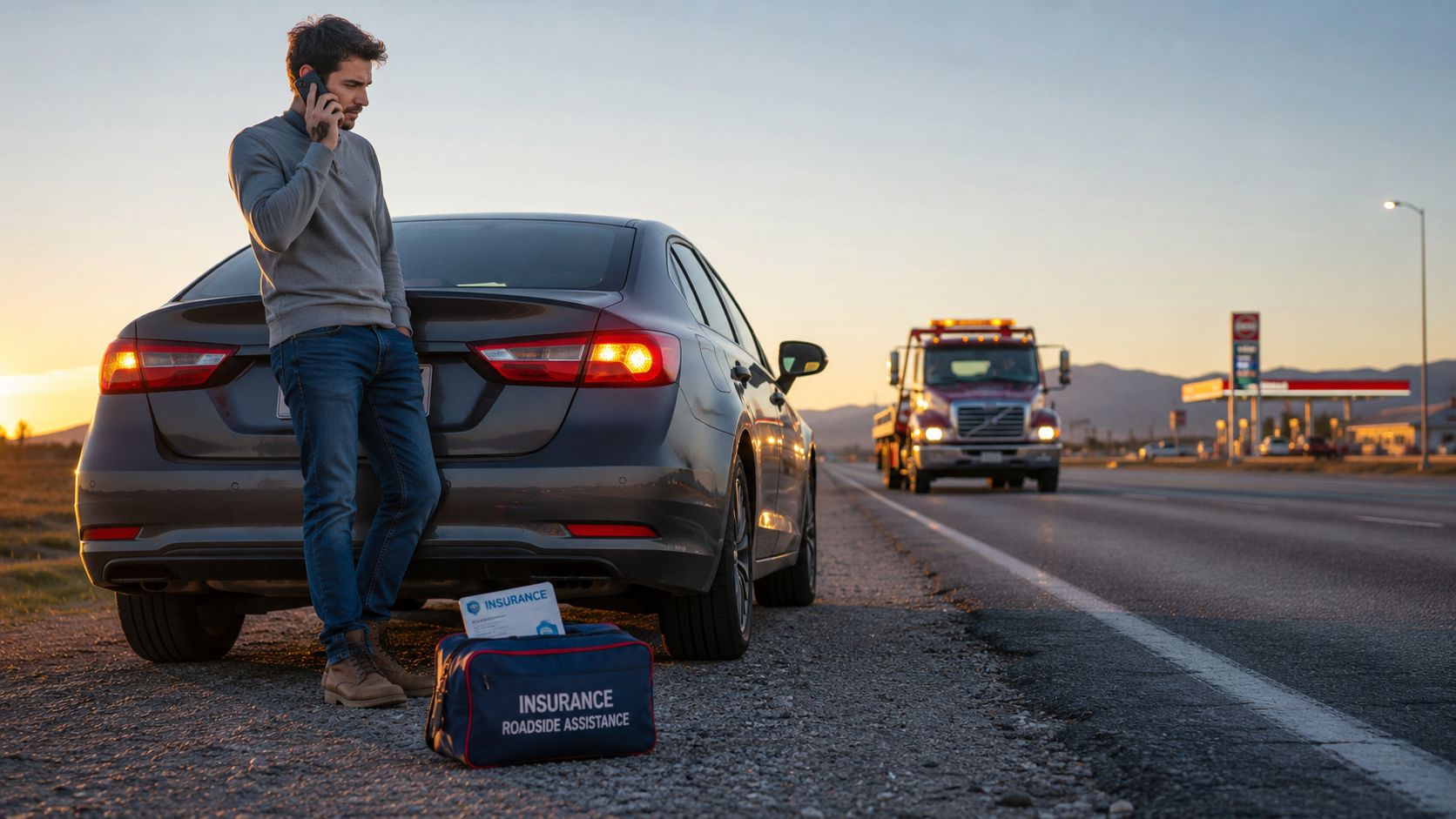
You're on the shoulder with hazards blinking, a tow truck on the way, and a dispatcher asking questions that sound routine but aren't. The answers you give in the next few minutes decide whether the file is clean, whether the bill gets paid, and whether you spend the next month fighting over tow charges, storage, or a total-loss valuation. A roadside assistance claim is never just a tow call. It's the first paper trail in a bigger claims process, and drivers who treat it casually usually pay for it later.
The Moment You Break Down and the Claim Clock Starts
A driver in the right lane of a highway shoulder usually feels only one thing first, pressure. The car won't move, traffic is flying by, and the fastest option is to call for help and let someone else sort the mess out. That's exactly where people lose their advantage. The roadside call creates the record, and the record is what claims people will trust later.
The practical mistake is assuming the tow is the whole story. It often isn't. A dead battery, a lockout, or a flat can still lead to paperwork that matters if the event turns into a reimbursement request, an accident file, or a total-loss dispute. If the breakdown followed a collision, the tow may become part of a broader claim path, not a separate inconvenience. For the claims side of that chain, the first notice of loss matters because it sets the timeline and the facts the insurer will keep pointing back to. See first notice of loss if you want the bigger claim timeline in plain English.
Practical rule: the first call is not a courtesy call, it's evidence creation.
The roadside event also splits quickly into two tracks. One track is service usage, where the program sends help and the driver moves on. The other is claims reporting, where the event is entered, reviewed, and compared with policy language, receipts, and limits. Drivers confuse those two all the time, then act surprised when a bill is denied, delayed, or treated differently than expected.
The cleanest move is simple. Slow down, get safe, and think like a file builder instead of a stranded driver. Every note, photo, and authorization you capture before the truck leaves gives you more control later.
Is a Roadside Assistance Claim a Claim
Drivers get tripped up here because they hear “roadside assistance” and assume insurance never gets involved. That assumption breaks down fast once the call starts a paper trail, and that paper trail can matter later for reimbursement, coverage questions, or a bigger loss file.
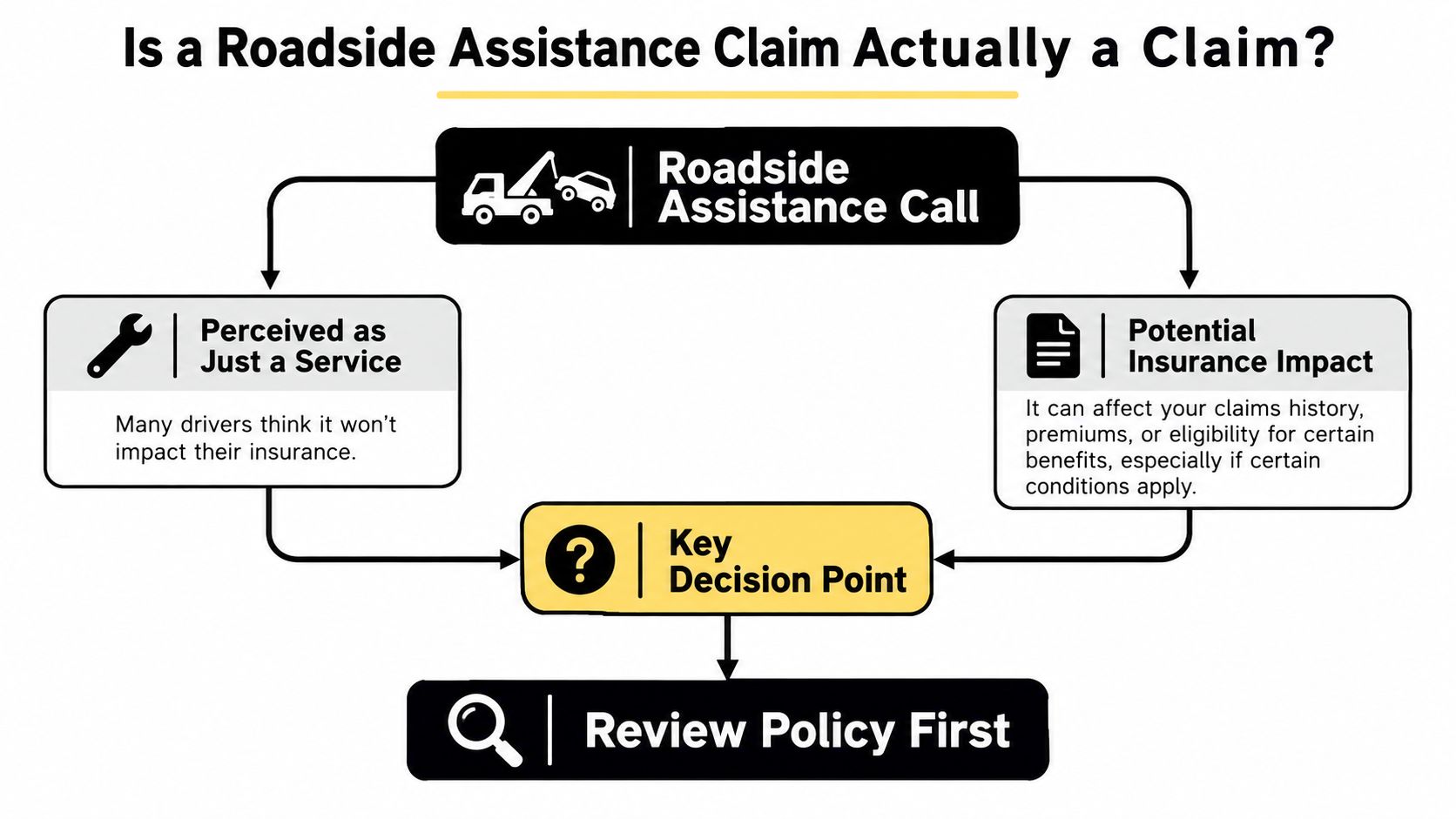
Insurer-facing materials often describe roadside help as a service, not a loss claim. USAA's roadside support page frames it as assistance for towing, lockouts, jump starts, fuel delivery, and similar problems, which is why a simple use of the benefit does not automatically read like a collision claim in the customer's mind or in the policy language USAA roadside assistance support. The key question is whether the event gets logged as roadside-benefit utilization, as a reported claim, or both.
That distinction matters because drivers focus on the wrong issue. A jump start or tow is not just a service call if the event ends up in claims history, affects future pricing or eligibility, or gets handled as a standalone benefit use. A lot of generic advice glosses over that split and treats every roadside call as the same thing. That is bad guidance.
Ask the dispatcher, “Is this being handled as direct roadside service, or do I need to file a reimbursement claim later?”
That question forces a clean answer before the truck rolls. If the answer is vague, get the reference number and write down exactly how the service was categorized. If you do not, you are left guessing later while the insurer works from a file that may already be framed against you.
What to Capture at the Scene Before the Tow Truck Leaves
A claim-resistant file starts at the curb, not in the adjuster's inbox. The best evidence is boring, time-stamped, and specific. You want the facts that let an insurer connect the bill to a real breakdown without having to reconstruct the scene from memory.
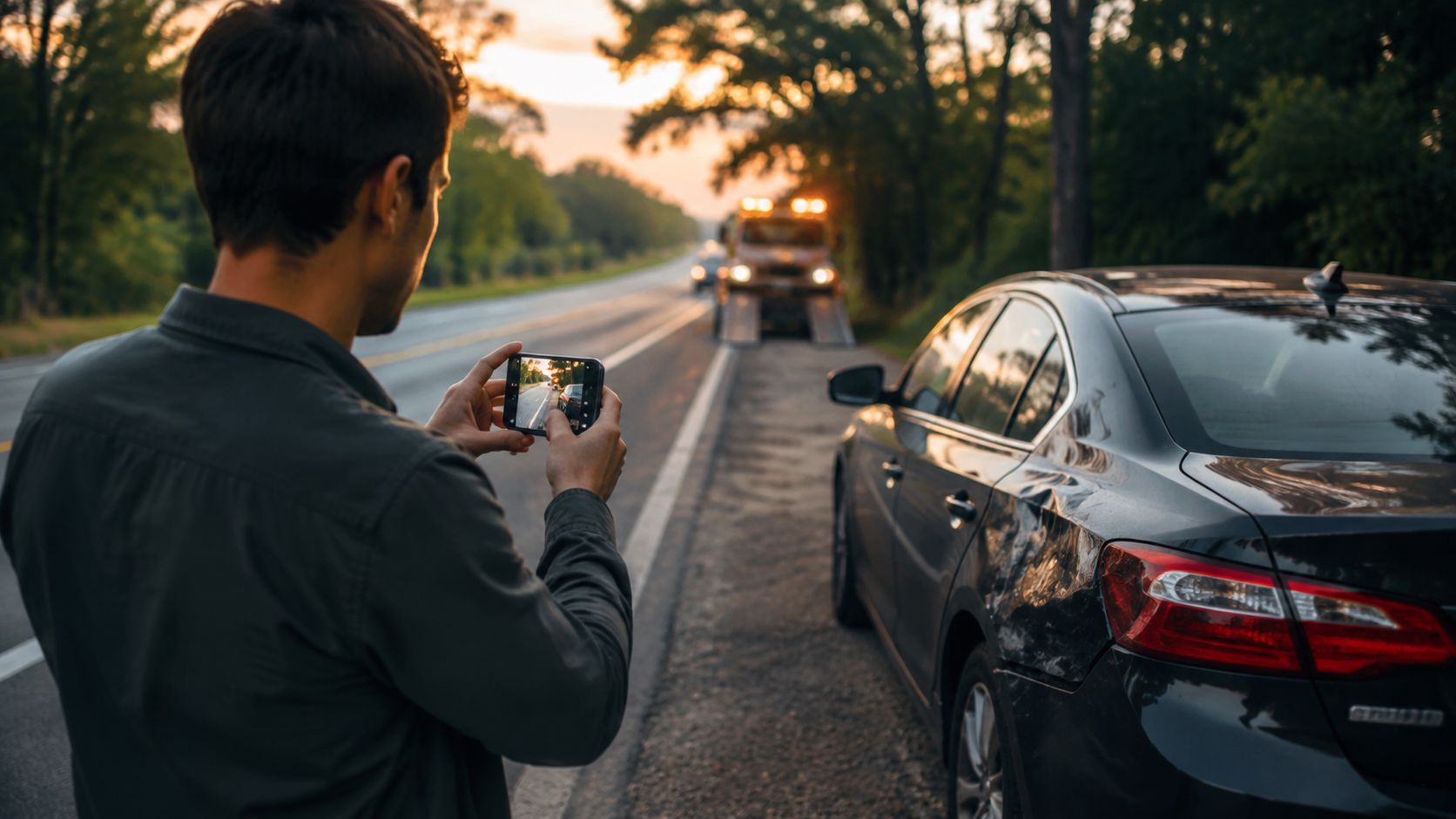
Take the photos before anything gets moved if it's safe to do so. Capture the vehicle from a few angles, the nearby mile marker or exit sign, the dashboard if it shows warning lights, and the tow truck's company name or unit number once it arrives. Then write down the time, the exact location, and what happened in sequence. A generic “car died on highway” note is weak. A step-by-step record wins arguments later.
Use the documentation standard that claim teams can verify quickly. That means the policy number, exact incident location, vehicle details, service provider identity, and an itemized receipt or work order that shows what was performed. A helpful benchmark is the auto claim documentation checklist at auto claim documentation, because the same discipline that helps with collision claims also protects you on roadside reimbursement. For a practical reimbursement workflow, Snyp's guide to getting paid back is useful because it reinforces the same habit, save the proof first, file second.
Claim file rule: if the invoice doesn't show date, time, provider identity, and line items, expect a delay.
| Roadside Claim Documentation Checklist | Why It Matters |
|---|---|
| Policy number | Proves coverage can be checked against the right contract |
| Exact incident location | Ties the service to a verifiable event |
| Time and date | Matches the breakdown to the invoice and call record |
| Vehicle year, make, model, and plate | Confirms the tow or service belonged to the right car |
| Dispatcher or authorization number | Shows the service was approved, not improvised |
| Itemized receipt or work order | Proves exactly what was done and what was charged |
| Photos of the scene and vehicle | Corroborates the need for service and the condition of the car |
| Provider name and contact details | Lets the insurer verify the vendor if needed |
Don't ignore deadlines. Some programs require fast submission, and weak documentation gets worse with time. If you wait until the shop has moved the car and the driver is gone, you've already made your own claim harder.
Direct-Bill Versus Reimbursement and How Each One Works
The cleanest roadside file starts with the right payment path. Most drivers don't know which path they're on until after the tow is complete, and that's a mistake. If you want less friction, you need to know whether the provider is billing the program directly or whether you're paying first and asking for repayment later.
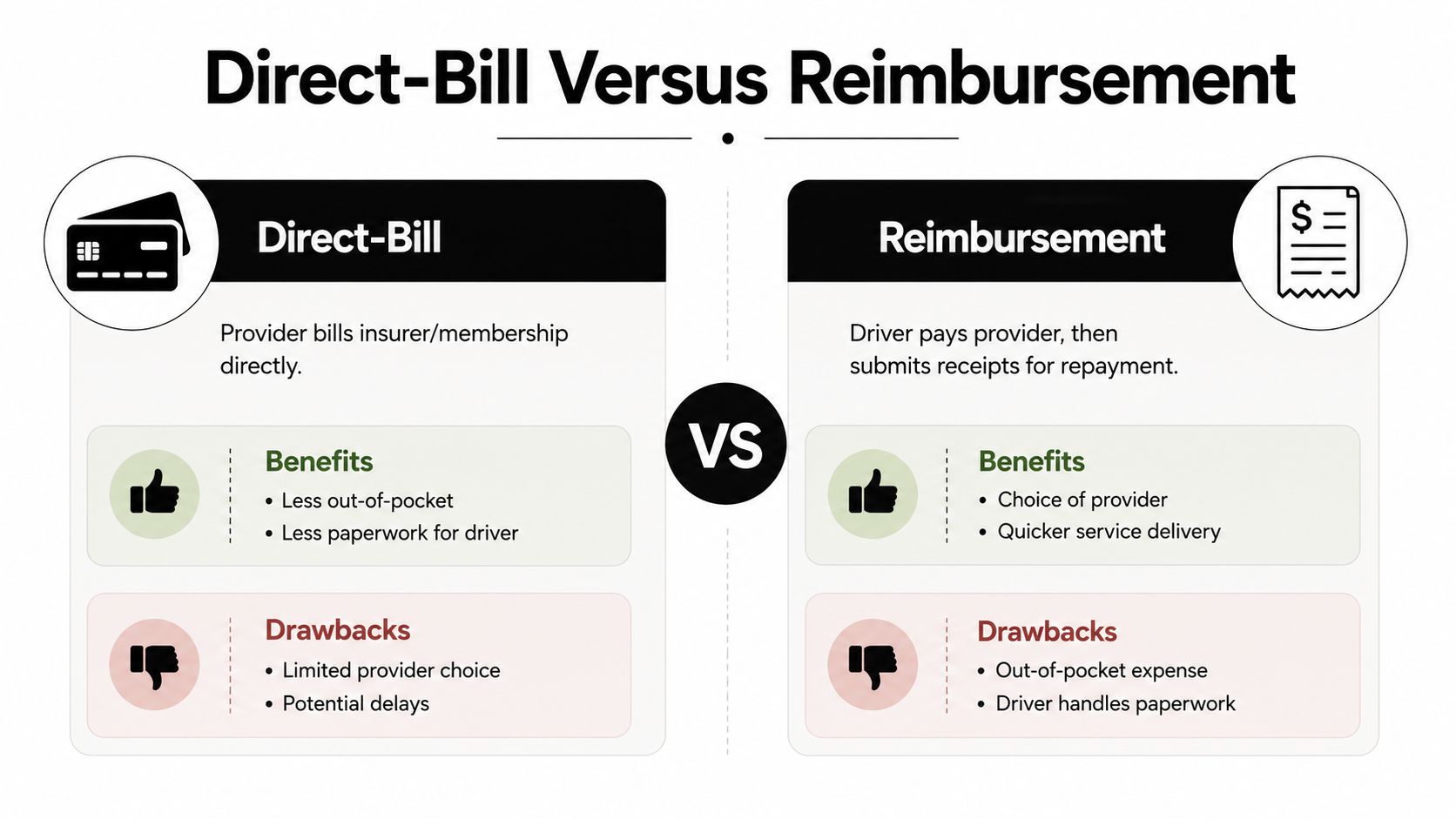
Direct-bill is cleaner for the driver. The insurer or membership program pays the provider, and you sign off on the service. That usually means less out-of-pocket pain and less paperwork. The downside is control. You may have less choice in provider, and if the network is slow, you're stuck waiting.
Reimbursement is the other route. You pay the provider, then submit receipts and supporting proof for repayment. That gives you more freedom to get moving quickly, but it also puts the burden on you to document everything correctly. Claims get rejected most often, because the file is missing the invoice, the service address, the time stamp, or proof that the billed service matched the policy benefit.
A solid reimbursement package is basically an expense file with wheels. If you need a format model, the expense reimbursement guide for freelancers is a useful example of why clean receipts and simple recordkeeping matter. The principle is the same here. If the insurer can't verify the expense, you're the one stuck.
Use plain language when you call the roadside line. Say, “I need direct roadside dispatch if I'm covered,” or, “Please tell me if this will be reimbursement so I can keep the invoice and authorization number.” Don't be cute. Don't assume the rep knows what you mean. Ask for the reference number, ask how the service will be billed, and ask what proof you need before you hang up.
When the Tow Feeds Into a Total Loss or Accident Claim
A tow after a collision is not the same thing as a tow after a dead battery. That difference matters because accident-related towing, storage, and trip interruption can get folded into a larger claim file. Insurer materials on trip interruption make that broader connection clear, since some policies may reimburse rental, meals, lodging, and even ambulance charges after a disablement or collision when the driver is far from home Allstate roadside assistance.
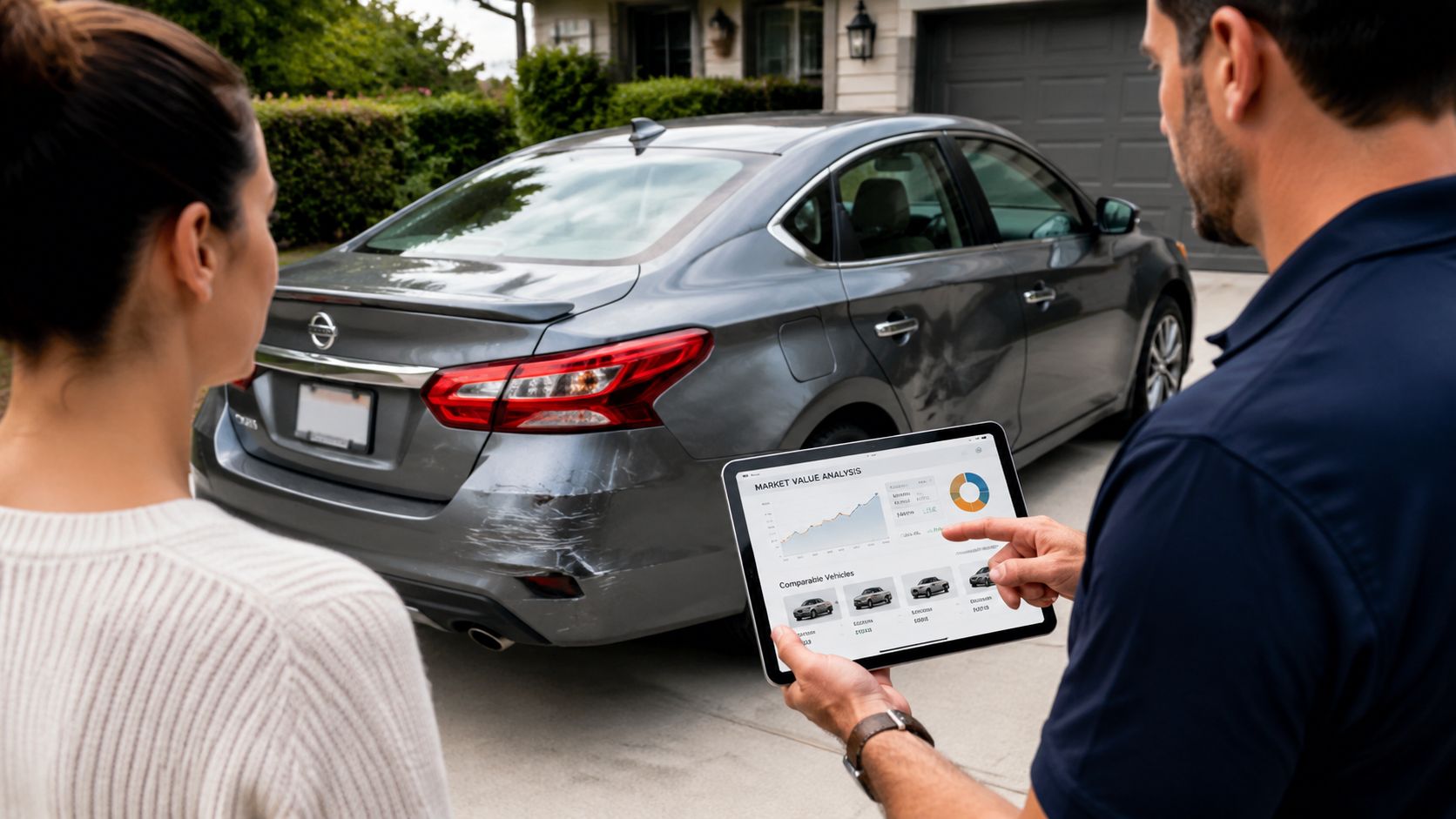
That's where drivers get financially surprised. The tow isn't just moving the car. It can affect where the vehicle is stored, how fast the insurer inspects it, and how much of the final payout gets eaten by storage time. If the car is later declared a total loss, every unnecessary day in an impound yard is a day you may be fighting over cost. That's why owners of older cars, high-value vehicles, and custom builds should push for release and documentation immediately.
The safest move after a collision is to separate three questions. First, is the tow covered under the accident claim. Second, who approves storage. Third, what paperwork proves the charges were necessary. If you can't answer those fast, the file gets messy and the bill grows while the insurer debates liability.
Don't let a tow yard become the most expensive part of a claim because nobody approved release in time.
This is also where the distinction between routine roadside service and accident recovery becomes real money. A battery jump has one paper trail. A collision tow can lead into repair estimates, total-loss evaluation, storage disputes, and trip interruption reimbursement. If the vehicle is sitting in a yard and the insurer is slow, you need to press for written confirmation about release and coverage, not just verbal comfort.
Disputing Towing and Storage Charges That Insurers Try to Deny
The most common money fight is not the tow itself. It's the bill that comes after the tow. Insurers often reject charges they consider excessive, unapproved, or outside policy limits, and if you don't challenge them with proof, the denial sticks.
Start with the invoice. Check the tow mileage, the storage dates, and every line item for add-ons you never authorized. Then compare that bill against the roadside benefit or claim file. If the provider billed a longer distance than the truck traveled, or if storage accumulated before anyone approved it, you have grounds to push back. The towing and storage fees issue is usually a documentation fight, not a mystery.
A proof-first dispute works better than an emotional complaint. The same logic appears in proof of service guidance from OnRoute, because the reader can't argue a charge without showing what was done. That's the standard you should use here too. Save the photos, the reference number, the claim notes, and the invoice before you make the call.
Use this message if the charge gets denied:
“I'm disputing the tow and storage charges because the invoice doesn't match the service authorized at the scene. Please review the dispatch record, the itemized bill, and the photos I captured at the breakdown location. If the charge stays denied, send the reason in writing so I can escalate it.”
If the adjuster won't budge, go up one level. Start with the dispatcher, move to the claims adjuster, then submit a written complaint to the insurer. If the billing still looks wrong, escalate to your state insurance or consumer protection agency. Don't let the tow company or insurer keep the file in a verbal loop.
Putting It All Together So the Next Call Goes Smoothly
The strongest roadside file starts at the curb, not at the adjuster's desk. If you remember nothing else, remember this, the best protection is a clean record built in real time. That means you capture the scene, confirm how the service is being handled, and keep every receipt and authorization number tied to the event.
Three commitments will save you pain later. First, you'll document the breakdown before the truck leaves. Second, you'll ask whether the event is direct-bill or reimbursement before you authorize service. Third, you'll treat every tow tied to a collision or total loss as part of the larger claim, not as a separate inconvenience.
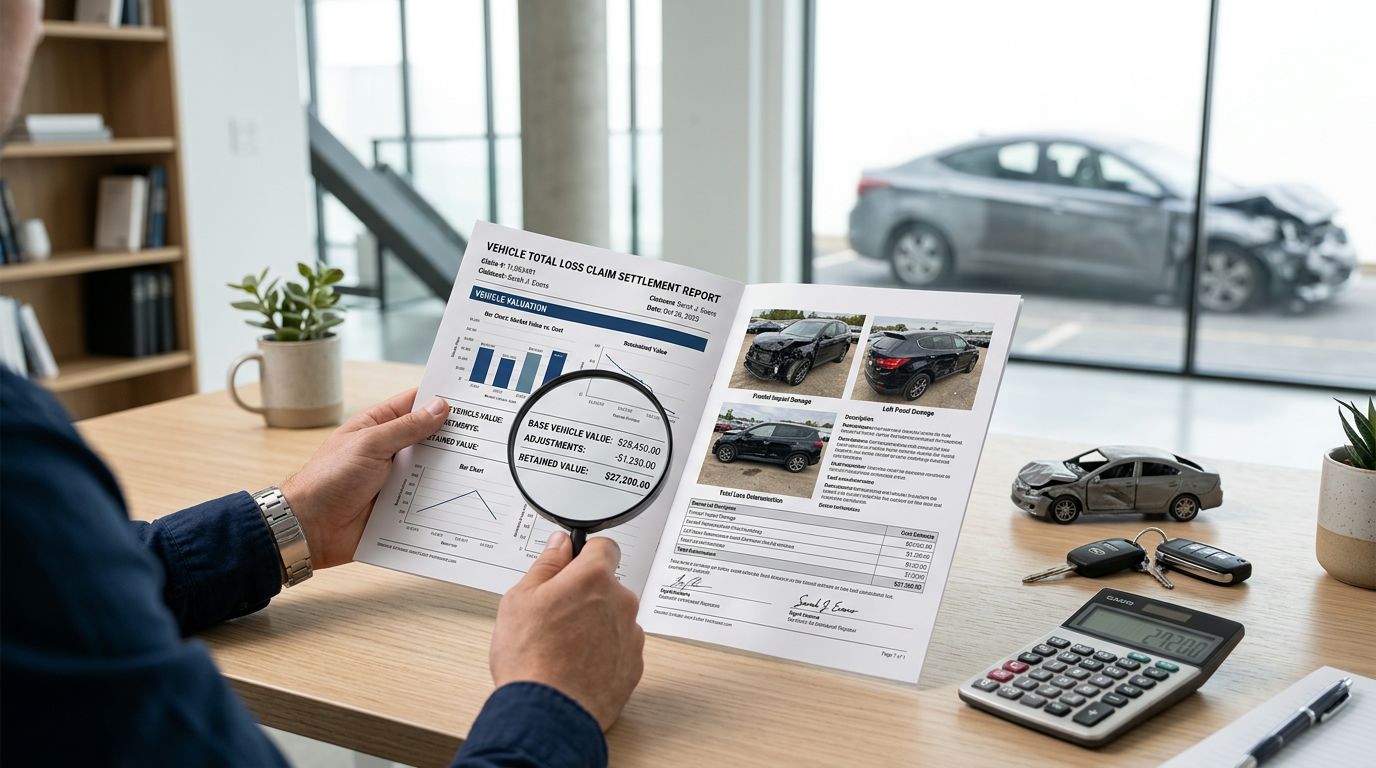
If your vehicle is unusual, modified, or worth more than the insurer's first pass suggests, don't let a roadside event trap you into a weak valuation. When the tow turns into a total-loss fight, an independent appraisal path can matter just as much as the tow invoice. That's where owners of collector, custom, and high-value vehicles need to think beyond the roadside call.
If you're dealing with a tow, storage bill, or a total-loss valuation that doesn't add up, visit Total Loss Northwest. They handle independent appraisals and total-loss disputes for drivers who need a fair number, not a lowball estimate.