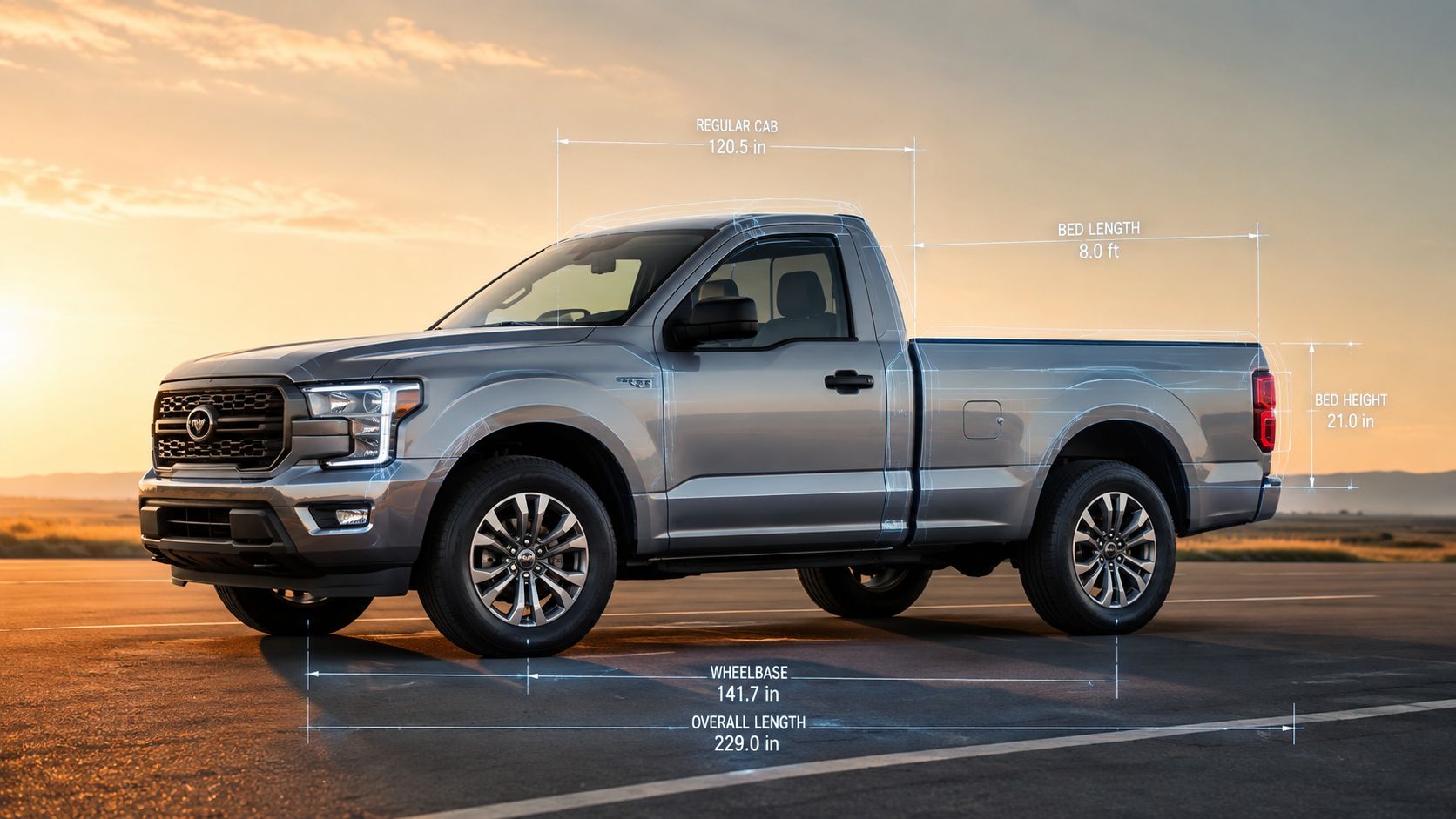
A regular cab truck is a two-door pickup with a single row of seats, no rear seating area, and room for up to three occupants on a front bench. Its whole layout is built around utility, which is why it often pairs with the longest beds and keeps the cabin compact instead of adding passenger space.
If you're looking at a truck after an accident, shopping for a work pickup, or trying to understand why your insurer's value feels off, cab style matters more than is commonly understood. I see this issue often with work trucks. Owners know why they bought a regular cab, but the valuation system only sees a base-model pickup unless someone explains the truck's actual utility and market position.
A regular cab isn't just the "small cab" version of a pickup. It's a specific configuration with a different purpose, different buyer, and in some cases a different value profile than an extended or crew cab. That distinction matters when you're comparing trucks, pricing one for sale, or challenging a total loss offer.
Understanding the Regular Cab Truck
When someone asks what is a regular cab, the cleanest answer is this: it's the most traditional pickup layout. You get one row of seats, two full-size front-hinged doors, and no rear passenger area. The design gives as much of the truck's footprint as possible to the bed instead of the cabin.
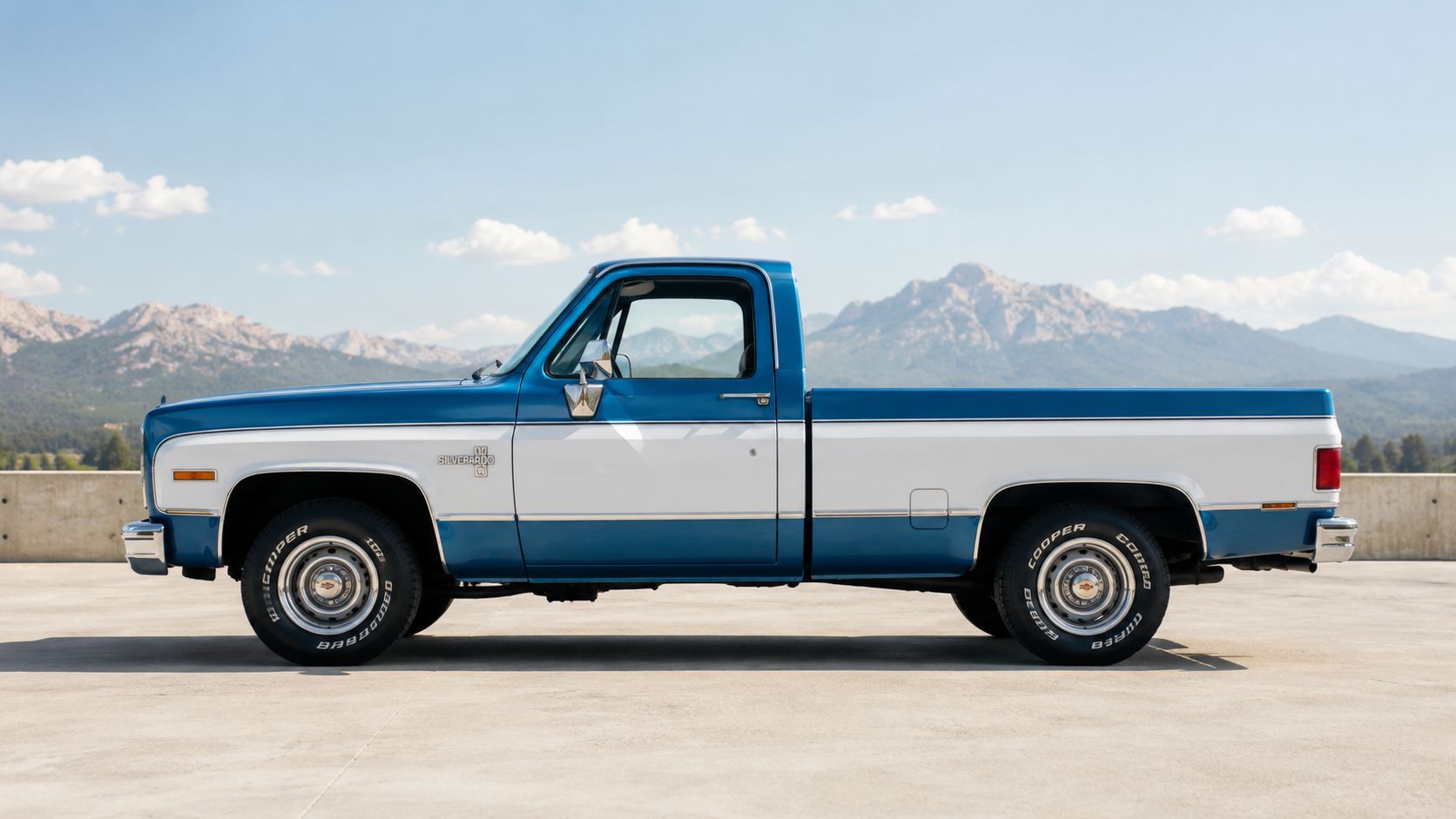
That sounds simple, but the details matter. A regular cab doesn't have the partial rear area of an extended cab, and it doesn't have the full second row of a crew cab. In practical terms, the seatbacks sit close to the rear wall so the truck can dedicate more length to cargo. That's why contractors, fleets, farms, and buyers who care more about bed function than family seating still seek them out.
What the layout tells you
The regular cab is a purpose-built work layout. It strips out the extra doors, rear seat structure, and rear legroom that make modern pickups more family-friendly.
That changes how the truck feels and how it gets used:
- Passenger capacity stays limited: It accommodates a maximum of three occupants on a front bench seat, not a full crew.
- Cabin storage stays minimal: There's no true rear seating zone to hold tools, child seats, or personal gear.
- Bed utility improves: The shorter cabin makes room for longer bed configurations.
Ford's F-150 Regular Cab gives a useful sense of scale, with 40.8 inches of front headroom, 43.9 inches of front legroom, and 66.7 inches of front shoulder room according to CarBuzz's breakdown of regular and crew cab truck configurations. Those measurements make the point clearly. The cabin isn't tiny for the driver. It's just focused almost entirely on the front row.
Why this cab style is getting harder to find
The regular cab used to be the default work-truck shape. Now it's the exception. For the 2025 model year, Ford limits the F-150 Regular Cab to the XL trim, while GM limits single-cab availability to base work trims such as the Silverado 1500 WT and Sierra 1500 Pro, as noted in CarBuzz's comparison of truck cab configurations.
Practical rule: If a truck's cabin looks "too small" by today's standards, that's often the point. A regular cab gives up passenger flexibility so the truck can do more truck work.
That shrinking availability matters for value. When a configuration becomes rare but still useful, standard pricing tools don't always keep up. A truck that's easy to dismiss as basic can be exactly what a commercial buyer wants.
Regular Cab vs Extended and Crew Cabs
Cab style changes more than appearance. It affects seating, bed options, turning room, jobsite usefulness, and how a truck fits into your daily life. If you're comparing truck layouts, start with function instead of labels.
Truck Cab Configuration Comparison
| Feature | Regular Cab | Extended Cab | Crew Cab |
|---|---|---|---|
| Doors | Two full-size front doors | More than two doors or rear access doors, depending on brand | Four full-size doors |
| Seating | Single row, up to three on a front bench | Front row plus limited rear seating | Two full rows with full rear seating |
| Rear passenger space | None | Limited | Full-size |
| Typical buyer | Work-focused owner | Mixed-use owner | Family and lifestyle buyer |
| Bed pairing | Often the longest bed options, including 8-foot beds | Varies by model | Often shorter bed pairings |
| Maneuverability | Best of the three in tight areas | Middle ground | Least compact |
That table is the quick version. The trade-off is simple. The more room a manufacturer gives the cabin, the less compact the truck becomes, and the harder it is to preserve the clean utility advantages of a single-cab layout.
Mechanical differences that matter in the real world
A regular cab eliminates the second seating row and rear doors. That reduces curb weight by approximately 150 to 250 lbs and shortens overall length by roughly 12 to 18 inches compared with crew cabs, according to Riser Ford's comparison of cab configurations.
Those aren't abstract differences. They affect how the truck works every day.
- Tighter maneuvering: A shorter truck is easier to place in alleys, loading zones, barns, and older parking lots.
- Long-bed compatibility: Regular cabs commonly pair with 6.5-foot or 8-foot beds, which matters if you carry materials that don't fit well in short boxes.
- Less weight to carry around: Removing extra cab structure improves efficiency in work-trim setups and supports stronger payload-focused packaging.
If you want a fuller side-by-side explanation of the larger cabin formats, this comparison of crew cab vs extended cab is useful because it shows where the middle configuration fits between the two extremes.
What works and what doesn't
A regular cab works best when the truck's mission is stable and clear. One driver. Limited passengers. Frequent cargo use. Tight spaces. Long materials. Repetitive work.
A crew cab works better when the truck has to handle family duties, employee transport, or daily-driver comfort. An extended cab can bridge the gap, but it still doesn't deliver the pure bed-first focus of a regular cab.
Buyers often compare trims and engines before they compare cabs. In practice, the cab decides how usable the truck will feel every day.
From an appraiser's perspective, valuation errors often begin with this misunderstanding. If someone values all half-ton pickups as roughly interchangeable, they miss why one buyer pays a premium for a regular cab long bed while another would never consider it.
The Pros Cons and Ideal Use Cases
The regular cab is excellent for some owners and a bad fit for others. Most disappointment comes from buying the wrong truck for the wrong job, not from the layout itself.
Where the regular cab still shines
For straight work use, a regular cab does several things very well.
- Maximum utility focus: The truck gives more priority to bed length and payload-oriented packaging than to passenger comfort.
- Cleaner jobsite use: Two doors and one row mean fewer moving parts, fewer interior surfaces to abuse, and less cabin clutter.
- Better fit for specialized towing and hauling: If you're moving equipment, feed, tools, or materials, bed access and total length often matter more than rear seats.
That last point shows up often with trailer owners. If your truck is part of a towing setup rather than a family shuttle, it's worth understanding what are gooseneck trailers for hauling because the trailer type can change which cab and bed combination makes the most sense.
The trade-offs buyers underestimate
The drawbacks are real. A regular cab has very little flexibility once your needs change.
No rear seat means no easy place for a dog crate, child seat, work crew, groceries, or protected gear. If you're carrying personal tools or electronics, you'll feel the shortage of enclosed storage quickly. That's why many owners who like the idea of a regular cab don't like living with one unless they have another vehicle.
The market has moved that direction too. Regular cabs fell to 3% of the total U.S. truck mix for the 2020 model year, down from 6.6% in 2016, and the same reporting notes that 87% of Ford F-150 owners used their trucks frequently for shopping and errands while only 28% used them often for personal hauling, according to The Truth About Cars on America's shift away from non-crew cabs.
Who should actually buy one
A regular cab makes sense for a narrow but serious buyer.
- Commercial owners who care more about tools, bed use, and turning room than rear passengers.
- Property and farm users who spend more time loading than commuting.
- Enthusiasts who want the older, simpler truck feel and don't need the cabin to do everything.
It usually doesn't work for a one-vehicle household unless the owner has very specific habits. Buyers no longer purchase pickups strictly as work tools anymore, and the market reflects that.
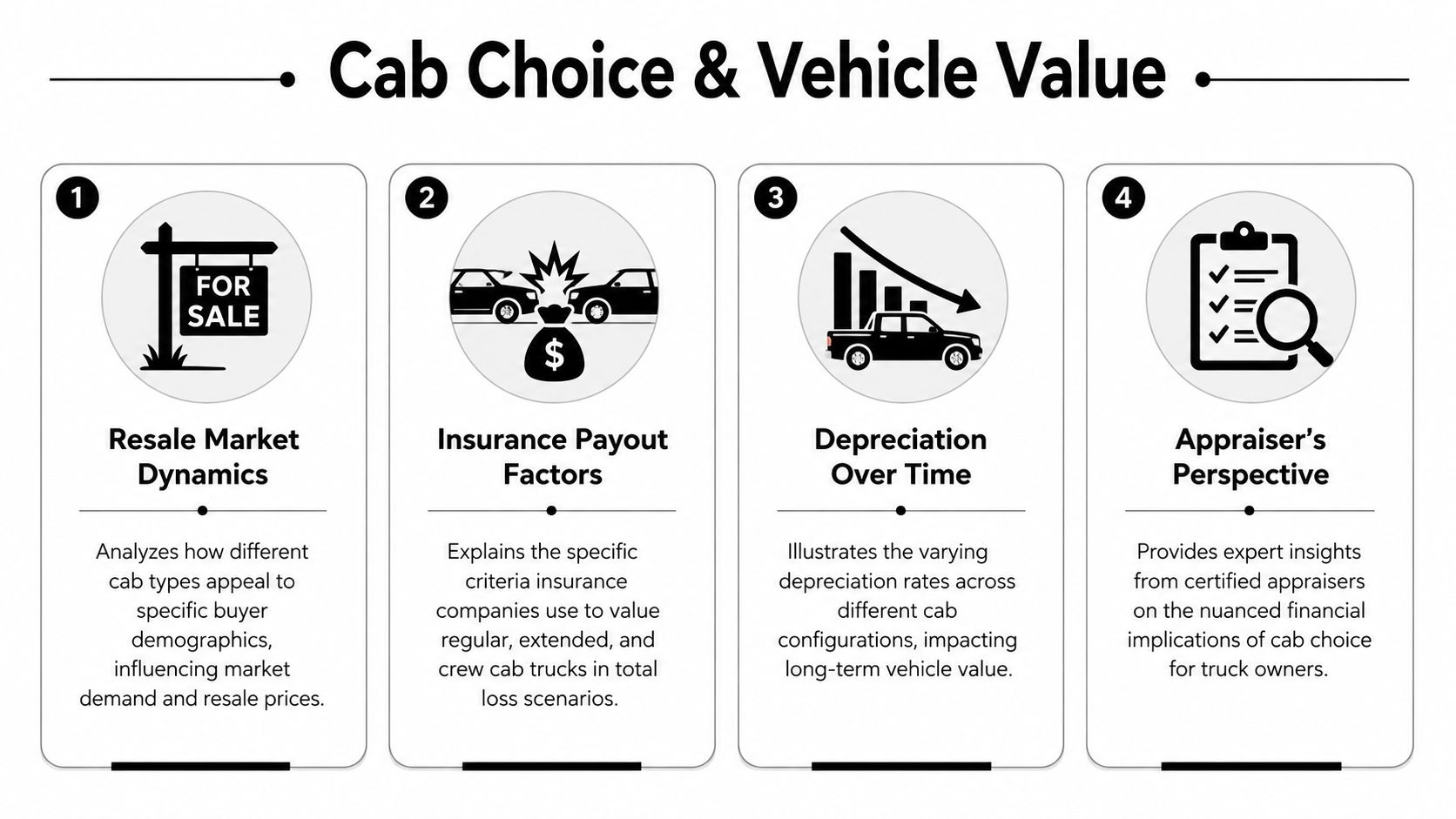
How Cab Choice Affects Total Loss and Resale Value
The financial impact can be substantial. Cab style doesn't just change comfort and utility. It can also change how a truck should be valued after an accident.
Insurance software tends to work from broad market categories. That's efficient for volume claims, but it's a weak method for niche trucks. A regular cab often gets treated as a stripped-down version of a more desirable crew cab when the actual buyer pool sees it differently.
Why standard valuations miss the point
A regular cab's core value often sits in its utility. The lighter structure can produce 200 to 400 lbs higher payload capacity, and Jim Ellis Commercial's discussion of regular vs double cab trucks notes that insurance valuation software often fails to account for those specific value drivers in total loss claims.
That matters most when damage affects the bed or cargo area. On a regular cab, the bed isn't secondary. It's the main reason many buyers chose the truck.
If the valuation system compares your truck to broader pickup listings without adjusting for configuration-specific utility, the result can be too low. I see this especially with base-trim work trucks that look ordinary on paper but have the exact cab-bed setup local buyers want.
Where owners should push back
A low offer isn't always about bad faith. Sometimes it's just a weak comp set. The software may pull in crew cabs, mixed trims, or trucks with different use profiles and assume the market sees them as close substitutes.
That's where documentation matters:
- Show the configuration clearly: Cab style, bed length, trim, drivetrain, and work-specific equipment all affect the buyer pool.
- Explain the truck's utility role: If the truck was selected for payload, maneuverability, or long-bed use, say so directly.
- Look at pre-loss condition carefully: Utility trucks often have wear, but condition still needs to be measured accurately, not casually discounted.
For owners learning how to challenge an offer, this guide for total loss claims is a practical resource because it explains how settlement negotiations often unfold after an insurer presents the first number.
A deeper issue is that cab choice can affect fair market value in ways a template doesn't capture. If you're trying to understand that process, a close look at fair market vehicle valuation helps frame why configuration-specific analysis matters.
A regular cab can be less popular in the general market and still be more valuable to the right market. Those are not contradictions. They're appraisal facts.
The collector angle many systems overlook
Older regular cabs add another layer. Some vintage single-cab trucks now attract buyers specifically because they represent the pure work-truck form without later compromises. That doesn't mean every old regular cab is collectible. It means the category deserves closer scrutiny before anyone accepts a generic value report.
When the truck is original, clean, and configuration-correct, a broad insurance database may miss the niche demand entirely.
Actionable Advice for Regular Cab Owners
If you own a regular cab, or you're considering one, the smartest move is to treat the cab configuration as part of the truck's value story, not just a body style note. That's especially important after a collision.
If you're buying one
Start with use, not price. A regular cab is a strong choice when you need a truck that works hard and carries people rarely.
Before you buy, check these items closely:
- Bed condition matters more than usual: On this configuration, bed utility is central to value. Inspect the floor, wheel wells, rails, tailgate alignment, and signs of past repair.
- Look at originality on older trucks: Collector interest is strongest when the bed and cab retain their original integrity.
- Be realistic about cabin life: If you need secure indoor storage or carry passengers often, this layout may frustrate you.
If you're dealing with a claim
After an accident, don't let the claim reduce the truck to "base pickup" in the file notes. A regular cab often has a narrower but very motivated market, and that can matter.
Take these steps:
- Photograph the configuration thoroughly. Get the cab, doors, bench seat, bed, trim badges, wheels, and any work-related setup in clear images.
- Document why this truck was configured this way. Long bed use, commercial hauling, property maintenance, and shop deliveries all help explain market relevance.
- Review the comparable vehicles carefully. If the insurer's report leans on crew cabs or mixed configurations, that's a problem worth challenging.
- Address condition before the loss, not after it. A proper pre-loss condition evaluation can make the difference between a supportable rebuttal and a weak objection.
If the truck is older or unusual
Owners most often overlook potential earnings, as auction data shows classic regular cab trucks from the 1980s and 1990s can bring 15% to 25% more than comparable extended or crew cabs when originality is preserved, according to Bob Howard Chevrolet's discussion of regular, double, and crew cab trucks.
That doesn't mean every old single cab deserves a collector premium. It does mean you shouldn't assume standard insurance software has recognized one.
If your truck's appeal comes from being simple, original, and unusually functional, you need to prove that on paper. The valuation system usually won't do it for you.
The best regular cab claim files are specific. They don't just say the truck was "nice" or "well kept." They show exactly why that configuration had demand before the loss.
If you're being lowballed on a regular cab truck after an accident, Total Loss Northwest can help you challenge the number with an independent appraisal grounded in real market value, pre-loss condition, and the specific utility or collector factors that generic insurance software often misses.