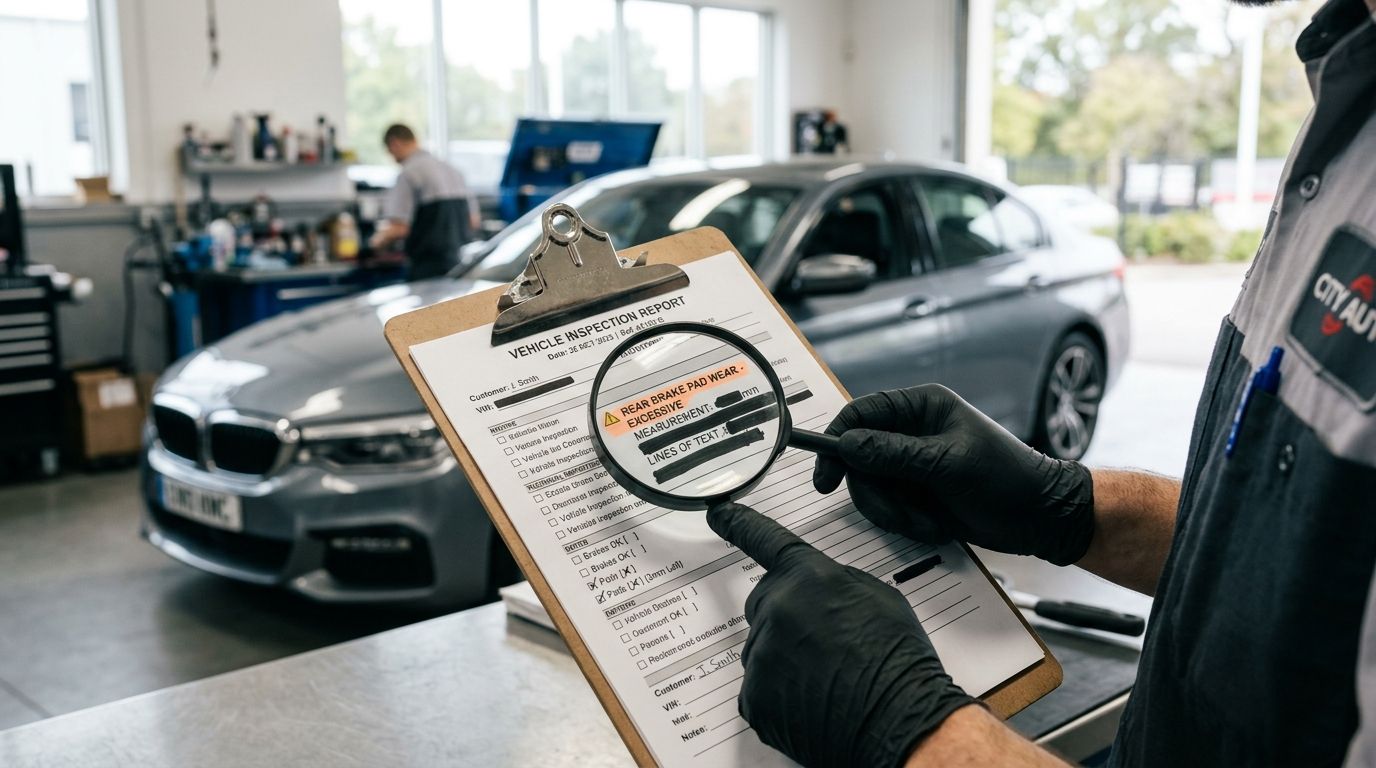
You've just been in an accident. The other driver may be at fault. Your car is in a shop lot, a tow yard, or your driveway. Then the insurance paperwork starts arriving. One document says “estimate.” Another says “valuation.” Another lists parts, labor, condition, prior damage, and a settlement number that feels too low.
Most owners focus on the check first. I understand why. But the document that usually decides that check is the vehicle inspection report.
If you're asking what is vehicle inspection report, the plain answer is this: it's the written record of what someone says your vehicle's condition is. After a claim, that record can shape whether your car gets repaired, whether it's called a total loss, and whether the insurer recognizes reduced market value after repairs. If the report is thin, rushed, or biased, your settlement usually follows it in the same direction.
What Is a Vehicle Inspection Report and Why It Matters
After a collision, many owners assume the key question is who caused the crash. That matters for liability. But once fault is established, the financial fight shifts to condition.
In the United States, car condition is identified as a factor in only 2 to 7% of all crashes according to Department of Transportation data discussed in this systematic review on vehicle inspections and crash outcomes. That tells you something important. Pre-accident condition rarely explains the wreck itself. Post-accident condition often decides what you get paid.
The document behind the number
When an insurer sends an offer, it usually isn't pulled out of thin air. Someone inspected the vehicle, directly or remotely, and created a written record. That record may include visible damage, repair assumptions, part selections, condition notes, and valuation inputs. In practice, that's the insurer's justification for the number on the page.
Think of it this way:
- For a repairable vehicle, the report supports what gets fixed and what gets ignored.
- For a diminished value claim, the report helps establish what damage occurred and how serious it was.
- For a total loss, the report becomes part of the basis for the insurer's market valuation.
Practical rule: Don't argue with the settlement amount until you've seen the inspection report or estimate details behind it.
A good inspection report can protect you. A weak one can box you in. That's why owners should care about more than a one-line summary from the adjuster.
Why independent documentation matters
If you want a second set of eyes before a dispute grows, it helps to start with a thorough, reliable vehicle inspection that treats the car as an object to be documented, not just a claim file to be closed. The point isn't the label on the form. The point is getting an accurate record of condition.
That's what makes a vehicle inspection report more than paperwork. It's evidence. And in claims, evidence moves money.
Anatomy of a Vehicle Inspection Report
A vehicle inspection report is the medical chart for your car. It identifies the patient, lists the symptoms, records the findings, and recommends treatment. If you know how to read those sections, the jargon gets much less intimidating.
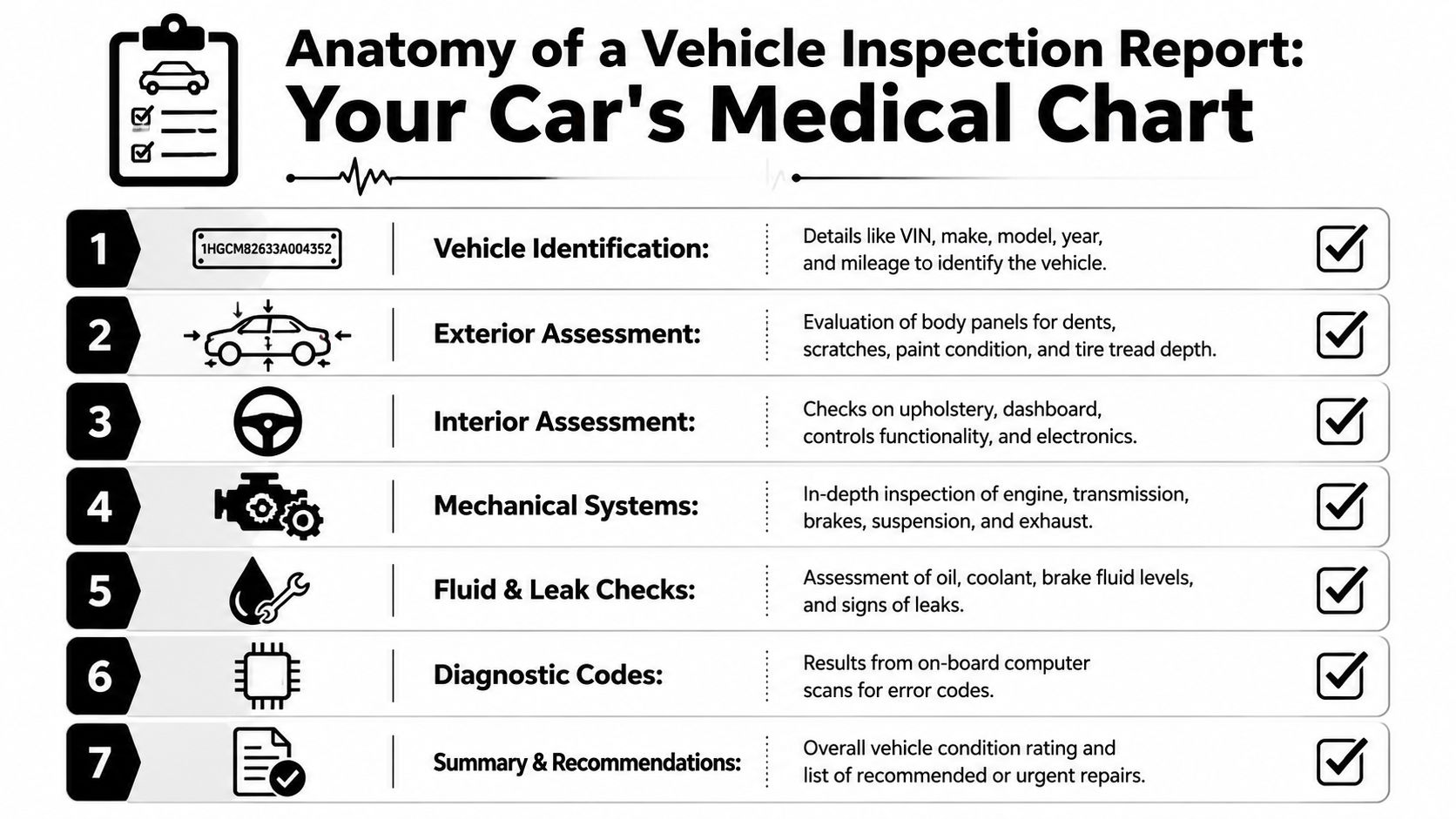
If you want to compare what you received against a more complete condition-focused reference, this vehicle condition inspection overview is a useful benchmark.
The identifying section
Start at the top. Here, mistakes can poison the whole file.
Look for the VIN, year, make, model, trim, mileage, and sometimes license or stock identifiers. If the wrong trim level is used, parts and value assumptions can drift. If mileage is off, total loss valuation can tilt the wrong way. If the VIN is wrong, everything that follows is suspect.
This section sounds basic, but I've seen owners skip over it. They shouldn't.
The damage lines
The next part is the heart of the report. It usually lists damaged panels, components, and operations line by line. You may see entries for bumper covers, reinforcement bars, quarter panels, suspension parts, lamps, sensors, and paint work.
Pay attention to the verbs:
- Repair means the insurer thinks the part can be restored.
- Replace means the part is considered too damaged or too time-consuming to save.
- Refinish means paint-related work.
- Blend usually refers to matching adjacent painted panels.
What matters isn't just whether damage is listed. It's whether the report captures the full scope of what was hit.
The cost logic
Most reports also contain a pricing logic section, in which the insurer or software assigns labor operations, part types, and sometimes notes about condition or prior damage.
A quick reading guide helps:
| Section | What to check | Why it matters |
|---|---|---|
| Vehicle info | VIN, trim, mileage | Errors can distort value |
| Parts list | OEM, aftermarket, recycled, reconditioned | Part type affects repair quality and resale perception |
| Labor lines | Structural, body, paint, mechanical, calibration | Missing operations often mean an incomplete scope |
| Notes | Prior damage, unrelated damage, condition adjustments | These notes can reduce your offer if left unchallenged |
| Summary | Repair total or valuation conclusion | This is where the file turns into money |
A neat-looking estimate can still be incomplete. Formatting isn't the same as accuracy.
The summary section
The last page often gets the most attention because it holds the conclusion. That's backward. The summary only makes sense if the underlying line items are sound.
When people ask what is vehicle inspection report, they often expect a definition. In claims, the better answer is practical: it's the document you read backward. Start with the conclusion, then work through every assumption that created it.
Who Prepares an Inspection Report and When
Not all inspection reports mean the same thing. The person preparing it, and the reason they prepared it, matter as much as the content.
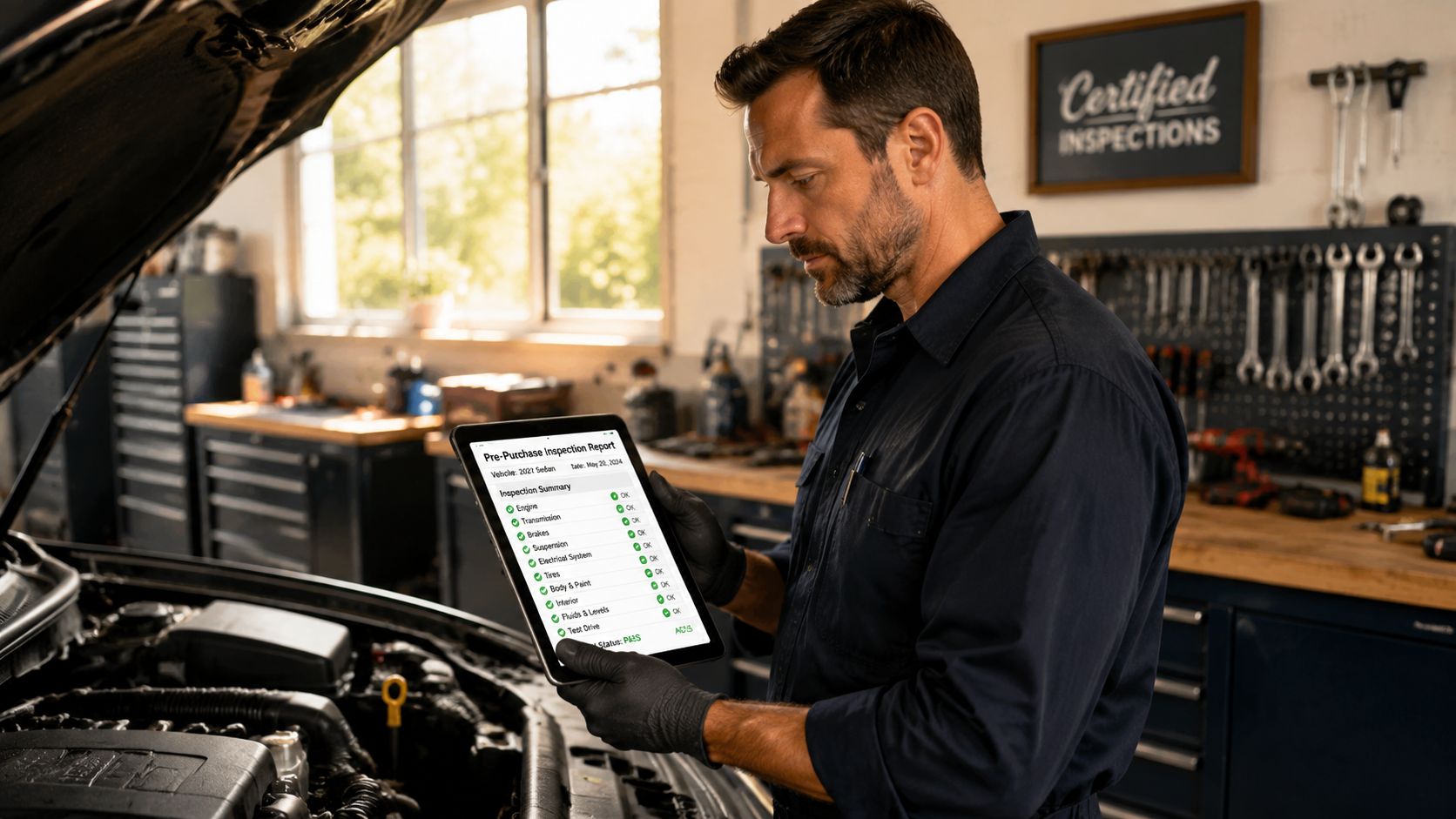
Three common report types
A pre-purchase inspection is written for a buyer. Its job is to flag condition issues before a sale.
A commercial compliance inspection exists to satisfy regulatory or operational requirements. For commercial vehicles, these reports can carry legal weight, especially when they relate to out-of-service issues, repairs, and retained records.
A post-accident insurance inspection is created for a claim. This is the one most passenger vehicle owners run into after a crash. It may be prepared by a staff adjuster, an independent adjuster hired by the insurer, or a repair facility working from insurer-approved estimating systems.
Those are not interchangeable.
Why the author matters
An insurer's inspection report often looks official because it is official inside the claim. But it is still produced inside a process designed to resolve the insurer's exposure. That doesn't mean every report is wrong. It does mean you should read it with open eyes.
Commercial reporting offers a useful cautionary example. Industry data shows 95% of commercial Driver Vehicle Inspection Reports report zero defects, which auditors often treat as a red flag for incomplete inspections rather than proof of perfect vehicle condition, as explained in this discussion of how vehicle inspection reports are read and analyzed.
That matters for one reason. A report can exist and still fail to tell the whole truth.
A document isn't reliable just because someone uploaded it to a file and gave it a formal name.
Timing changes the value of the report
A pre-loss inspection asks, “What condition was the vehicle in before the event?”
A post-loss inspection asks, “What changed because of the event?”
Those are very different questions. In accident claims, the most useful report is the one that ties specific damage to the collision and separates it from wear, prior repairs, or unrelated cosmetic issues. If the report blurs those lines, insurers can use that ambiguity against you.
That's why two reports on the same car can lead to two very different outcomes.
The Report's Critical Role in Insurance Claims
At this point, the inspection report stops being descriptive and begins to provide influence.
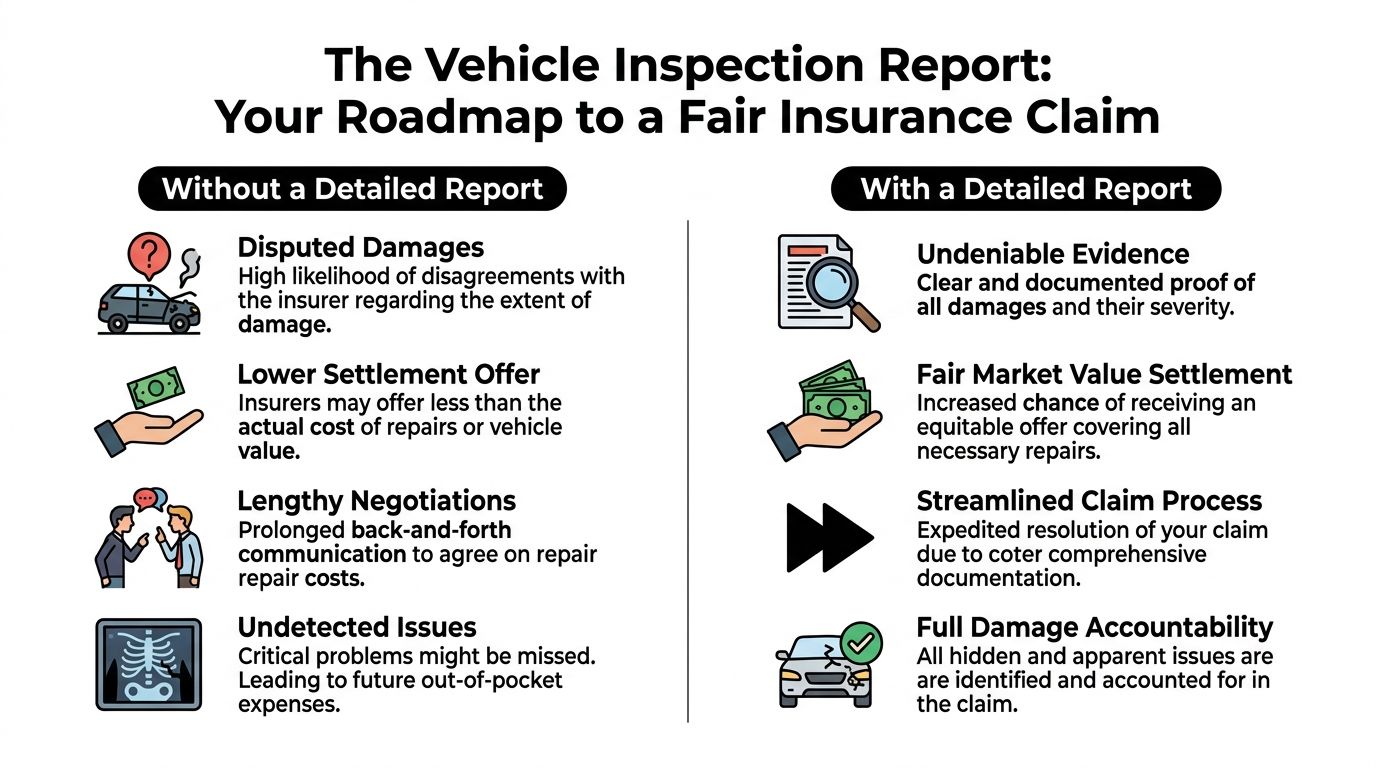
Without a detailed condition record, the insurer gets to control the story. With a detailed record, you can challenge the story line by line.
For owners dealing with a potential total loss, this total loss claim settlement report explanation helps connect the inspection details to the valuation dispute itself.
How the report affects diminished value
A repaired car can still lose market appeal. Buyers react to structural repairs, paintwork, panel replacement, airbag deployment, frame concerns, and evidence of major collision history. But you can't argue diminished value well if the damage record is vague.
A detailed inspection report, such as a Level 1 37-point inspection, provides the technical baseline required to prove that an accident-induced defect directly causes a measurable reduction in the vehicle's market value, according to this explanation of what a detailed inspection checks and how it supports claims.
That is the key distinction. You're not just saying, “My car is worth less now.” You're showing why.
How the report affects total loss disputes
In a total loss claim, the inspection report can influence:
- Condition adjustments applied to your vehicle before the crash
- Options and features included or omitted from the valuation
- Severity findings that support or undermine repair feasibility
- Damage categorization that affects market comparisons
If the report understates trim, misses pre-loss condition strengths, or mislabels damage, the final valuation can come in lower than it should.
Here's a simple comparison:
| If the report is weak | If the report is detailed |
|---|---|
| Damage gets generalized | Damage gets tied to specific components |
| Hidden issues are easier to ignore | Mechanical and structural concerns are easier to prove |
| The insurer controls the narrative | You have a basis to challenge omissions |
| Settlement pressure rises | Negotiation position improves |
A short explainer can help if you're sorting through the claim process while another coverage issue is also in play, such as a hit-and-run or no insurance situation. This guide for uninsured motorist incidents gives helpful context on that side of the problem.
Here's a useful overview of how claim evidence and valuation disputes often unfold:
Use their paperwork against a low offer
Owners often assume they need brand-new evidence to dispute a low number. Sometimes they do. But often the first step is simpler. Read the insurer's own report closely.
If it documents a structural hit, suspension damage, multiple replaced panels, or significant refinish work, that same report may undermine a minimal diminished value offer or a soft total loss valuation. The file can contain the seeds of your own rebuttal if you know what to look for.
How to Obtain and Scrutinize Your Report
Many owners never get the full report. They get a payment summary, a repair authorization page, or a verbal description from the adjuster. That's not enough.
Ask for the complete inspection and estimate file. Ask for all pages, photos, condition notes, valuation inputs, and any supplements. If the insurer used a third-party appraiser or desk-review service, ask for that material too.
What to request
Be specific in writing. You want the full claim-side documentation, not a summary.
Request:
- The complete repair estimate with line items and notes.
- All inspection photos taken by the insurer or its vendor.
- Any total loss valuation report and condition adjustment pages.
- Supplement estimates if the shop found more damage later.
- Internal notes about prior damage or unrelated damage, if those notes affected value.
Keep the request simple and dated. Email works well because it creates a record.
What to examine closely
When you review the report, don't read like a customer. Read like someone checking a contractor's bid.
Look for these issues:
- Part type choices: If the estimate substitutes aftermarket, recycled, or reconditioned parts where quality and fit matter, ask why.
- Missing operations: Sensor calibration, diagnostic scans, structural measurements, corrosion protection, and blend work are often where incomplete estimates show themselves.
- Unexplained prior damage notes: Insurers sometimes reduce value based on prior condition comments that are thin, broad, or unsupported by photos.
- Visible mismatch between photos and line items: If the photos show a harder hit than the estimate reflects, that gap matters.
“If it's not written, insurers often act like it didn't happen.”
Why post-accident records matter so much
Commercial vehicle claims show this problem in sharp form. For property-carrying commercial vehicles, a Driver Vehicle Inspection Report is only required if a defect is found, which creates an evidentiary gap. For a passenger car owner, the lesson is practical. You need the post-accident report that captures what was wrong, not assumptions based on the existence of some earlier clean paperwork, as explained in this overview of DVIR requirements and record use.
That same mindset applies to your own file. Don't let the insurer rely on shorthand. Get the actual report and test every line.
Common Pitfalls and State-Specific Rules for OR and WA
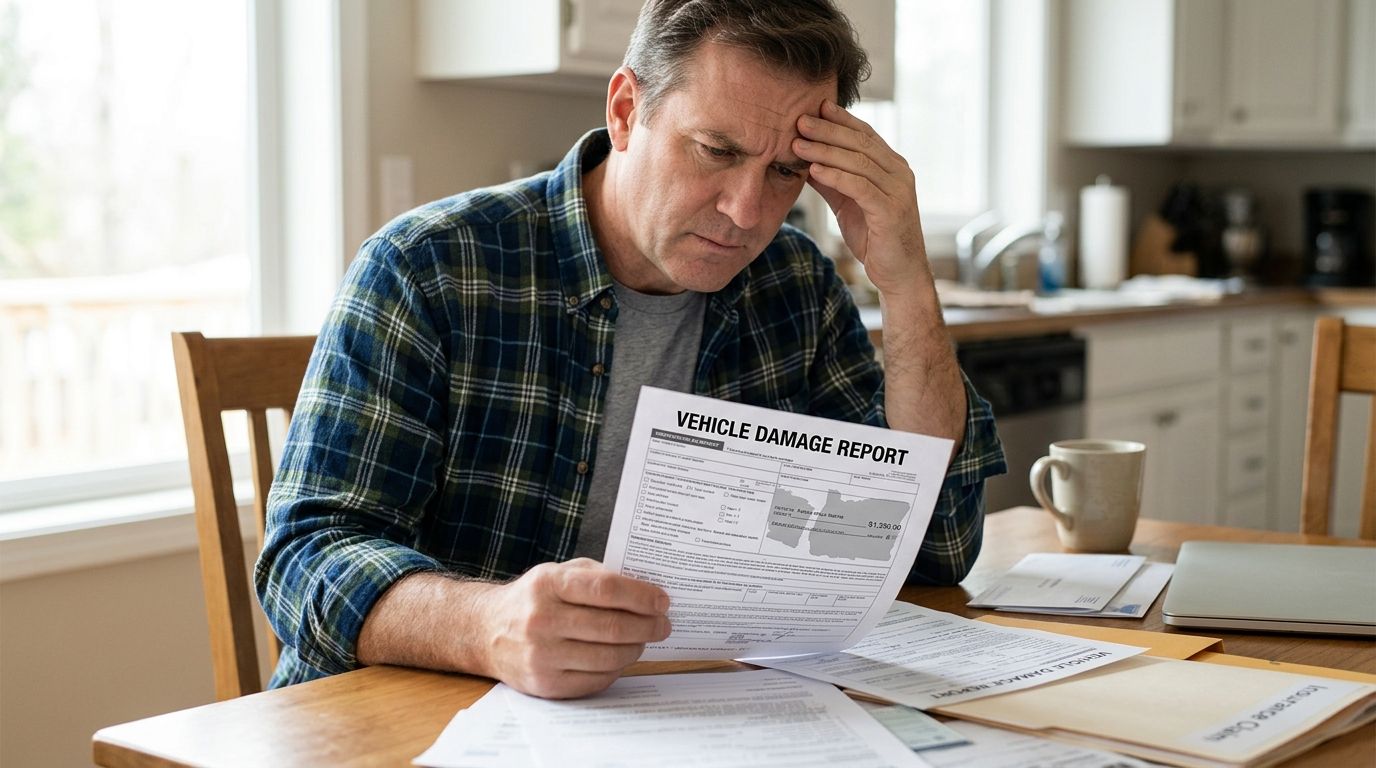
Owners usually hurt their own claim in predictable ways. They authorize repairs before the scope is settled. They assume the first estimate is complete. They cash a check without understanding whether the insurer will later argue that payment closed the dispute.
Mistakes that weaken your position
The biggest problem isn't speed. It's agreeing to facts that were never proven.
Watch for these common errors:
- Accepting a scope too early: Once repairs start, it gets harder to challenge what should have been included from the beginning.
- Treating the insurer's appraiser as neutral: Their report may be usable, but it isn't independent by default.
- Failing to preserve records: Save emails, estimate versions, photos, supplements, and shop findings.
OR and WA practical concerns
For Oregon and Washington drivers, the same general advice applies. Read the estimate carefully, confirm what parts are being proposed, and don't assume your shop choice has to mirror the insurer's preference. If a valuation dispute starts to build, local help matters because claim handling practices and policy language can get technical fast. This local insurance dispute help page for Oregon and Washington drivers is a useful place to understand that situation.
There's another point many owners miss in commercial-related cases. Under federal law, motor carriers must retain annual vehicle inspection reports for a minimum of 14 months, as described in this guide to annual vehicle inspection report requirements. That record-keeping obligation can matter in civil disputes when you need to request documentation tied to vehicle condition and maintenance history.
Don't assume a missing document means it never existed. Sometimes it means nobody has asked for it correctly yet.
What works better
In both OR and WA, the strongest approach is steady, documented disagreement. Ask for the full report. Compare it against the photos. Get repair-facility input if the estimate looks thin. If the claim still stalls, bring in an independent appraiser before the insurer's version of the file hardens into the final number.
FAQ and Next Steps for Disputed Valuations
What if the insurer's report looks biased
Treat it as one version of events, not the final truth. Review the photos, line items, condition notes, and valuation assumptions. If the report minimizes damage, skips needed operations, or uses unsupported prior-condition deductions, challenge those points in writing.
Bias in claims usually shows up through omissions, not dramatic language. A missing calibration line can matter as much as a wrong damage description.
Can I get my own inspection
Yes. In many disputes, you should.
An independent inspection can document damage more thoroughly, separate collision damage from unrelated wear, and create a clearer record for diminished value or total loss arguments. The key is independence. You want someone evaluating the vehicle's condition, not someone trying to close a claim cheaply.
What is the Appraisal Clause
The Appraisal Clause is a policy mechanism found in many auto insurance contracts that allows a value dispute to move out of the insurer's internal valuation process and into a structured appraisal process. It is commonly used when the fight is over amount of loss, not who caused the accident.
For owners, that matters because valuation software and insurer-selected comparables don't get the last word if the policy gives you an appraisal path. The clause has rules, and it won't fit every dispute, but when it applies, it can change the balance of power.
Is a repair estimate the same as a vehicle inspection report
Not always. A repair estimate often includes inspection-based findings, but the terms get used loosely. Some files contain photos, condition notes, scan results, and valuation pages that go beyond the estimate itself. That's why asking for the complete file is smarter than asking for “the estimate” alone.
What should I do first if the settlement feels low
Use this order:
- Get the full report and all photos.
- Check the basic data like VIN, trim, mileage, and options.
- Compare the listed damage to the actual vehicle and shop findings.
- Identify missing items or unsupported deductions.
- Decide whether you need an independent appraiser.
When should I stop handling it alone
If the insurer keeps repeating the same number without addressing the substance of your objections, you're usually at the point where professional appraisal help makes sense. The same is true if the vehicle is high-value, collectible, heavily optioned, recently repaired, or the report involves structural or market-value issues that need technical support.
At that stage, the goal isn't to complain louder. It's to present better evidence.
If you're dealing with a low total loss offer or a diminished value dispute, Total Loss Northwest provides certified independent appraisals for Oregon and Washington vehicle owners. Their work is built for claim disputes, including Appraisal Clause cases, with detailed reports aimed at replacing insurer-biased valuation methods with supportable market evidence.