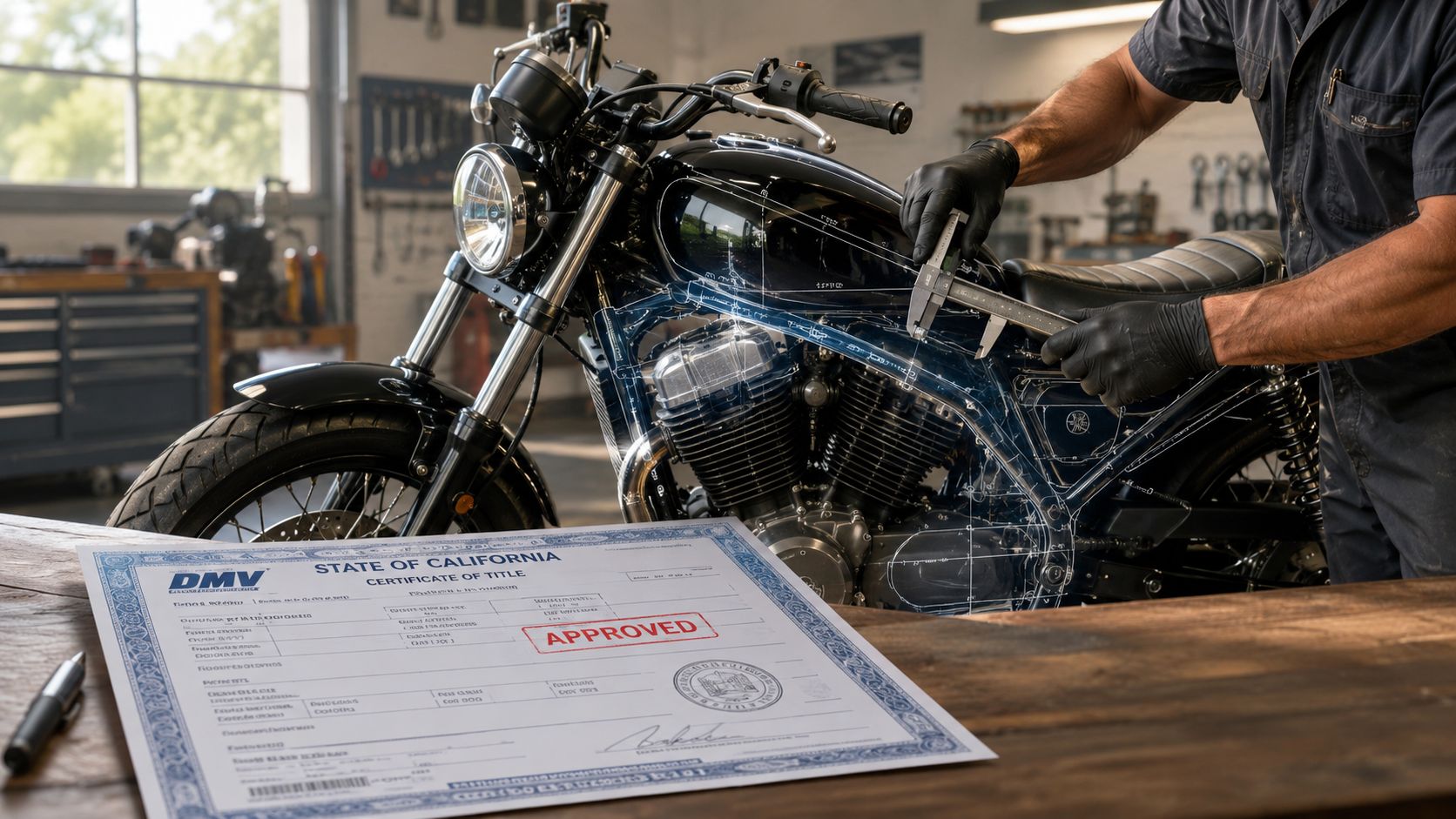
You're probably looking at one of two situations right now. You found a motorcycle priced well below similar bikes, and the seller says it has a rebuilt title. Or your insurer just treated the rebuilt history on your bike like an excuse to cut the settlement.
Both situations turn on the same issue. A motorcycle rebuilt title makes the bike legal to register and ride, but it doesn't restore the bike to clean-title status in the eyes of buyers, lenders, or insurance adjusters. That gap is where people lose money.
As an appraiser would tell a client, the right question isn't “Can I ride it?” The right question is “What will this title brand cost me later, and what proof do I need to protect myself?”
What a Motorcycle Rebuilt Title Actually Means
You see a sharp-looking bike online. Fresh plastics, clean photos, lower price than comparable listings. Then you read the line that changes the whole deal: rebuilt title.
That term doesn't mean “bad bike,” but it does mean the motorcycle went through a legal branding process after serious prior damage. The title history matters because it tells you the bike was once written off, then repaired, inspected, and put back into legal road use.
From total loss to legal road use
A salvage title is issued after an insurer declares the motorcycle a total loss. That usually happens when repair costs exceed 60 to 75 percent of the bike's pre-accident value, depending on the state, according to Web Bike World's explanation of salvage versus rebuilt motorcycles.
Once that happens, the original clean title is gone. Repairing the bike and riding it as if nothing happened is not an option. To move from salvage status to rebuilt status, the owner has to repair the motorcycle and then complete the state process. That usually includes inspection, title paperwork, receipts, and fees.
A simple way to think about it is a house after a major fire. The house can be repaired and certified habitable again, but its damage history still affects value, insurability, and buyer confidence. A motorcycle rebuilt title works the same way.
Practical rule: A rebuilt title means the state has allowed the motorcycle back on the road. It does not mean the market will treat it like a clean-title bike.
What the rebuilt brand does and doesn't prove
A rebuilt title typically means the bike passed the required state inspection and can now be legally registered, used on public roads, and insured, as described in this guide to rebuilt title vs salvage title. That's the legal side.
What it does not prove is that every repair was done to the same standard you'd want for long-term ownership, crashworthiness, or full market value. The inspection confirms compliance with the state's requirements. It doesn't erase the prior total loss event.
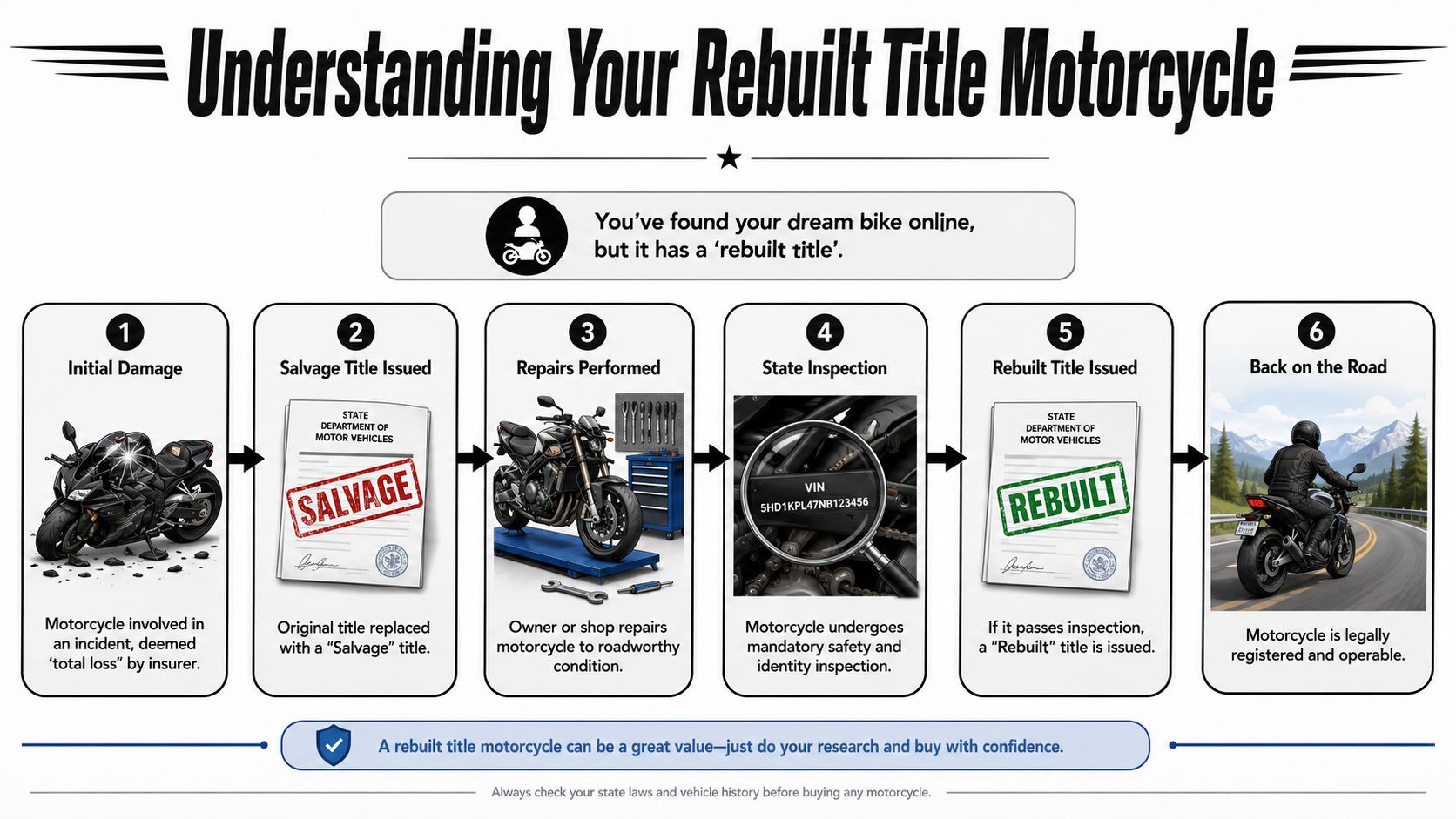
Here's the lifecycle in plain terms:
- Damage happens and the insurer evaluates repair cost versus pre-loss value.
- The bike is declared a total loss and branded salvage.
- Repairs are made by an owner, rebuilder, or shop.
- The motorcycle is inspected under the state's rebuilt process.
- Paperwork is submitted, including receipts and prior title documents.
- A rebuilt title is issued, and the bike becomes road legal again.
That final step is where many buyers stop thinking. They shouldn't. The rebuilt title is the beginning of the financial analysis, not the end of it.
The True Financial Cost of a Rebuilt Title
The legal problem may be solved once the title changes from salvage to rebuilt. The financial problem stays with the bike.
A motorcycle with a rebuilt title typically retains only 60 to 80 percent of its clean-title market value, which means a permanent 20 to 40 percent reduction in resale price, according to PowerSport Buyers' rebuilt and salvage title valuation guide. That same source notes insurers may refuse coverage, limit the policy to liability only, or increase premiums by 10 to 30 percent.
Why the discount never disappears
Buyers don't pay clean-title money for rebuilt bikes because they're pricing risk, not just appearance. They know the title brand is permanent. They know financing can be harder. They know the next buyer after them will ask the same questions.
That discount applies even when the repairs look excellent. A polished tank, fresh fairings, and a smooth test ride don't remove the title history from DMV records or insurance files.
A practical example from the same PowerSport Buyers article on rebuilt title market value makes the point clearly. A $20,000 clean-title motorcycle may be worth only about $12,000 to $16,000 once it carries a rebuilt title.
Where owners get hit hardest
The rebuilt brand usually costs owners money in three places:
- Resale pressure: Buyers use the title history to negotiate aggressively, even if your repair file is organized and complete.
- Insurance friction: Some carriers won't write full coverage. Others will insure it, but on narrower terms.
- Loan resistance: Lenders often view rebuilt vehicles as weaker collateral, which reduces your options.
A rebuilt bike can be a decent machine and still be a weak financial asset.
That's why I tell owners to think beyond purchase price. A cheap entry price can still be expensive if the bike is hard to insure, difficult to finance, and discounted again when you sell it.
Ownership costs still matter while it sits
Storage decisions can also affect the economics. If you're holding a rebuilt motorcycle during a dispute, a repair delay, or an off-season sale, basic preservation matters because poor storage creates fresh problems that muddy value discussions later. A solid checklist on how to store a vehicle long-term is worth reviewing before the bike sits for weeks or months.
What doesn't work is assuming price alone makes the deal safe. With a motorcycle rebuilt title, low purchase cost often distracts buyers from the larger issue, which is long-term recoverable value.
Navigating Rebuilt Title Rules in Oregon and Washington
Oregon and Washington owners often assume the rebuilt process is basically the same on both sides of the river. It isn't. The broad logic is similar, but the inspection path, document review, and practical bottlenecks differ enough that mistakes can waste time and delay registration.
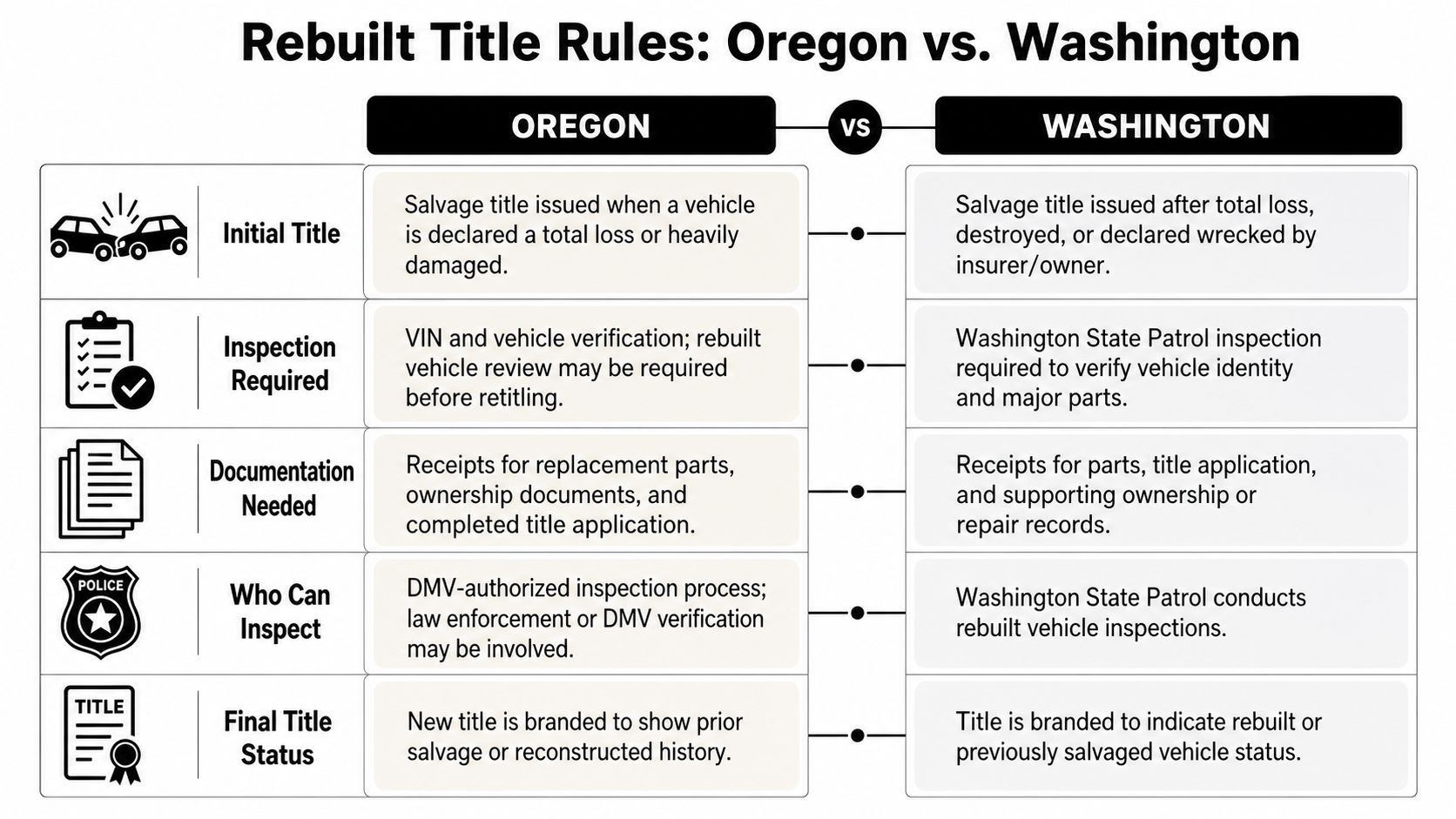
For a general overview of the registration path for branded vehicles in this region, see salvage vehicle registration guidance.
Oregon owners need a paper trail that holds up
In Oregon, the rebuilt process usually rises or falls on documentation quality. If the receipts are sloppy, incomplete, or inconsistent with the bike's visible parts, the file gets harder to move through review.
Use this working checklist before you submit anything:
- Original title history: Bring the salvage title or ownership documents that show the chain into your name.
- Repair receipts: Keep invoices for major components and supporting parts. If the engine, frame-related pieces, or other significant components were replaced, the paperwork needs to match what's on the bike.
- Repair narrative: Write a clear summary of what was damaged and what was repaired or replaced.
- Inspection readiness: Make sure VIN identification points are legible and consistent.
Oregon owners often get tripped up by one practical problem. They have receipts, but not a coherent file. A stack of parts invoices without dates, source names, or item descriptions won't give a reviewer much confidence.
Washington owners should expect a physical inspection emphasis
Washington owners often deal with a more inspection-centered path, especially where identity and physical review are concerned. In practice, the bike has to present cleanly for review, and the supporting records need to back up what the inspector sees.
The focus points usually include:
| Area | What matters |
|---|---|
| VIN identification | The VIN must be readable and consistent with the documents |
| Parts origin | Major replacement components should be traceable through receipts |
| Repair presentation | The motorcycle should appear complete and roadworthy |
| Title branding | The rebuilt or prior salvage status remains attached to the record |
Bring duplicates of every receipt and keep digital copies. Lost paperwork causes more delays than most repair defects.
The key difference that affects owners
Oregon often punishes poor documentation. Washington often exposes poor preparation at inspection. In both states, owners who try to “fill in the gaps later” usually create bigger title problems for themselves.
What works is boring but effective. Keep every invoice, photograph the bike before and during repair, make sure the VIN area is clean and visible, and confirm that all major components on the motorcycle can be supported by paperwork. That won't guarantee a smooth process, but it gives you a file that can survive scrutiny.
The Ultimate Pre-Purchase Inspection Checklist
A passed rebuilt inspection doesn't answer the question most buyers should be asking. It answers whether the bike cleared the state process. That isn't the same as whether the motorcycle is structurally sound under stress.
State-mandated inspections often focus on cosmetic and operational checks rather than advanced structural testing, and rider forums report that “hidden issues are the norm, not the exception” in rebuilt bikes, according to this rebuilt motorcycle safety buying guide.
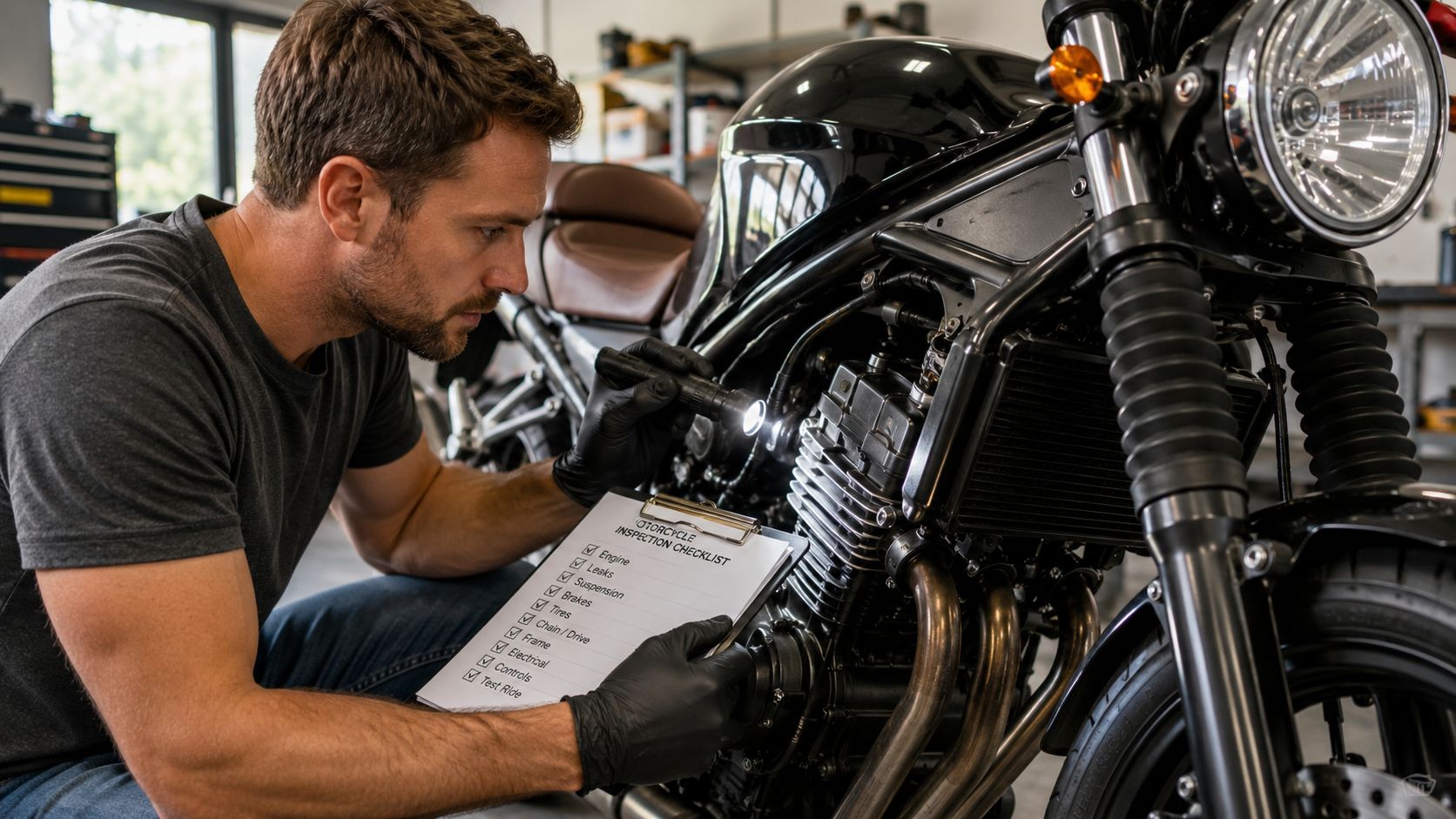
A smart buyer uses the title as a warning label, not reassurance. For a broader buyer-oriented overview, review this resource on buying a salvage title motorcycle.
What to inspect before you talk price
Start with the frame, not the paint. On a rebuilt motorcycle, the expensive mistake is buying a bike that looks straight in photos but has underlying damage near high-stress points.
Check these areas carefully:
- Steering head area: Look for hairline cracks, ripples in paint, fresh coating over suspect welds, or small distortions where the frame takes front-end load.
- Swingarm pivot zone: Inspect for cracking, asymmetry, or repaired metal that doesn't match the surrounding finish.
- Subframe alignment: A bent subframe may not be catastrophic, but it often tells you how hard the bike was hit.
- Forks and triples: Look for signs the front end was replaced after a major impact. Mismatched wear or hardware can tell a story the seller doesn't.
- Fastener consistency: Mixed bolts, rounded heads, or hardware-store substitutions often signal rushed work.
Then step back and sight the motorcycle from the front and rear. You're looking for visual clues that the bike doesn't track symmetrically.
Signs the rebuild was done cheaply
Poor rebuilt bikes often reveal themselves through patterns, not one dramatic flaw.
Look for combinations like these:
| Warning sign | Why it matters |
|---|---|
| Uneven panel fit | Can indicate lingering structural misalignment |
| Fresh paint in isolated areas | May be hiding repairs rather than finishing them |
| Mismatched component age | Can suggest parts were sourced opportunistically |
| Incomplete receipts | Makes it harder to verify major repairs |
| Seller avoids specifics | Usually means the history file won't hold up |
If the seller says, “It passed inspection, so it's fine,” that's not proof. It's a prompt to inspect the bike more carefully.
This walkaround video is useful as a practical companion to your own in-person review:
What a professional mechanic should verify
Your own checklist is only the first filter. Before purchase, pay for a motorcycle mechanic who knows crash repairs to inspect the bike. Ask that mechanic to focus on structure, not just whether it starts, idles, and shifts.
Have them verify:
- Frame straightness
- Quality of weld repairs
- Fork, wheel, and swingarm alignment
- Evidence of hidden impact damage
- Consistency between repair records and actual installed parts
What doesn't work is relying on seller confidence, title paperwork, or your own optimism. A motorcycle rebuilt title can still be a fair buy, but only if the machine underneath it is better than the label suggests.
How to Sell a Rebuilt Motorcycle Legally and Ethically
If you own a rebuilt motorcycle and plan to sell it, the best strategy is simple. Disclose everything early and document everything well.
Trying to blur the title history is a legal risk and a pricing mistake. Buyers eventually find out, and once they think you hid one detail, they'll assume you hid the rest.
Build a file that answers the hard questions
The strongest sellers create what I'd call a rebuild binder. It doesn't need to be fancy. It needs to be complete.
Include:
- Title documents: Current title, prior salvage paperwork if available, and registration records.
- Repair receipts: Organize them by date and component.
- Before-and-after photos: Show the actual damage and the repair progression.
- Shop invoices or notes: If a professional shop handled any part of the work, include those records.
- Parts details: Keep proof for major components that a buyer will care about, especially anything tied to safety or drivetrain function.
A buyer with a stack of questions becomes much easier to handle when you can put the file in front of them and let the paperwork answer.
Price for the title you have, not the bike you wish you had
Sellers often sabotage their own deal by pricing off clean-title comps and then trying to “explain away” the rebuilt history. That approach burns time and attracts the wrong buyers.
Instead, write the listing around transparency:
- State the rebuilt title upfront.
- Identify the damage event if you know it.
- Explain who performed the repairs.
- Mention what records are available.
- Be clear about recent service and current condition.
Clean disclosure usually brings better buyers than defensive selling.
Avoid future disputes
A clean handoff protects you after the sale. Keep copies of the ad, bill of sale, and any written disclosures you provided. If the buyer later claims you misrepresented the motorcycle, your records matter.
An ethical sale doesn't erase the rebuilt label. It reduces uncertainty around it. That's the practical path to the best available price.
Fighting for Fair Value When Your Insurer Lowballs You
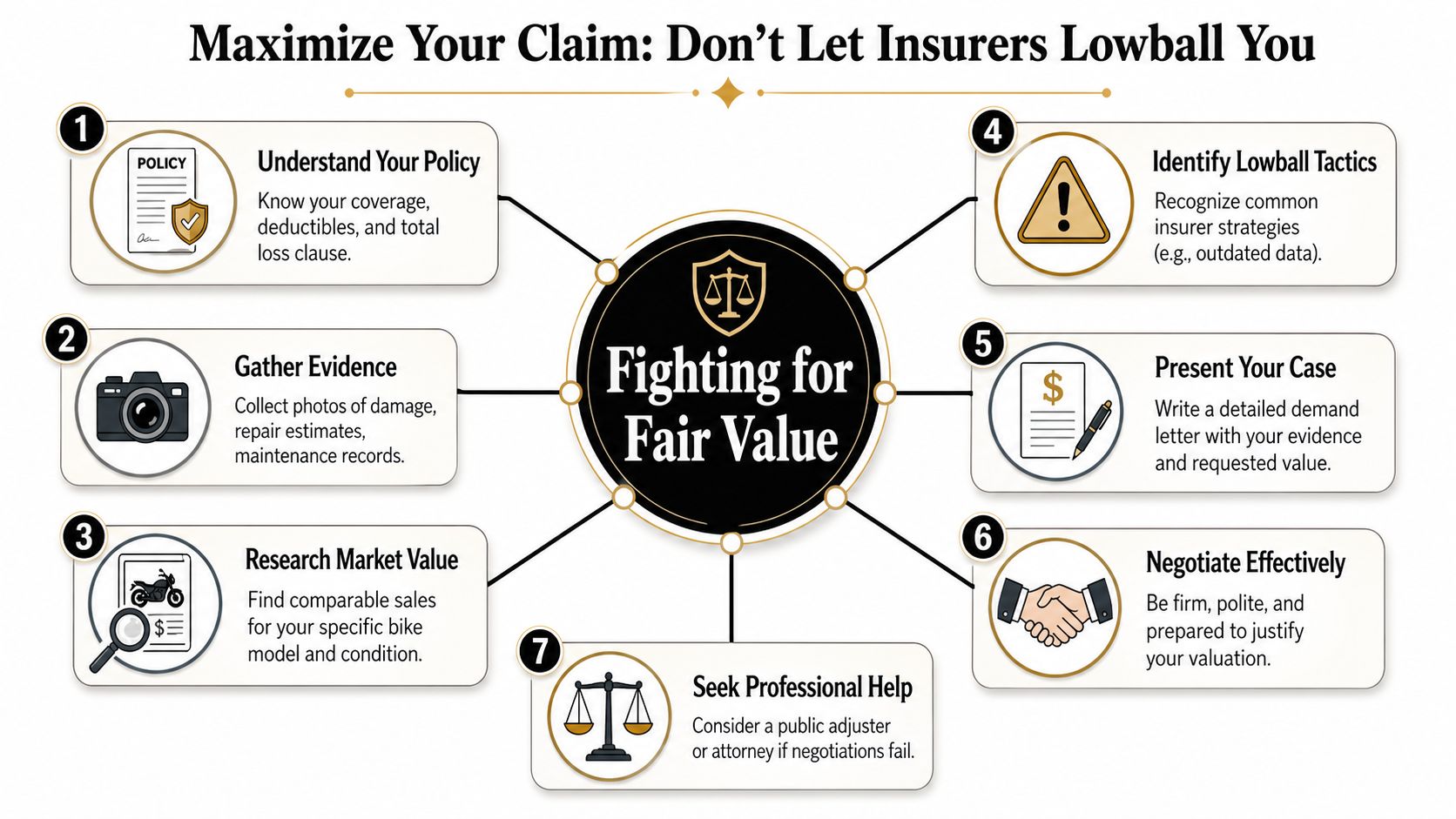
When a rebuilt motorcycle is totaled again, or when an insurer evaluates a diminished value or total loss claim, many adjusters treat the title brand like a shortcut. They discount first and ask questions later.
Some insurance disputes involving rebuilt vehicles center on offers that come in 20 to 30 percent below market value, as discussed in this article on salvage title motorcycle claim disputes. That's where owners make the biggest mistake. They assume the first offer reflects an objective market analysis.
It often doesn't.
What insurers often get wrong
A rebuilt title does affect value. That part is real. The problem starts when the carrier uses the brand as a blanket excuse instead of valuing your specific motorcycle based on its actual condition, documented repair quality, maintenance history, and local market evidence.
In Oregon and Washington, I'd tell a client to scrutinize these parts of the valuation immediately:
- Comparable vehicles used by the insurer: Are they similar in model, condition, mileage, and title history?
- Condition adjustments: Did the adjuster ignore upgrades, service records, or post-repair quality?
- Market area: Did the carrier pull weak comparables from outside the relevant market?
- Brand discount logic: Did they apply a broad penalty without showing how they reached it?
If the valuation file is thin, generic, or built around software shortcuts, you have grounds to push back.
The appraisal clause is often your strongest tool
Many policyholders don't realize their own policy may contain an appraisal clause. That clause can provide a formal path to resolve a value dispute without merely accepting the insurer's number.
The practical sequence usually looks like this:
- Read the valuation language in your policy. Look specifically for appraisal rights and dispute procedures.
- Request the insurer's valuation support. Ask for the comparables, condition adjustments, and basis for the offer.
- Document your motorcycle. Gather photos, receipts, maintenance records, prior repair documentation, and any market listings that are comparable.
- Hire an independent appraiser. The report should focus on the motorcycle's real market position, not a generic branded-title assumption.
- Invoke the appraisal clause if appropriate. Do it in writing and keep the communication organized.
The claim gets stronger when you stop arguing in general terms and start presenting a defensible appraisal file.
What a solid appraisal changes
A professional appraisal reframes the dispute. Instead of debating feelings about a rebuilt title, you're forcing the conversation onto evidence.
That evidence can include the bike's before-condition benchmark, the quality and traceability of repairs, the relevance of the insurer's comparables, and the actual local market for a motorcycle with this exact history. For owners in Oregon and Washington, that shift matters because many low offers survive only when the owner has no competing valuation.
If your claim also overlaps with broader injury or liability issues after a crash, it can help to understand the bigger legal sequence in a motorcycle case. This overview of the Texas motorcycle crash legal process is jurisdiction-specific, but it does a good job showing how claim handling, evidence, and dispute timing can affect the outcome.
What doesn't work
Three approaches fail repeatedly:
- Accepting the first offer because the bike had a rebuilt title
- Arguing by phone without demanding the insurer's valuation support
- Sending random listings without a structured value analysis
A rebuilt title weakens your position only when you let the insurer define the value without challenge. Once you bring in a credible independent appraisal, the dispute becomes more balanced. The question is no longer whether the bike has a rebuilt history. The question becomes whether the insurer valued that history correctly.
If you're in Oregon or Washington and your insurer is undervaluing a rebuilt motorcycle, Total Loss Northwest can help you challenge the number with a certified independent appraisal. They specialize in diminished value and total loss disputes, and they use the appraisal clause process to push the claim away from biased valuation software and toward real market evidence.